
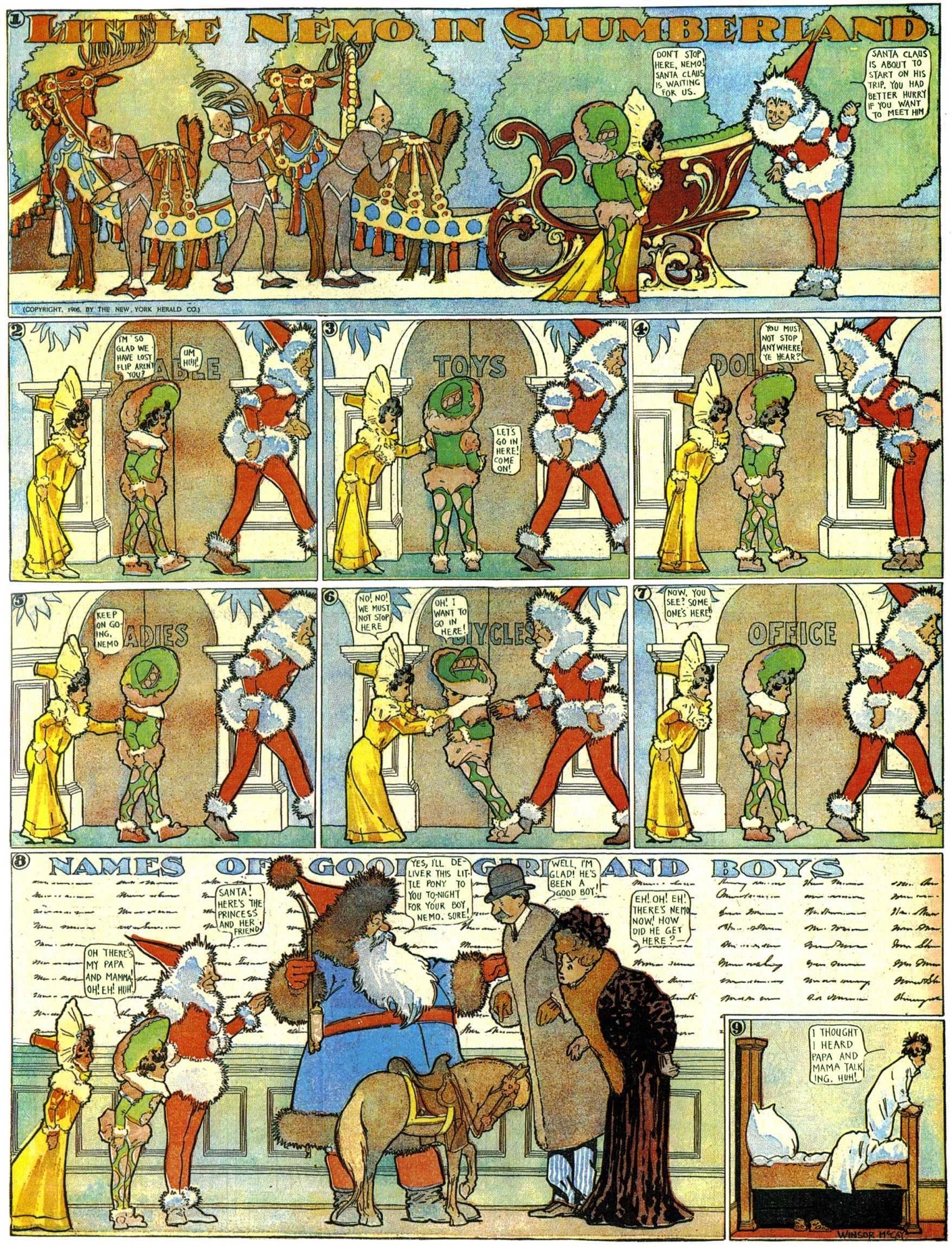
The grand tradition of the Christmas-themed comic episode started pretty much with the modern comic strip itself. Topicality was baked into the newspaper format. But as recurring characters and extended storylines developed, artists found a range of creative ways to integrate holiday greetings with their strips. Today, let’s dance across some noteworthy, even historic, Christmas funnies. Winsor McCay’s Little Nemo in Slumberland often referenced an upcoming holiday. In 1906, Nemo dreams up a pony as his own present.
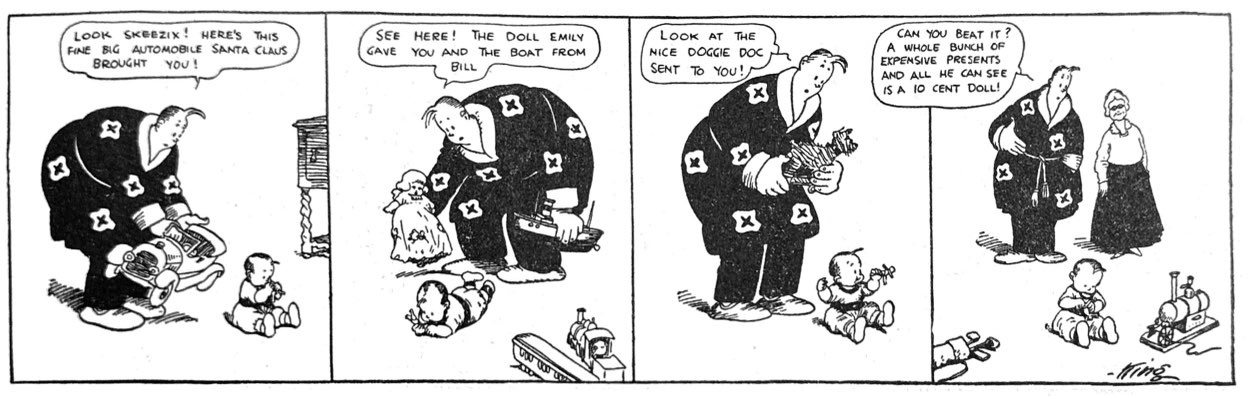
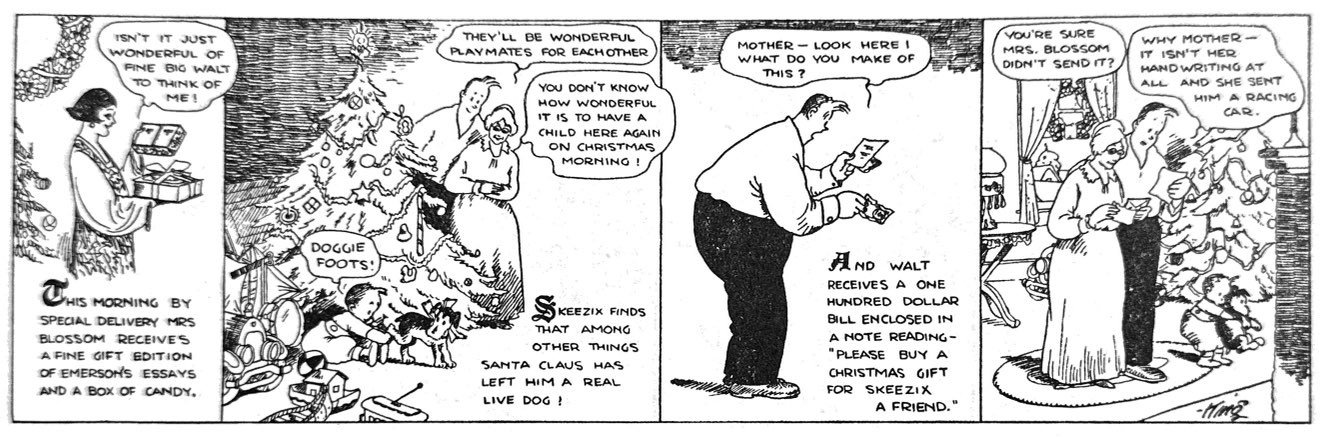
Christmas 1921 and 1922 in Gasoline Alley were the first for Skeezix, the foundline who famously appeared on Walt Wallet’s doorstep in 1921.
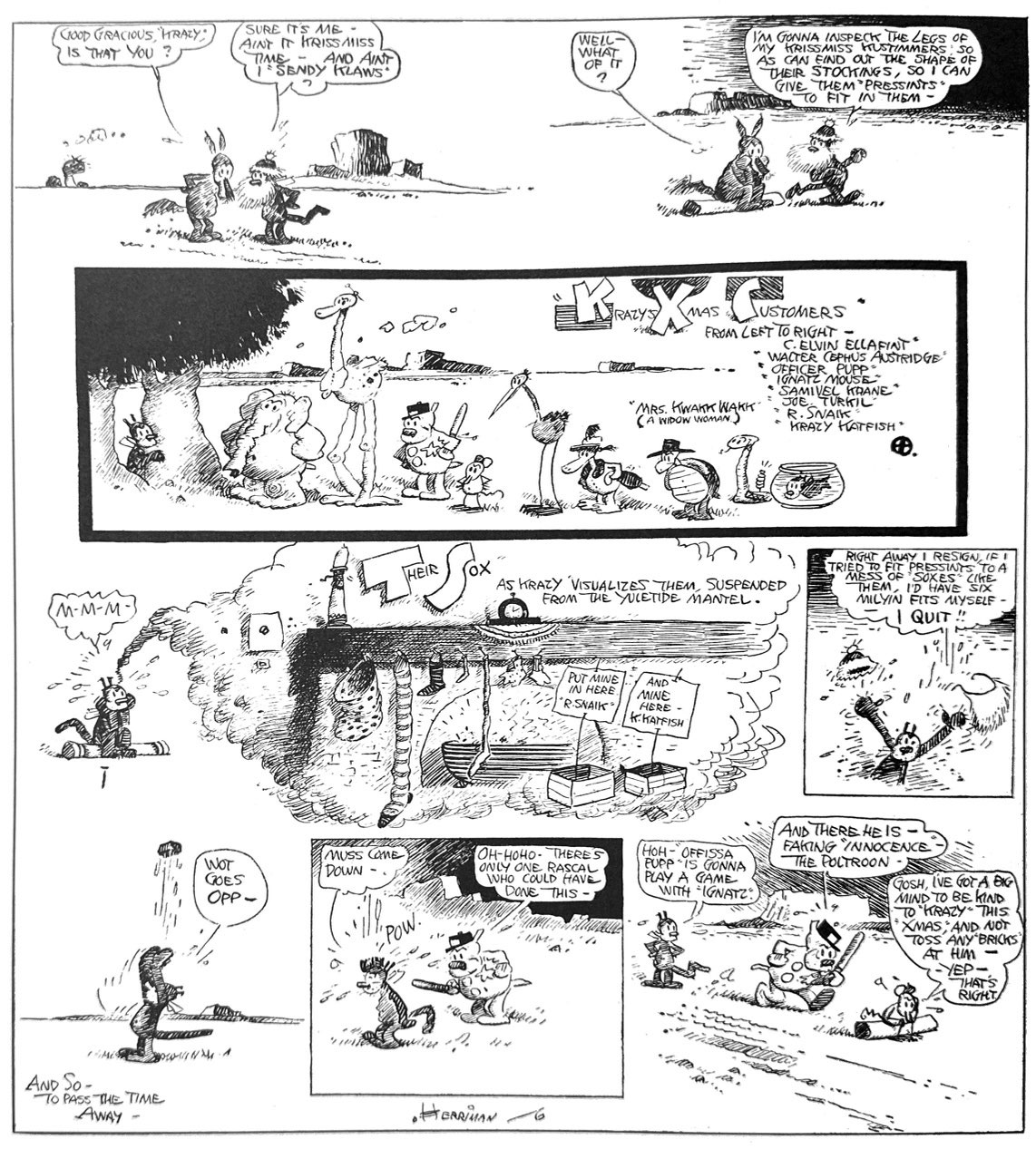
In a wildly creative take on both the holiday and his own cast of characters, George Herriman sized up Krazy Kat’s friends for stockings in 1925.

Harold Gray is often credited with endowing his Little Orpan Annie with “spunk.” His original design of “Little Orphan Otto” went through a gender switch on the suggestion of legendary syndicate publisher Joseph Medill Patterson. Often overlooked is his persistent empathy for the lonely plight of his orphaned character and the glee he takes in reversing her low expectations. This is from an early storyline while she stays with the wonderfully named couple, “The Futiles” in 1925.
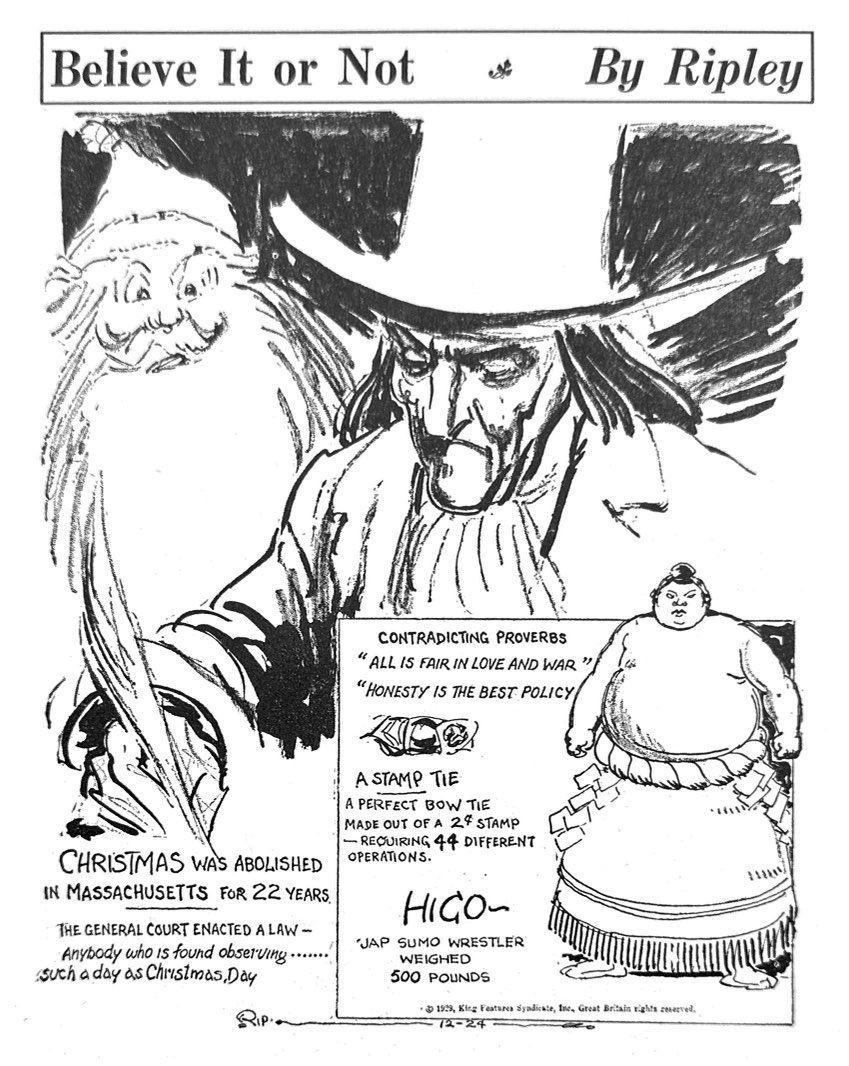
Robert Ripley enjoyed dropping holiday downers. Christmas bans were a favorite item. He liked this item about Massachusetts history so much in the first year of Believe It Or Not in 1929, he repeated it the following year.
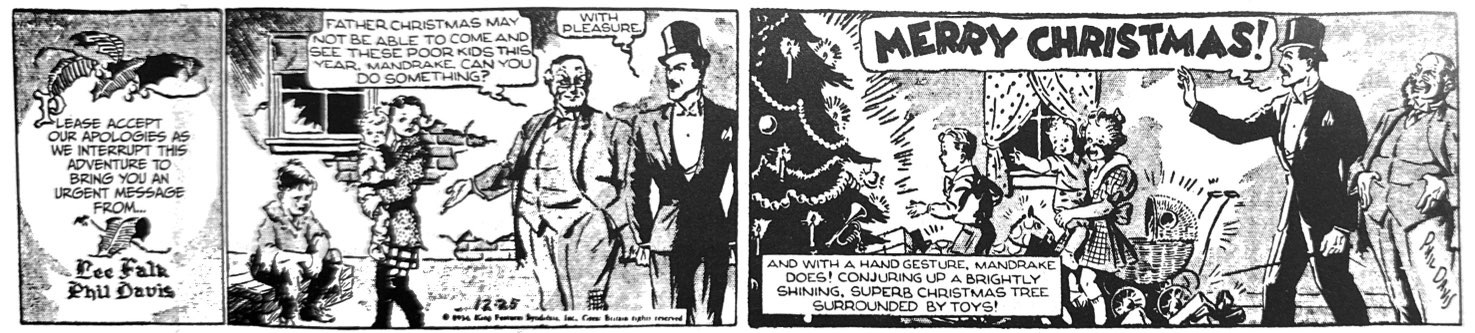
Realism was never a strong suit of Lee Falk’s Mandrake the Magician. After all, this earliest of costumed heroes went everywhere in top hat and tails. Nevertheless, the stark bleakness of 1934 America, the depths of the Great Depression, prssed everywhere. And so, Mandrake takes a break from the current storyline to cheer destitute children. Abracadabra – New Deal.
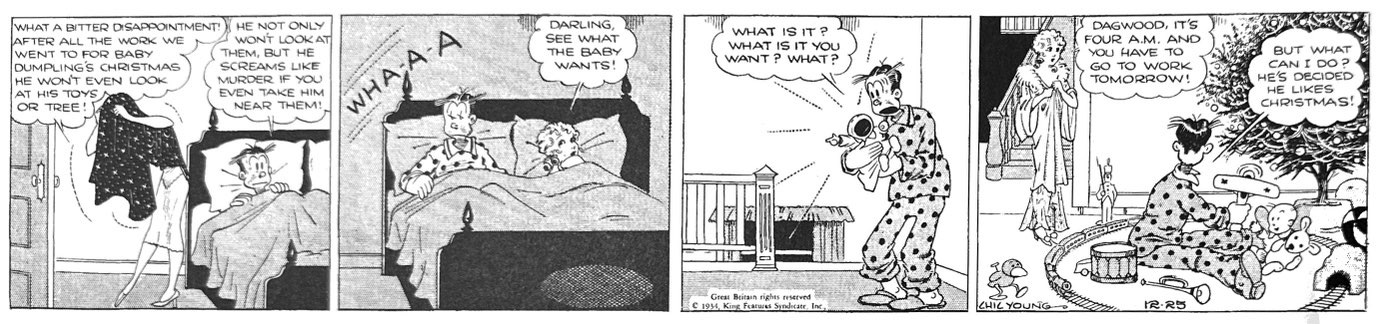
Christmas 1934 also saw Blondie and Dagwood celebrating the first holiday with their newbie, Baby Dumpling, who decides in the liddle of Christmas night that he wants to play with his toys after all.
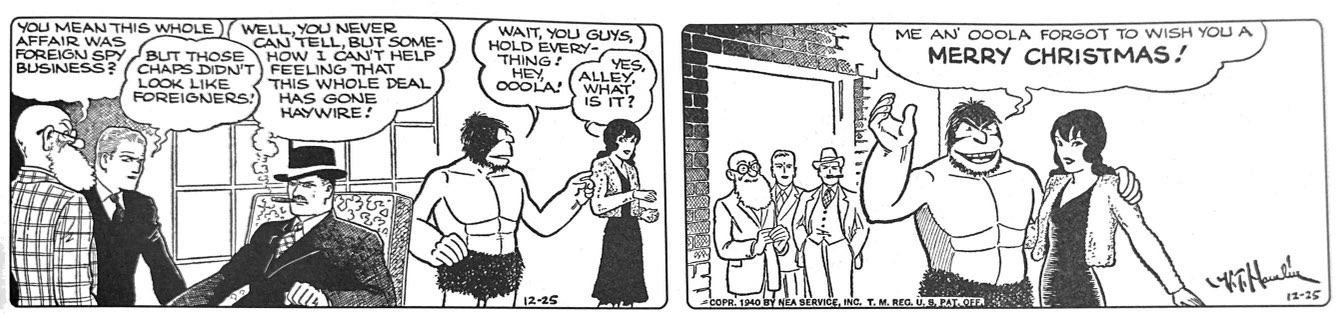
By Christmas 1940, Alley Oop was more than a year into his unwitting capture by Dr. Wonmug’s time machine. But the ever-adaptable cave man seems to have learned quickly about the modern holiday spirit.
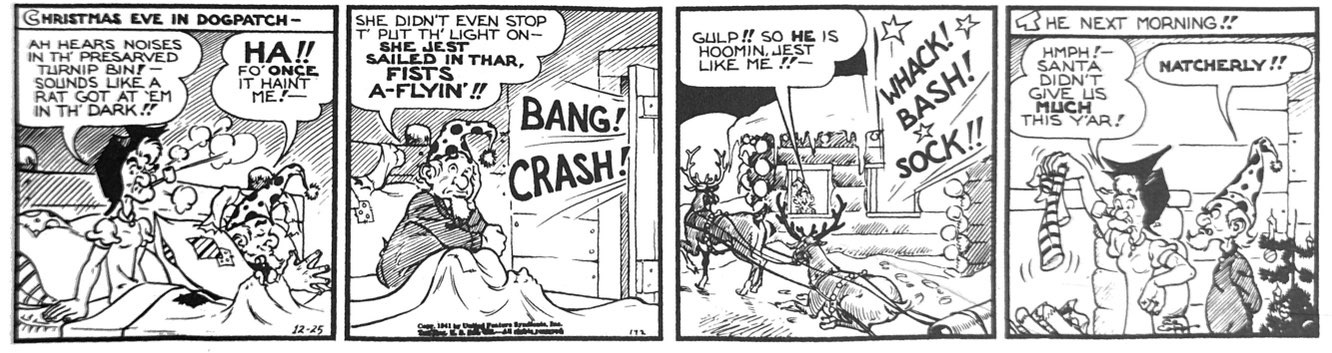
Li’l Abner’s Mammy Yokum has no truck with varmints, even jolly old souls. From 1941.

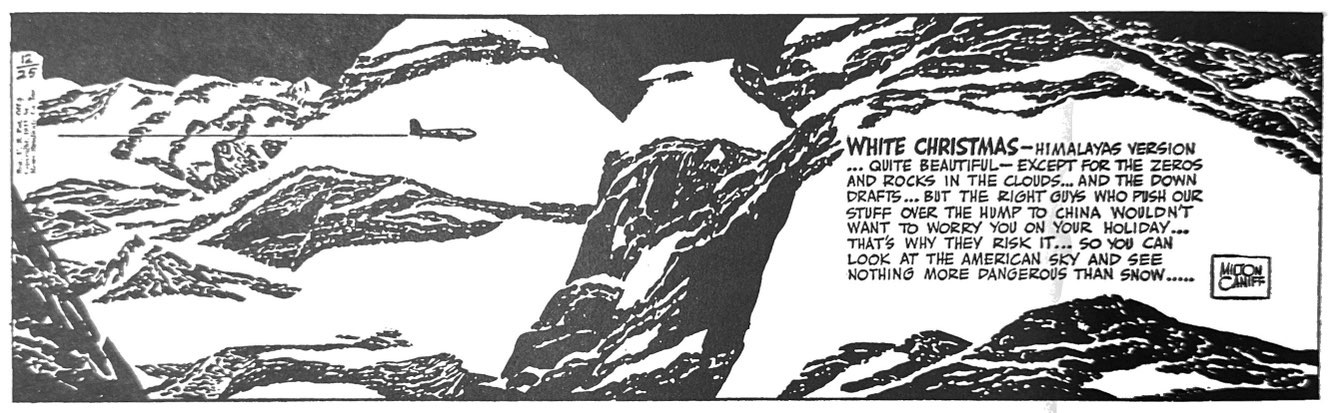
Milton Caniff was all-in for the war effort in the Terry and the Pirate strips of the early 1940s. His holiday strips often highlighted the emotional toll on the troops of being half a world away from home. The second strip above, from 1944 and near the end of his work on Terry, is a great example of the master’s sense of composition, mood, sentiment.

Unca Donald foots the bill, circa 1945.
Discover more from Panels & Prose
Subscribe to get the latest posts sent to your email.
 Panels & Prose