
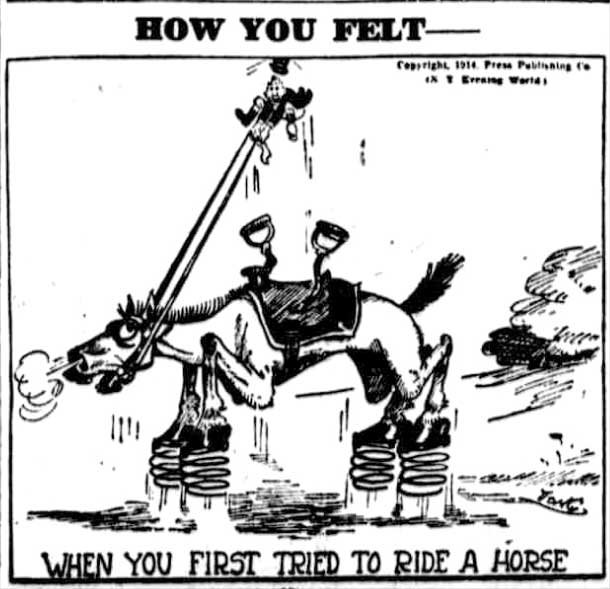
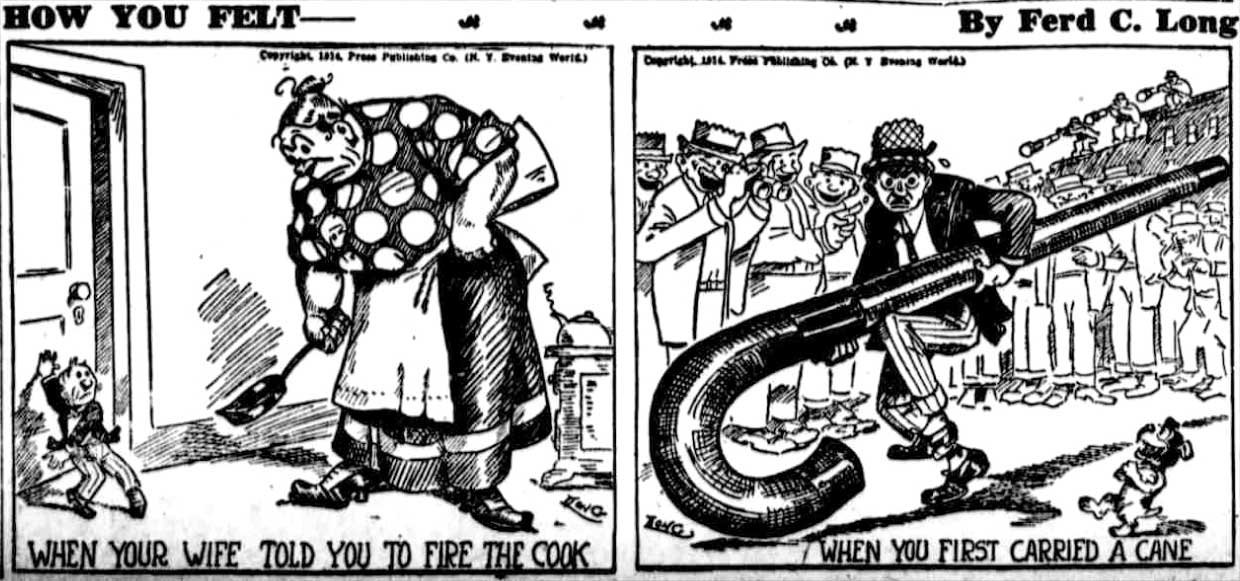


I don’t know who this Ferd. C Long was, nor how long the engaging “How You Felt” strip ran. But it captured me instantly as a great example of early cartoon experiments that explored some of the unique qualities of the new medium. The great team at Barnacle Press, who nobly harvest every scrap of early comic strips they can, gathered these. Like many strips of the day, it took up a simple single conceit – in this case using visual exaggeration to capture a feeling. The result is a fantastic surrealism that communicates in a singular way a range of small and common responses to the world.
Continue readingMonthly Archives: April 2022
McManus’s One Joke, Deftly Told

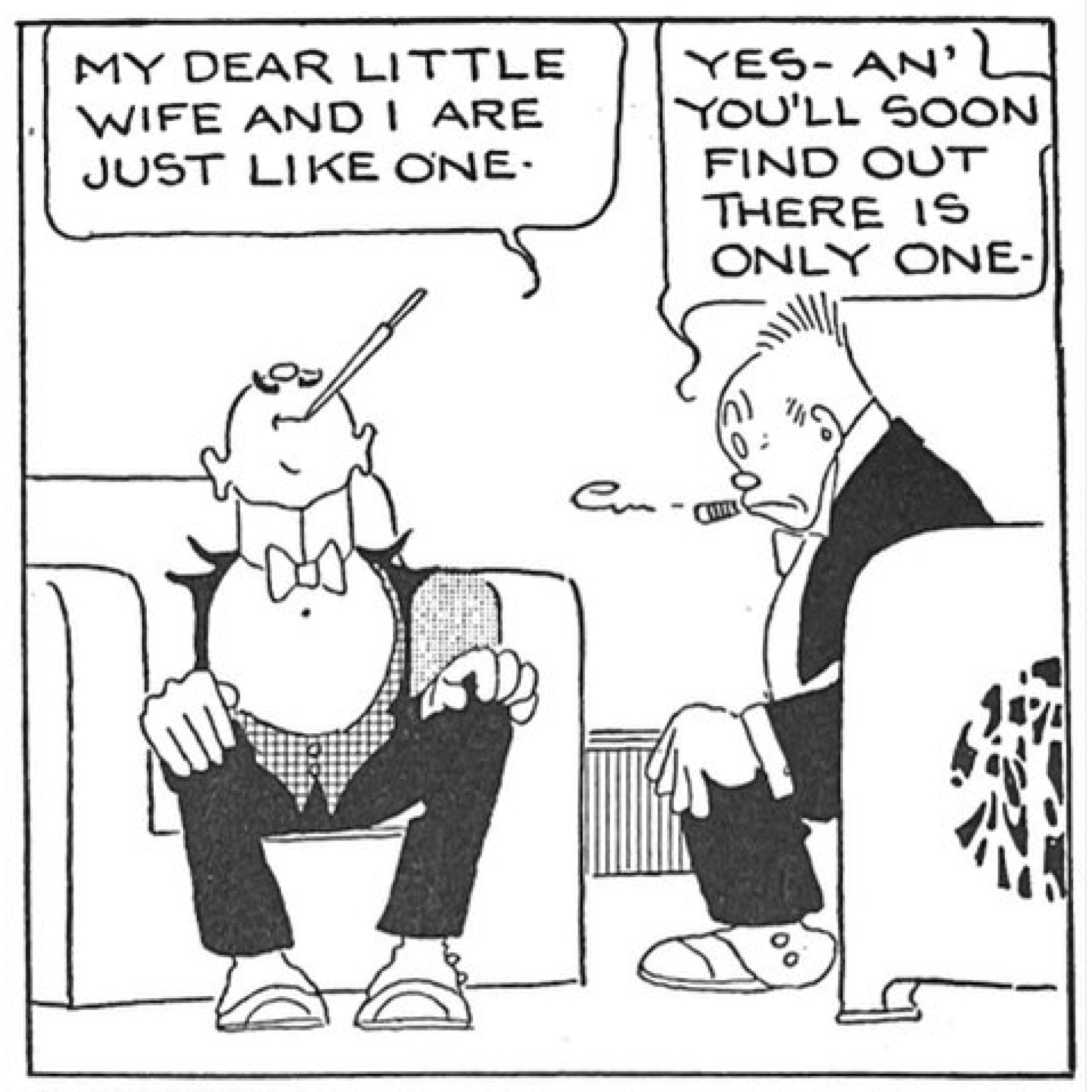

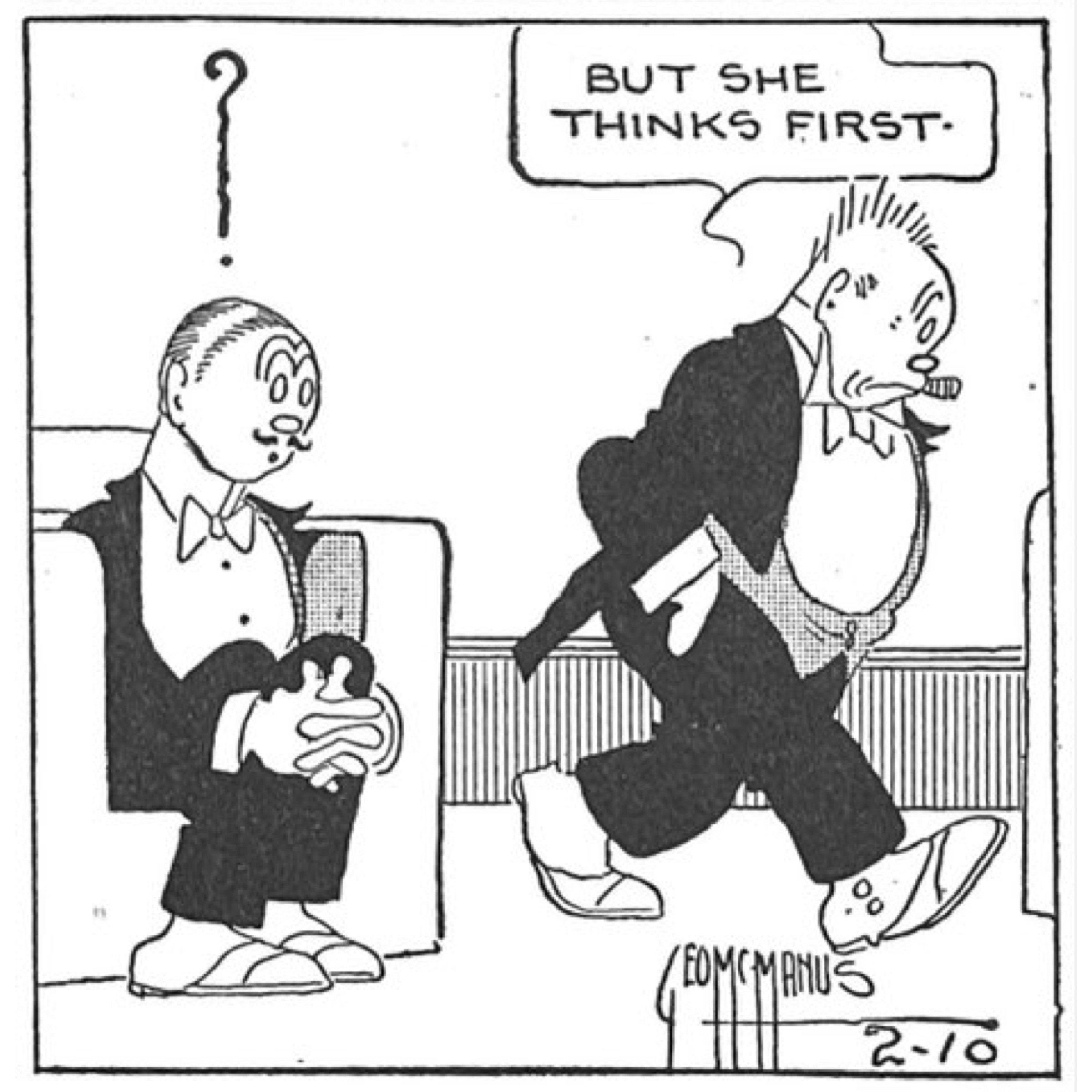
Comic disharmony between Jiggs and Maggie over their social climb was the central joke of George McManus’s Bringing Up Father for over four decades. For all of McManus’s fine sense of humor, he banged that one note across four panels six days a week and a full page every Sunday. To be sure, he layered in nuances of class and generational conflict. Jiggs was a hod carrier who struck it rich, never adjusted to his own ascent, and clashed with wife Maggie and daughter’s ambitions to join the social elite. The dynamic was rich with potential and embodied the experience of millions of American emigrees moving into the modern middle class. But many of the daily strips tediously replayed Jiggs’s sneaking out to his former watering hole Dinty Moore’s, embarrassing his family with etiquette transgressions or ducking Maggie’s thrown dishes. These were conventions that American newspaper readers enjoyed hearing for a handful of panels and 30 seconds a day over its 87-year run. McManus, however, was especially adept at maintaining reader interest in the familiar with his mastery of visual style, panel sequencing and timing.
Continue readingNapoleon: The Gentle Art of Everyday-ness
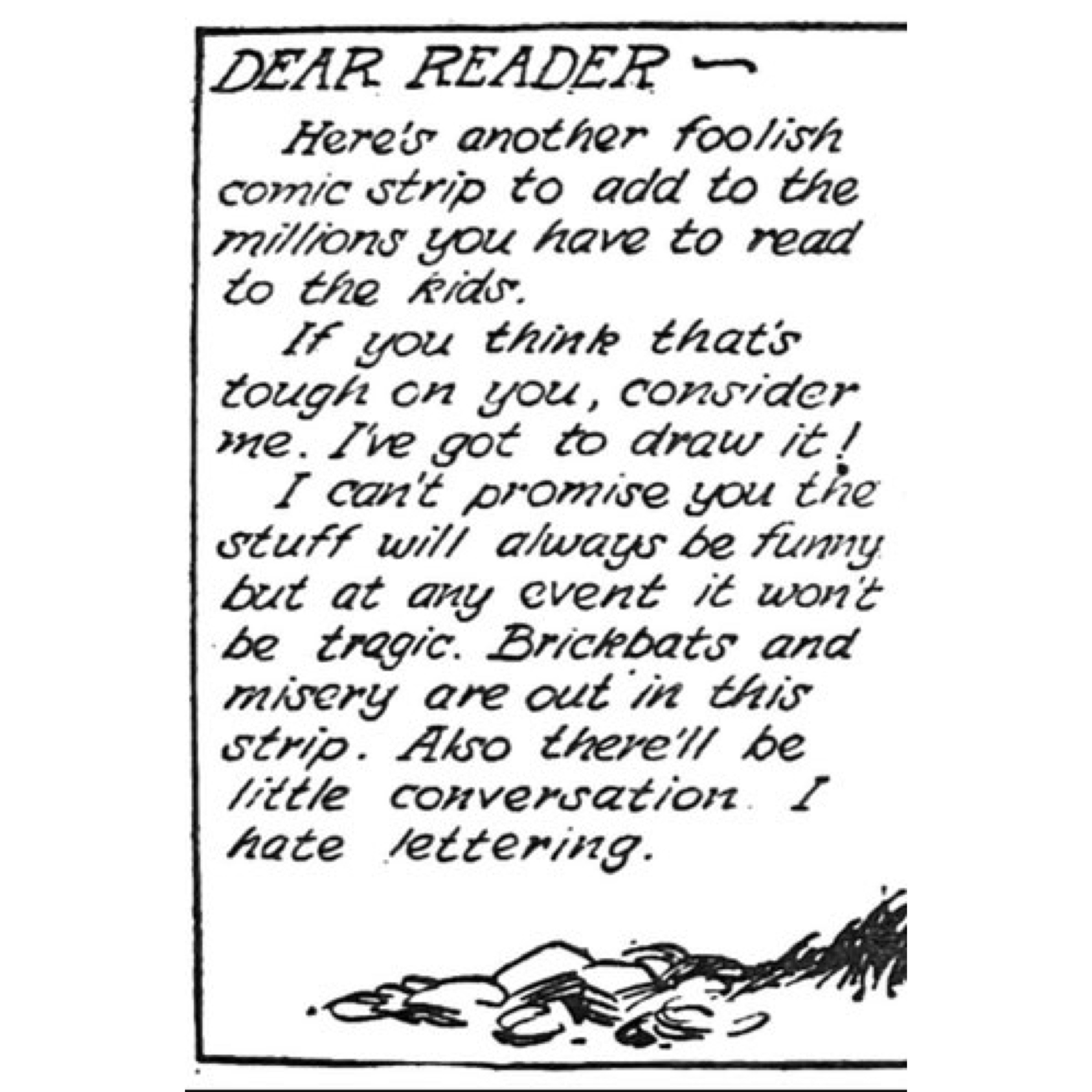
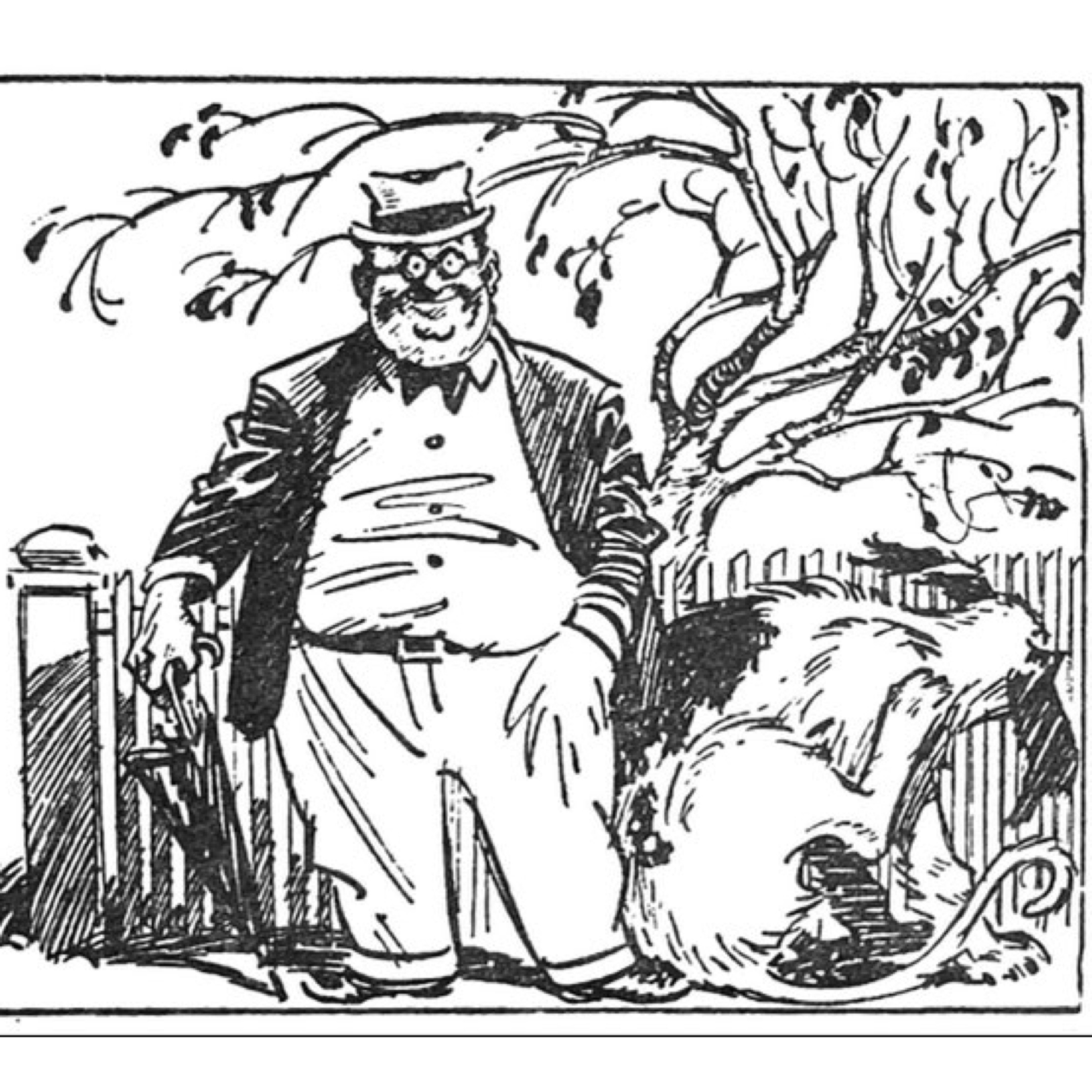


Clifford McBride’s portrait of the affable, accident-prone and corpulent Uncle Elby and his puckish oversized dog Napoleon is one of those great American comic strips that are about nothing. There is no adventure or much of an ongoing storyline to the Napoleon and Uncle Elby strip. Nor are there gags, verbal or physical, really. It is more a strip about everyday mishaps. Uncle Elby is proud of his new white suit, which an affectionate Napoleon meets at the the front door with muddy paws. Constructing a simple tent results in a tangled mess. Napoleon chases a fleeing rabbit, chicken, cat or whatnot (it’s a frequent theme), only to be chased by his prey in the end. Elby mows over one of his dog’s hidden bones, which conks him on the bean. Elby gets out of his car to open the garage door only to have it slam shut before he can drive through.
No, really, the action in the Napoleon strip is that banal and trifling…relentlessly…and apparently by design.

 Panels & Prose