Best Books of 2022: Minority Report: Revisiting Bootsie/Breezy/Dayenu Dayenu

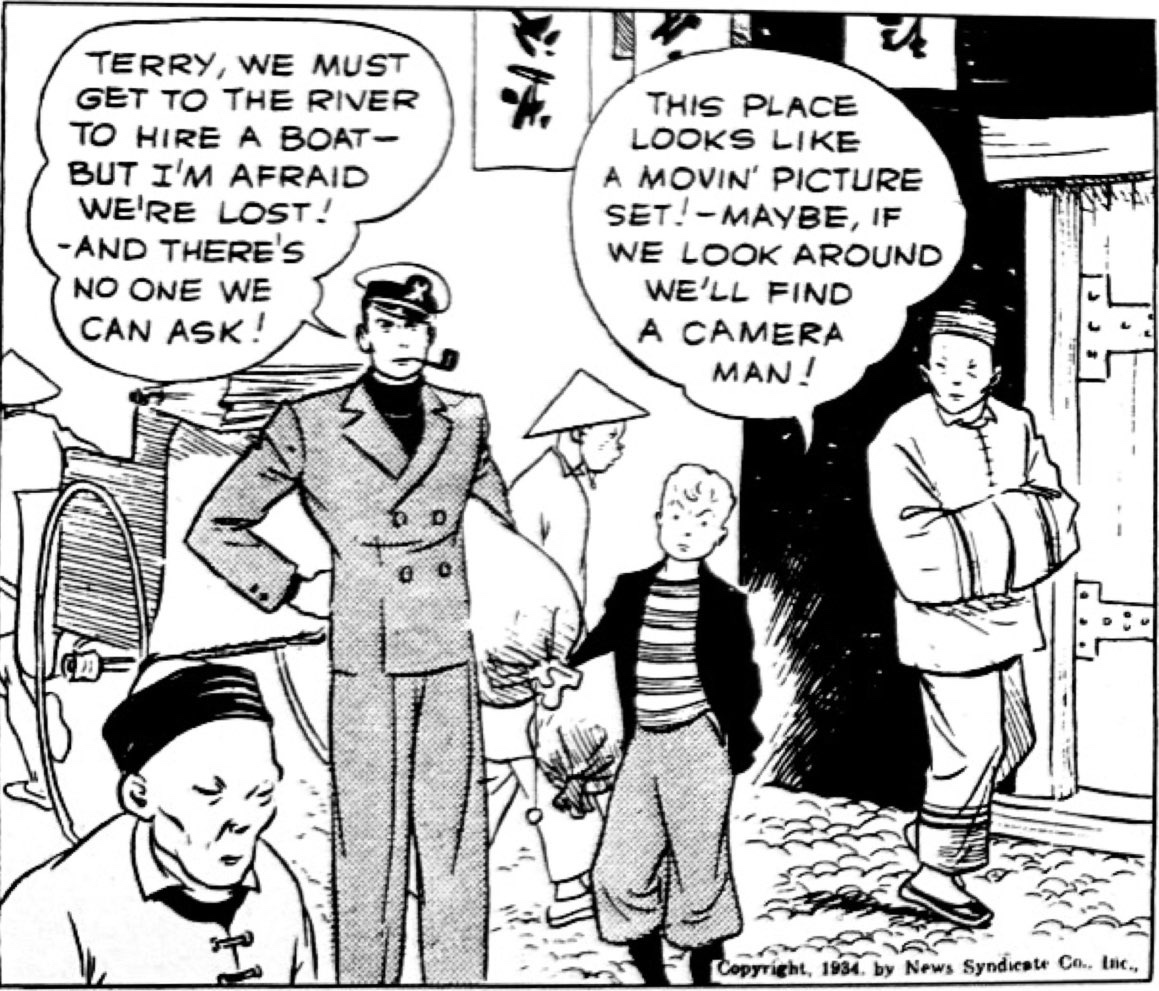
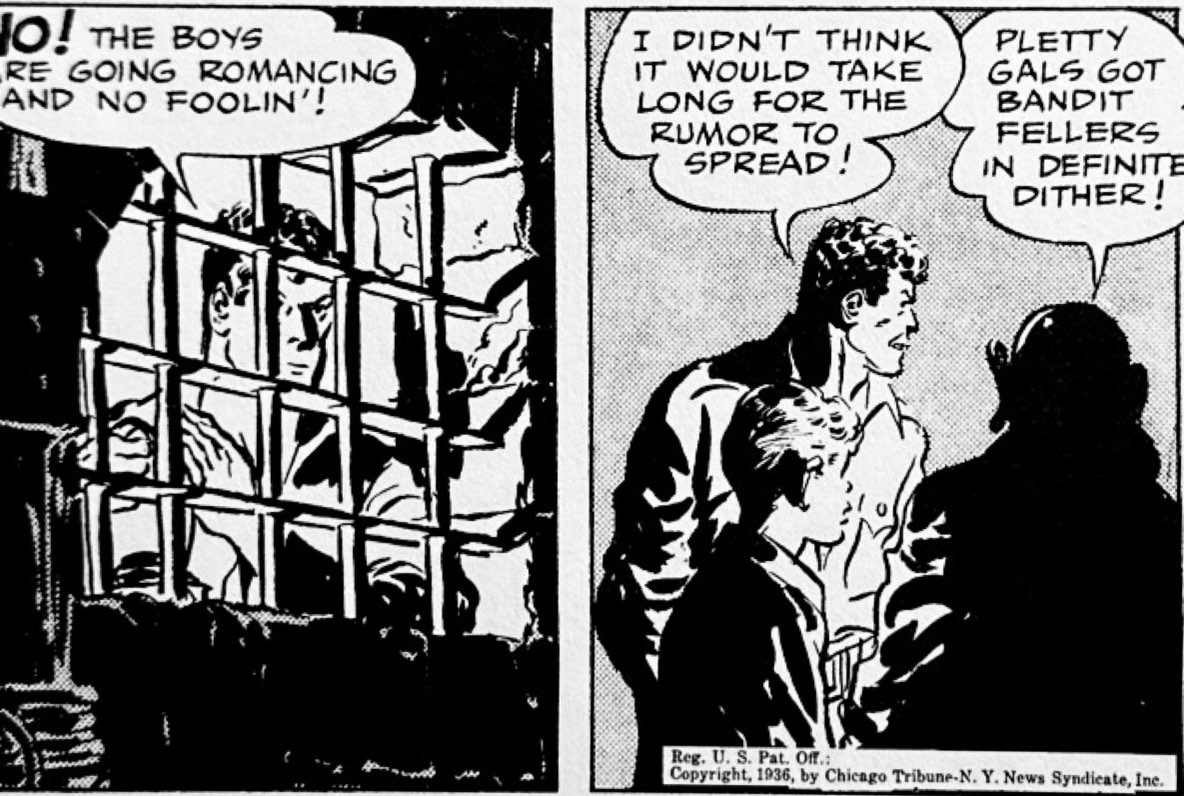
One of the biggest blind spots in the history of American comic strips is the community newspapers that spoke to and out of the ethnic minority experience for decades. About Comics is engaged in one of the most important reprint projects in reprinting some of these overlooked comic strips. Throughout the 20th Century, Black, Italian, Eastern European, Jewish and other native and emigre minority communities generated newspaper networks that applied their own lenses to local, national and international affairs. They produced unique takes on modern American culture rarely seen from the dominant comics syndicates. Few of the comics artists and serial strips have been reprinted in any depth…until now. Their inclusion in the American comics canon is long overdue.

Continue reading

Doc Hero: Rex Morgan, M.D. Is Here to Help

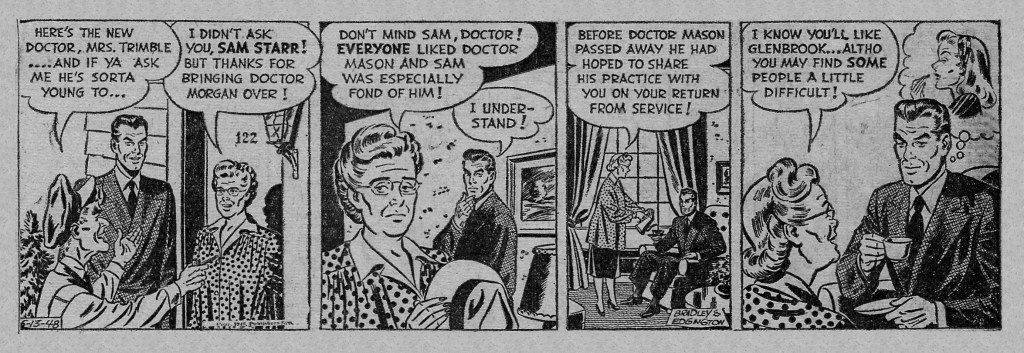
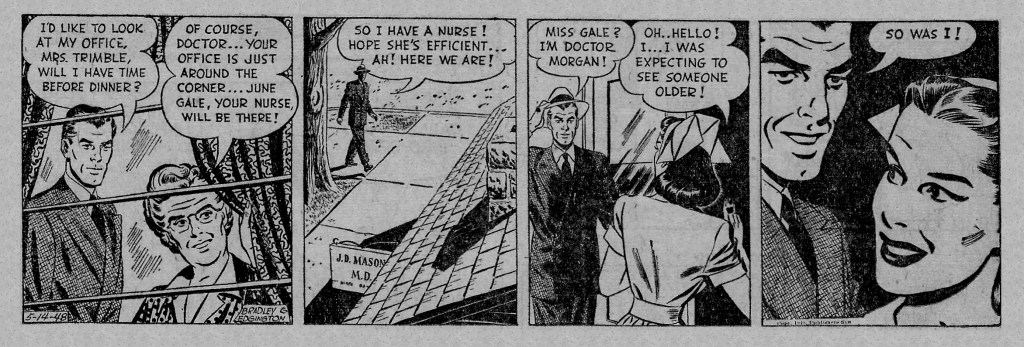
Remember when doctors were iconic pillars of respectability and authority in pop culture? Before alternative medicine? Before CDC missteps? Before drug company bribery? Before all expertise became “elitist conspiracy?” Remember Dr. Kildare? Ben Casey? Marcus Welby? And how about the most enduring of them all, Rex Morgan, M.D.? Launched on March 10, 1948, the doctor-driven soap opera was the brainchild of a psychiatrist, Nicholas P. Dallis, who wrote under the moniker Dal Curtis. His intent was to create a doctor hero who ministered not only to broken bodies but to overall mental and moral health. Young Dr. Morgan, apparently not long out of medical school, moves to the small town of Glenbrook to take over the practice of the burg’s departed, beloved practitioner. The strip was very much part of the psychological turn in American pop culture after WWII. Morgan represented that new generation of more enlightened experts of all things both scientific and emotional.

But at the same time, Rex Morgan M.S. rightfully remains a monument of 1950s iconography. For many years under the hands of main artist Marvin Bradley and backgrounder John Edgington, the strip had the bland realist style of contemporary advertising illustration. Characters showed minimal expressiveness; environments were just as pristine and inexpressive; houses, cars, furniture were just as generic; and any cartoonishness was saved for the offbeat minor players and comic relief.

Continue reading

The Nebbs: The Social Realism of a Mid-List Sitcom

The Nebbs (1923-1947), written by Sol Hess and drawn by W. A. Carlson started as an unabashed knock-off of the more familiar domestic comedy strip, The Gumps. And yet the strip was quite popular in its day, appearing in over 500 newspapers and spawning a radio version. And to its credit, The Nebbs developed its own charms and developed distinct sitcom conceits, if only in a minor key.

Hess wrote gags for Sidney Smith’s The Gumps and well understood the conventions of emerging situation comedy. And while in name and domestic situation, The Nebbs clearly mimicked some aspects of The Gumps, Hess’s variations were notable. Rudy Nebb is less bombastic than Andy Gump. And the thrust of the strip is more wordy and introspective. It seemed to have as much in common with the internal monologues of Harold Gray’s Little Orphan Annie and the slice of life motif of Frank King’s Gasoline Alley. Most of the available samples of The Nebbs focus on the Sunday standalone gag strips. For a richer sense of the continuity of Hess and Carlson’s world, I have to rely on a contemporaneous 1928 Cupples and Leon reprint. Alas, the selection in this volume focuses outside of the the Nebbs themselves and on the wealthy cousin Ambrose and his dual failure at launching a local hotel and courting the spinster Sylvia.

Continue reading

Into the Heart of Juliet Jones

The thoroughly engaging and visually captivating The Heart of Juliet Jones is an underrated gem of 1950s comic strip photo-realism and romantic adventure. Its admirable run began in 1953 (through 1999), under the artful pen of Stan Drake and the scripting of Elliott Caplin. The first week of the strip is added below, and it illustrates the melodrama of the this soapiest of soap operas.

The basic setup involves the Jones family – a widowed father “Pop Jones,” his 30-something unmarried daughter Juliet and teen wild-child other daughter Evie. Sibling rivalry and the tension between responsible Juliet and adventurous man-obsessed Evie form the basic dynamic. I am working from details in the excellent reprints of the early strips by Classic Comics Press (2008). The first volume has introductions by Leonard Starr (of Mary Perkins fame) and Armando Mendez.

Continue reading

Kurtzman Turns The Funnies Into The Sillies

As part of his general send-up of modern popular culture in the original MAD magazine, Harvey Kurtzman took special care with his satirical takes on famous American comic strips. Most often aided by the uncanny mimicry skills of Will Elder, who seemed able to channel any cartoonist’s style, it was clear that their hearts were really in these stories. Whether it was Manduck the Magician, Little Orphan Melvin or Prince Violent, these parodies were coming out of deep familiarity of having been raised on these strips. And Kurtzman always zeroed in on the inane in pop culture as his target.

Putting Manduck into a mind-bending duel with fellow mystic The Shadow was an inspired but typical Kurtzman assault on the shallow and phoney in pop culture conventions.

Continue reading

Early Polly: Inventing the Sitcom

Cliff Sterrett’s Polly and Her Pals (1912-58) was along with George McManus’ Newlyweds and Bringing Up Father and George Herriman’s Family Upstairs one of the pioneers of a situation comedy genre that would eventually define radio and TV. There were progenitors, to be sure, like vaudevillian skits and theatrical parlor room comedy. But it was in the comics pages of the first two decades of the last century that the major tropes and situations of the genre developed. The kooky neighbors, generation gaps, spousal miscommunication and jealousy, and especially the aggrieved and diminished father figure – all took root here and were developed by Sterrett, Herriman and McManus, among others.

Continue reading

Lance: Warren Tufts’ Beautiful…Strange America

Lance (1955-60) was Warren Tufts’ masterful exploration of mid-19th Century American expansion, and it remains among the most breathtaking uses of the newspaper comics medium in its history. Tufts, who had previously fictionalized the Gold Rush in his wonderful Casey Ruggles (1949-55), was a self-taught savant of realistic illustration and frontier history. Lance embodies some of the signature qualities of the American newspaper strip. Visually, and much like Winsor McCay, Cliff Sterrett, Frank King, Hal Foster and Alex Raymond before him, and scouted new ways of using the full-page Sunday format and especially color to evoke emotions and a sense of place. And like Chester Gould’s Dick Tracy, Percy Crosby’s Skippy and Harold Gray’s Little Orphan Annie, Tufts’ rendered a highly personal, idiosyncratic and often weird vision of America and humanity. Lance demonstrates how such individual and offbeat perspectives were still possible in the comic strip format, and could make this medium much different from other modern mass media that had become corporatized and collaborative.

Continue reading