While it goes without saying that Hal Foster was a much more buttoned down, stiff and restrained adventure artist than the ebullient Alex Raymond, he had his moments of gratuitous cheesecake. Here, from some 1939 sequences, Prince Valiant strips down for some manly bathing.
Hal Foster was never shy about pouring on the bloody swords, celebrations of battle, corpse-coated fields of war. In fact some foreign markets censored the strip when they felt Prince Val’s love of war crossed the line. But showing skin? Not so much.
Even comics aficionados barely recall the very popular aviation adventure strips of the late 1920s and 1930s, perhaps because, well, they just weren’t very memorable. Tailspin Tommy, Scorchy Smith, Smilin’ Jack, Flyin’ Jenny, and Skyroads, to name a few, were definitely of their time, tapping into the most romantic technology of early 20th Century – aviation. The wild tales of WWI air battles, the triumph of machine and human endurance in Charles Lindbergh’s solo crossing of the Atlantic, the mystery of Amelia Earhart’s disappearance fueled film, pulp magazines, and even popular science journals with an admixture of human spirit, adventure to far off lands and technical jargon that many audiences, especially boys, ate up. The strips captured that blend. Many of them were created by pilots who brought their love and knowledge of flight to the strips. Much of the art was unremarkable. Noel Sickles’ work on Scorchy Smith was a legendary exception, and Russell Keaton had a polished and breezy style in Flyin’ Jenny. For the most part, however, aviation cartoonists were more in love with the planes than their own characters, and they tended to focus effort and attention on the planes themselves.
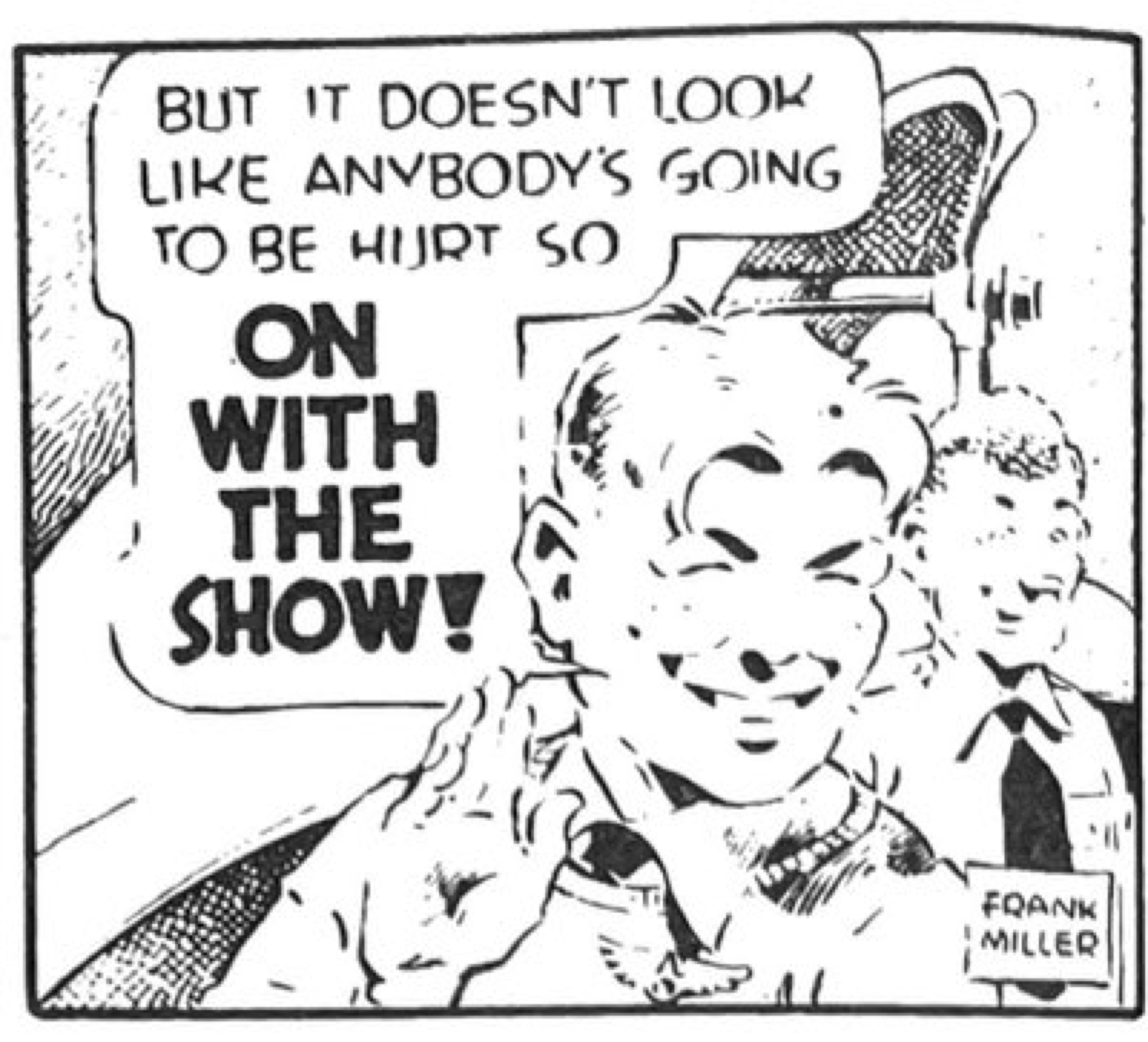
Frank Miller, however, brought Barney Baxter in the Air (1935-1949) a special whimsy to the genre both in his characterizations and line work. From the Art Deco/Machine Age feel of his lettering to the rounded nature of his figures, everything about this strip feels sophisticated, considered, modern . His faces are comprised of a few deft dabs of ink. The upholstered texture of his people and objects are somewhere between big foot cartooning and classic adventure realism. And this allows him to bring his style to either extreme as it fits the scene. It reminds me of (or foreshadows) Rick Geary, whose style I also love. Miller is adept at using a variety of panel framings to keep the eye energized across the progression. His narrower close-up panels call out important moments of gesture or expression. And he has such a stylized way of rendering shadows in a pointillist style. It all adds up to a visual signature that light, witty, and yet functional as a vehicle for adventure. The feel is similar to Capp’s Li’l Abner.
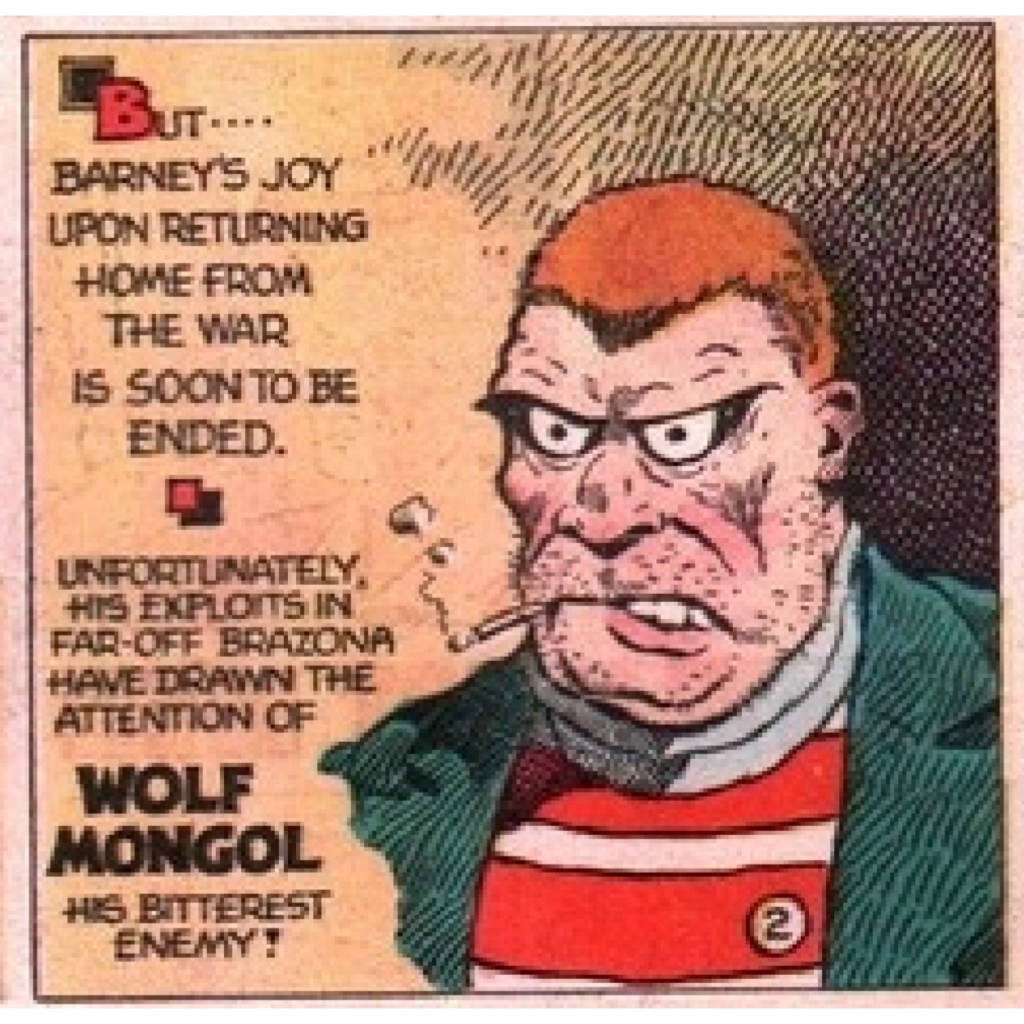
His skills often came together in some truly creepy villains.
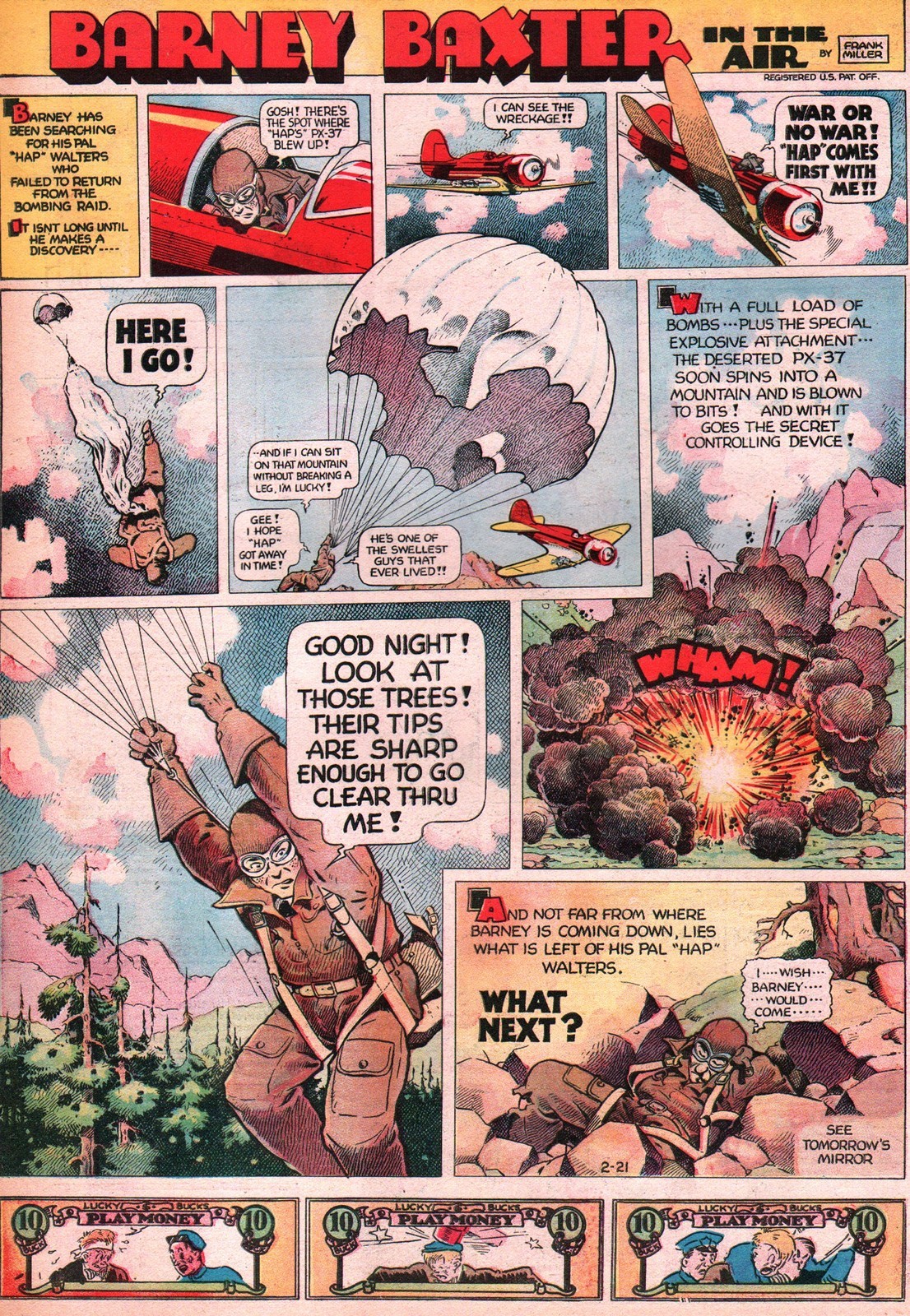
Miller lavishes attention and invention on his Sunday pages. He is breaking frame, manipulating panel shapes and sizes with the kind of energy we usually associate with McCay, King or Sterrett. The detail and color in his rocky backgrounds are just wonderful for establishing setting. He maneuvers our point of view radically from panel to panel to bring us into the scene by circling us around it. And just look at that open parachute as the visual centerpiece of the whole layout. If that isn’t an homage to McCay, I don’t know what is.
Frank Miller, obviously not the Frank Miller of later comic book fame, ran the strip throughout its 15 year span and until his premature death in 1949.
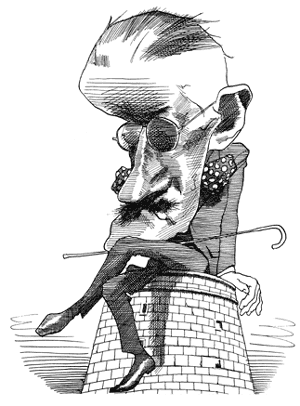
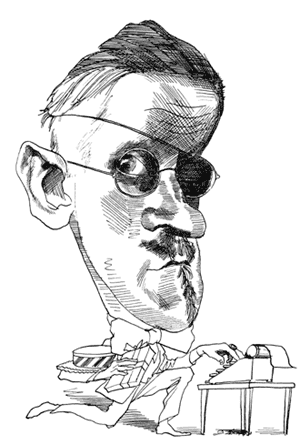
On June 16, 1922, Jame Joyce’s Ulysses was first published in Paris and quickly became a monument to the many strands of modernism that had been coursing through the literary and visual arts in the first decades of the 20th Century. And it would confound scholars and students ever after. To celebrate, here is a small collection of David Levine’s wonderful caricatures of the great Dubliner from The New York Review of Books. Levine’s puckish takes on revered literary figures in NYRB served as a welcome counterpoint to the somber and studied tone of the critical prose in the magazine.
Whatever one thinks of Joyce’s Ulysses, I am experiencing rereading it this week as an important antidote to the culture of now. So much of our high and low art on the 100th Bloomsday in 2022 is aimed at pandering, to providing messages and experiences that demand nothing of us. The digital targeting of messages and news through social media, art that likewise targets our sense of our own identity, leaders who follow – nothing about our culture makes us work at understanding anything beyond who and where we are now. Joyce is hard and disorienting, and reading him demands both attention and aiming higher than our current understanding. It is worth putting those demands on ourselves and our arts.
Joyce himself was not a visual artist, even if his prose was a master class in imagery. But he did try his hand at cartooning once in an artist’s studio when recovering from one of his many eye surgeries. Below is his rough rendering of Ulysses’ protagonist Leopold Bloom. I believe the words above it are the opening lines of the Odyssey.
If not Joyce, then try something else that is hard to read. Happy Bloomsday.
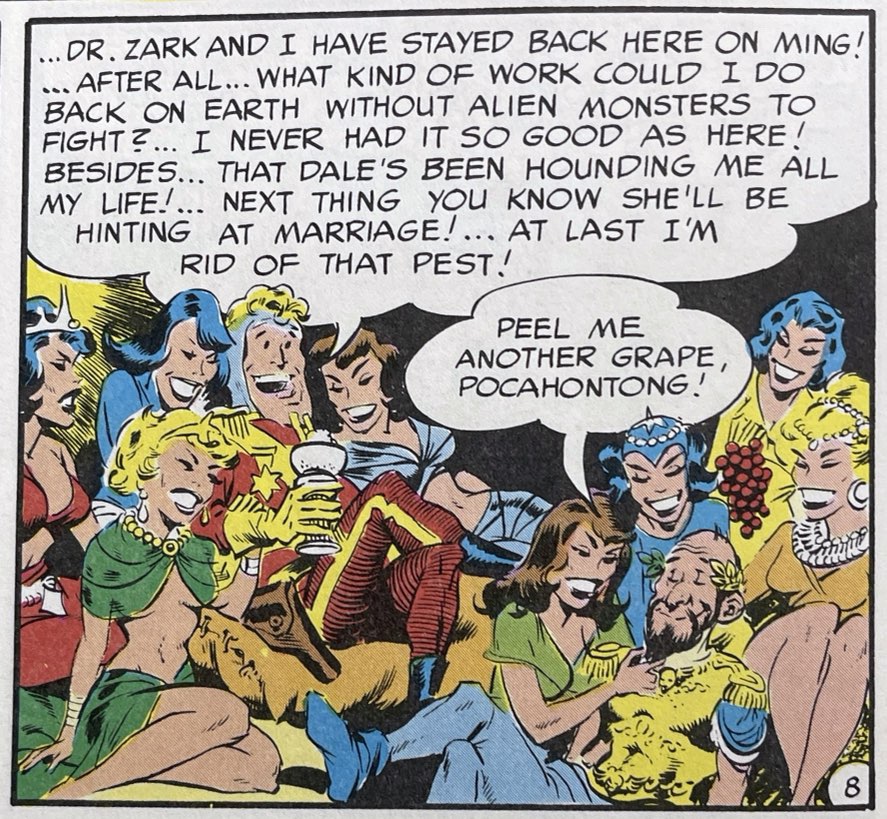
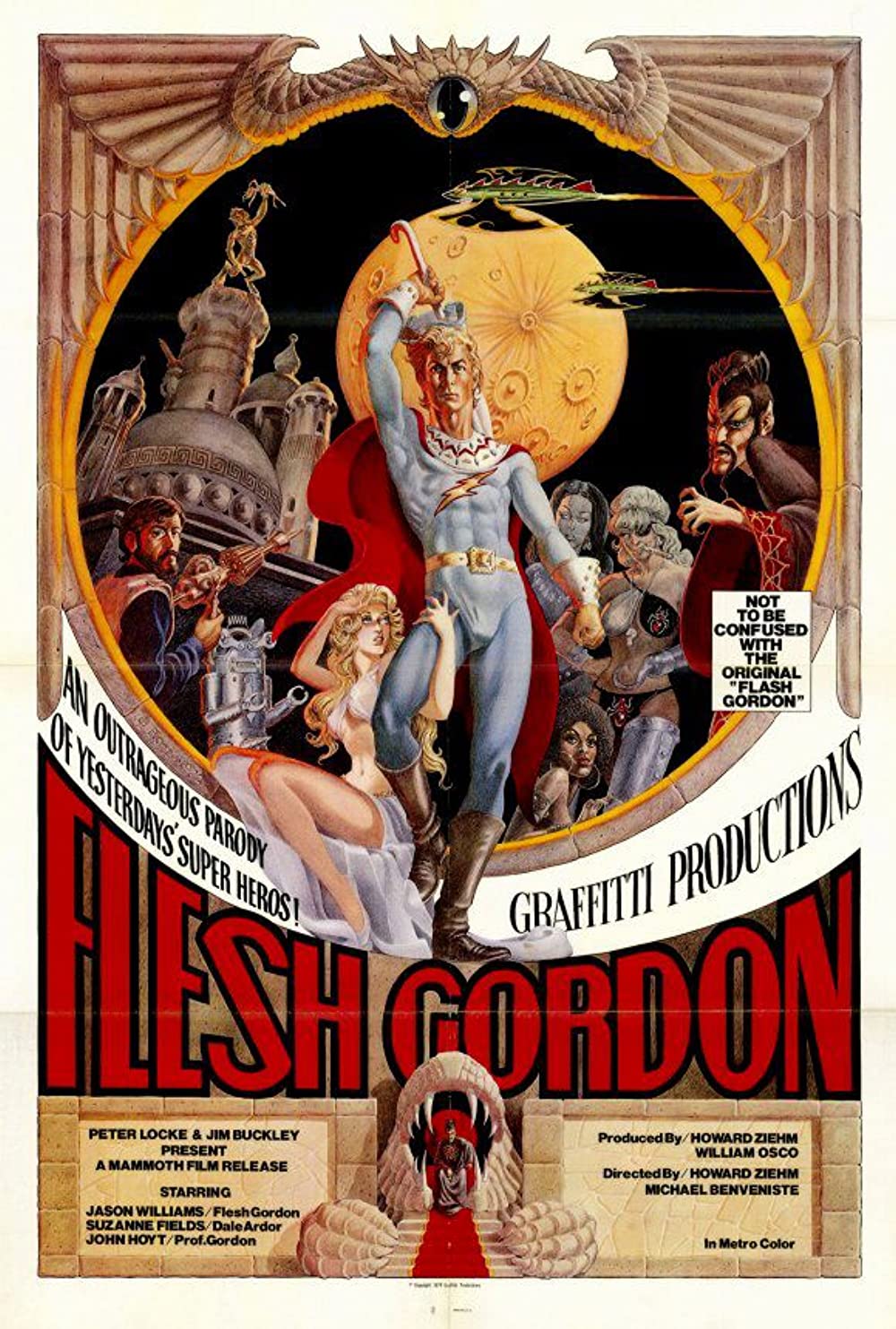
Alex Raymond loved bodies. Male bodies, female bodies, animal and alien bodies. He couldn’t wait to disrobe them, pop on loincloths or skin-hugging gossamer robes and bras, put them on show, flex their muscles. And this made his 1930s space opera Flash Gordon (1934) a masterpiece of subverted sexual energy. Two of the most famous satires of the great strip, Harvey Kurtzman’s MAD magazine parody, Flesh Garden (May, 1954) and the software porn cult classic Flesh Gordon (1974) got this about Raymond’s work. In many ways, Flash Gordon was laughable. Its dialogue and plotting were sub-literate. Its conceptions of aliens (Lionmen, Sharkmen, Powermen) pedestrian. Its conceptions of technology (Disolvo-Rays, Oxo-Liquifiers) paled beside even Buck Rogers. And its even sillier sexual politics (alien princesses pursuing the irresistible Flash and the forever jealous, swooning, fawning, nagging Dale Arden) were embarrassingly adolescent. And yet it was a fetishist’s delight, and certainly the most erotic mainstream comic strip of all time.
The special genius of Flash Gordon is Alex Raymond’s talent for visualizing primal urges and tired tropes with such detail, energy, operatic extravagance that they registered deeply with the viewer. His mastery of bodily form, facial expression and panel composition supercharged visually the familiar adolescent fantasies and fetishes that he and co-writer Don Moore lifted from pulp fiction magazines of the era. Xenophobia, hyper-masculinity, emasculation, dominatrices, bondage, miscegenation – all of the fodder of adventure pulp stories were dialed up to eleven by Raymond’s art.
Misanthropic and petty, scheming and nagging, reviled by their neighbors and barely tolerable to themselves, The Bungle Family was the quintessential domestic comic strip of the 1920s. Critical historians like Bill Blackbeard, Rick Marshall and Art Spiegelman have singled out Harry J. Tuthill’s masterpiece as an especially dark and pointed critique of the modern petit bourgeoisie. But George, Jo and Peg Bungle were really the penultimate satirical family of 20s strips. George was no more a man on the make, looking for that get-rich-quick invention or financial scheme, than Barney Google, A. Mutt or even Andy Gump. His wife Jo was no less socially self-conscious and ambitious, nor more of a nag, than Jigg’s Maggie. And Jo wasn’t even in the habit of throwing things. Nor was the Bungle family dysfunction any worse than the in-fighting at Moon Mullin’s boardinghouse.
In early 20th Century theater and film, the “sissy” was the dreaded antithesis of two-fisted pulp hyper-masculinity, at best, and at worst was a stereotypical euphemism for what was unspoken in general culture, homosexuality. Wimpy, the dandyish, appetite-driven counterpoint to Popeye’s principled violence, is of course Popeye’s best tutor for all things “sissy.” To make this sexual dynamic even weirder we have Popeye’s Pappy bewildered by his prancing progeny. It reads like an unintended burlesque of Popeye “coming out”. Per a previous post, These dailies precede Popeye deceiving the underground demons to come up and fight.
It is important to note that this gender-bending sequence was followed immediately by another adventure cycle involving Popeye getting the crap beaten out of him in a land of highly muscled women. And this is all happening right after E.C. Segar’s death in October 1938. The strip was being continued unsigned by assistants for the time being.
Along with chaos, mayhem and violence, obsessive behavior was a core theme of early newspaper cartooning. Consider the many titular anti-heroes of these years, like Hungry Henrietta, Superstitious Sam, Jingling Johnson, Sammy Sneeze. Or the… Read more: Dingbat Calls In the Klan: Herriman’s Bourgeois Obsessive
The authoritarian strain in modern democracies has only heightened since I first posted this bit of cartoon wisdom several years ago. In 1937, H.T. Webster’s Casper Milquetoast (The Timid Soul) responds to Italy’s Benito Mussolini… Read more: The Timid Soul Toys With Fascism
Here is your Weekly Weird. Call it comfort food for robots. When Lee Falk and Phil Davis sent their Mandrake the Magician into “Dimension X” in 1937 they found early stage AI. Metal Men were… Read more: Mmmm…Coal!: Mandrake’s Metal Men Are Hungry
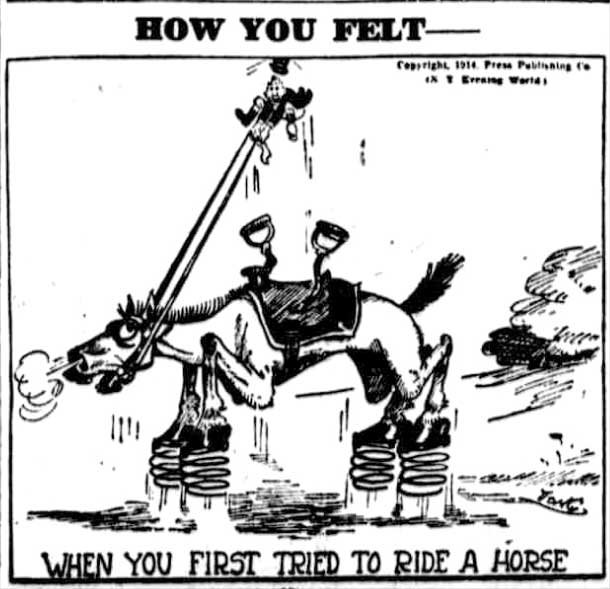
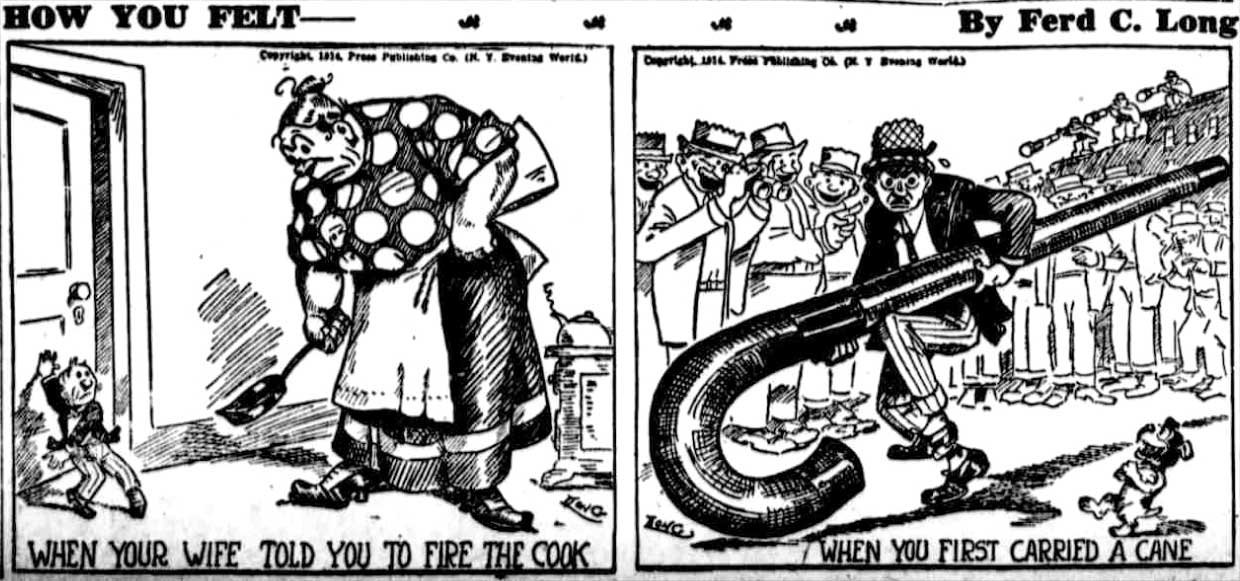
I don’t know who this Ferd. C Long was, nor how long the engaging “How You Felt” strip ran. But it captured me instantly as a great example of early cartoon experiments that explored some of the unique qualities of the new medium. The great team at Barnacle Press, who nobly harvest every scrap of early comic strips they can, gathered these. Like many strips of the day, it took up a simple single conceit – in this case using visual exaggeration to capture a feeling. The result is a fantastic surrealism that communicates in a singular way a range of small and common responses to the world.











 Panels & Prose