Great Moments: The Phantom’s Origin (1936)

Hot on the heels of his first comic strip success, Mandrake the Magician, author, Lee Falk crafted a second and arguably more important bridge between dime novel and pulp heroism and the “super” heroes soon to dominate the American pop culture scene. Falk recalled later he had originally conceived of The Phantom having an alter ego as a millionaire playboy, echoing pulp heroes The Shadow and The Spider. Within the first months of the strip’s premiere in 1936, however, he changed course. “I became intrigued with the whole mythical notion about 400 years and 20 generations of Phantoms in the jungle. The more I got into that, I keep adding to the background.

Here The Phantom relays in thumbnail form to his perennial love interest Diana Palmer, the origin of The Phantom legend. It is a 400 year-old revenge fantasy, in which generations of Phantoms avenge the treachery of Singh pirates. The first-born son of each generation of Phantom must dedicate himself to fighting “all forms of piracy.”

Among jungle natives, of course, The Phantom is known as “The Ghost Who Walks.” Like much of pulp adventure fiction of the day, The Phantom was colonialist fantasy writ large, complete with ignorant or naive native cultures championed by this white (in purple wrapping) savior.

While The Phantom had no super powers, he was the first hero to don the skintight costume that would soon become standard for comic book super heroes with the arrival of Superman several year’s later. The strip was drawn by Ray Moore, following an Alex Raymond style that King Features encouraged across its adventure line of strips.

Like the spicy pulps of the era, The Phantom always had an erotic and sadomasochistic undercurrent that provided more titillation for young and old male readers than usual. Falk and Moore seemed devoted to depicting women in various states of undress and with gossamer thin gowns that were as skintight and revealing as The Phantom’s own outfit.

In fact the series begins with Diana Palmer in short shorts, low-slung tank top and boxing gloves pummeling her male opponent. This set the subtext for the series. For a 400-year-old Ghost, The Phantom finds himself bound and tortured more than you would think possible. And the female love interests and villains alternate between being damsels in need of saving or dominatrixes asking for a slap-down. The second major adventure cycle in the series is about a band of female pirates, the Sky Band, which quickly becomes a figurative S&M orgy of women alternately endangering The Phantom and falling in love with him.

The series has been enduring, however, thriving in comic strip form for these many decades and in comic books as well. Falk continued to author the strip until his death in 1999.

Great Moments: Ring Lardner’s “You Know Me, Al” Launches

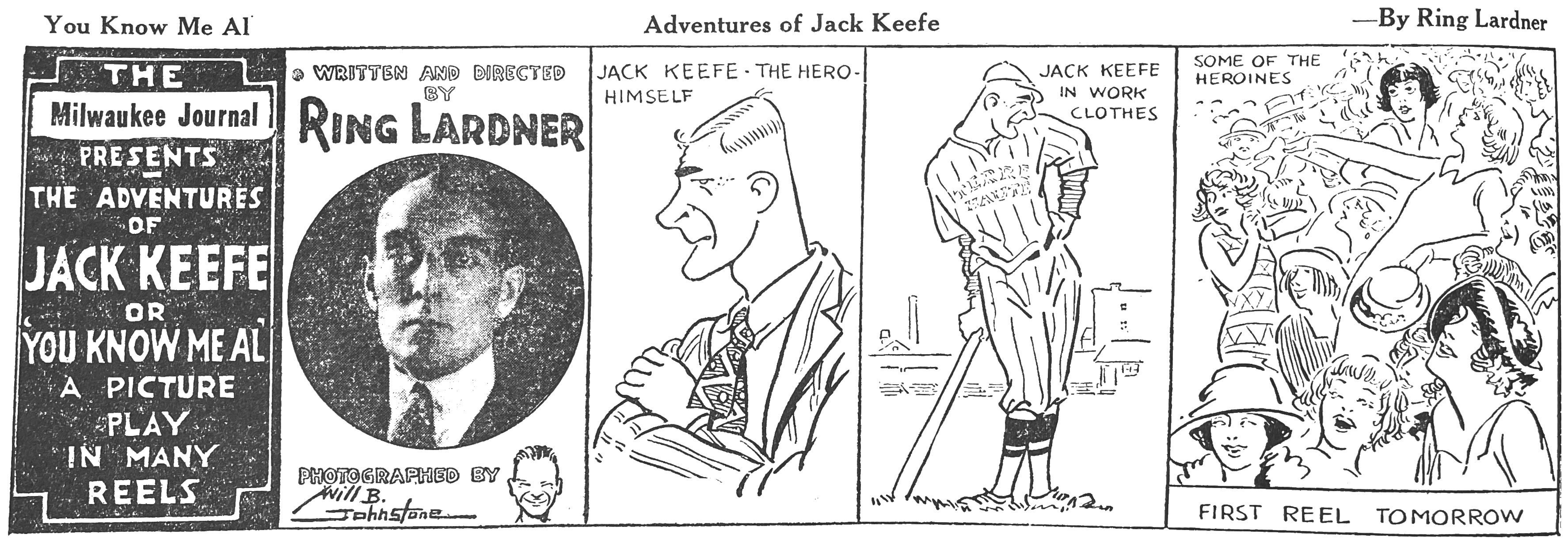
American humorist, sportswriter, magazine columnist Ring Lardner had already been writing the “You Know Me, Al” series of humor pieces for The Saturday Evening Post since 1914 when a comic strip version launched in 1922. The format was epistolary, ongoing letters that bush league pitcher Jack Keefe wrote to his friend Al back in his old small town. Keefe is a rube in the city, often clueless in the face of urban pretensions and jaded attitudes. 

Keefe is dropped into the real life Chicago White Sox organization, called up from the minors as the team was struggling back from the infamous Black Sox scandal of the previous decade. Real life owner Charles Comiskey is off stage but forever keeping Keefe in his place. Larder makes reference to a host of actual sports figures and rivalries throughout the strip, but baseball play itself is only occasionally depicted.

The basic action of the strips are Keefer’s everyday interactions with the women who often pursue him, sportswriters who cover him, and team owner Comiskey. The humor of the strip came from Jack’s mildly inflated sense of his own talent and attractiveness.
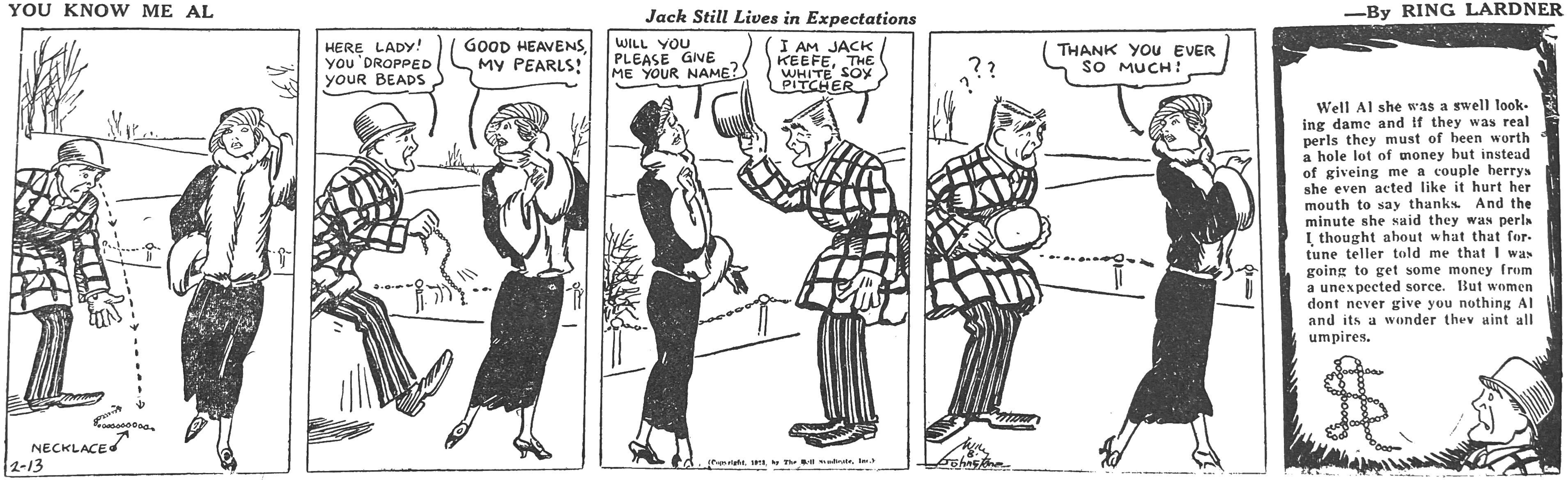
The country vs. city meme had been central to American comic strips since its earliest years. The transformation of American society and culture from an agrarian, rural sensibility to an urban, industrial one was still echoing throughout mass media and literature in the American 20s. More so than most cartoonists, who tended to lionize the plain spoken, morally upright mythology of small town America, Lardner poked fun at Keefer’s naïveté both to the world and to himself. He is forever fooled or easily outsmarted by city ladies, competing suitors and Comiskey. Keefe goes into the main office pumped up to demand a $500 advance, quickly retreats to $50 and then leaves satisfied when told to come back for his “advance” on pay day. 

The strip continuities were outlined by Lardner, who was overworked at the time with magazine articles, columns, and even dramas bearing his name. The artwork was done by popular sports illustrator Dick Dorgan, who lived near Lardner in the New York suburbs and had been illustrating Lardner books and columns for years. Dorgan was also brother to more famous cartoonist TAD. After a few years, Lardner stopped writing for the strip, though it retained his name for a while.

I find Dorgan’s drawing style attractive in its looseness. The lines seem ready to fall apart at any moment, and yet they communicate character more through posture than expression. He keeps most frames visually interesting by working with angles, body leanings, competing head hangs and positions. In some of the best strips it feels as if there is a storyline apparent just in body attitudes. Perhaps this is the attribute of a good sports illustrator, always sensitive to the physicality of character, momentum, stance.
Great Moments: Rube Goldberg’s Foolish Questions, 1909

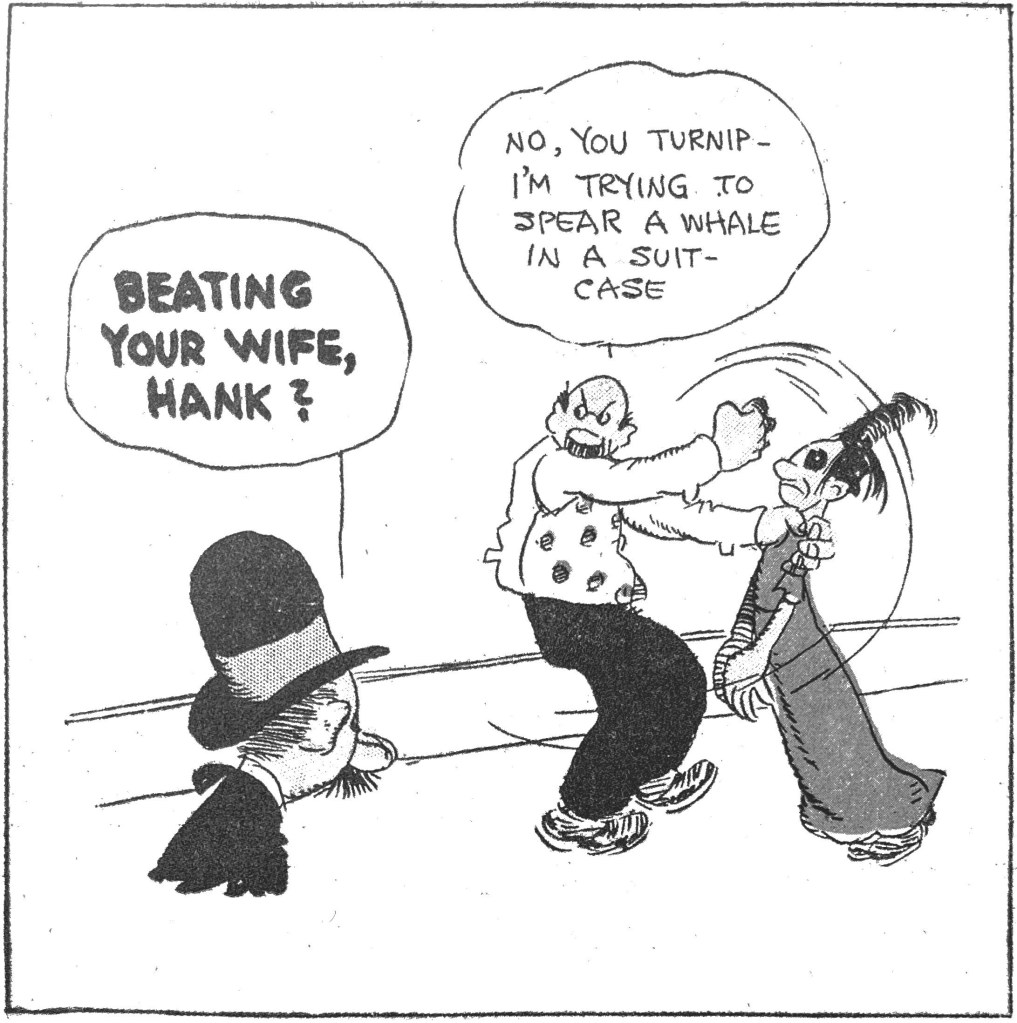
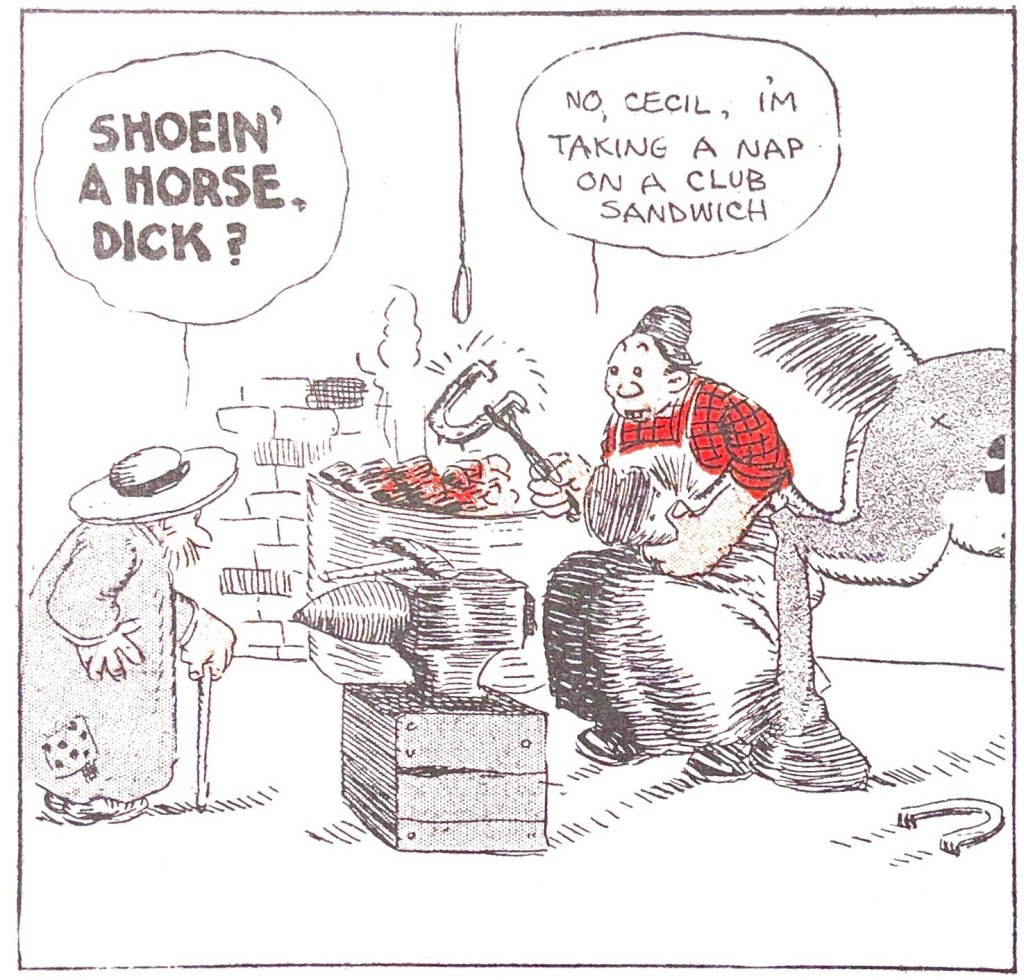
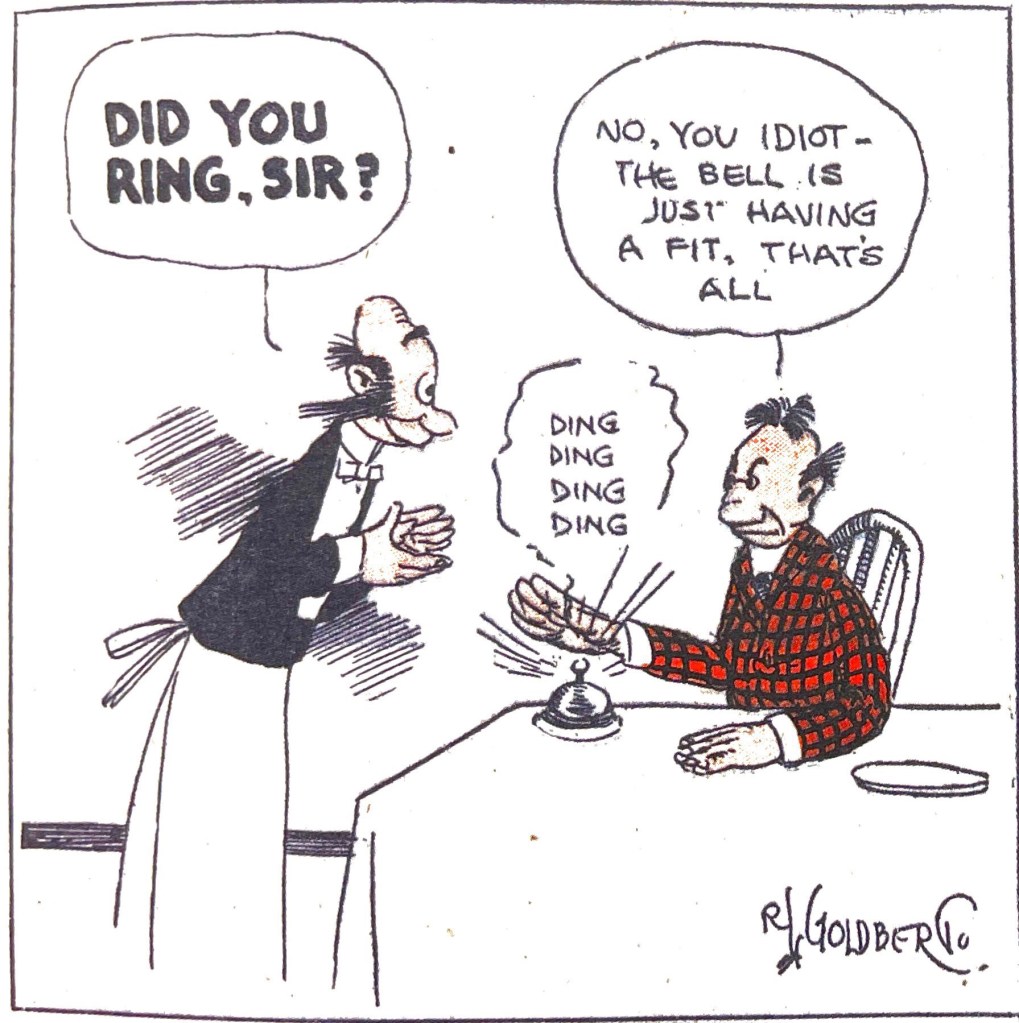
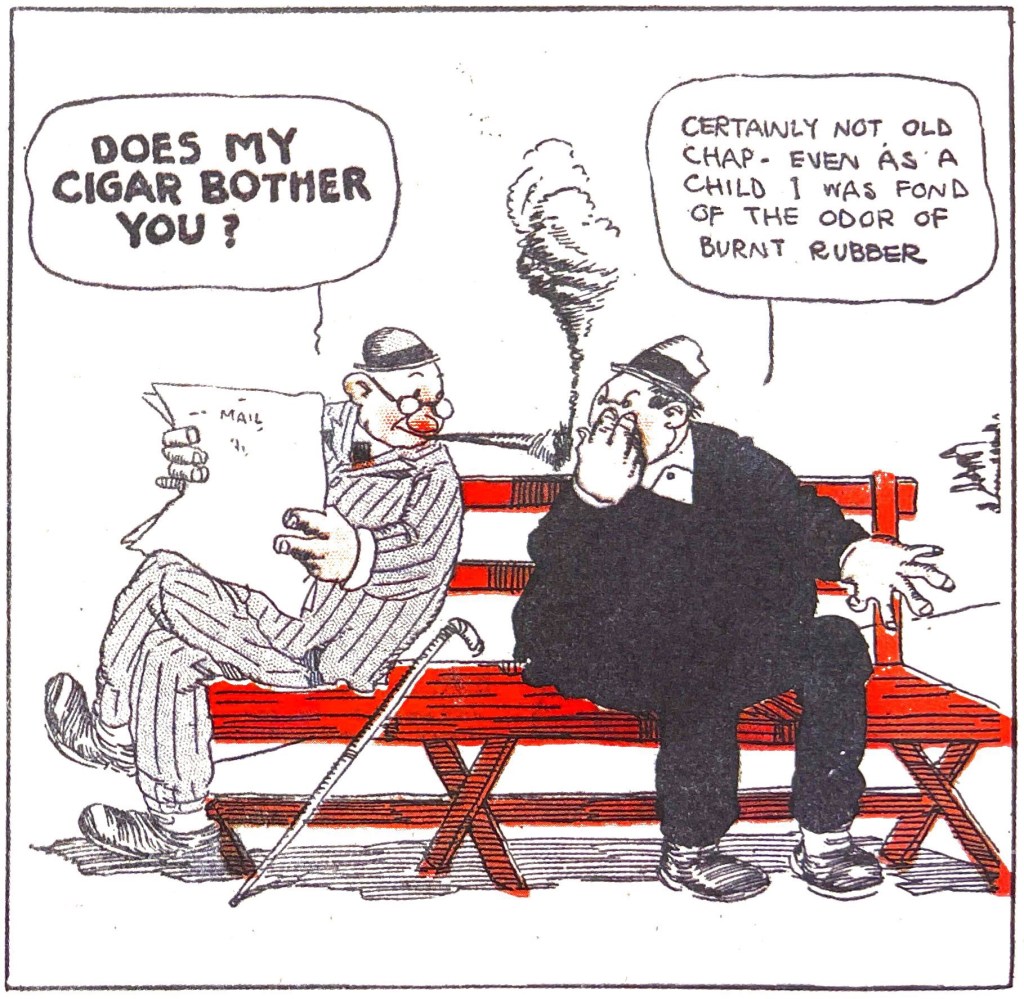
In 1908, Rube Goldberg continued to look for a comic strip series that captured popular imagination. His first Foolish Questions panel that year caught on almost immediately and it became a series in the Sunday Chicago Tribune. Like many strips in the first 20 years of the form’s history, Foolish Questions hinged on a simple gag repeated in every strip. In this case, the surreal silliness of the come-back to the “foolish question” is what gives the strip its energy. But most striking here is how Goldberg’s cranky, abrasive tone could also move into some gritty, dark places. Witness making light of wife beating. This is chilling, even in historical context, to see domestic violence treated this casually in a family newspaper, let alone seen as a site for screwball comedy.

Foolish Question also exercises a common comic strip trope – grumpy rejoinders to little human quirks. From its earliest years, the comic strip form took a light satirical perspective on everyday human foibles and excesses, the tics and social types that rang familiar with readers. Making fun of braggarts, poseurs, women’s fashion, the latest catchphrases or the middle class vogue of treating house pets like children (imagine!) were among the trends early comics artists poked.

In various forms Goldberg continued to answer Foolish Questions as late as 1939. These are from Sunday Press’ excellent compilation.

Frozen Motion: Opper’s Machine Poetry

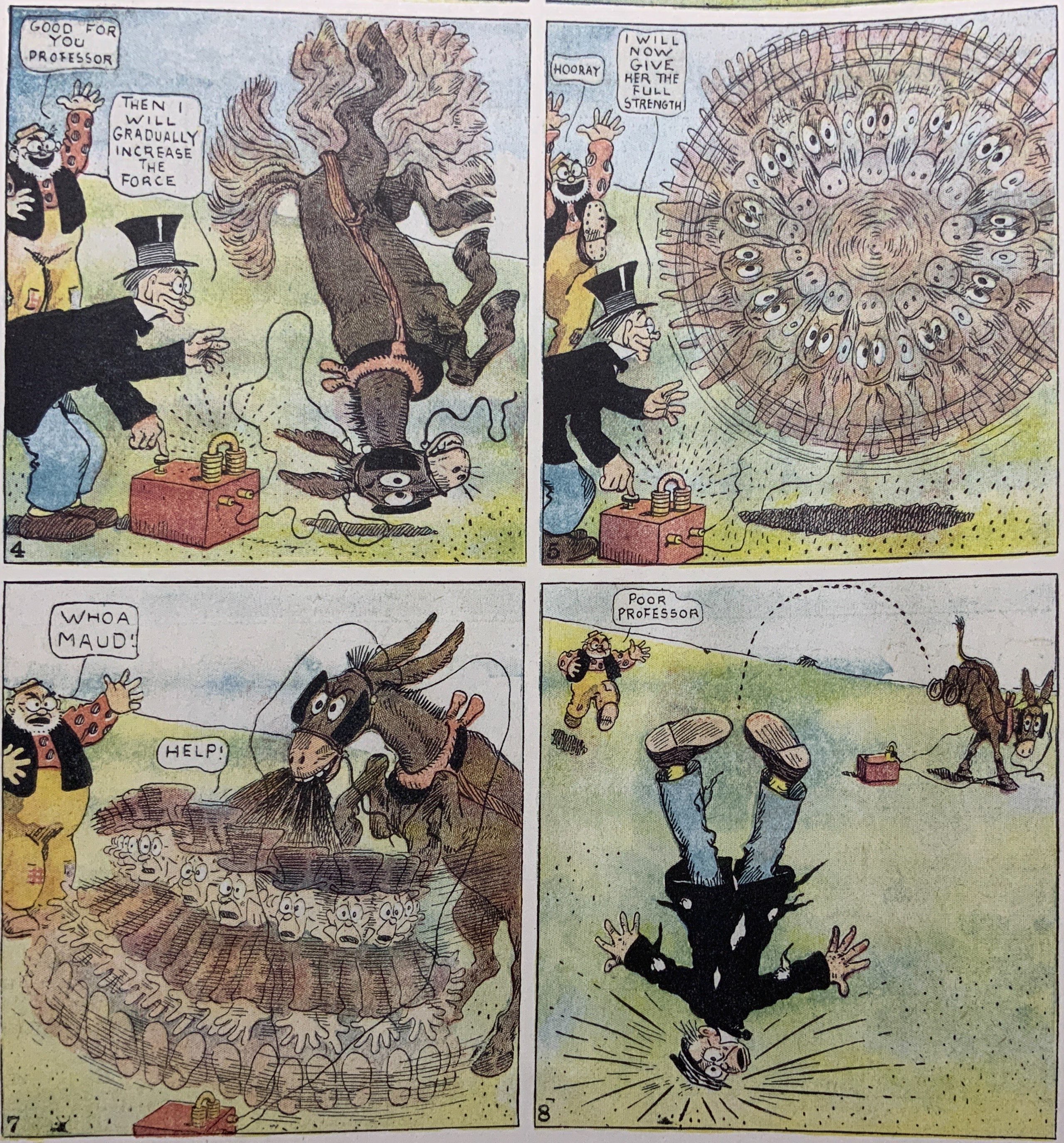
America was in motion, and the first decades of the comic strip were shaped by that culture and in turn interpreted it. Frederick Burr Opper was the chief poet of motion. When his signature characters Happy Hooligan and Maude the Mule did their blurred spin (with multiple iterations of a pie-eyed, panicked visage) he gave us an enduring visual trope. This was frantic motion expressed in a contained, comic, vital way.

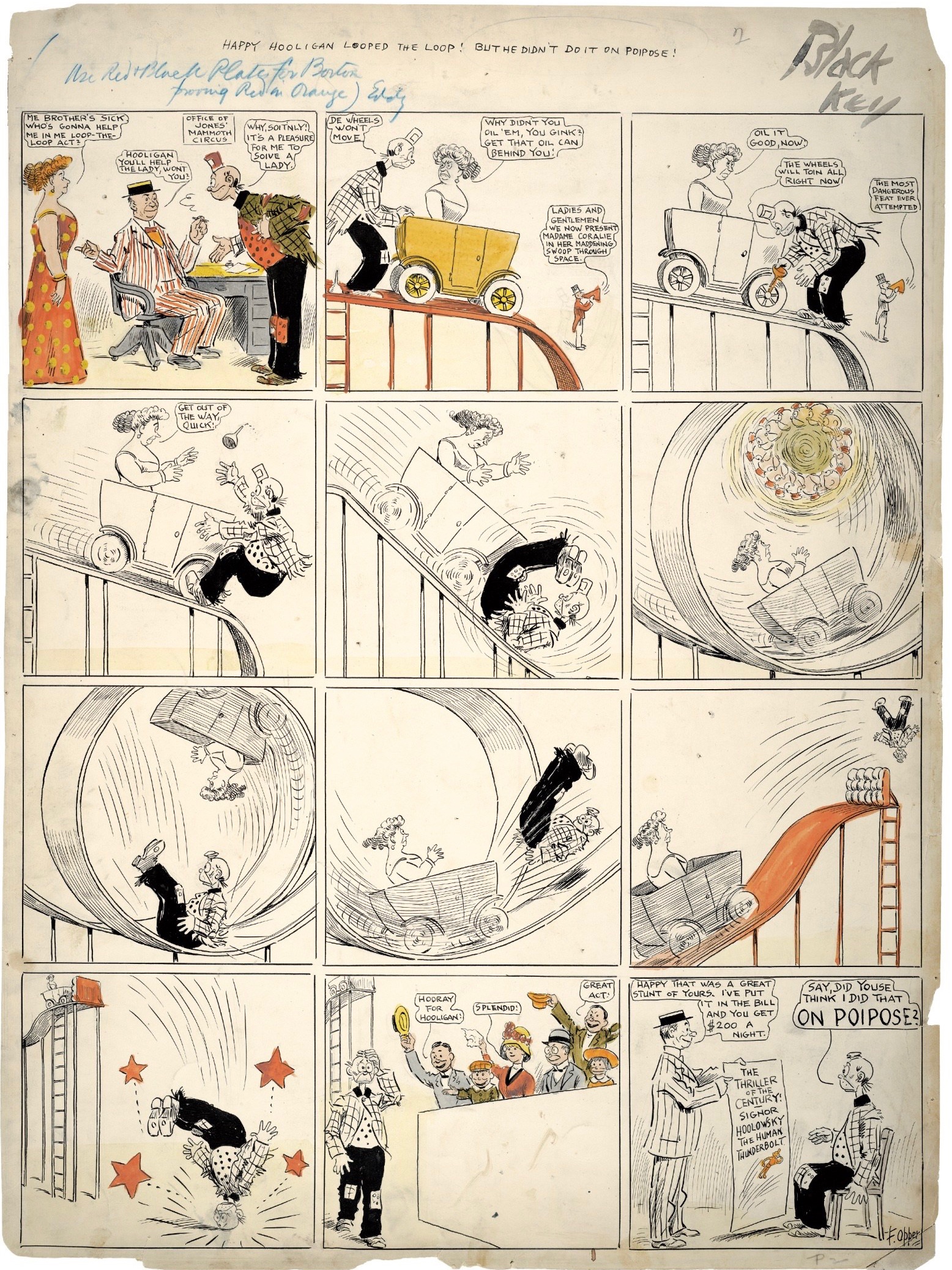
“Happy Hooligan Looped the Loop: But He Didn’t Do It On Poipose!” (July 25, 1909) has been reprinted at least twice and for good reason. It best exemplifies Opper’s talent for containing and ordering chaotic motion with lyric, mechanical beauty. As always, Hap’s misfortune begins with a good deed, assisting a circus performer’s “Hoop Act.” As she descends the track in her roller coaster car, he is toppled and set into motion.

But Opper is all about cause and effect, not chaos. Most of his earlier Happy Hooligan slapstick starts with a small mishap, a dropped hat, a poorly timed turn, that starts a chain reaction of motion that Opper shapes into a series of comic frozen moments. Notice how he breaks down the Loop sequence into a series of causes and effects. There is the bump of the cart, the signature spin from the momentum, the thump to the bottom of the loop as gravity triumphs, the final launch into space. What otherwise might seem like explosive, chaotic motion is dissected into its parts, turned into a kind of ballet, visual poetry, but one with understandable structure.

Along with Outcault in Yellow Kid, Dirks in Katzenjammer Kids and McCay in Little Nemo, Opper visualized Some of the inchoate forces of modernizing America – motion, energy, mechanical action – in ways that expressed and contained anxiety around them. Opper’s focus on the physical mechanics of motion, of showing it as a series of causes and effects, is just one way of expressing the idea of motion. In another post, I try to explore this point with a sample of early comic artists and how they interpreted motion.

Bending the City – McCay’s Urban Dreams

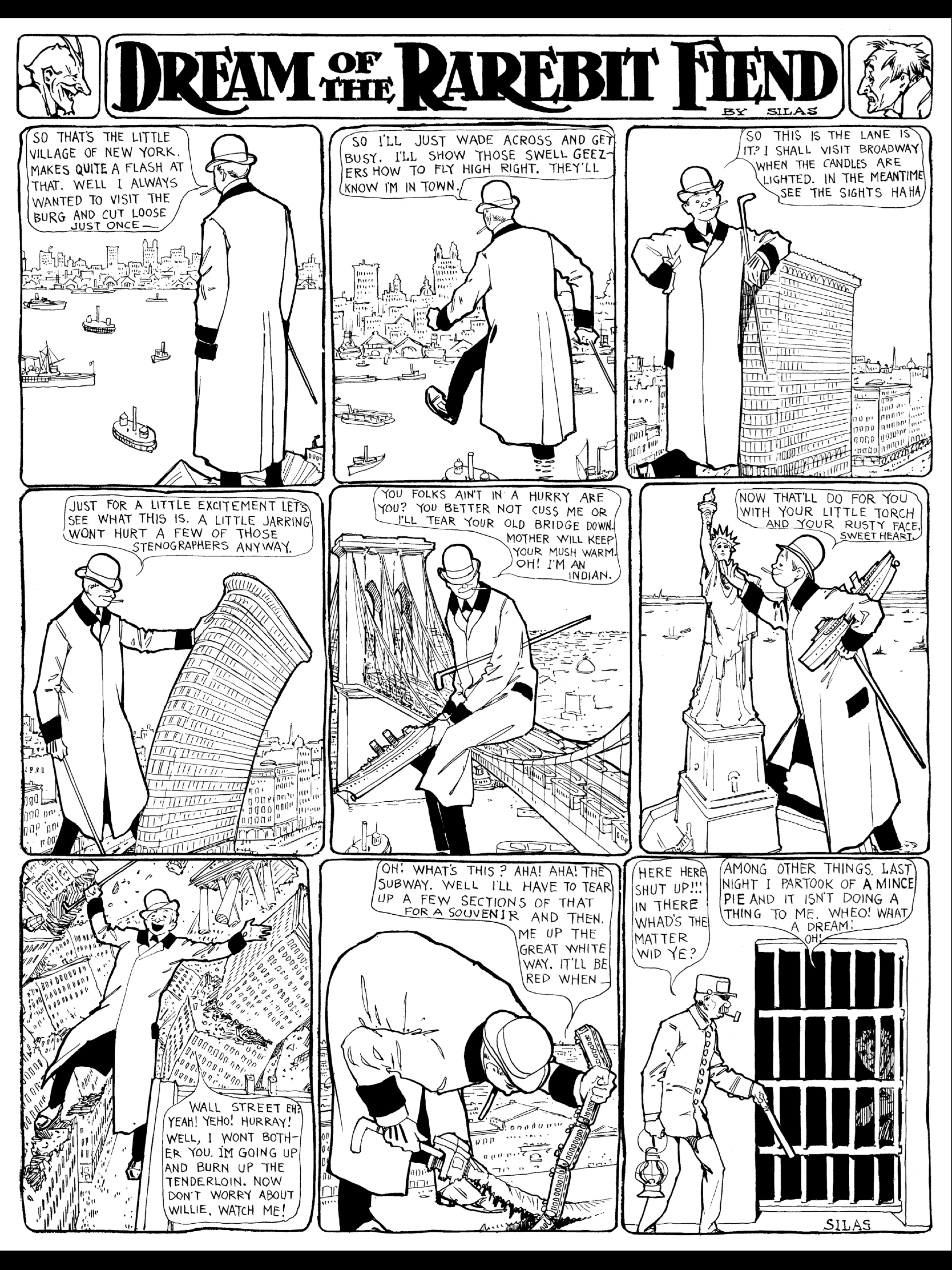
The teeming, always moving, mechanized, bureaucratic, dwarfing city was the the most striking new reality pushing on American in just those very years the comic pages emerged in the late 19th and early 20th Century. Many of the leading artists of the day like Outcault, Opper and McCay were themselves midwestern rural transplants for whom the big city and its humbling scale must have been disorienting environments. Outcault was known to walk the streets of the city picking up inspiration and ambience for his Hogan’s Alley/Yellow Kid vision of tenement life. McCay lavished the city skyline with his obsessively detailed line work in both Dream of the Rarebit Fiend and Little Nemo in Slumberland.

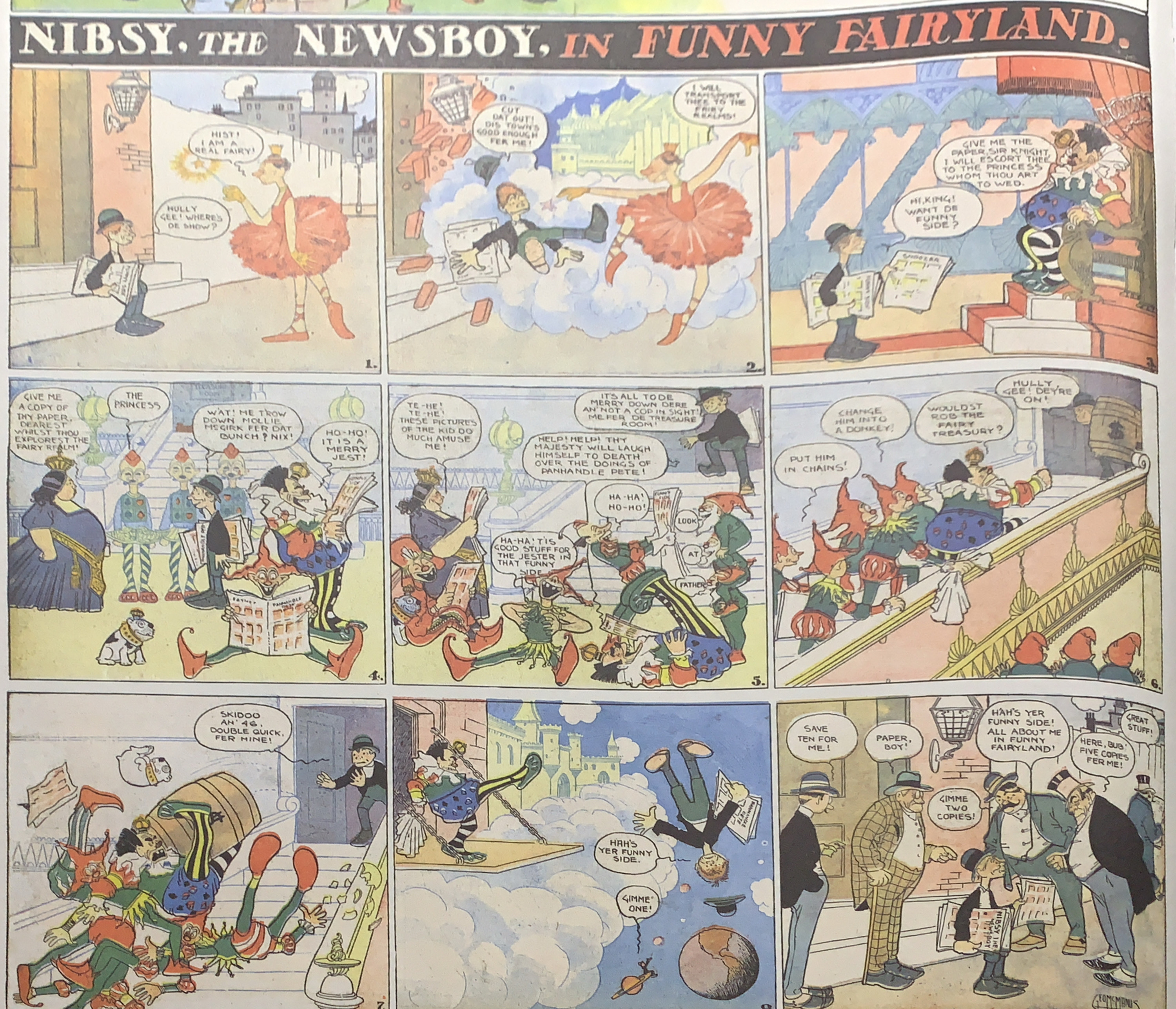
That is why I am fascinated by the ways in which these artists visually depicted this new reality in the first decades of the newspaper comics. In the two examples here, Windsor McCay and Jimmy Swinnerton use dream sequences to reimagine the landscape. In the first from the Rarebit Fiend series, McCay has his character master the scale of the modern city by becoming a giant himself and reducing the skyline to so many toys, some of which even can be bent. Swinnerton’s is the newcomer’s surreal nightmare of all the ways in which the city masters him.

The daunting urban world becomes malleable, subject to human reimagination in the comic pages, offering readers alternative ways of thinking about the disorienting spaces they occupy.

McDougall’s City Vision

The city was among the pressing new realities facing Americans at the turn of the 20th Century, and the comics medium was uniquely equipped to express sensations around a novel environment. Walt McDougall (1858-1938) was among the pioneers of American cartooning who took special interest in this historic shift. His “Familiar Sights of a Great City – No. 1 The Cop Is Coming” (New York Journal, Sunday, Jan. 9, 1898) is among my favorite one-offs of the era.

Much like R.F Outcault’s visions of urban chaotic action in The Yellow Kid that I commented about earlier, McDougall signifies city life with images of antic physical energy but a highly individuate view of that crowd. Visually, this frantic flight of street vendors (presumably unlicensed) from a strolling cop is a delicious explosion. The mere presence of a virtually inert cop in the far background produces this lurch into the foreground of scurrying limbs and panicked visages.

McDougall’s cartoon stylings are so much more sophisticated than many of his peers here. The cantilevered limbs of all his fleeing vendors are all frozen perfectly at the apogee of their panic. He has a sharp sense of each character’s weight and stance, momentum and facial expression. All of these qualities foreshadow in my mind post-WWII master Jack Davis in particular. There is some wonderful detail in here as well, like the shadows cast by wagon wheels and fruit. The one newspaper reader in the right foreground is an oblivious counterpoint to the onrush, which only enhances the sense of movement and fear in the rest of the crowd.

McDougall’s reading of the city here is much like Outcault’s in that he never lets the crowd be a “crowd.” He personalizes the cityscape. It is a collection of highly distinct individuals rather than the crowd as faceless horde. The emerging medium of film, however, would soon reinterpret the crowd more as a mass.

That said, McDougall exercises ethnic stereotyping as broadly as his comrades often did in newspaper comics of the day. I presume that the handlebar mustaches, beards, fruit, figs and statuettes signify an early Italian-American neighborhood. The great migration of Italians to the US spanned 1880 to 1924 and settled principally in Manhattan, where they often occupied street vendor and dayworker jobs.

I like this image because it is a great example of the uniqueness of comic art in America. Of course many formal critics wrote extensively about the city, pro and con. Their skyscraping buildings, mass transport and increasingly organized city governments were considered icons of progress, the triumph of industry, the genius of science. At the same time angst over crime, disease, xenophobic responses to emigrees, dislocation from nature all proliferated. But illustration, especially comics that took the crowd and the skyscraper as its subject, could express and interpret the sensations of urban life. The cultural role of modern visual media like comics and film often were to help make sense of these feelings with nuance that eludes written prose.

Terry and the Psychologists

We revere Milt Caniff’s Terry and the Pirates quite rightfully as the apex of the adventure strips. His evocative use of frame, staging, rhythms, ink and line (or blobs), setting, landscape, story arc – all set new and high standards for comic art in the 1930s and 40s that define the form. But as I read through the strip from its beginning I am struck by the pop psychological dimension of the strip. So much time is spent on characters musing on one another’s motives, gaming one another’s psychology, and especially mapping the contours of ideal manhood and the war of the sexes.

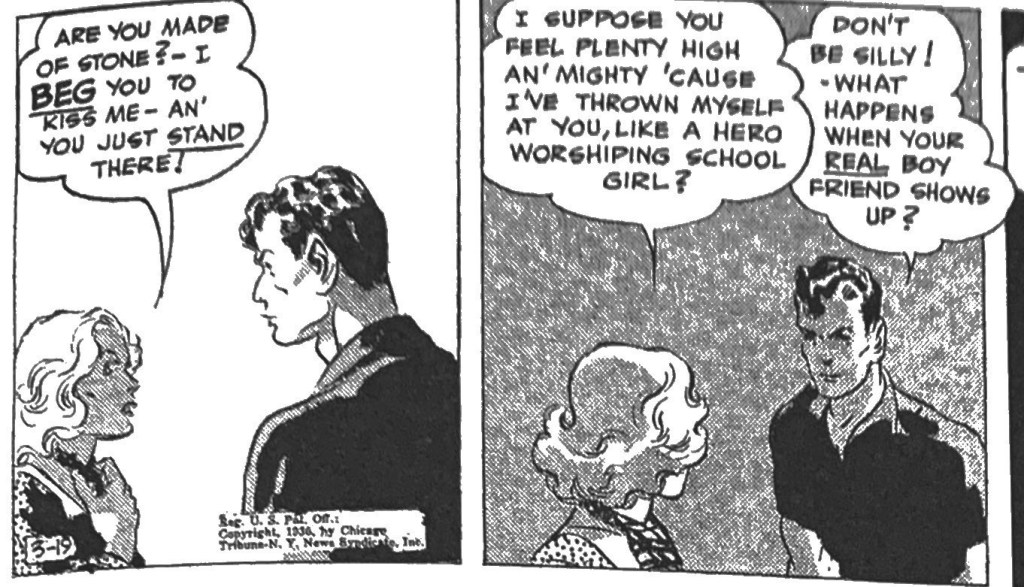
Terry the amateur psychologist – decoding adult relationships and the male ego in the first adventure with eternal Pat Ryan love interest Normandie Drake.

The basic psychological dynamic of Terry and the Pirates is father and son. In most places we are taking the perspective of teen Terry Lee who follows and tries to decipher ersatz dad vagabond Pat Ryan as his model male. In the very first story arch of the daily strip society gal Normandie Drake draws Pat’s eye. Here we get the first of many male/female cat and mouse games between Pat and a love interest. At one point Pat leaves Normandie because he doesn’t feel he could fit into her high society. She tries to retrieve him by falsely charging Pat with forgery. And the game is on.

Terry Lee is in the role of son actively trying to decipher the male role that stand-in father Pat is modeling. Connie is his sounding board, which lets Terry voice his readings of Pat without breaking the fourth wall and talking directly to us. And for all of the terrible stereotyping Connie himself endures at Caniff’s hand, he too engages in the pop psychologizing of men and women that quickly becomes one of the sub-themes of the strip.

For his part, Pat is less often an interpreter of human emotional signals than the classic American stoic, the isolato who spends more time silently staring out windows and having his actions and unspoken gestures read by others.

And Caniff’s world of men and women is one of deception, scheming and misdirection. As Terry understands above, a man or woman’s words or actions often run opposite their real meaning. Pat and romantic interests like Normandie, Burma and the Dragon Lady snub and reject one another regularly as ploys to intrigue and attract the other. Per below, Burma rages at Pat labeling him a coward to successfully challenge their stoic to declare his passion for her.

In a rare moment of vocalized reflection, Pat ponders the motives of Burma and his own worthiness as a suitor.

Pat often takes the paternal role to Terry, filling in the blanks on this great mystery that seems to be woman. Heart-to-hearts abound in this strip. Above Caniff invokes the familiar father/son exchange over “Dad” shaving. Caniff portrays the scheming and counter-scheming between men and women with the pointed curiosity of a boy’s view. The interpersonal plots in TATP take up at least as much panel time as the unfolding adventures as the two conceits of the strip run in parallel. And character introspection plays a large role in the day to day content of the strip. Typically the pulp adventure genre is about action, heroic characters who are fully externalized and use violence to express usually male emotion. In TATP, almost every character is capable of being at turns self-deprecating, introspective, analytical.

For and adventure genre usually focused on externalization, Terry and the Pirates uses character introspection to a remarkable degree. Here, Burma reflects own her own motives.
Pat on the glories of women who take “a man’s point of view.”
Connie too is one of Terry and the Pirates’ many armchair psychologists, following Caniff’s rules of interpersonal relations. Outward behaviors often run opposite real intentions.

In putting Caniff’s masterpiece in its context of the 30s and 40s, we would do well to understand this dimension to the strip’s appeal. As pure adventure and graphic storytelling, the strip is unmatched. But Caniff clearly is also exploring with his readers human behavior, psychology, the layers of motive and delusion in human interaction. The basic insight of modern psychology, that humans are not always fully aware of their own motives and that actions are not always clear reflections of thought and feeling, are remarkably featured in this strip. It may be Caniff’s unique blend of external physical action with internal introspection that made the strip so rich and appealing during its very popular run.