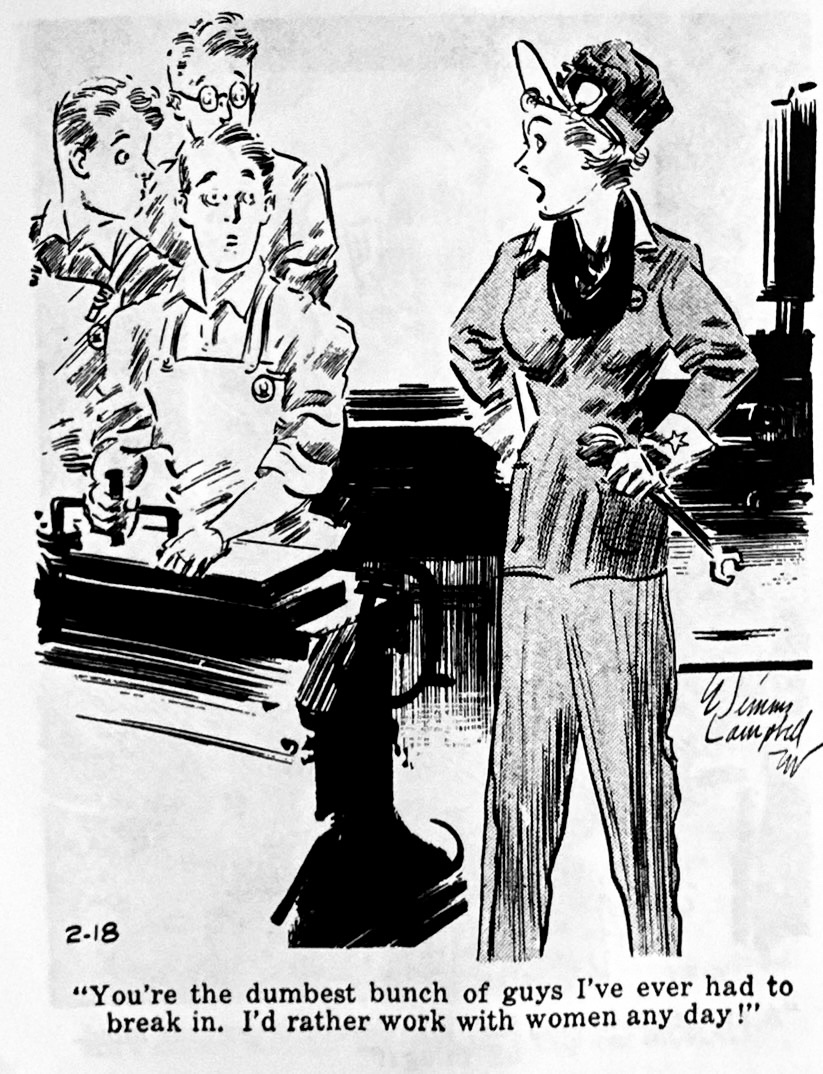
The role of WWII in the history of women, equality and feminism in America is widely known and usually mythologized in Rosie the Riveter tales. With many men abroad, women filled roles in industry and management that typically had been denied them. According to the thumbnail version, newly empowered women suffered a kind of cultural whiplash with the post-war return of men to the States. Industry, government and pop culture generally actively discouraged women from enjoying their newfound role outside of the home in range of unseemly ways.
Bungleton Green was the longest running comic strip in the history of American Black newspapers, and an extended reprint of its greatest, wildest period during WWII is long overdue. But New York Review Comics has come through with this well-designed volume embracing artist Jay Jackson’s 1943-1944 sequence Bungleton Green and the Mystic Commandos. The strip began in 1920 with Leslie Rogers’ rendering of his eponymous character as a comic shirker, gambler and goof in the model of Moon Mullins or Barney Google. When the Chicago Defender’s prolific cartoonist Jay Jackson took the reins in the early 1930s, he made Bungleton into more of an adventurer, riding a genre that dominated the 1930s with Dick Tracy, Terry and the Pirates, Flash Gordon and Little Orphan Annie. Meanwhile, Jackson was also freelancing artwork for the science-fiction pulps and honing his skills as a “good girl” artists, skills that would soon inform a major turn in his weekly strip work.
One of the biggest blind spots in the history of American comic strips is the community newspapers that spoke to and out of the ethnic minority experience for decades. About Comics is engaged in one of the most important reprint projects in reprinting some of these overlooked comic strips. Throughout the 20th Century, Black, Italian, Eastern European, Jewish and other native and emigre minority communities generated newspaper networks that applied their own lenses to local, national and international affairs. They produced unique takes on modern American culture rarely seen from the dominant comics syndicates. Few of the comics artists and serial strips have been reprinted in any depth…until now. Their inclusion in the American comics canon is long overdue.
Newspapers by and for predominantly Black audiences were a thriving part of the American press throughout much of the 20th Century in most major cities, even if they have been woefully invisible to most media history. More obscure have been the comic strips and their artists that appeared in many of these major newspapers like the Chicago Defender, Atlanta World and Pittsburgh Courier. The dearth of surviving hard copies and poor microfiche renderings have complicated attempts to retrieve that history to publish much-overdue reprints of some of this work. The 1993 Dark Laughter: The Satiric Art of Oliver W. Harrington is among the only extended reprints of a single Black artist I have found. Recently, however, a few industrious comics historians started filling in this blind spot. Ken Quattro’s indispensible Invisible Men: The Trailblazing Black Artists of Comic Books was among my favorites of last year (reviewed here). Also full of great reprinted work is Dan Nadel’s It’s Life As I See It: Black Cartoonists in Chicago, 1940-1980. And Rebecca Wanzo’s more scholarly The Content of Our Caricature: African American Comic Art and Political Belonging has a unique take on how many Black cartoonists navigated the shoals of stereotype.
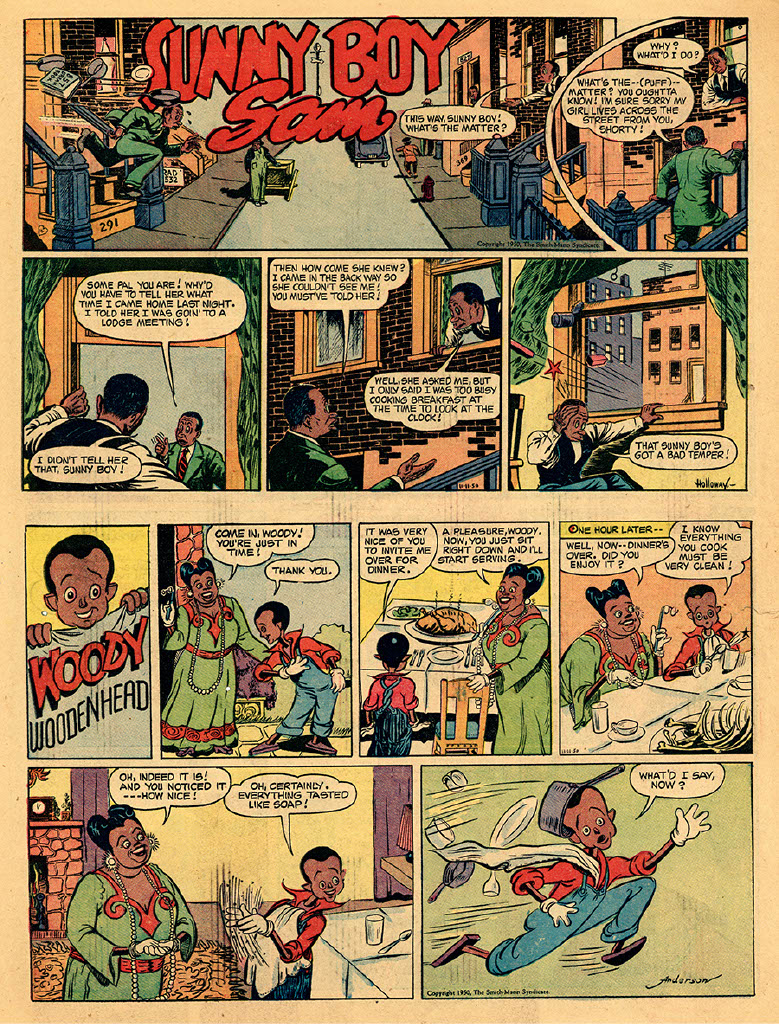
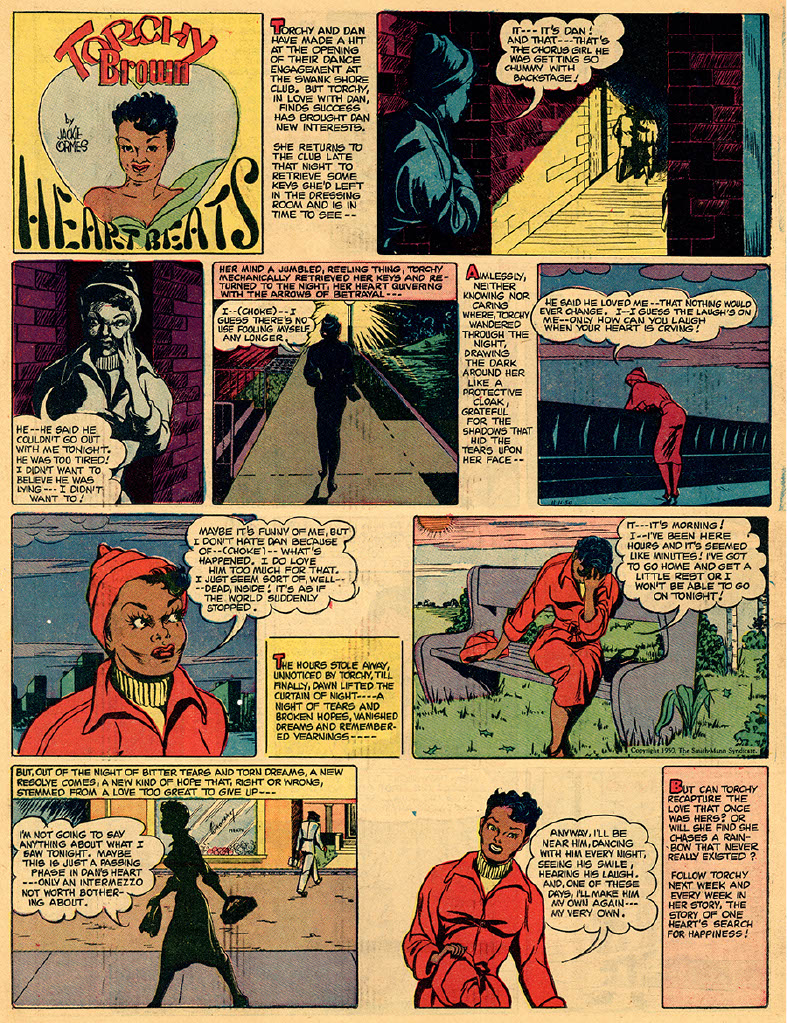
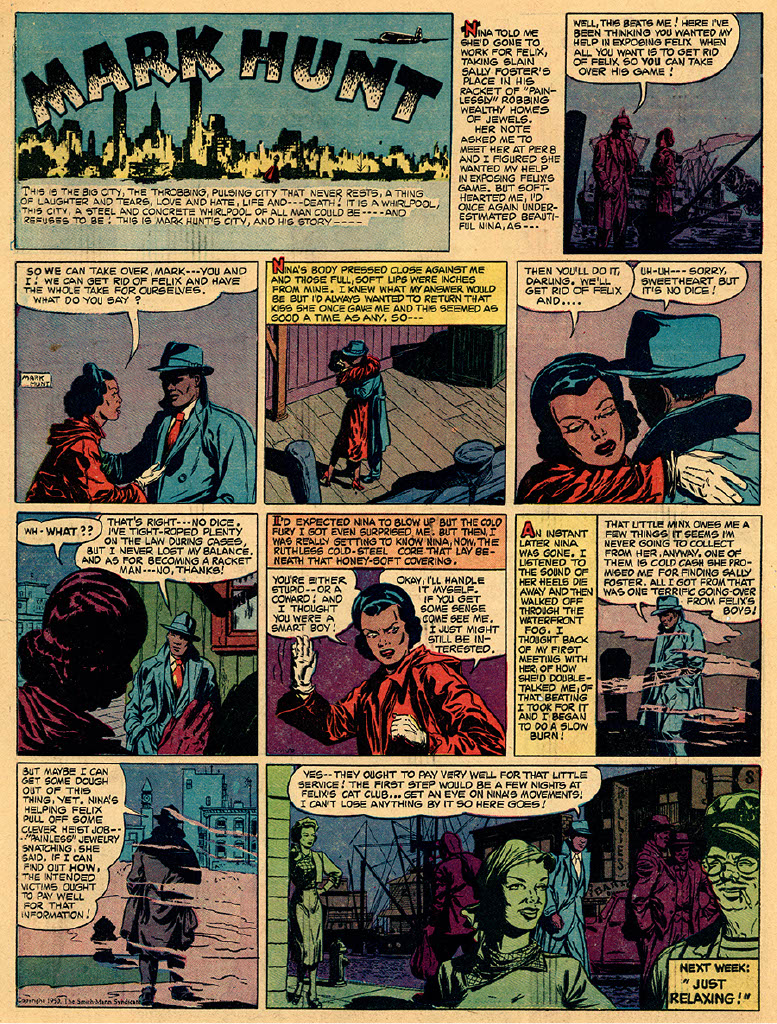
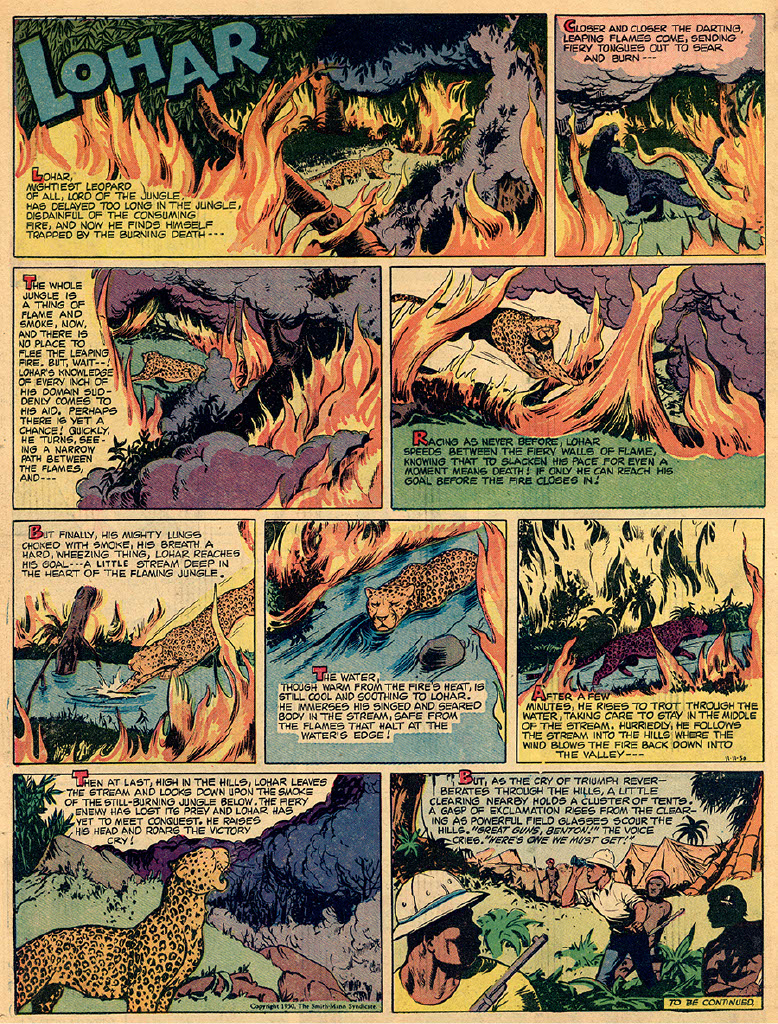
Earlier this year a small treasure fell into my lap courtesy of Library of American Comics head Dean Mullaney. During an email exchange about the possibility of reprinting Black cartoonists he sent me this pristine rendering of a rare surviving 8-page color comics section syndicated by the Smith-Mann company and appearing in the Pittsburgh Courier for Nov. 11, 1950. Smith-Mann distributed a full-color section to the Courier for only a few years, from August 1950 to Nov. 1955, according to Allen Holtz, who has done some legwork on Smith-Mann at his essential Stripper’s Guide. The sone of one of the syndicate’s founders has posted his own history and extensive samples of the Smith-Mann comics section at The Museum of Uncut Funk.
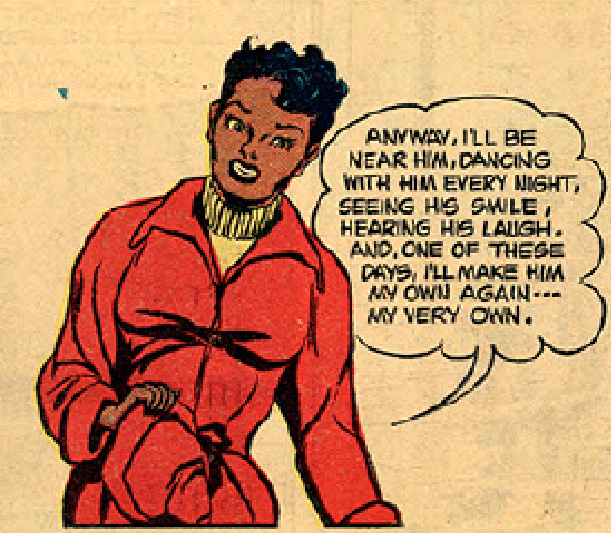
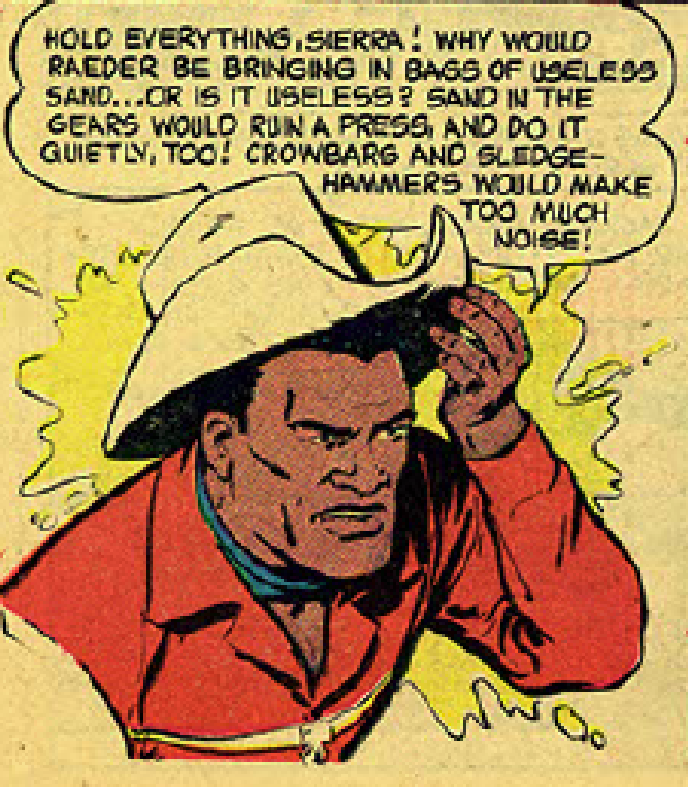
This Nov. 11 1950 edition Dean sent me includes espionage adventure Guy Fortune (by Edd Ashe), western The Chisholm Kid (by Carl Pfeufer), gag strips Sunny Boy Sam (by Wilbert Holloway) and Woody Woodenhead (by Edo Anderson), sports adventure Don Powers (by Sam Milai), romance strip Torchy Brown Heartbeats (by Jackie Ormes), adventure Mark Hunt (also by Ashe), sci-fi adventure Neil Knight of the Air (credited only to “‘Carl and Mac”), and animal adventure Lohar (by Bill Brady). The full 8-page section is below. In the coming weeks I will tease out a few of these strips and artists for more detail.








 Panels & Prose