

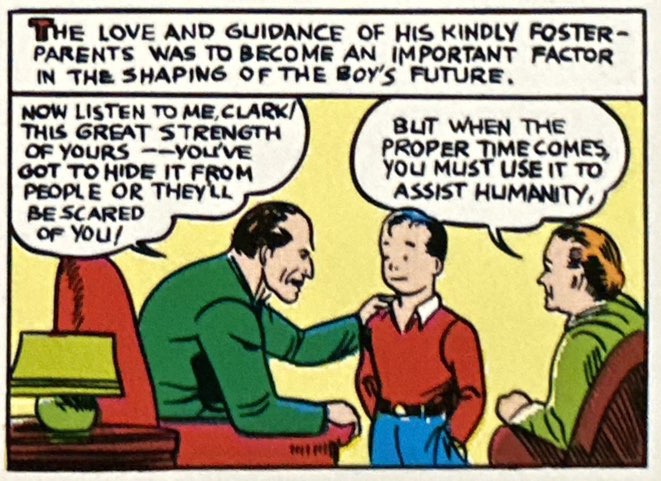
America needed a hero. That is how Superman creators Jerry Siegel and Joe Shuster remembered the late-1930s world in which their modern myth soared. Everyone is familiar with the Clark Kent origin story: orphaned by cosmic circumstance; rocketed to Earth; fostered by the Kents in the american breadbasket; super-powered by our planet’s physics; and taking on his secret identity as the milquetoast reporter. It is that rare mass mediated pop culture fiction that genuinely approaches folk mythology. It is an origin that compels retelling for every generation. Less attention has been paid to his political roots, however. Every comic strip in the adventure genre especially has an identifiable political slant, most obviously in its choices of wrongs to right and the villains to subdue. The famously conservative Chester Gould in Dick Tracy and populist Harold Gray in Little Orphan Annie were the most overt. Less obvious was the implicit imperialism of Milton Caniff’s Terry and the Pirates and most of the adventure pulps, which characterized non-Western cultures as at best quaintly primitive or at worst inherently brutal.
Continue reading Panels & Prose