Lance: Warren Tufts’ Beautiful…Strange America

Lance (1955-60) was Warren Tufts’ masterful exploration of mid-19th Century American expansion, and it remains among the most breathtaking uses of the newspaper comics medium in its history. Tufts, who had previously fictionalized the Gold Rush in his wonderful Casey Ruggles (1949-55), was a self-taught savant of realistic illustration and frontier history. Lance embodies some of the signature qualities of the American newspaper strip. Visually, and much like Winsor McCay, Cliff Sterrett, Frank King, Hal Foster and Alex Raymond before him, and scouted new ways of using the full-page Sunday format and especially color to evoke emotions and a sense of place. And like Chester Gould’s Dick Tracy, Percy Crosby’s Skippy and Harold Gray’s Little Orphan Annie, Tufts’ rendered a highly personal, idiosyncratic and often weird vision of America and humanity. Lance demonstrates how such individual and offbeat perspectives were still possible in the comic strip format, and could make this medium much different from other modern mass media that had become corporatized and collaborative.

Continue reading
“Papa Love Mama?”: The Quiet Desperation of Mr. and Mrs.

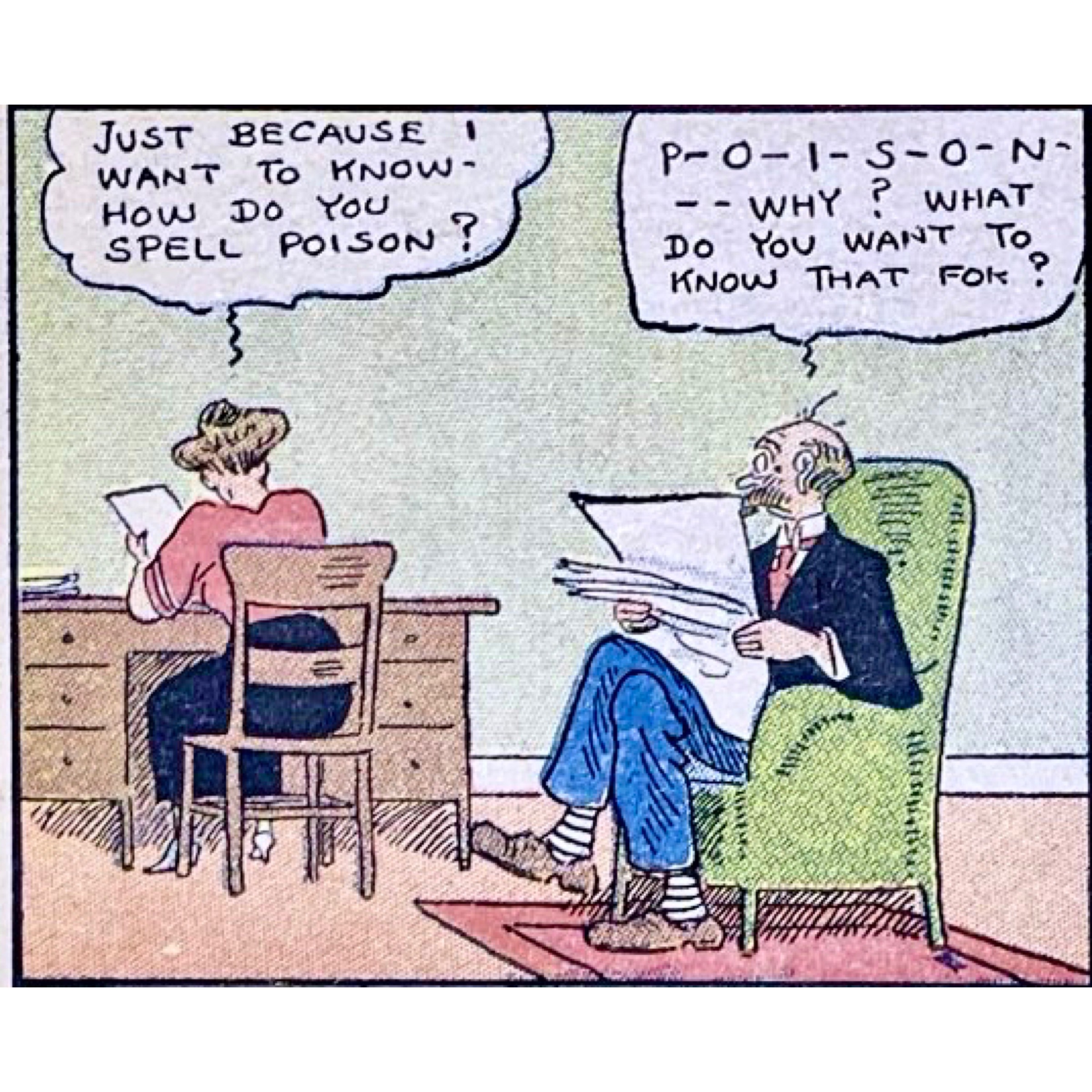
Clare Briggs’ contemplation of marital tension, Mr. and Mrs. (1919-1963) has always fascinated me both because of the harsh tenor of the strip itself and its source. When comics historians bother to remember Briggs (1874-1930) it is as quaint master of the nostalgic slice-of-life panels of small town childhood (The Days of Real Sport, When a Feller Needs a Friend, Aint’ It a Grand and Glorious Feeling). He is also credited with pioneering the format of the daily strip with recurring characters in A. Piker Clerk (1904) at Chicago’s American. But to contemporary newspaper readers in the 1910s and 1920s, he was among the best known, best-paid, and beloved of American cartoonists. His premature death in 1930 prompted both a single volume retrospective and a formidable seven-volume collection of his many strips.

Continue reading

The Working Class Heroes of Clare Briggs

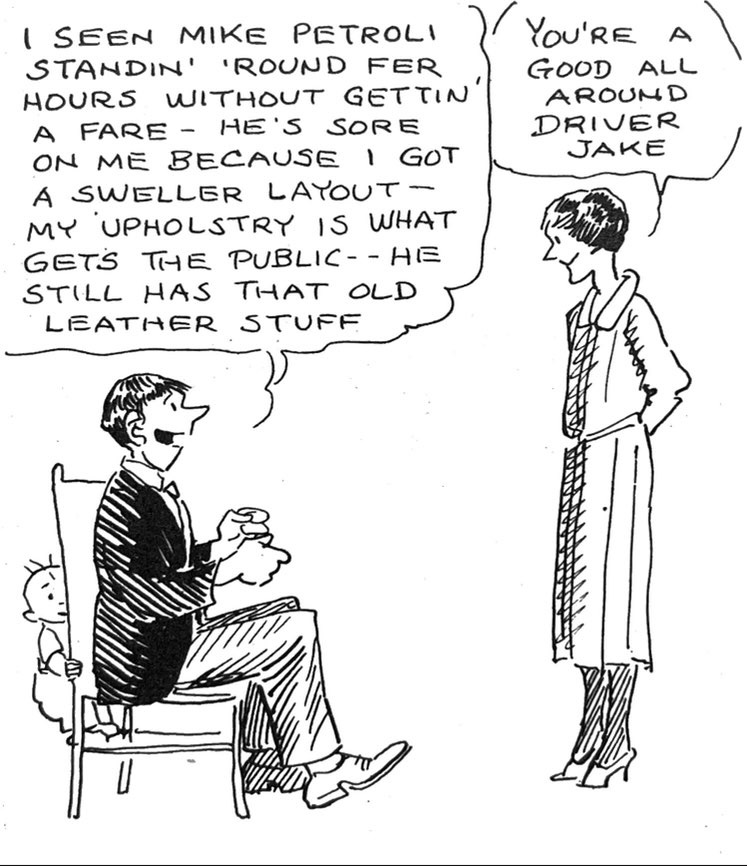
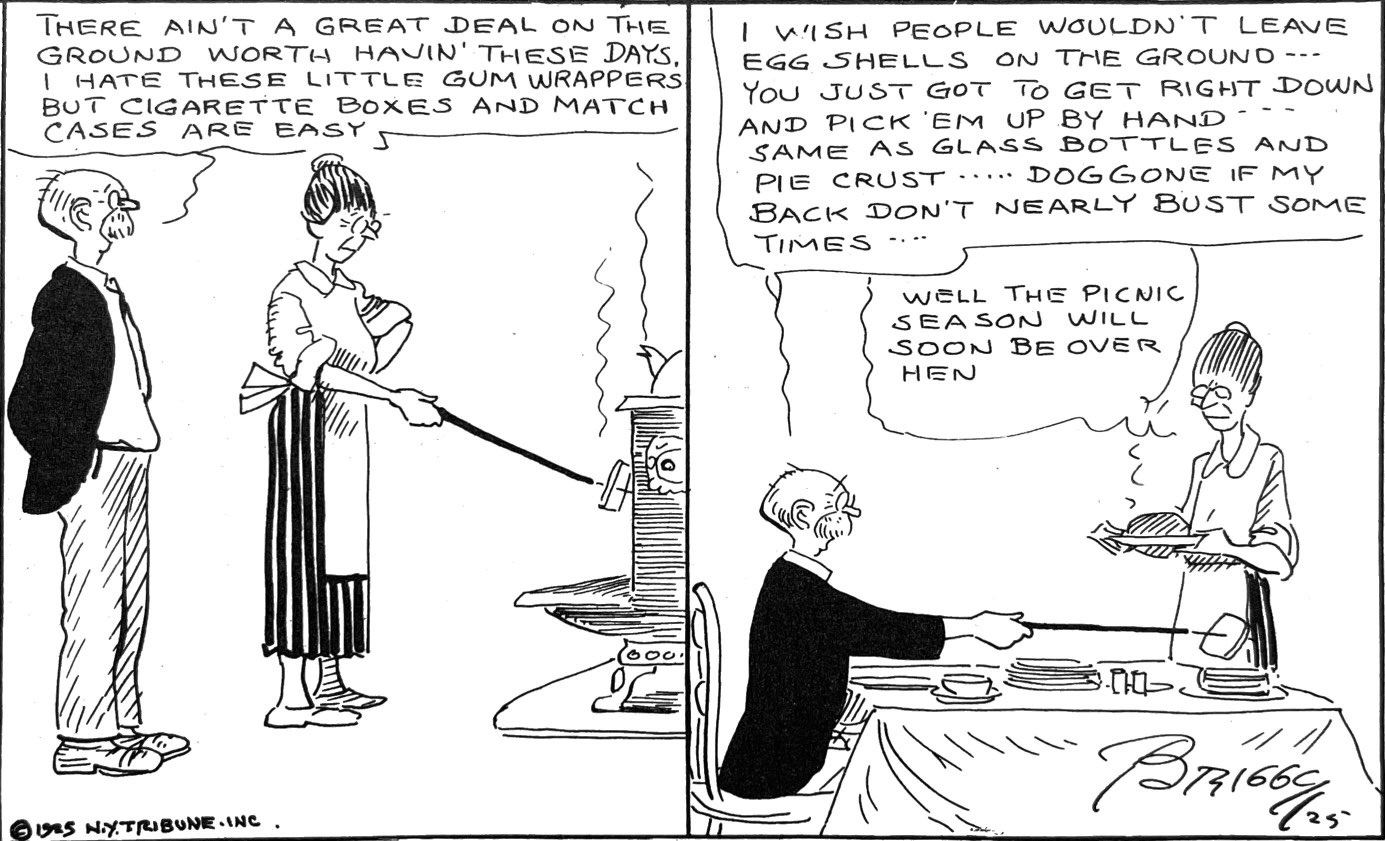
A shoe shine man enters his home after a long day’s work and boasts to his wife about his special talent for snapping his shine rag and using a better grade of polish. After work at a sign painter’s home, the practical artist extolls the superior quality of his brush and his unique mastery of curving letters. A park garbage cleaner muses on spearing newfangled gum wrappers and the challenges of cleaning up eggshells during picnic season. A soda jerk brags to his wife that his colleagues just can’t sling those mixed drinks as quickly as he. A street sweeper shows off to his wife the new brush with just the right heft and breadth for easier work, and then ponders his chances for promotion over “Jerry” who “is good at plain sweeping’ but he’s no good around telegraph poles.”

These scenarios of workingmen returning home at night and reflecting upon their craft was the conceit for Clare Briggs’ remarkable Real Folks at Home series of the 1920s. This was a deep dive into the nuances of pride, spousal support, small ambitions, respect for craft among the laboring classes for the most part. There were occasional forays into more vaunted professions like an orchestra conductor, opera singer, or baseball star. But largely Briggs was concerned with the hard-working manual laborers who may have been invisible to the white collar suburban classes to which many newspapers tried to expand their circulation after WWI. This was a regular celebration of the people who made towns and cities run, the dignity of work, and the native intelligence and thoughtfulness of “real folk.”

Continue reading