
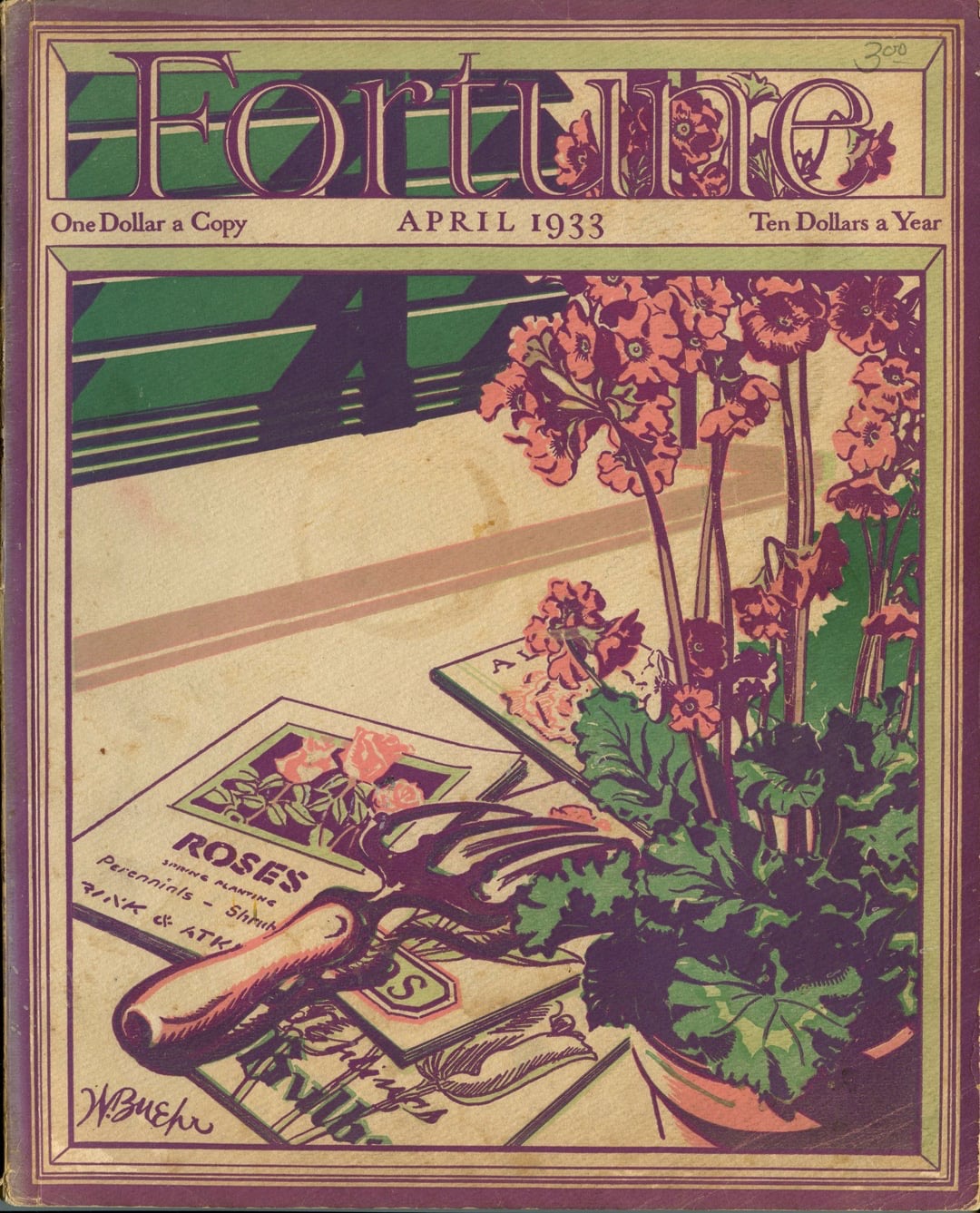
“But the [comic] strip has suffered from mass production and humor hardening into formula…. It has sacrificed its original spirit for spurious realism.” – “The Funny Papers”, Fortune Magazine, April, 1933.
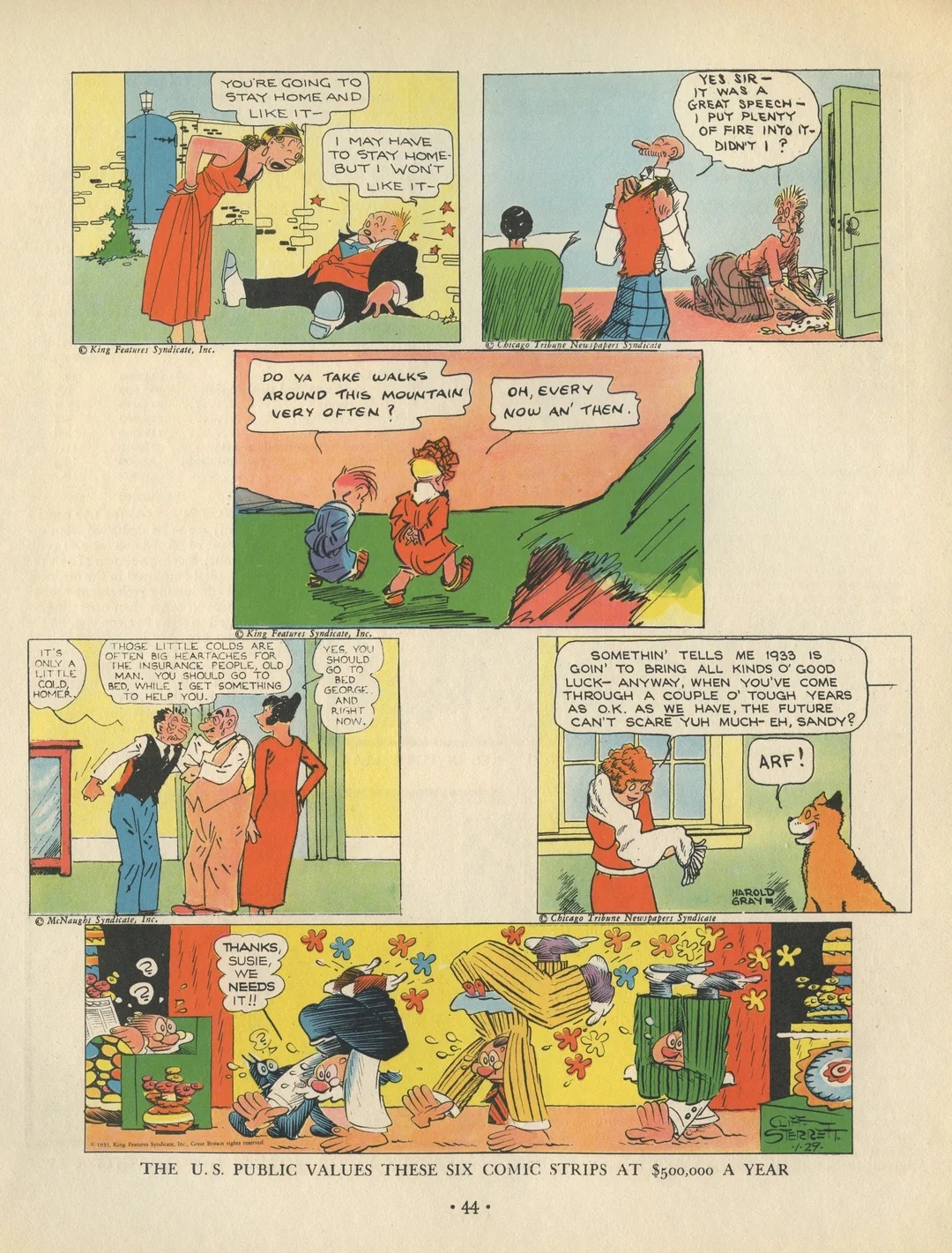
Who could say such a thing in 1933, just as Flash Gordon, Dick Tracy, Buck Rogers, Tarzan and Terry were about to launch what many consider a “golden age” of American comic strips? But in a major feature in its April 1933 number, Fortune magazine lamented the new adventure trend as a sign of the medium’s decline. In their telling, comics were losing an antic, satirical edge that had distinguished them from the gentility of American literature or saccharine romance of silent film. In particular, the Fortune piece (unattributed so far as I could tell), bemoaned the rise of the dramatic “continuity” strip in place of gags. They single out Tarzan in particular as a corporate product that suffers from too many scribes and artists not working together. “The strip wanders through continents and cannibals with incredible incoherence,” they say. And to be fair, who could have foreseen in 1933 that Flash, Dick, Terry and Prince Val were about to redirect the “funnies” from hapless hubbies and bigfoot aesthetics towards hyper-masculinized heroism and a new realism that readers found far from “spurious?”
Odder still is the source of this complaint. Fortune was, after all, a stylish celebrant of industrial capitalism, and, as the article outlines, the newspaper syndication machine was reaching new heights of business success and influence in 1933. With its usual attention to the business ledger, Fortune details how more than 70% of newspaper readers reviewed the comics each day. How manufacturers of body soap, cereal and soup were now paying up to $17,000 a page to advertise in Sunday supplements. Comics had become a $6 million a year revenue juggernaut for syndicates, which included a growing $1 million in ad spend. Fortune even dug into salary estimates, showing how artist “headliners” like George “Bringing Up Father” McManus, Sydney “The Gumps” Smith and Harold “Little Orphan Annie” were bringing down $1200 to $1600 a week just in syndicate payments, even apart from licensing revenue. On one hand, Fortune diagrams yet another success of industrialization, how dominant syndicates, especially King Features, Chicago Tribune, United and NEA, turned a disposable daily pleasure into a rationalized mass medium and big business.
Yet, the Fortune piece is critical of the comics industry and ambivalent about the product. Beyond eschewing the adventure strip, the piece found advertisers’ use of the comic pages weak and ineffective. Brands like Lifebuoy soap, Grape-Nuts cereal or Egbert Energy had created their own comics in order to ride the medium’s appeal with consumers. But Fortune found these sponsored strips to be failures both as comics and as ads. Typically they were thoroughly predictable and unfunny, “built around a sales talk instead of a gag.” Just as bad, they represented a decline in advertising itself, a base appeal to insecurity over body odor or unattractiveness rather than the stylish, clever aspirational appeals of 20s ads. “Comic strip advertising is simple depression advertising in one of its most depressed moments,” they argued.
Comics history tends to resurface only the more sensational contemporaneous criticism of the medium, which means we love to dwell on silly censors. The anti-“comics supplement” crusades of 1907-08 and the moral panic over of horror and crime comics in the 1950s render wonderfully prissy scare quotes, to be sure. But more general contemporaneous press coverage of the comics medium, especially the equivocating Fortune article, may tell us much more about how Americans were consuming comics.
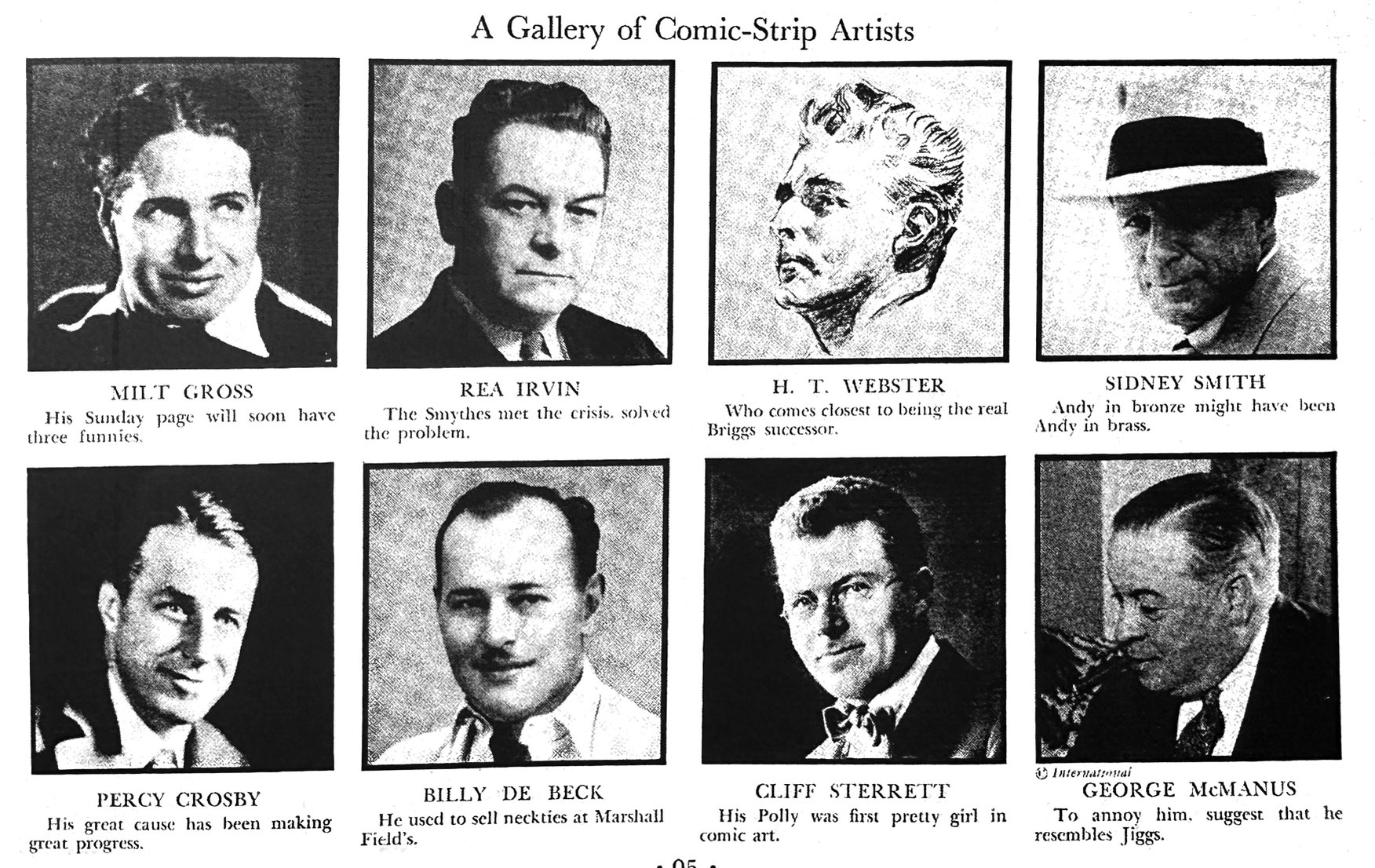
The ambivalence in this 1933 piece seems to come from a genuine respect and understanding of the medium, not from a blithe dismissal of a disposable media trifle. For all of the authors’ misgivings about the direction of formerly funny funnies, they dig deep into artists like McManus, Rube Goldberg, George Herriman and Milt Gross as standard bearers of the irreverent and zany spirit of the medium. We get background bios of each of them, short takes on their ironically normal daily lives, and curiosity about how they create their ideas. They note how Gross, H.T. “The Timid Soul” Webster, Ernie “Fritzi Ritz” Bushmiller, and Dow “Skeets” Walling all share their own office on the 44th floor of the Chrysler Building in New York. “They are all relics of the old World staff.”
This Fortune piece suggests an overlooked aspect of the newspaper comic strip’s power and cultural appeal in the first half of the 20th Century. It represented for many readers an obviously hand-crafted, highly individual and idiosyncratic counterpoint to a media world that was moving in exactly the opposite direction – towards anonymized mass production, streamlined and standardized product, reliance on formula and happy endings. The article characterizes the funnies as a “hard-boiled” rejoinder to the polite social realism of bestselling novels and the glamorous idealizations of Hollywood. It claims that cartoonists discovered how to make fun of the modern middle class long before Sinclair Lewis was celebrated for doing so in Main Street (1920) and Babbit (1922).
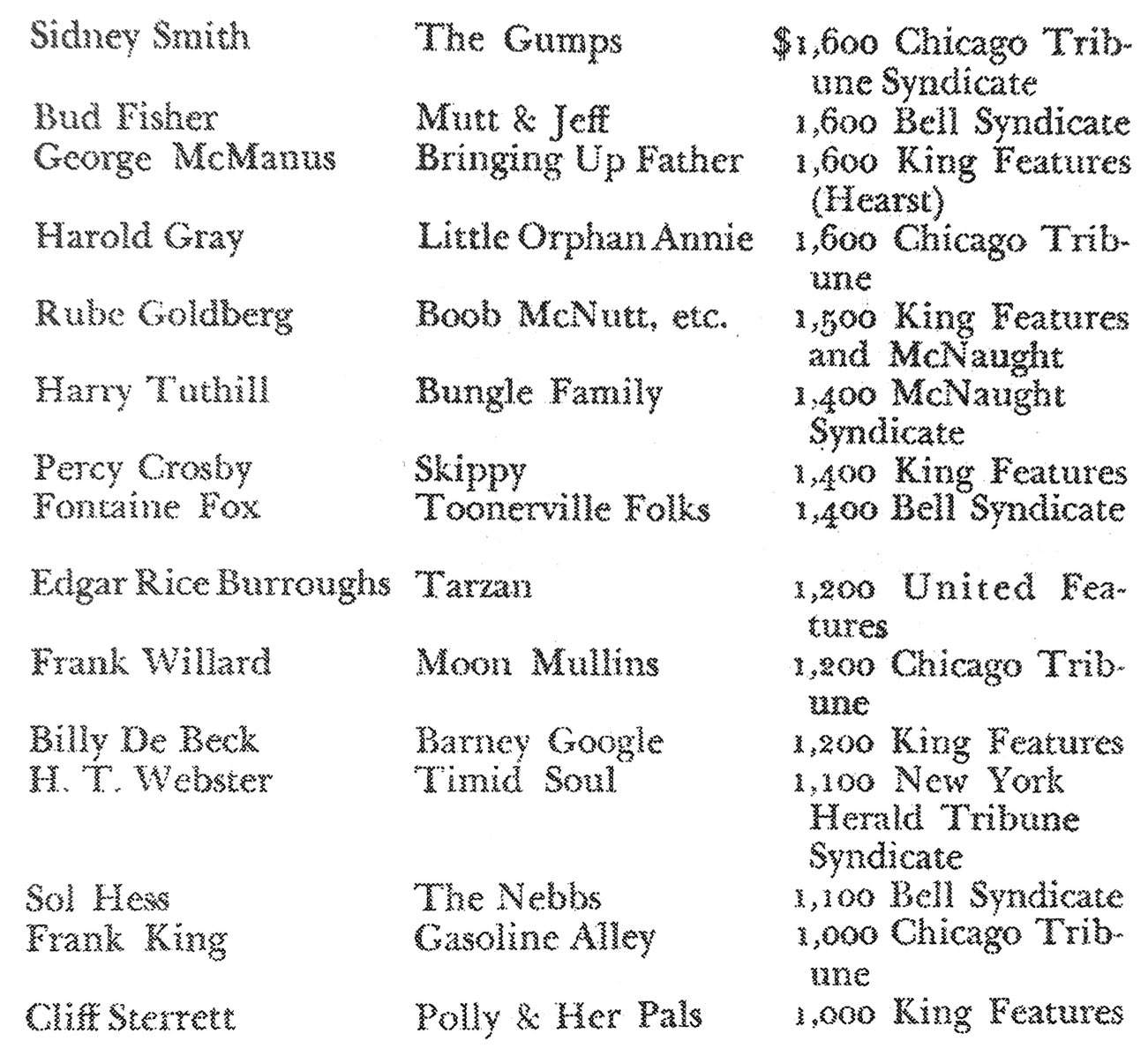
These authors envision the comic strip as fundamentally different from other mass-produced media not just in content and perspective but in production as well. They seem stunned, for instance, that the fortunes of such a critical media industry rests on the personal vision (let alone health) of a relatively small pool of disparate souls. “This vital and permanent business depends on the individual talent of some 200 artists – depends largely on the talent of the less-than-100 widely read tycoons of comedy.” “Sydney Smith sneezes, the article jokes, “and 400 newspapers tremble for Andy Gump.” And this talent is cultivated organically rather than professionally taught. The article advises aspiring headliners to eschew art school, which will turn you into a mere magazine illustrator. Instead, start as syndicate office boys and hope to work your way up to provide lettering, backgrounds or gag writing. In other words, and occasional ghosting. At the same time the ambitious cartoonist has to germinate his own ideas, avoid imitation, create something fresh and new. And by the way, this old-fashioned apprenticeship could make you a modern millionaire.
This mythology around cartooning and the cartoonist in the popular press was not new, and it highlights an important admixture of conflicting tropes. We see a mashup of modern mass media and pre-modern craft and apprenticeship, of idiosyncratic artistic vision that is distributed by the industrialized system of syndication, of artistic auteur and entrepreneur, and even of a buttoned-down, highly family-friendly medium that somehow manages to be genuinely satirical and even marvelously vulgar. If the Fortune piece equivocates about the fate of the comics art and business, it may be because it is struggling to reconcile the some of the central contradictions of modern popular culture: art vs. commerce, industrial standardization vs. individual vision and craft, formula vs. innovation.
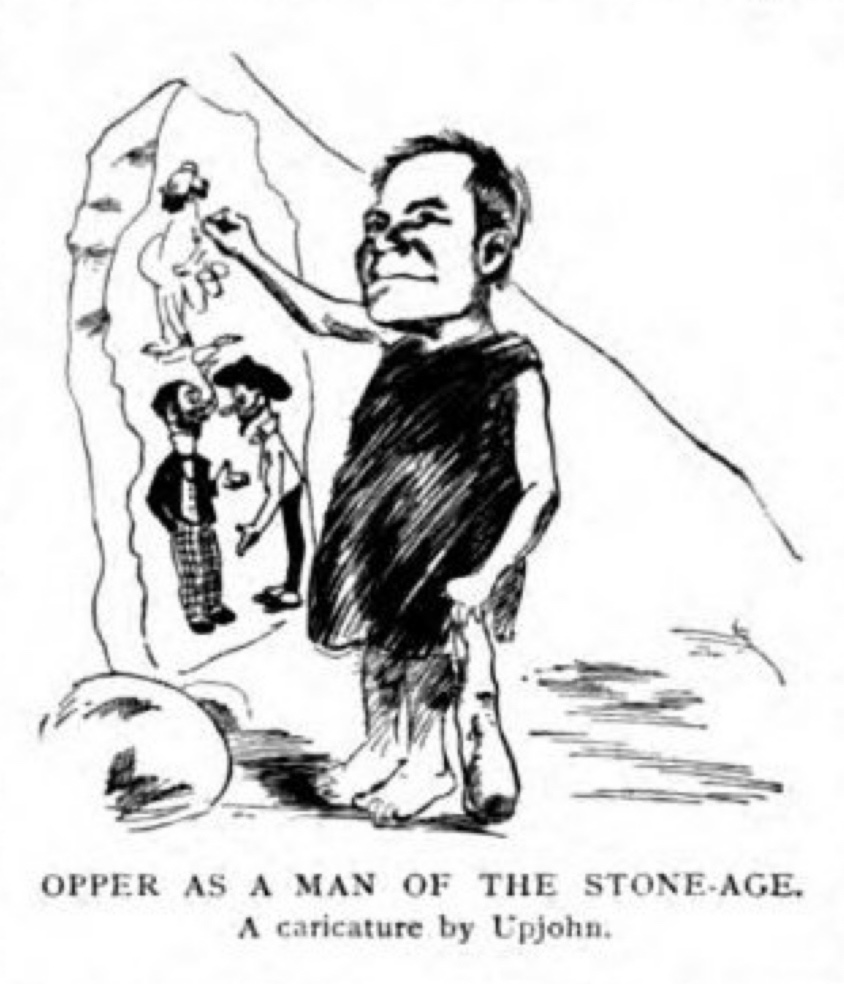
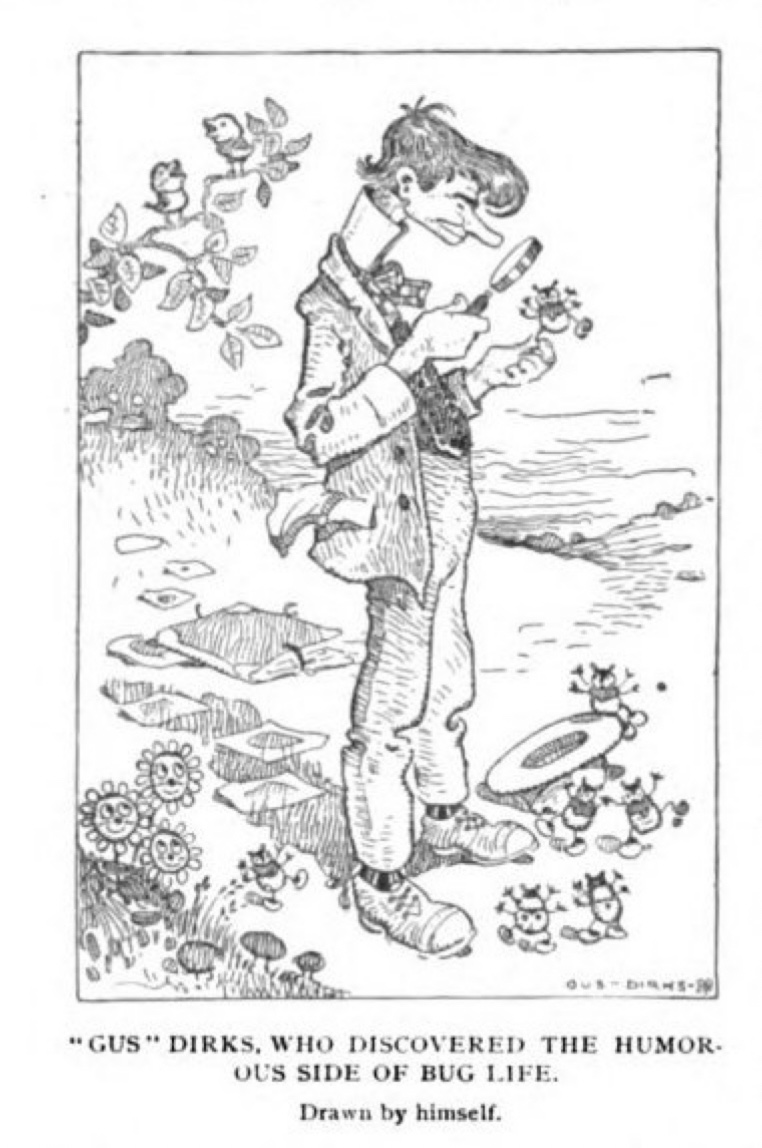
Fortune’s take on comics in 1933 typifies the complex mythology around this strange medium that had started with the newspaper comic strip itself. Cartoonists were among the first mass media celebrities. In their famous newspaper circulation wars of the late 19th and early 20th centuries, Joseph Pulitzer and William Randolph Hearst made stars of Dirks, Opper, Outcault, and others. Their names and images often headlined the Sunday supplements and weekday promotions. Sports cartoonists in particular, were treated like prominent columnists. The magazines, who knew a competitor when they saw one, took notice and started writing about this “comic supplement” phenomenon. In 1905, humorist Roy L. McCardell wrote a 10-page first pass at a history of the medium for the popular Everybody’s magazine. While historians often question McCardell’s historical accuracy, “Opper, Outcault and Company: The Comic Supplement and the Men Who Make” is a great example of how certain themes took root early in mythologizing the modern cartoonist. McCardell alternately sees them as inventors and entrepreneurs. He is fascinated by their idiosyncratic individuality, how they generate ideas, and how much money they make. And he sees these new artisans and their humor as throwbacks to old styles of humor thrown into modern forms and industrialized editorial processes. “The supplement to-day is composed entirely of pictures, but their subjects are aged-long-time friends with new faces,” he says at the beginning of this history. And he goes on to describe an idea factory that meshes individual inspiration, collaboration and direction by editors, testing on readers and responding to the market. And McCardell recognizes the strip as an extension of a particularly American tradition. “Its humor is strenuous, not to say brutal; the knock-about comedians of the old-time music-halls might easily have posed for most of the pictures that the supplement has printed in its ten years of life.”
It seems to me that the vacillations within McCardell and Fortune’s portraits of the comics industry, separated by several decades, should tell us something about Americans’ nuanced relationship with this medium in particular and perhaps with mass media generally in this century. This tension between craft and commerce, between individual inspiration and mass production, seems to have been baked into the popular narratives surrounding the comics from the beginning. Ever-present in these stories is discussion of salaries, market demands, enormous newspaper audiences, licensing extensions and the restraints of serving a family newspaper market. Interwoven with these details about commerce is an attention to the idiosyncratic bios of these artists and the unconventional development of their skills, their unique inspiration for gags and characters, their offbeat work habits, the irreverence of their creations. They are characterized as the zany imaginations within the new industrialized machine of syndicated mass media. And yet both articles go out of their way to note how normal, even banker-like these agents of comic chaos appear in their everyday work.
Beneath these mixed narratives about the cartoonist I think we find even more important hints about why the comic strip was so wildly popular in the last century, a question I don’t’ think even comics historians have addressed very well. Let me suggest that the comic strip represented a unique form of modern mass media that in its creation, context, content and consumption represented a valuable counterpoint to the modern mass culture and society many American experienced. Unlike the other major mass media of the century – newspapers, radio, film, TV – comics were not the products of corporate or anonymized authorship.
The modern cartoonists are usually depicted as craftsmen rather than as moguls of modern mass media. Comics were identified with a specific author/artist, whose visual signature was unmistakably individual on the page. They were hand crafted, painstakingly artisanal — anything but mass produced, even if reliant on the cheap mass distribution that modern newspaper technology enabled. And visually, the comics were quite unlike everything that preceded it in the newspaper reading experience. The Sunday supplements were explosions of color, visual abstraction and motion that stood in stark contrast to the pages of text, photo portraits and realistic ad illustrations that occupied the rest of the paper. And when daily collections of strips began coalescing into the back pages of every edition, between 1912 and 1918, that effect became even starker. The sheer democracy of the printed comics page was part of its appeal. Unlike the corporate, journalistic newspeak and standardized ad pitches, the comics page was a cacophony of diverse and highly personalized visual voices, different worlds defined by the personal style of discrete artists. The implicit message of the comics page within the context of the rest of the newspaper, and against other mass media for that matter, was that individual vision persists even amid the modern forces of standardization.
The persistence of individualism against the dehumanizing and anonymizing forces of modernity may seem like too simple (or grandiose) a meaning to lay onto the comic strip medium as a whole. But consider all of the ways this theme courses through all aspects of comics. For instance, one of the most obvious qualities of the medium, its overwhelming focus on the problem of selfhood in the modern world. In one of his introductions to a Hyperion collection of comics back in the 70s/80s, the godfather of comics historians, Bill Blackbeard guesstimated that upwards of 90% of American comic strips were named after a single person. That general theme of the discrete self’s engagement with the modern world, while present in every other high and pop art of the century, is the central concern of most comic strips and surely part of the intense intimate connection we have with its characters.
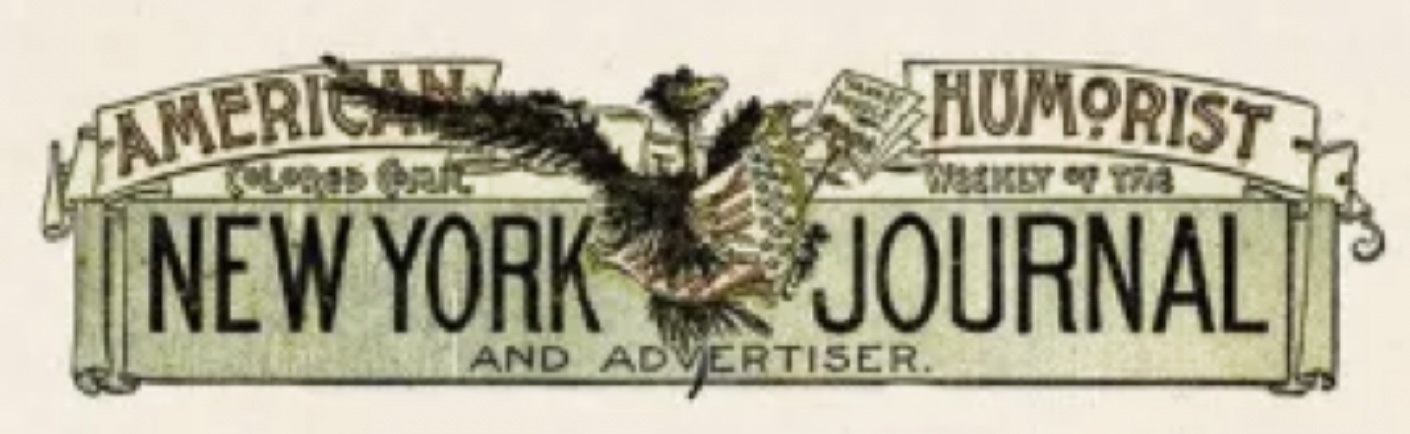
And this exploration of character and selfhood in modern times was baked into the comic strip’s earliest expressions. Some comic studies scholars argue that the comics pretty much invented the idea of persistent serialized character. R.F. Outcault’s “Hogan’s Alley” quickly became known as “The Yellow Kid,” and Katzenjammer Kids, Happy Hooligan, Foxy Grandpa, Buster Brown, Mr Peewee, et. al. established the first art form organized around the never-ending story of a single character making their way through the world. Of more than 800 strips launched in American newspapers between 1893 and 1905, the overwhelming majority were titled after a specific character, a couple, or a character trait (i.e. Absent-Minded Man (1901), Prof. Hypnotizer (1902), et. al.). Indeed, in the first decade of the 1900s at least 130 strips were named “Mr.” followed by a characteristic. From the beginning, the American strip took the modern self as it core conceit. At it did not emerge out of whole cloth. The serialized, character-centered format had been generating in American popular culture in particular throughout the 19th Century. The dime novel industry of the late 19th Century gave us the ongoing adventures of Frank Reade Jr., Brave Billy Bland and Buffalo Bill. Davy Crockett was humorously chronicled across scores of issues of his own “Almanack” magazine in the 1830s and 40s. And multiple tall tales explored fictional and real life characters like Mike Fink and Pecos Bill, Yankee peddler Brother Jonathan and James Fennimore Cooper’s serialized frontiersman Natty Bumppo. While comics studies and comics history tend to focus on the roots of modern comics in European caricature and magazine cartooning, the importance of 19th Century folk and regional American humor seem to get overlooked. After all, most of the early newspaper cartoonists were themselves raised in small towns across the mid-Atlantic and Mid-west where regional humor was a dominant entertainment. William Randolph Hearst himself recognized the connection between these native folk traditions and his own vision for the modern comics. The Sunday supplement at his New York Journal was named “American Humorist.”
This idea that the comic strip medium was uniquely tied to highly individualist and democratic traditions in American humor and literature extends into the consumption side as well. A 1955 Science Research Associates study of comic strip readers found that they tended to craft their own individualized experience around comics reading. Everything from the strips they curated to read each day to the order of reading and time and place for enjoying them were all very personal rituals. And no other mass medium was so deliberately involved with audience feedback. The Internet did not invent user-generated-content. As early as 1903’s The Importance of Mr. Peewee, comic strips regularly invited readers to submit content, take polls on the fate of characters, and contribute gags. Unlike other mass media of the century, the comics were neither constructed nor conceived for passive consumption.
All of these arguments point to understanding that the unprecedented popularity of the comic strip in the 20th Century may come in part from it being a mass medium that neither looked or felt like a mass medium, nor was even consumed like one. It felt intimate, hand-crafted and interactive in a century where other media, and even our work lives, seemed to value mass production, bureaucratic skills, standardized products and passive consumption. On a daily basis, and using the vehicles and technologies of mass production, the comics poked through the modern experience with very a pre-modern counterpoint – grounded in craft, personal vision, intimate connection with reader, a participatory audience.
Discover more from Panels & Prose
Subscribe to get the latest posts sent to your email.
 Panels & Prose