
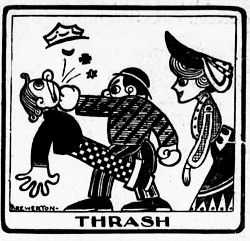
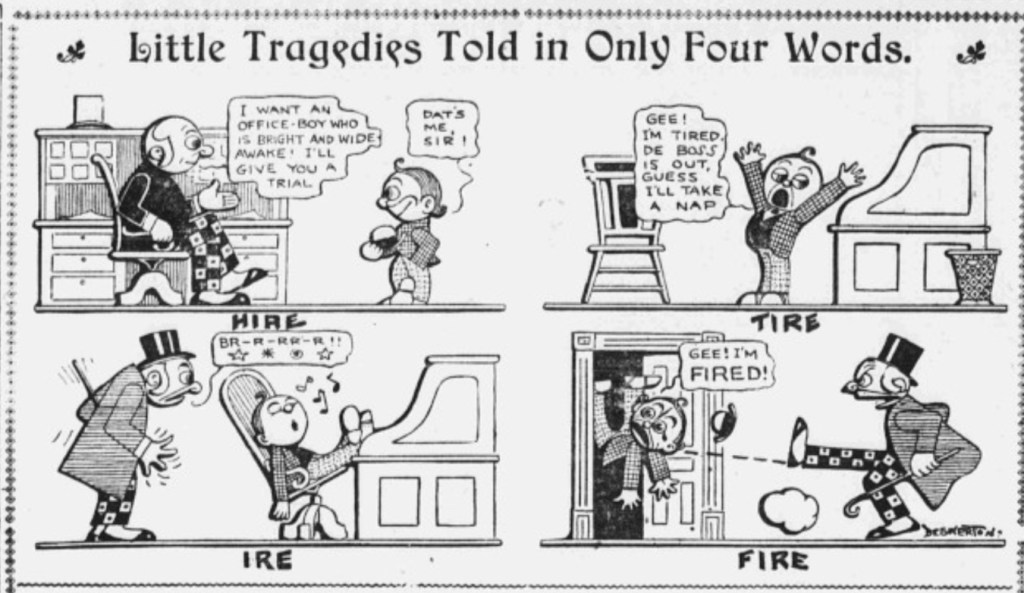
There were no firm rules for comic artists during that first 10 or 15 years of newspaper strips. Formats, aesthetic conventions, even panel shapes and limits hadn’t been fully established. The medium was still elastic. And so we see in these years wild experiments in artistic styles, unfettered explorations of page and the panel structures, even testing different interactions of words and image. Little Tragedies Strikingly Told in Four Words contains that spirit in its own title. It frames itself as an experiment. Crafted by the otherwise forgettable Alfred W. Brewerton for the New York Evening World between Oct. 1903 and June 1904, it was an unusually long-lived title to appear several times a week. True to its title, the strip is indeed striking because it blends pantomime and text in a novel way that is also compact, highly stylized, even wry. It recalls that famous quip about Ernie Bushmiller’s Nancy being easier not to read than to read. And like Nancy, the strip gets at something elemental about how comics work.
In 1903 the strip starts out staying true to its basic conceit. It uses cute rhyming wordplay and pantomime to create a lightning fast gag about human nature and everyday mishaps.
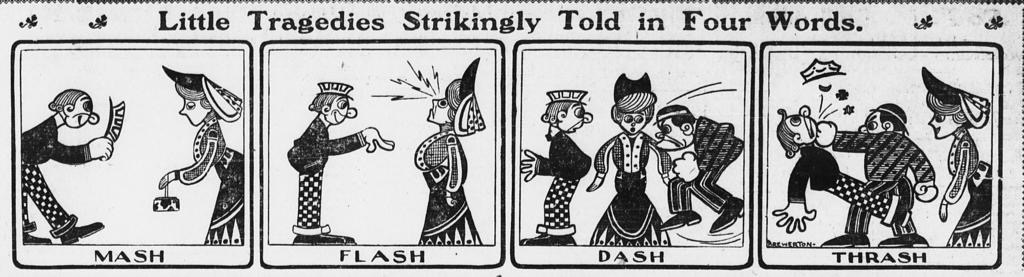
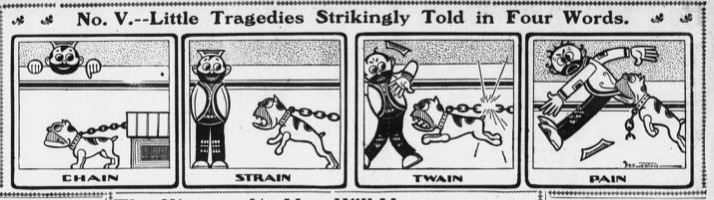
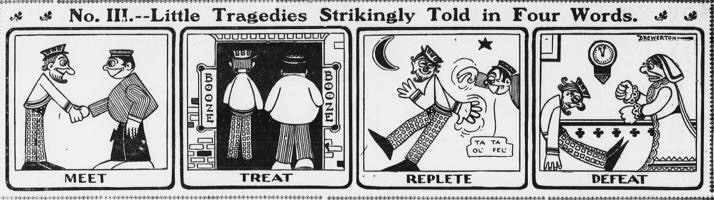
The visual tone of the strip engages us with a woodcut aesthetic and deliberately stiff and simplified figures. Like so many early newspaper strips, it lays a childish fable-like style atop adult situation. And it feels primal, like Egyptian hieroglyphs.
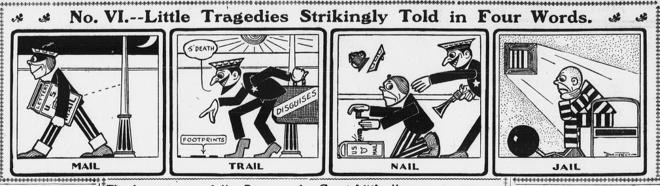

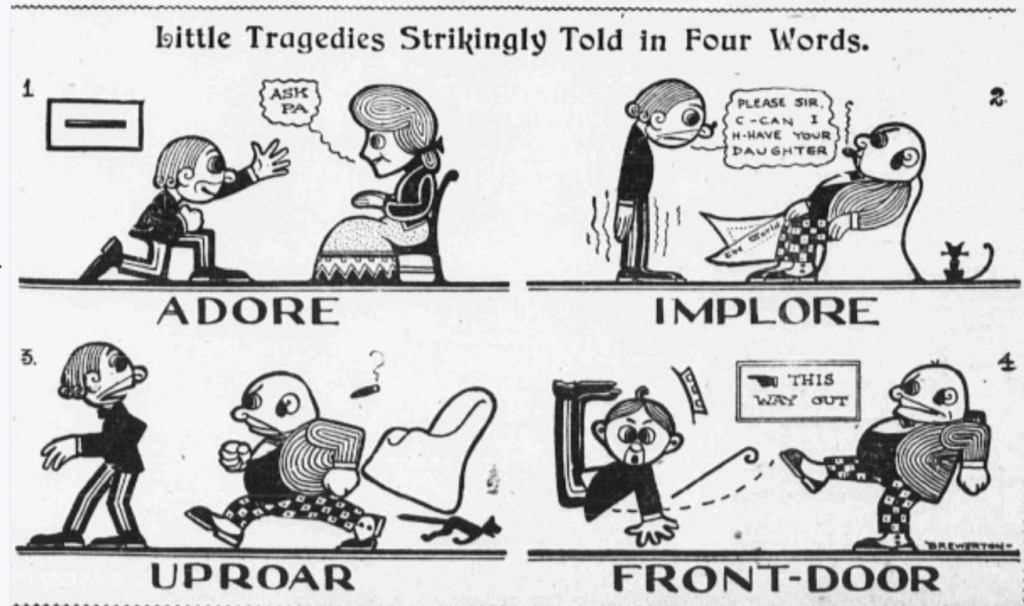
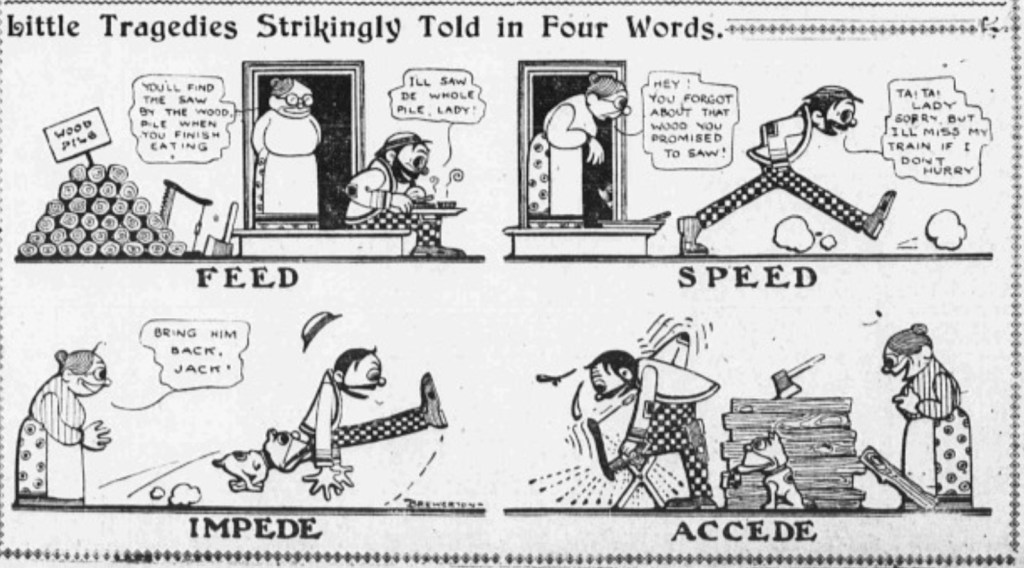
One of the pleasures of this strip, I think, is the way the four words themselves seem to work in the same sequential way as the imagery. Just as the frozen motion of a cartoon panel implies movement that precedes it, the single word stands in for a fuller narrative that has been stripped down to a minimal descriptor. Somehow, Little Tragedies embodies the fundamentals of comic strip aesthetics, sequential cause and effect, the interplay and tension between language and image, the focus on everyday humanity. At its best, this strip feels like an autopsy of the medium itself.
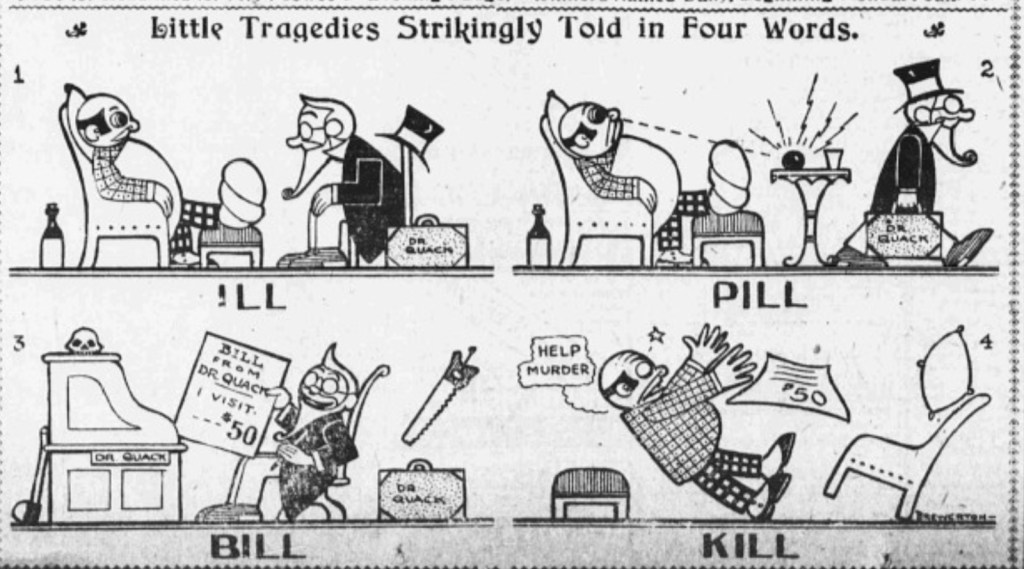
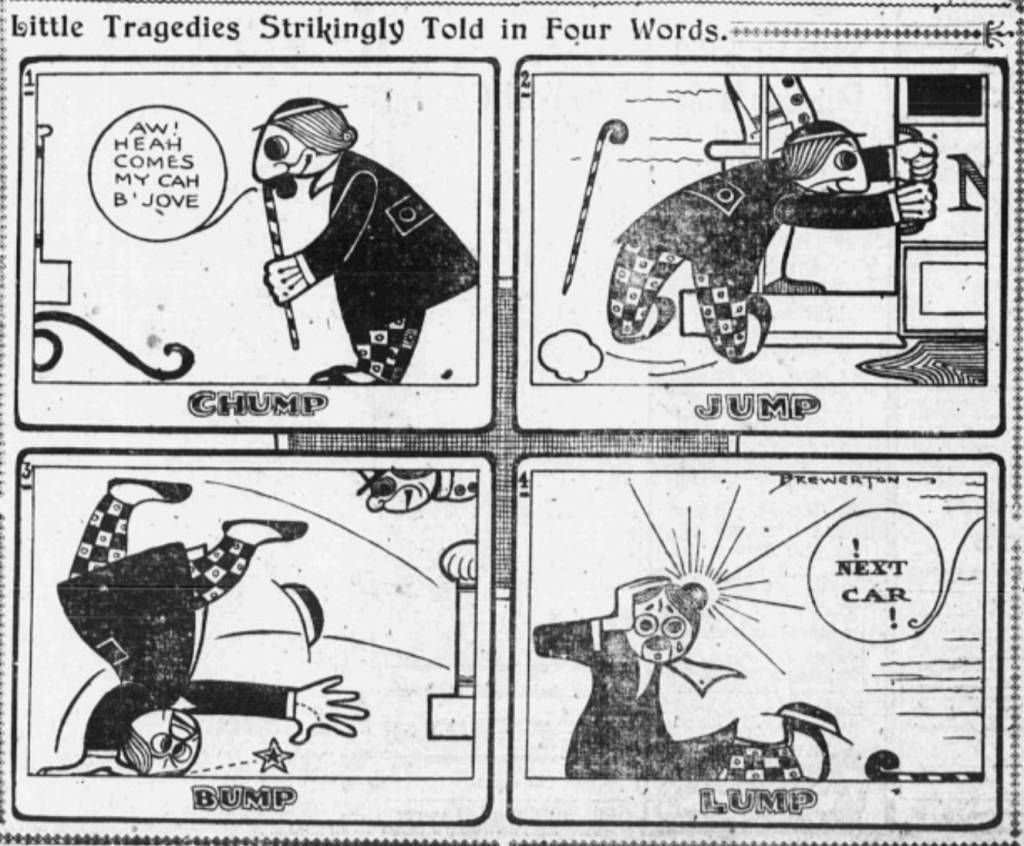
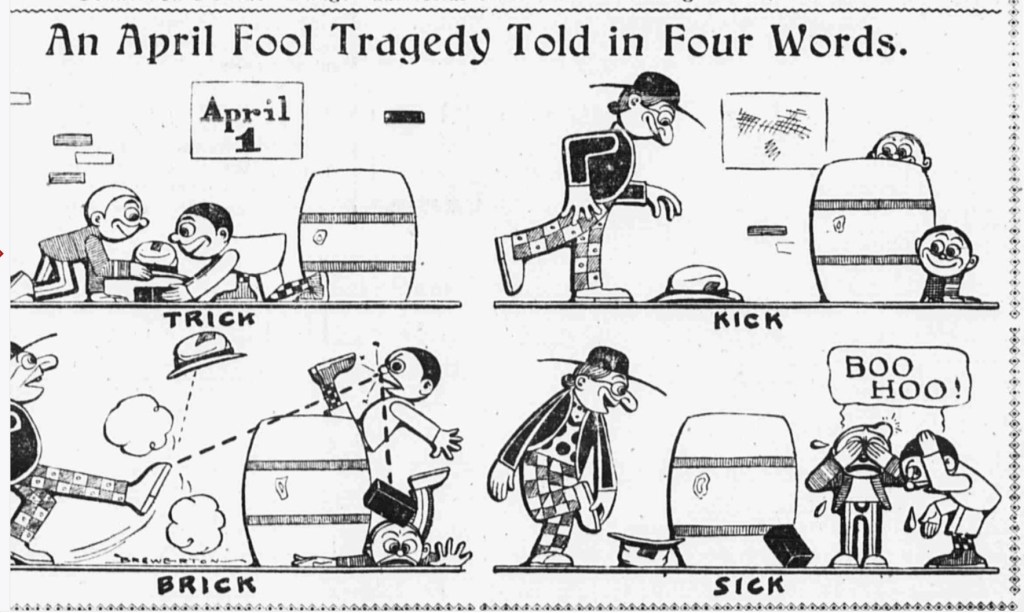
It is fascinating to see Brewerton waver from his own good idea over time, as he introduces more dialog and the rhymes become more strained. As the strip becomes wordier, the situations more involved and needing explanation, the less charming the effect.
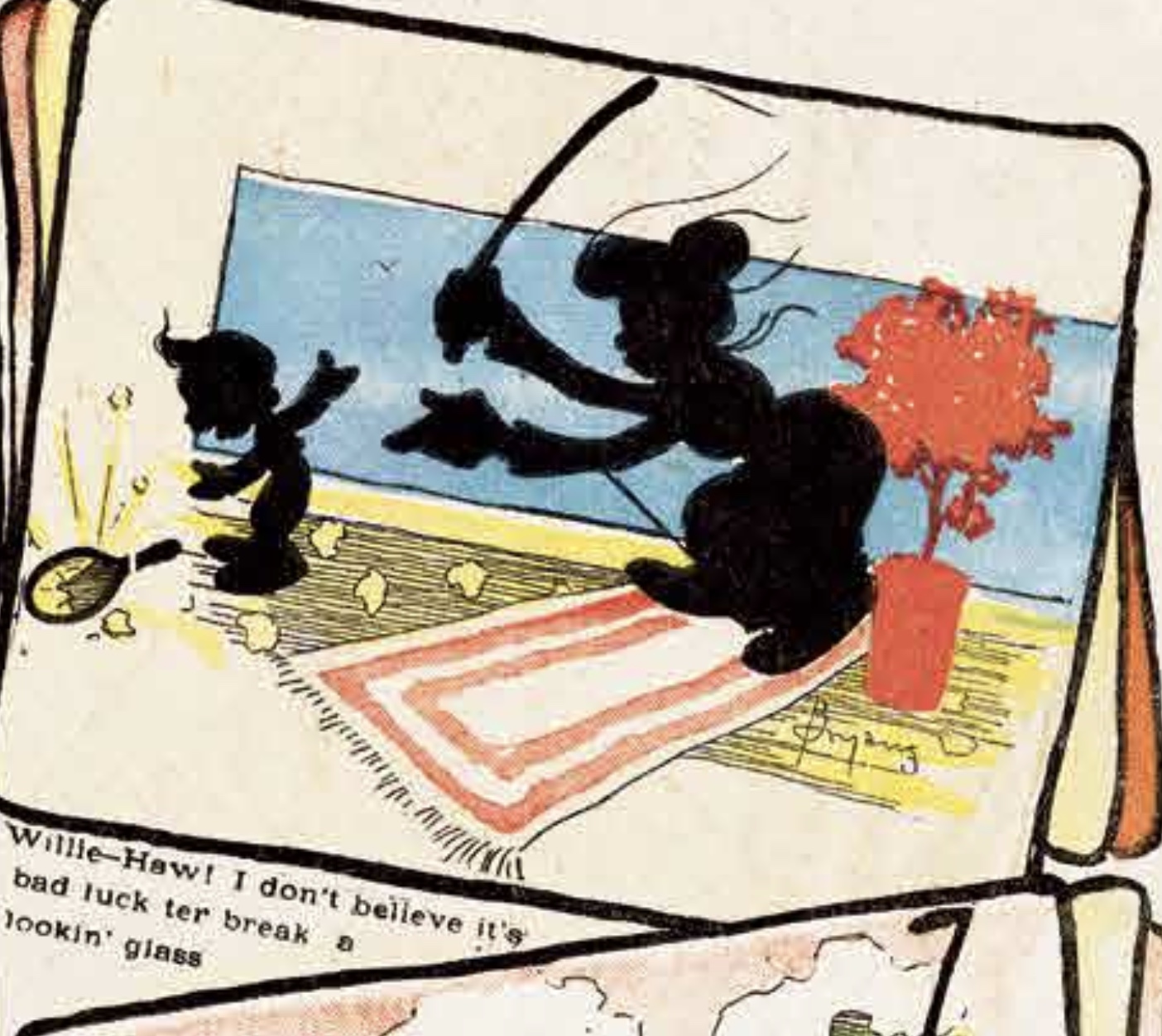
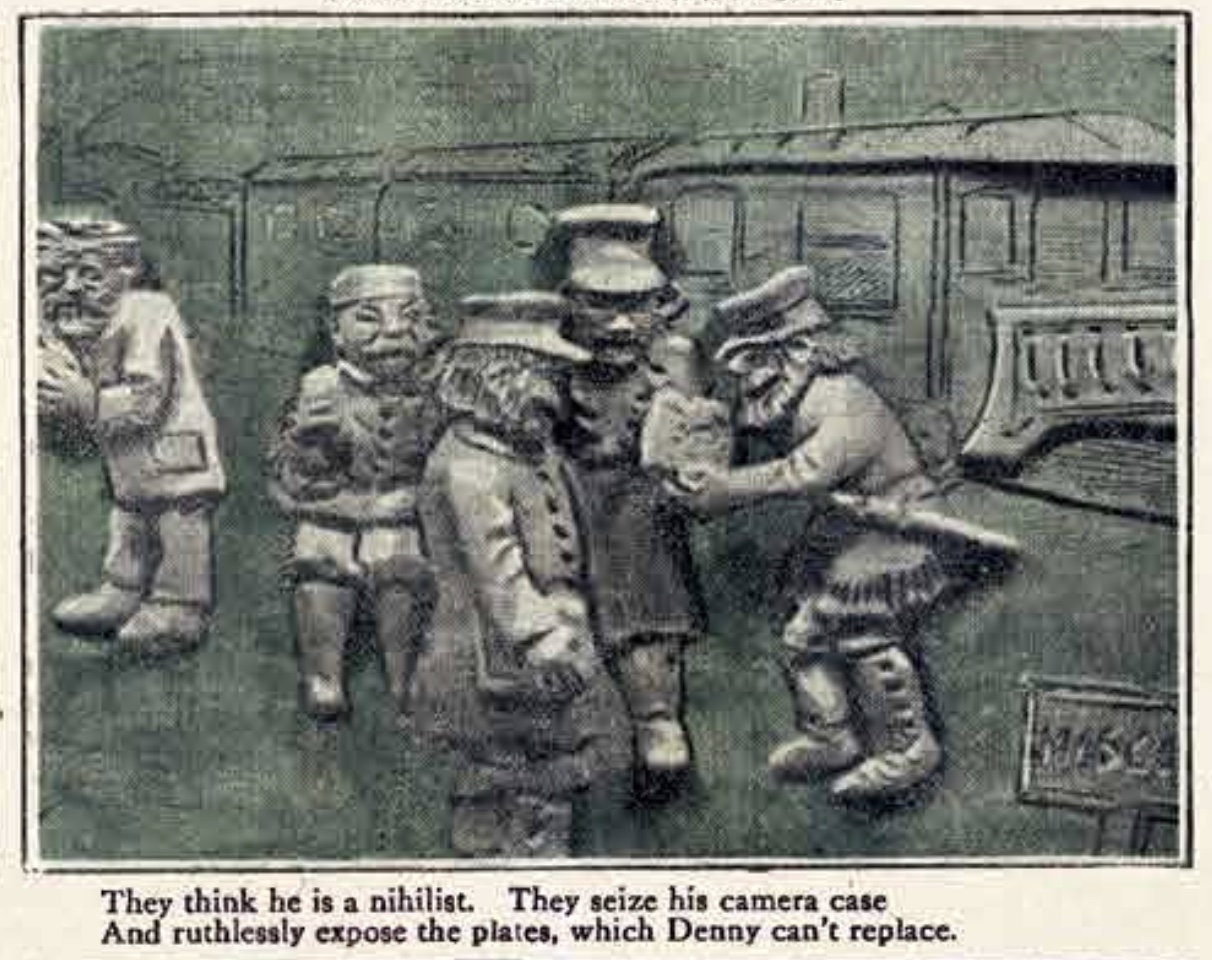
Little Tragedies was just one of many early strips that alluded to older, simplified art styles to test ideas for the evolving medium. Peter Maresca’s Society Is Nix collection is a trove of these visual explorations. Jack Bryan, for instance, specialized in silhouettes. In 1910 C.A. Beaty photographed sequences of clay reliefs, added captions, and built a sculpted comic strip.
Brewerton not only runs out of steam but may have run out of ideas. Late in its run, the strip above steals directly from its partner on the World’s weekday page, The Importance of Mr. Peewee. That much more famous and successful strip is now accepted at the first true recurring daily franchise. The diminutive braggart Peewee is the center of the action, but every panel featured bystanders reading newspapers with sensational and deceptive headlines. Thia was Pulitzer’s World poking at Hearst’s even more provocative tabloid Journal.
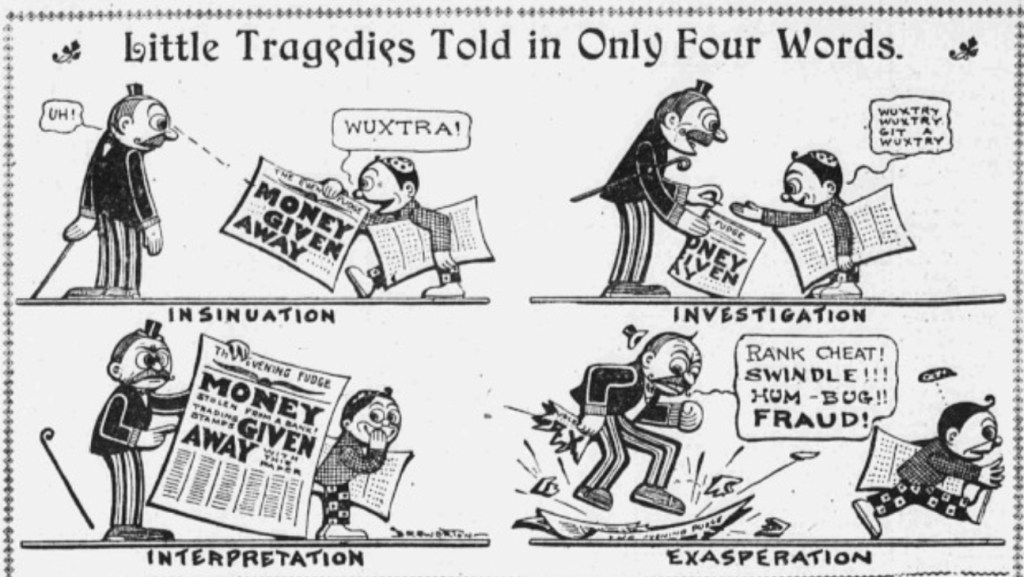
As curious as Little Tragedies appears, Brewerton never distinguished himself during a long cartooning career. He is most was associated with the forgettable Pam strip of the late 20s and 30s. In Little Tragedies, however, he had an engaging idea that could well have developed into an ongoing conceit.
Discover more from Panels & Prose
Subscribe to get the latest posts sent to your email.
 Panels & Prose