Great Moments: The Rise of Dauntless Durham of the USA

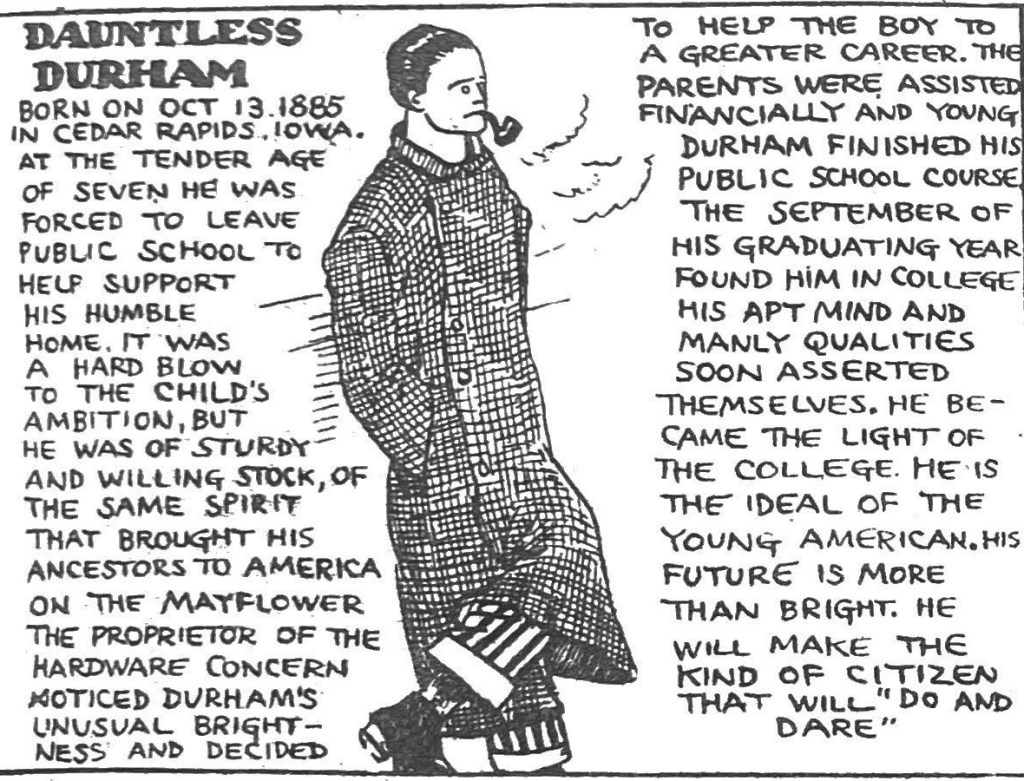
Harry Hershfield’s Dauntless Durham of the U.S.A. only ran for about a year in 1913-14, but it was among the most fully bonkers American comic strips in its imaginative extravagance. Durham was among several sends of the familiar 19th century hero/damsel/villain melodrama. Our damsel is kidnapped relentlessly by the mustachioed, top-hatted Desperate Desmond and rescued in improbable ways from impossible peril.

Continue reading

When Superman Was Woke?

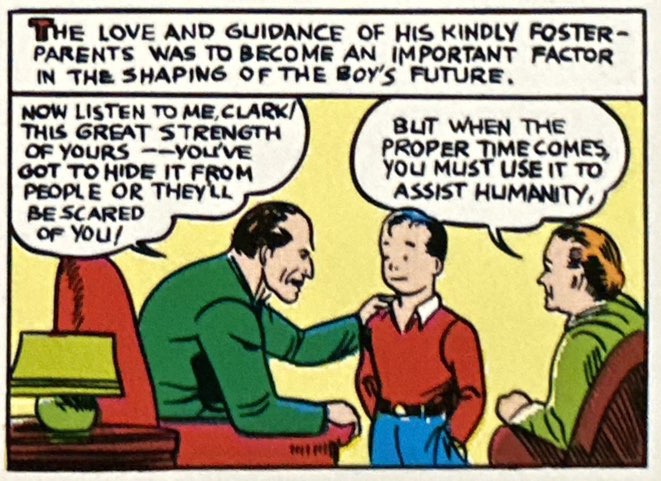
America needed a hero. That is how Superman creators Jerry Siegel and Joe Shuster remembered the late-1930s world in which their modern myth soared. Everyone is familiar with the Clark Kent origin story: orphaned by cosmic circumstance; rocketed to Earth; fostered by the Kents in the american breadbasket; super-powered by our planet’s physics; and taking on his secret identity as the milquetoast reporter. It is that rare mass mediated pop culture fiction that genuinely approaches folk mythology. It is an origin that compels retelling for every generation. Less attention has been paid to his political roots, however. Every comic strip in the adventure genre especially has an identifiable political slant, most obviously in its choices of wrongs to right and the villains to subdue. The famously conservative Chester Gould in Dick Tracy and populist Harold Gray in Little Orphan Annie were the most overt. Less obvious was the implicit imperialism of Milton Caniff’s Terry and the Pirates and most of the adventure pulps, which characterized non-Western cultures as at best quaintly primitive or at worst inherently brutal.

Continue reading

Peak Segar: Plunder Island (1934)

The Plunder Island sequence of Thimble Theatre Sundays that ran from December 1933 to July 1934 was E.C. Segar’s signature epic. It concentrated most of this master’s diverse talents and blended the many genres Thimble Theatre traversed into the strips most impressive run. Fabulism, farce, adventure, sentiment, venality, romance, screwball — all and more are here. And along the way, Segar even fleshes out and distinguishes among his key characters.

Continue reading

Boy Wonder: Tailspin Tommy’s Machine Romance

“Boy!! That’s the life for me. Gosh…” The first of the major aviation-themed strips, Tailspin Tommy (1928-1942) embodied many of the essential qualities of the genre. From its start, the strip had an infectious, boyish wonder…about the air, about technology, about modern progress itself. Like most in the category, it was drawn by a pilot and flying enthusiast (Hal Forrest) in a rough style that fetishized planes and flight images yet fell flat in depicting characters and earthbound life.

Continue reading

Like a Comet: Frazetta Races In

On Jan. 28, 1952, Frank Frazetta’s breathtaking talent for dramatically charged action and erotic, muscular figure drawing finally made its way into newspapers with one of the most gorgeous, if short-lived, strips of the decade, Johnny Comet. The eponymous adventure was set in the racing world, a theme that should have tapped naturally into the car customization craze of the 50s. It was ceonceived and distributed by the McNaught Syndicate, ghost-written by Earl Baldwin, but co-credited to Frazetta and 1925 Indianapolis 500 winner Peter DePaolo who served more as an advisor and was attached to the project to lend an air of authenticity. Hobbled perhaps by uninspired scripting, Johnny Comet failed to catch on despite its standout visual poetry.

Continue reading

Secret Agent X-9: Watching Alex Raymond Mature

Nearly 90 years ago yesterday Jan. 22 1934, the collaboration between Dashiell Hammett and Alex Raymond launched as Secret Agent X-9. Designed to respond to Dick Tracy’s massive success with the literary cachet of Hammett and the rising talent of Raymond, X-9 looked better on paper perhaps than it did, well, on the actual page. The famous innovator of the hard-boiled style was at the tail end of his productive output and clearly did not give his best effort. After crafting just a few very uneven scenarios, Dash got canned.

Continue reading

Dick Tracy Battles The JDs: Flattop Jr. and Joe Period

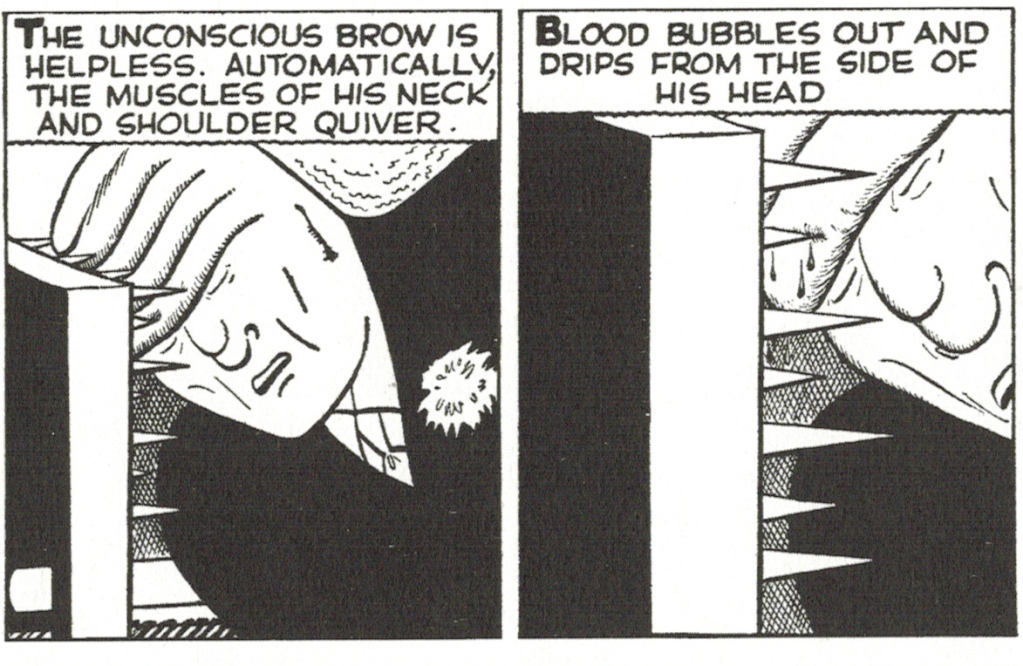
Chester Gould’s Dick Tracy was created in the 1930s as a response to the romanticization of gangsters and declining respect for law enforcement. And throughout its run under the notoriously conservative artist made no secret of his disdain for many modern trends. In the 1950s when mania around “juvenile delinquency” dominated popular culture, Gould added to his famous rogues gallery a few of these teen terrorists. Most notable for its outright weirdness (even for Gould) are the 1956 episodes spanning Joe Period and Flattop, Jr., the son of one of Tracy’s most famous nemeses of the prior decade.

Continue reading