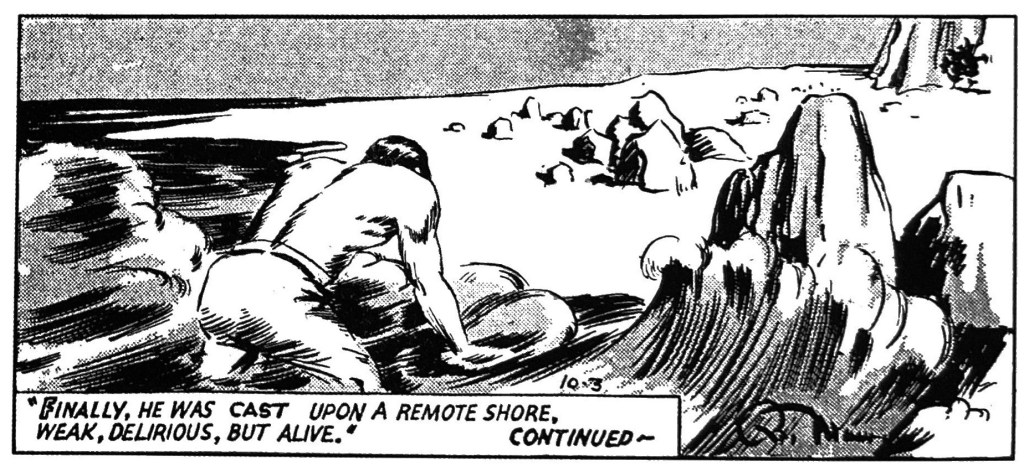
Hot on the heels of his first comic strip success, Mandrake the Magician, author, Lee Falk crafted a second and arguably more important bridge between dime novel and pulp heroism and the “super” heroes soon to dominate the American pop culture scene. Falk recalled later he had originally conceived of The Phantom having an alter ego as a millionaire playboy, echoing pulp heroes The Shadow and The Spider. Within the first months of the strip’s premiere in 1936, however, he changed course. “I became intrigued with the whole mythical notion about 400 years and 20 generations of Phantoms in the jungle. The more I got into that, I keep adding to the background.
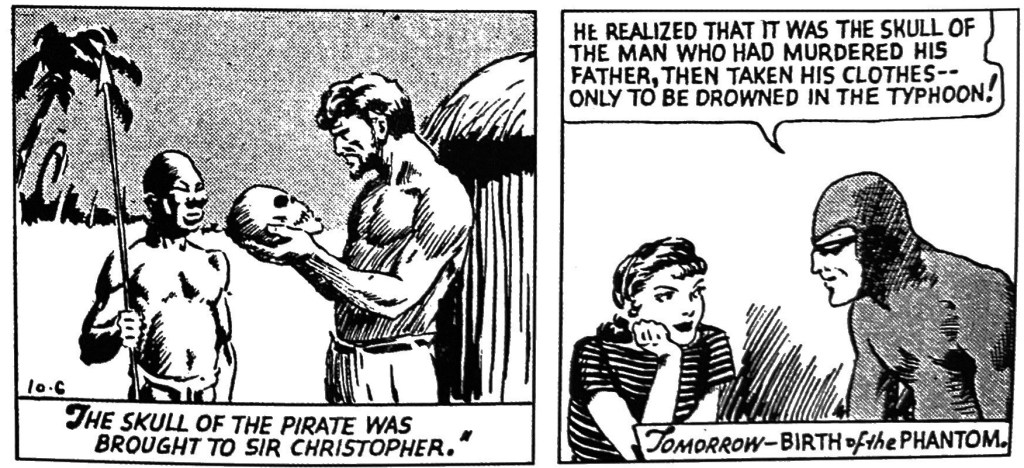
The Phantom reveals his origin story to love interest Diana Palmer (1936)
Here The Phantom relays in thumbnail form to his perennial love interest Diana Palmer, the origin of The Phantom legend. It is a 400 year-old revenge fantasy, in which generations of Phantoms avenge the treachery of Singh pirates. The first-born son of each generation of Phantom must dedicate himself to fighting “all forms of piracy.”
Among jungle natives, of course, The Phantom is known as “The Ghost Who Walks.” Like much of pulp adventure fiction of the day, The Phantom was colonialist fantasy writ large, complete with ignorant or naive native cultures championed by this white (in purple wrapping) savior.
While The Phantom had no super powers, he was the first hero to don the skintight costume that would soon become standard for comic book super heroes with the arrival of Superman several year’s later. The strip was drawn by Ray Moore, following an Alex Raymond style that King Features encouraged across its adventure line of strips.
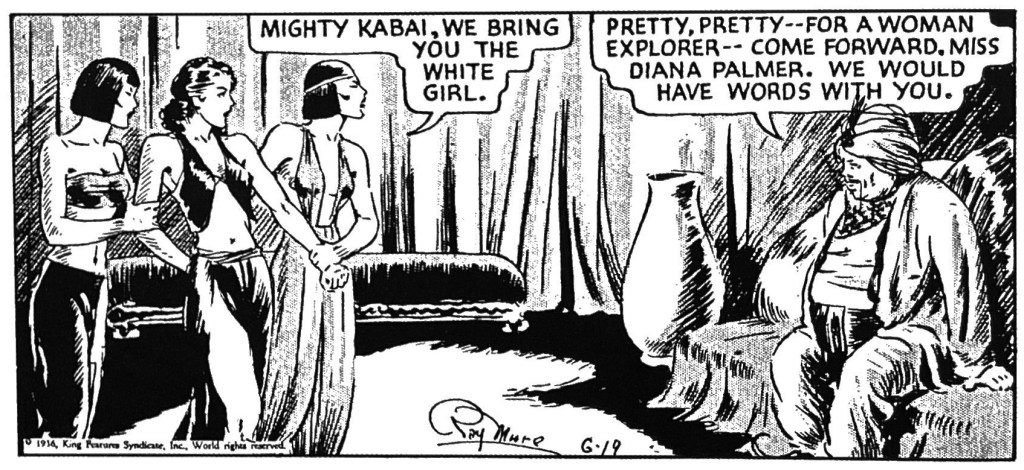
Like the spicy pulps of the era, The Phantom always had an erotic and sadomasochistic undercurrent that provided more titillation for young and old male readers than usual. Falk and Moore seemed devoted to depicting women in various states of undress and with gossamer thin gowns that were as skintight and revealing as The Phantom’s own outfit.
In fact the series begins with Diana Palmer in short shorts, low-slung tank top and boxing gloves pummeling her male opponent. This set the subtext for the series. For a 400-year-old Ghost, The Phantom finds himself bound and tortured more than you would think possible. And the female love interests and villains alternate between being damsels in need of saving or dominatrixes asking for a slap-down. The second major adventure cycle in the series is about a band of female pirates, the Sky Band, which quickly becomes a figurative S&M orgy of women alternately endangering The Phantom and falling in love with him.
The series has been enduring, however, thriving in comic strip form for these many decades and in comic books as well. Falk continued to author the strip until his death in 1999.
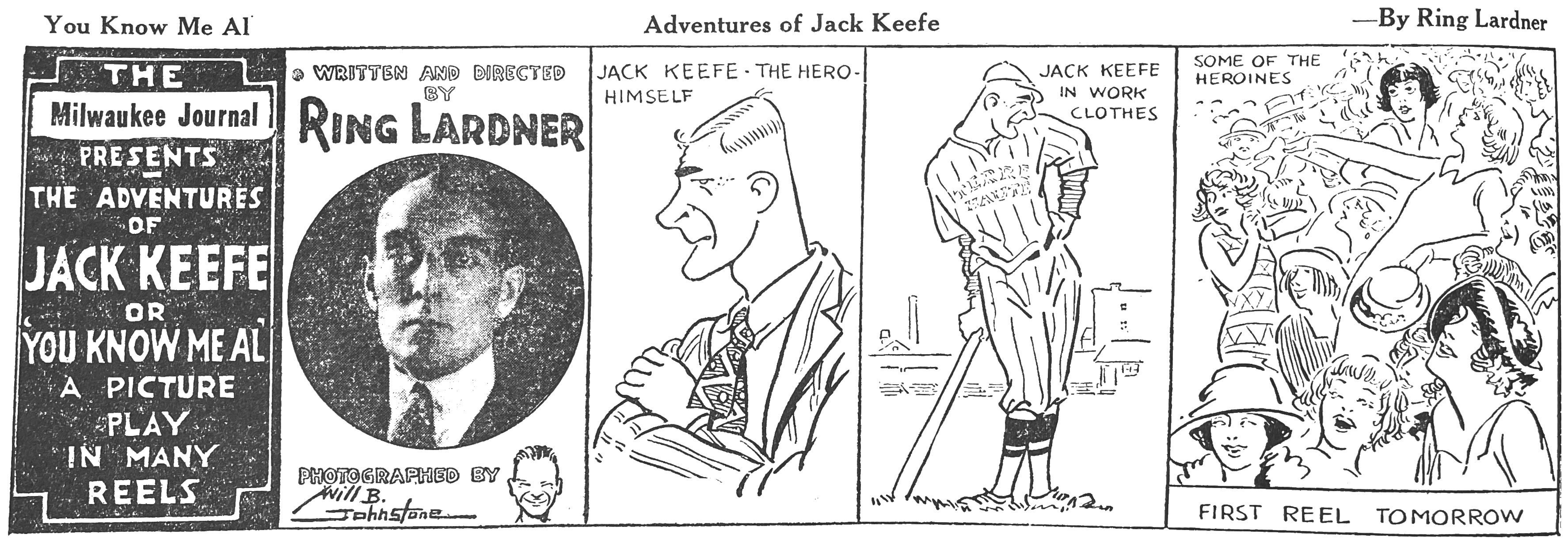
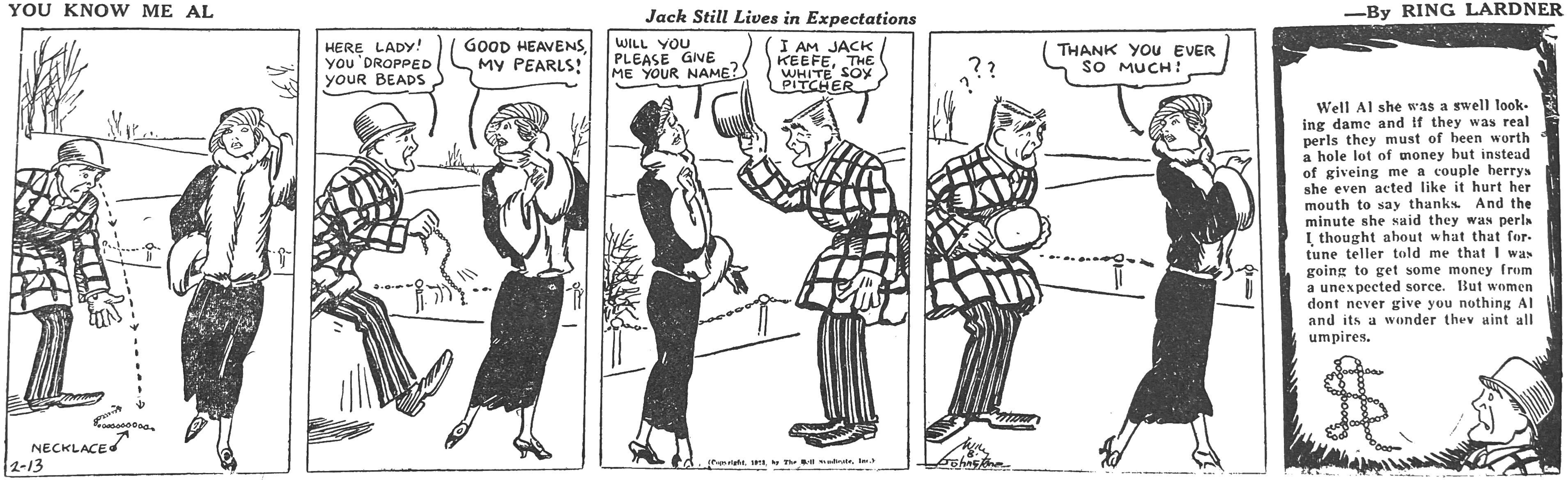
American humorist, sportswriter, magazine columnist Ring Lardner had already been writing the “You Know Me, Al” series of humor pieces for The Saturday Evening Post since 1914 when a comic strip version launched in 1922. The format was epistolary, ongoing letters that bush league pitcher Jack Keefe wrote to his friend Al back in his old small town. Keefe is a rube in the city, often clueless in the face of urban pretensions and jaded attitudes.
Keefe is dropped into the real life Chicago White Sox organization, called up from the minors as the team was struggling back from the infamous Black Sox scandal of the previous decade. Real life owner Charles Comiskey is off stage but forever keeping Keefe in his place. Larder makes reference to a host of actual sports figures and rivalries throughout the strip, but baseball play itself is only occasionally depicted.
The basic action of the strips are Keefer’s everyday interactions with the women who often pursue him, sportswriters who cover him, and team owner Comiskey. The humor of the strip came from Jack’s mildly inflated sense of his own talent and attractiveness.
The country vs. city meme had been central to American comic strips since its earliest years. The transformation of American society and culture from an agrarian, rural sensibility to an urban, industrial one was still echoing throughout mass media and literature in the American 20s. More so than most cartoonists, who tended to lionize the plain spoken, morally upright mythology of small town America, Lardner poked fun at Keefer’s naïveté both to the world and to himself. He is forever fooled or easily outsmarted by city ladies, competing suitors and Comiskey. Keefe goes into the main office pumped up to demand a $500 advance, quickly retreats to $50 and then leaves satisfied when told to come back for his “advance” on pay day.
The strip continuities were outlined by Lardner, who was overworked at the time with magazine articles, columns, and even dramas bearing his name. The artwork was done by popular sports illustrator Dick Dorgan, who lived near Lardner in the New York suburbs and had been illustrating Lardner books and columns for years. Dorgan was also brother to more famous cartoonist TAD. After a few years, Lardner stopped writing for the strip, though it retained his name for a while.
I find Dorgan’s drawing style attractive in its looseness. The lines seem ready to fall apart at any moment, and yet they communicate character more through posture than expression. He keeps most frames visually interesting by working with angles, body leanings, competing head hangs and positions. In some of the best strips it feels as if there is a storyline apparent just in body attitudes. Perhaps this is the attribute of a good sports illustrator, always sensitive to the physicality of character, momentum, stance.
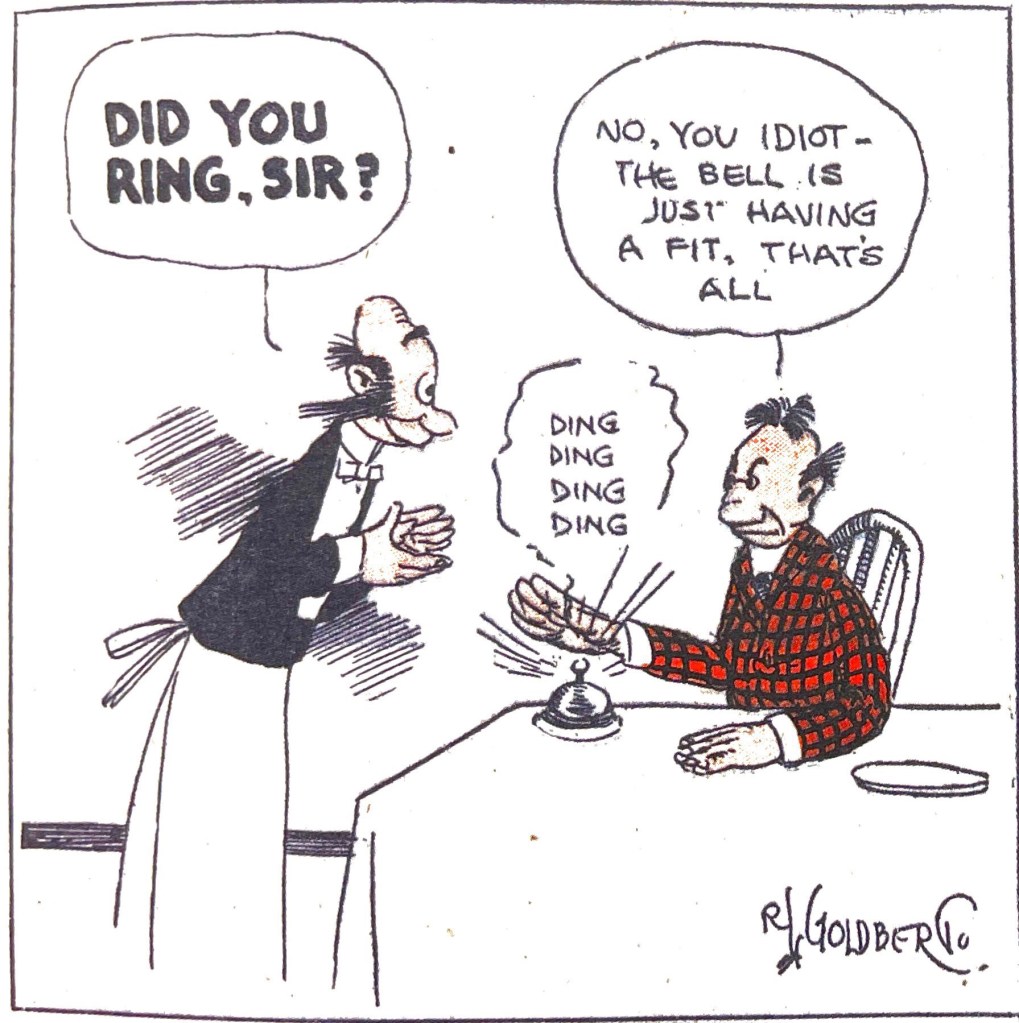
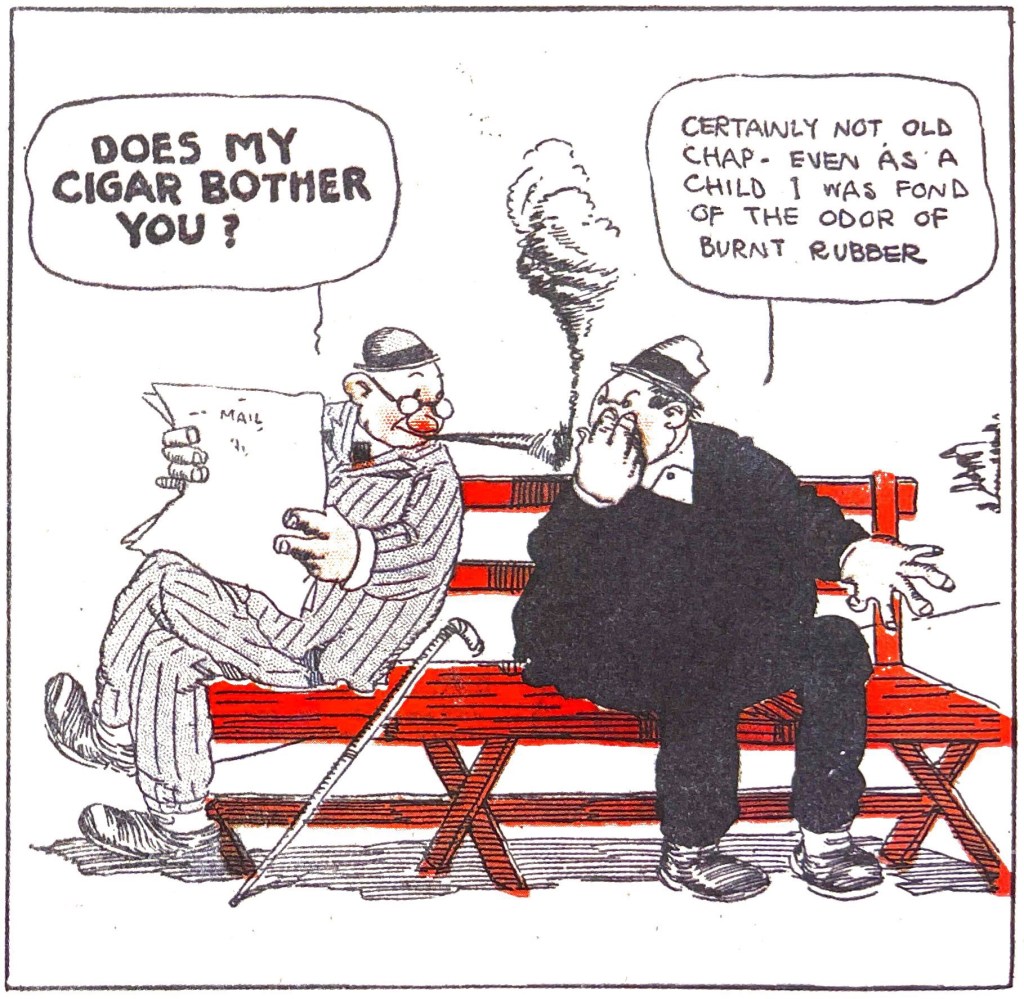
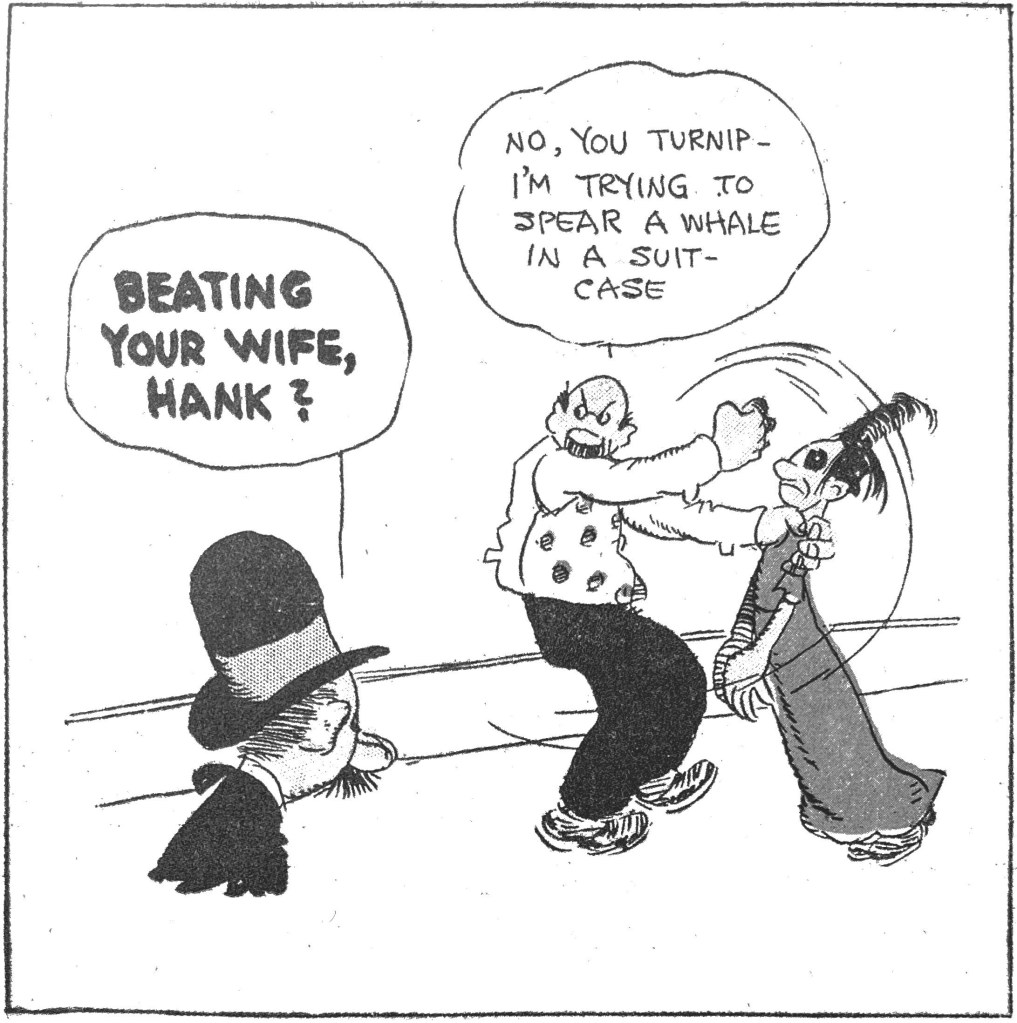
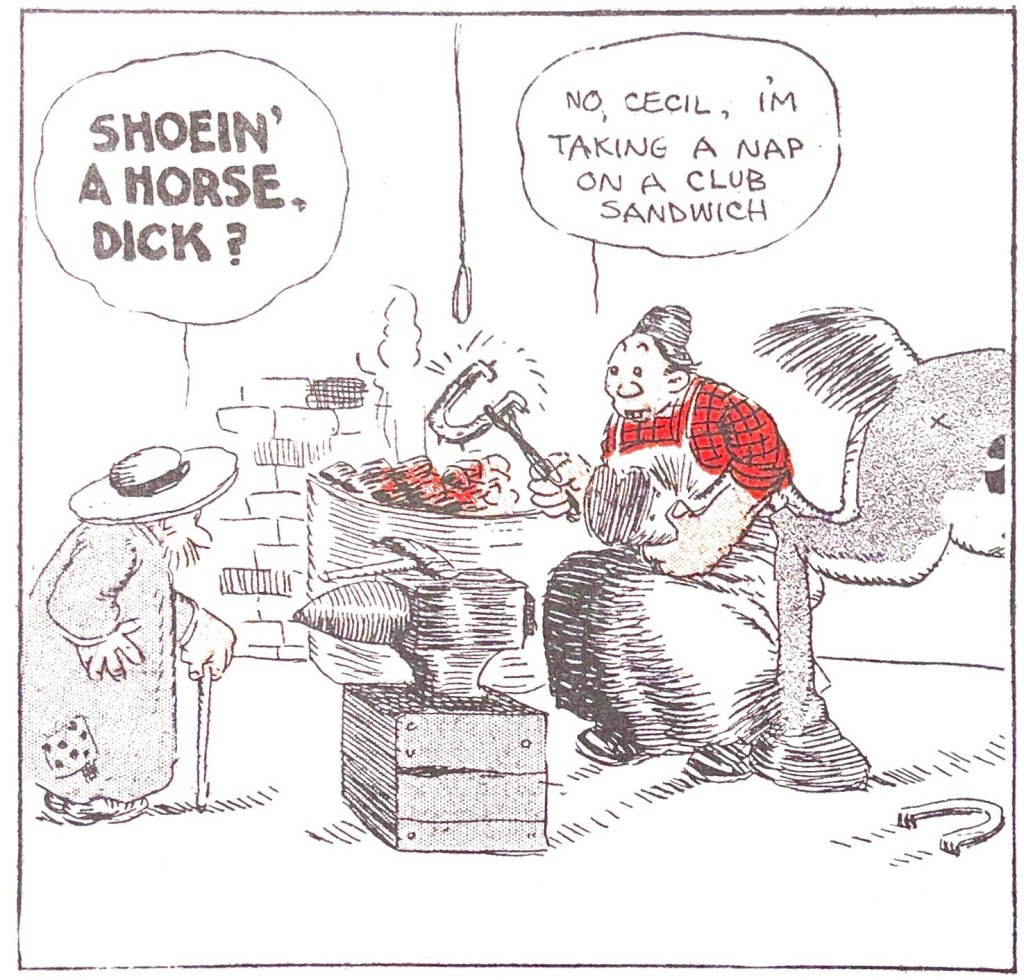
In 1908, Rube Goldberg continued to look for a comic strip series that captured popular imagination. His first Foolish Questions panel that year caught on almost immediately and it became a series in the Sunday Chicago Tribune. Like many strips in the first 20 years of the form’s history, Foolish Questions hinged on a simple gag repeated in every strip. In this case, the surreal silliness of the come-back to the “foolish question” is what gives the strip its energy. But most striking here is how Goldberg’s cranky, abrasive tone could also move into some gritty, dark places. Witness making light of wife beating. This is chilling, even in historical context, to see domestic violence treated this casually in a family newspaper, let alone seen as a site for screwball comedy.
Foolish Question also exercises a common comic strip trope – grumpy rejoinders to little human quirks. From its earliest years, the comic strip form took a light satirical perspective on everyday human foibles and excesses, the tics and social types that rang familiar with readers. Making fun of braggarts, poseurs, women’s fashion, the latest catchphrases or the middle class vogue of treating house pets like children (imagine!) were among the trends early comics artists poked.
In various forms Goldberg continued to answer Foolish Questions as late as 1939. These are from Sunday Press’ excellent compilation.





 Panels & Prose