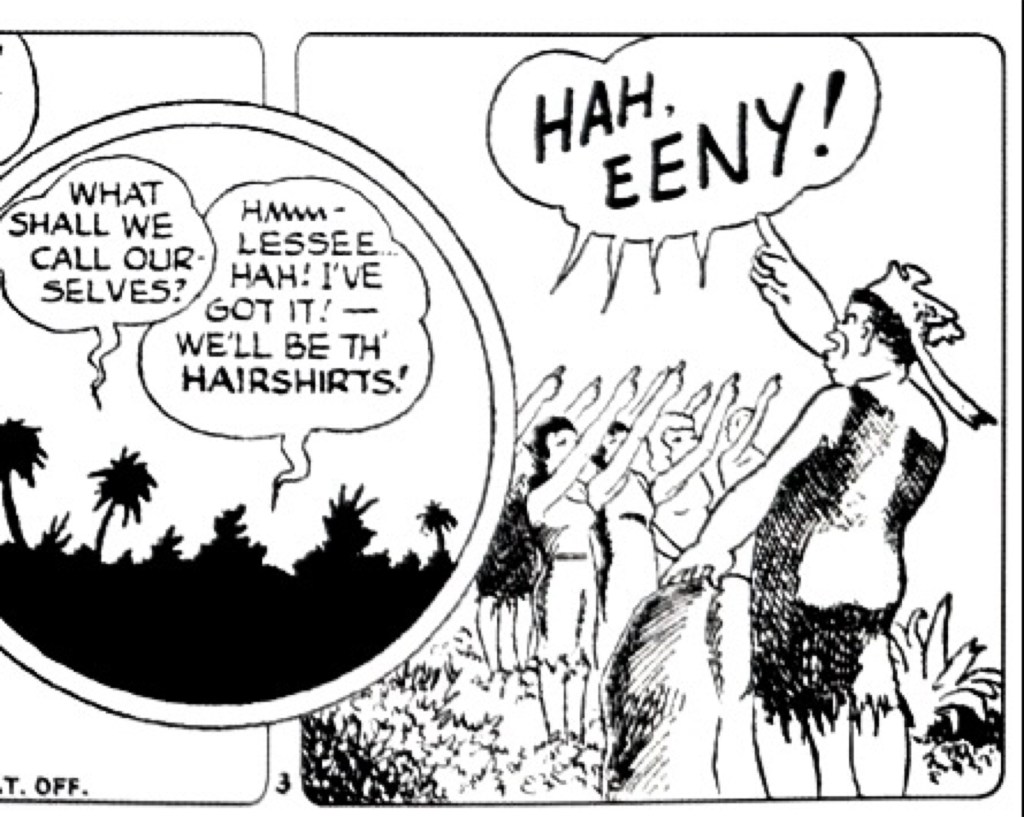
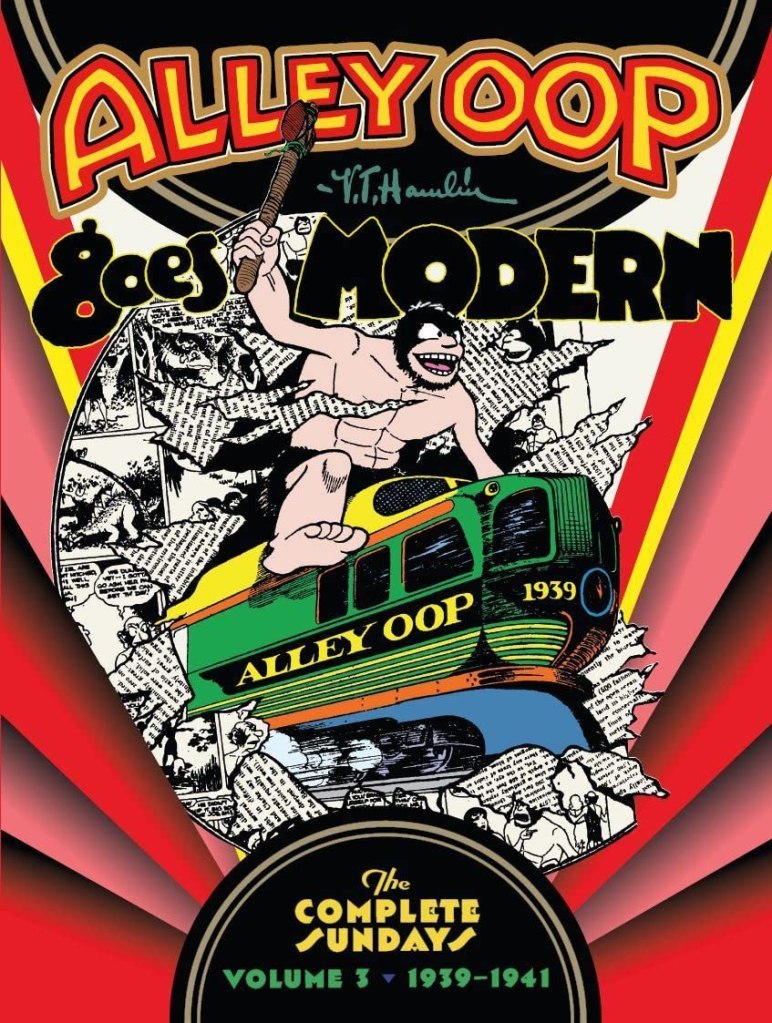
V.T. Hamlin was unambiguous about introducing to Alley Oop’s kingdom of Moo the interloping dictator Eeny in 1938. “She was Hitler,” he admitted in an interview later in life. Even three years before America’s entry into the war in Europe, Hamlin felt it was inevitable. The villainous dictator Eeny would reappear during wartime as well, but in this first episode we see Hamlin’s take on how bad leaders co-opt good people.
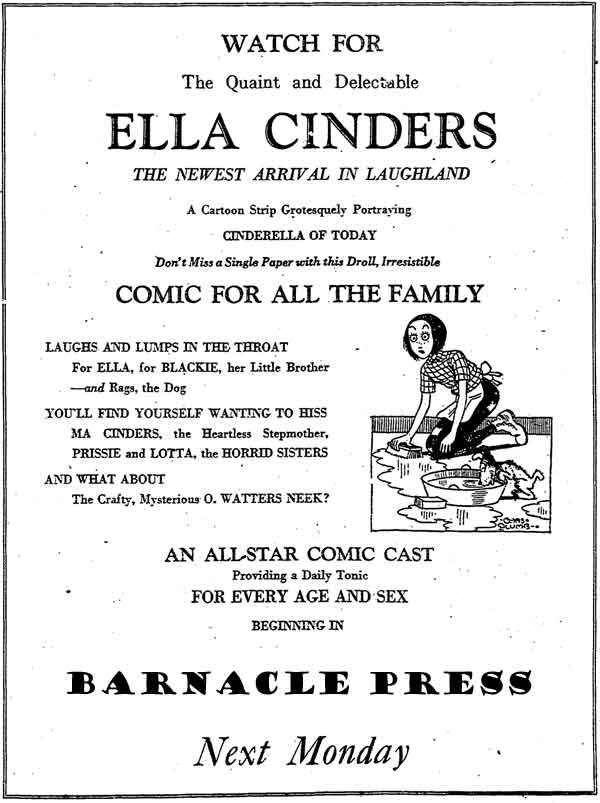
Ella Cinders (1925-61) was a female comic strip character with genuine character. And this is no small thing in an era of flappers, housewives and career girl stereotypes. While overlooked and under-appreciated, there have always been women both drawing comics and depicted in them. In the 20s and 30s alone we can point to Winnie Winkle, Tillie the Toiler, Dixie Dugan, Polly and Her Pals, Blondie, Connie, Fritzi Ritz, etc. But aside from the most visible heroine of the 20s and 30s strip, Little Orphan Annie, few of these female figures rose above bland cut-outs for the generic idea of the “New Woman.’ Even in the late 1940s, in the crop of more adventurous “Dauntless Dames,” that Trina Robbins and Peter Maresca featured in their wonderful new book, most heroines asserted their presence into the outside world more than they did assert an identifiable personality. Male helpers or wise-cracking boy sidekicks tended to provide the action and sharp banter. Aside from Annie, Dale Messick’s Brenda Starr (1940) is the first leading woman in comic strips to assert ambition and a full range of emotion.
Disney’s Silly Symphonies comic strip of the 1930s would not be my go-to place for veiled references to weapons of mass destruction, hobo philosophy, trench warfare or impoverished ghettoes. Much to my surprise, the first year of this brand extension of the studio’s hit animated short series included all of those dark themes and more.
Comic strip history fans should run, not walk, to grab the one indispensable reprint project of this holiday book season, Trina Robbins and Pete Maresca’s Dauntless Dames: High-Heeled Heroes of the Comics (Fantagraphics/Sunday Press, $100). And I don’t mean “indispensable” as a blurb-able critical throwaway, either. The female characters and creators reprinted here from the 1930s and 40s have been “dispensable” in too many histories of the newspaper comic. The central value of this volume is the smart editorial decision Trina and Peter have made here: surfacing strips and artists who have been underserved by the standard anthologies and reprint series. Whether it is Frank Godwin’s pioneering adventuress Connie or Neysa McMein and Alicia Patterson’s Deathless Deer, Bob Oksner and Jerry Albert’s Miss Cairo Jones or Jackie Ormes’ Torchy Brown Heartbeats, the editors have not only featured previously un-reprinted and forgotten material. We get here substantial continuities from each strip that allows a much deeper appreciation for each strip’s character interactions and story arcs than we get from typical anthology samples. You are in the hands of two masters here. Trina has single-handedly championed the history of women comics creators in a number of previous historical and reprint works. And the longtime editor and founder of The Sunday Press, Peter is not only a walking library of comic strip history, but a sensitive curator and restorer. As a book, Dauntless Dames has the same qualities as the heroines it reprints: at once brainy and drop dead gorgeous.
It has been a minute – or maybe a year? – since I rounded up my favorite books that revive or explore the great American comic strip or pre-code comics. I don’t know why we are experiencing such a torrent of good reprints from major publishers as well as a number of small enthusiast presses rediscovering artists. My hope is that a new generation of graphic storytellers are being inspired by their predecessors. The graphic novel genre has gone mainstream, and that means our respect for visual storytelling has evolved. And so in various ways the history of the modern comics medium has become important to help fuel the imaginations of a new generation of artists. Let’s dig in.
A lot of comic strip fans have been looking forward to these updated early volumes of The Complete Dick Tracy. Here are Vols. 1 and 2, just in today. This project reprints the first six volumes in the larger format that matches the rest of the series.
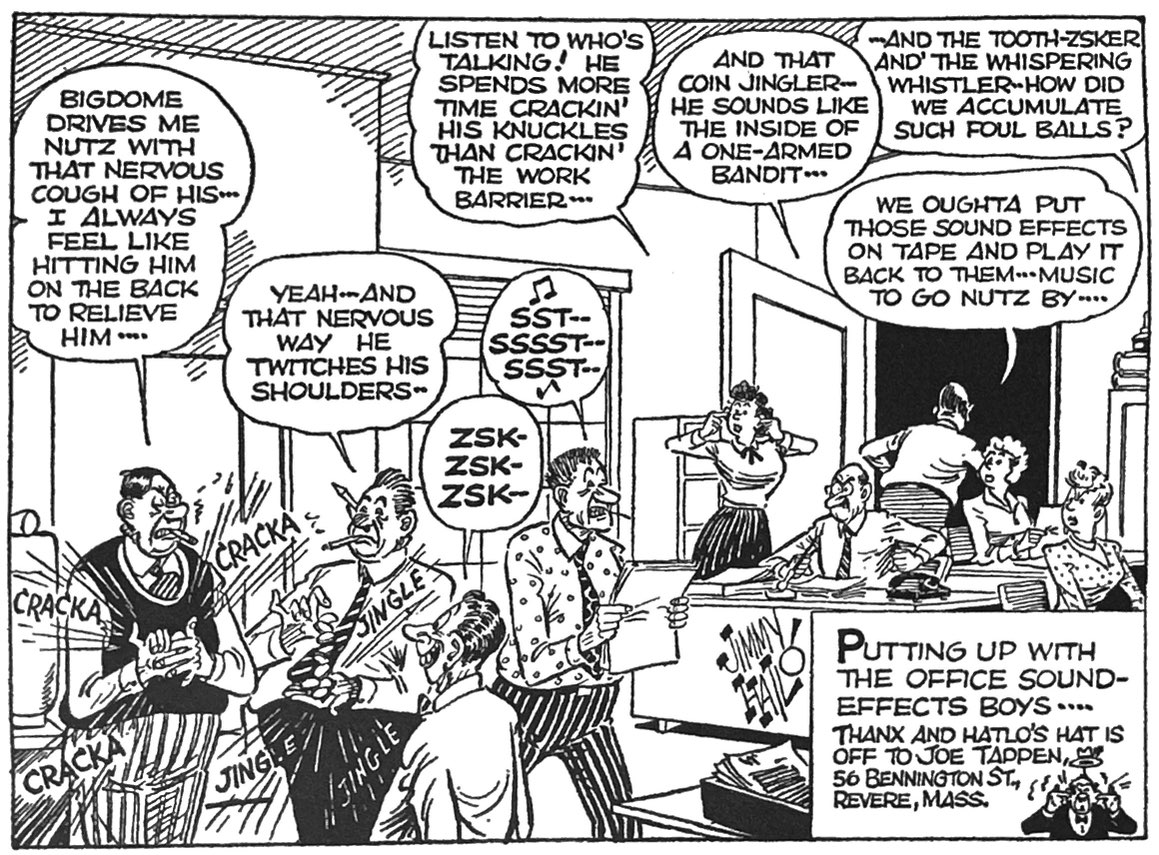
Jimmy Hatlo’s They’ll Do It Every Time (1929-2008) was as long-lived and beloved as it was throughly benign. To be fair, this single-panel museum of petty grievance had banality baked into its title and premise. The actual identity of the “they” is kept usefully loose enough to encompass an “other” of our choosing, but most likely all of humanity but us. And their “doing it every time” is by definition rote and predictable. But of course it is the aching familiarity of Hatlo’s observations that gave the strip purchase. Widely praised for poking at the small hypocrisies, human foibles, bombast of everyday existence, the strip had a special populist appeal. Hatlo was inspired by readers who submitted ideas and got daily credit with a “tip of the Hatlo hat” and even their name and street address for millions to see. Indeed, that was a vastly different era when it came to personally identifiable information. And yet, not so ancient. We can see in They’ll Do It Every Time predecessors of both user-generated content (UGC) and observational humor.





 Panels & Prose