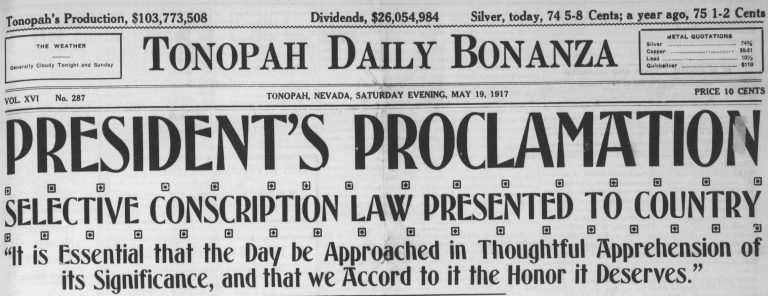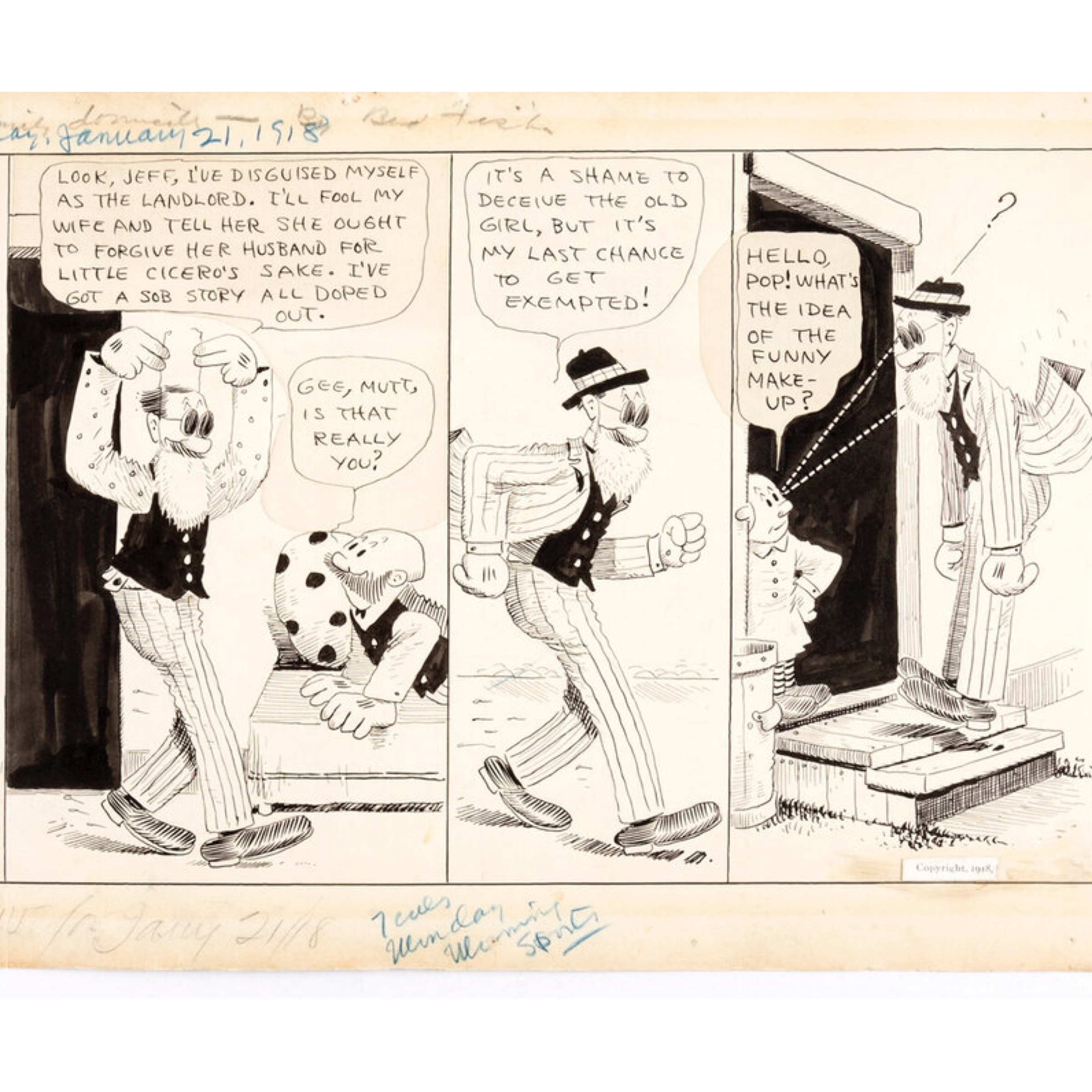
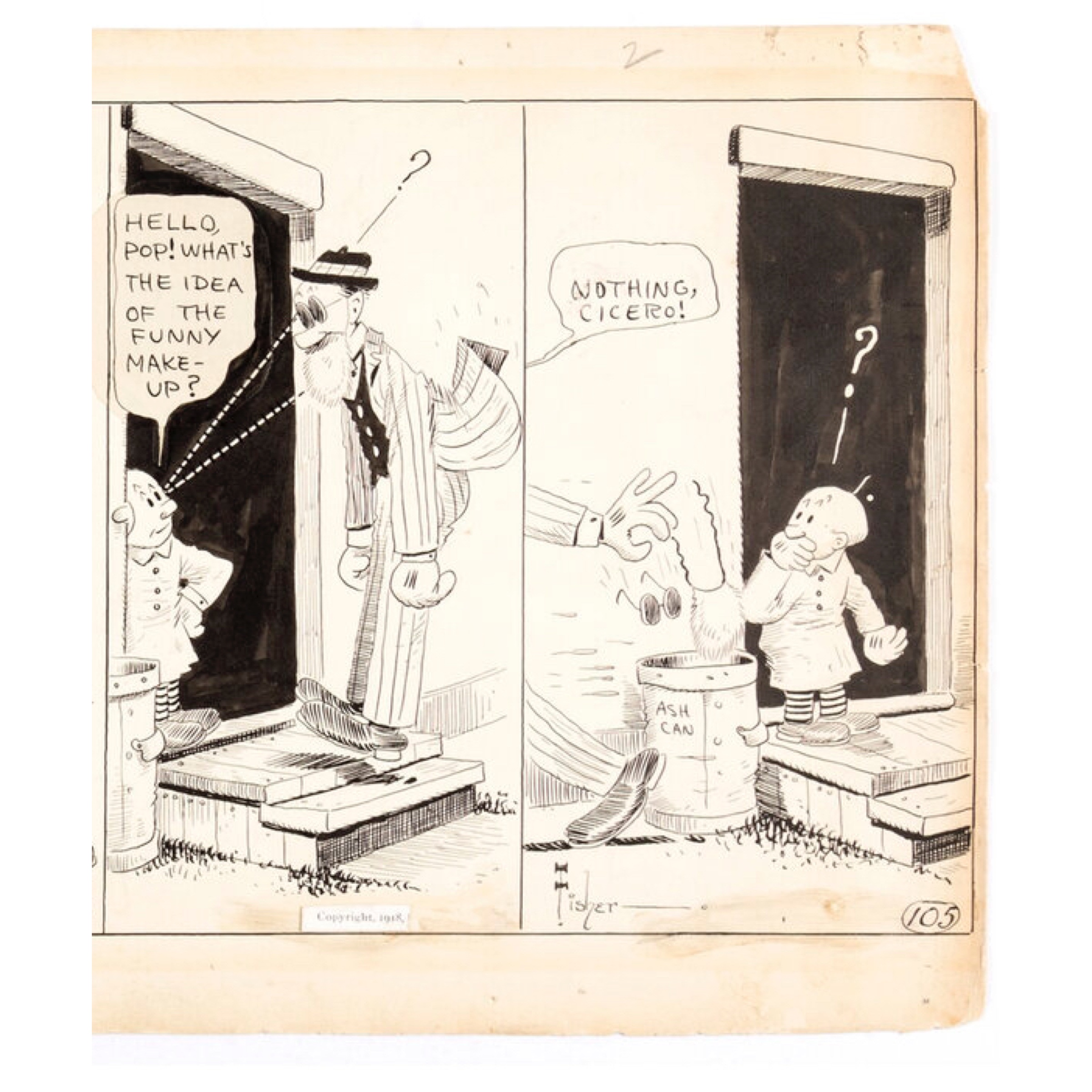
When Woodrow Wilson and Congress formally declared war on Germany in 1917, many Americans remained lukewarm on involvement. Volunteers for getting gassed and shot in the muddy trenches of the French front fell far short of goals. More persuasion was needed. And so Congress invoked the draft with the Selective Service Act that men to register for a draft lottery. Bud Fisher’s Mutt and Jeff registered continued ambivalence in this Jan. 21, 1918 strip in which both characters muse on draft exemption strategies. For Jeff this involves reuniting with his estranged wife.
This is a great example of what critic Gilbert Seldes meant when he cited the unique grittiness of the comic strip. The rest of America is gearing up a massive propaganda machine to whip up patriotic fervor for a dubious venture. In the world of Mutt and Jeff, however, self-interested scheming, the stuff of humanity, is a given. At their best, newspaper comics offered counterpoints to all of the news that preceded them in the daily newspaper simply by localizing and personalizing the political and civic coverage in the rest of the news.
This strip is scanned from Fisher’s original art. More on Mutt and Jeff’s first meeting here.