Clare Briggs’ contemplation of marital tension, Mr. and Mrs. (1919-1963) has always fascinated me both because of the harsh tenor of the strip itself and its source. When comics historians bother to remember Briggs (1874-1930) it is as quaint master of the nostalgic slice-of-life panels of small town childhood (The Days of Real Sport, When a Feller Needs a Friend, Aint’ It a Grand and Glorious Feeling). He is also credited with pioneering the format of the daily strip with recurring characters in A. Piker Clerk (1904) at Chicago’s American. But to contemporary newspaper readers in the 1910s and 1920s, he was among the best known, best-paid, and beloved of American cartoonists. His premature death in 1930 prompted both a single volume retrospective and a formidable seven-volume collection of his many strips.
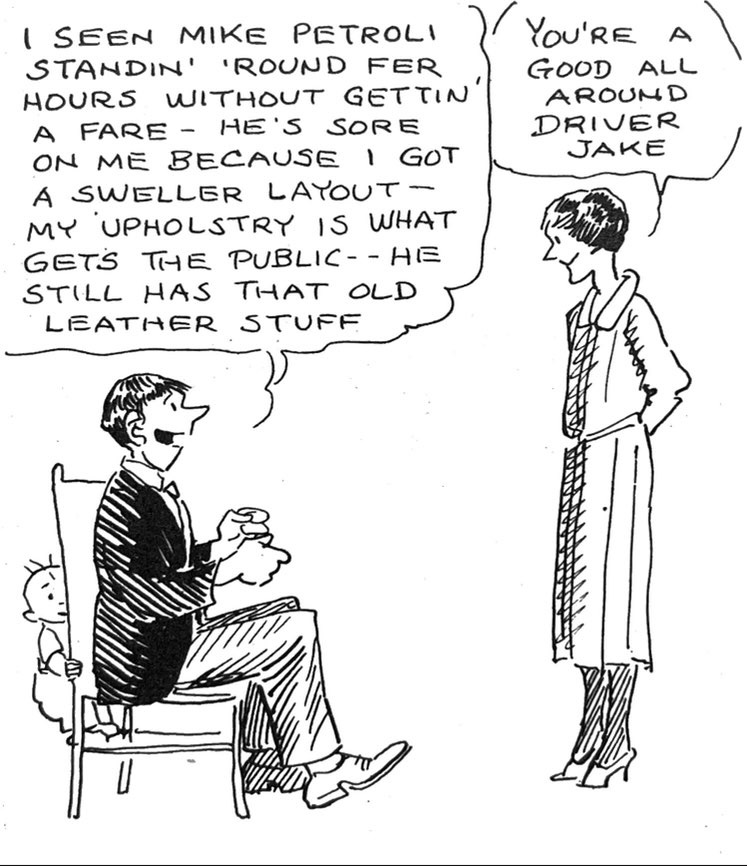
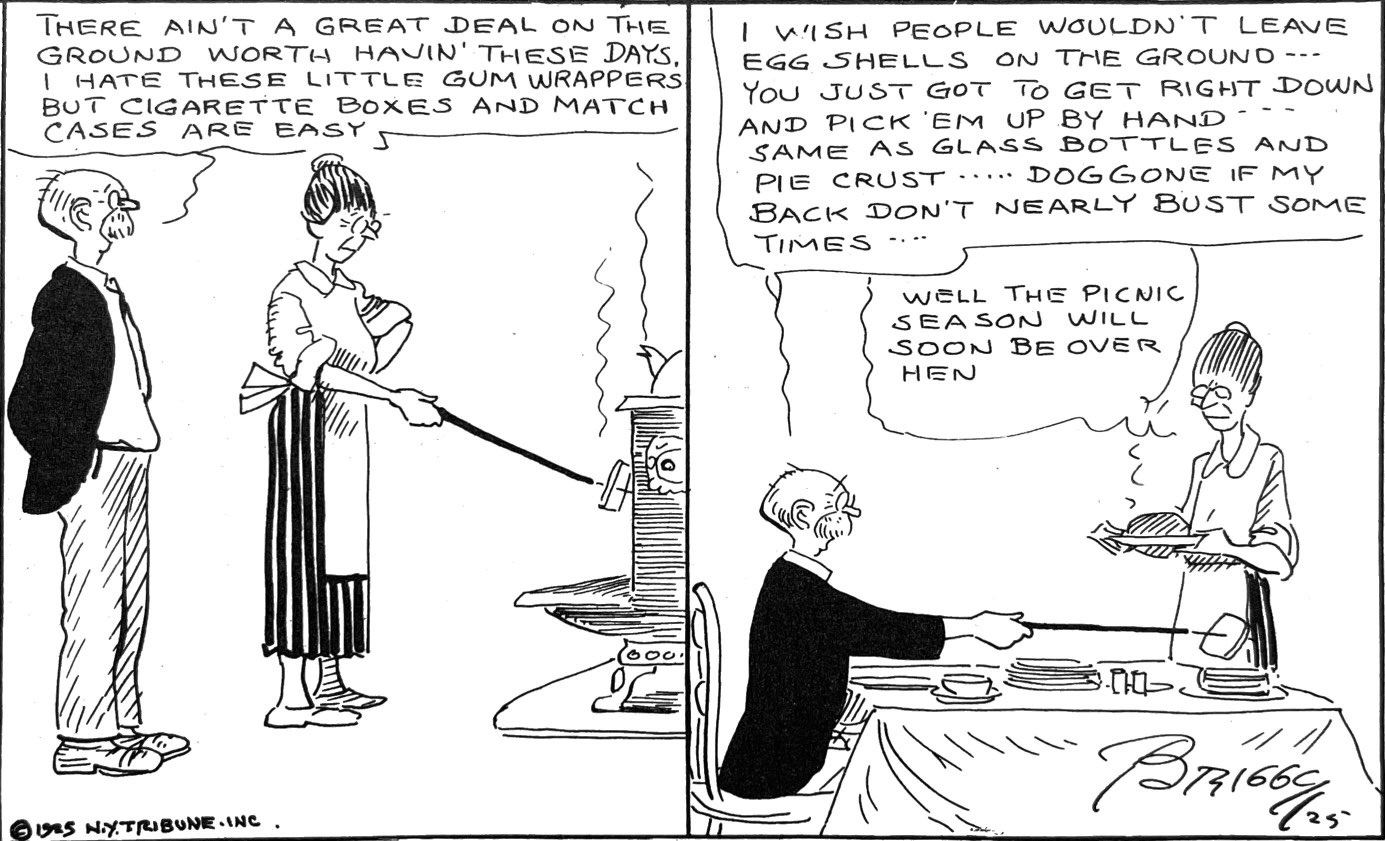
A shoe shine man enters his home after a long day’s work and boasts to his wife about his special talent for snapping his shine rag and using a better grade of polish. After work at a sign painter’s home, the practical artist extolls the superior quality of his brush and his unique mastery of curving letters. A park garbage cleaner muses on spearing newfangled gum wrappers and the challenges of cleaning up eggshells during picnic season. A soda jerk brags to his wife that his colleagues just can’t sling those mixed drinks as quickly as he. A street sweeper shows off to his wife the new brush with just the right heft and breadth for easier work, and then ponders his chances for promotion over “Jerry” who “is good at plain sweeping’ but he’s no good around telegraph poles.”
These scenarios of workingmen returning home at night and reflecting upon their craft was the conceit for Clare Briggs’ remarkable Real Folks at Home series of the 1920s. This was a deep dive into the nuances of pride, spousal support, small ambitions, respect for craft among the laboring classes for the most part. There were occasional forays into more vaunted professions like an orchestra conductor, opera singer, or baseball star. But largely Briggs was concerned with the hard-working manual laborers who may have been invisible to the white collar suburban classes to which many newspapers tried to expand their circulation after WWI. This was a regular celebration of the people who made towns and cities run, the dignity of work, and the native intelligence and thoughtfulness of “real folk.”
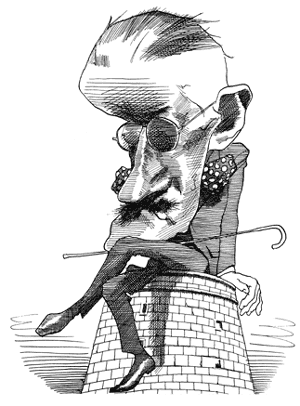
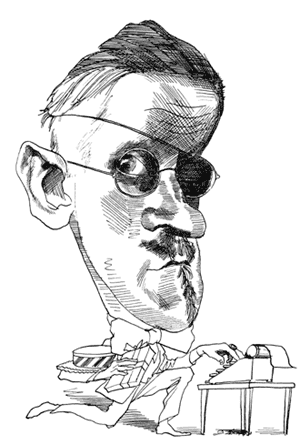
On June 16, 1922, Jame Joyce’s Ulysses was first published in Paris and quickly became a monument to the many strands of modernism that had been coursing through the literary and visual arts in the first decades of the 20th Century. And it would confound scholars and students ever after. To celebrate, here is a small collection of David Levine’s wonderful caricatures of the great Dubliner from The New York Review of Books. Levine’s puckish takes on revered literary figures in NYRB served as a welcome counterpoint to the somber and studied tone of the critical prose in the magazine.
Whatever one thinks of Joyce’s Ulysses, I am experiencing rereading it this week as an important antidote to the culture of now. So much of our high and low art on the 100th Bloomsday in 2022 is aimed at pandering, to providing messages and experiences that demand nothing of us. The digital targeting of messages and news through social media, art that likewise targets our sense of our own identity, leaders who follow – nothing about our culture makes us work at understanding anything beyond who and where we are now. Joyce is hard and disorienting, and reading him demands both attention and aiming higher than our current understanding. It is worth putting those demands on ourselves and our arts.
Joyce himself was not a visual artist, even if his prose was a master class in imagery. But he did try his hand at cartooning once in an artist’s studio when recovering from one of his many eye surgeries. Below is his rough rendering of Ulysses’ protagonist Leopold Bloom. I believe the words above it are the opening lines of the Odyssey.
If not Joyce, then try something else that is hard to read. Happy Bloomsday.
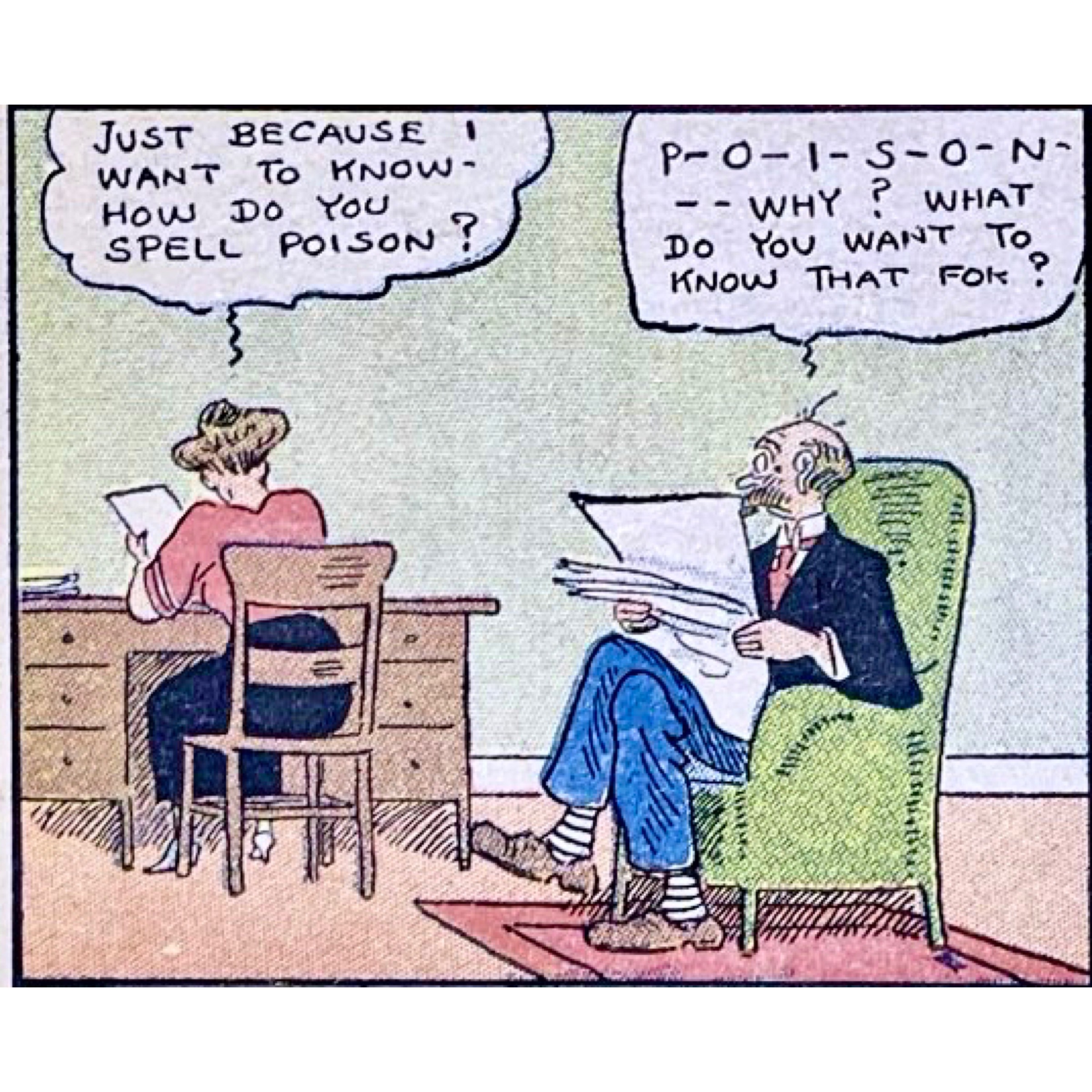
Misanthropic and petty, scheming and nagging, reviled by their neighbors and barely tolerable to themselves, The Bungle Family was the quintessential domestic comic strip of the 1920s. Critical historians like Bill Blackbeard, Rick Marshall and Art Spiegelman have singled out Harry J. Tuthill’s masterpiece as an especially dark and pointed critique of the modern petit bourgeoisie. But George, Jo and Peg Bungle were really the penultimate satirical family of 20s strips. George was no more a man on the make, looking for that get-rich-quick invention or financial scheme, than Barney Google, A. Mutt or even Andy Gump. His wife Jo was no less socially self-conscious and ambitious, nor more of a nag, than Jigg’s Maggie. And Jo wasn’t even in the habit of throwing things. Nor was the Bungle family dysfunction any worse than the in-fighting at Moon Mullin’s boardinghouse.
Comic disharmony between Jiggs and Maggie over their social climb was the central joke of George McManus’s Bringing Up Father for over four decades. For all of McManus’s fine sense of humor, he banged that one note across four panels six days a week and a full page every Sunday. To be sure, he layered in nuances of class and generational conflict. Jiggs was a hod carrier who struck it rich, never adjusted to his own ascent, and clashed with wife Maggie and daughter’s ambitions to join the social elite. The dynamic was rich with potential and embodied the experience of millions of American emigrees moving into the modern middle class. But many of the daily strips tediously replayed Jiggs’s sneaking out to his former watering hole Dinty Moore’s, embarrassing his family with etiquette transgressions or ducking Maggie’s thrown dishes. These were conventions that American newspaper readers enjoyed hearing for a handful of panels and 30 seconds a day over its 87-year run. McManus, however, was especially adept at maintaining reader interest in the familiar with his mastery of visual style, panel sequencing and timing.
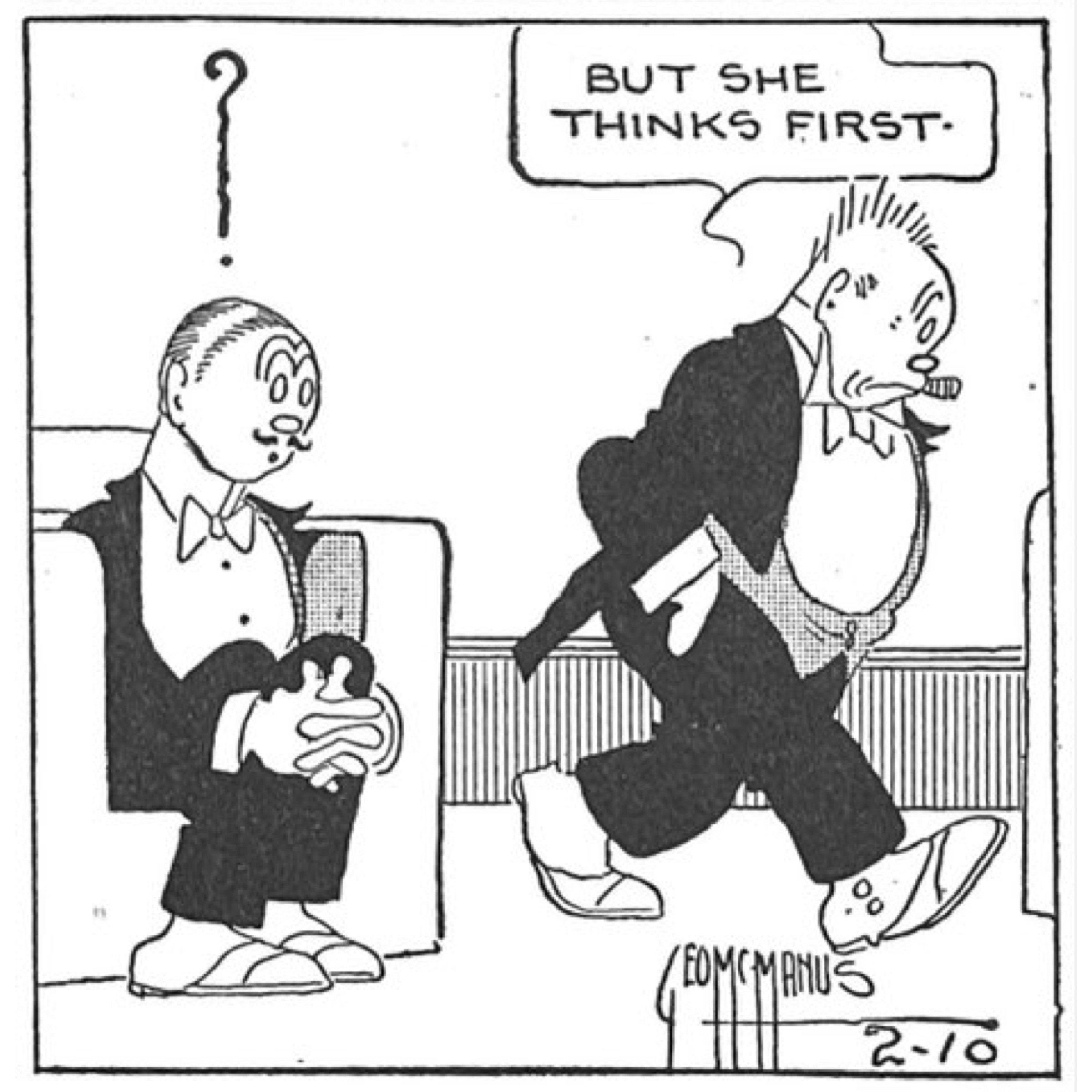
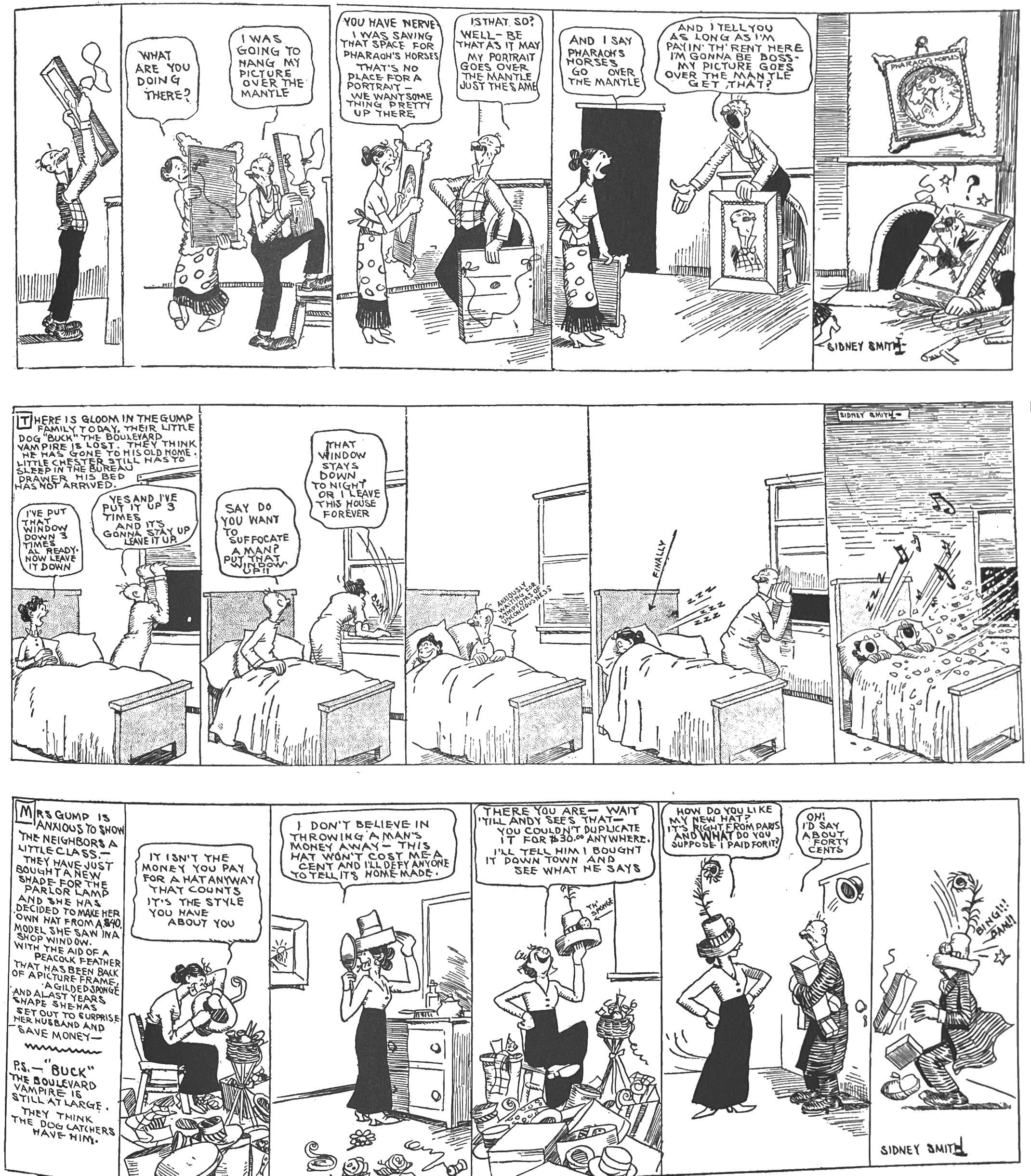
One of the singular comic strip launches must be the artful transition from Sidney Smith’s relatively short-lived (1912-1917) Old Doc Yak to one of the great runs of inter-war family strips, The Gumps (1917-1959). Doc Yak was a goat and centerpiece of an early sitcom daily. Smith ended the Yak run to start his Gumps series by literally evicting his hard-luck goat from the premises. In the early days of 1917, Yak’s landlord threatens to toss his deadbeat tenant unless he pays up. Failing to raise the back rent, Yak takes a powder, leaving the landlord with a taunting note (never likes the place anyway) and an empty property. In the final panel of Feb. 10, 1917, the landlord announces that new tenants will be moving into the property and the strip on Monday.
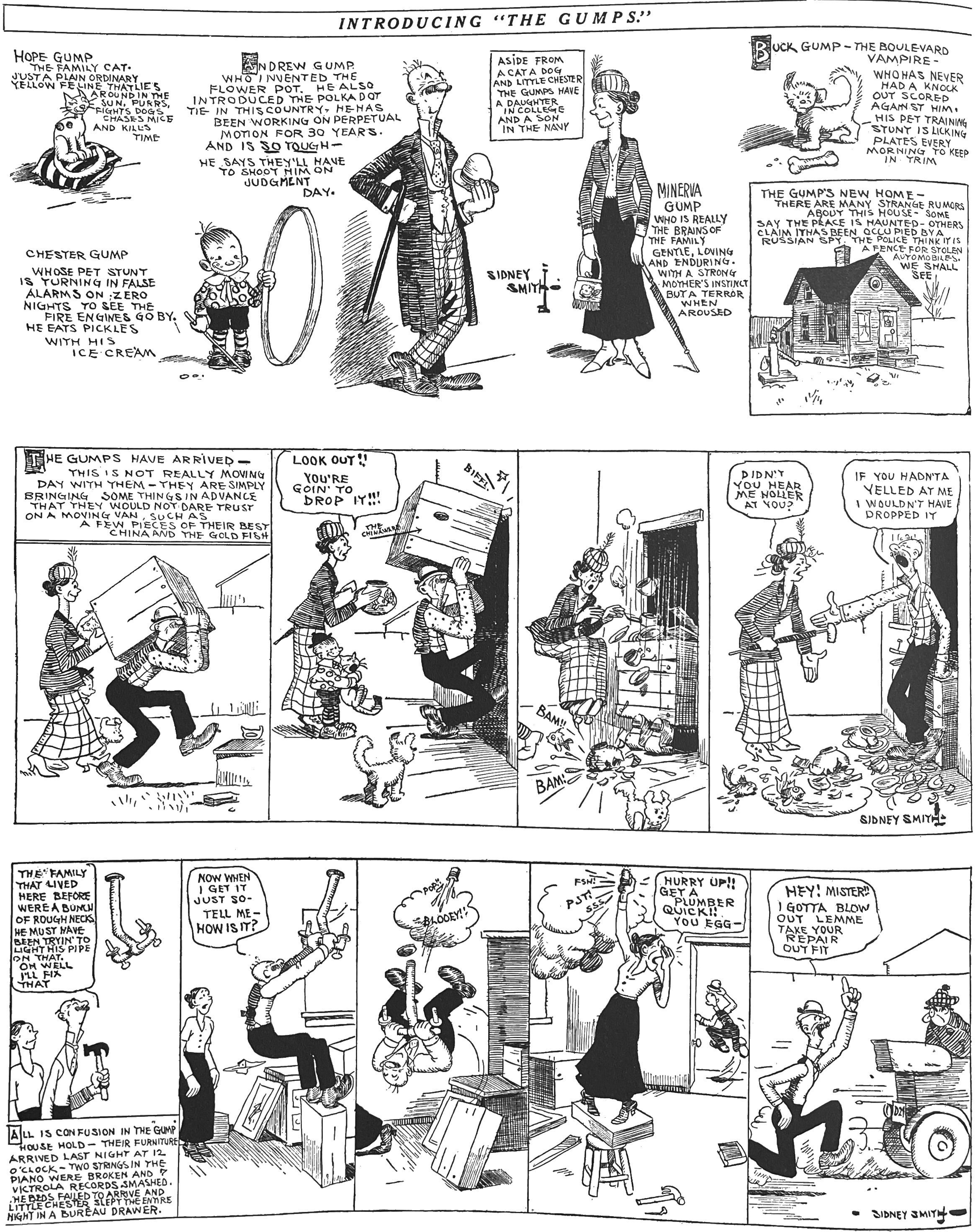
And on that following Monday, indeed, the eerily jawless Andy Gump and the Gump clan are introduced. The strip was quite literally vacated by one character and occupied by a new one. in fact, in the closing day of the Yak series Smith tells the reader “Doc has but one day left to raise the rent or be thrown off this page.”
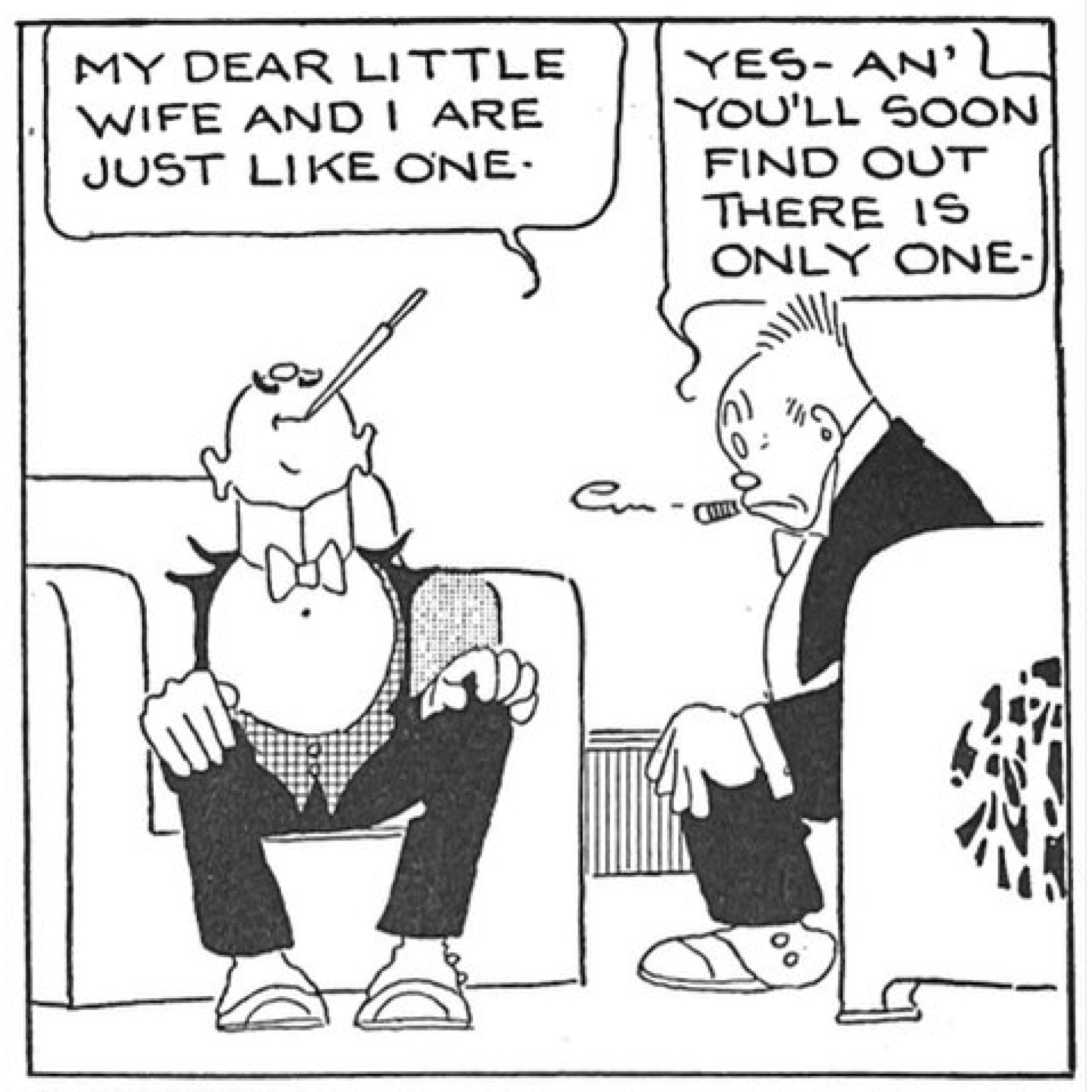
Andy Gump himself would go on to become one of the most recognizable and seminal sitcom dads in the early decades of century. The besieged and aggrieved comic father figure had been foreshadowed already in the Dingbat Family, Bringing Up Father and Smith’s own Old Doc Yak. But Andy helped crystallize and propel the sitcom formula. Overconfident of his knowledge, skills and savvy, Andy was the kind of oafish but ineffectual blowhard that would become the bedrock of radio and TV family comedy for, well, forever. His patient wife Min is understood as the quiet “brains of the family” as well as its heart. Life of Riley, The Honeymooners, The Jeffersons (and pick any 2000s famcom) rode the same formula. Which is to say that America has been laughing about the middle and working class father figure pretty much since they were invented. But the formula really seems to have taken shape in the comic strips of the 10s and 20s.
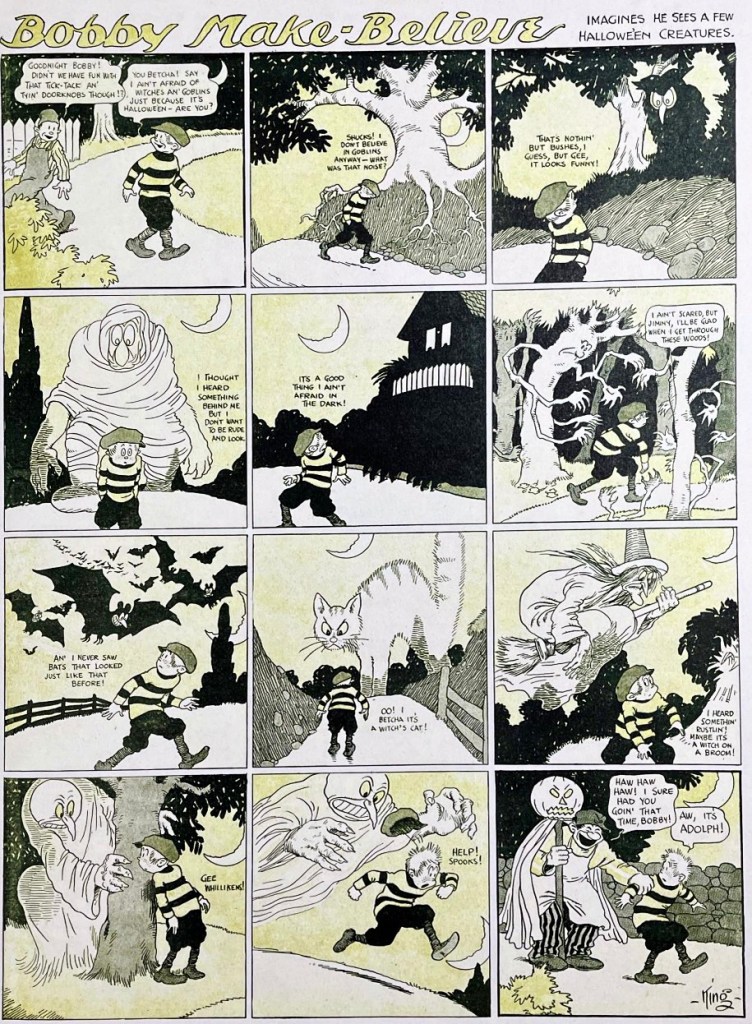
By title alone Frank King’s Bobby Make-Believe strip is compared to Winsor McCay’s Little Nemo. But King Brought to the strip richer and subtler understanding of the inner life of children than McCay. And yet, like McCay, King loved to play with nature and landscape, bringing out their surreal potential. But this strip foreshadows the gentle sensitivity to everyday emotional reality King was about to bring to Gasoline Alley.











 Panels & Prose