Great Moments: Ring Lardner’s “You Know Me, Al” Launches

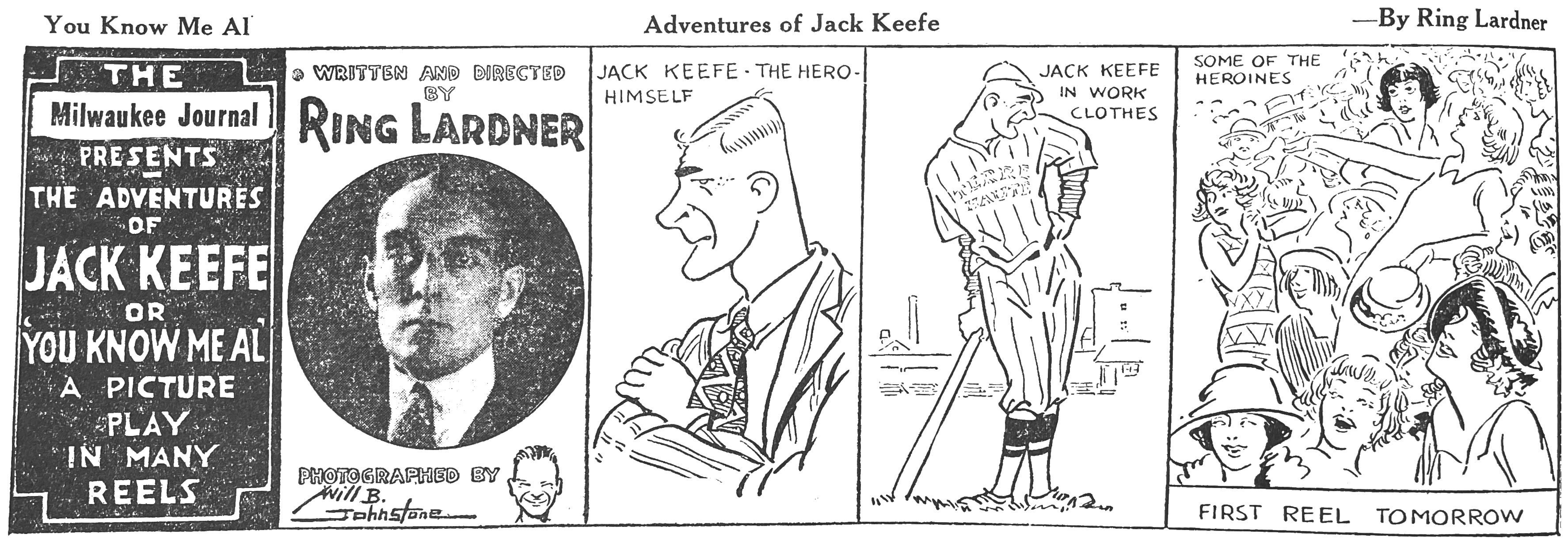
American humorist, sportswriter, magazine columnist Ring Lardner had already been writing the “You Know Me, Al” series of humor pieces for The Saturday Evening Post since 1914 when a comic strip version launched in 1922. The format was epistolary, ongoing letters that bush league pitcher Jack Keefe wrote to his friend Al back in his old small town. Keefe is a rube in the city, often clueless in the face of urban pretensions and jaded attitudes. 

Keefe is dropped into the real life Chicago White Sox organization, called up from the minors as the team was struggling back from the infamous Black Sox scandal of the previous decade. Real life owner Charles Comiskey is off stage but forever keeping Keefe in his place. Larder makes reference to a host of actual sports figures and rivalries throughout the strip, but baseball play itself is only occasionally depicted.

The basic action of the strips are Keefer’s everyday interactions with the women who often pursue him, sportswriters who cover him, and team owner Comiskey. The humor of the strip came from Jack’s mildly inflated sense of his own talent and attractiveness.
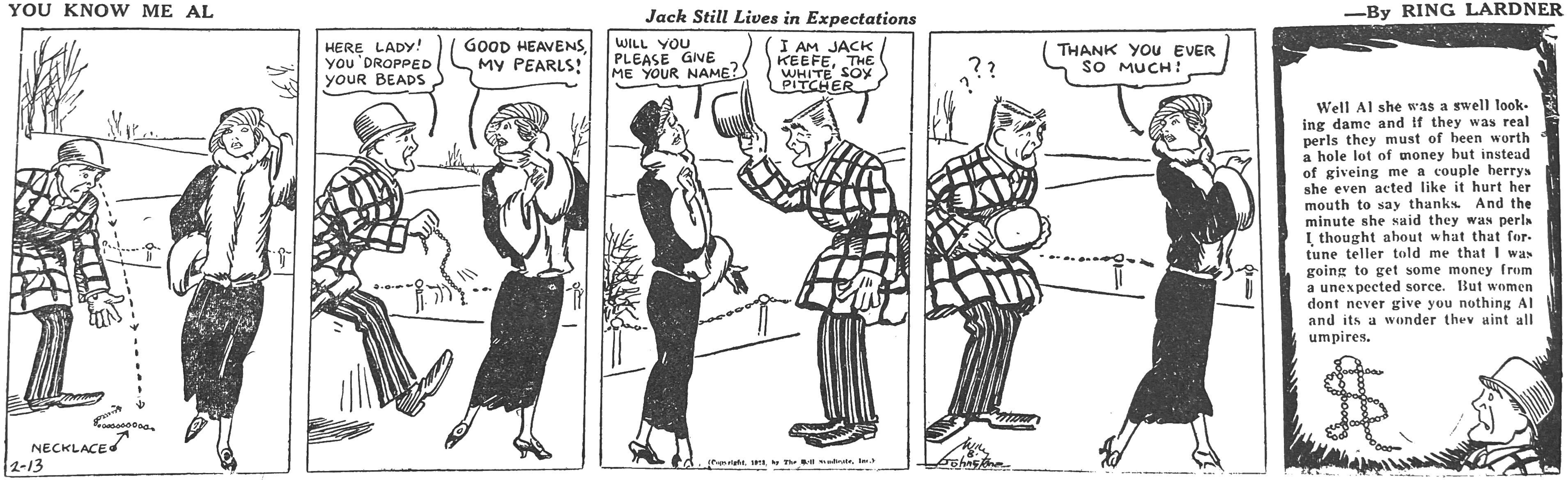
The country vs. city meme had been central to American comic strips since its earliest years. The transformation of American society and culture from an agrarian, rural sensibility to an urban, industrial one was still echoing throughout mass media and literature in the American 20s. More so than most cartoonists, who tended to lionize the plain spoken, morally upright mythology of small town America, Lardner poked fun at Keefer’s naïveté both to the world and to himself. He is forever fooled or easily outsmarted by city ladies, competing suitors and Comiskey. Keefe goes into the main office pumped up to demand a $500 advance, quickly retreats to $50 and then leaves satisfied when told to come back for his “advance” on pay day. 

The strip continuities were outlined by Lardner, who was overworked at the time with magazine articles, columns, and even dramas bearing his name. The artwork was done by popular sports illustrator Dick Dorgan, who lived near Lardner in the New York suburbs and had been illustrating Lardner books and columns for years. Dorgan was also brother to more famous cartoonist TAD. After a few years, Lardner stopped writing for the strip, though it retained his name for a while.

I find Dorgan’s drawing style attractive in its looseness. The lines seem ready to fall apart at any moment, and yet they communicate character more through posture than expression. He keeps most frames visually interesting by working with angles, body leanings, competing head hangs and positions. In some of the best strips it feels as if there is a storyline apparent just in body attitudes. Perhaps this is the attribute of a good sports illustrator, always sensitive to the physicality of character, momentum, stance.
Great Moments: Rube Goldberg’s Foolish Questions, 1909

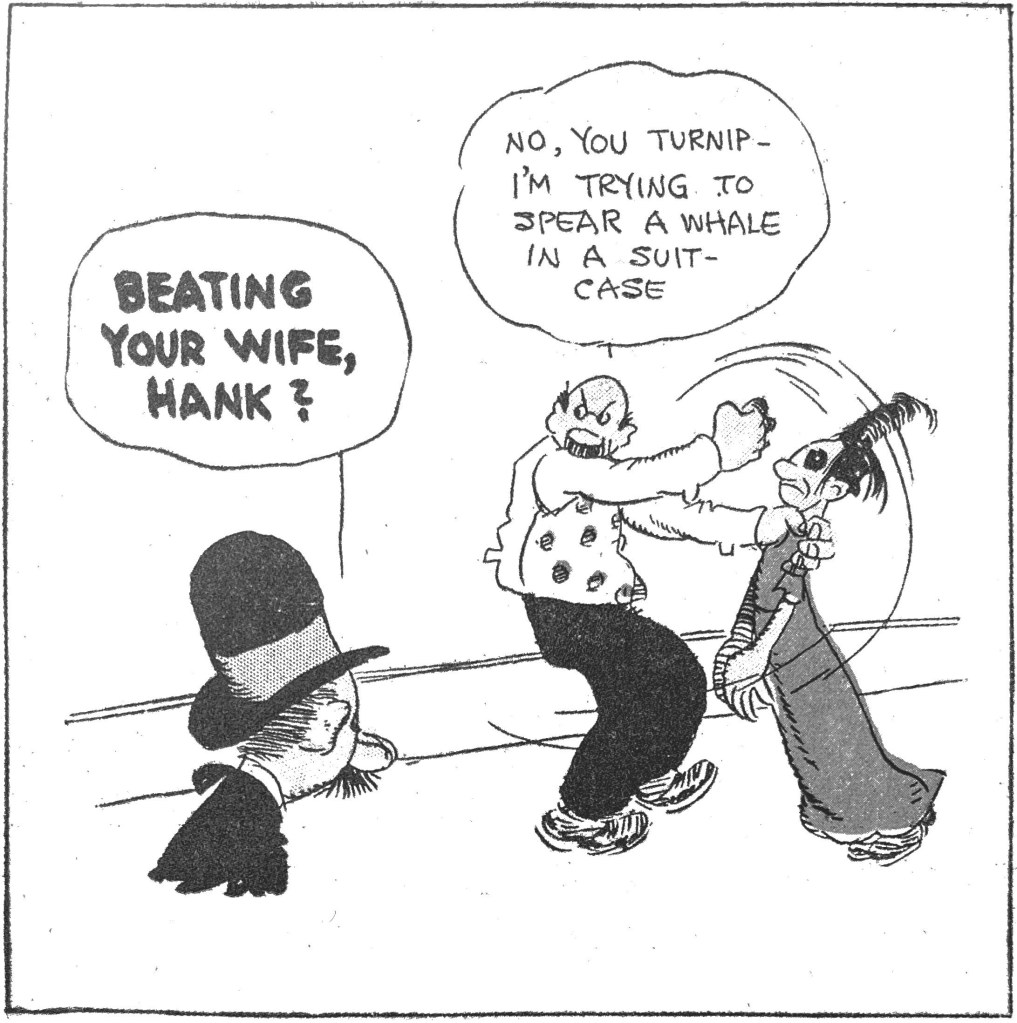
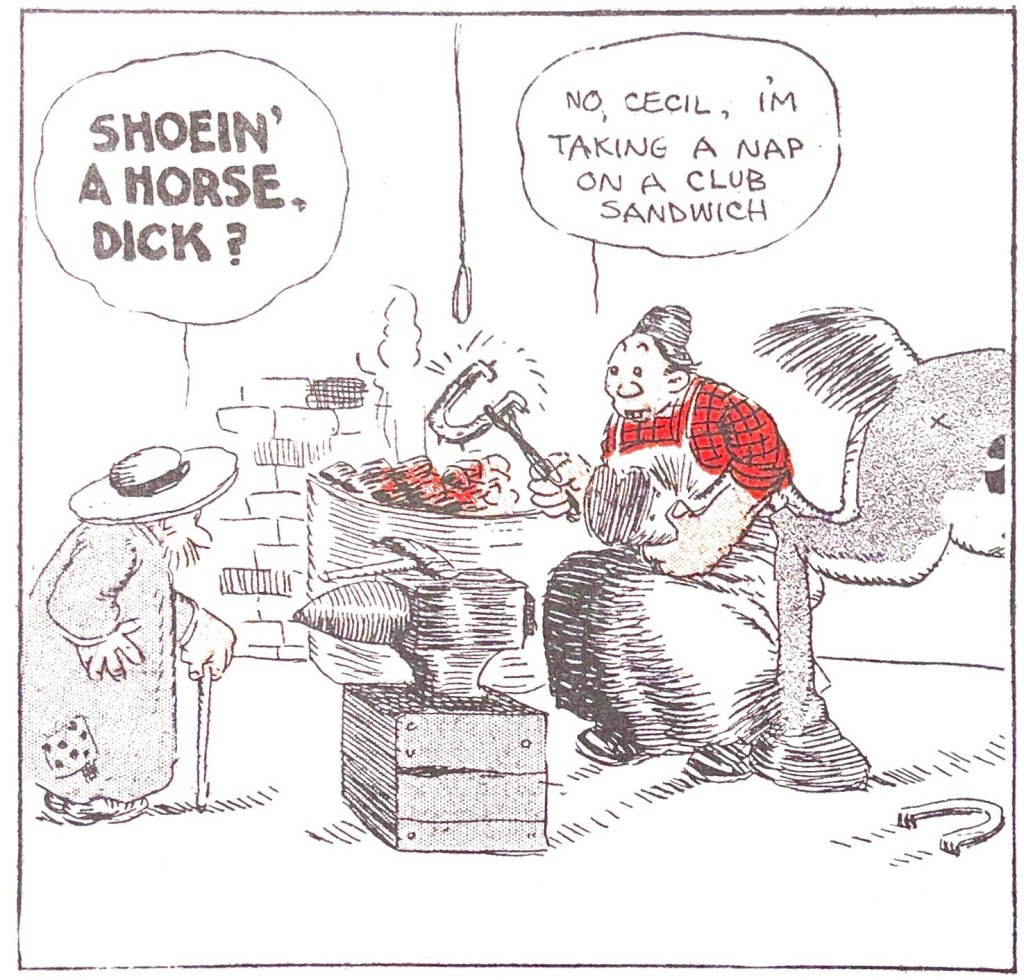
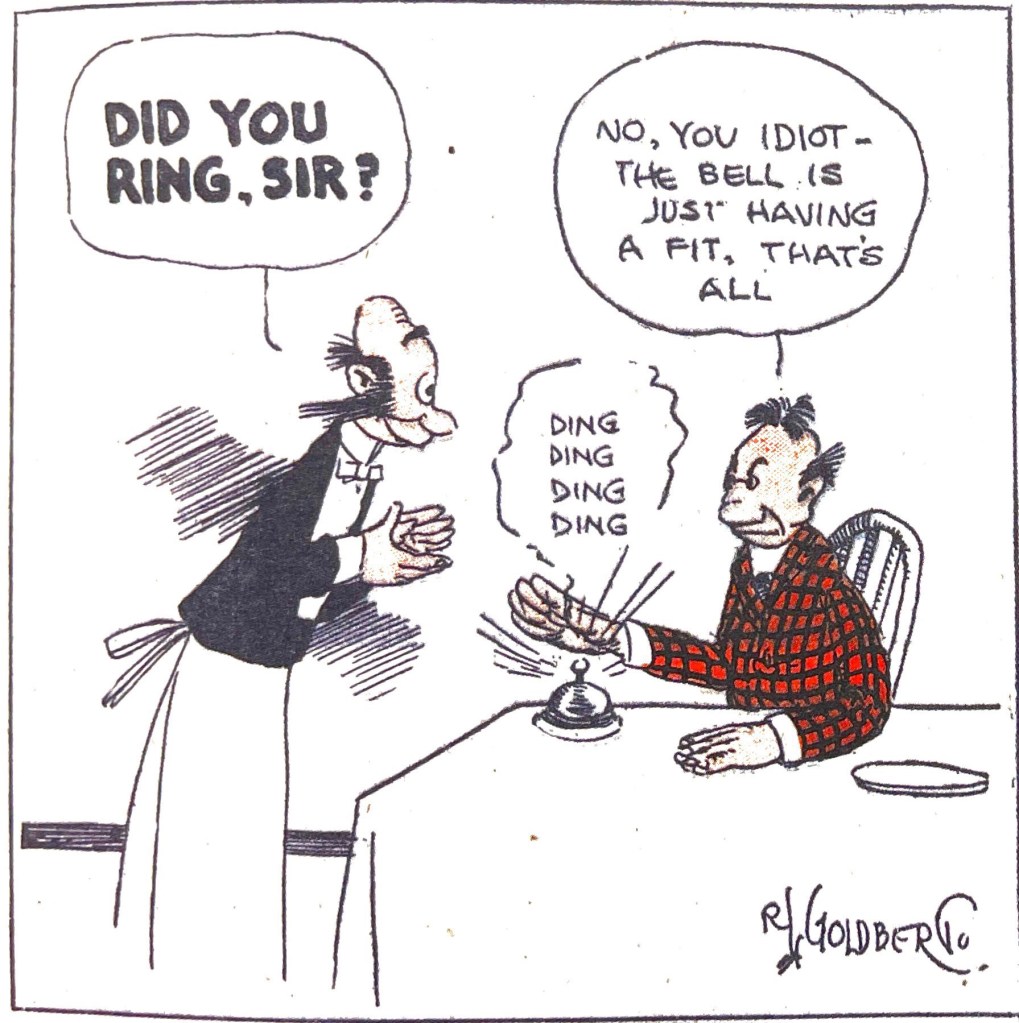
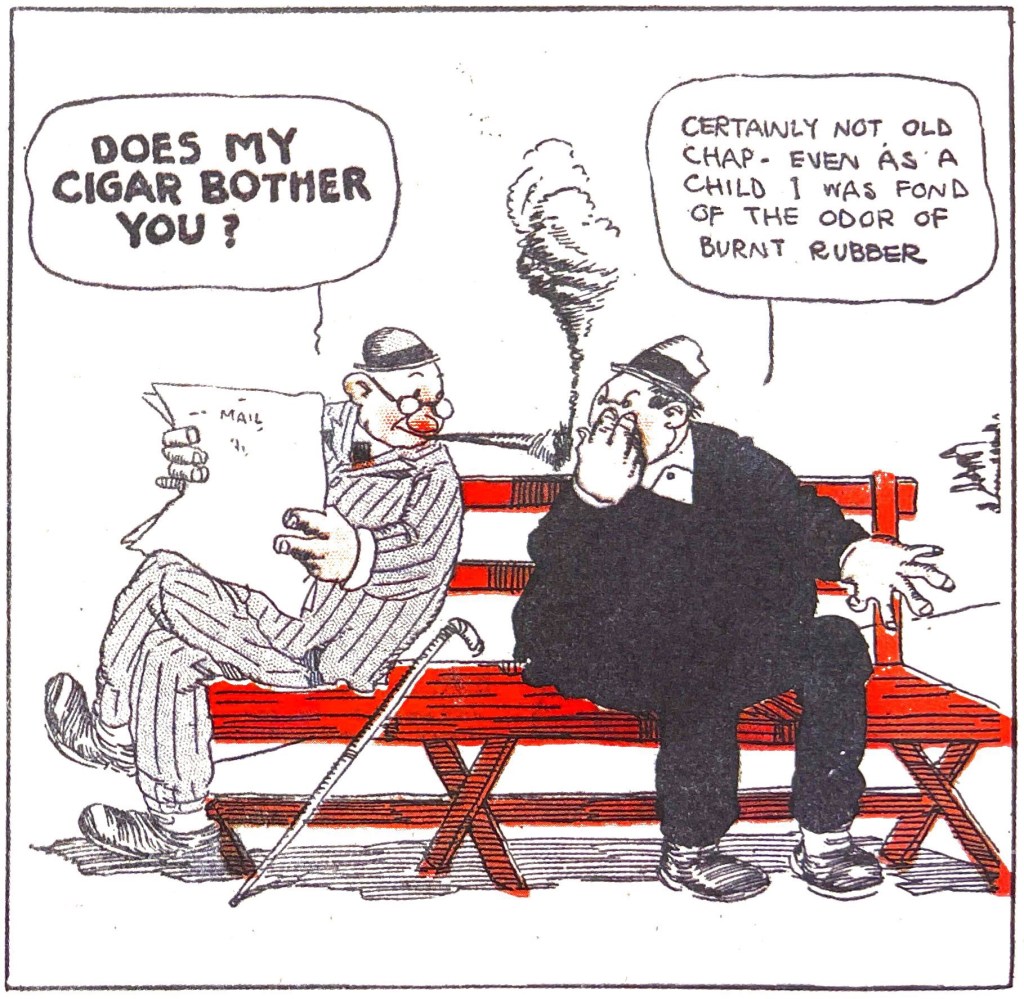
In 1908, Rube Goldberg continued to look for a comic strip series that captured popular imagination. His first Foolish Questions panel that year caught on almost immediately and it became a series in the Sunday Chicago Tribune. Like many strips in the first 20 years of the form’s history, Foolish Questions hinged on a simple gag repeated in every strip. In this case, the surreal silliness of the come-back to the “foolish question” is what gives the strip its energy. But most striking here is how Goldberg’s cranky, abrasive tone could also move into some gritty, dark places. Witness making light of wife beating. This is chilling, even in historical context, to see domestic violence treated this casually in a family newspaper, let alone seen as a site for screwball comedy.

Foolish Question also exercises a common comic strip trope – grumpy rejoinders to little human quirks. From its earliest years, the comic strip form took a light satirical perspective on everyday human foibles and excesses, the tics and social types that rang familiar with readers. Making fun of braggarts, poseurs, women’s fashion, the latest catchphrases or the middle class vogue of treating house pets like children (imagine!) were among the trends early comics artists poked.

In various forms Goldberg continued to answer Foolish Questions as late as 1939. These are from Sunday Press’ excellent compilation.

Frozen Motion: Opper’s Machine Poetry

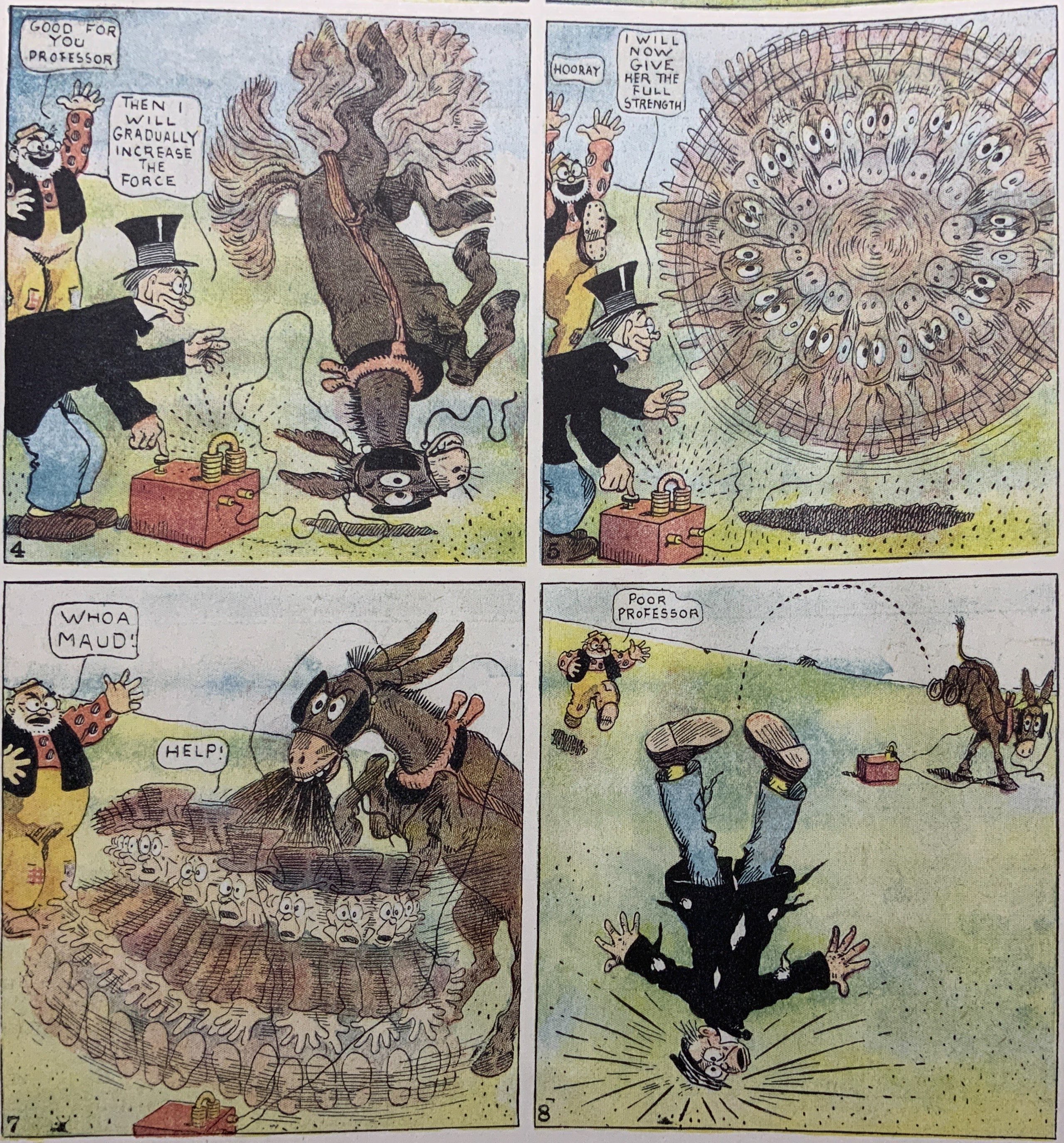
America was in motion, and the first decades of the comic strip were shaped by that culture and in turn interpreted it. Frederick Burr Opper was the chief poet of motion. When his signature characters Happy Hooligan and Maude the Mule did their blurred spin (with multiple iterations of a pie-eyed, panicked visage) he gave us an enduring visual trope. This was frantic motion expressed in a contained, comic, vital way.

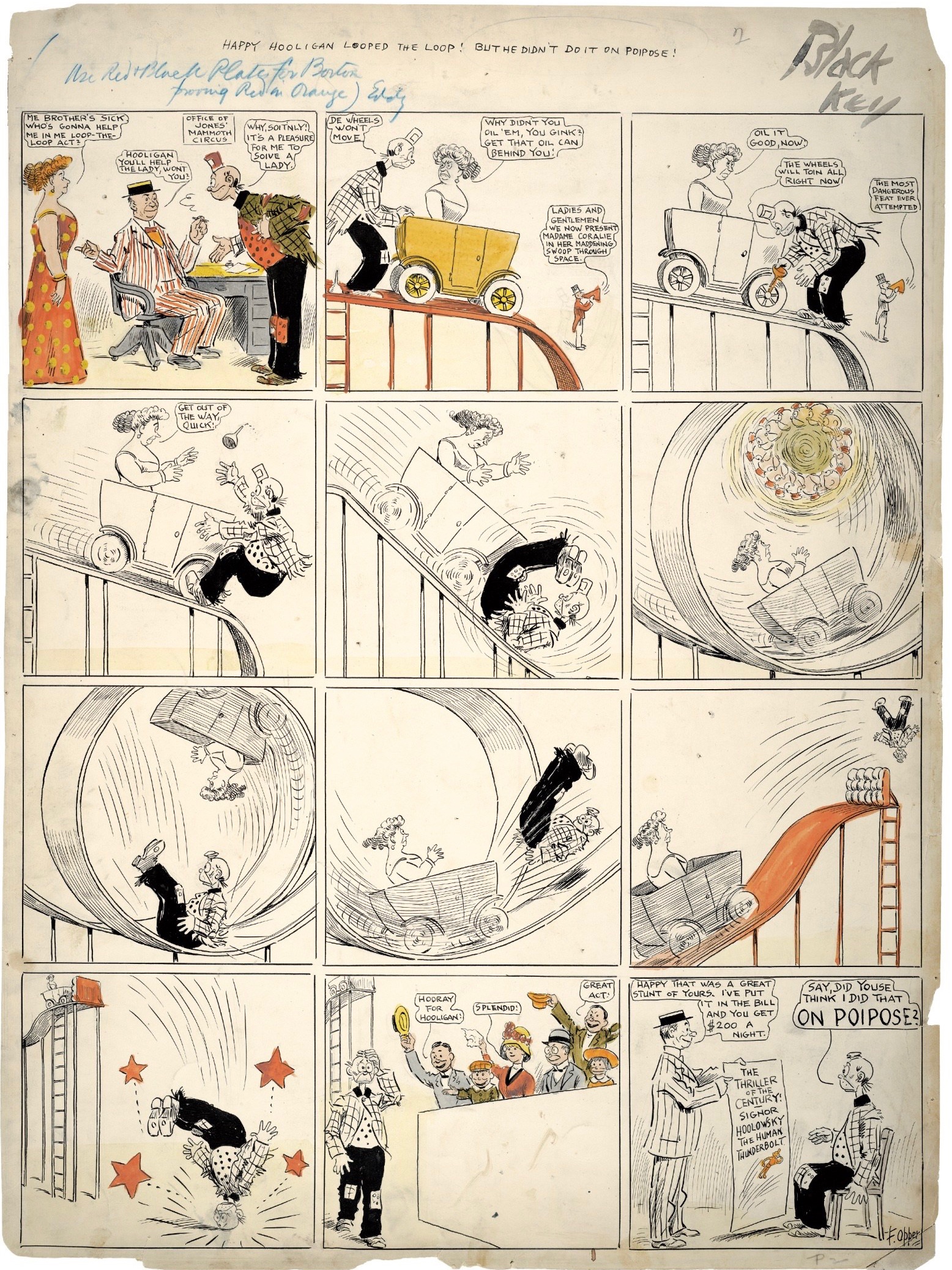
“Happy Hooligan Looped the Loop: But He Didn’t Do It On Poipose!” (July 25, 1909) has been reprinted at least twice and for good reason. It best exemplifies Opper’s talent for containing and ordering chaotic motion with lyric, mechanical beauty. As always, Hap’s misfortune begins with a good deed, assisting a circus performer’s “Hoop Act.” As she descends the track in her roller coaster car, he is toppled and set into motion.

But Opper is all about cause and effect, not chaos. Most of his earlier Happy Hooligan slapstick starts with a small mishap, a dropped hat, a poorly timed turn, that starts a chain reaction of motion that Opper shapes into a series of comic frozen moments. Notice how he breaks down the Loop sequence into a series of causes and effects. There is the bump of the cart, the signature spin from the momentum, the thump to the bottom of the loop as gravity triumphs, the final launch into space. What otherwise might seem like explosive, chaotic motion is dissected into its parts, turned into a kind of ballet, visual poetry, but one with understandable structure.

Along with Outcault in Yellow Kid, Dirks in Katzenjammer Kids and McCay in Little Nemo, Opper visualized Some of the inchoate forces of modernizing America – motion, energy, mechanical action – in ways that expressed and contained anxiety around them. Opper’s focus on the physical mechanics of motion, of showing it as a series of causes and effects, is just one way of expressing the idea of motion. In another post, I try to explore this point with a sample of early comic artists and how they interpreted motion.

Bending the City – McCay’s Urban Dreams

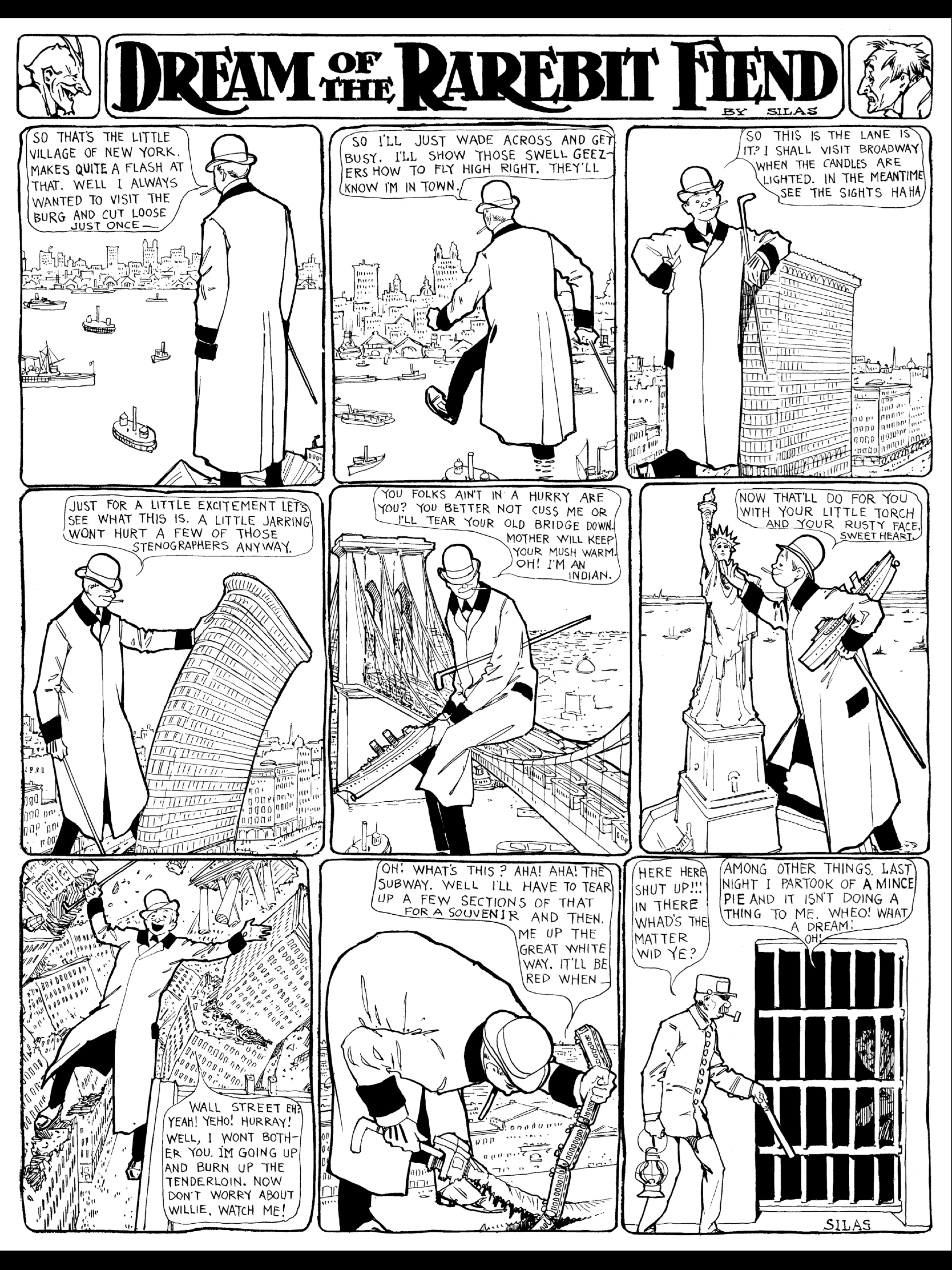
The teeming, always moving, mechanized, bureaucratic, dwarfing city was the the most striking new reality pushing on American in just those very years the comic pages emerged in the late 19th and early 20th Century. Many of the leading artists of the day like Outcault, Opper and McCay were themselves midwestern rural transplants for whom the big city and its humbling scale must have been disorienting environments. Outcault was known to walk the streets of the city picking up inspiration and ambience for his Hogan’s Alley/Yellow Kid vision of tenement life. McCay lavished the city skyline with his obsessively detailed line work in both Dream of the Rarebit Fiend and Little Nemo in Slumberland.

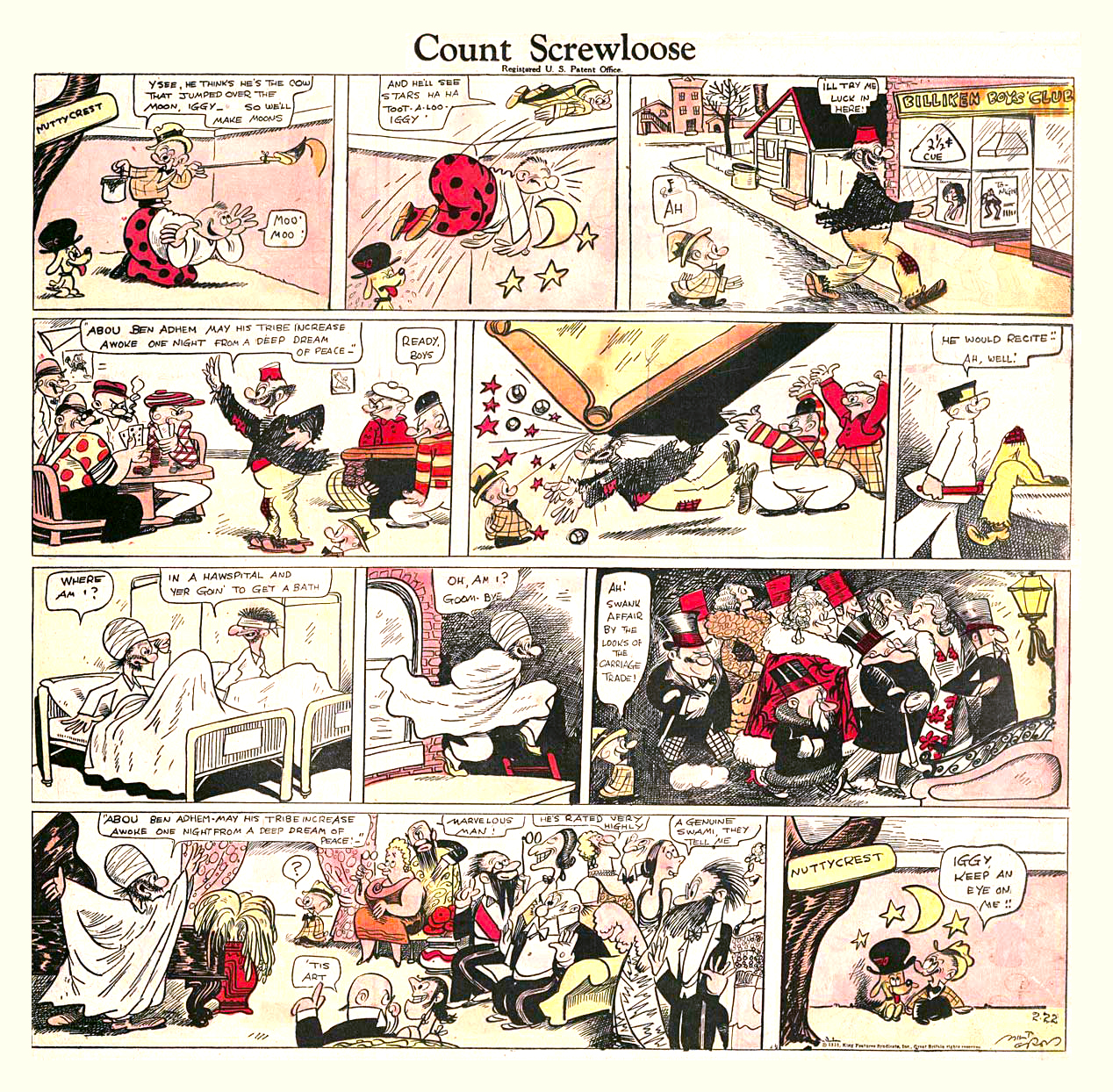
That is why I am fascinated by the ways in which these artists visually depicted this new reality in the first decades of the newspaper comics. In the two examples here, Windsor McCay and Jimmy Swinnerton use dream sequences to reimagine the landscape. In the first from the Rarebit Fiend series, McCay has his character master the scale of the modern city by becoming a giant himself and reducing the skyline to so many toys, some of which even can be bent. Swinnerton’s is the newcomer’s surreal nightmare of all the ways in which the city masters him.

The daunting urban world becomes malleable, subject to human reimagination in the comic pages, offering readers alternative ways of thinking about the disorienting spaces they occupy.

Top 2019 Books: #1 All Hail The Screwballs

From Gene Ahern’s”The Squirrel Cage” 1936

#1 Screwball: The Cartoonists Who Made the Funnies Funny, by Paul Tumey. IDW/LOAC, $59.99

In my mind, this is the most important contribution to comic strip history published this year. Tumey’s excellent research validates and revives a dominant style of comics of the first four decades of the medium’s history that may seem shallow, silly or just unfunny to modern sensibilities. The imaginative verve is timeless, however. This book fills a real void in our historical sense of comic strips and leads to important questions about how the medium related to the times.

Nonsense, slapstick, harmless anarchy formed a kind of lightly transgressive response to modern times in both early comics and film. But even if we don’t quite get the humor anymore, the antic visual energy of overlooked figures like Walter R. Bradford, Eugene Zimmerman and Clare Dwiggins is irresistible. Tumey takes a biographical approach to the screwball style, highlighting fifteen artists. But along the way he also references scores of others to create a rich overview of a lost style of popular art. 

Top 2019 Books: #2 Harrison “Peter Rabbit” Cady Gets His Moment

#3 Madness in Crowds: The Teeming Mind of Harrison Cady (Beehive Books, $100)

Harrison Cady (1877-1970) may be the most prolific magazine illustrator you never heard of…until now. But his signature crowd scenes and nature fantasies were found in the pages of LIFE (where he was a staff illustrator) as well as Saturday Evening Post, Ladies Home Journal, Good Housekeeping, among many others, across seven decades. He was also known for his progressive politics, children’s book images and long-running Peter Rabbit comic strip. The small publisher Beehive has nobly revived this wonderfully imaginative mind in one of the most beautifully designed and printed books of the year. Underground comics artist and publisher Denis Kitchen provides an appreciation. But just fall into these thick pages of crisp, oversized images that Beehive has produced. This is what bookmaking is all about, where design enriches substance. You just want to hug it. 

In his magazine and book work Cady was renowned for his detailed, teeming crowd scenes. These enormous tableaux recall Outcault’s Hogan’s Alley in a couple of respects. Cady shared Outcault’s vision of of the modern crowd as a collection of discrete interpersonal worlds. But he also flattens perspective to give the comic audience a privileged, unnatural view of the social scene.

Top 2019 Books: #3 Krazy Sundays, XXL

#3 George Herriman’s “Krazy Kat”. The Complete Color Sundays 1935–1944, edited by Alexander Braun, NY: Taschen, $200

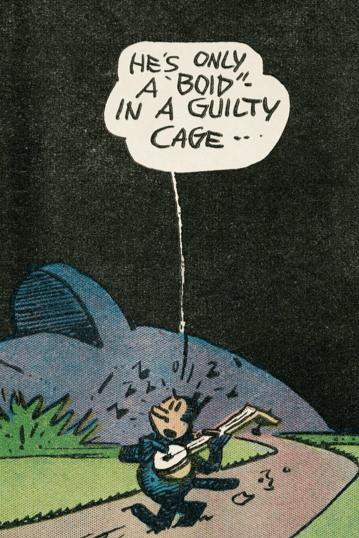
Comic strip collectors will remember Alexander Braun and Taschen’s earlier complete, XXL-sized  Little Nemo collection that delighted Winsor McCay fans and caused hernias everywhere. Braun is at it again. This beautiful but massive reprint captures the color Sundays from the last decade of Herriman’s life and career. Krazy Kat is the longtime darling of highbrow critics since the early 1920s, when Gilbert Seldes dubbed the strip one of the most satisfying works of art in the modern age. Since then critics gush over the gender-bending, mythologizing, philosophizing and satirizing “genius” of the strip. In recent decades scholars added a new dimension to reading Krazy as we discovered Herriman had been “passing” as white throughout his life. Herriman seems to have been the designated modernist Joyce of the medium’s history. And Braun does his part to further burnish Herriman’s stature in his very comprehensive and lengthy prose accompaniment. Reprinting Krazy at this scale also lets us lean back and appreciate Herriman’s mastery of movement, slapstick timing (He was a Mack Sennett fan), layout and use of the full page as a canvas. 

While on the subject of Kracy Kat, it is worth mentioning also that Fantagraphics Press just initiated yet another series it calls The George Herriman Library: Krazy & Ignatz, 1916-918. This edition of Herriman’s full page Krazys cover the same ground as an earlier softcover reprint from Fantagraphics. But this time we get hardcovers, with two years in each volume, and best of all larger, at 11.3″ x 13.8″.