In the Air: Barney Baxter Flies With Style

Even comics aficionados barely recall the very popular aviation adventure strips of the late 1920s and 1930s, perhaps because, well, they just weren’t very memorable. Tailspin Tommy, Scorchy Smith, Smilin’ Jack, Flyin’ Jenny, and Skyroads, to name a few, were definitely of their time, tapping into the most romantic technology of early 20th Century – aviation. The wild tales of WWI air battles, the triumph of machine and human endurance in Charles Lindbergh’s solo crossing of the Atlantic, the mystery of Amelia Earhart’s disappearance fueled film, pulp magazines, and even popular science journals with an admixture of human spirit, adventure to far off lands and technical jargon that many audiences, especially boys, ate up. The strips captured that blend. Many of them were created by pilots who brought their love and knowledge of flight to the strips. Much of the art was unremarkable. Noel Sickles’ work on Scorchy Smith was a legendary exception, and Russell Keaton had a polished and breezy style in Flyin’ Jenny. For the most part, however, aviation cartoonists were more in love with the planes than their own characters, and they tended to focus effort and attention on the planes themselves.

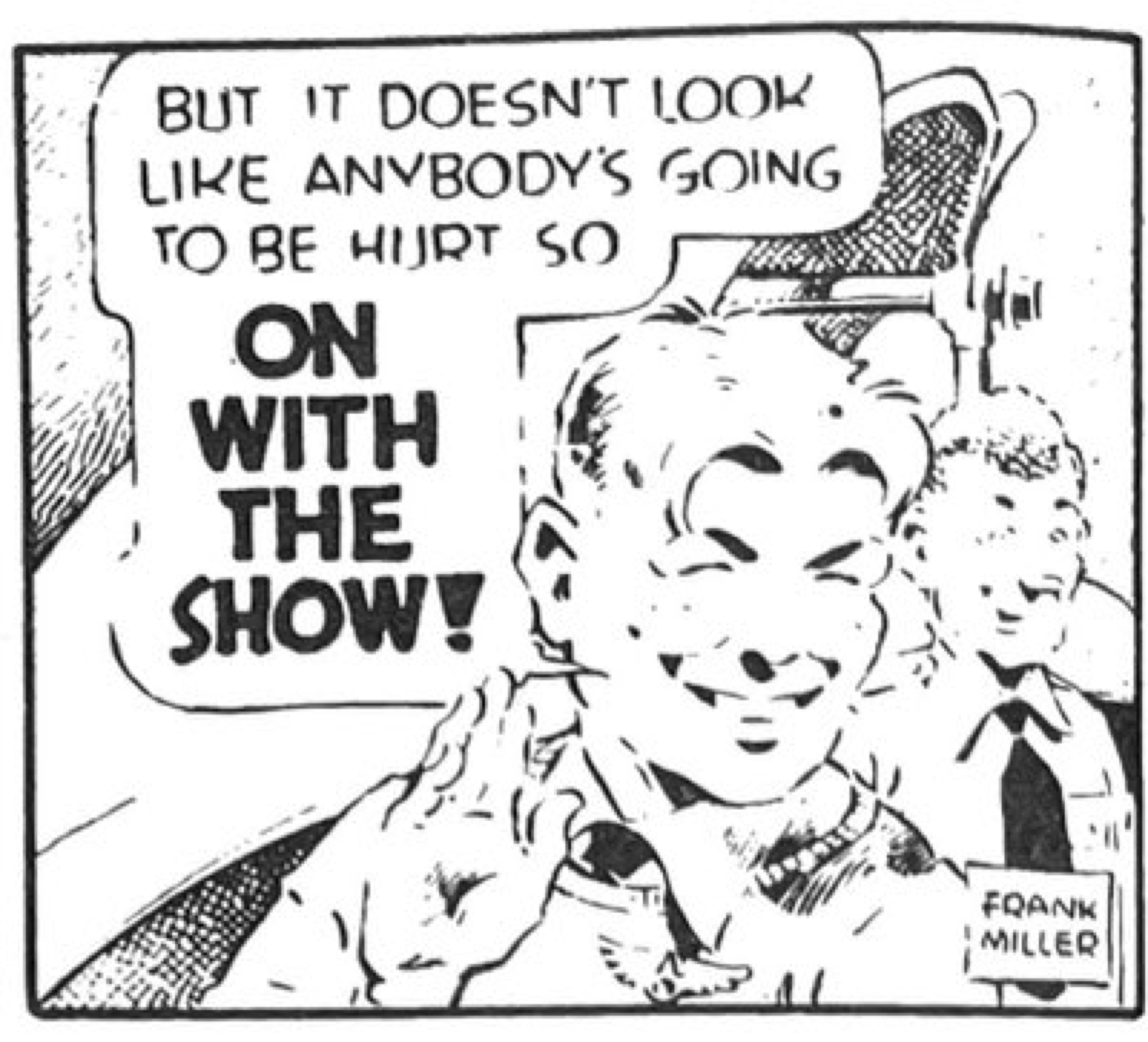
Frank Miller, however, brought Barney Baxter in the Air (1935-1949) a special whimsy to the genre both in his characterizations and line work. From the Art Deco/Machine Age feel of his lettering to the rounded nature of his figures, everything about this strip feels sophisticated, considered, modern . His faces are comprised of a few deft dabs of ink. The upholstered texture of his people and objects are somewhere between big foot cartooning and classic adventure realism. And this allows him to bring his style to either extreme as it fits the scene. It reminds me of (or foreshadows) Rick Geary, whose style I also love. Miller is adept at using a variety of panel framings to keep the eye energized across the progression. His narrower close-up panels call out important moments of gesture or expression. And he has such a stylized way of rendering shadows in a pointillist style. It all adds up to a visual signature that light, witty, and yet functional as a vehicle for adventure. The feel is similar to Capp’s Li’l Abner.

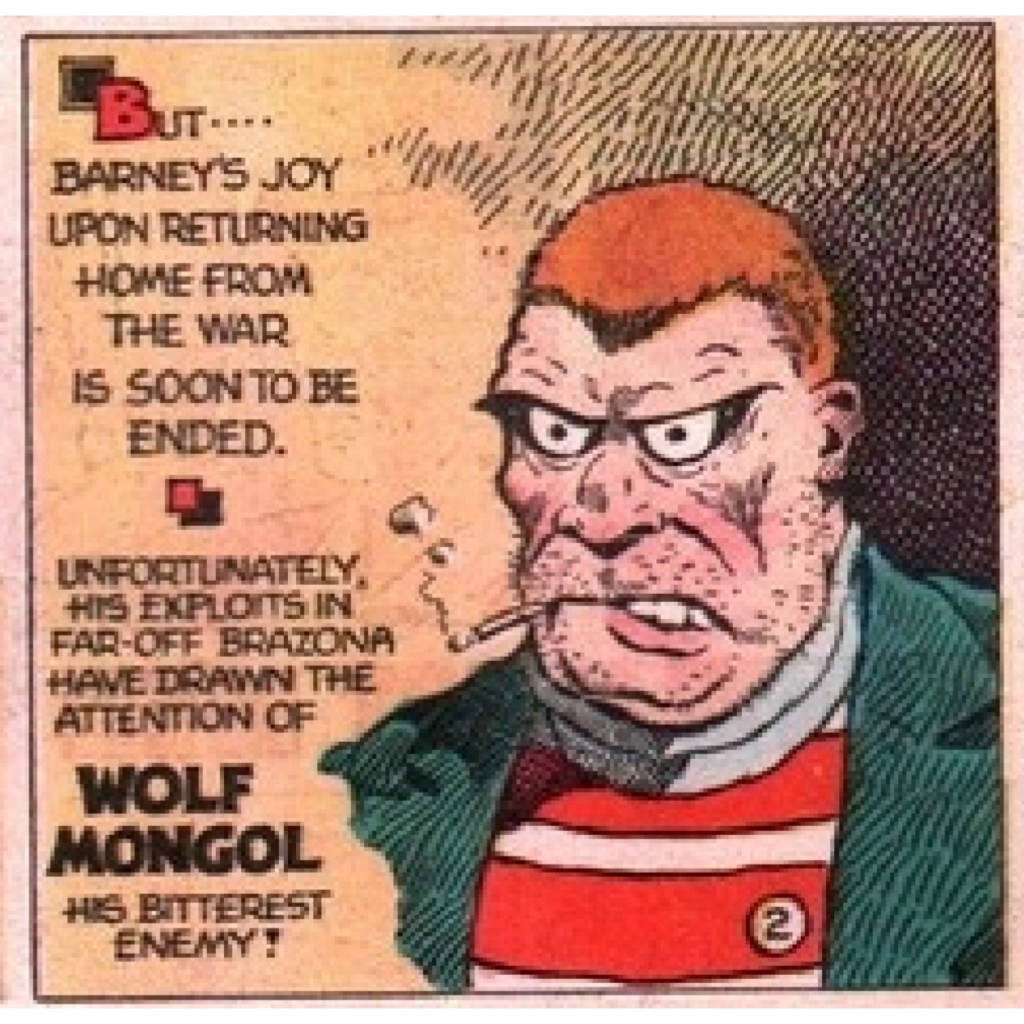
His skills often came together in some truly creepy villains.
Miller lavishes attention and invention on his Sunday pages. He is breaking frame, manipulating panel shapes and sizes with the kind of energy we usually associate with McCay, King or Sterrett. The detail and color in his rocky backgrounds are just wonderful for establishing setting. He maneuvers our point of view radically from panel to panel to bring us into the scene by circling us around it. And just look at that open parachute as the visual centerpiece of the whole layout. If that isn’t an homage to McCay, I don’t know what is.
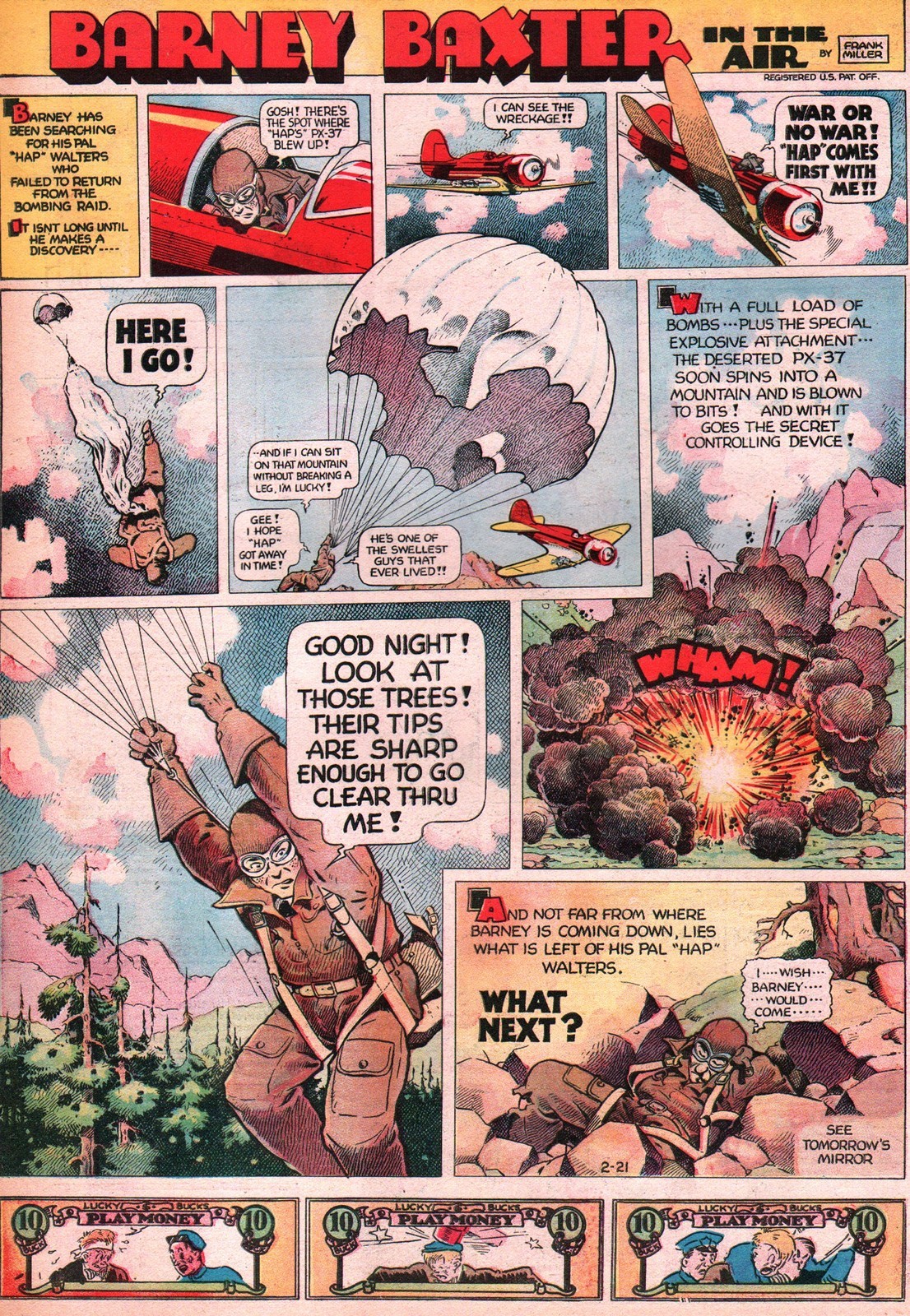
Frank Miller, obviously not the Frank Miller of later comic book fame, ran the strip throughout its 15 year span and until his premature death in 1949.
Happy 100th Bloomsday: Read Something Hard

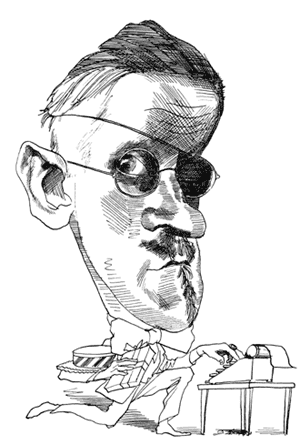
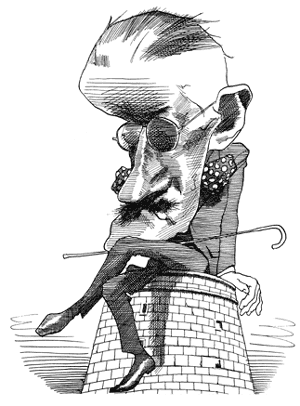
On June 16, 1922, Jame Joyce’s Ulysses was first published in Paris and quickly became a monument to the many strands of modernism that had been coursing through the literary and visual arts in the first decades of the 20th Century. And it would confound scholars and students ever after. To celebrate, here is a small collection of David Levine’s wonderful caricatures of the great Dubliner from The New York Review of Books. Levine’s puckish takes on revered literary figures in NYRB served as a welcome counterpoint to the somber and studied tone of the critical prose in the magazine.

Whatever one thinks of Joyce’s Ulysses, I am experiencing rereading it this week as an important antidote to the culture of now. So much of our high and low art on the 100th Bloomsday in 2022 is aimed at pandering, to providing messages and experiences that demand nothing of us. The digital targeting of messages and news through social media, art that likewise targets our sense of our own identity, leaders who follow – nothing about our culture makes us work at understanding anything beyond who and where we are now. Joyce is hard and disorienting, and reading him demands both attention and aiming higher than our current understanding. It is worth putting those demands on ourselves and our arts.

Joyce himself was not a visual artist, even if his prose was a master class in imagery. But he did try his hand at cartooning once in an artist’s studio when recovering from one of his many eye surgeries. Below is his rough rendering of Ulysses’ protagonist Leopold Bloom. I believe the words above it are the opening lines of the Odyssey.

If not Joyce, then try something else that is hard to read. Happy Bloomsday.

The Bungles Are Us

Misanthropic and petty, scheming and nagging, reviled by their neighbors and barely tolerable to themselves, The Bungle Family was the quintessential domestic comic strip of the 1920s. Critical historians like Bill Blackbeard, Rick Marshall and Art Spiegelman have singled out Harry J. Tuthill’s masterpiece as an especially dark and pointed critique of the modern petit bourgeoisie. But George, Jo and Peg Bungle were really the penultimate satirical family of 20s strips. George was no more a man on the make, looking for that get-rich-quick invention or financial scheme, than Barney Google, A. Mutt or even Andy Gump. His wife Jo was no less socially self-conscious and ambitious, nor more of a nag, than Jigg’s Maggie. And Jo wasn’t even in the habit of throwing things. Nor was the Bungle family dysfunction any worse than the in-fighting at Moon Mullin’s boardinghouse.

Continue reading

McManus’s One Joke, Deftly Told

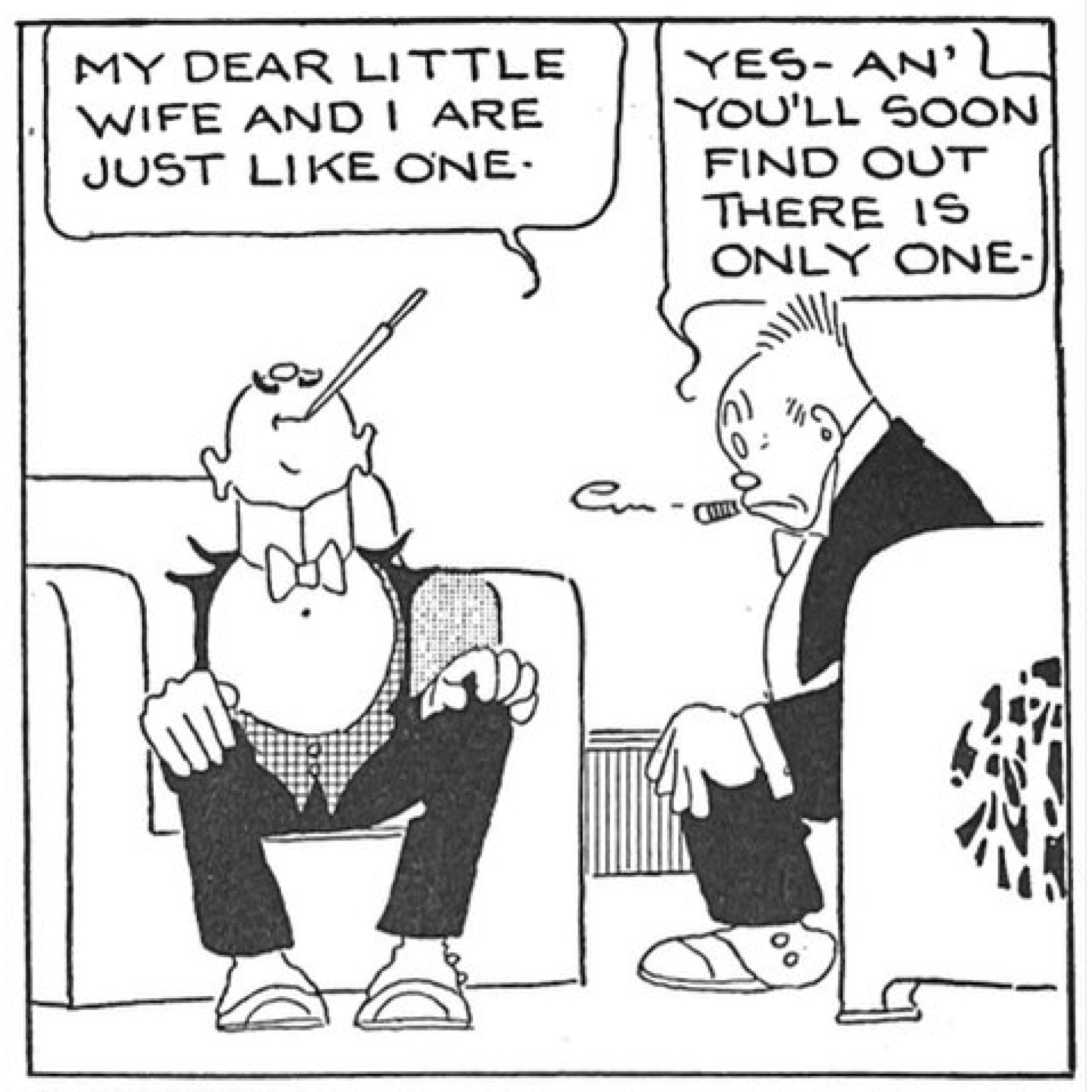
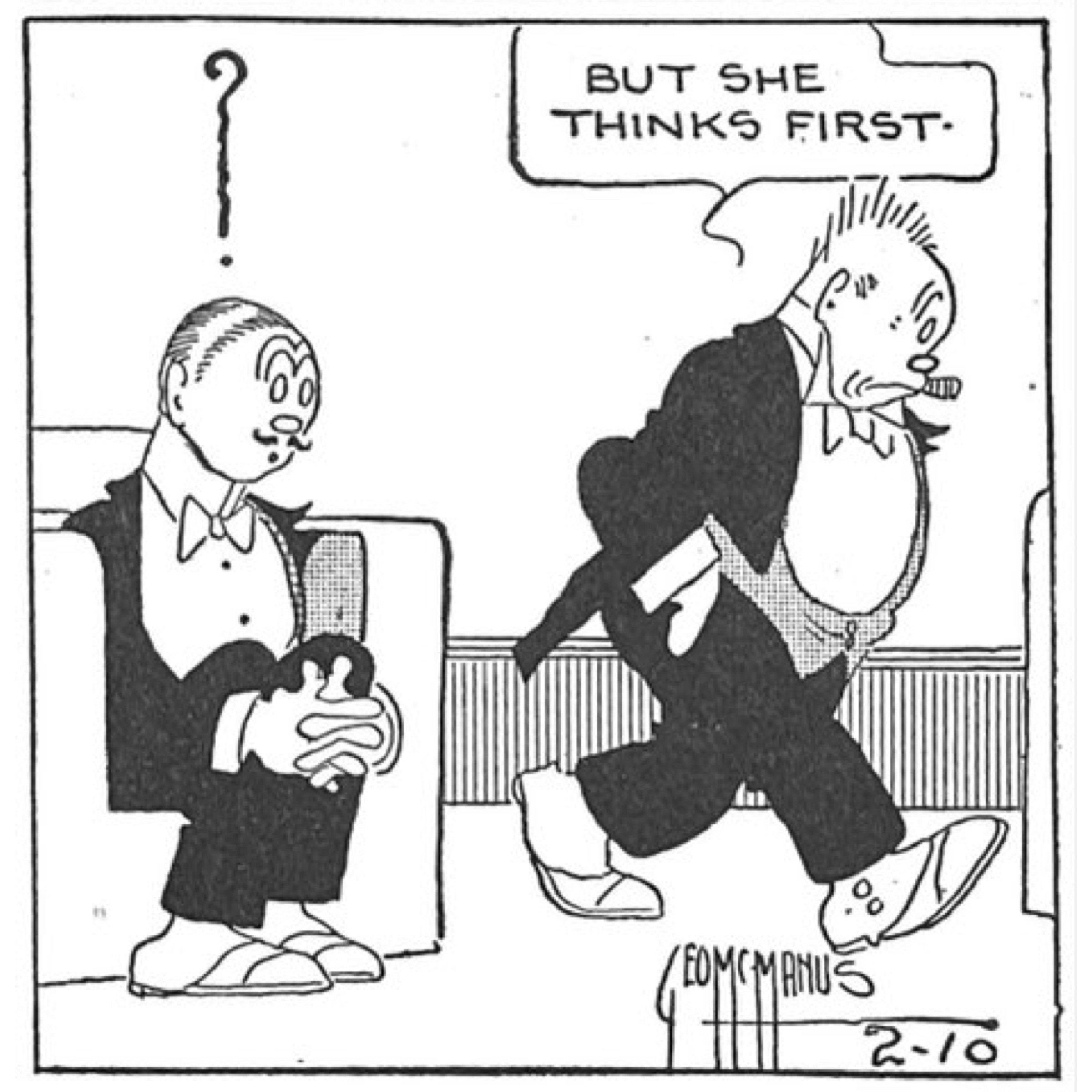
Comic disharmony between Jiggs and Maggie over their social climb was the central joke of George McManus’s Bringing Up Father for over four decades. For all of McManus’s fine sense of humor, he banged that one note across four panels six days a week and a full page every Sunday. To be sure, he layered in nuances of class and generational conflict. Jiggs was a hod carrier who struck it rich, never adjusted to his own ascent, and clashed with wife Maggie and daughter’s ambitions to join the social elite. The dynamic was rich with potential and embodied the experience of millions of American emigrees moving into the modern middle class. But many of the daily strips tediously replayed Jiggs’s sneaking out to his former watering hole Dinty Moore’s, embarrassing his family with etiquette transgressions or ducking Maggie’s thrown dishes. These were conventions that American newspaper readers enjoyed hearing for a handful of panels and 30 seconds a day over its 87-year run. McManus, however, was especially adept at maintaining reader interest in the familiar with his mastery of visual style, panel sequencing and timing.

Continue reading

Napoleon: The Gentle Art of Everyday-ness

Clifford McBride’s portrait of the affable, accident-prone and corpulent Uncle Elby and his puckish oversized dog Napoleon is one of those great American comic strips that are about nothing. There is no adventure or much of an ongoing storyline to the Napoleon and Uncle Elby strip. Nor are there gags, verbal or physical, really. It is more a strip about everyday mishaps. Uncle Elby is proud of his new white suit, which an affectionate Napoleon meets at the the front door with muddy paws. Constructing a simple tent results in a tangled mess. Napoleon chases a fleeing rabbit, chicken,  cat or whatnot (it’s a frequent theme), only to be chased by his prey in the end. Elby mows over one of his dog’s hidden bones, which conks him on the bean. Elby gets out of his car to open the garage door only to have it slam shut before he can drive through.

No, really, the action in the Napoleon strip is that banal and trifling…relentlessly…and apparently by design.

Continue reading

Gasoline Alley 1922: Seemed Like A Good Idea At The Time

Premiere Panels: Mandrake Materializes…Eventually

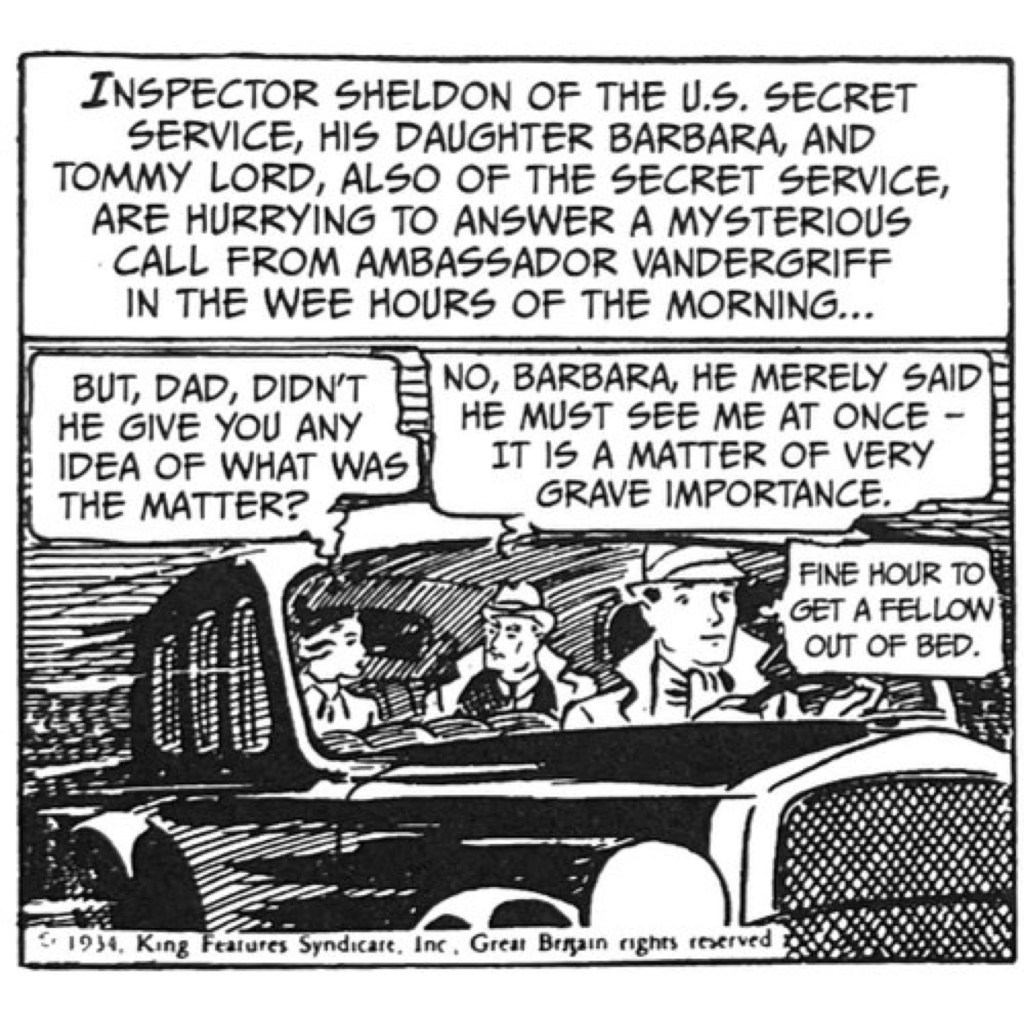
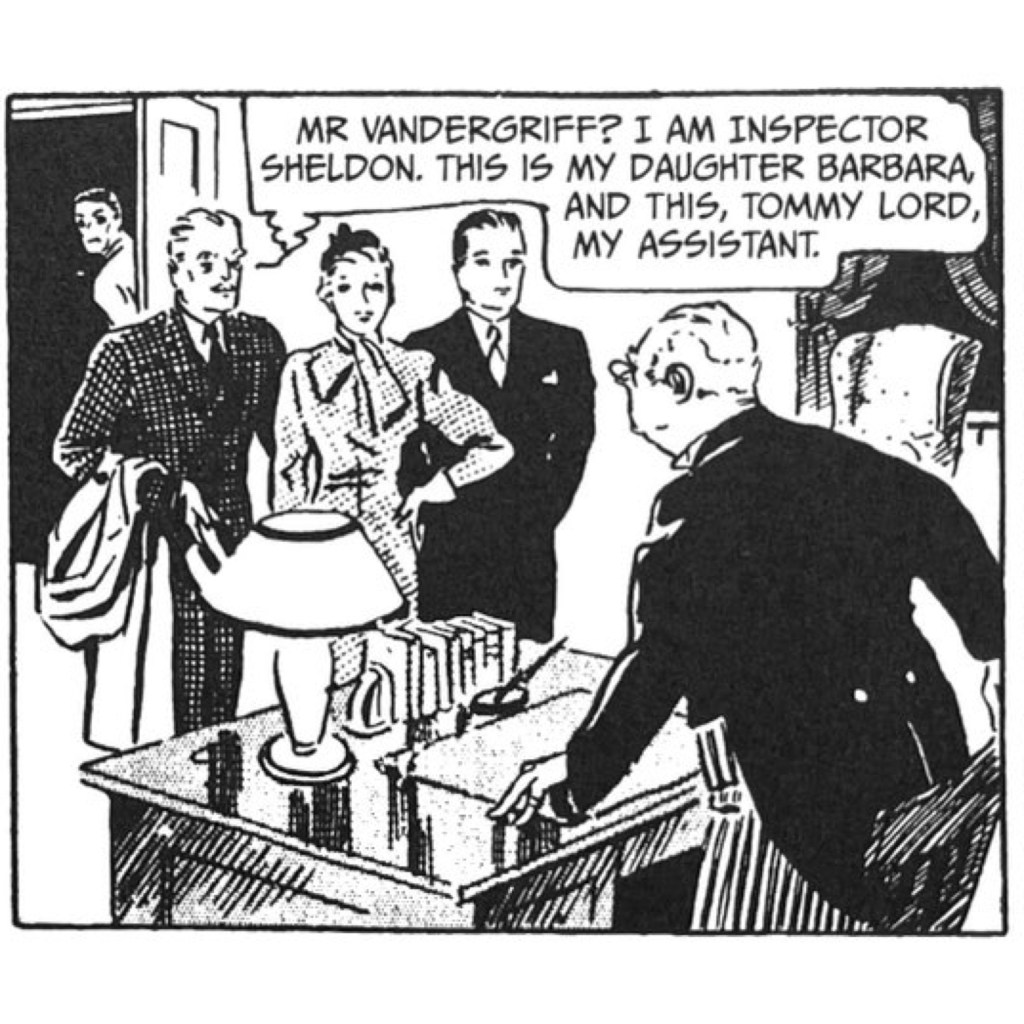
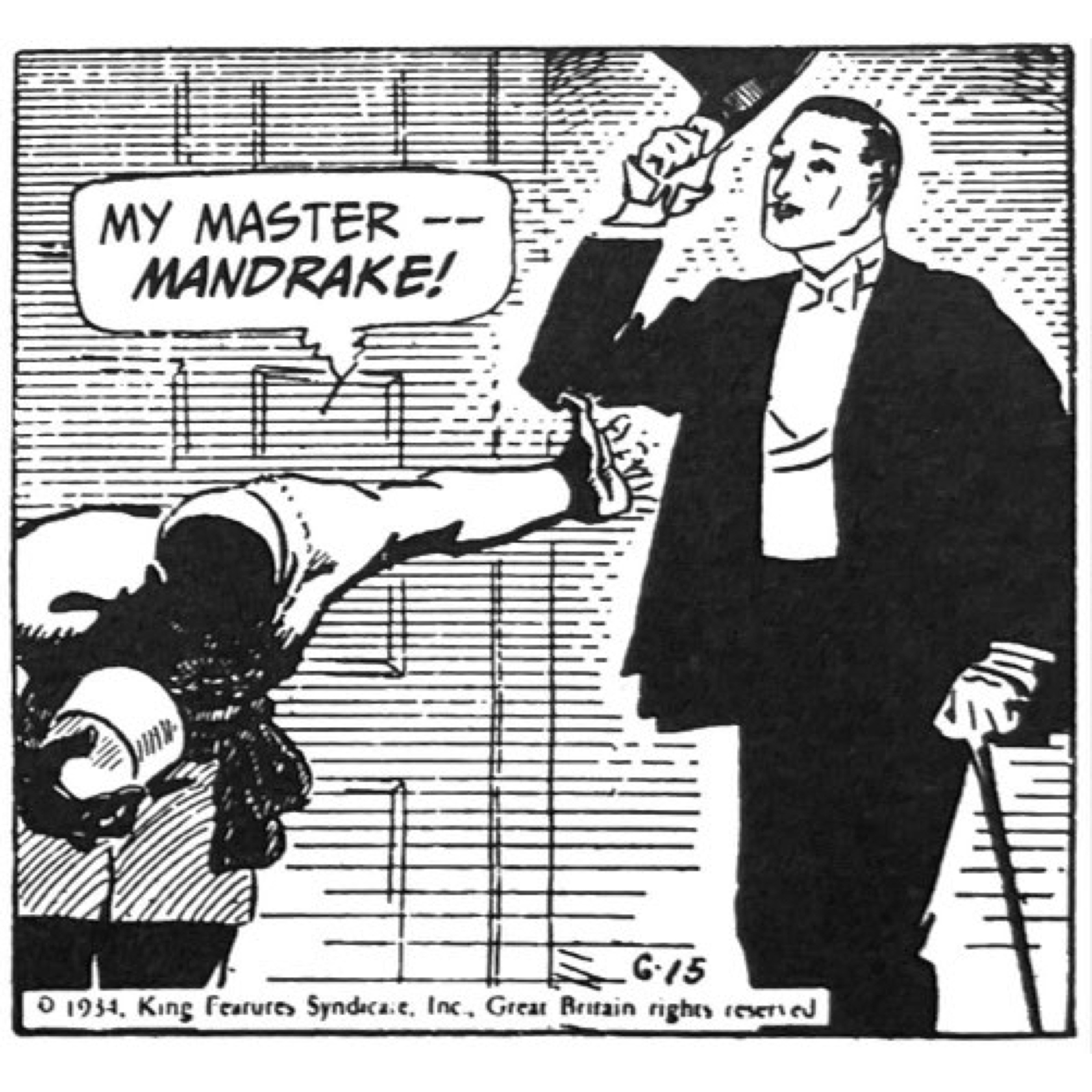
It took a full week of strips for the eponymous hero of Lee Falk’s Mandrake the Magician strip to make his grand entrance. June 11, 1934 was the first strip, which evokes some of the feel of a classic mystery wind-up. But on June 15, in what has to stand as one of the most unambiguously racist intros in pop culture history, Mandrake’s “servant” Lothar heralds the coming of his “master.” One doesn’t even know where to start here. Falk’s full bore colonialism is more fully and relentlessly explored in his later The Phantom series whose origin we covered here and whose fetishes we covered here.

For all of its weaknesses, Mandrake remains important both to comic strip and comic book history in that his is the first strip to move towards a super-powered hero. Mandrake’s “magic” is only nominally super-natural, in that it is based on the power of suggestion and influence over others’ minds. But it precedes the appearance of Superman by 5 years and aldo nods towards costumed heroism, which would be more fully introduced in Falk’s The Phantom.