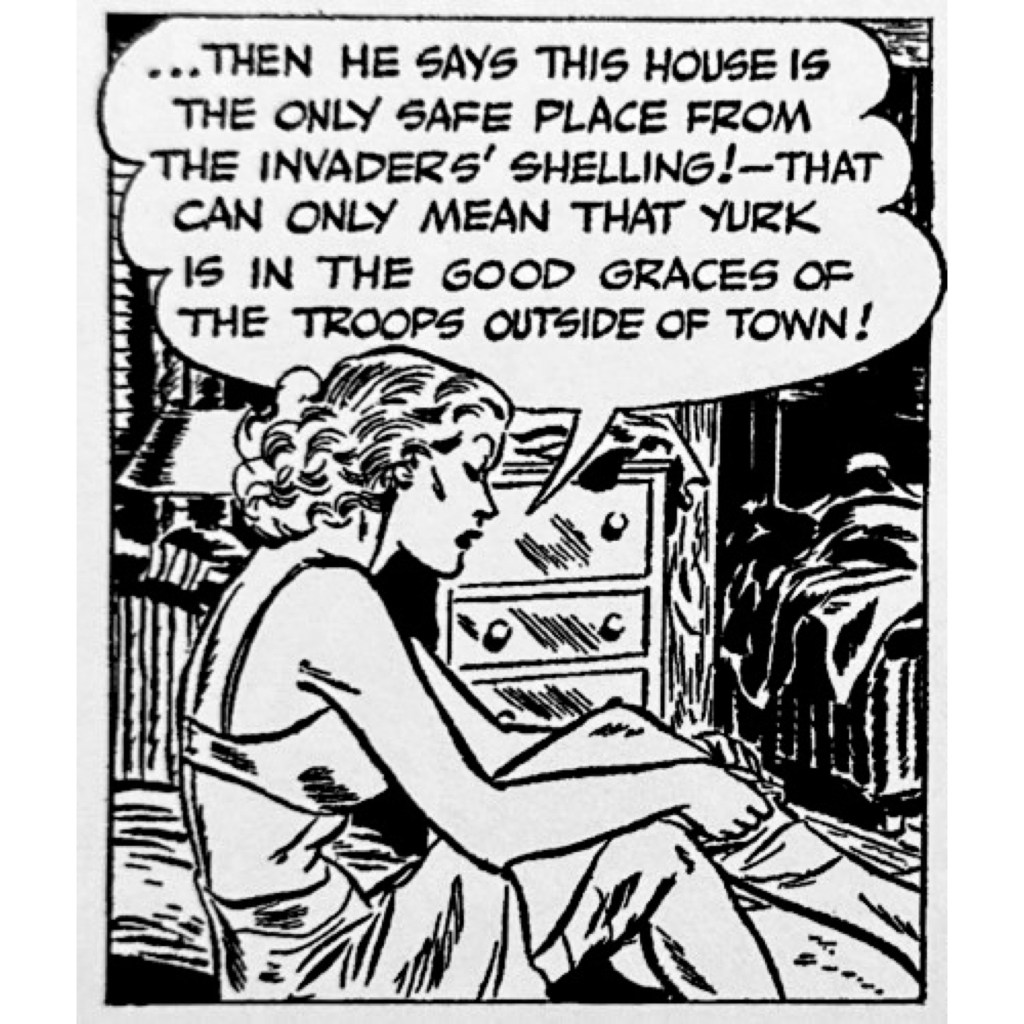
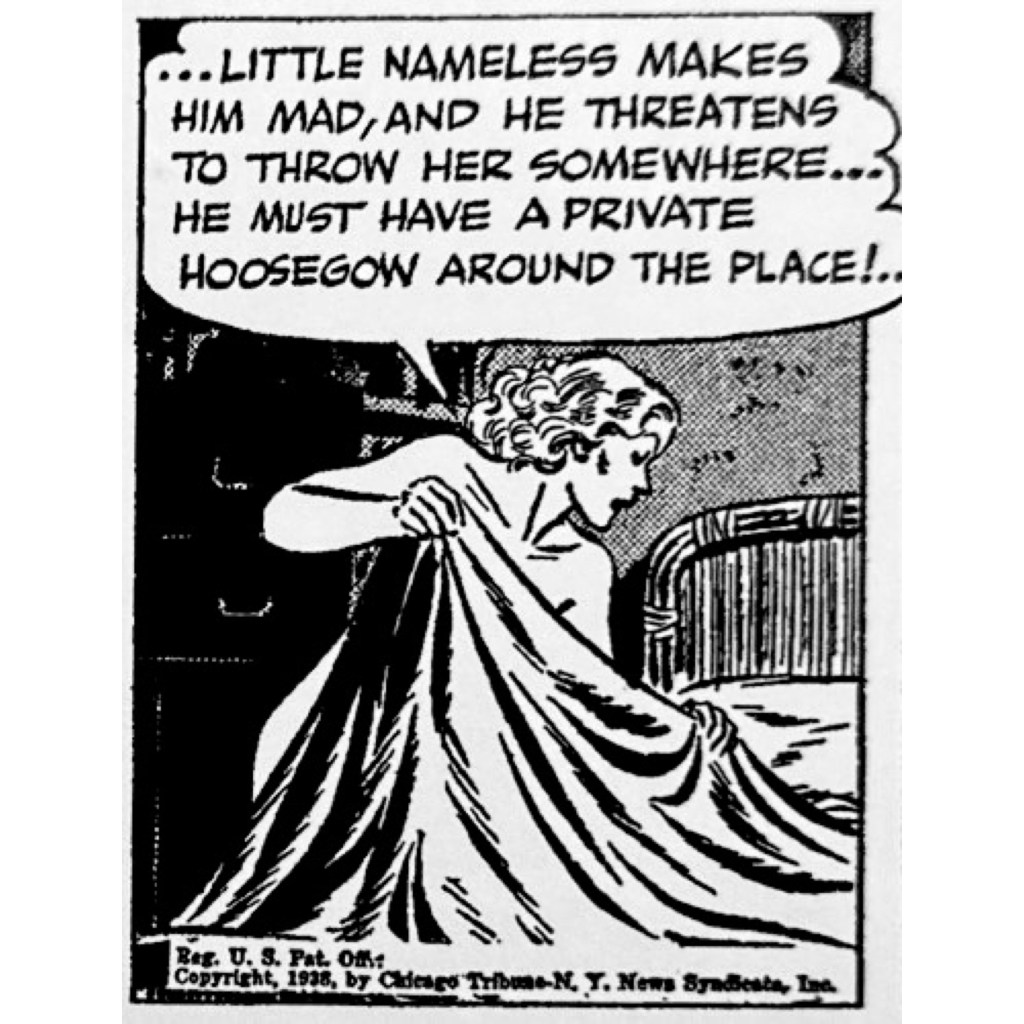
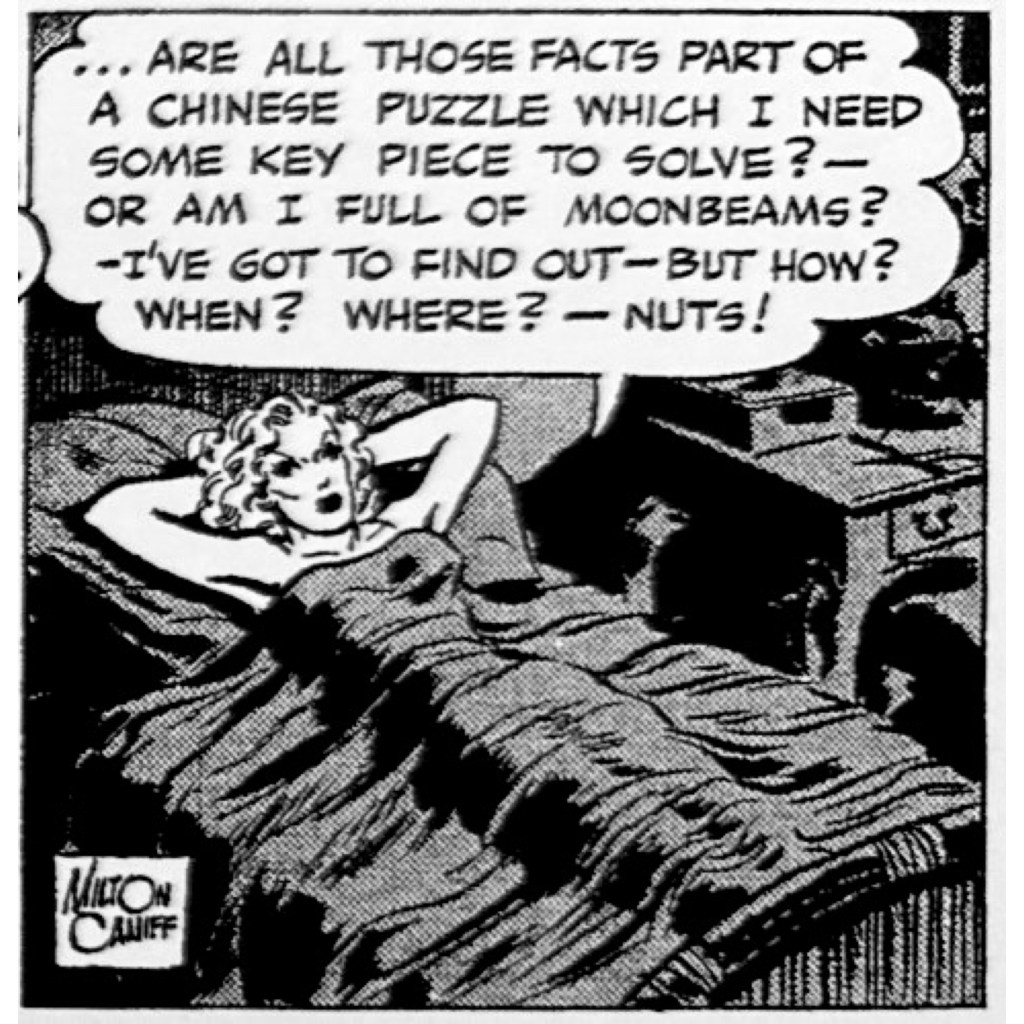
The sublimations of the American comic strip are legion. Whether it is the unbridled eroticism of Flash Gordon or the beefcake of Prince Valiant, the kinkiness of The Phantom or the stripteasing of Terry and the Pirates, the most “innocent” of modern American mass media contained many quiet erotic sub-texts for horny readers across ages and sexes. Case in point, Buz Sawyer in the 1940s. I have no idea what was going on with Buz’s artist Roy Crane and writer Edwin Granberry in the 1947-48 years, but the strip seemed a bit obsessed with gender-bending, sexual stereotypes and masculine identity across storylines in those years. In two adjoined episodes, our two-fisted hero deals with the barely-veiled advances of an effeminate gun-runner and sexual harassment at the hands of a masculinized female Frontier executive. This is one of those many cases where the most reserved and adolescent of modern media, the family newspaper strip, traded in suggestive imagery and innuendo that would never pass muster in other media of the day.
Slipping a bit of light erotica into the back pages of the buttoned-down newspaper medium was something of a sport among many comic strip artists throughout the last century. From the ubiquitous Gibson Girls of the the 00s to the curvy and well-delineated flapper daughters and office gals of 20s strips to the imperiled damsels and femmes fatale of 30s adventure, cartoonists understood they were wedging adult cheesecake into a “kids’ medium. Milton Caniff understood the better than anyone the potential here for serving the needs of a daily adventure strip while also pushing the boundaries of the conservative editorial propriety of national syndication.
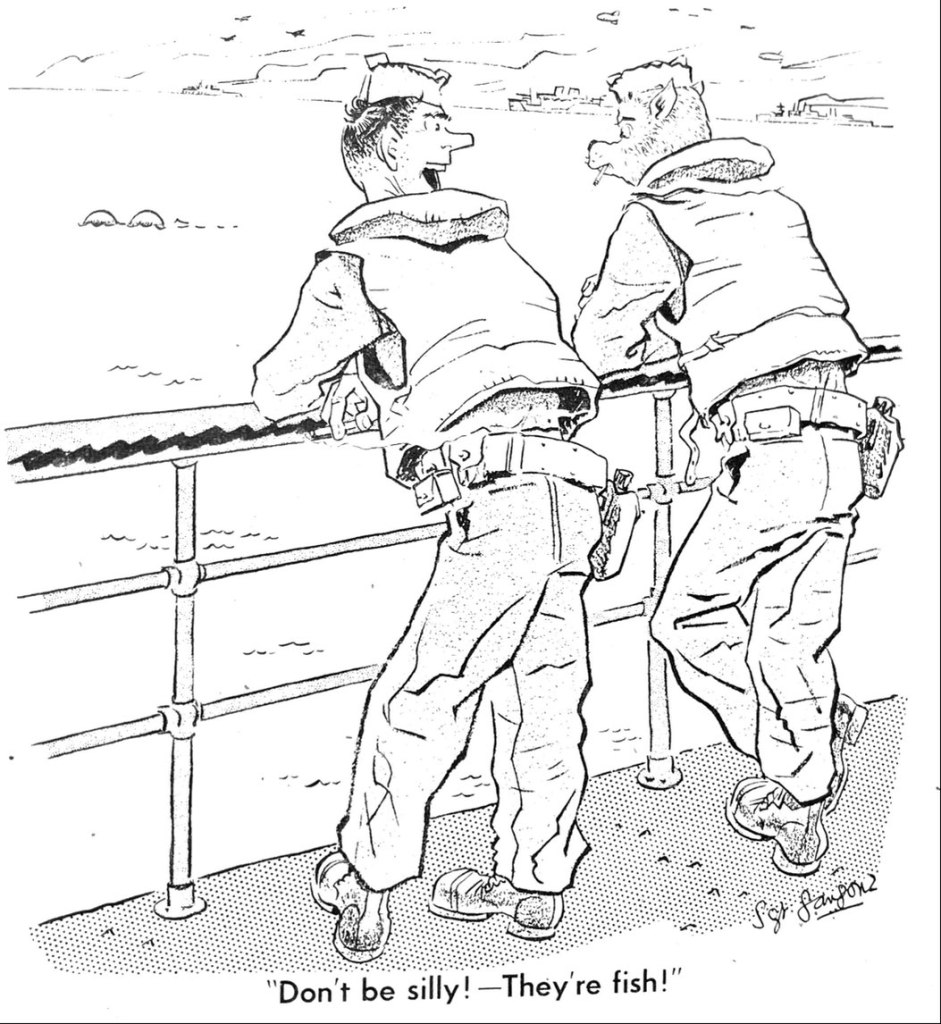
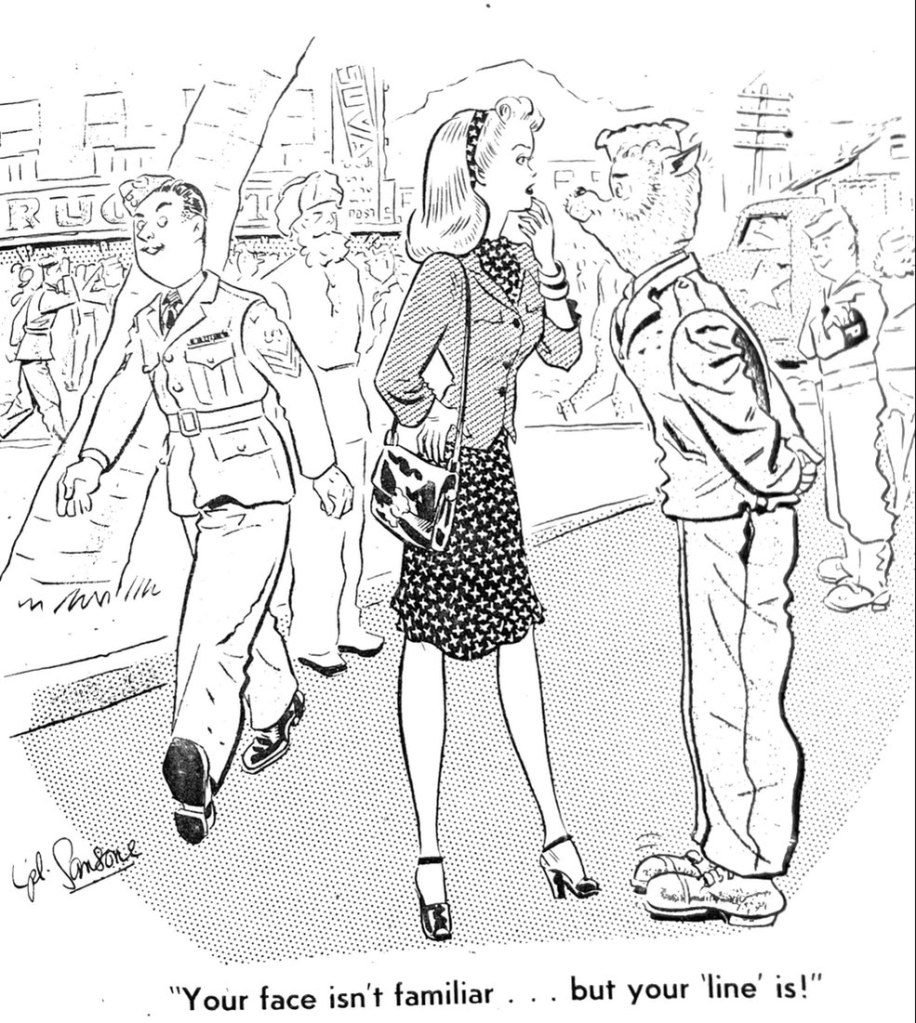
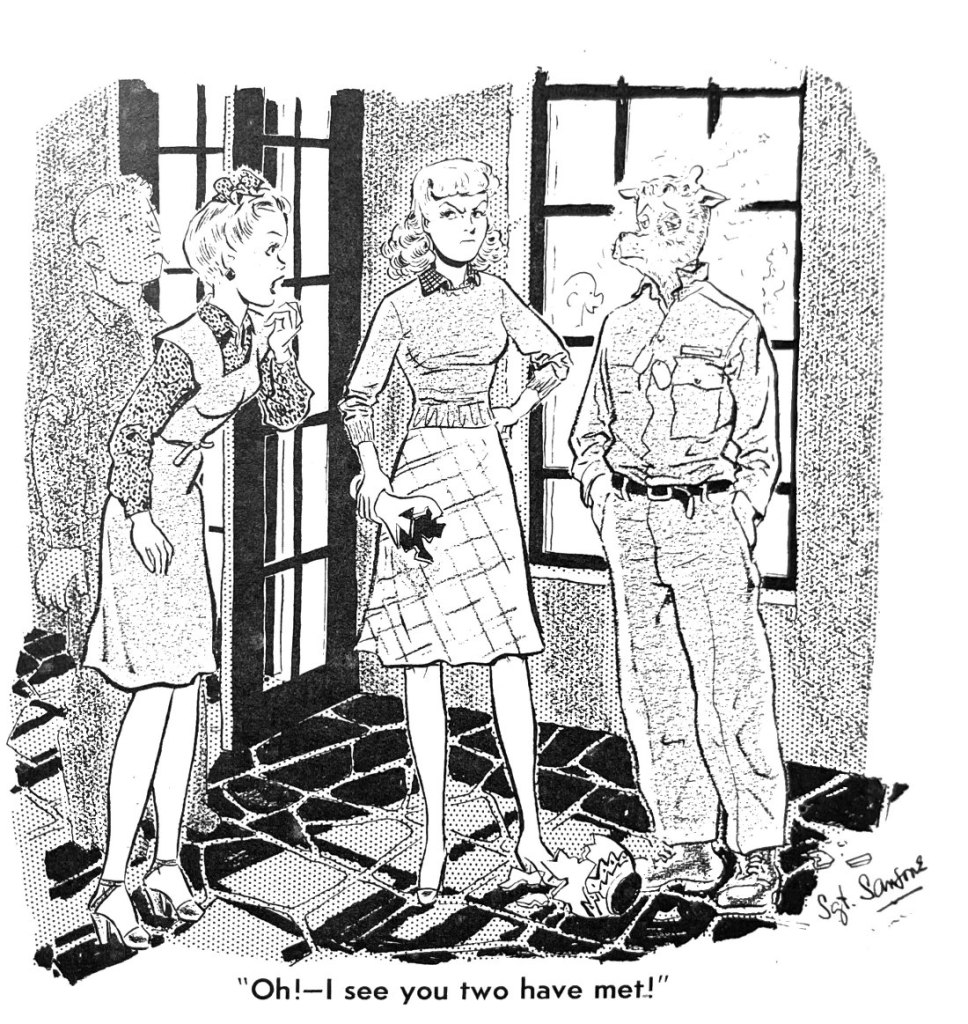
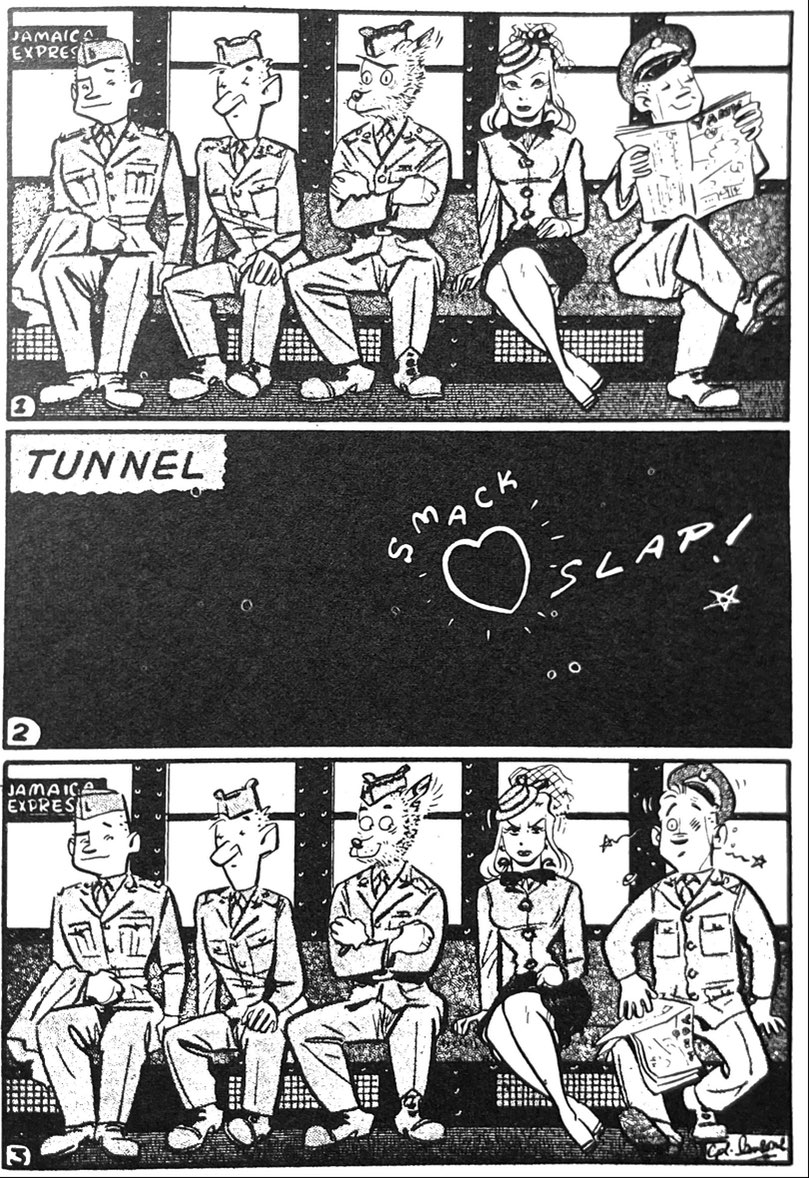
During WWII the country mobilized for a two-front war on every level, including cartooning. Bill Mauldin’s Willie and Joe, Milt Caniff’s Male Call, Sgt. George Baker’s Sad Sack are among the best known strips created for the troops, and many of them enjoyed a greater latitude than newspaper counterparts in their use of language, sexual references, and sheer cheesecake. Less well-known and remembered is Leonard Sansone’s girl-chasing, cat-calling, kiss-stealing “G.I. Wolf”. Also known as “The Wolf” and “Private Wolf,” this one-panel comic featured a GI depicted with a wolf’s head and insatiable, predatory libido. It was a big hit among the troops in its 1942-1945 run, landed Sansone a profile in Life magazine in ’44 and a book reprint “The Wolf” in 1945 with an introduction from the king of male adventure strips Milt Caniff.
G.I Wolf’s humor was based less on hilarity than familiarity. The character was instantly recognizable to most of the late adolescents we sent to war as the embodiment of their inevitable frustrated sexuality. And he is the one lad in the unit most vocal about it. But while the GI Wolf strip is not especially funny, not to mention hopelessly sexist in retrospect, it remains noteworthy. Most of all, it takes horniness itself as its subject. While other strips for the troops, like Caniff’s, ladled on the legs and double entendre for its more adult and lonely male audience, GI Wolf was more direct. Men without women is an inevitable trope of army tales, but it is usually engaged obliquely. Bob Hope shows always featured the latest Hollywood starlets. Airmen painted cheesecake images on their planes’ nosecones. And the marauding of soldiers and sailors on leave was the stuff of lore. But Sansone puts horniness front and center in GI Wolf. He not only personifies the theme with a fantastic wolf-headed character but makes his sex drive the persistent punch-line. And Sansone pushes the theme in fantastic directions. My favorite is the cow talking back to Wolf as he manhandles her udders.
But most often, GI Wolf is recognition humor aimed at enlisted men’s common experiences. Buddies set each other up with disappointing blind dates. Wolf projects his sexuality onto everything, from potatoes he is peeling to cows he is milking to fish swimming off a dock. And so the relentlessness of GI Wolf’s horniness is the real butt of the joke here. His predatory and politically incorrect antics may be familiar but they are not seen here as heroic. Far from it. His fellow soldiers complain about his unproductive fantasizing, even intimate that he may be jerking off too much. His skirt chasing rarely ends in conquest. And most often the damsels he chases hit back…effectively.
Which is not to say Sansone’s GI Wolf was a feminist treat. Slinking away from unattractive dates is a frequent trope of the series. And the entire cat-calling ritual is presented as a mutually agreed upon game between the sexes. In fact in a stupendously dated introduction to the 1945 reprint, Caniff says as much. “No matter how smoothly she tossed her head, I have yet to see a woman who did not betray the secretly pleased expression around the eyes when whistled at or wolf-called by a man or men in uniform,” Caniff writes. Yeesh!
Sgt. Sansone was a member of the Camp Newspaper Service, and GI Wolf ran in the Stars and Stripes newspaper and Yank magazine the armed forces produced for the troops. He was born in Norwood, MA in 1917 and moved to New York City before the war to pursue a freelance art career for advertisers and the early comic book market. After the war, Sanone moved to Miami and developed the Willie newspaper strip. He died in an auto accident in 1963 at the young age of 46.







 Panels & Prose