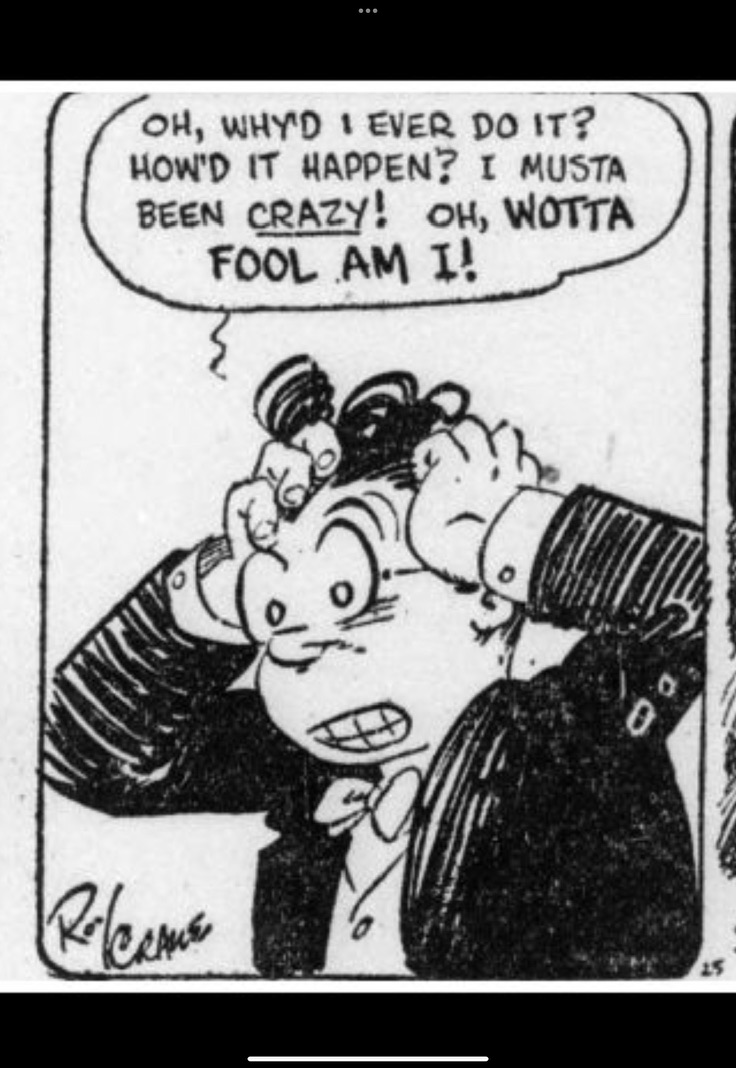
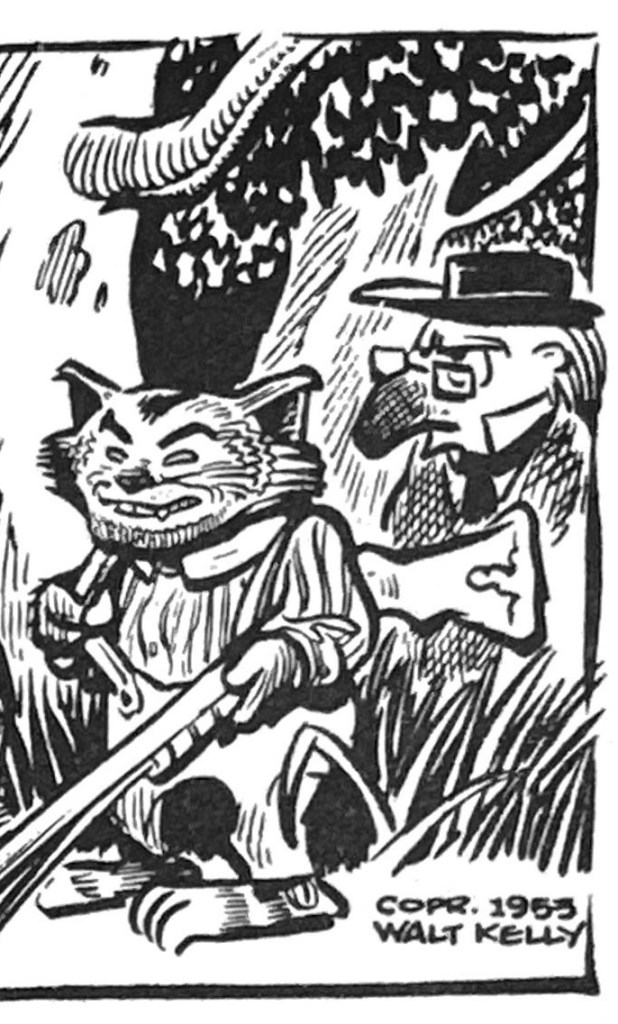
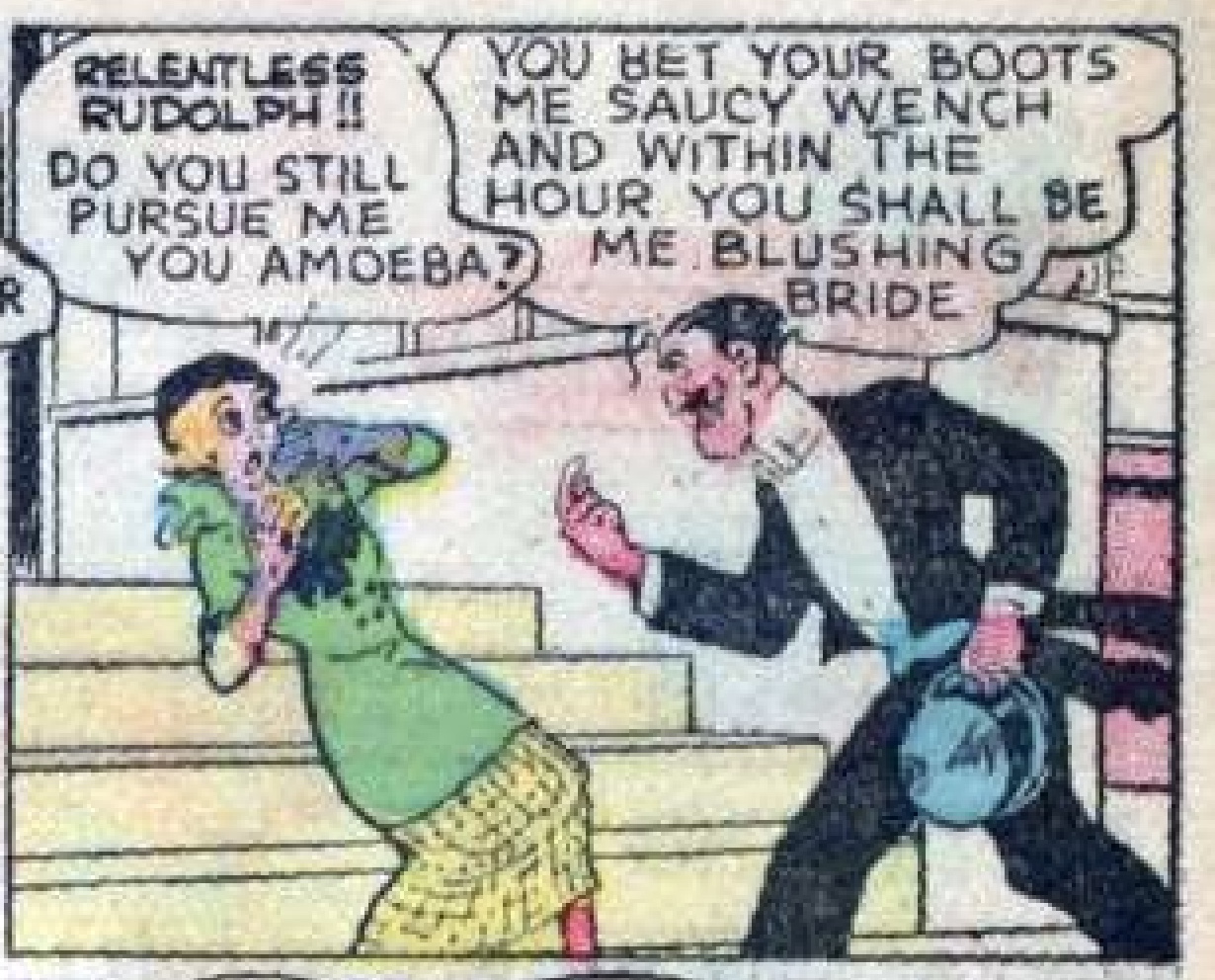
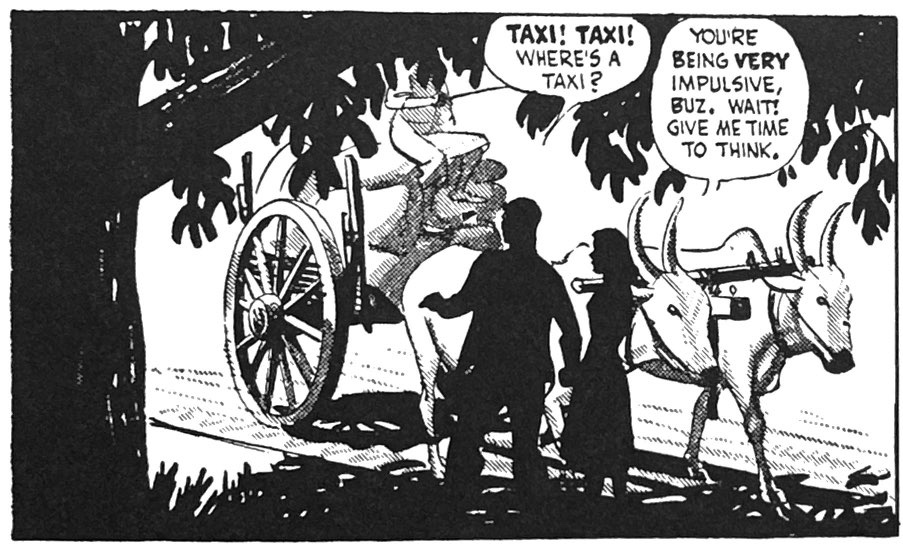
Roy Crane always seemed to me underappreciated in the pantheon of comic artists. True aficionados of the medium recognize his talent, of course. But in that larger gallery of cartoon notables, we tend to mention him more than study him. Too often, Crane is recognized off-handedly for originating the continuous story adventure strip with Wash Tubbs (1924), a genre that then reached its height in Alex Raymond’s detailed illustrative style, Milton Caniff’s chiaroscuro and cinematic effects or Chester Gould’s primitive Grand Guignol.
We round out our survey of comic strip baddies steeped in post-WWII American culture. As are our choices for standout villains. The funny papers followed popular culture into new Cold War mythologies around both heroism and its counterparts. Main currents of a rapidly changing social, economic, and political environment are imprinted unmistakably on all of these villains.
For the first 15 members of our rogues’ gallery, click into Part 1, Part 2, and Part 3. And once again, credit also goes to the the comics hibbyists of Facebook who contributed many ideas that made this review of villainy broader.
Villainy is, well, a necessary evil. At least so far as popular adventure is concerned. What is a hero without an antagonist, morality plays without sin? Whether it is the Satan of Genesis or of Milton, the slave-driving Simon Legree of Uncle Tom’s Cabin or Holmes’s worthy nemesis Moriarty, villainy is always a statement about evil itself that is somehow embedded in its time and its creator’s world view. That is what makes baddies so much fun to unravel. Paradise Lost is the original object lesson in our finding evil more intriguing than heroism. But the comic strip had particular roles in the evolution of popular scoundrels. Along with dime novels, pulp magazine fiction and film serials, it was among a cluster of turn-of-the-century mass media that relied on serialized heroes and stories. From these new modes of endless storytelling arose a popular sensation, the recurring villain. Moriarty (Conan Doyle), Fu Manchu (Rohmer), Fantômas (Allain and Souvestre) and a range of black-masked kidnappers of the chronically imperiled silent film heroine Pauline (Perils of Paulin) set the pattern. But the comic strip brought to evildoing its unique aesthetic strengths: believable absurduty, the light tone of caricature, and relentless irony. With some exceptions, this medium made evil unserious, fun, or at least safely farcical.
The sublimations of the American comic strip are legion. Whether it is the unbridled eroticism of Flash Gordon or the beefcake of Prince Valiant, the kinkiness of The Phantom or the stripteasing of Terry and the Pirates, the most “innocent” of modern American mass media contained many quiet erotic sub-texts for horny readers across ages and sexes. Case in point, Buz Sawyer in the 1940s. I have no idea what was going on with Buz’s artist Roy Crane and writer Edwin Granberry in the 1947-48 years, but the strip seemed a bit obsessed with gender-bending, sexual stereotypes and masculine identity across storylines in those years. In two adjoined episodes, our two-fisted hero deals with the barely-veiled advances of an effeminate gun-runner and sexual harassment at the hands of a masculinized female Frontier executive. This is one of those many cases where the most reserved and adolescent of modern media, the family newspaper strip, traded in suggestive imagery and innuendo that would never pass muster in other media of the day.
Roy Crane doesn’t seem to garner the kind of reverence held for fellow adventurists like Milton Caniff and Alex Raymond, even though he pioneered the genre in Wash Tubbs and Capt. Easy. Perhaps it is that he lacks their sobriety. After all, Crane evolved the first globe-trotting comic strip adventure out of a gag strip about the big-footed, pie-eyed and bumbling Tubbs. But when he sent Wash on treasure hunts and international treks into exotic pre-modern cultures he kept one foot in cartoonishness style and the other in well-researched, precisely rendered settings, action and suspense. It was a light realism, with clean lines, softly outlined figures, often set in much more realistic panoramic backgrounds. This was not the photo-realist dry-brushing and feathering of Raymond, nor the brooding chiaroscuro of Caniff.