
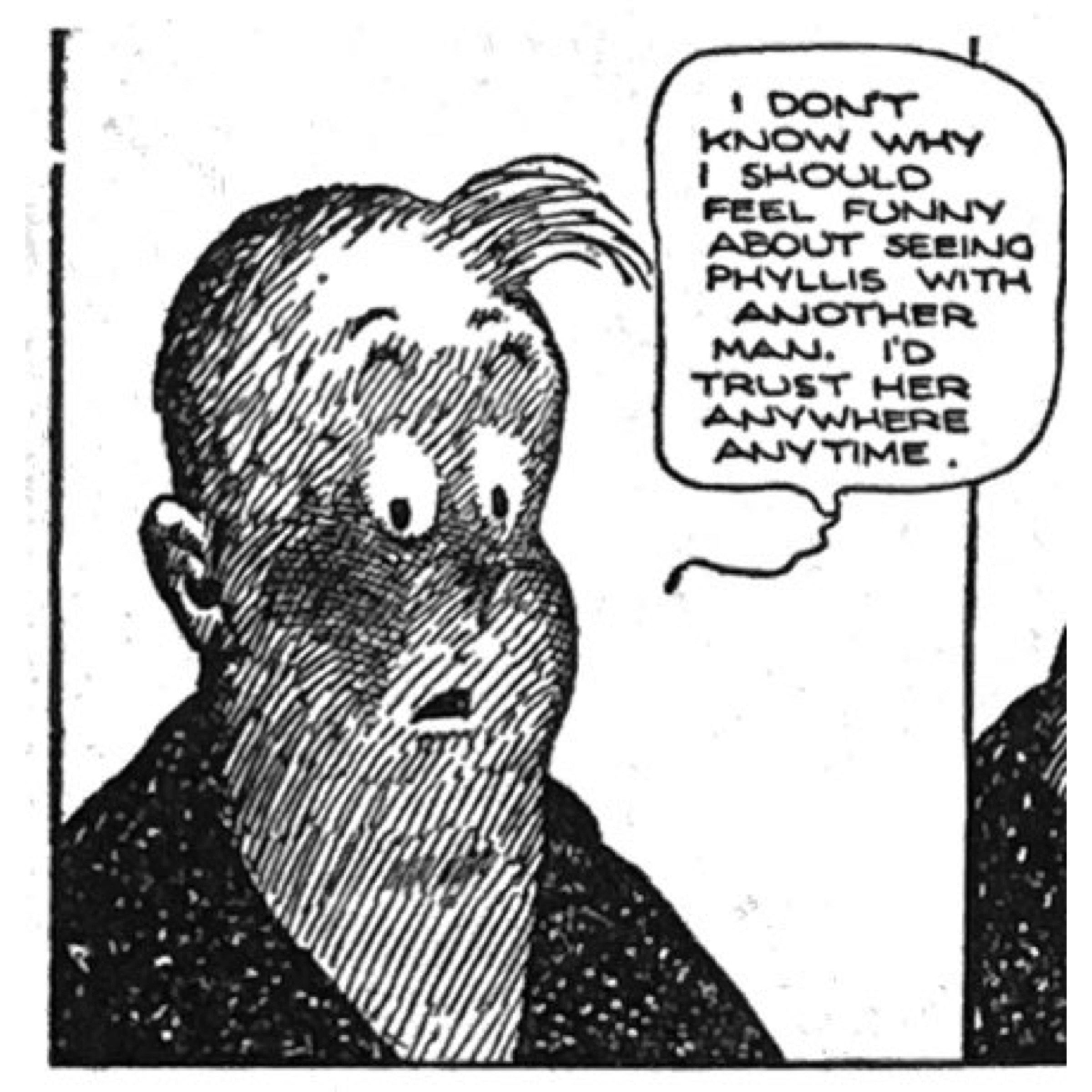


Frank King’s Gasoline Alley may be the “Great American Novel” of the 20th Century we didn’t know we had. This remarkable multi-generational saga of the Wallets evolved in several panels a day across decades, exploring the domestic and emotional lives of small town Americans during a century of intense change. And in its heyday during the post-WWI era, this strip was singular in its affectionate embrace of suburban family life at a time when post-war disenchantment overwhelmed the intellectual class, when glamour, sex and emotion dominated the film arts and magazines and glitz dominated Hollywood. When more famous social commentators like H.L. Mencken, Walter Lippman and Sinclair Lewis lampooned, decried and doubted the small town American intellect – the so-called “revolt from the village” – King celebrated what Mencken called the “booboisie.” Comics historians often characterize the post-1915 period of the medium as a kind of literal and figurative domestication. As newspaper syndication expanded into every burg, the mass media business of comics needed to shave the edges off of a once-raucous and urban-focused art form. Shifting the focus to family relations and suburbia, relying on more repartee than prankish violence, made the comic strip more acceptable to a mass audience.
Continue readingMonthly Archives: July 2025
The Rapidtoodleum Will Save Us All

In the New York World on April 5 1904, a giant but apparently friendly robotic beast vaulted from an unfinished New York City subway entrance to address some of the city’s most pressing concerns. Daily, and for the next week, this cartoon “Rapidtoodleum” offered rapid transit that solved for a much-delayed subway project, exposed gambling in Harlem, proposed an alternative to overpriced city housing, outpaced a newfangled automobile, and lampooned the florid fashion in women’s hats.
Continue readingWhen Superman Was Woke?

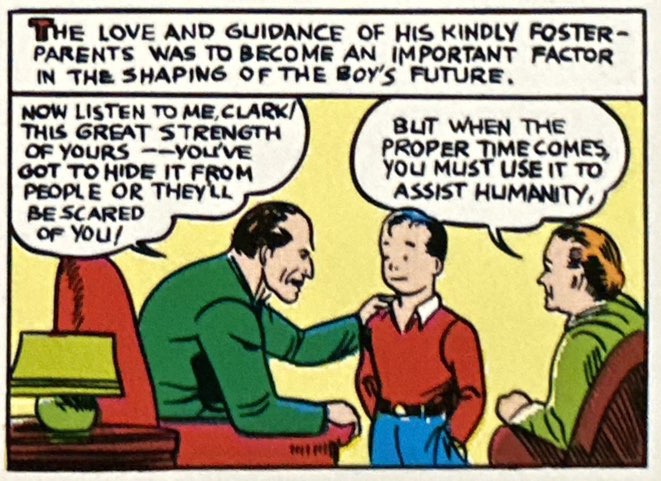
America needed a hero. That is how Superman creators Jerry Siegel and Joe Shuster remembered the late-1930s world in which their modern myth soared. Everyone is familiar with the Clark Kent origin story: orphaned by cosmic circumstance; rocketed to Earth; fostered by the Kents in the american breadbasket; super-powered by our planet’s physics; and taking on his secret identity as the milquetoast reporter. It is that rare mass mediated pop culture fiction that genuinely approaches folk mythology. It is an origin that compels retelling for every generation. Less attention has been paid to his political roots, however. Every comic strip in the adventure genre especially has an identifiable political slant, most obviously in its choices of wrongs to right and the villains to subdue. The famously conservative Chester Gould in Dick Tracy and populist Harold Gray in Little Orphan Annie were the most overt. Less obvious was the implicit imperialism of Milton Caniff’s Terry and the Pirates and most of the adventure pulps, which characterized non-Western cultures as at best quaintly primitive or at worst inherently brutal.
Continue reading Panels & Prose