
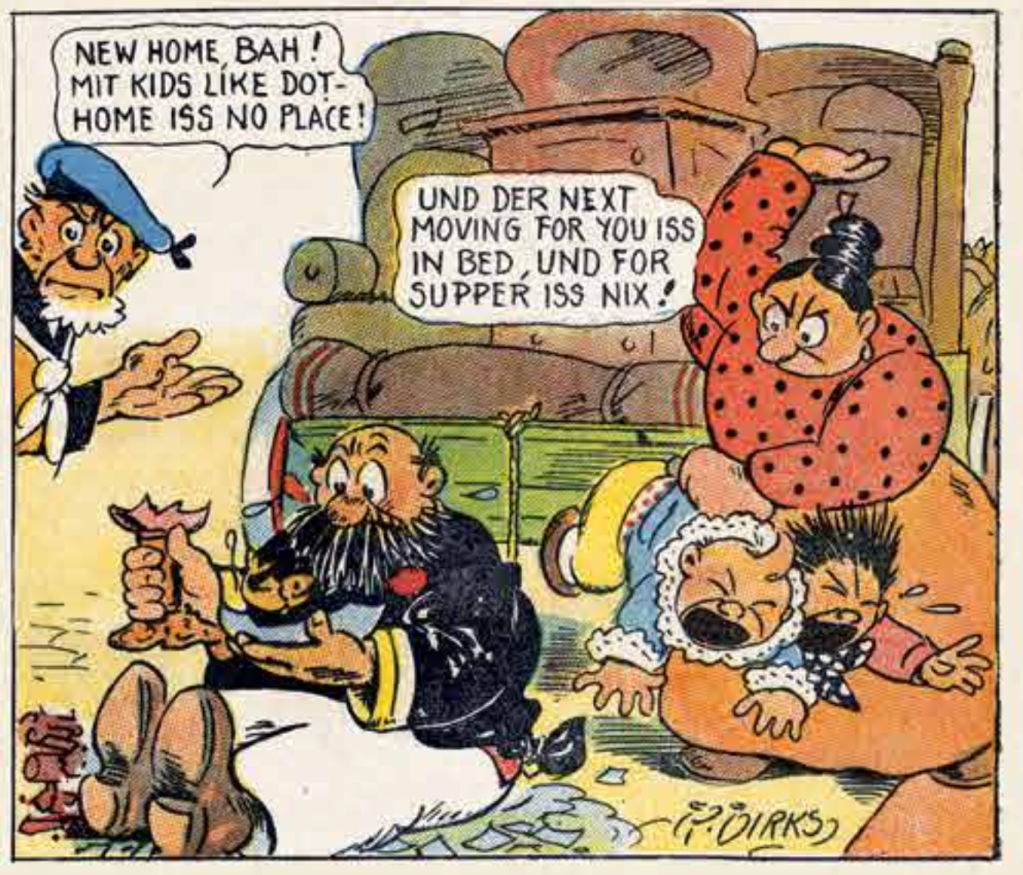
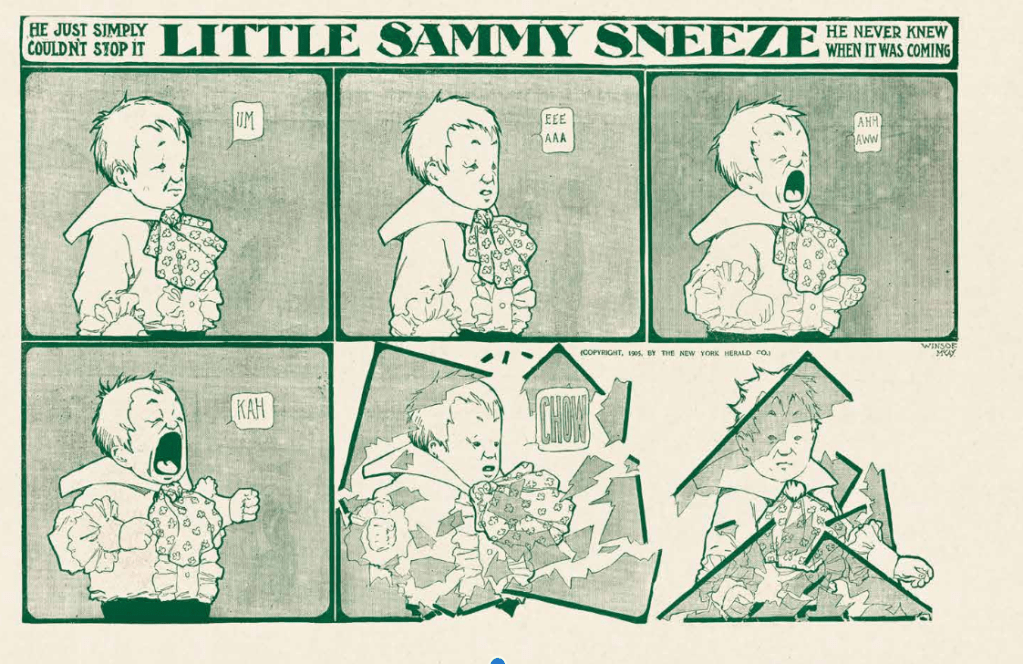
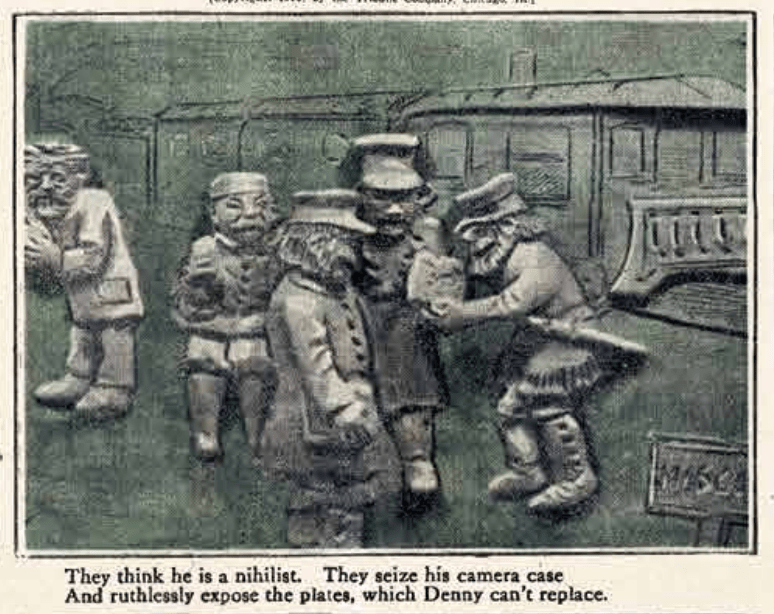
When the massive 21-inch by 17 inch, 152 page slab of early newspaper comic reprints bruised our laps in 2013, Sunday Press’s Society is Nix was a milestone. First of all, we had never seen so many examples from the innovative birthing years of the medium curated so intelligently, restored so beautifully and scaled to the original experience of the first Sunday supplements. Here we got that familiar crumbling mushroom forest in Winsor McCay’s Little Nemo in Slumberland, but now with the tonal nuance and size McCay intended. The Yellow Kid’s Hogan’s Alley was clear and detailed enough to appreciate all of that background business R.F. Outcault helped pioneer. We could best appreciate the sense of motion, and symmetry of Opper’s signature spinning figures in Happy Hooligan and Her Name Was Maude. And James Swinnerton’s often primitive-seeming linework revealed its expressiveness and intentionality when viewed closer up. Taking its title from a proclamation by the Inspector about the unruly Katzenjammers (“Mit dose kids, society iss nix!”), the book captured the creative freedom of a medium that hadn’t settled yet on a form, let alone a business model. Editor/Restorer Peter Maresca was unrivaled both in his eye for the right exemplary strip as well as his sheer skill in reviving the original color and detail from these yellowed, faded paper. For the last. Decade, Society is Nix remained indispensable for any fan or historian of the medium.
Continue readingMonthly Archives: September 2025
Mad Men Angst: Dedini, Shulman and Self-Hating Suburbia
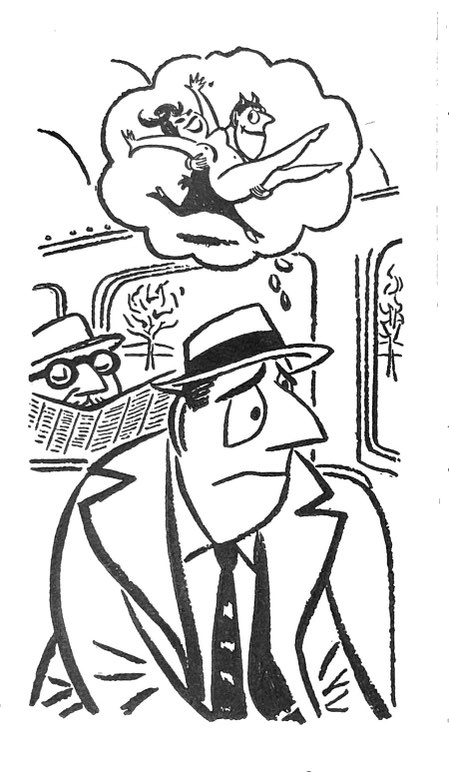
You may not think you know Max Shulman and Eldon Dedini, but you have seen their stuff. Shulman was a comic novelist of the 1940s and 50s whose most famous, enduring creation was The Many Loves of Dobie Gillis, a short story collection that became an MGM musical in 1953 and a genuinely witty TV sitcom (1959-1963). But throughout those those decades, Shulman was a bestselling satirist of mid-Century suburbia. His 1943 breakout college satire Barefoot Boy With Cheek was followed by The Feather Merchants, the Dobie Gillis collection and Rally Round the Flag, Boys!. In their Bantam paperback releases, many of Shulman’s novels enjoyed cartoon complements by Eldon Dedini, best remembered as a longtime Playboy magazine regular. His cartoon style is immediately recognizable: highly abstracted balloon faces, sharp triangle noses, bright watercolor washes. His lascivious satyrs were among jhis signature series in Playboy.
Continue reading Panels & Prose