
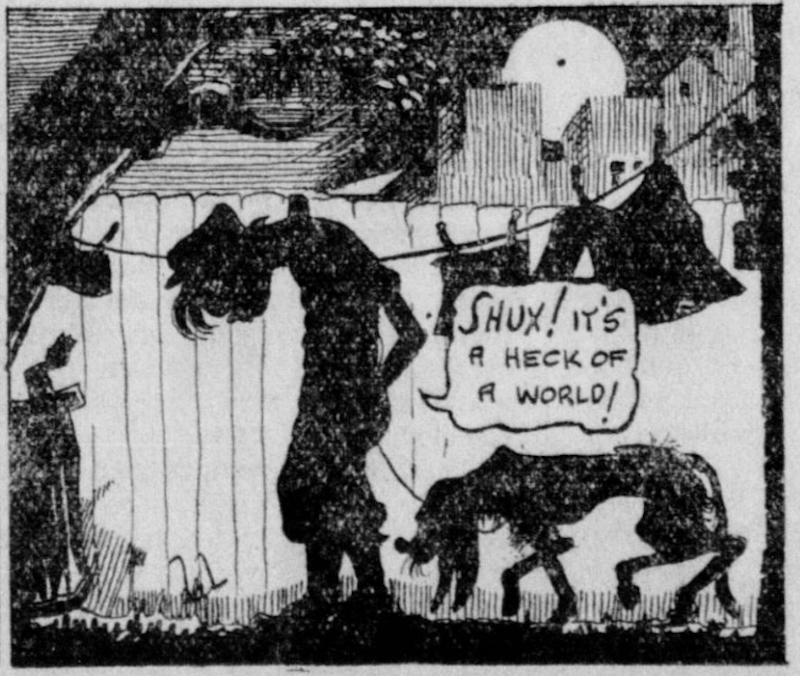
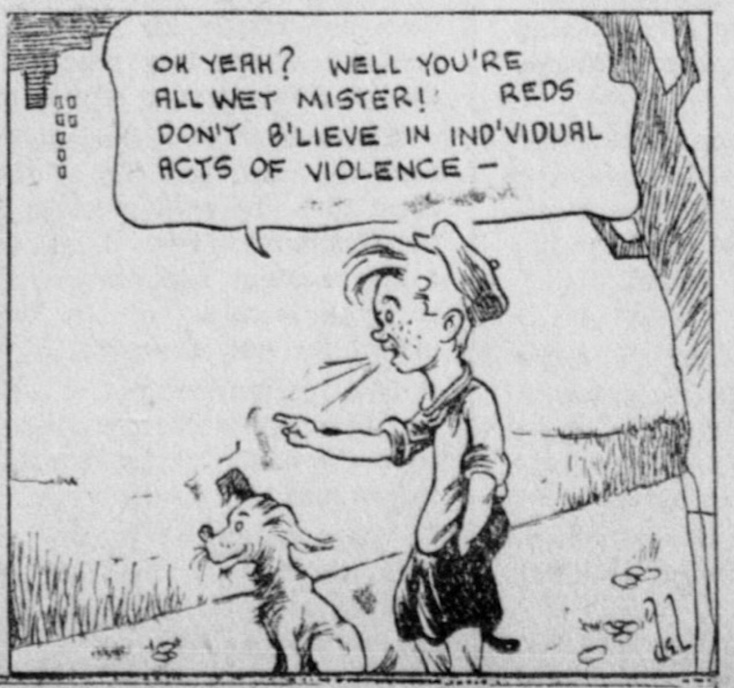
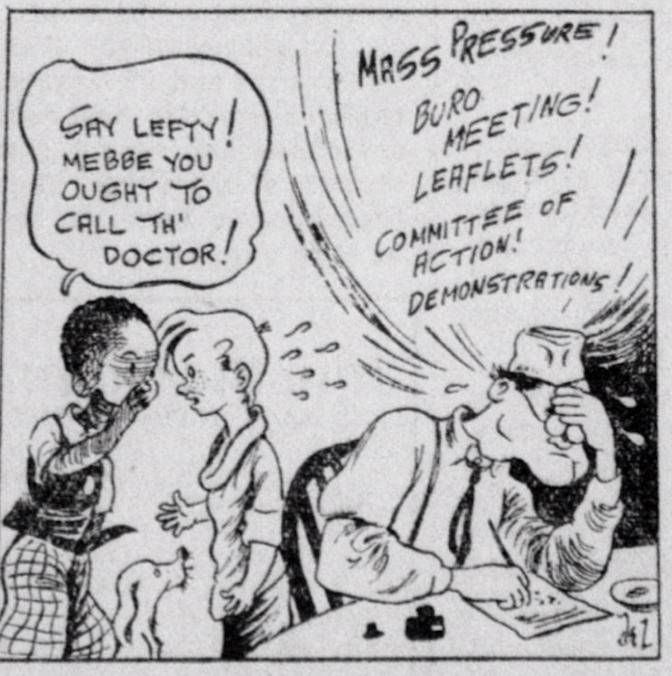
As we found with Coulton Waugh’s lost gem Hank, the radical comic her Little Lefty is often mentioned in comics history but rarely read. This mainstay of the Daily work through much of the 1930s deserves more than a footnote. Like Waugh’s Hank, and the later Pinky Rankin by Dick Briefer, Little Lefty was a genuine and sustained attempt to leverage the conventions of the comics genre towards specific political ends. And it was part of a legacy of leftist cartooning that was already decades old.
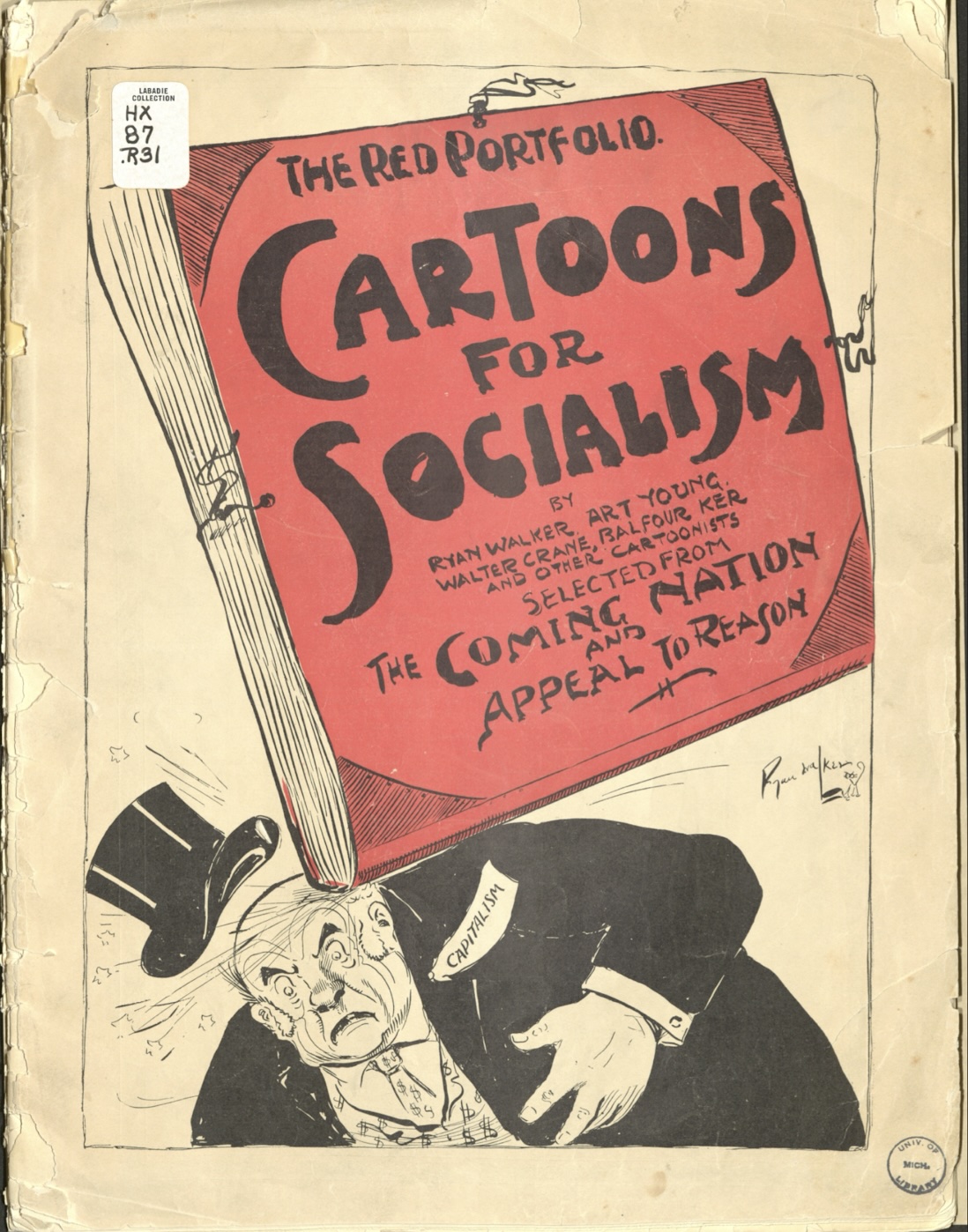
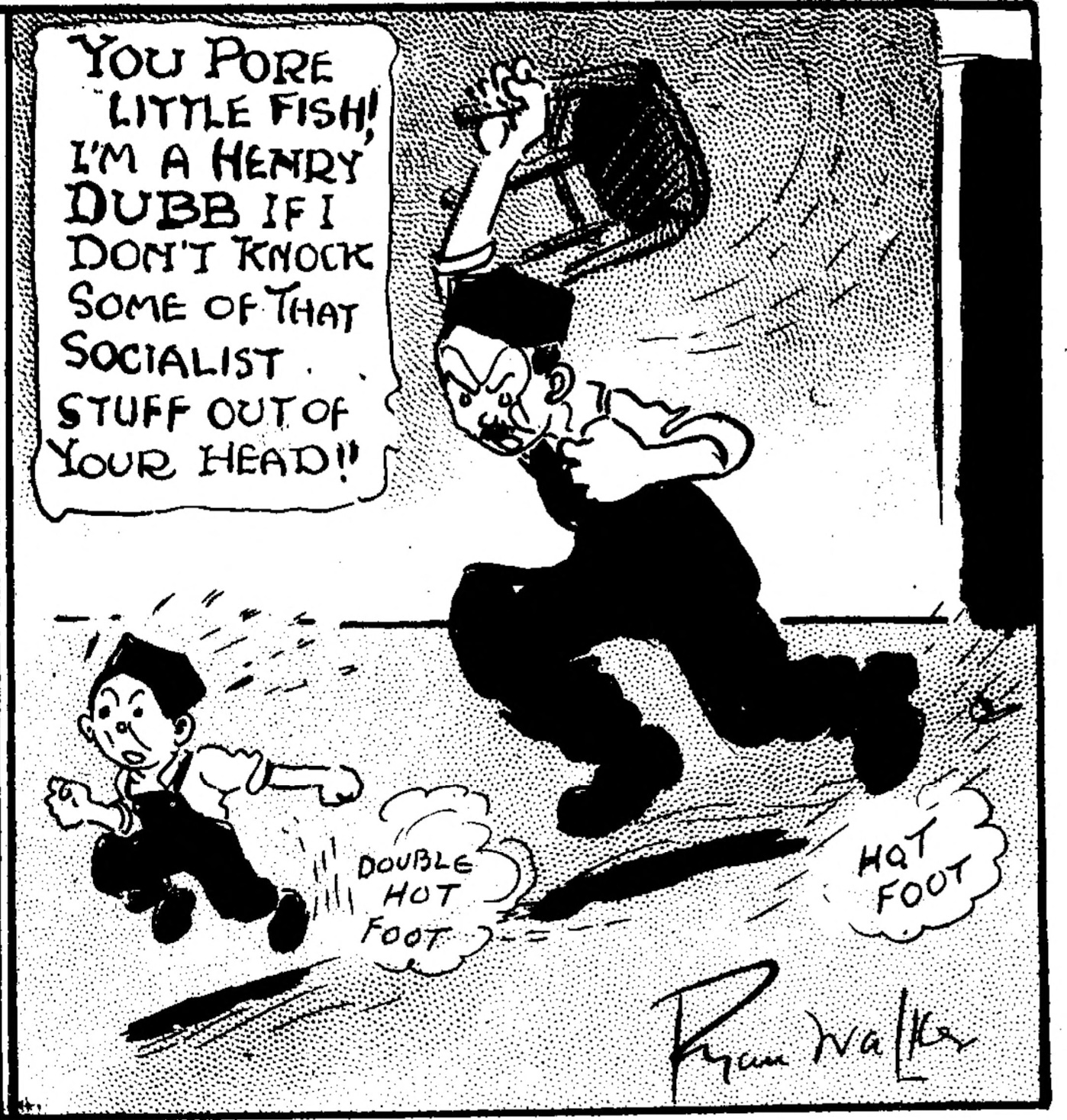
The political and cultural left in America embraced the comics medium long before it became fashionable among pop culture enthusiasts and academics. As early as 1912, fames Socialist activist and persistent Socialist Presidential candidate Eugene V. Debs predicted that cartooning would be a bulwark of revolution because it had unique rhetorical power and democratic accessibility. In his introduction to a collection of Socialist newspaper comics from Coming Nation and Appeal to Reason, he dissected an anti-war comic by the prolific radical artist Ryan Walker as an object lesson in comics as important propaganda. “It requires no study and no interpretation. It is a terrible picture flashed upon the mind and can never be forgotten. A school child pauses before it, shudders, and understands. Its stern and compelling protest and its profound and solemn warning appeal alike to young and old, poor and rich, ignorant and learned. All are alike halted, shocked, and sent forth loathing war and abominating its crimes and horrors. A score of pages of the most graphic writing could not be so effective.”
For Debs, cartoons tapped audience sentiments that speeches and pamphlets could not, and did so across language or class barriers. These ideas were fundamental to the left’s ongoing, but rocky love affair with comics. A range of storied insurgent publications across the 20th Century featured cartoons, including ongoing character strips. In Appeal to Reason, the most widely circulated radical paper in American history (750,000 at its peak), Walker produced a regular strip, The Adventures of Henry Dubb, a send-up of the capitalist dupe. Dubb was a poor, exploited laborer who somehow believed that his and his capitalist employer shared common political interests. The Dubb strips appeared in successive reprint volumes in 1915 and 1916. At the same time, another hapless dupe, Mr. Block, became popular across many local I.W.W. (Industrial Workers of the World) newspapers in the 1910s. Crafted by activist Ernest Riebe, the wooden-headed Block was a dunderheaded apologist for capitalist excess, a cartoon avatar of “false consciousness” among the working class.
Henry Dubb and Mr. Block were notably different from later radical strip protagonists like Little Lefty and Pinky Rankin, who had extended runs in the Communist Daily Worker during the 1930s and 40s. These 1910s characters followed the conventions of early mainstream cartoons by featuring a hapless anti-hero and invoking the comedy of cluelessness. As well, they registered the frustration many socialist and I.W.W. leaders felt towards the majority of American laborers who refused to see themselves as objects of capitalist exploitation and unreconcilable class conflict. Later radical strips took a different propaganda tack and channeled a different era in comics.
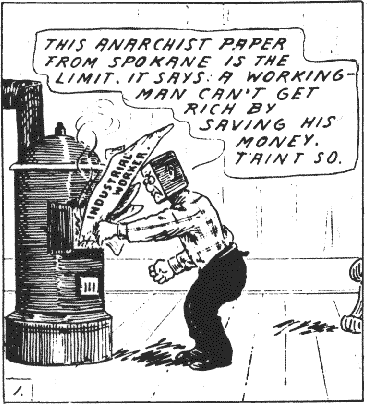

Which brings us to Little Lefty. The longest running character-driven strip in radical papers, it was drawn by Maurice del Borgo (signing under “del”) and launched on Oct. 8, 1934 in the Daily Worker. It ran regularly, with some drop-offs until the first month of 1943. If Lefty looks a bit more polished than some of his predecessors, it is because del Borgo had real cartoonist chops. By the 1940s he had a steady stream of work from nascent comic book publishers. At various times he drew Airboy, Green Lantern and eventually a number of Classic Comics. He got a lot of practice with Lefty, which ran daily for most of its decade and event appeared for a while in the Sunday edition of the Worker.
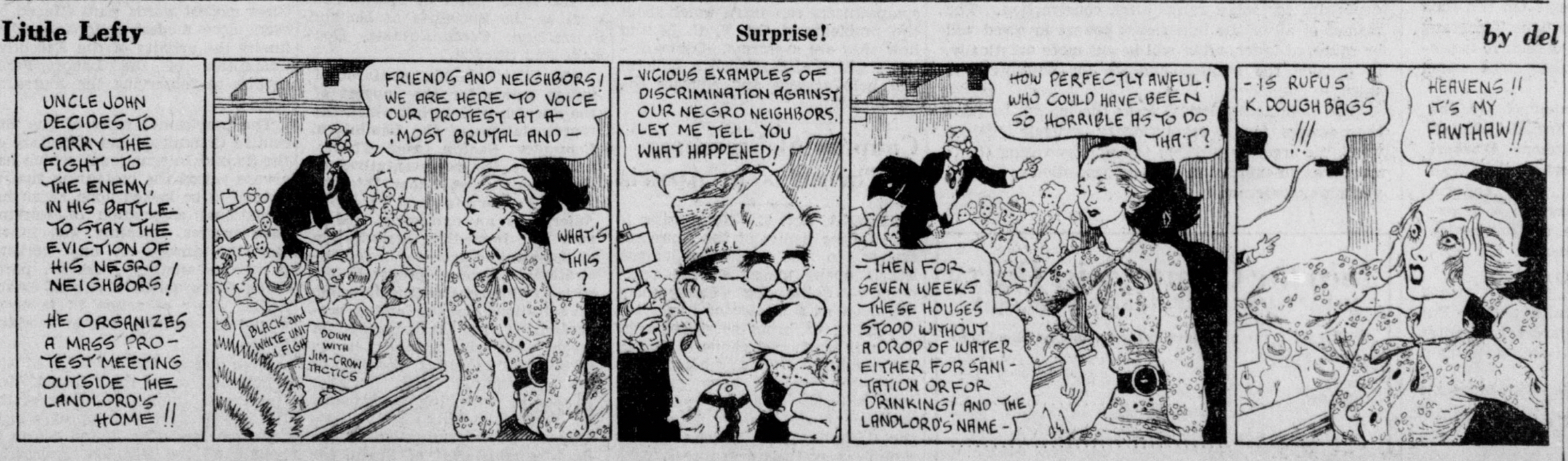
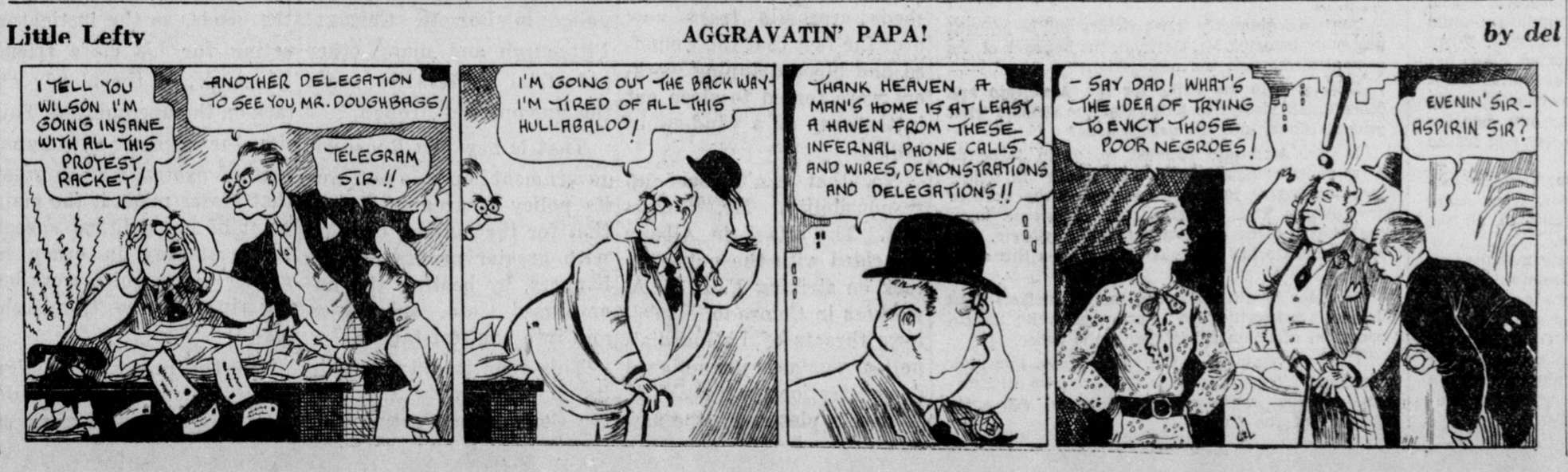
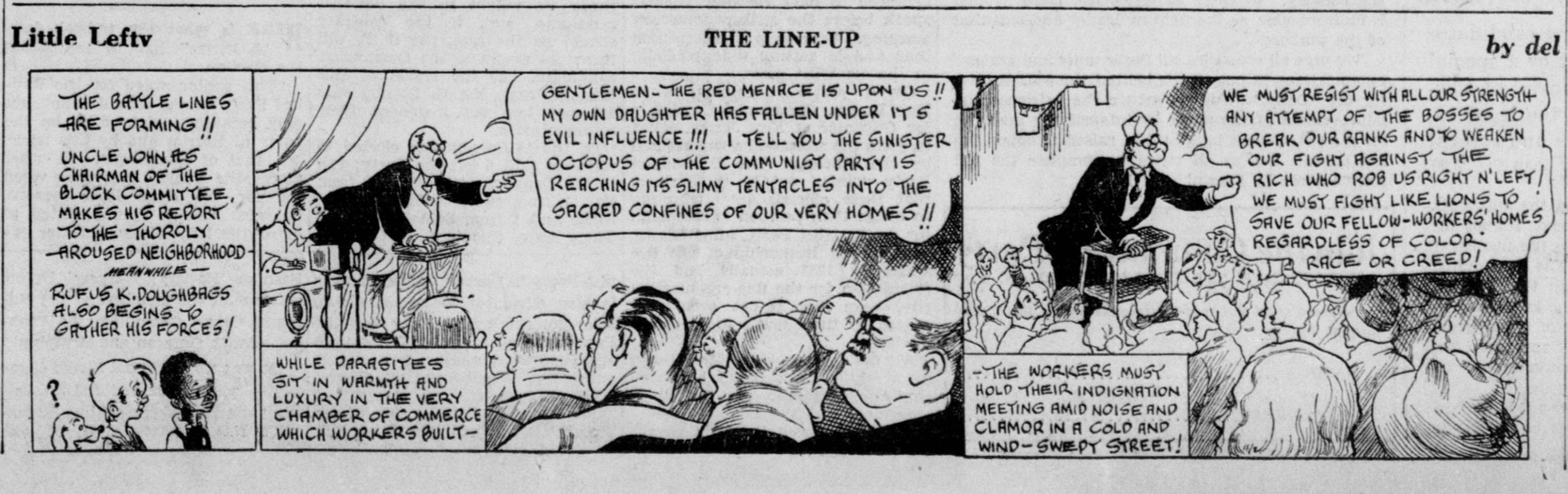
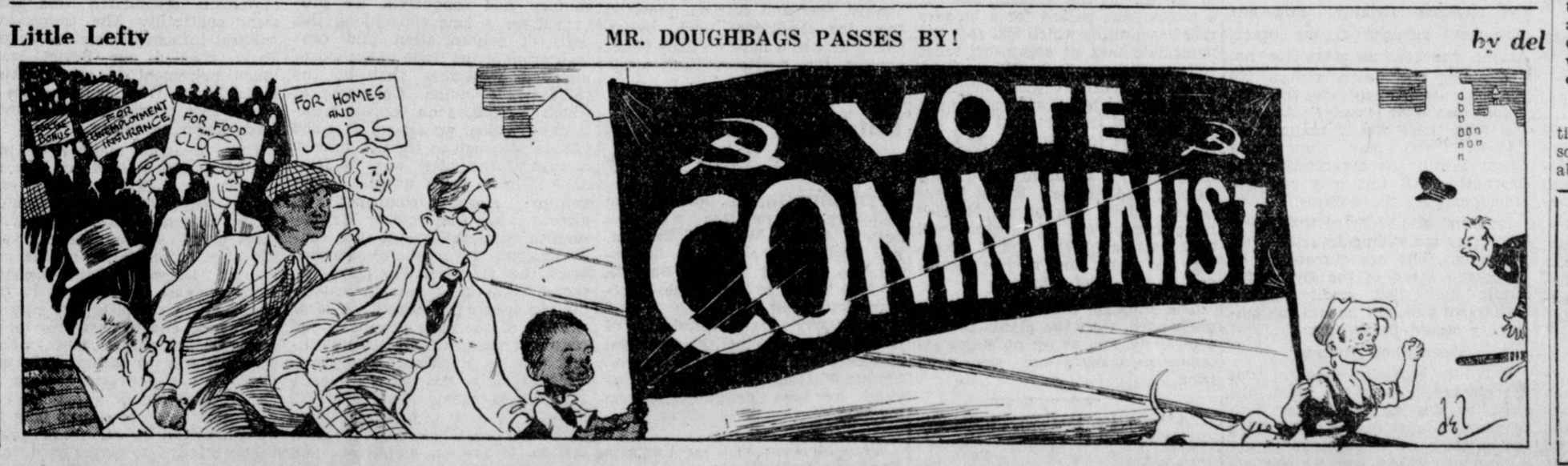
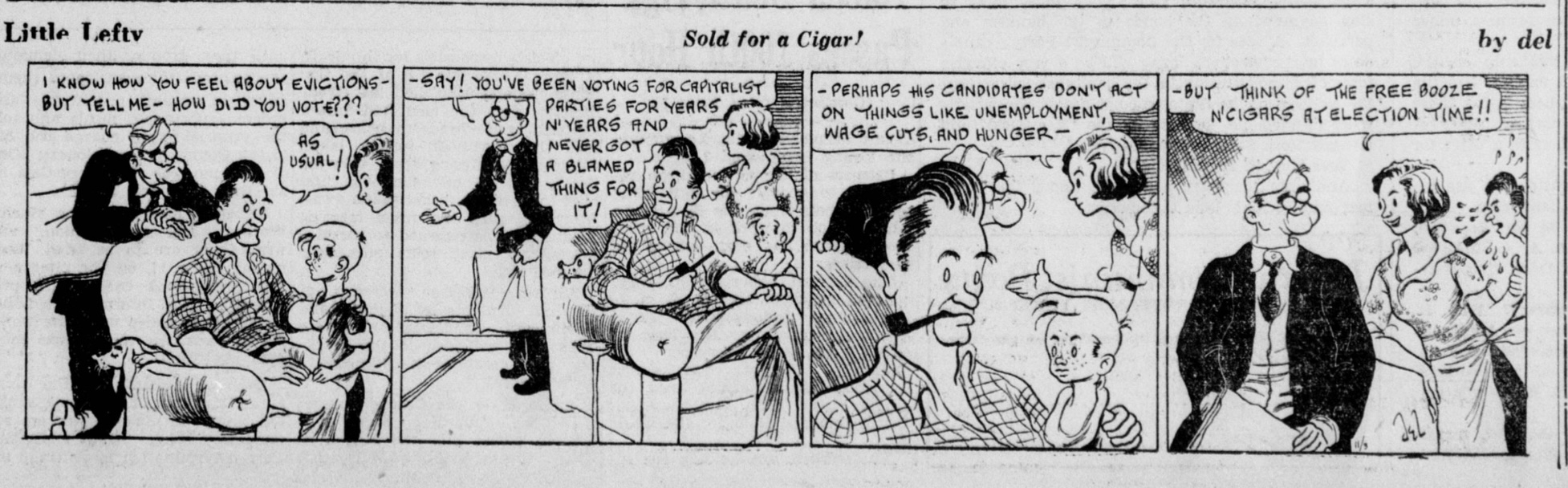
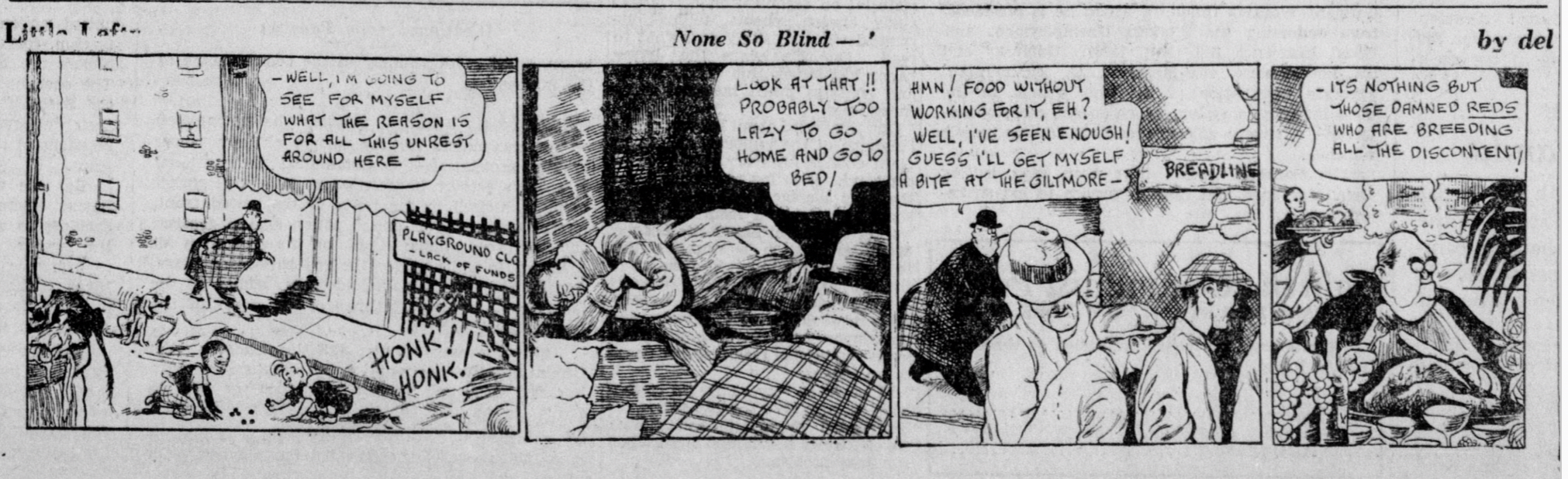
While relentlessly political and anti-capitalist in its overt messaging, the Lefty strip absorbed some of the dominant strip genres of the day in blending some adventure and domestic themes. The titular hero is a familiar pre-teen character who seems to jump from any number of kid strips. The son of the blue collar working poor “Pa” and frugal, resourceful “Ma,” Lefty is a street kid who sees social injustice all around – from racist red-zoning to union-busting. Typically we only see sample days of the strip that highlight the radical tropes, so we have collected the first five weeks of the strip below to capture a full story arc and the characterizations that drove the strip.
The opening strip is the Worker’s clear shot across mainstream media’s bow, suggesting that “Capitalist Comics” like Popeye, Katzenjammer Kids, Skippy, Betty Boop, Mickey Mouse, et. al. are in for a rude shock from the likes of neighborhood newcomer Lefty.
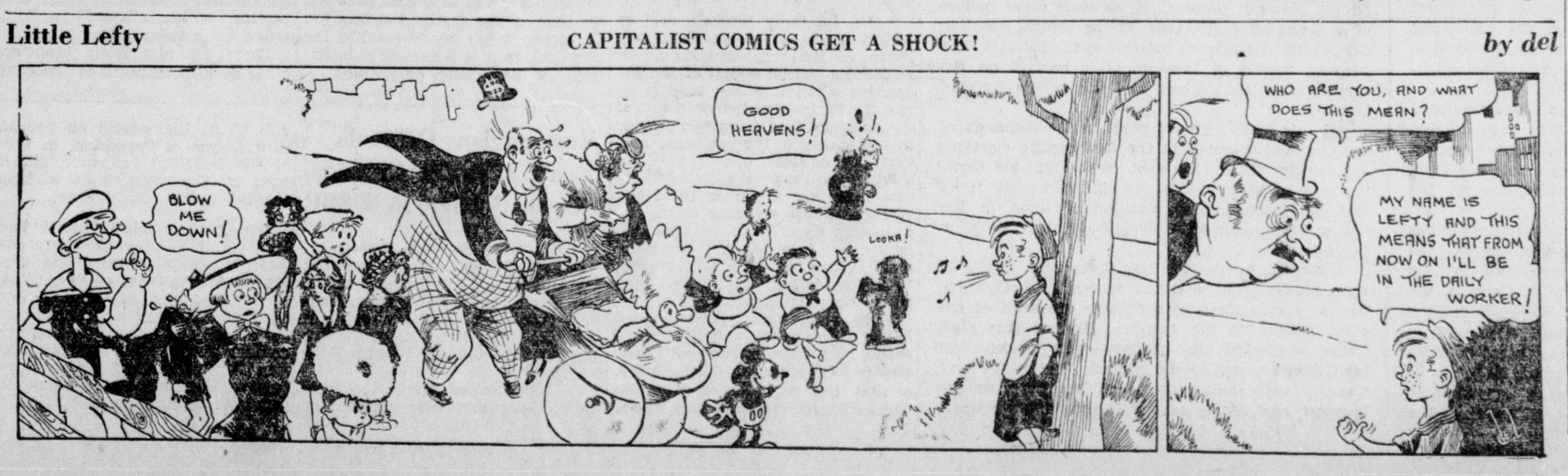
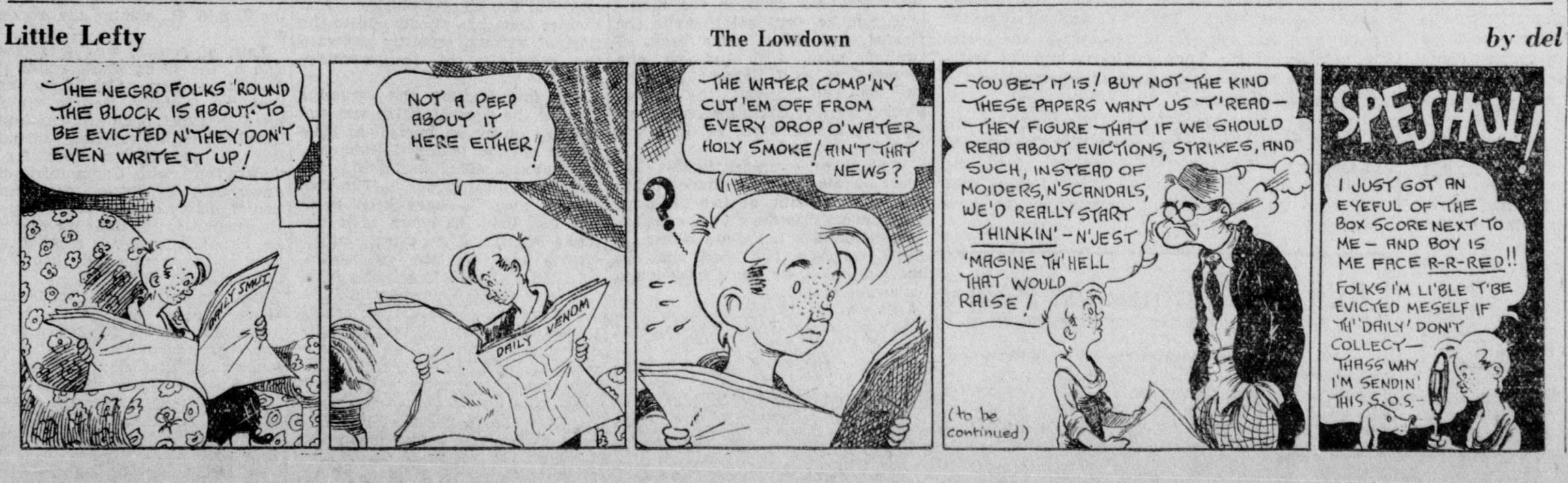
In fact, the strip often channeled the Worker’s persistent criticism of mainstream newspapers as mouthpieces for their capitalist owners. It is important to keep in mind that the Worker (founded in 1934) was the official organ of the CPUSA (Communist Party USA. While it often included a range of leftist opinion, the paper often criticized Socialist efforts as half-hearted and took aim at Roosevelt and The New Deal as gift to the banker class.
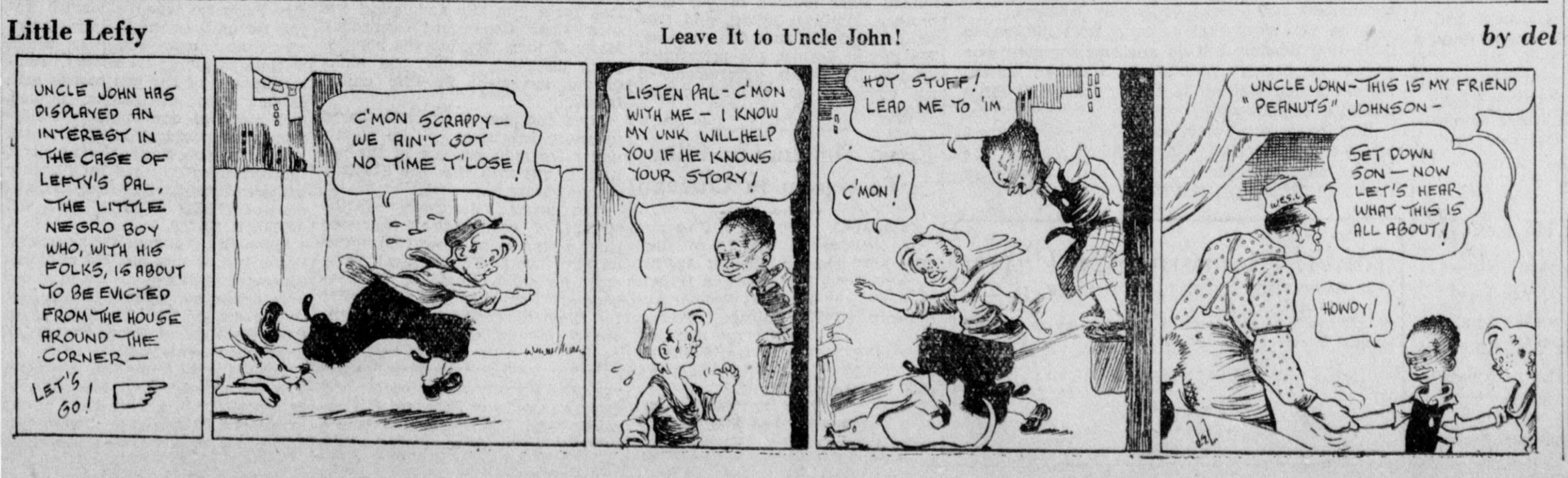
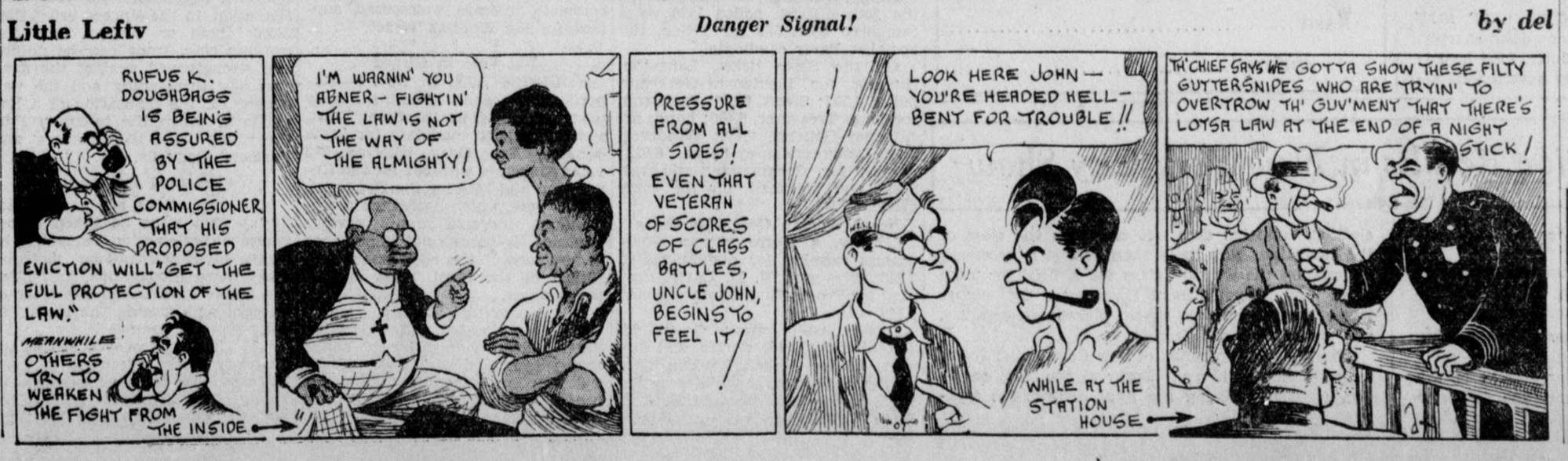
Lefty’s family dynamic is especially interesting. While “Pa” is an underpaid, put upon working stiff, he resists radicalization and often sides with his capitalist masters. “Ma’s” brother “Uncle John” is the instigator. A grizzled veteran who seems to represent the lapsed pre-war Socialist and I.W.W. activism, John is the one to encourage young Lefty’s social conscience. Recalling a previous, lost era of populist resistance would itself become a trope in American radicalism. The counter-culture and the New Left of the 1960s made a similar move in leapfrogging their patents’ generation to find inspiration and a usable past in the populist, Popular Front and radical moments of the 1930s.
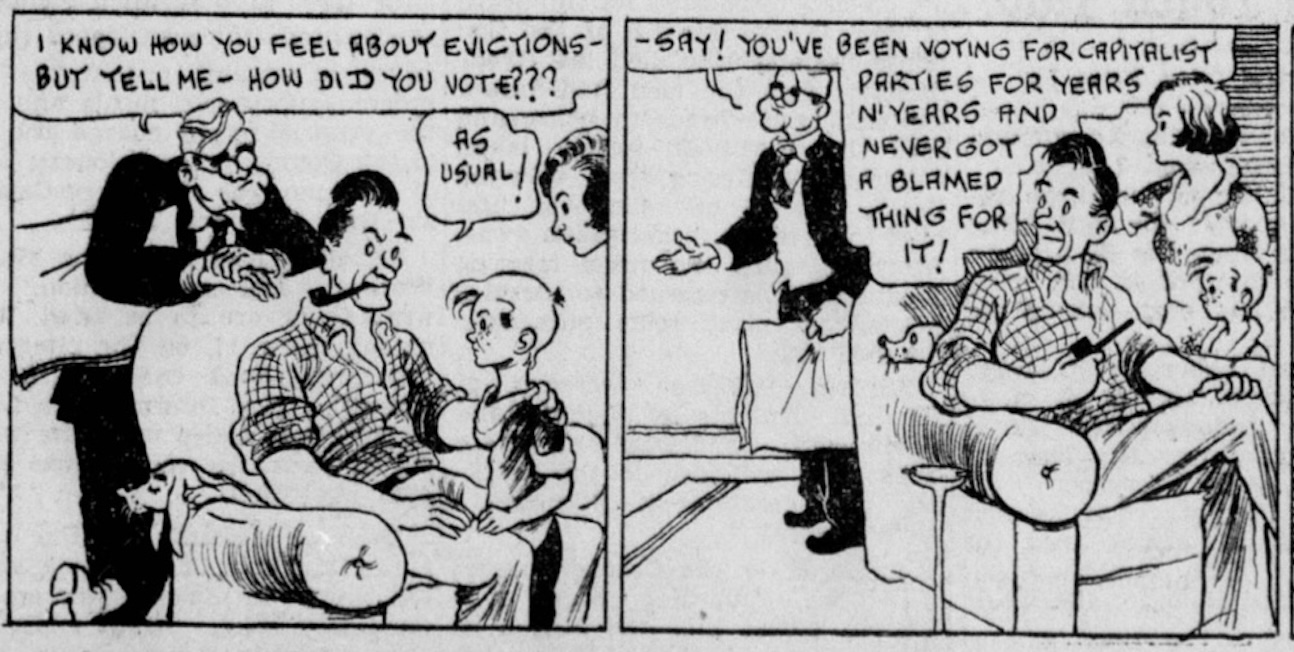
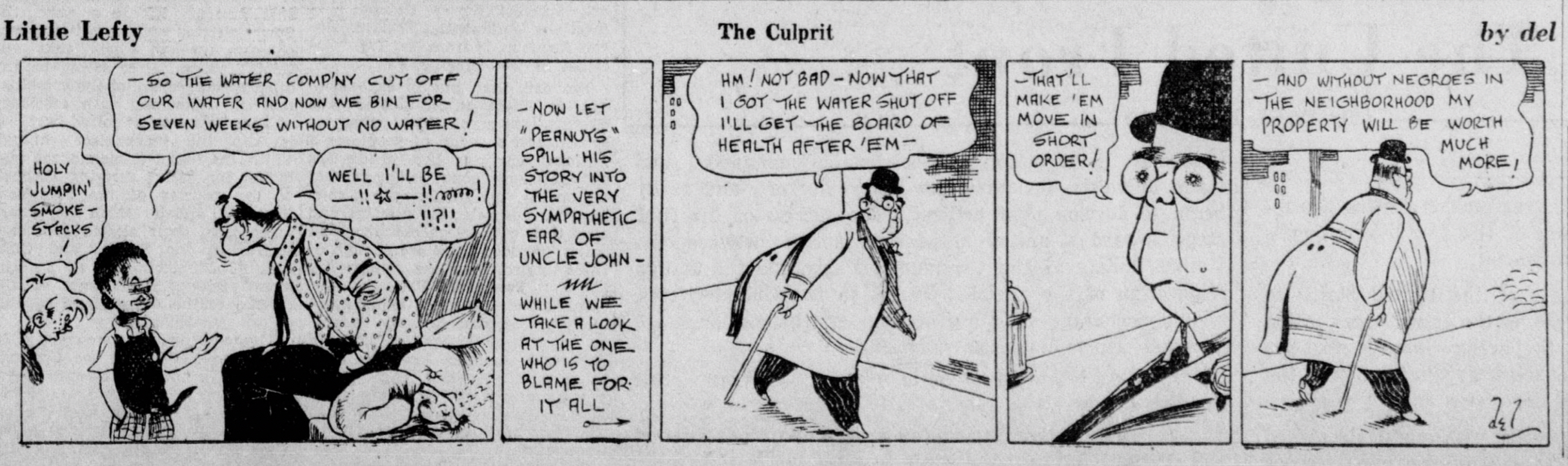
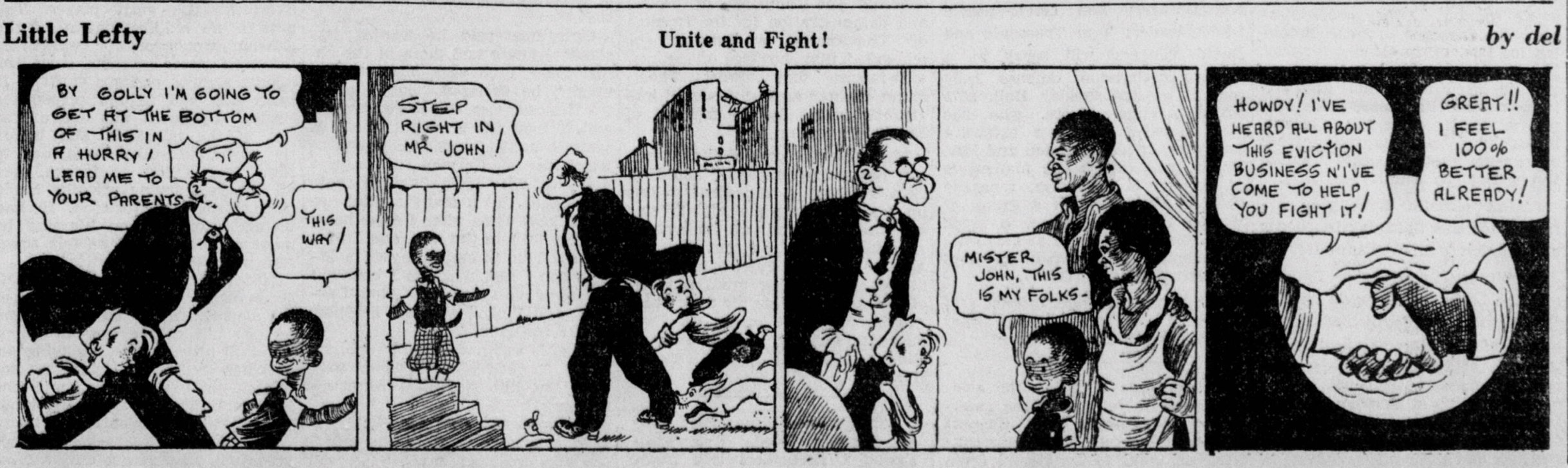
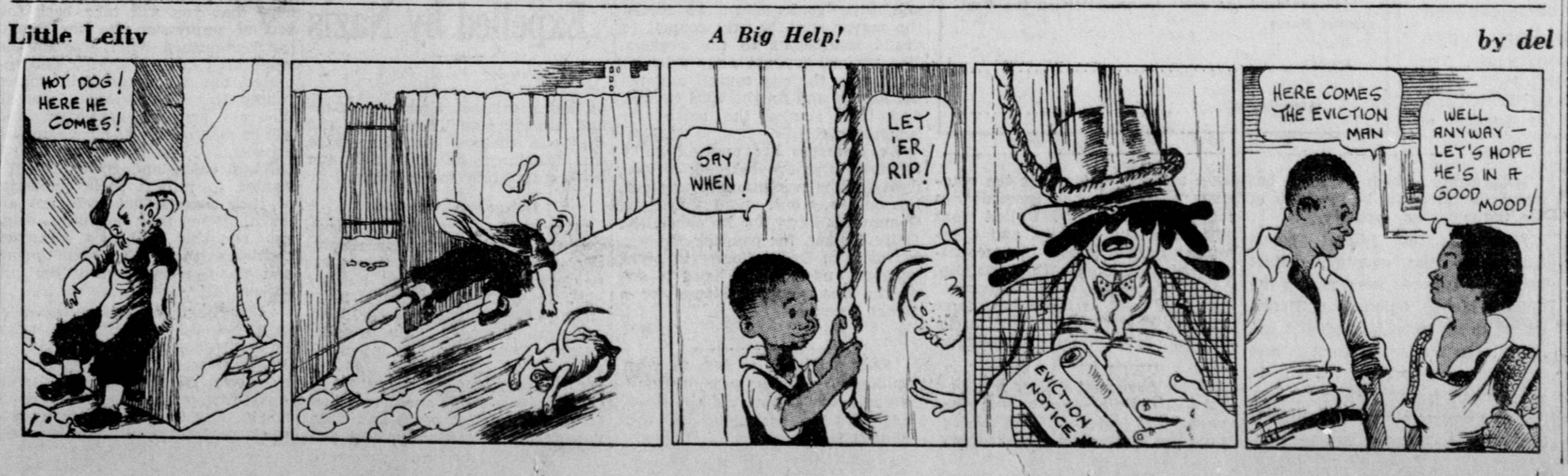
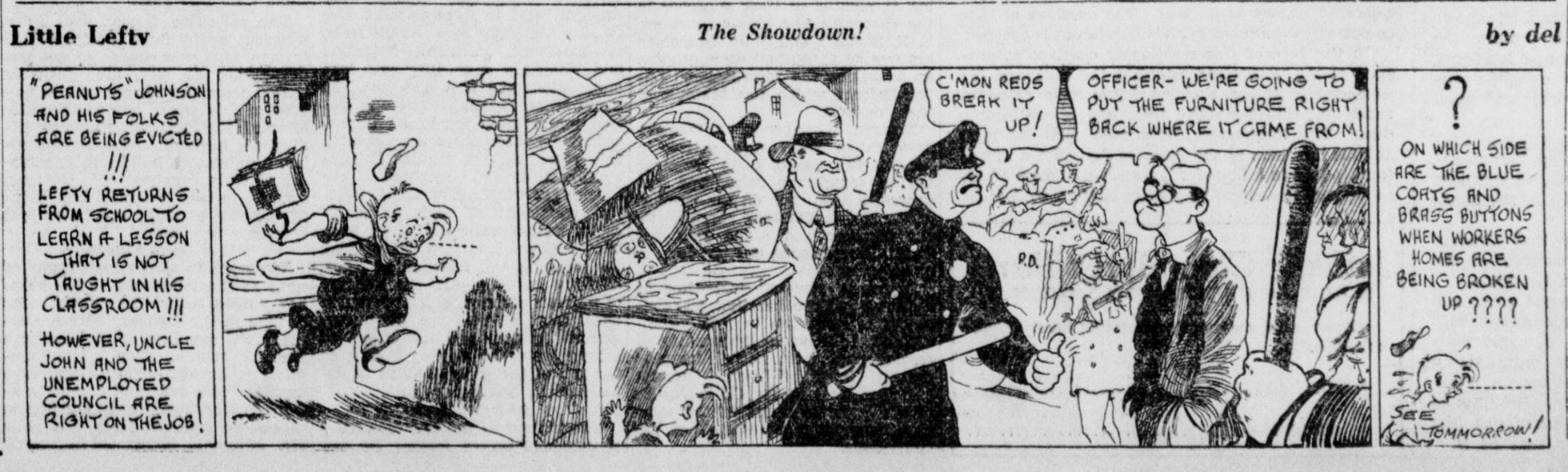
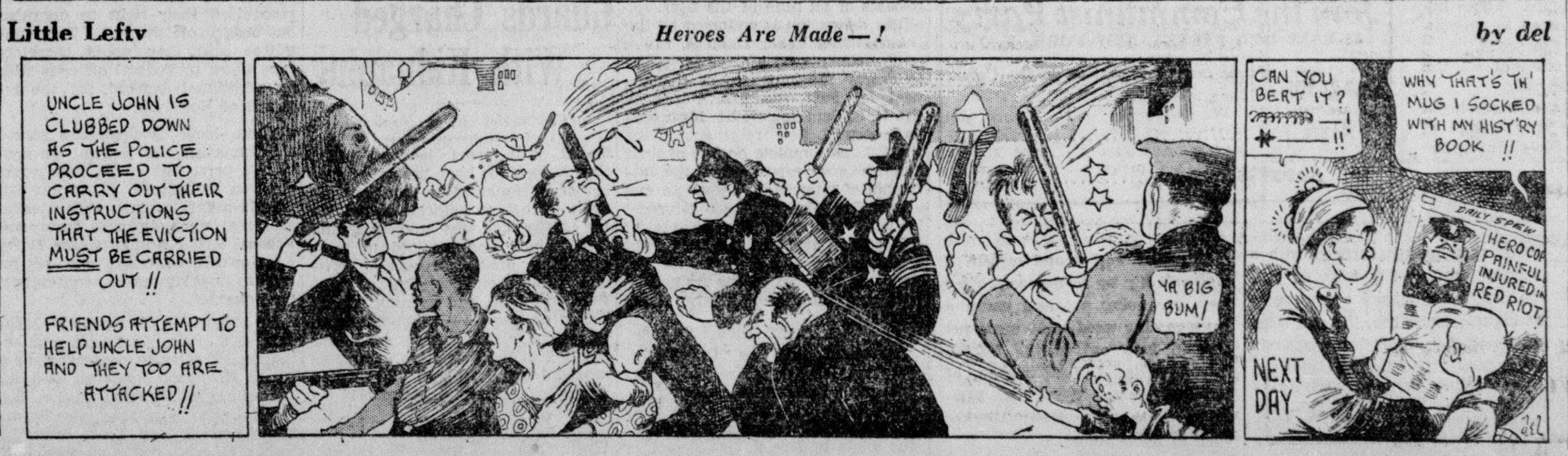
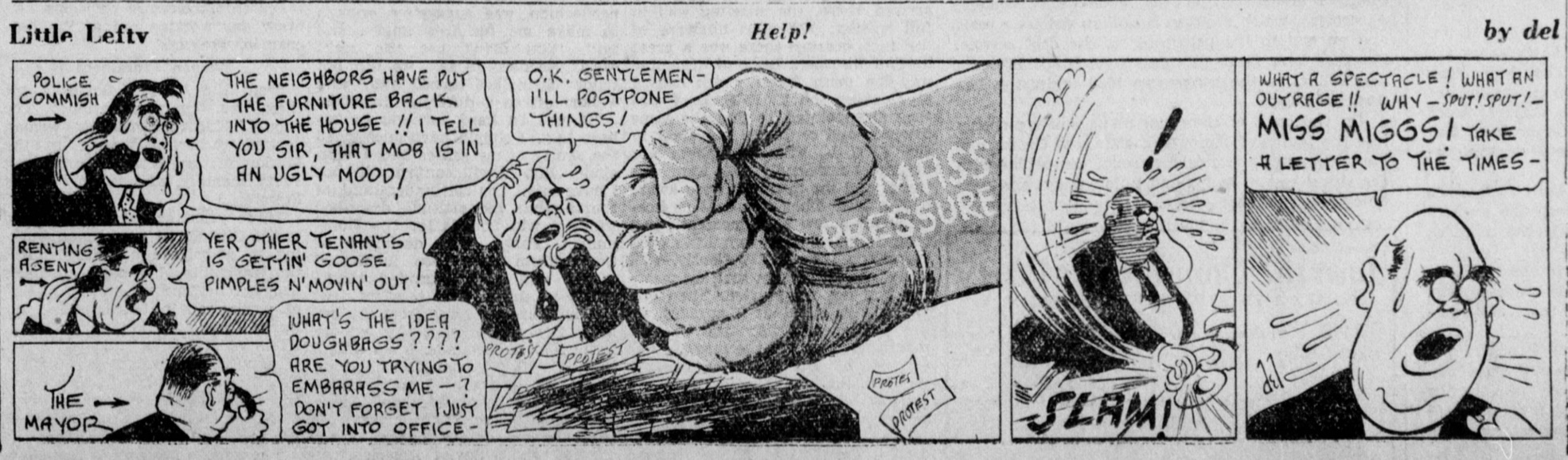
The first story arc takes on both racism and capitalist exploitation when a landlord moves to evict a Black family in order to raise his property values. While the message is unambiguous and the villains broadly drawn, the propaganda is effective because it is not a simple burlesque of big money greed. The strip dissects how courts, media, and police normalize wealthy interests and often do their bidding as a matter of course. And at the same time “del” scopes out how collective action exerts effective pressure against institutional power, even when it resorts to violence. The strip does more than spew bromides and caricatures; it diagrams activism.
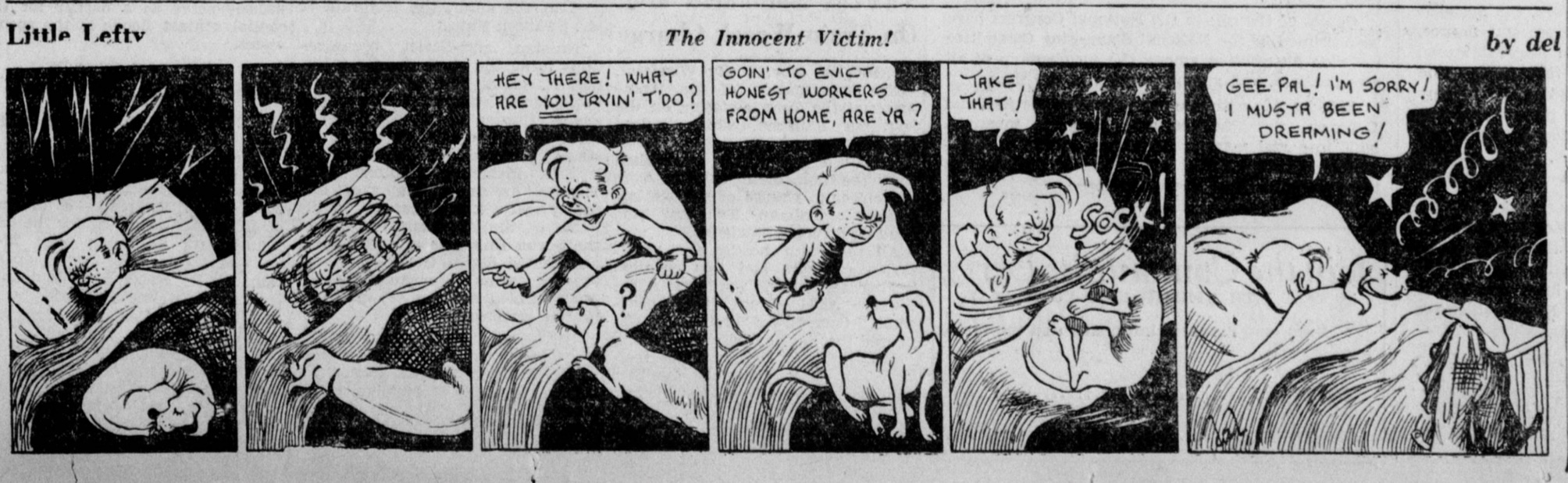
And Little Lefty does all of this with a professional visual style, which makes it all the more engaging. “del” had a flowing line and good panel rhythms. While never especially funny or visually innovative, the strip made the politics feel human. He knew when to toss in a gag to soften the daily didacticism. I like especially the daily devoted to Lefty fighting the landlord in his sleep and mistakenly socking his own dog.
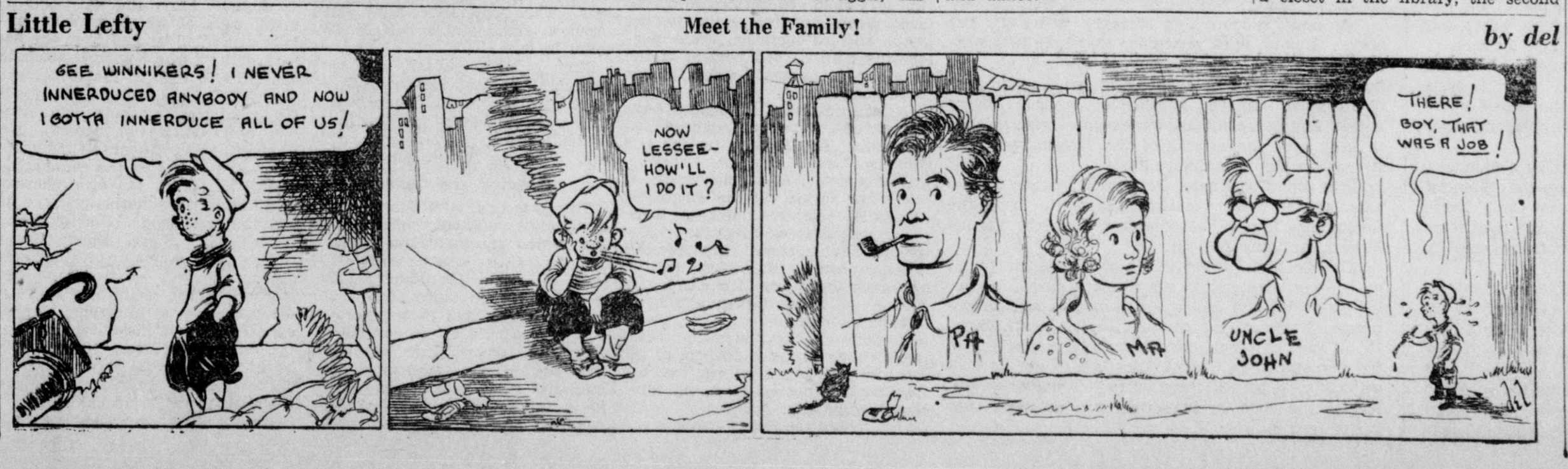
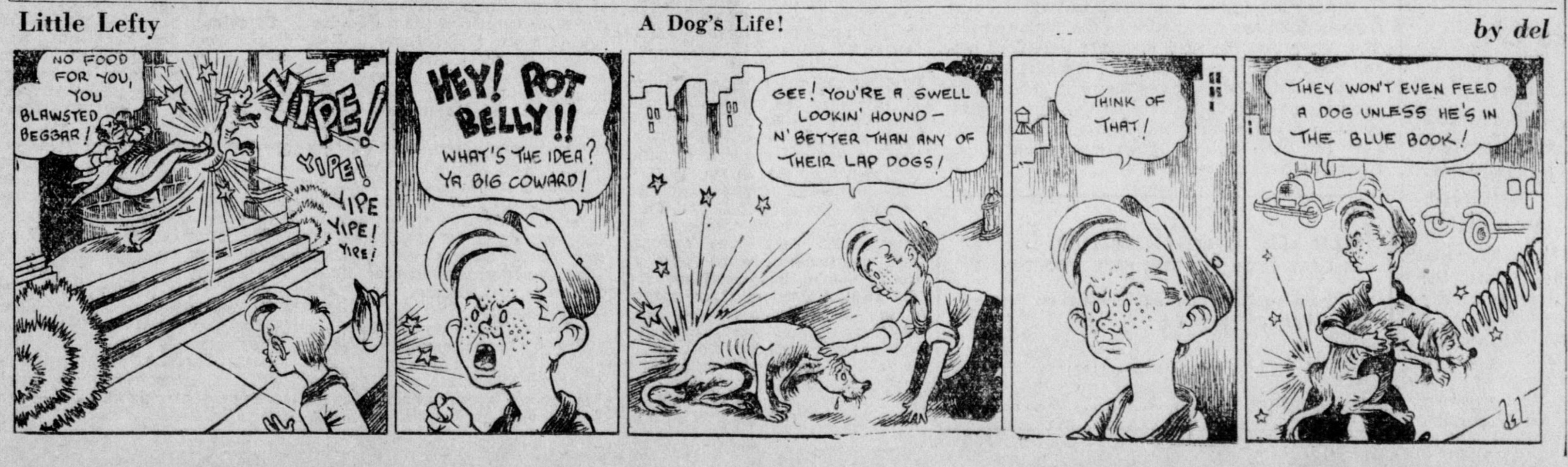
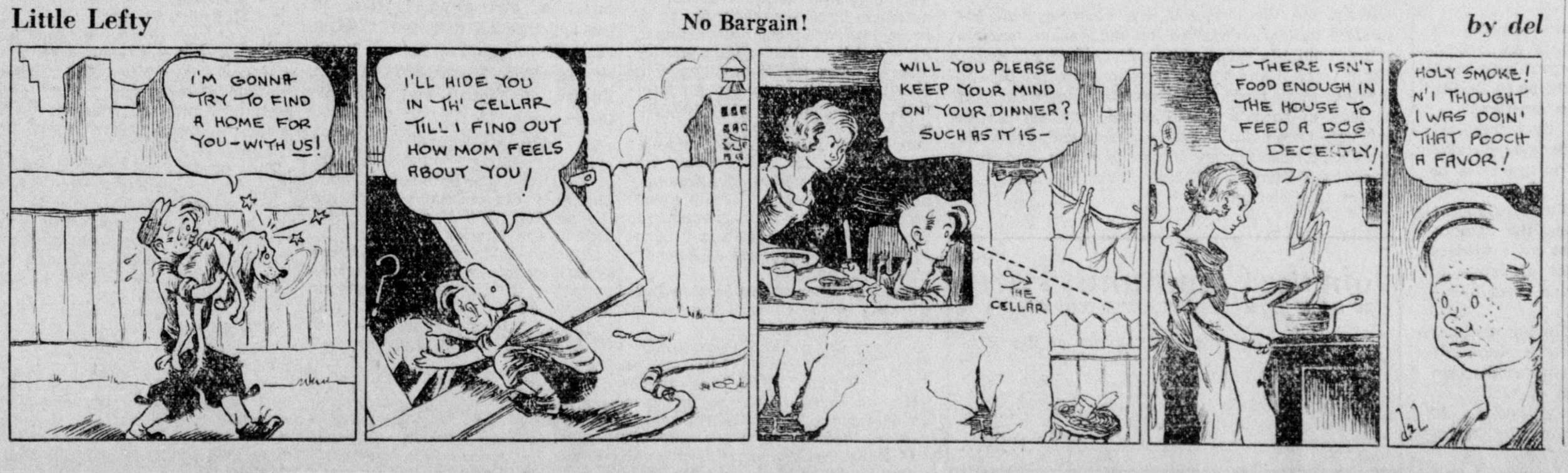
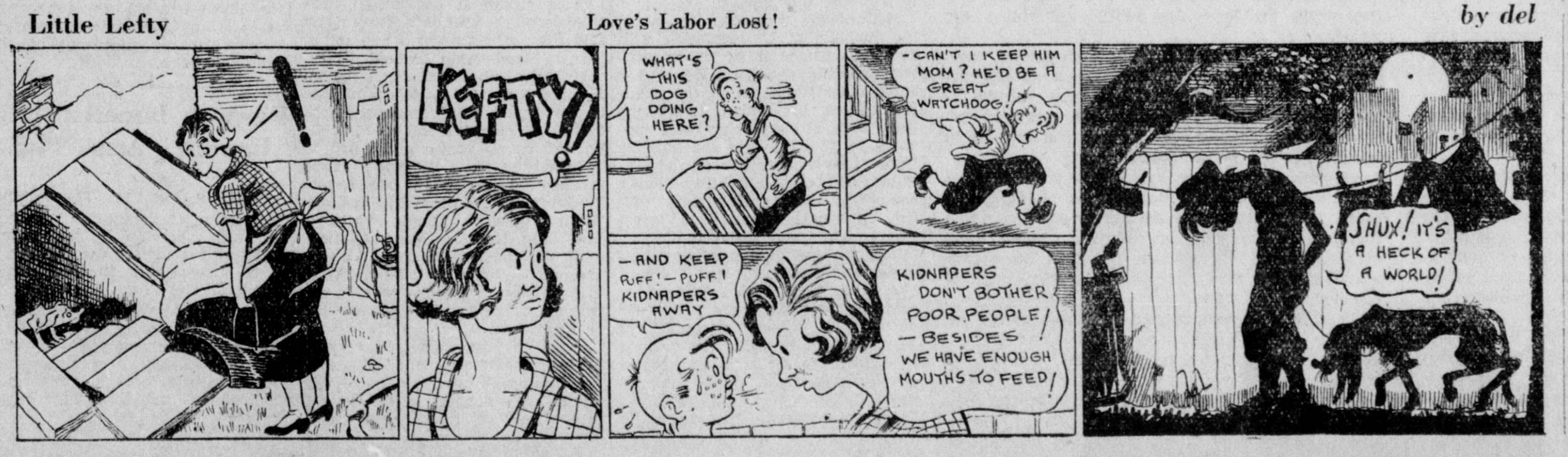
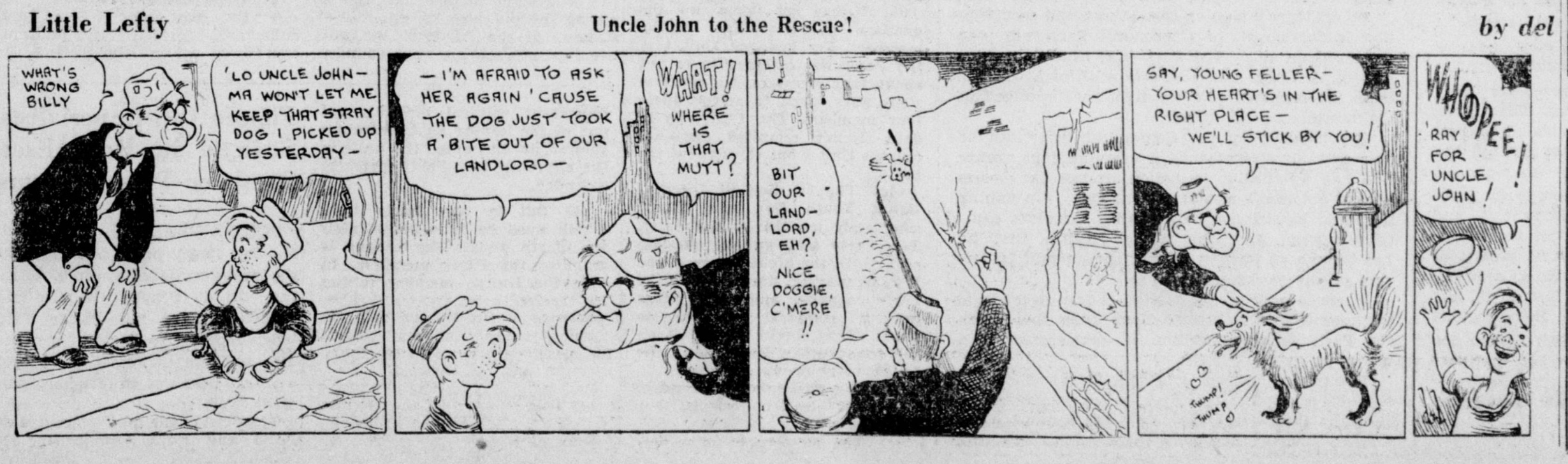
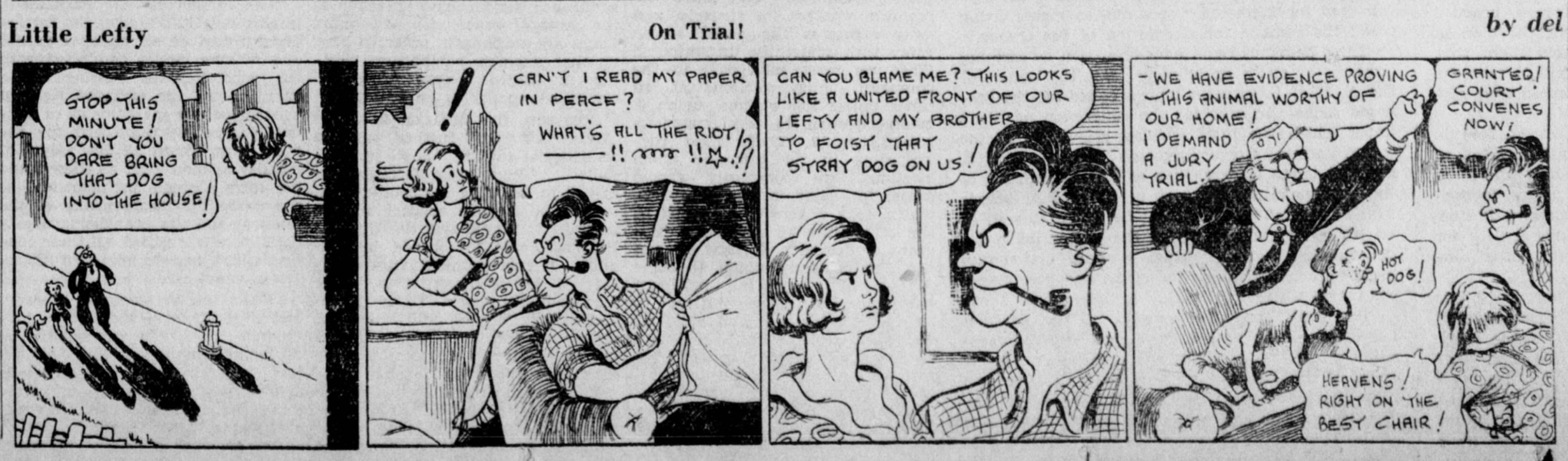
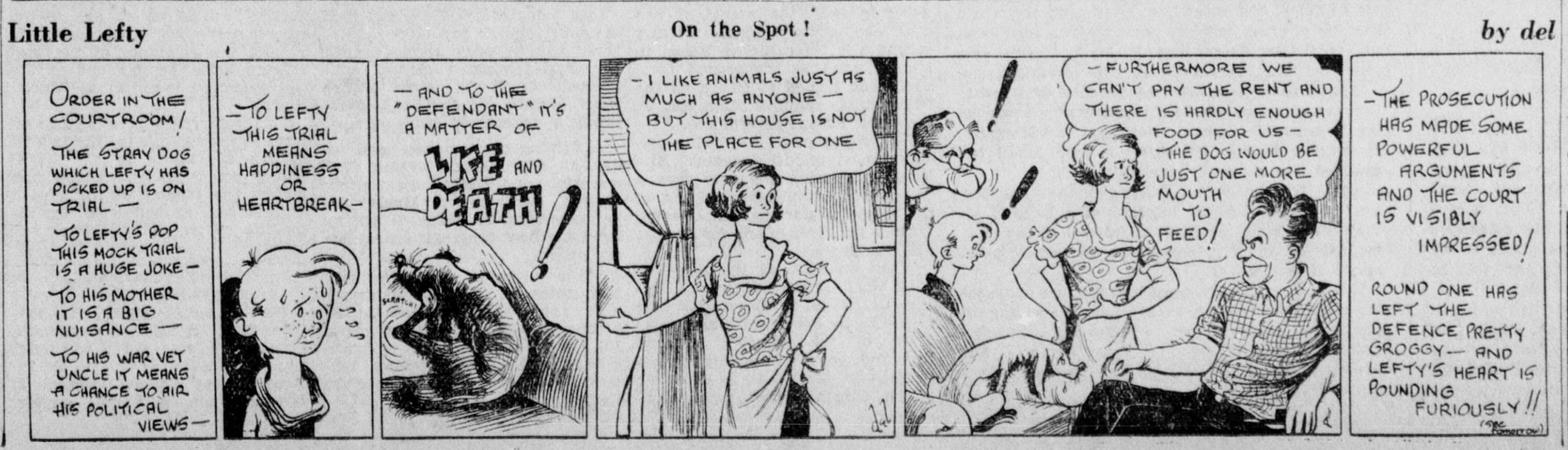
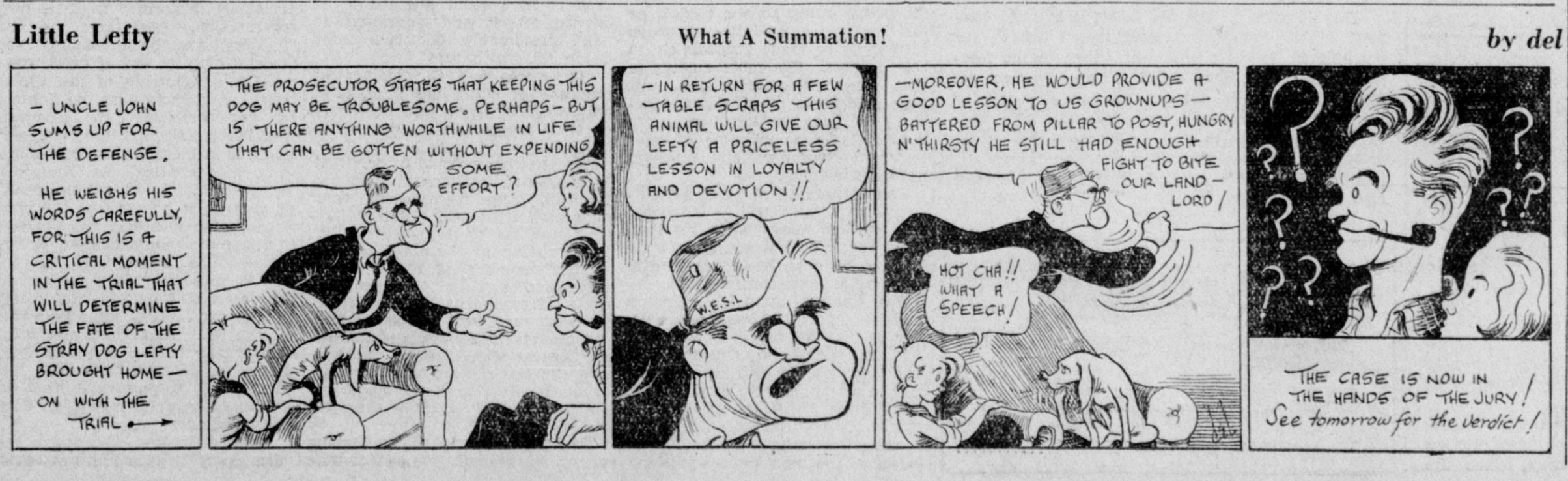
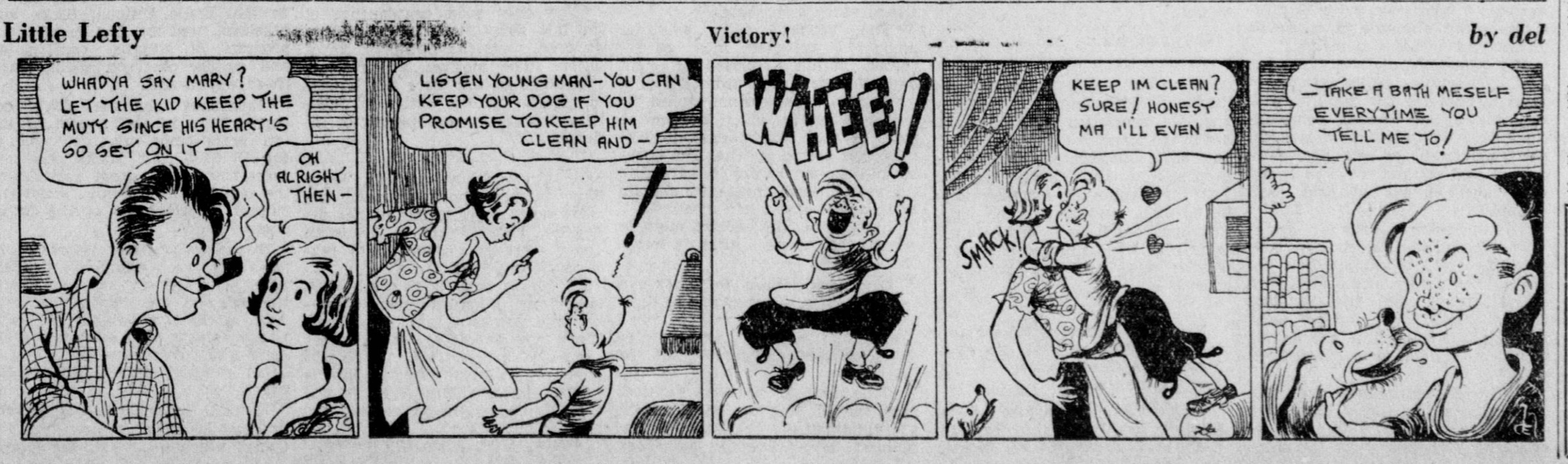
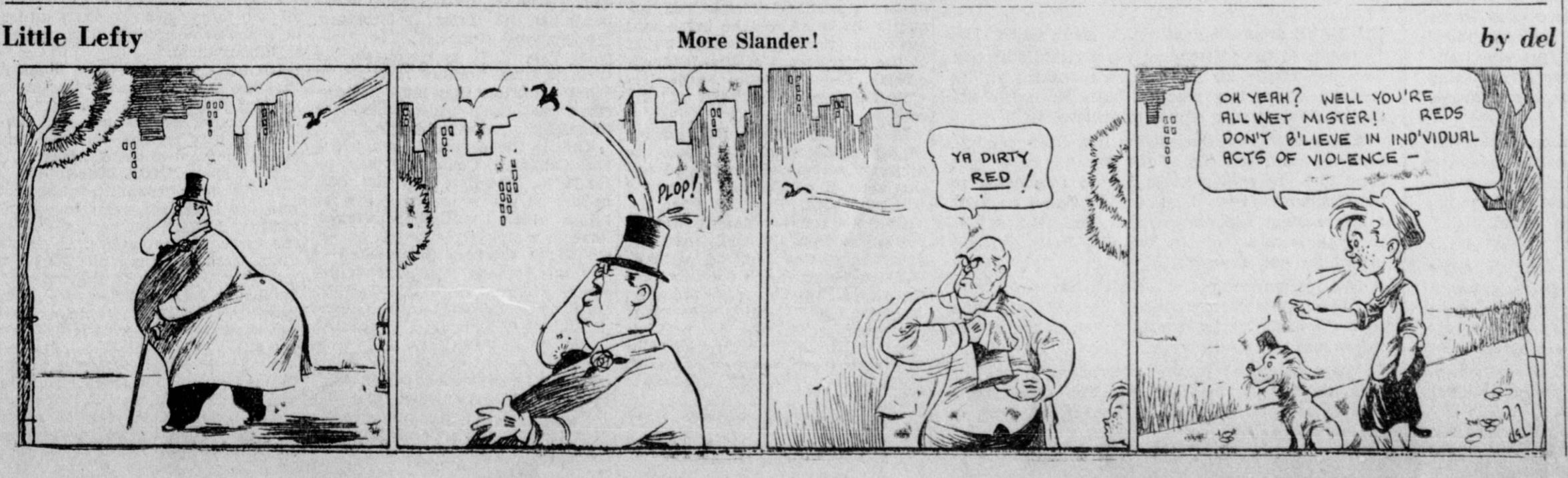
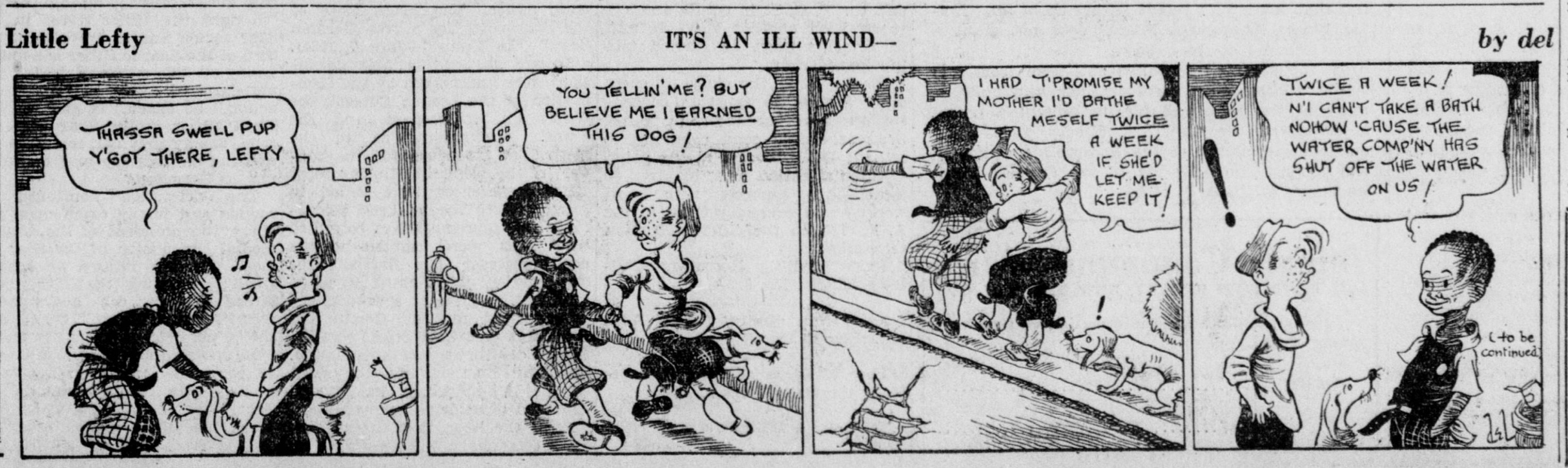
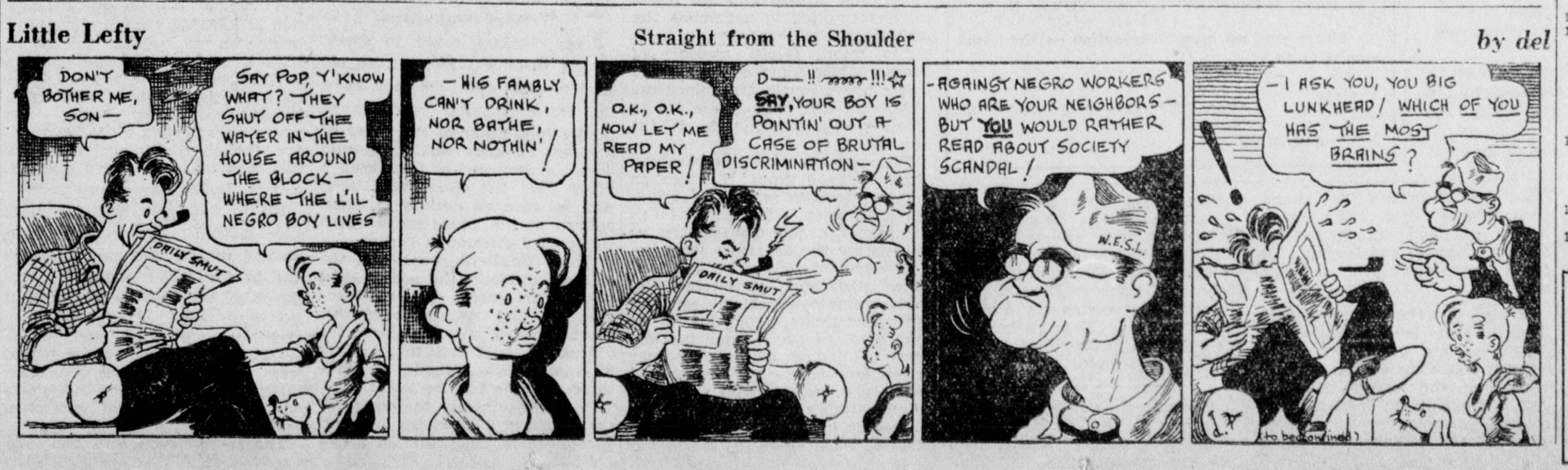
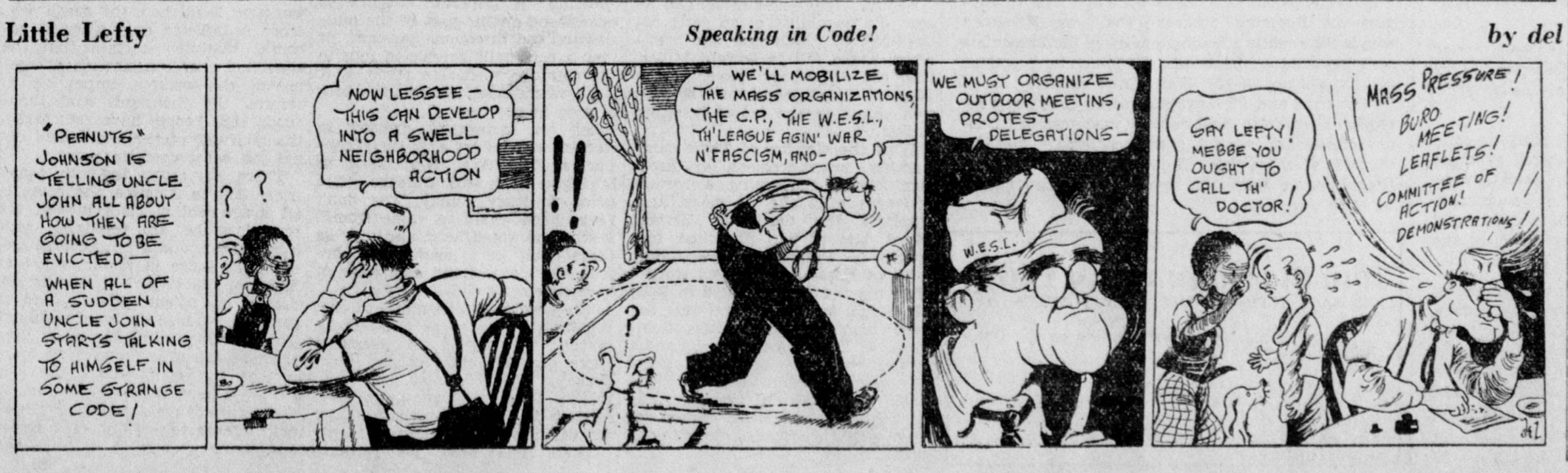
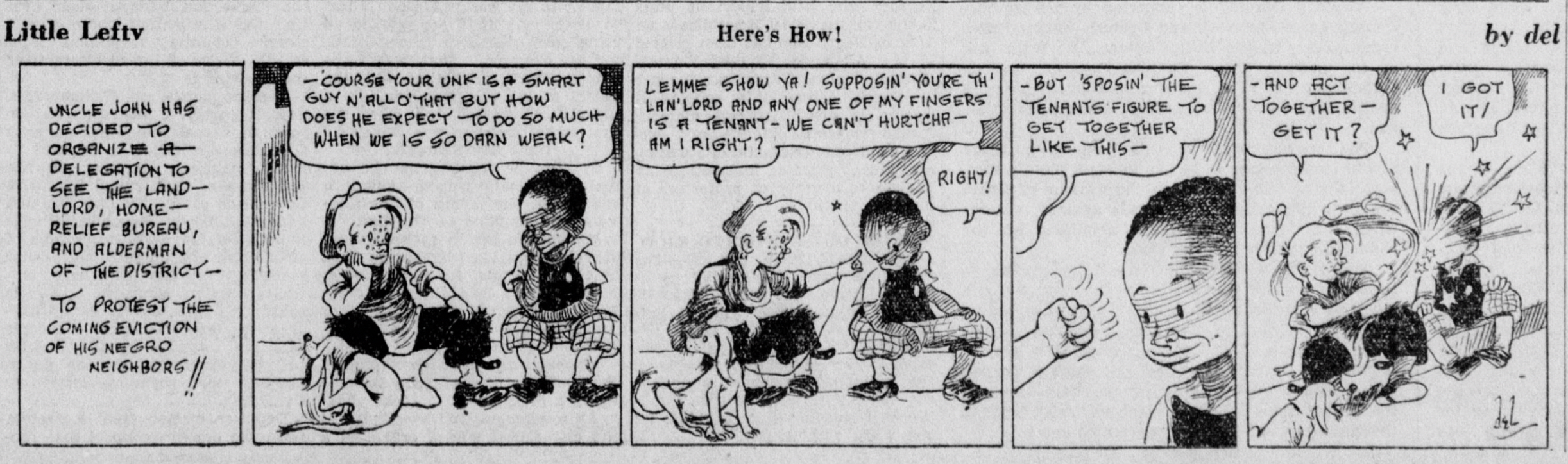
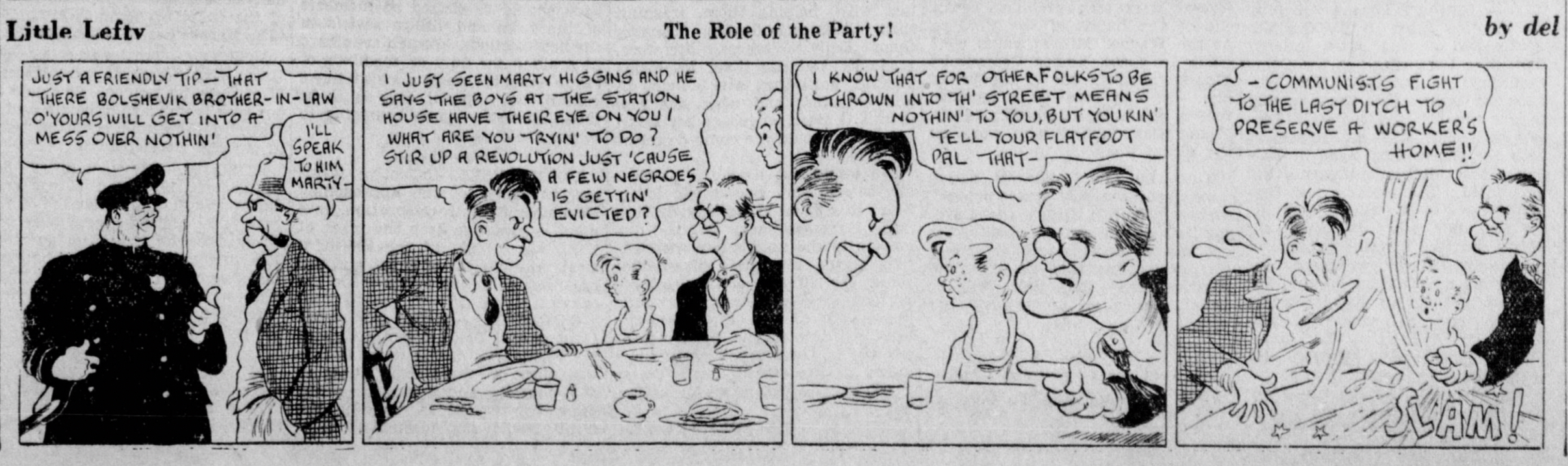
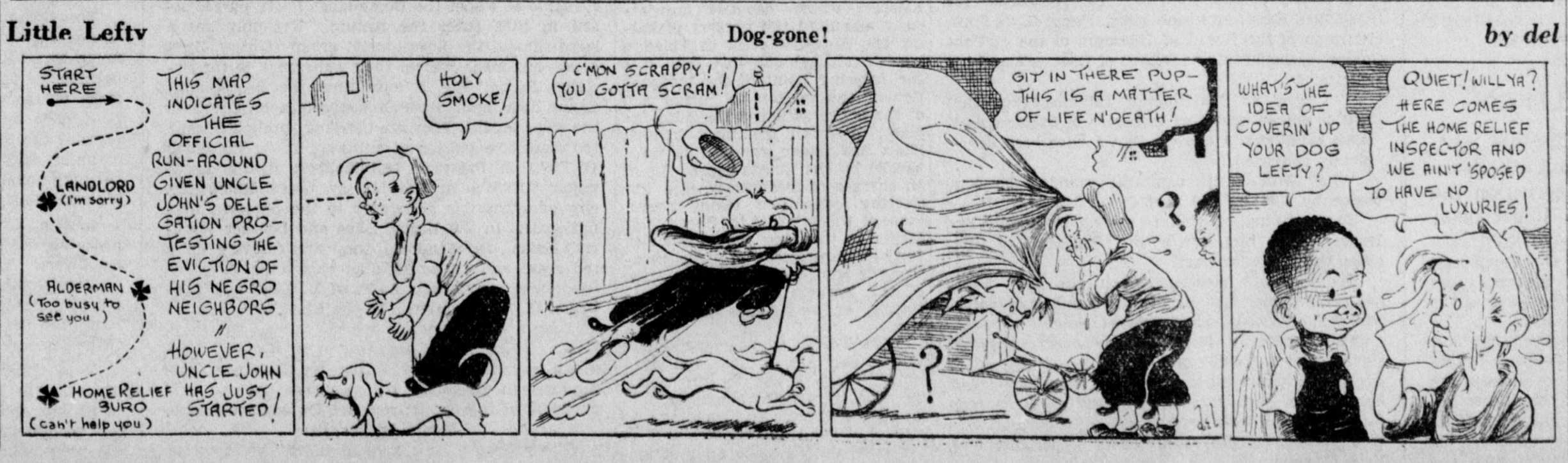
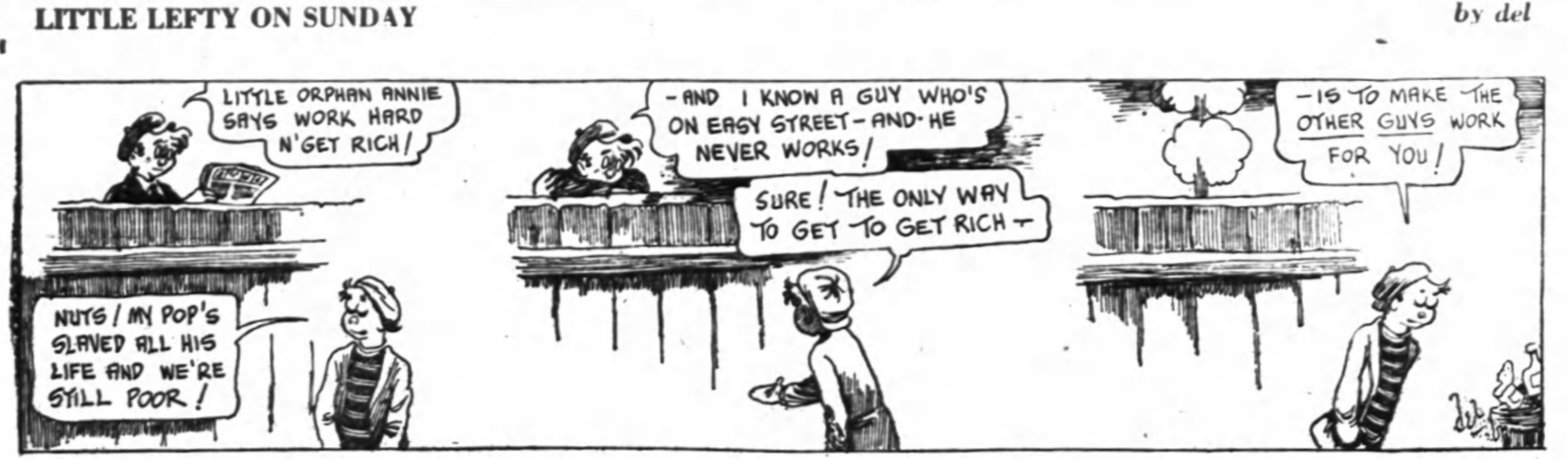
And “del” never loft sight of the fact that he was providing an alternative to those “Capitalist Comics.” In 1937 he took a pot shot at the notoriously conservative populism of Harold Gray and Little Orphan Annie.
Discover more from Panels & Prose
Subscribe to get the latest posts sent to your email.
 Panels & Prose