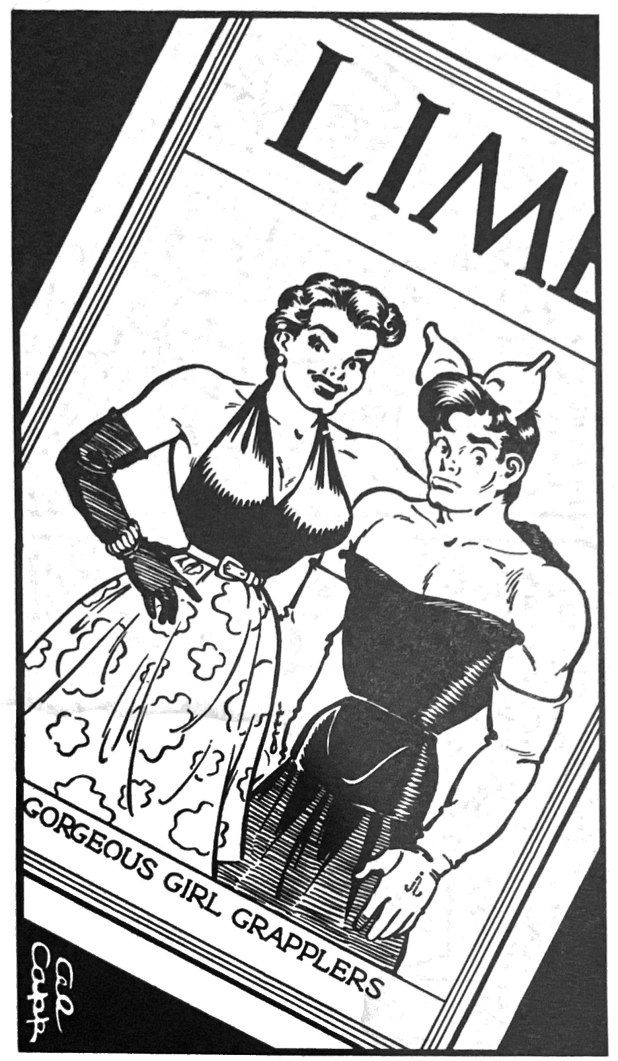
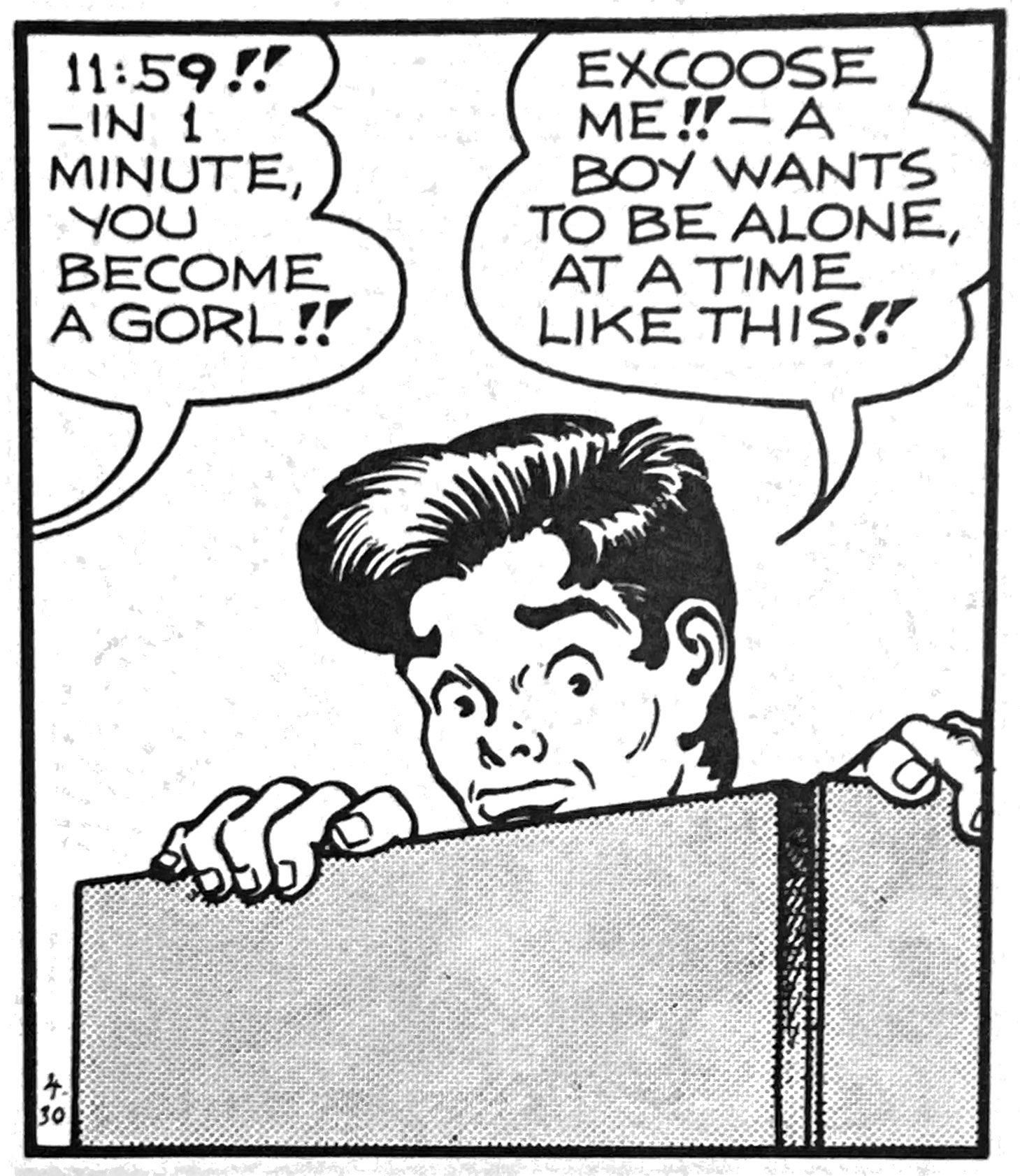
Alert the gender police! Recruit the culture warriors. Al Capp’s Li’l Abner strip was bending gender norms more than 70 years ago. In fact, this 1953 story arc weirdly foreshadowed current skirmishes over cross-dressing, drag performance, legal gender reassignment and even “men” playing in women’s sports.
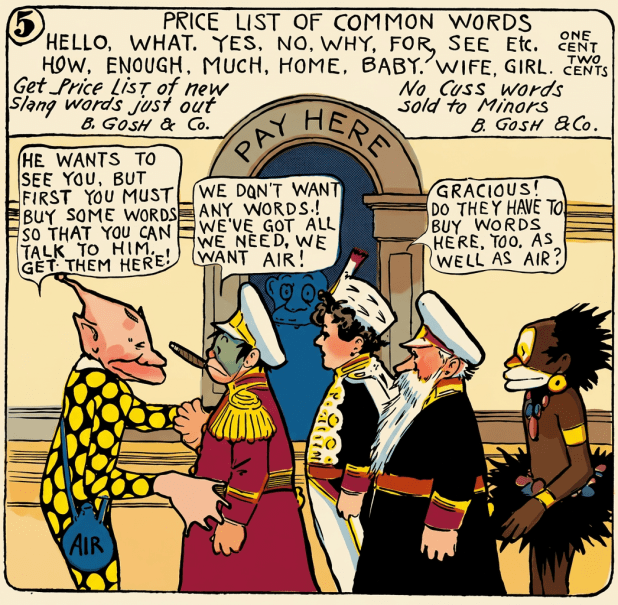
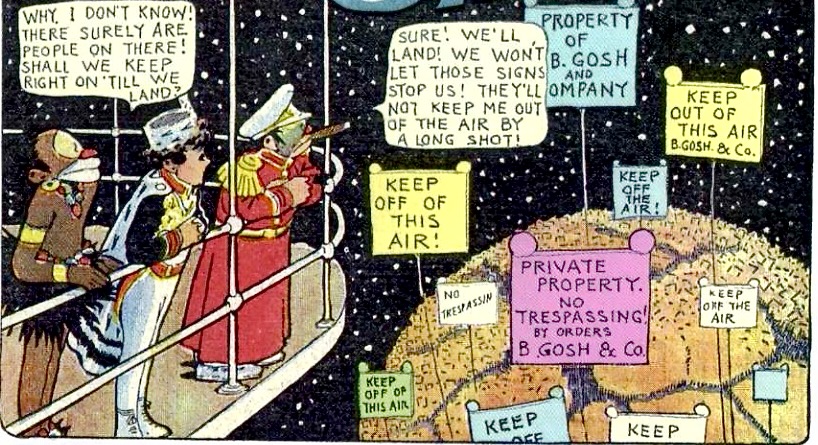
Between April 24 and Aug 23 1910 Winsor McCay sent Little Nemo and his wise-ass sidekick Flip to Mars, making for one of the longest and most politically pointed of the Little Nemo in Slumberland adventures. Mars was a dystopia of cement canyons and urban overgrowth, clots of faceless worker bodies rushing to thankless jobs. The landscape, with endless skyscrapers and spherical flying cars was as technologically wondrous as its lived reality seemed dismal. Mars is overtly Dante-esque. As the archway to the main city declares, “Abandon Hope All Ye Who Try to Enter Here Without the Price.” Unlike the classic Inferno, there is only one main sin driving the despair – greed. Even as the modern age of consumer capitalism was just taking shape, McCay satirized its logical extreme. Everything, from air to words, comes at a cost.
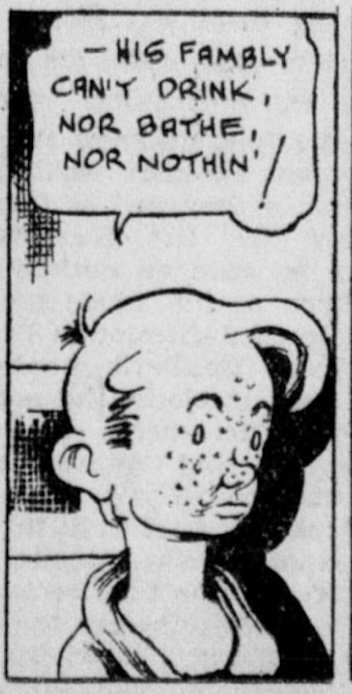
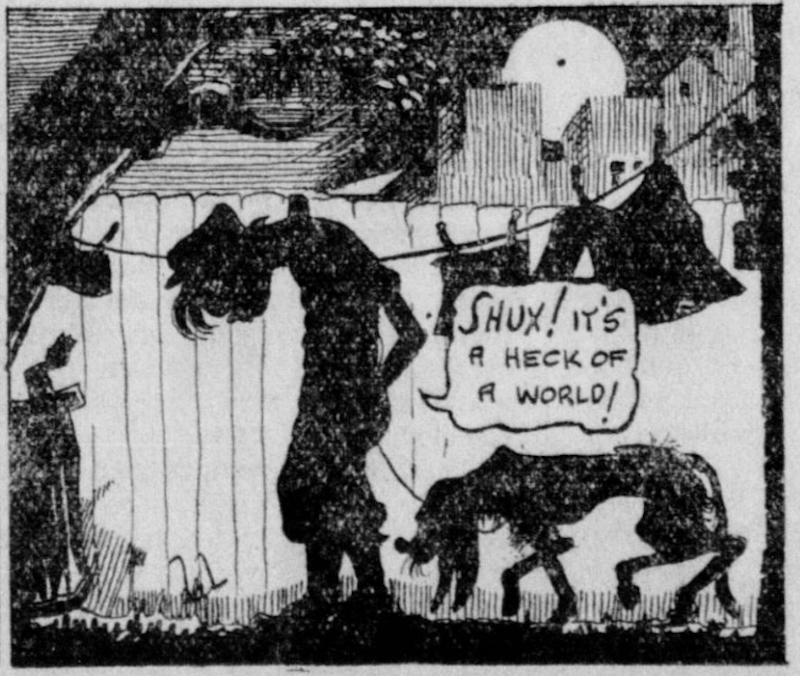
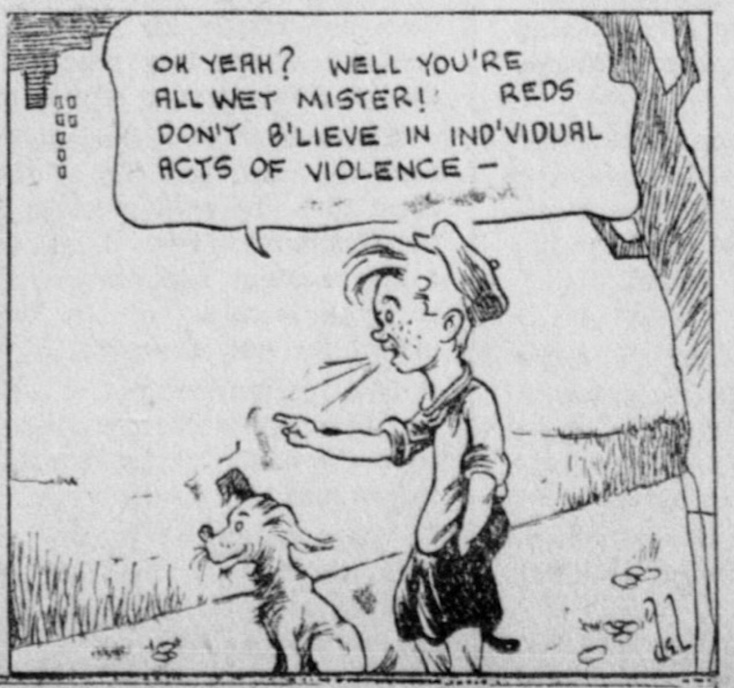
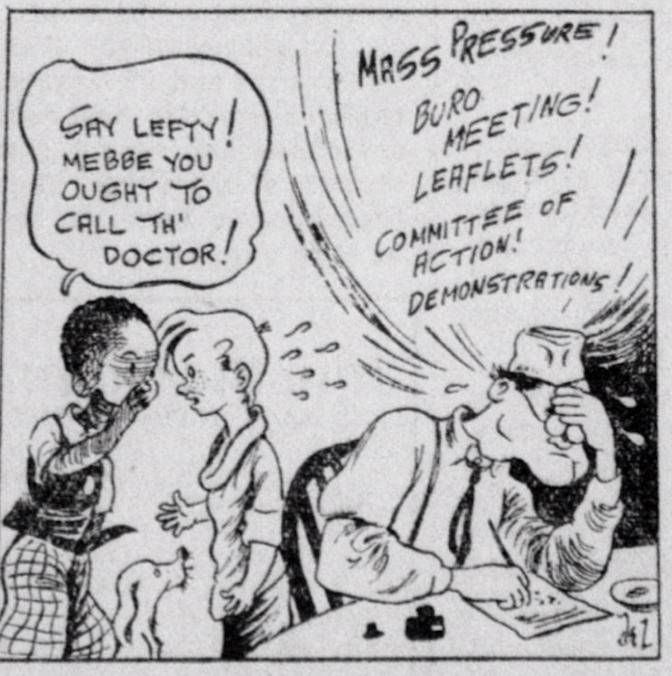
As we found with Coulton Waugh’s lost gem Hank, the radical comic hero Little Lefty is often mentioned in comics history but rarely read. This mainstay of the Daily Worker through much of the 1930s deserves more than a footnote. Like Waugh’s Hank, and the later Pinky Rankin by Dick Briefer, Little Lefty was a genuine and sustained attempt to leverage the conventions of the comics genre towards specific political ends. And it was part of a legacy of leftist cartooning that was already decades old.
The United States has never made a bold move forward without anchoring it in a reading of the past. Our “Founding Fathers” have been carted out regularly to sanctify everything from The Civil War to Progressive and New Deal reforms, the Civil Rights movement to Reaganism. Americans like to frame changes in our politics and culture not as radical breaks from the past so much as realizations of original principles. It is self-evident in our own time. Consider the distance between Lin Manuel Miranda’s Hamilton and the countless founders bios from Fox News hosts. Arguing about America’s future is always grounded in a a declaration about its past.
It should not surprise us, then, that one of the most ambitious projects in the underground comics movement of the 1970s was a cartoon retelling of the war that started it all. The 50th Anniversary reissue of Gilbert Shelton and Ted Richards’ Give Me Liberty: A Revised History of the American Revolution is a cause for appreciation and reflection on the rich legacy of the 60s/70s counter-culture. Across 1975-76 in the pages of their Rip-Off Press comic books and underground newspaper syndicate, the creator of the Fabulous Furry Freak Brothers and collaborator on the Disney-defaming Air Pirates combined well-researched history with hippie irreverence.
Hate is an easy sell. In the marketplace of hearts and minds, intolerance, grievance, anger are some of the most compelling product features of any cause or candidate that is new to the political shelves. Likewise, simple, high aspirations tend to market more easily. See “Hope and Change.” Appealing to base instincts or ambition and aspiration is Marketing 101 in America’s cultural economy.
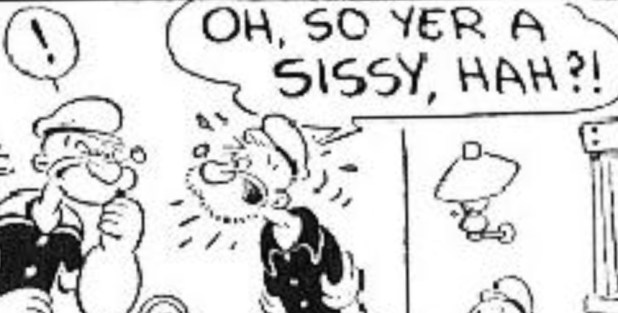
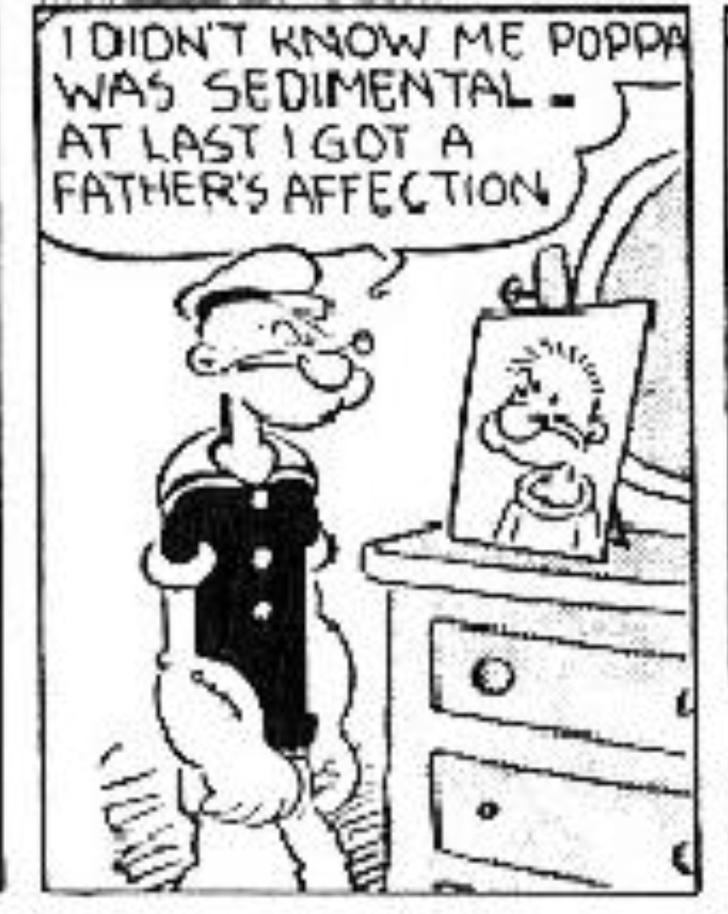
Do we really want to psychoanalyze Popeye? Sure, his anger management is pretty clear. His tendency to resolve all disagreements with a sock in the jaw is often considered a feature, not a bug. But why not leave this Depression-era icon as is? E.C. Segar perhaps unwittingly created a hero for his times. He straddled the conflicting impulses that occupied so much of 30s popular culture, a rage at the machine and a hunger for an organic folk renewal. He was part Hollywood gangster, part Tom Joad, the angry moralist who had had enough. But in the fateful story arc of 1936, when “orphink” Popeye catches up with the father that abandoned him, Poopdeck Pappy, Segar himself puts father and son on the couch. “But ain’t ya jus’a little glad to see yer son?” asks our hero? “NAW!” Poopdeck replies. Trauma, resentment, guilt, projection, repression, masculine insecurity – they all surface along the way. Segar creates a kind of vernacular psychology to unpack Popeye’s Pappy issues. And like much of what made this strip great, Segar manages to be at once screwball and serious.