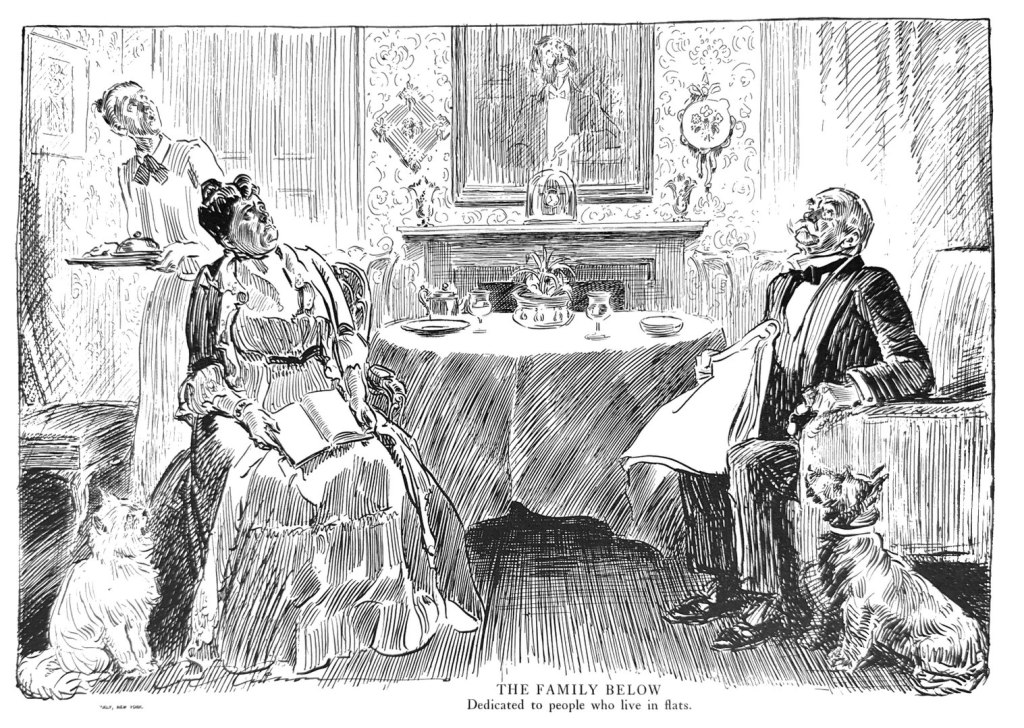
Charles Dana Gibson was the grandmaster of magazine illustration by the time the first wave of Pulitzer and Hearst’s cartoonists disrupted the media universe after 1895. And from the beginning, it was clear that newspaper artists, even those that migrated from the humor weeklies, were stretching both the form and subject matter of caricature beyond the genteel sensibilities of Puck and Life. The line was becoming more elastic, the expressions more animated and emotive, the action more extreme. Magazine humor was witty but remained politely seated in the middle-class parlor. Newspaper humor was raucous and usually situated out of doors, where just about anyone or anything could happen. For their part, magazine editors knew a cultural and economic threat when they saw one. Many magazine columnists and editors denounced Pulitzer and Hearst as vulgarians actively debased the culture with sensationalism. But the comic strip in particular was singled out for celebrating violence and appealing to juvenile sensibilities.
Continue readingCategory Archives: history
Books That Made Me: A Panels & Prose Journey

Panels and Prose began in September 2019 with a modest post about R.F. Outcault’s mentor in urban urchin cartooning, Michael Angelo Woolf. After a series of shorter posts and book reviews, I started writing in earnest the following March a series of deeper long and short essays (that now number over 150) on the comic strip and American culture. This seems a good moment to reassess what this site is about, where it came from and where headed. I have recast the site’s “About” page to include more about my own journey through comics history and especially the six books that lit my fire as a young teen.
Continue readingCharles Dana Gibson Educates Mr. Pipp

For comic strip devotees, Charles Dana Gibson (1867-1944) is often treated as a sidebar. And yet in the last decade of the 19th and first of the 20th Centuries he may have been the most famous and recognizable cartoonist in America. Best known for his “Gibson Girl” idealizations of middle class feminine youths, he worked mainly in Life and other humor and mass market magazines of the 1890s and 1910s. In fact after WWI Gibson became editor and eventually owner of Life. But by that point the newspaper revolution had diminished the power and role for weekly humor periodicals. This may be why both Gibson’s style and career seems at odds with the evolving comic strip. He represented the more gentle and genteel humor of a magazine world that sniffed at the crude humor and violence of the massively popular dailies.
Continue readingIn the Big House With Ella Cinders
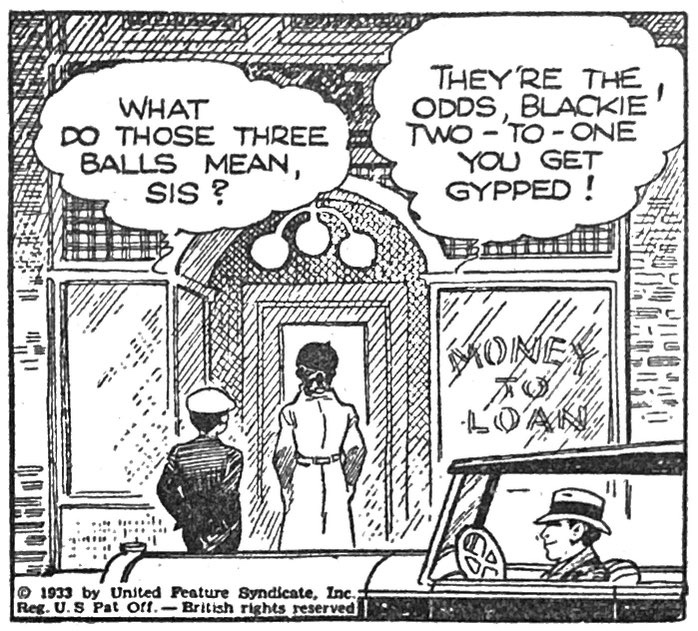
The more I read of Bill Conselman and Charlie Plumb’s Ella Cinders strip (first explored here), it is clear this spunkiest of comic strip heroines has been woefully underrepresented in pop culture history. She was at once big-hearted and hard boiled. She rode the roller coaster of 20s and 30s boom and bust, passing through pop culture fads and economic trends. And this girl took no shit. She was aiming withering barbs at cocky lovers years before Mae West, trading edgy banter a decade before Kate Hepburn, Carol Lombard and Barbara Stanwyck. Comics historians who point to Connie Kurridge, Flyin’ Jenny, Miss Fury or Brenda Starr as pioneering women in comics pages are missing one of the most interesting examples. Ella Cinders resembled Little Orphan Annie, a picaresque that was less ponderous and lighter. And the tale of a New Woman making her way through inter-war America was rendered as a unique distinct world – with its own linguistic and visual style. The panel above shows how the strip’s sharp voice and thoughtful composition could work together. Ella and brother Blackie, backs to us, framed by a predatory pawn shop, quip about getting fleeced.
Continue readingMore Holiday ’23 Books for Comics Nerds
In the two months since my last roundup of 2023 books, publishers have unleashed a torrent of books aimed at holiday gift giving. So let’s catch up with capsule takes on the more notable releases in this last quarter.
Continue readingPrehistoric Nazis: Alley Oop Knows a Fascist When He Sees One

V.T. Hamlin was unambiguous about introducing to Alley Oop’s kingdom of Moo the interloping dictator Eeny in 1938. “She was Hitler,” he admitted in an interview later in life. Even three years before America’s entry into the war in Europe, Hamlin felt it was inevitable. The villainous dictator Eeny would reappear during wartime as well, but in this first episode we see Hamlin’s take on how bad leaders co-opt good people.
Continue readingElla Cinders Deserves Her Moment
Ella Cinders (1925-61) was a female comic strip character with genuine character. And this is no small thing in an era of flappers, housewives and career girl stereotypes. While overlooked and under-appreciated, there have always been women both drawing comics and depicted in them. In the 20s and 30s alone we can point to Winnie Winkle, Tillie the Toiler, Dixie Dugan, Polly and Her Pals, Blondie, Connie, Fritzi Ritz, etc. But aside from the most visible heroine of the 20s and 30s strip, Little Orphan Annie, few of these female figures rose above bland cut-outs for the generic idea of the “New Woman.’ Even in the late 1940s, in the crop of more adventurous “Dauntless Dames,” that Trina Robbins and Peter Maresca featured in their wonderful new book, most heroines asserted their presence into the outside world more than they did assert an identifiable personality. Male helpers or wise-cracking boy sidekicks tended to provide the action and sharp banter. Aside from Annie, Dale Messick’s Brenda Starr (1940) is the first leading woman in comic strips to assert ambition and a full range of emotion.
Continue reading