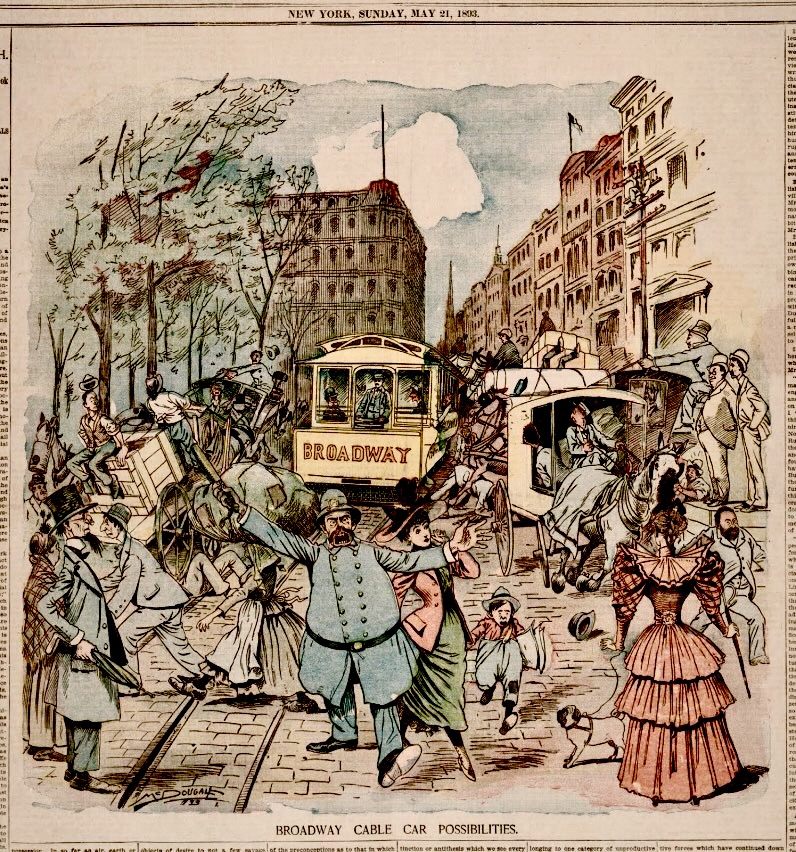
McDougall’s Trolley Launches the Sunday Comics

This Walt McDougall comic should be more famous than it seems to be. On March 21, 1893, Joseph Pulitzer’s New York World published the first true color comics supplement of the modern era.1 It was a landmark effort that soon placed cartooning at the center of newspaper circulation wars and sparked a new mass medium. It is beyond me why this inaugural comic supplement cover is not more widely studied.  McDougall’s “Broadway Cable Car Possibilities” was more than an historical marker.  It carries within it, much of what made newspaper comics so appealing so quickly.

Continue reading
A Tale of Two Comics: Gibson vs. The Comic Strip

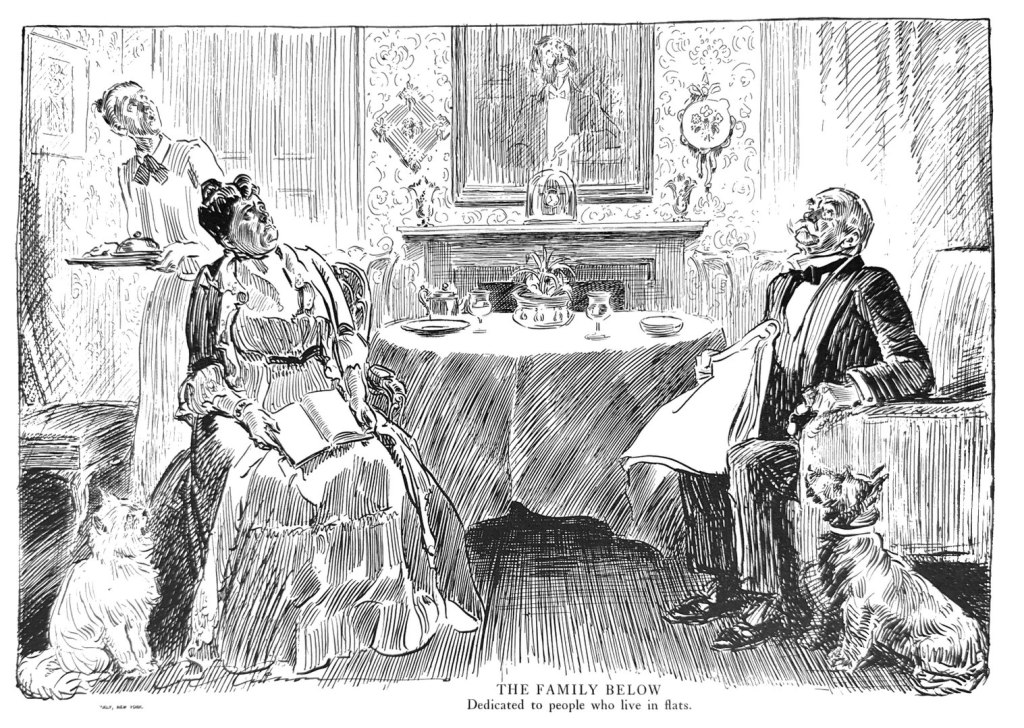
Charles Dana Gibson was the grandmaster of magazine illustration by the time the first wave of Pulitzer and Hearst’s cartoonists disrupted the media universe after 1895. And from the beginning, it was clear that newspaper artists, even those that migrated from the humor weeklies, were stretching both the form and subject matter of caricature beyond the genteel sensibilities of Puck and Life. The line was becoming more elastic, the expressions more animated and emotive, the action more extreme. Magazine humor was witty but remained politely seated in the middle-class parlor. Newspaper humor was raucous and usually situated out of doors, where just about anyone or anything could happen. For their part, magazine editors knew a cultural and economic threat when they saw one. Many magazine columnists and editors denounced Pulitzer and Hearst as vulgarians actively debased the culture with sensationalism. But the comic strip in particular was singled out for celebrating violence and appealing to juvenile sensibilities.

Continue reading