Top 2019 Books: #3 Krazy Sundays, XXL

#3 George Herriman’s “Krazy Kat”. The Complete Color Sundays 1935–1944, edited by Alexander Braun, NY: Taschen, $200

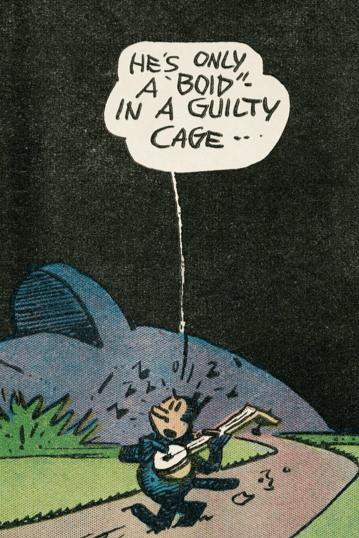
Comic strip collectors will remember Alexander Braun and Taschen’s earlier complete, XXL-sized  Little Nemo collection that delighted Winsor McCay fans and caused hernias everywhere. Braun is at it again. This beautiful but massive reprint captures the color Sundays from the last decade of Herriman’s life and career. Krazy Kat is the longtime darling of highbrow critics since the early 1920s, when Gilbert Seldes dubbed the strip one of the most satisfying works of art in the modern age. Since then critics gush over the gender-bending, mythologizing, philosophizing and satirizing “genius” of the strip. In recent decades scholars added a new dimension to reading Krazy as we discovered Herriman had been “passing” as white throughout his life. Herriman seems to have been the designated modernist Joyce of the medium’s history. And Braun does his part to further burnish Herriman’s stature in his very comprehensive and lengthy prose accompaniment. Reprinting Krazy at this scale also lets us lean back and appreciate Herriman’s mastery of movement, slapstick timing (He was a Mack Sennett fan), layout and use of the full page as a canvas. 
While on the subject of Kracy Kat, it is worth mentioning also that Fantagraphics Press just initiated yet another series it calls The George Herriman Library: Krazy & Ignatz, 1916-918. This edition of Herriman’s full page Krazys cover the same ground as an earlier softcover reprint from Fantagraphics. But this time we get hardcovers, with two years in each volume, and best of all larger, at 11.3″ x 13.8″.

Top 2019 Books: #4 Before Popeye – Segar’s Thimble Theatre

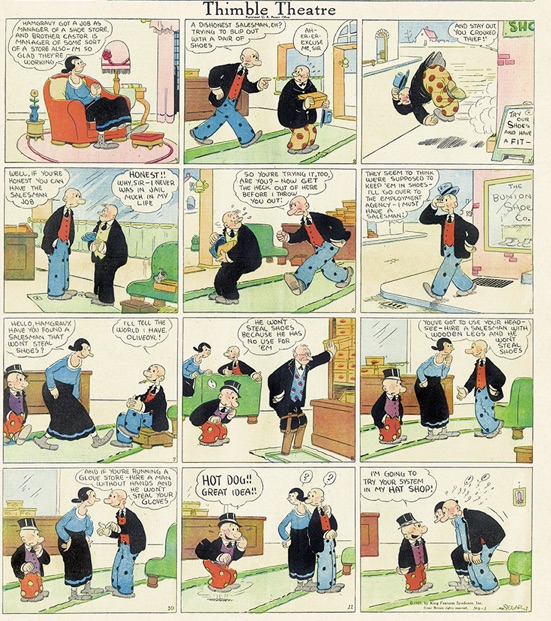
#4 Thimble Theatre and the Pre-Popeye Cartoons of E. C. Segar, by E. C. Segar (Peter Maresca, ed.), Sunday Press, $85

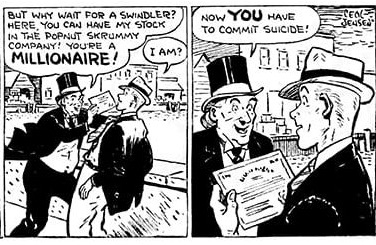
Technically a late 2018 publication, I didn’t get to it until the new year. Peter Maresca’s Sunday Press doesn’t just reprint lost episodes of comic strip history. They think hard about them. Before Popeye’s famous arrival to Segar’s Oyl family saga, Thimble Theatre was a hard-nosed satire of modern American acquisitiveness and family relations, with a big dose of surrealism tossed in. This oversized and impeccably restored selection of Sunday pages shows Segar growing his chops for long story arcs and vicious rogues who somehow succeed in making us root for the otherwise unlikeable Oyls. As usual with Sunday Press productions, this has insightful background material, this time from screwball comics expert Paul Tumey and historian Jeet Heer. 

Top 2019 Books: #5 Skeezix’s Teen Angst

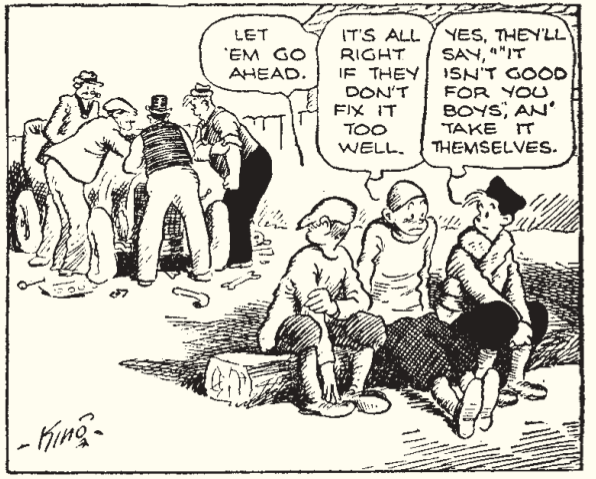
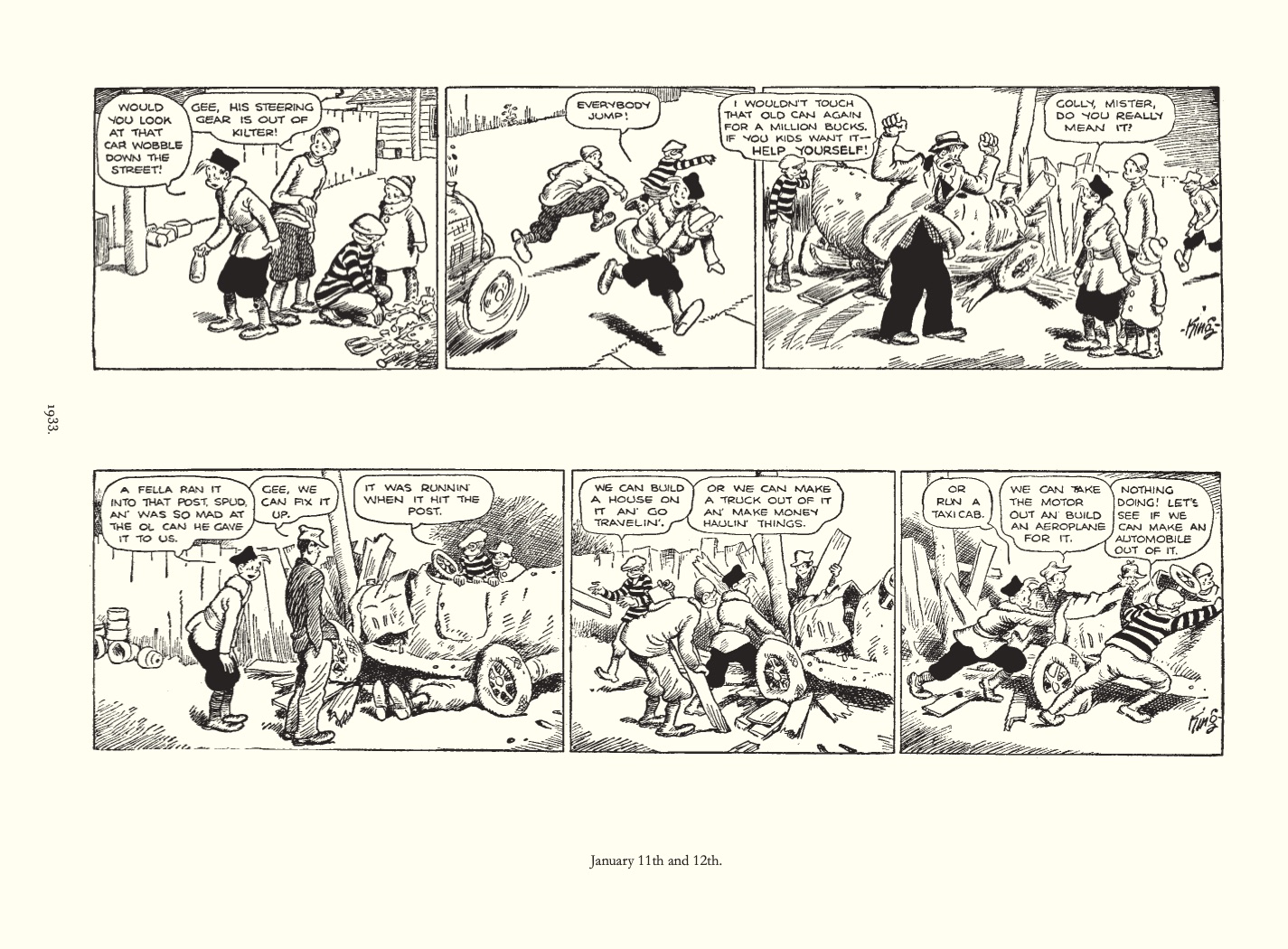
#5 Walt and Skeezix 1933-1934, Frank King, Drawn and Quarterly. $49.99

The sheer everyday-ness of Frank King’s Walt and his adopted son Skeezix is a marvel. For decades Gasoline Alley honored small town life and unremarkable middle-class Americans by making their small dramas, conflicts and schemes important to us. King respected his characters and the reality of their lives so much he did what few other comic strip artists have ever done; he let them age, pass on and birth new generations to replace them. In this volume the Great Depression hits but not that you can tell. The more important development is Skeezix coming into his teens with all the attendant drama. Along with the Andy Hardy films and later Archie comics, we are witnessing here the invention of the teenager as a new cultural type. Drawn & Quarterly, with Chris Ware leading the design of this series, makes each volume even more visually rich and loaded with contextual history. Jeet Heer, the most historically knowledganle comic strip critic we have, provides great background here in the 30s, cultural change and King’s response. If you aren’t collecting the full series, this is a great pivotal volume to get for its glimpse into the maturing characters.

Top 2019 Books: #6 Brain Bats of Wolverton

Lena the Hyena – Wolverton’s Winning Entry in Li’l Anber Ugliest Woman Contest

#6 Brain Bats of Venus: The Life and Comics of Basil Wolverton, Vol. 2 (1942-1952) by Greg Sadowski, Fantagraphics, $44.99

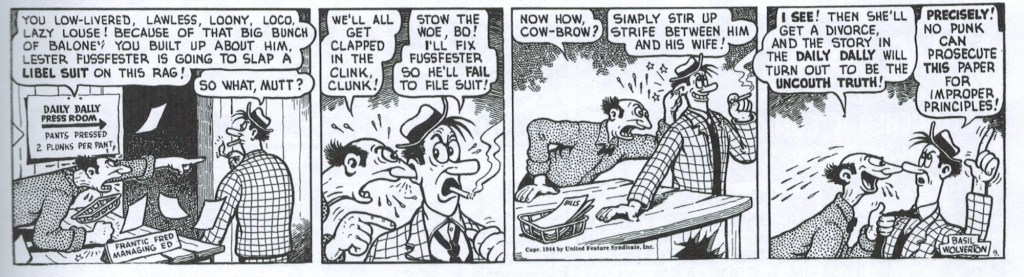
Volume 2? You have to wonder if any biographer really needs a two volume bio-reprint to cover the life and art of a single cartoonist. To be fair, Sadowsky’s treatment gives up a massive share of space to reprinting much of Basil Wolverton’s best published work and revealing sketch and spec pieces. But in fact, Wolverton was as singular and curious a character as his art. This volume focuses mostly on his horror and sci-fi work, which was often batshit imaginative. But there is also his caricature art, advertising work, and more. Also interesting and included here are his many failed attempts to break into comic strip syndication with some of his screwball comedy characters of the 1940s like Scoop Scuttle (below). And of course Wolverton leapt from obscurity to fame when his Lena the Hyena caricature won Al Capp’s contest to depict the world’s “ugliest woman.” Wolverton remains a seminal figure. His break from any previous comic art style anticipated (and was revered by) the comics underground more than a decade later.

Wolverton made several unsuccessful attempts to break into what every comic book artist viewed as the mother lode – newspaper comics syndication. Among his several failed attempts to break into strips, he translated his Scoop Scuttle screwball comic book character to a daily format on spec.

Top 2019 Books: #7 Mickey Mouse As Adventure Hero

7. Mickey Mouse: The Greatest Adventures, by Floyd Gottfredson, Fantagraphics, $49.99.

Fantagraphics’ complete reprinting of the Floyd Gottfredson Mickey Mouse dailies has been among the most literate and richly contextualized comics history projects in recent years. This one volume color rendering of some of Mickey’s best adventures between 1930 and 1951 is a shorter, more affordable sample. Here is Mickey evolving from scrappy, spunky adventure hero of the 30s to bland suburban everyman of the 50s. Lest we forget, Mickey’s 1930 comic strip launch places him at the advance guard of adventure strips, along with Orphan Annie and Wash Tubbs and Popeye that would bring us 30s powerhouses – Dick Tracy, Terry and the Pirates, Flash Gordon et. al. Gottfredson’s penchant for putting movement, gestures, expression and urgency into every panel is matched by his and collaborators’ mastery of story pacing and suspense. While I would quibble with some of the choices (really, no Phantom Blot?), this is a great sampling across eras for those who aren’t up for buying the enture run. 


Top 2019 Books: #8 Elmo…No, Not That One

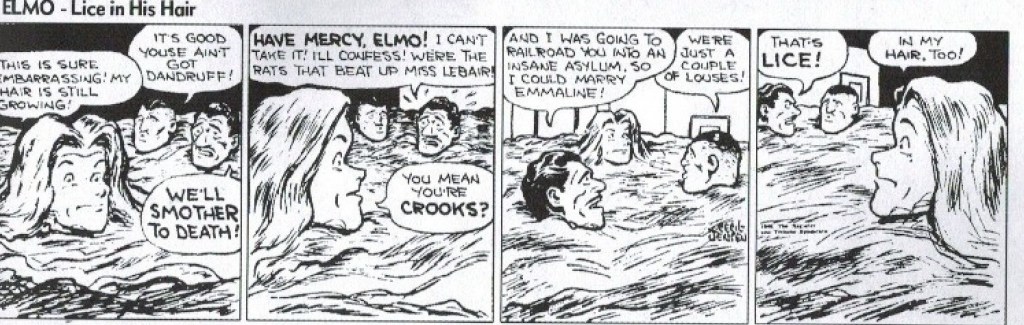
#8 Elmo: An American Experiment by Cecil Jenson, edited by Frank M. Young, Middletown DE, Labor of Love Press, $14.99

What a find. Young has unearthed and reprinted a darkly surreal strip from the late 1940s by the author of the later Little Debbie strip of the 1950s. It seems like a Li’l Abner knockoff, with the rural rube Elmo encountering urban caricatures. But Jenkens sends Elmo down some of the darkest urban and psychological alleyways of post-war America. Its brief run shows it was too strange for post-war audiences groping to return to normality after WWII. But Elmo suggests a kind of unease to that project that would also come out in 40s noir, crime comics and 50s horror comics. 

Top 2019 Books: #9 Charlie Chan

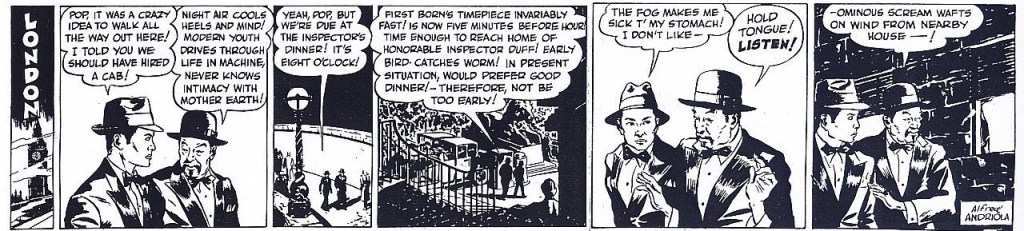
#9 Charlie Chan, 1938 (LOAC Essentials Vol. 13) by Alfred Andriola. IDW, $29.99

The LOAC Essentials series highlights a full year of classic strips that may not support a full reprint series. And it uses a uniquely narrow format that displays a strip per page for a singular reading experience.  It is an inspired imprint from The Library of American Comics that makes accessible many strips that might be lost to history. Charlie Chan had decent locked-room mystery plotting that channeled the popular novels and films. Andriola, who went on to do Kerry Drake strips for years, took his visual cues from Milton Caniff, even if he lacked the master’s rich talents. Modern sensibilities will need to excuse the daily dose of stereotypical Confucian aphorisms, though.

Here is a little bonus I found at the Charlie Chan Family Home site, which has some samples of both the dailies and Sunday strip. The first week of dailies finds Chan and “Number One Son” on the case.