Cool and Calculating: 20 Favorite Comic Strip Villains – Part 3

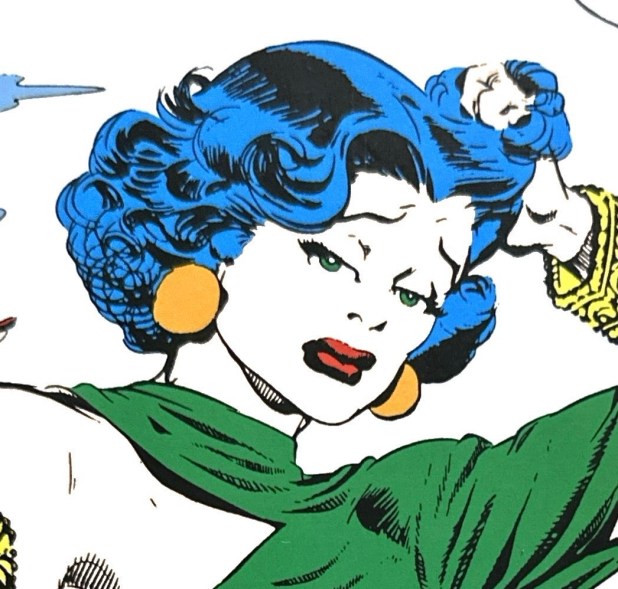
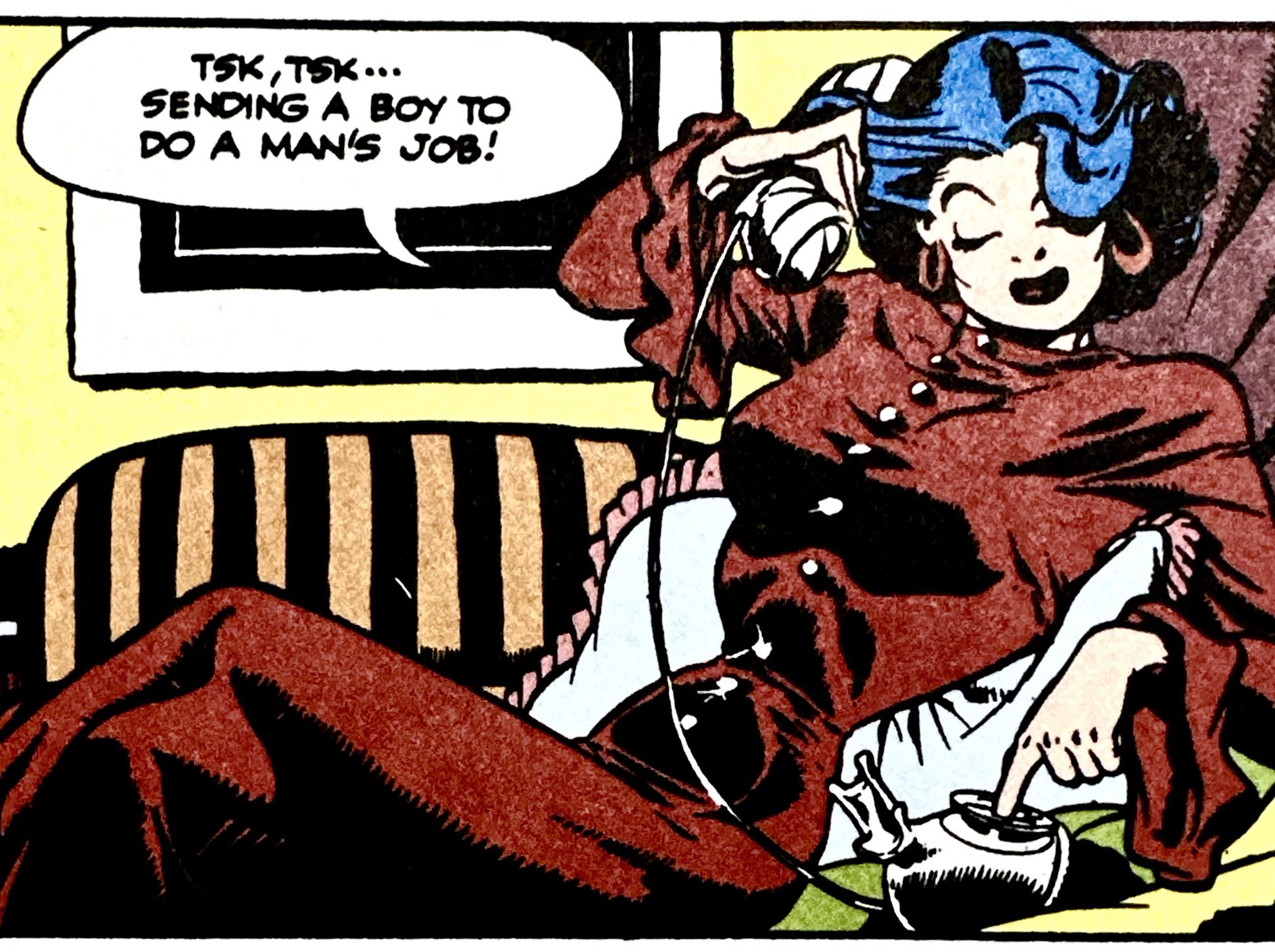
As the 1930s progressed, comic strip adventuring matured its visions of villainy. And the times were changing, as world war was becoming a reality rather than a distant rumble. As we saw in Part 1 and Part 2 of our favorite comic strip badasses, the thuggish, petty, and naturally mean antangonists of the 20s and early 30s (Bull Dawson, Sea Hag, etc.) had given way to the world-eating maniacs like Ming and The Cobra. By the late 30s, villainy becomes a bit more real and local – often focused on espionage or just personal greed. And the characters are evolving as well, more conniving and cerebral, less tied to gangsterism and power-madness than to cool demeanors and low-key malevolence. Evil was no longer wearing crowns, medieval cloaks or mustaches. They were well-dressed and brainy – the villain next door.

Continue reading
Mickey Mouse Diplomacy: Disney’s Ambassador of American Exceptionalism

By the summer of 1937, Disney’s Mickey Mouse cartoons and the syndicated strip had already become worldwide ambassadors of American mass media. Like Charlie Chaplin in the previous decade, Mickey’s simple visual signature and deft antics translated well from Europe to Asia. The Mouse had effectively displaced The Tramp as an international icon of slapstick. But in August 1937, with Floyd Gottfredson’s Medioka story line, the ambassadorship becomes self-conscious and reflexive..even politicized by both creators and at least one government. Mickey journeys off to the vaguely Slavic kingdom of Medioka to save its corrupt government and oppressed people from feudalism with American ingenuity, empiricism and democratic character. It is the most explicit exercise of the American exceptionalism mythology we are bound to see in comics history, even if it has all of the political subtlety of a Yellowstone episode.

Continue reading

Gottfredson’s Mickey: The Art and Science of Action

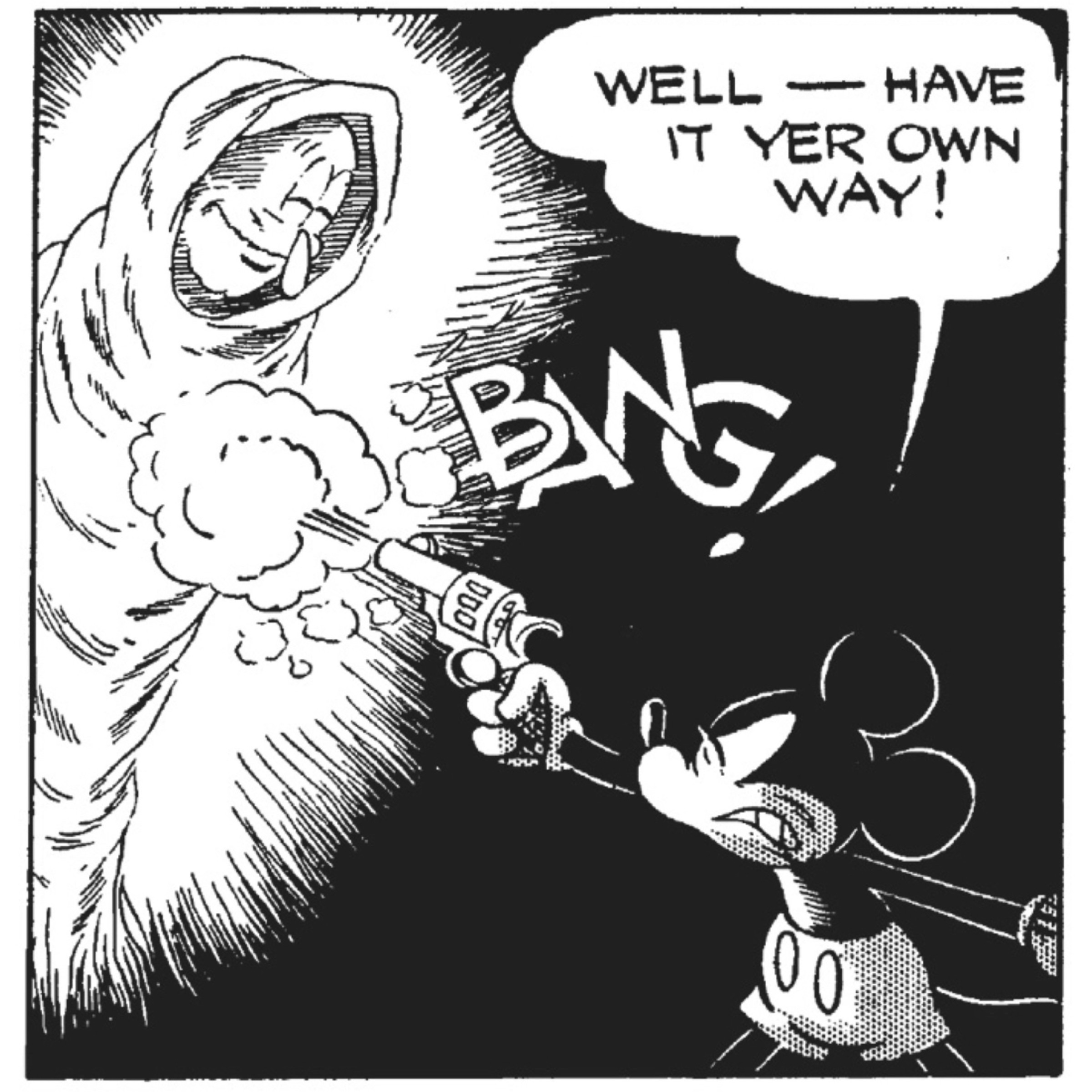
Before becoming the anodyne logo of Disney’s saccharine-soaked family image during the post-WWII era, Disney’s Mickey Mouse had some heroic chops. Make no mistake, Mickey was never even remotely “edgy” let alone hard-boiled in the style of some other 30s pulp protagonists. But he was imagined by Disney in the original animated shorts and then by Floyd Gottfredson in the daily comic strips, as a spunky, resourceful adventurer. In the 1930s, Mickey was thrust into a number of roles and across all of the pop culture genres: sky jockey, detective, western outlaw hunter, ghost-hunter, even sci-fi adventurer. As tame as Mickey’s 30s adventures may seem, the Disney corporation in its most controlling moments in the past has tried to disappear come of the earliest imagery of their corporate logo packing a gun or interacting with some cringe-worth but commonplace racial stereotyping of the era.

Continue reading

Top 2019 Books: #7 Mickey Mouse As Adventure Hero

7. Mickey Mouse: The Greatest Adventures, by Floyd Gottfredson, Fantagraphics, $49.99.

Fantagraphics’ complete reprinting of the Floyd Gottfredson Mickey Mouse dailies has been among the most literate and richly contextualized comics history projects in recent years. This one volume color rendering of some of Mickey’s best adventures between 1930 and 1951 is a shorter, more affordable sample. Here is Mickey evolving from scrappy, spunky adventure hero of the 30s to bland suburban everyman of the 50s. Lest we forget, Mickey’s 1930 comic strip launch places him at the advance guard of adventure strips, along with Orphan Annie and Wash Tubbs and Popeye that would bring us 30s powerhouses – Dick Tracy, Terry and the Pirates, Flash Gordon et. al. Gottfredson’s penchant for putting movement, gestures, expression and urgency into every panel is matched by his and collaborators’ mastery of story pacing and suspense. While I would quibble with some of the choices (really, no Phantom Blot?), this is a great sampling across eras for those who aren’t up for buying the enture run.