A lot of comic strip fans have been looking forward to these updated early volumes of The Complete Dick Tracy. Here are Vols. 1 and 2, just in today. This project reprints the first six volumes in the larger format that matches the rest of the series.
Between August 1936 and March 1937, Mandrake the Magician and his right-hand man Lothar teleported into one of author Lee Falk’s most wildly imagined worlds, Dimension X. It was a universe of altered physics and futuristic super-beings: robotic “Metal Men” made of “animated metal”; “plant people”; ignited, swooping firebirds; man-eating plants; pacifist “Plant People”; and ruthlessly cruel “Crystal Men” who use the skin of captured men to keep their bodies shiny and ready to refract light. Ew! And, of course, no dystopia is complete without hordes of enslaved humans who dream of liberation. It was bonkers, even for a strip that had weird implausibility baked in. And while Mandrake’s side-quest into Dimension X seems like the most fanciful escapism, it was very much of its time.
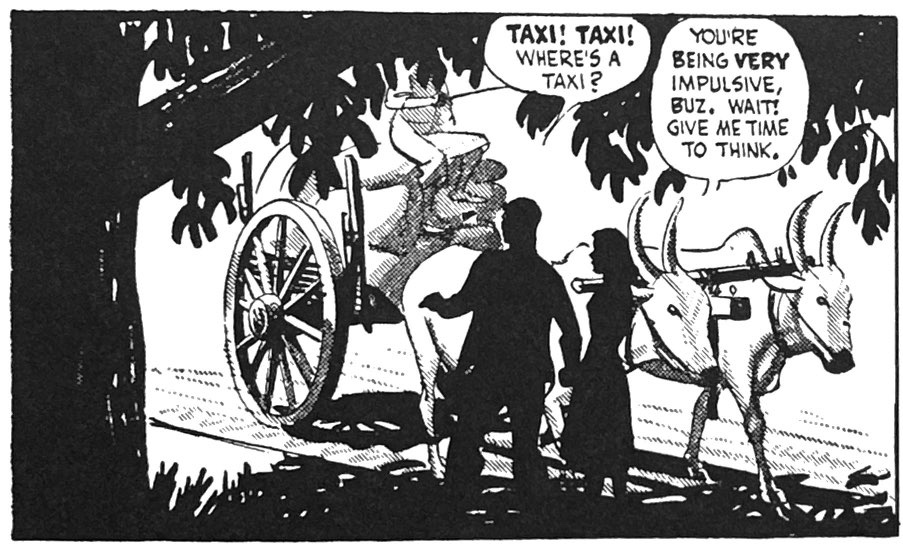
Roy Crane doesn’t seem to garner the kind of reverence held for fellow adventurists like Milton Caniff and Alex Raymond, even though he pioneered the genre in Wash Tubbs and Capt. Easy. Perhaps it is that he lacks their sobriety. After all, Crane evolved the first globe-trotting comic strip adventure out of a gag strip about the big-footed, pie-eyed and bumbling Tubbs. But when he sent Wash on treasure hunts and international treks into exotic pre-modern cultures he kept one foot in cartoonishness style and the other in well-researched, precisely rendered settings, action and suspense. It was a light realism, with clean lines, softly outlined figures, often set in much more realistic panoramic backgrounds. This was not the photo-realist dry-brushing and feathering of Raymond, nor the brooding chiaroscuro of Caniff.
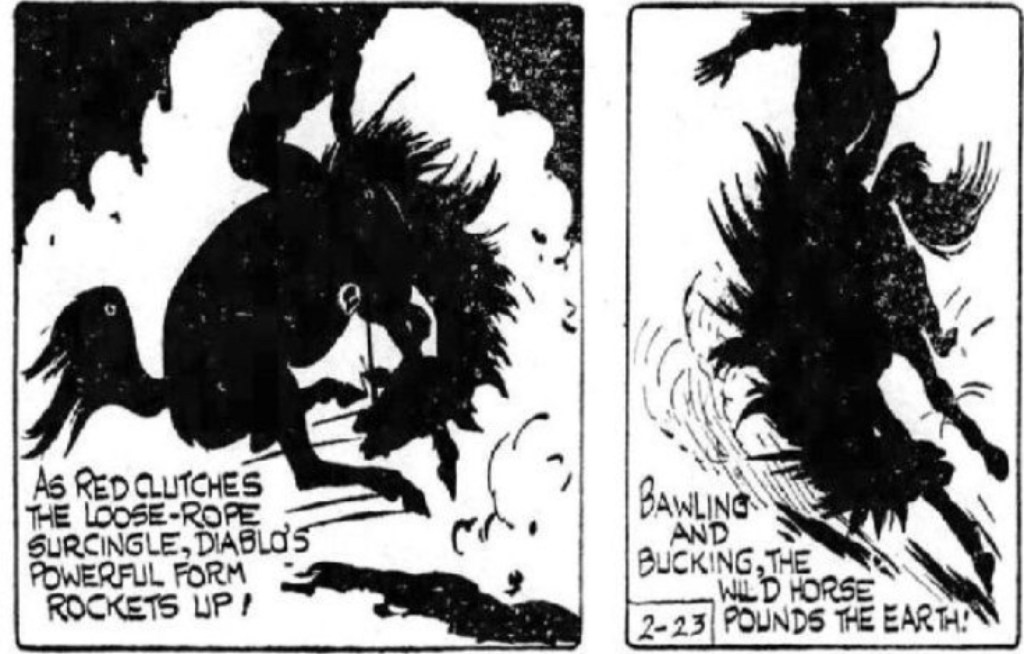
One of the longest-lived and popular Western series of the last century, Red Ryder (1938-1965) is barely remembered today…mostly for good reason. Unlike richer, historically-informed efforts like Warren Tufts’ masterful Casey Ruggles and Lance, Red Ryder was closer to Western genre boilerplate, The titular hero is a red-headed journeyman cowpoke who finds and resolves trouble wherever he roams. His woefully typecast sidekick “Little Beaver” was an orphaned Native American boy who provided identification for kid readers, a sounding board for the solitary and stoic Red, and comic relief of a distinctly stereotyped sort. In truth the strip made little effort to delve into character let alone suspense or high adventure.
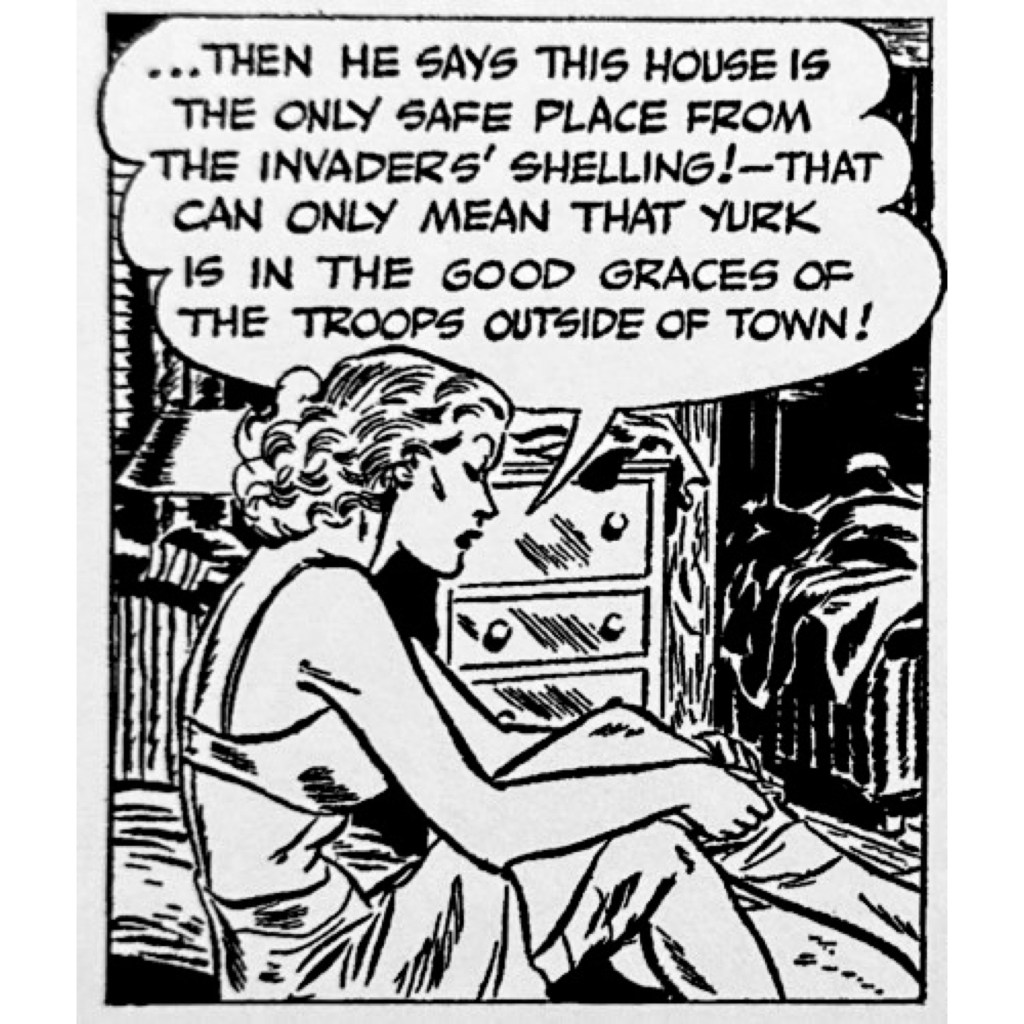
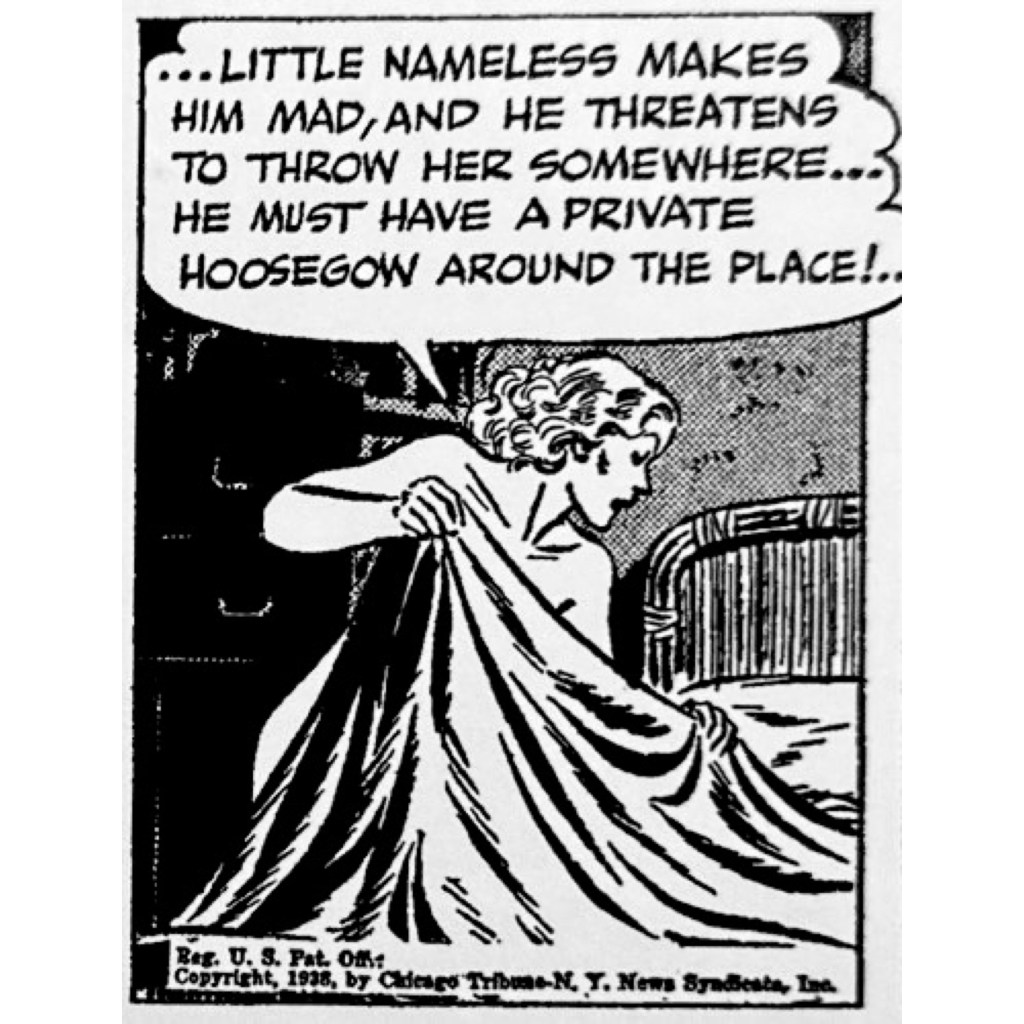
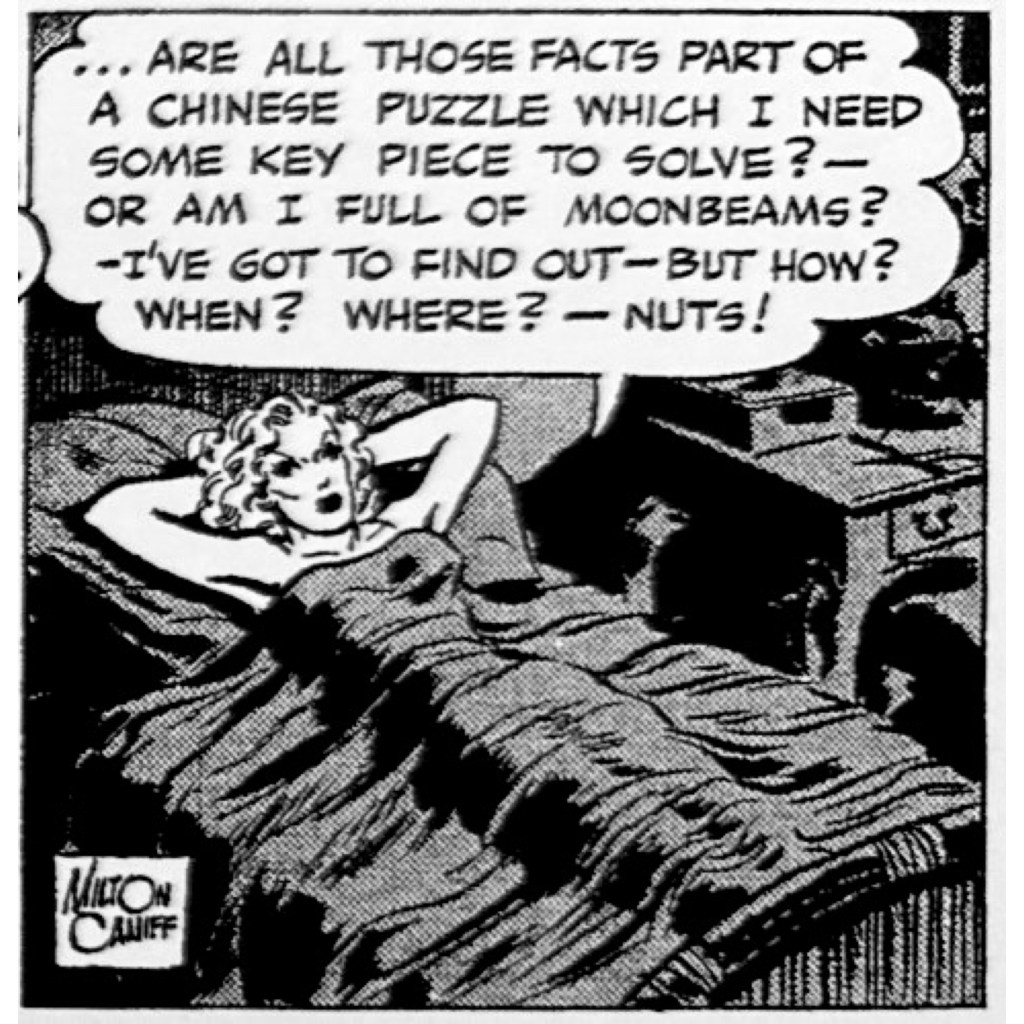
Slipping a bit of light erotica into the back pages of the buttoned-down newspaper medium was something of a sport among many comic strip artists throughout the last century. From the ubiquitous Gibson Girls of the the 00s to the curvy and well-delineated flapper daughters and office gals of 20s strips to the imperiled damsels and femmes fatale of 30s adventure, cartoonists understood they were wedging adult cheesecake into a “kids’ medium. Milton Caniff understood the better than anyone the potential here for serving the needs of a daily adventure strip while also pushing the boundaries of the conservative editorial propriety of national syndication.
With a striking visual energy, speech and violence that was unlike anything else on the page, Will Gould ‘s (1911-1984) short-lived Red Barry (1934-38) jumped out of the Depression-era comics page. It was intended to mimic the success of crime comic powerhouse Dick Tracy. But the two unrelated Goulds, Tracy’s Chester and Barry’s Will, couldn’t have been more unalike in temperament and values. And so their visions of gangesterism, crime and heroism took wildly different paths. Red Barry was uniquely exciting among rival crime comics of the day, and even to the contemporary eye, it feels fresh. Everything vibrated with action and intrigue in the strip – from the modernist, machine age sharp edges to every person and thing in the panel to bolded words in speech balloons, to the massive, stylized shadows its characters cast on nearby walls. The strip blended cartoonish visual abstraction with realistic violence and plot lines that deliberately mimicked current news stories. In comparing it to Dick Tracy, Red Barry exemplifies how deeply and varied the personal visions and personalities of artists could inform a range of perspectives on society despite the institutional constrains of this mass medium.
Paper dolls and cut-out toy models are centuries-old, but the format was a natural fit for the modern newspaper comic from its beginnings. We tend to identify the comic strip paper doll with “women’s strips” from the great fashionistas, Jackie “Torchy” Ormes or Gladys “Mopsy” Parker. But in 1934, Alex Raymond’s Flash Gordon got into the act with a series that ran in every Sunday from August 18 to December 16. While Raymond focused mainly on Dale Arden as well as the various princesses and other female characters the still-young strip had amassed by then, he covers most of the cast, from Zarkov in a tuxedo to Ming the Merciless’ collection of flamboyant collars.





 Panels & Prose