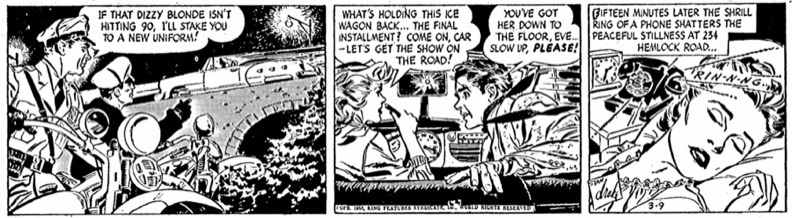
The thoroughly engaging and visually captivating The Heart of Juliet Jones is an underrated gem of 1950s comic strip photo-realism and romantic adventure. Its admirable run began in 1953 (through 1999), under the artful pen of Stan Drake and the scripting of Elliott Caplin. The first week of the strip is added below, and it illustrates the melodrama of the this soapiest of soap operas.
The basic setup involves the Jones family – a widowed father “Pop Jones,” his 30-something unmarried daughter Juliet and teen wild-child other daughter Evie. Sibling rivalry and the tension between responsible Juliet and adventurous man-obsessed Evie form the basic dynamic. I am working from details in the excellent reprints of the early strips by Classic Comics Press (2008). The first volume has introductions by Leonard Starr (of Mary Perkins fame) and Armando Mendez.
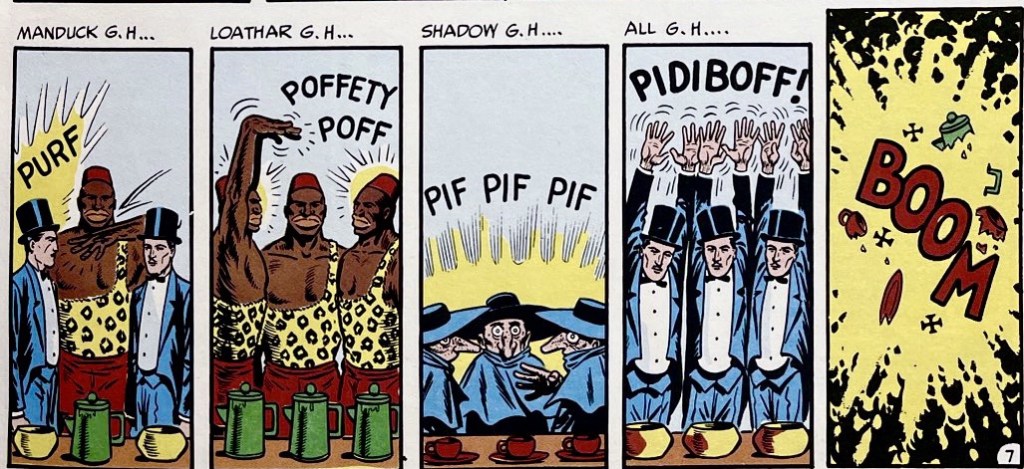
As part of his general send-up of modern popular culture in the original MAD magazine, Harvey Kurtzman took special care with his satirical takes on famous American comic strips. Most often aided by the uncanny mimicry skills of Will Elder, who seemed able to channel any cartoonist’s style, it was clear that their hearts were really in these stories. Whether it was Manduck the Magician, Little Orphan Melvin or Prince Violent, these parodies were coming out of deep familiarity of having been raised on these strips. And Kurtzman always zeroed in on the inane in pop culture as his target.
Putting Manduck into a mind-bending duel with fellow mystic The Shadow was an inspired but typical Kurtzman assault on the shallow and phoney in pop culture conventions.
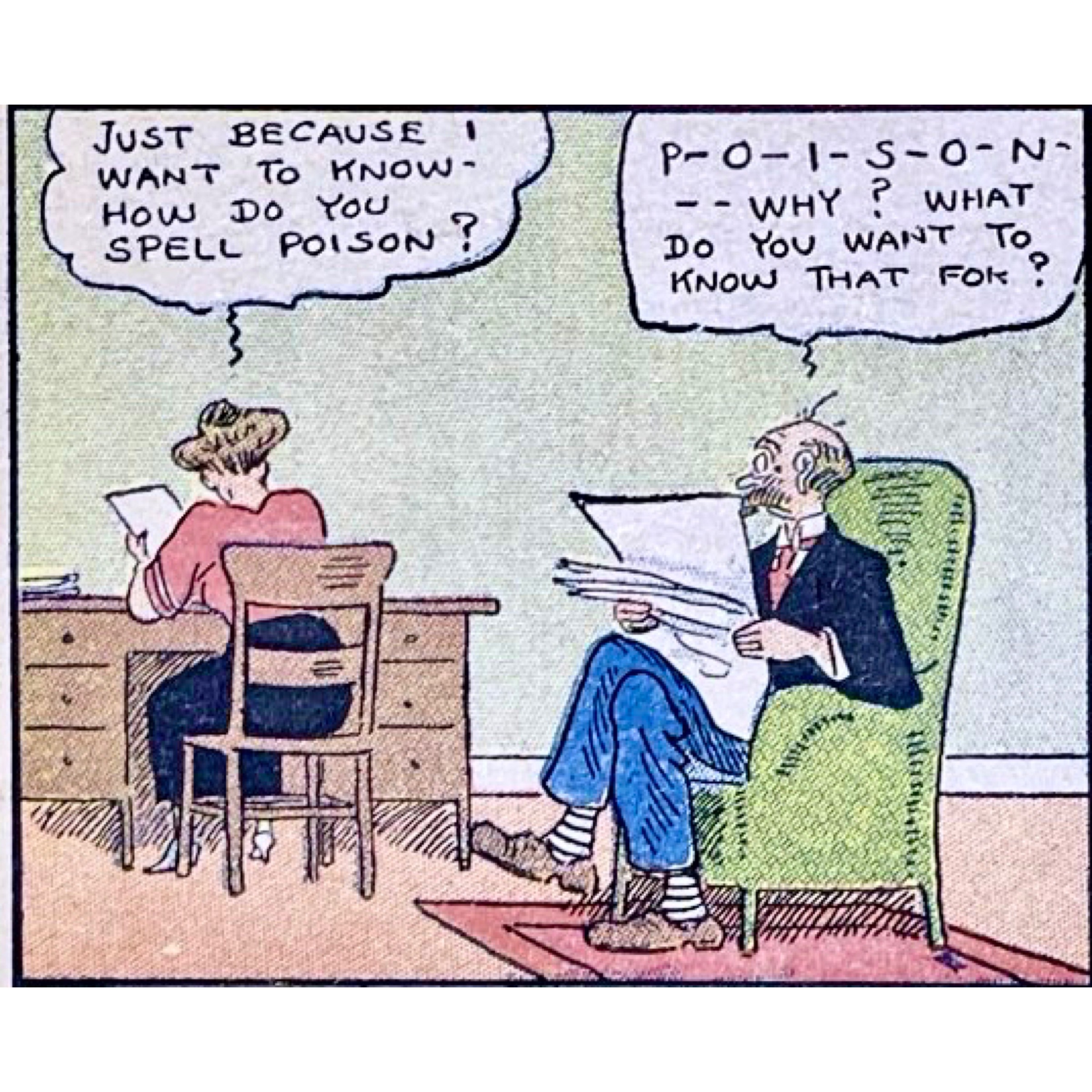
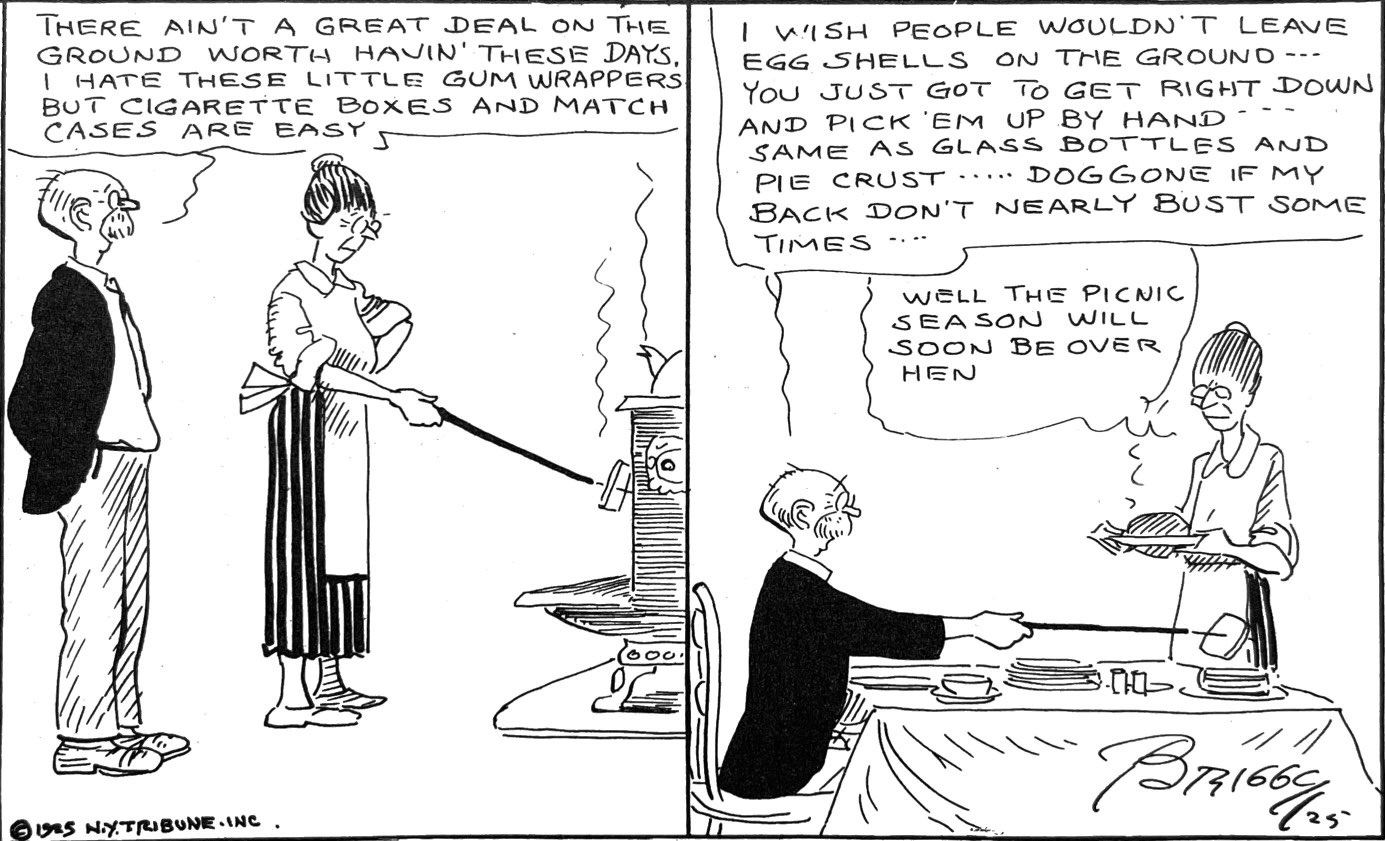
Clare Briggs’ contemplation of marital tension, Mr. and Mrs. (1919-1963) has always fascinated me both because of the harsh tenor of the strip itself and its source. When comics historians bother to remember Briggs (1874-1930) it is as quaint master of the nostalgic slice-of-life panels of small town childhood (The Days of Real Sport, When a Feller Needs a Friend, Aint’ It a Grand and Glorious Feeling). He is also credited with pioneering the format of the daily strip with recurring characters in A. Piker Clerk (1904) at Chicago’s American. But to contemporary newspaper readers in the 1910s and 1920s, he was among the best known, best-paid, and beloved of American cartoonists. His premature death in 1930 prompted both a single volume retrospective and a formidable seven-volume collection of his many strips.
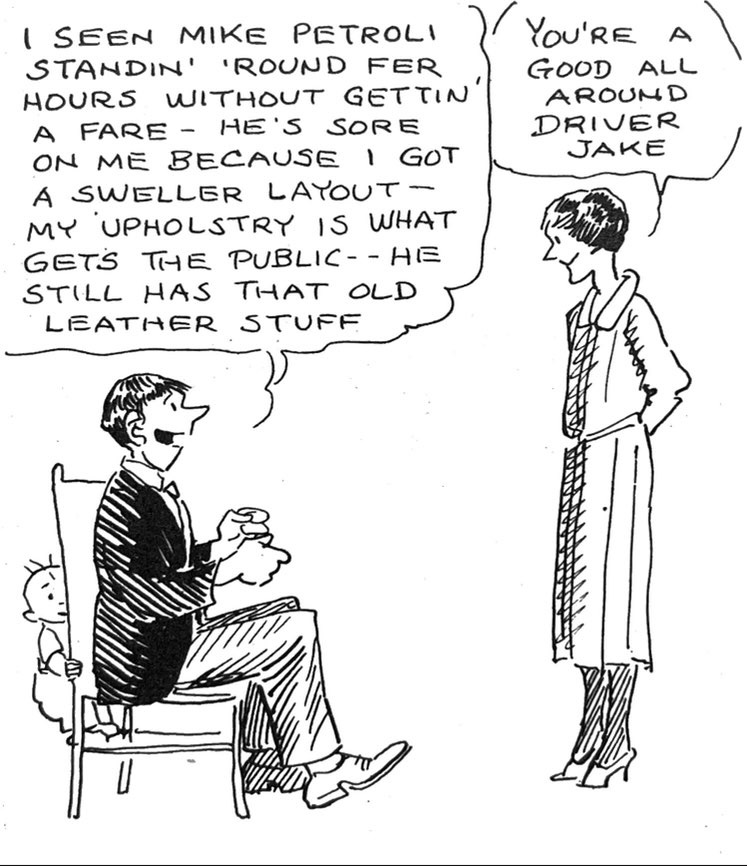
A shoe shine man enters his home after a long day’s work and boasts to his wife about his special talent for snapping his shine rag and using a better grade of polish. After work at a sign painter’s home, the practical artist extolls the superior quality of his brush and his unique mastery of curving letters. A park garbage cleaner muses on spearing newfangled gum wrappers and the challenges of cleaning up eggshells during picnic season. A soda jerk brags to his wife that his colleagues just can’t sling those mixed drinks as quickly as he. A street sweeper shows off to his wife the new brush with just the right heft and breadth for easier work, and then ponders his chances for promotion over “Jerry” who “is good at plain sweeping’ but he’s no good around telegraph poles.”
These scenarios of workingmen returning home at night and reflecting upon their craft was the conceit for Clare Briggs’ remarkable Real Folks at Home series of the 1920s. This was a deep dive into the nuances of pride, spousal support, small ambitions, respect for craft among the laboring classes for the most part. There were occasional forays into more vaunted professions like an orchestra conductor, opera singer, or baseball star. But largely Briggs was concerned with the hard-working manual laborers who may have been invisible to the white collar suburban classes to which many newspapers tried to expand their circulation after WWI. This was a regular celebration of the people who made towns and cities run, the dignity of work, and the native intelligence and thoughtfulness of “real folk.”
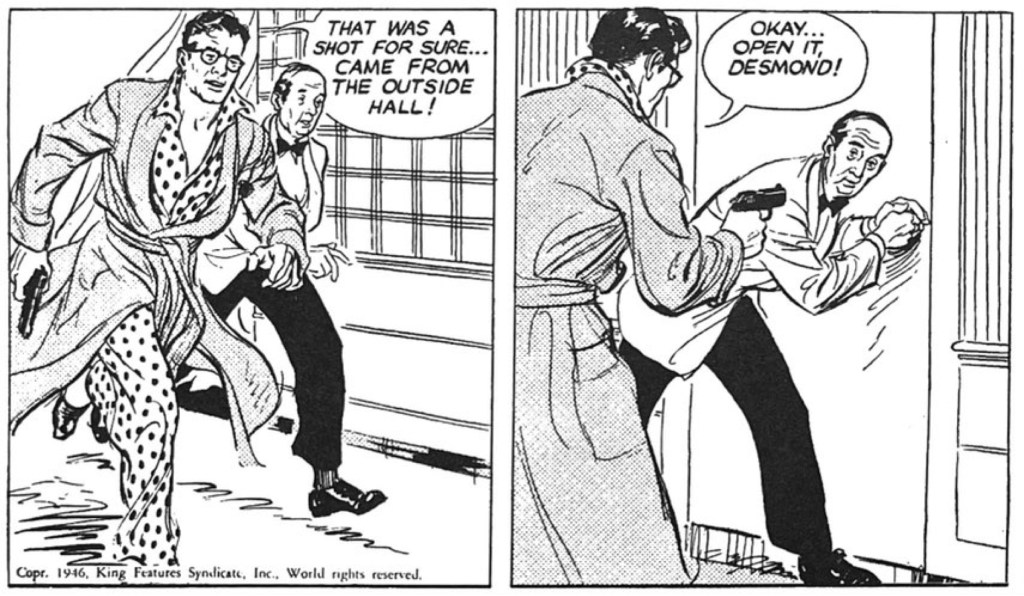
In the first days of Alex “Flash Gordon” Raymond’s post-WWII detective adventure Rip Kirby, it was clear the master was going to redefine the look of comic strip adventure. Day two of the March 1946 launch story speaks volumes about the influence Raymond was going to have on a decade of 50’s adventure style. The panel progression here is so engaging. The first two panels are energized so that you can almost feel the weight of the murder victim slump into Kirby’s arms and instantly change valence of the scene. And that final close up communicates the deadly reality of the situation by bringing us right into the complex reaction to beauty and death. The photo-realism is here, as is the increasing influence of cinematic points of view, timing, and close-ups. And arguably, the next decade would also see in comic strip adventure a turn inwards, toward psychological realism, the emotional lives of characters, that accompanied the more photographic style of the art. All of these elements would be deployed in different ways by Stan Drake in the Heart of Juliet Jones, Leonard Starr in On Stage, Warren Tufts in Casey Ruggles and Lance and John Cullen Murphy in Big Ben Bolt.
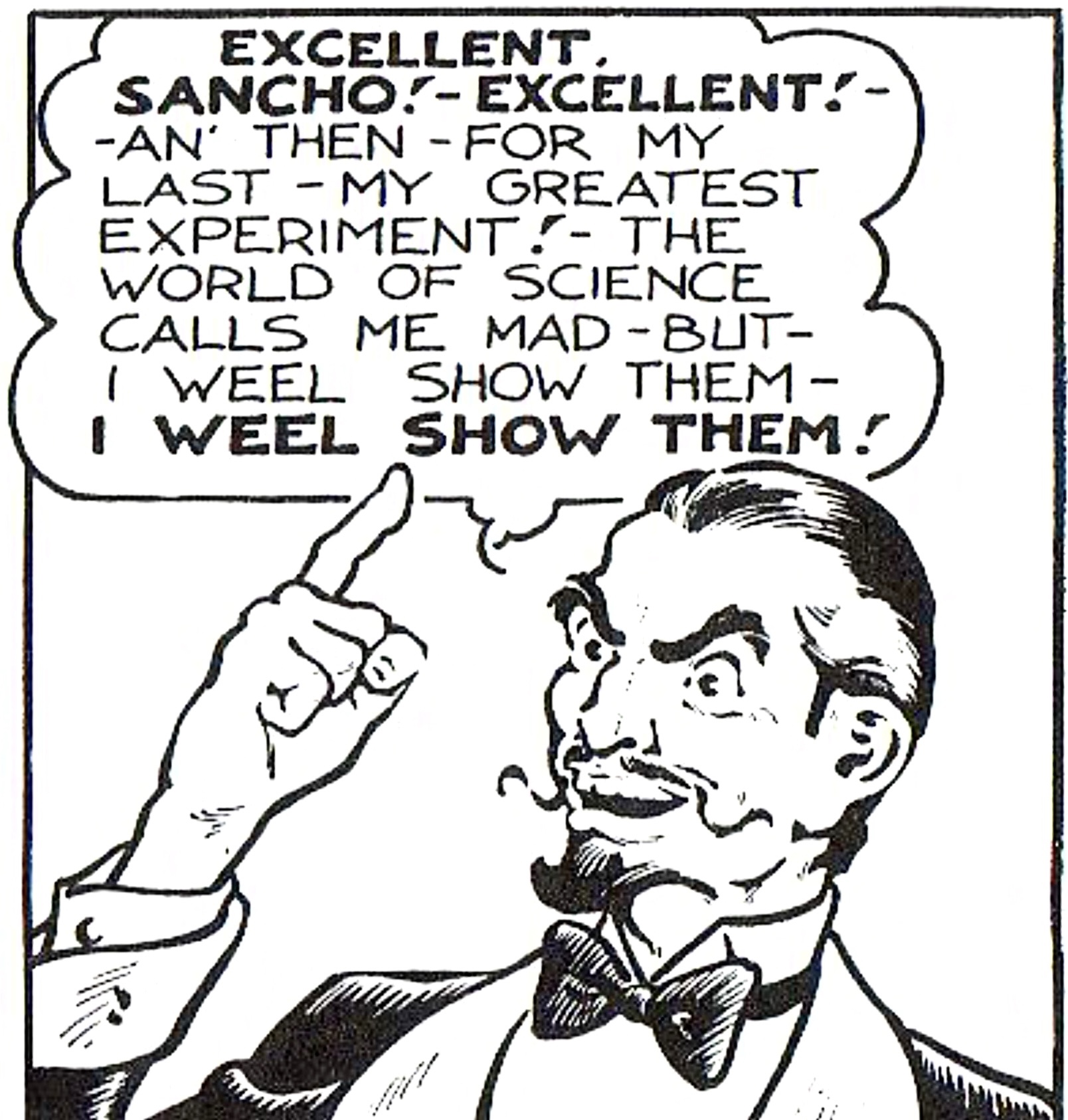
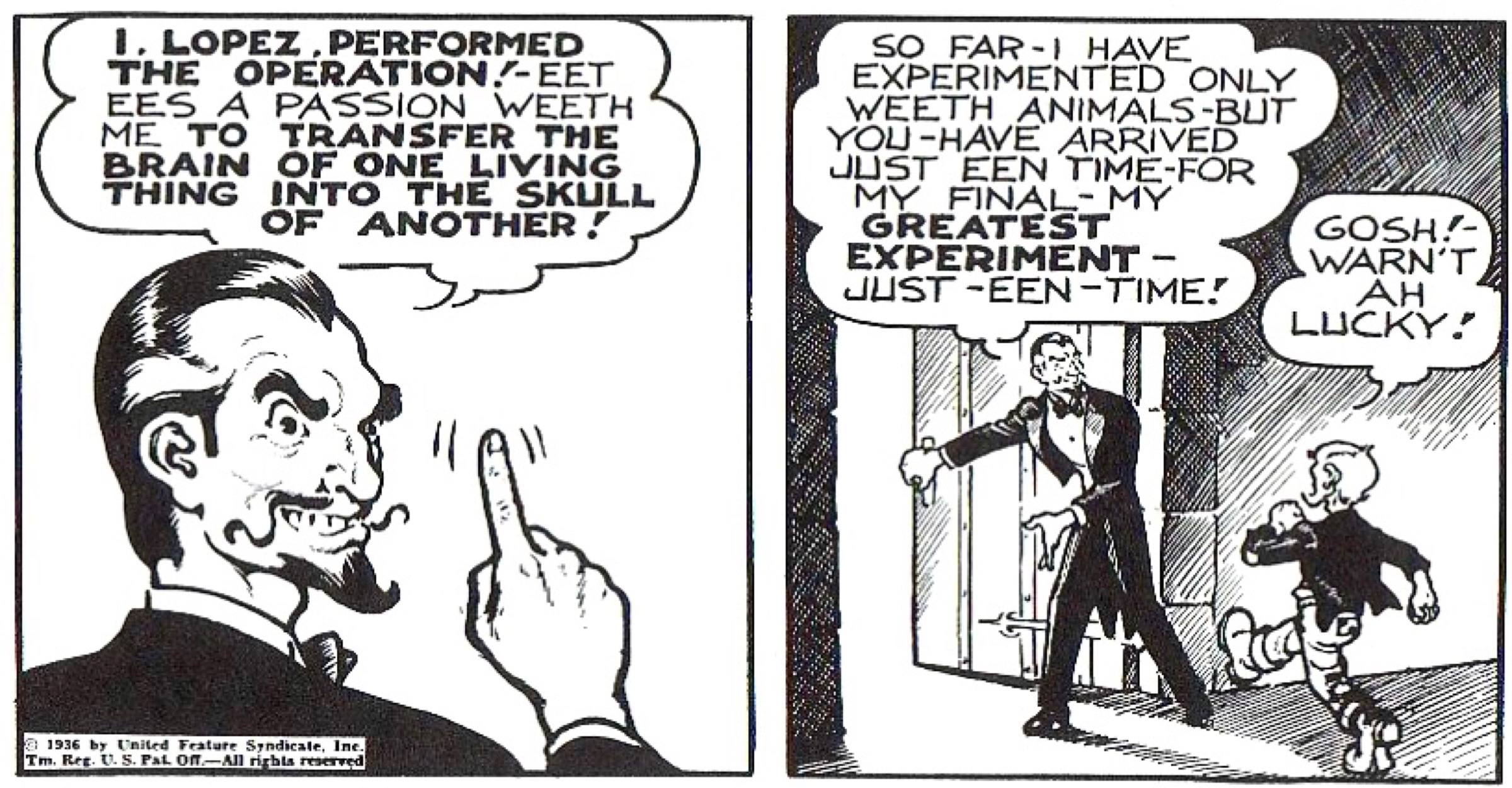
I’m a sucker for a good mad scientist, and the 1930s were brimming with them. We find them in pulp magazines, film and comic strips. Often bald, bespectacled, puny, deeply alienated and resentful, they were the prototypes of nerds-gone-wrong. The power-mad doctors, professors and other masters of technology were cautionary tales for a modernizing America about the risks of science without moral guardrails. In 1936, Al Capp put his unique satirical spin on the tropes when Mammy and Pappy Yokum briefly encounter Dr. Lopez, who is doing the old brain-transplant scheme. And Capp goes against type, making his laboratory fiend an elegant Spaniard in a tux and well-coiffed goatee.
This is a brief episode from the early years of Li’l Abner, and it finds Capp lurching towards the pop culture parody and signature visual stylings that would propel the strip into its greatest period in the 1940s and 50s. In its first stages, Capp felt constrained trying to satisfy the two dominant strains of mid-century comics – adventure and domestic sit-com. Capp leaned heavily on country vs. city culture clashes in the early years. Con men and thieves drop into Dogpatch, only to be defeated by the “rubes,” and hillbillies come to the city to send up the pretentions of sophisticates and expose the shallow selfishness of city folk. But after a few years, Capp starts turning to pop culture as his enduring source for send-ups and social commentary.
Capp’s wit, comic timing and visual style are also maturing here. He focused on faces, taking pride in facial expression as the center of the strip. Despite a crew of assistants often inking bodies and drawing backgrounds, Capp always insisted on doing the faces himself. According to one biographer, he kept a mirror near the drawing board so he could act out the facial expressions of his characters. And this comes through if you track these panels just via the faces. He loves putting eyebrows, eyes and mouth in extreme poses. You can almost see Capp mugging for his mirror in order to capture just the right pose. Few cartoonists of the 30s relied so fully on facial expression as Capp. Alex Raymond comes to mind. In fact it wasn’t until the 1950s when Raymond’s brand of realism became standard, and the comics panels shrunk, that we see cartoonists use close-ups and facial drama in the ways Capp is doing in the 1930s and 40s.
But I especially like the pacing, humor and pathos in the strip above. When Dr. Lopez aborts his plan to trade Pappy’s brain for a gorilla’s (because Pappy’s is too small), Mammy soothes her shamed husband with the assurance, “mebbe it were an unusual smart gorilla.” It is both a great punch line, timed and framed perfectly as a kicker in the back ground, but it is tender. The Yokums are a matriarchy that Capp had claimed was based on the relationship between his own assertive mother and retiring father. Capp’s burlesque of that dynamic in the Yokums turns Mammy into an assertive Mom with a killer punch. At one point Pappy recalls their elopement, when it was Mammy who brought the ladder and whisked her man off. But Capp crafts Mammy carefully, and perhaps informed by emotional notes of his own family history. She is always careful never to diminish her husband and minister to his ego as mindfully as she does to his body.








 Panels & Prose