


Talk of declining fertility and birth rates, even white nationalist mumblings about “race suicide” have become a weird sidebar this election cycle. At the turn of the 20th Century, all of these themes had already been well rehearsed. In 1903, R.F. Outcault’s blockbuster hit Buster Brown alludes to contemporary arguments around changing gender roles, women’s increased autonomy, family planning and, yes, “race suicide.”
Continue readingTag Archives: comic strips
I Hear America Talking: Stan Mack’s Real Life
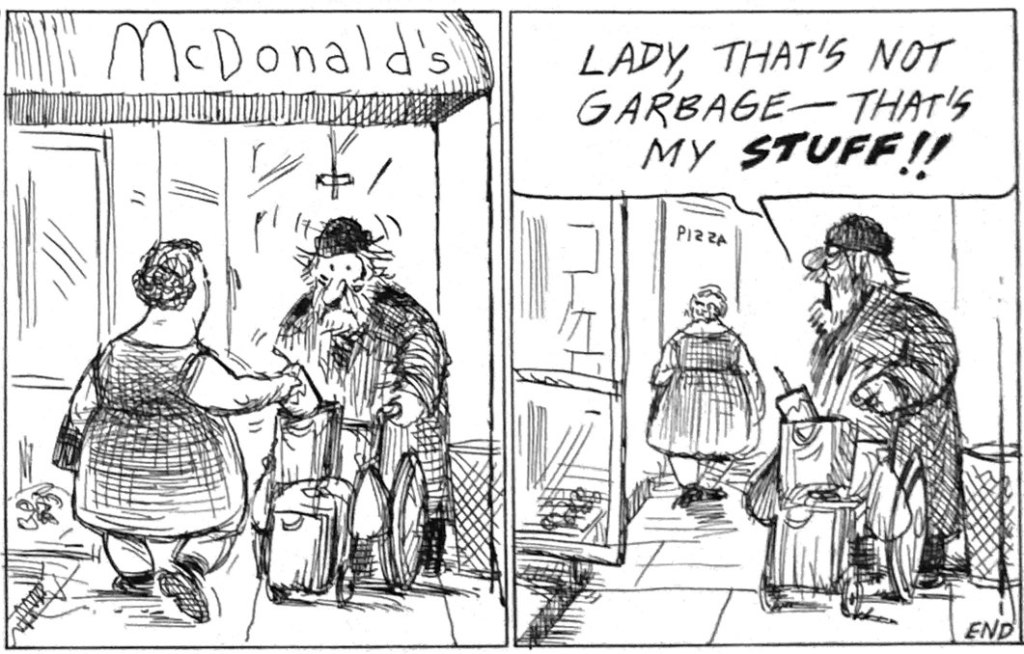
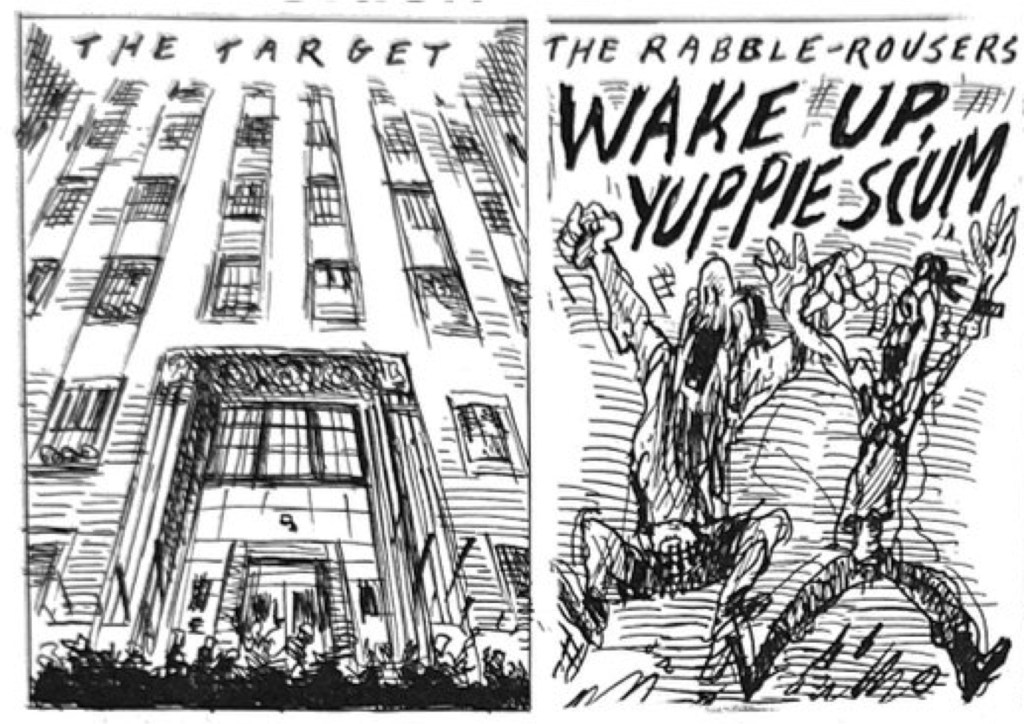
Earlier this summer, I got to chat with visual journalist Stan Mack as he launched the indispensable compilation of his most famous work, Stan Mack’s Real Life Funnies: The Collected Conceits, Delusions, and Hijinks of New Yorkers from 1974 to 1995. The interview is embedded below with a cursory review after that.
Little Orphan Annie: Character Is The Real Hero

On August 5, 1924, Harold Gray’s Little Orphan Annie premiered. Historians often remember the strip for its verbose didacticism or regressive politics. Gray famously crowded his panels with Annie’s homilies to self-reliance and in the 1930s anti-New Deal screeds. This explains historians’ interest in Little Orphan Annie, but it doesn’t account for readers’ love affair with the chatty moppet. In many ways Gray’s strip blended genres of adventure and domestic drama. It was among the earliest serial adventure strips. As much as Americans may have identified with Annie’s core self-reliant values and humane sympathies, she was forever the outsider, often overhearing key conversations or sitting in the corner of a panel as an onlooker. Annie was a picaresque figure who embodied modern Americans’ sense of social dislocation and alienation. She was both in and outside of this changing America of new cities, capitalist and government shenanigans, aggrandized power…and its victims. Gray’s Annie captured a complex relationship modern Americans felt towards their culture that was harder to articulate than it was to depict in character and situation. That is what great art, high or low, does for a culture.
Continue readingJungle Jim Is A Ramblin’ Man…And Quite the Charmer


No one could mistake master artist Alex Raymond for a proto-feminist. In his and scribe Don Moore’s dual successes of the 1930s, Flash Gordon and Jungle Jim, barely-clad distressed damsels abounded. To be sure, Raymond understood better than any comic strip artist the erotic potential of the formal, His male and female bodies were delicious. But it also goes almost without saying that the adventure genre has always been about male prowess and potency against forces natural, exotic, institutional and especially feminine. Comics artists like Carl Barks and Al Capp, among others, have recounted that newspaper editors often cited the 12-year old boy as the ideal target market for adventure strips. Well, yeah, sure…along with their horny Dads.
The adventure hero’s cavalier approach to women, romance, and all that icky girly stuff is clear in Jungle Jim’s caddish handling of two rival gal pals Lil and Kitty in this late 1941 interstitial between two episodes. Jim has no time for romance, and writes to Dear Jane letters, excusing himself from commitment. Lil gets the I’m-just-a-ramblin’-sorta-guy” brush off and Kitty gets the mock magnanimity ploy. “Find a nice substantial businessman… .” What a gentleman.
Continue readingA Tale of Two Comics: Gibson vs. The Comic Strip
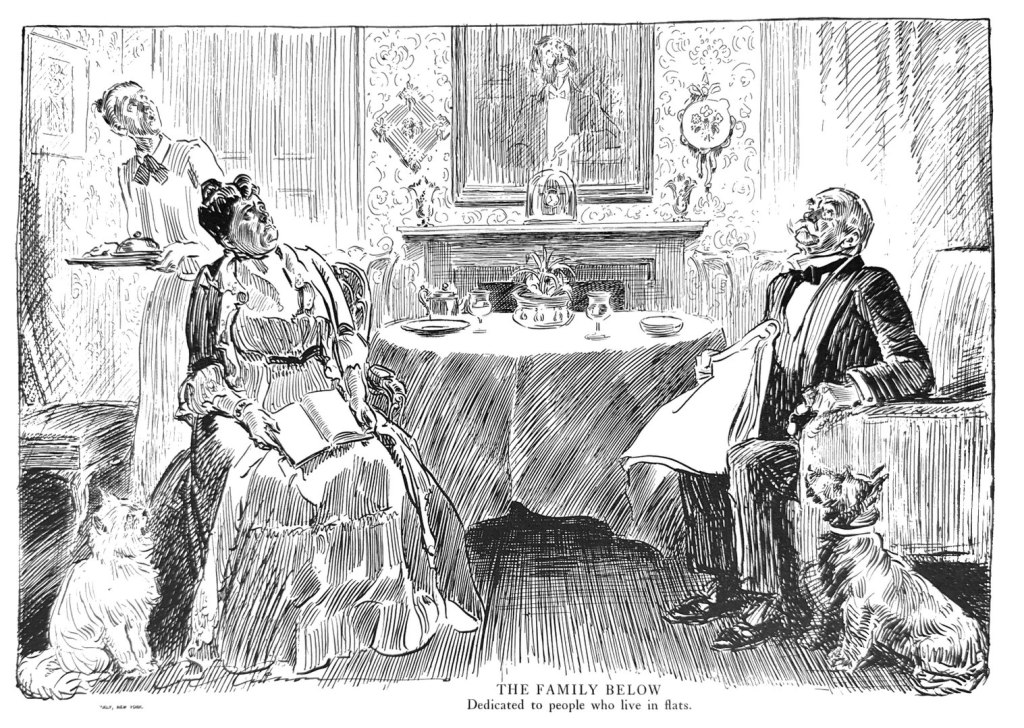

Charles Dana Gibson was the grandmaster of magazine illustration by the time the first wave of Pulitzer and Hearst’s cartoonists disrupted the media universe after 1895. And from the beginning, it was clear that newspaper artists, even those that migrated from the humor weeklies, were stretching both the form and subject matter of caricature beyond the genteel sensibilities of Puck and Life. The line was becoming more elastic, the expressions more animated and emotive, the action more extreme. Magazine humor was witty but remained politely seated in the middle-class parlor. Newspaper humor was raucous and usually situated out of doors, where just about anyone or anything could happen. For their part, magazine editors knew a cultural and economic threat when they saw one. Many magazine columnists and editors denounced Pulitzer and Hearst as vulgarians actively debased the culture with sensationalism. But the comic strip in particular was singled out for celebrating violence and appealing to juvenile sensibilities.
Continue readingBooks That Made Me: A Panels & Prose Journey

Panels and Prose began in September 2019 with a modest post about R.F. Outcault’s mentor in urban urchin cartooning, Michael Angelo Woolf. After a series of shorter posts and book reviews, I started writing in earnest the following March a series of deeper long and short essays (that now number over 150) on the comic strip and American culture. This seems a good moment to reassess what this site is about, where it came from and where headed. I have recast the site’s “About” page to include more about my own journey through comics history and especially the six books that lit my fire as a young teen.
Continue readingCharles Dana Gibson Educates Mr. Pipp

For comic strip devotees, Charles Dana Gibson (1867-1944) is often treated as a sidebar. And yet in the last decade of the 19th and first of the 20th Centuries he may have been the most famous and recognizable cartoonist in America. Best known for his “Gibson Girl” idealizations of middle class feminine youths, he worked mainly in Life and other humor and mass market magazines of the 1890s and 1910s. In fact after WWI Gibson became editor and eventually owner of Life. But by that point the newspaper revolution had diminished the power and role for weekly humor periodicals. This may be why both Gibson’s style and career seems at odds with the evolving comic strip. He represented the more gentle and genteel humor of a magazine world that sniffed at the crude humor and violence of the massively popular dailies.
Continue reading
