Junior Marries Moon Maid

By the end of his career in 1977, Dick Tracy creator Chester Gould was notoriously reactionary. His disdain for the counter-cultural forces at play in the 1960s and 70s, for liberal explanations of criminal behavior, were clear in the strip itself. In fact, his resistance to leniency in America’s legal system, and progressivism in general, had been baked into his epic since its roots n the gangster era of 1931. From the start, Dick Tray was an exploration of individual valor and evil rather than institutional or social forces. Gould’s take on the 50s moral panic around “juvenile delinquency” via Flattop Jr. is an excellent example. And the moral universe of Dick Tracy hinged on the personal evil of villains(usually embodied in physical abnormalities) and the poetic symmetry of their deaths via some kind of retributive justice.

Continue reading

Caniff’s Art of the Recap Striptease

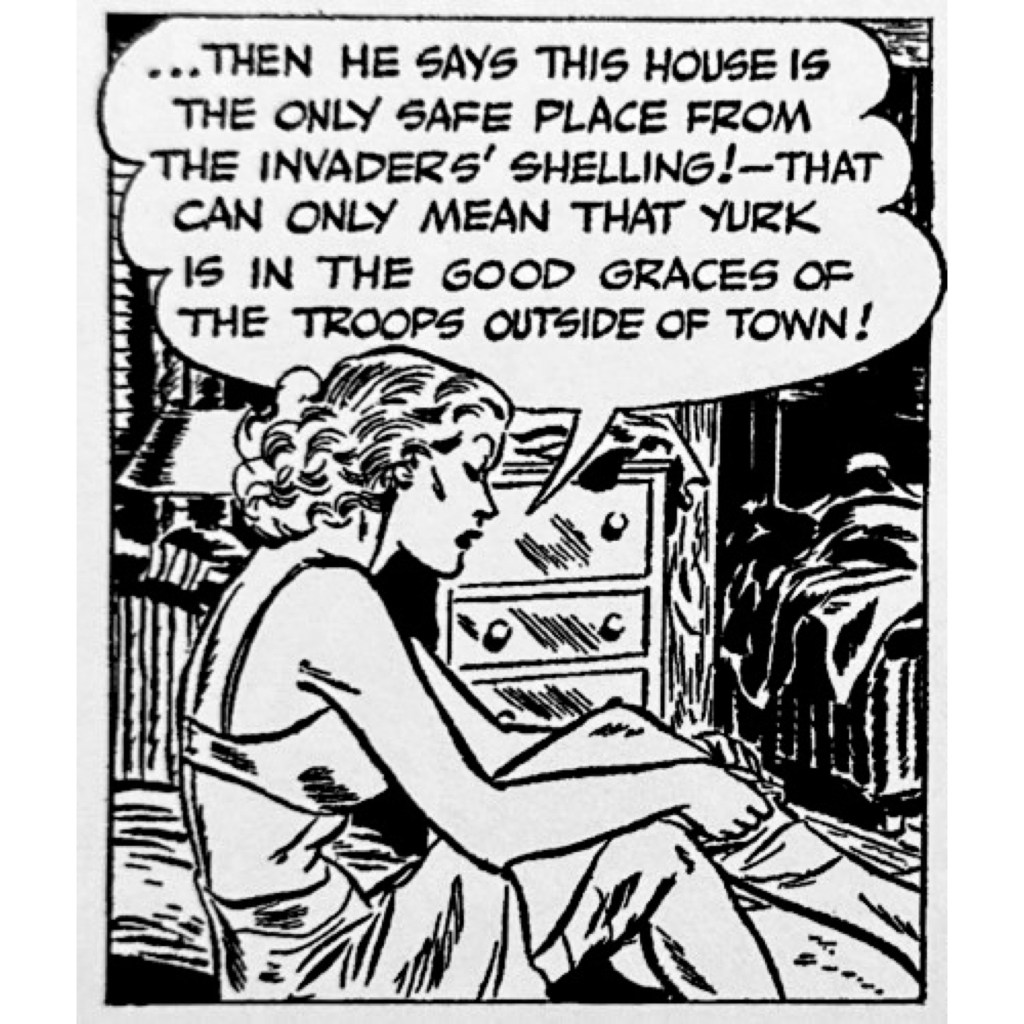
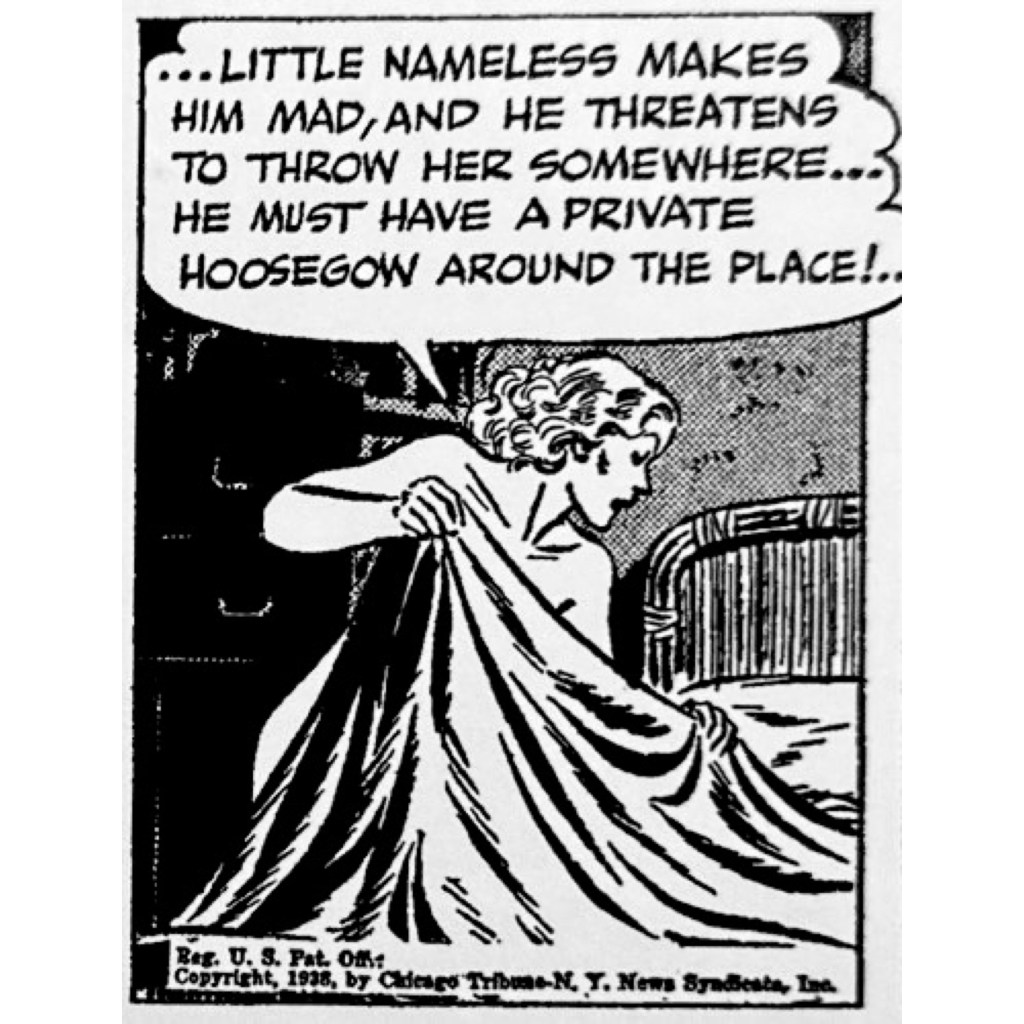
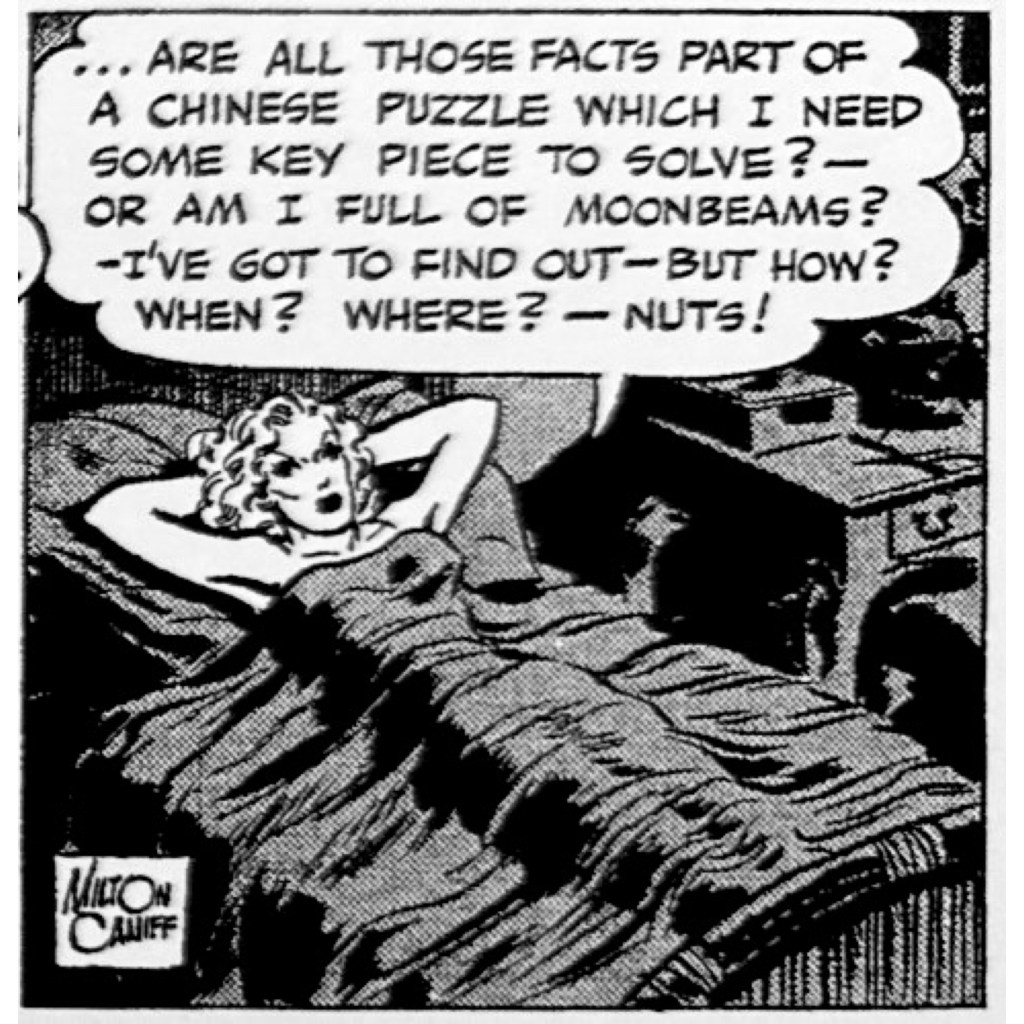
Slipping a bit of light erotica into the back pages of the buttoned-down newspaper medium was something of a sport among many comic strip artists throughout the last century. From the ubiquitous Gibson Girls of the the 00s to the curvy and well-delineated flapper daughters and office gals of 20s strips to the imperiled damsels and femmes fatale of 30s adventure, cartoonists understood they were wedging adult cheesecake into a “kids’ medium. Milton Caniff understood the better than anyone the potential here for serving the needs of a daily adventure strip while also pushing the boundaries of the conservative editorial propriety of national syndication.

Continue reading

Li’l Abner’s Culture Wars: Superman, Sinatra and Zoot Suits

One of the pleasures of Al Capp’s Li’l Abner across the decades was that the strip never took itself or any other pop culture phenomenon very seriously. In fact, Capp may have been at his best in his absurdist parodies of pop culture fads, rising celebrities, and politics. Satirical proxies for Margaret Mitchell, John Steinbeck, Frank Sinatra, Marilyn Monroe, Elvis Presley, Marlon Brando showed up in the strip at the height of their popularity. Larger issues like the Cold War, student unrest, Third World politics all found their way to Dogpatch, or Dogpatchers somehow found their way to them. Ironically, what started as a comedy about a backwards and alienated community of big-hearted naives, was really illustrating in its own light way how interdependent and mass mediated the world had become by the 1930s. In Capp’s hands, Dogpatch is anything but disconnected from the rest of the world. The wide world rushes through the hillbilly berg.

Continue reading

Sophisticated Shadows: The Inner Worlds of Carol Day

U.S. readers never got to experience one of the most visually arresting and subtle narrative comic strips of the 1950s and 60s, David Wright’s (1912-1967) Carol Day. Syndicate editors on this side of the pond deemed the popular UK newspaper soap opera too “sophisticated” for their audiences. They may not have been entirely wrong. To American eyes, this peerlessly drawn tale of an orphaned young model’s adventures in the stylish upper echelons of post-WWII London is more emotionally restrained and understated than its Yankee counterparts. But we will get to that.

Continue reading

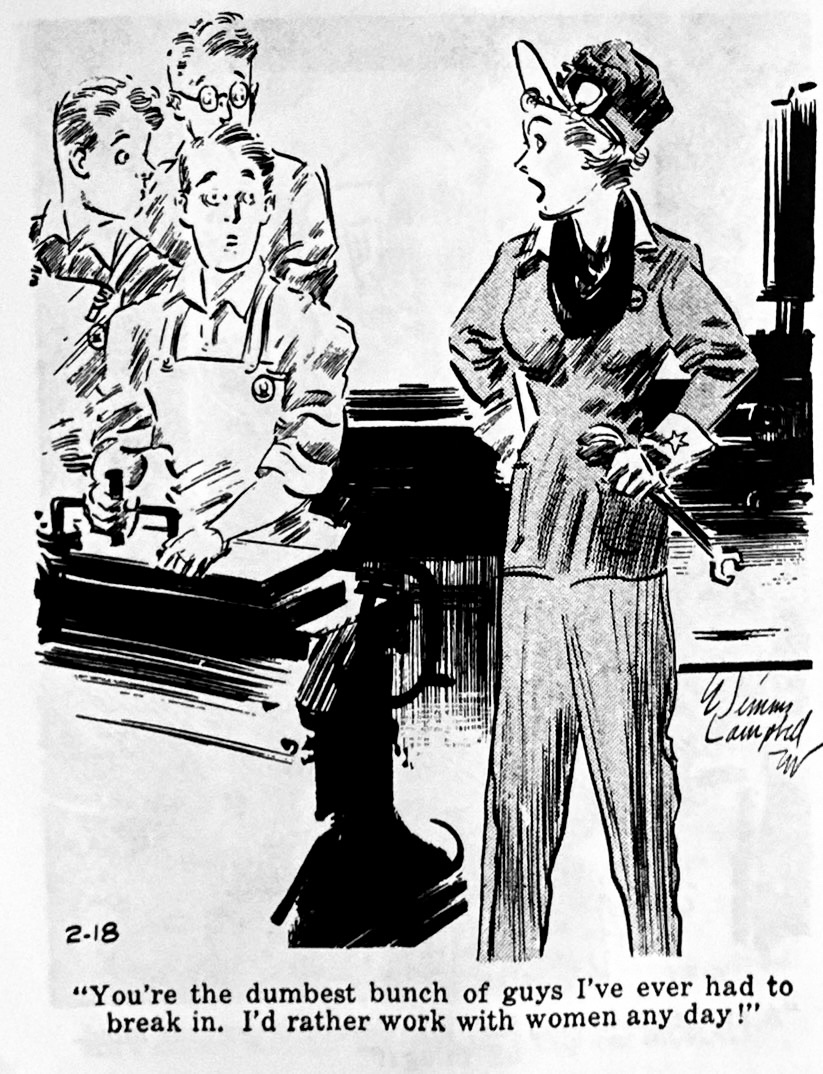
The Banality of Villainy: Syd Hoff Eats the Rich

Caricature, when done well, is the art of clarification through exaggeration. Which is not the same thing as simplification. The best caricaturists exaggerate, enhance, underscore and highlight some physical or character attributes that express a deeper insight about its subject. Thomas Nast’s iconic Boss Tweed was not just obese with graft. He was gelatinous, overwhelmed and almost inert from his own power and greed. It was a portentous portrait. It argued visually the seeds of Tweed’s own destruction, an appetite for power that was overcoming his own control and better judgment. It did what caricature does best by attaching ideas and arguments to figures in ways that reach beyond simple journalistic proof or language. And because political and social caricature almost always personifies issues, it tends to explain social problems as aspects of human imperfection.

Continue reading

Flashing Flash: Or, A Paper Doll That I Can Call My Own

Paper dolls and cut-out toy models are centuries-old, but the format was a natural fit for the modern newspaper comic from its beginnings. We tend to identify the comic strip paper doll with “women’s strips” from the great fashionistas, Jackie “Torchy” Ormes or Gladys “Mopsy” Parker. But in 1934, Alex Raymond’s Flash Gordon got into the act with a series that ran in every Sunday from August 18 to December 16. While Raymond focused mainly on Dale Arden as well as the various princesses and other female characters the still-young strip had amassed by then, he covers most of the cast, from Zarkov in a tuxedo to Ming the Merciless’ collection of flamboyant collars.

Continue reading

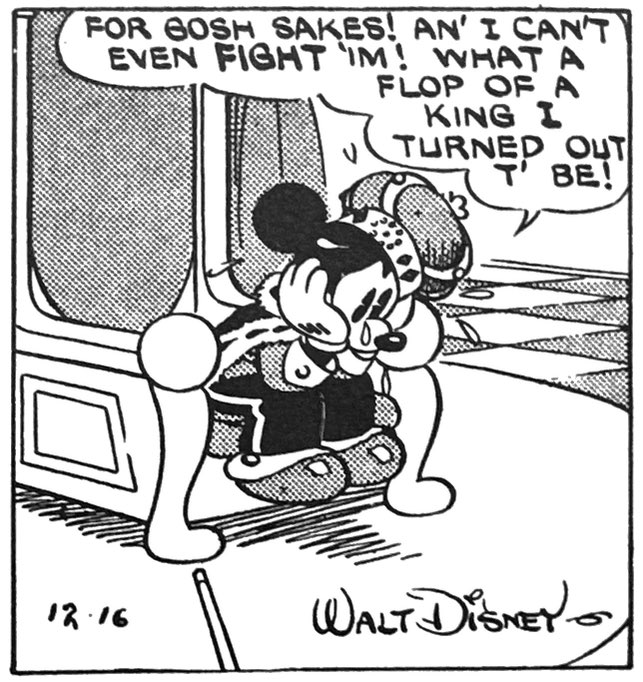
Gottfredson’s Mickey: The Art and Science of Action

Before becoming the anodyne logo of Disney’s saccharine-soaked family image during the post-WWII era, Disney’s Mickey Mouse had some heroic chops. Make no mistake, Mickey was never even remotely “edgy” let alone hard-boiled in the style of some other 30s pulp protagonists. But he was imagined by Disney in the original animated shorts and then by Floyd Gottfredson in the daily comic strips, as a spunky, resourceful adventurer. In the 1930s, Mickey was thrust into a number of roles and across all of the pop culture genres: sky jockey, detective, western outlaw hunter, ghost-hunter, even sci-fi adventurer. As tame as Mickey’s 30s adventures may seem, the Disney corporation in its most controlling moments in the past has tried to disappear come of the earliest imagery of their corporate logo packing a gun or interacting with some cringe-worth but commonplace racial stereotyping of the era.

Continue reading