


One of the biggest blind spots in the history of American comic strips is the community newspapers that spoke to and out of the ethnic minority experience for decades. About Comics is engaged in one of the most important reprint projects in reprinting some of these overlooked comic strips. Throughout the 20th Century, Black, Italian, Eastern European, Jewish and other native and emigre minority communities generated newspaper networks that applied their own lenses to local, national and international affairs. They produced unique takes on modern American culture rarely seen from the dominant comics syndicates. Few of the comics artists and serial strips have been reprinted in any depth…until now. Their inclusion in the American comics canon is long overdue.
Continue readingTag Archives: comics and culture
Doc Hero: Rex Morgan, M.D. Is Here to Help

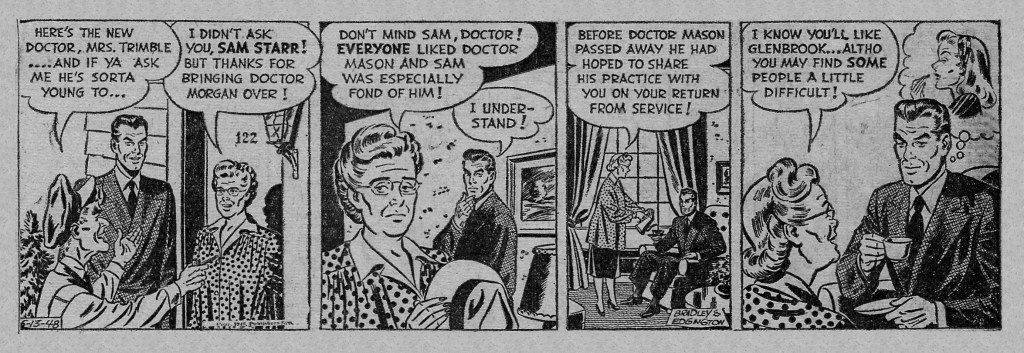
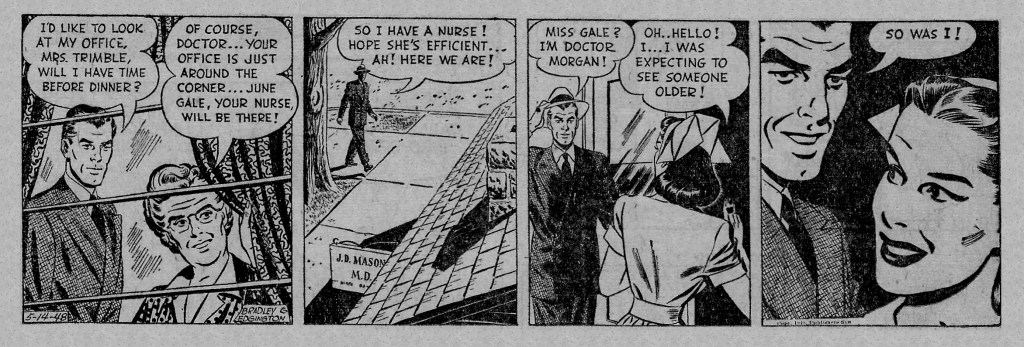
Remember when doctors were iconic pillars of respectability and authority in pop culture? Before alternative medicine? Before CDC missteps? Before drug company bribery? Before all expertise became “elitist conspiracy?” Remember Dr. Kildare? Ben Casey? Marcus Welby? And how about the most enduring of them all, Rex Morgan, M.D.? Launched on March 10, 1948, the doctor-driven soap opera was the brainchild of a psychiatrist, Nicholas P. Dallis, who wrote under the moniker Dal Curtis. His intent was to create a doctor hero who ministered not only to broken bodies but to overall mental and moral health. Young Dr. Morgan, apparently not long out of medical school, moves to the small town of Glenbrook to take over the practice of the burg’s departed, beloved practitioner. The strip was very much part of the psychological turn in American pop culture after WWII. Morgan represented that new generation of more enlightened experts of all things both scientific and emotional.
But at the same time, Rex Morgan M.S. rightfully remains a monument of 1950s iconography. For many years under the hands of main artist Marvin Bradley and backgrounder John Edgington, the strip had the bland realist style of contemporary advertising illustration. Characters showed minimal expressiveness; environments were just as pristine and inexpressive; houses, cars, furniture were just as generic; and any cartoonishness was saved for the offbeat minor players and comic relief.
Continue reading



The Nebbs: The Social Realism of a Mid-List Sitcom
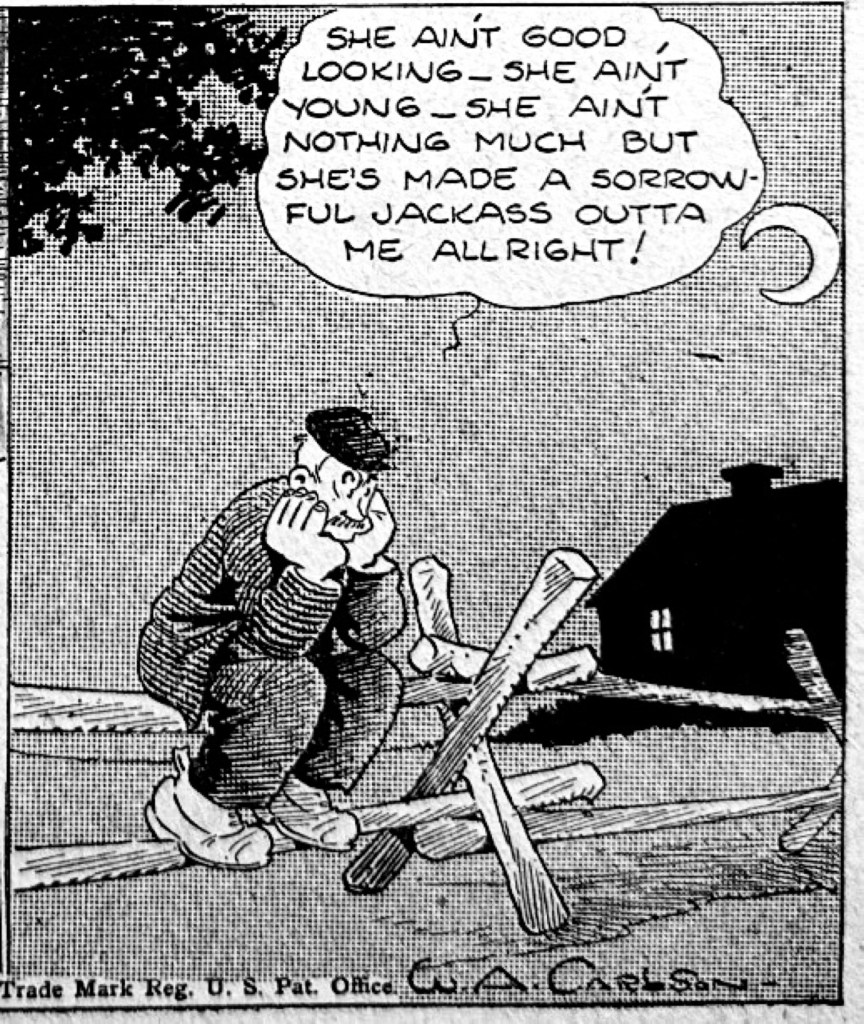
The Nebbs (1923-1947), written by Sol Hess and drawn by W. A. Carlson started as an unabashed knock-off of the more familiar domestic comedy strip, The Gumps. And yet the strip was quite popular in its day, appearing in over 500 newspapers and spawning a radio version. And to its credit, The Nebbs developed its own charms and developed distinct sitcom conceits, if only in a minor key.
Hess wrote gags for Sidney Smith’s The Gumps and well understood the conventions of emerging situation comedy. And while in name and domestic situation, The Nebbs clearly mimicked some aspects of The Gumps, Hess’s variations were notable. Rudy Nebb is less bombastic than Andy Gump. And the thrust of the strip is more wordy and introspective. It seemed to have as much in common with the internal monologues of Harold Gray’s Little Orphan Annie and the slice of life motif of Frank King’s Gasoline Alley. Most of the available samples of The Nebbs focus on the Sunday standalone gag strips. For a richer sense of the continuity of Hess and Carlson’s world, I have to rely on a contemporaneous 1928 Cupples and Leon reprint. Alas, the selection in this volume focuses outside of the the Nebbs themselves and on the wealthy cousin Ambrose and his dual failure at launching a local hotel and courting the spinster Sylvia.
Continue readingEarly Polly: Inventing the Sitcom
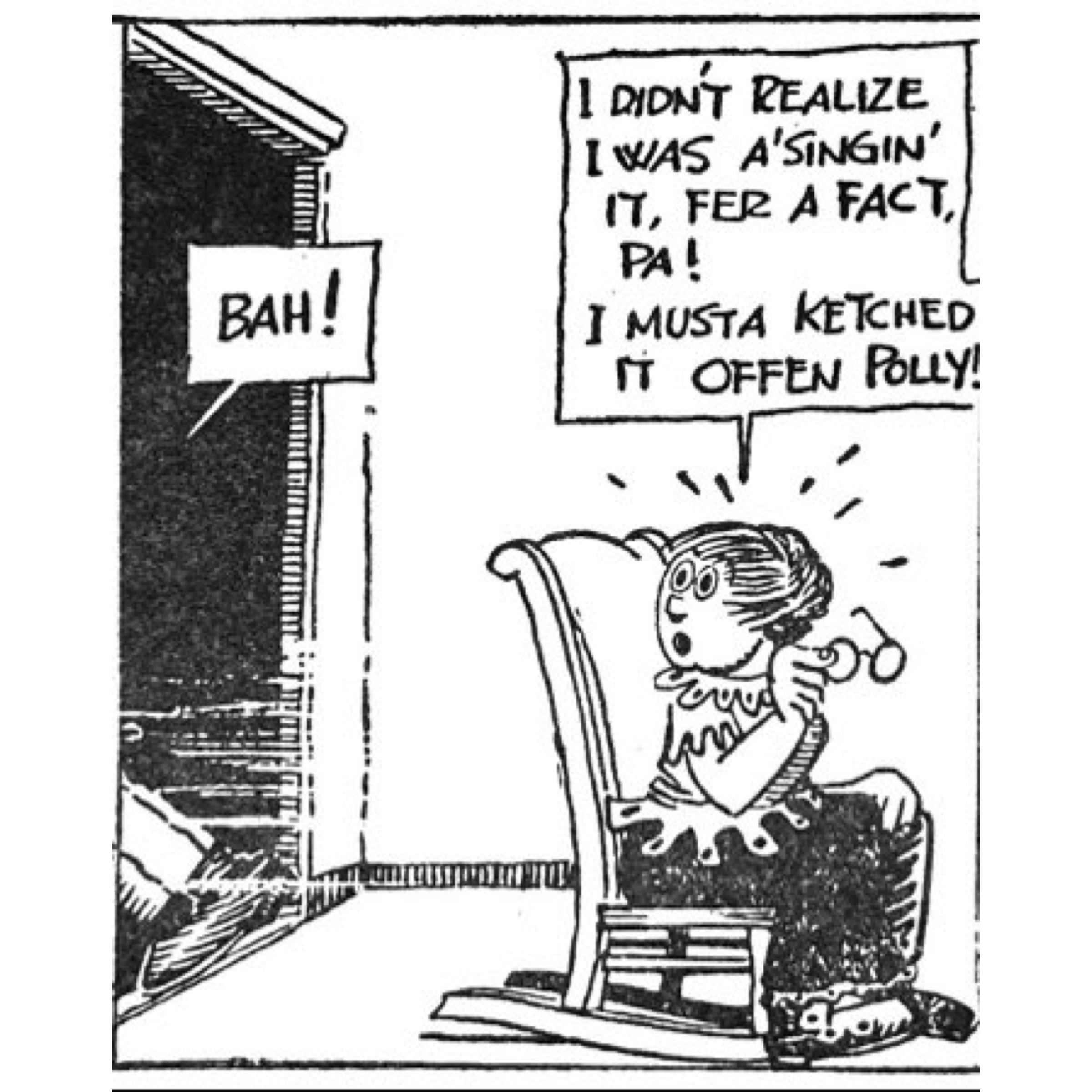
Cliff Sterrett’s Polly and Her Pals (1912-58) was along with George McManus’ Newlyweds and Bringing Up Father and George Herriman’s Family Upstairs one of the pioneers of a situation comedy genre that would eventually define radio and TV. There were progenitors, to be sure, like vaudevillian skits and theatrical parlor room comedy. But it was in the comics pages of the first two decades of the last century that the major tropes and situations of the genre developed. The kooky neighbors, generation gaps, spousal miscommunication and jealousy, and especially the aggrieved and diminished father figure – all took root here and were developed by Sterrett, Herriman and McManus, among others.
Continue reading“Papa Love Mama?”: The Quiet Desperation of Mr. and Mrs.
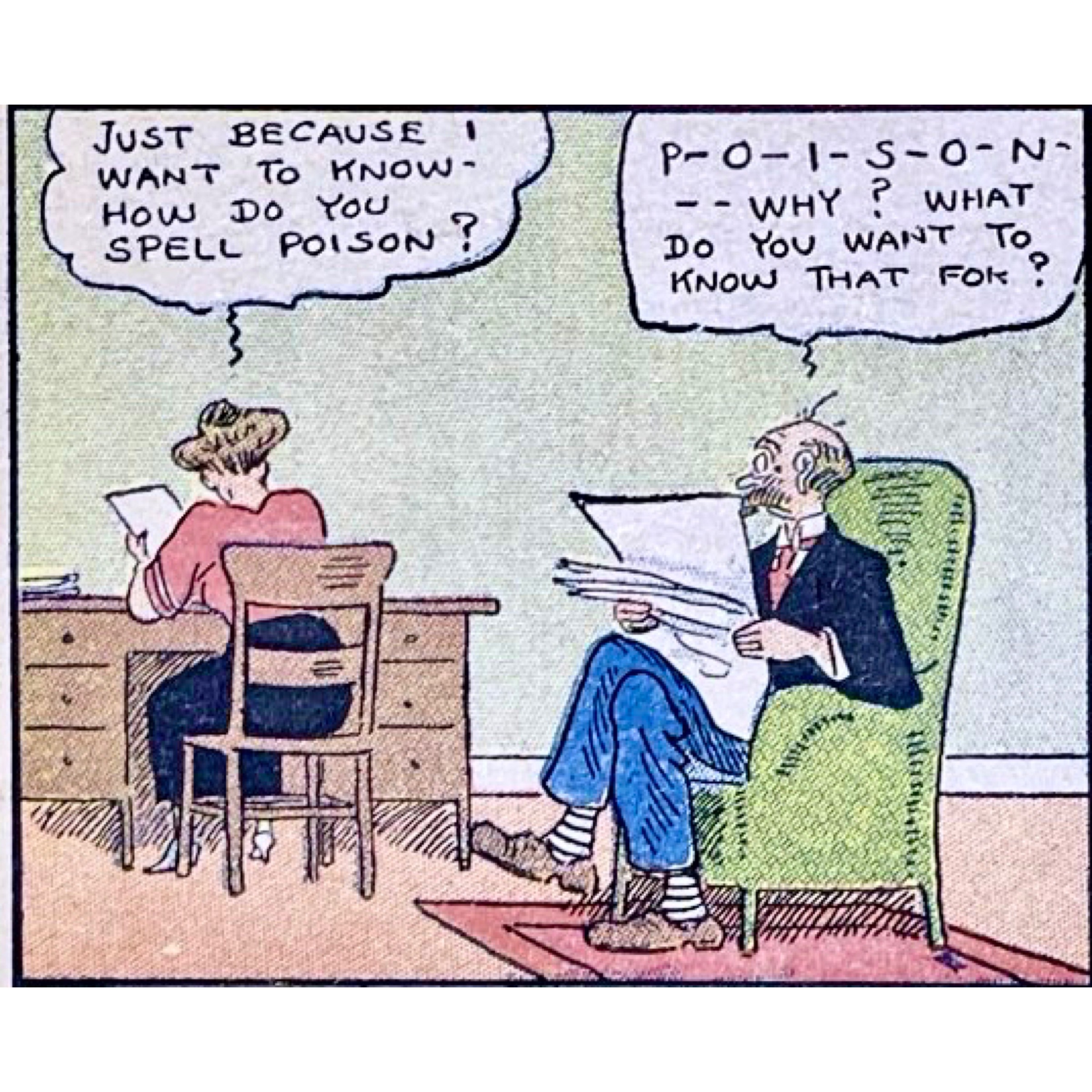
Clare Briggs’ contemplation of marital tension, Mr. and Mrs. (1919-1963) has always fascinated me both because of the harsh tenor of the strip itself and its source. When comics historians bother to remember Briggs (1874-1930) it is as quaint master of the nostalgic slice-of-life panels of small town childhood (The Days of Real Sport, When a Feller Needs a Friend, Aint’ It a Grand and Glorious Feeling). He is also credited with pioneering the format of the daily strip with recurring characters in A. Piker Clerk (1904) at Chicago’s American. But to contemporary newspaper readers in the 1910s and 1920s, he was among the best known, best-paid, and beloved of American cartoonists. His premature death in 1930 prompted both a single volume retrospective and a formidable seven-volume collection of his many strips.
Continue readingThe Working Class Heroes of Clare Briggs

A shoe shine man enters his home after a long day’s work and boasts to his wife about his special talent for snapping his shine rag and using a better grade of polish. After work at a sign painter’s home, the practical artist extolls the superior quality of his brush and his unique mastery of curving letters. A park garbage cleaner muses on spearing newfangled gum wrappers and the challenges of cleaning up eggshells during picnic season. A soda jerk brags to his wife that his colleagues just can’t sling those mixed drinks as quickly as he. A street sweeper shows off to his wife the new brush with just the right heft and breadth for easier work, and then ponders his chances for promotion over “Jerry” who “is good at plain sweeping’ but he’s no good around telegraph poles.”

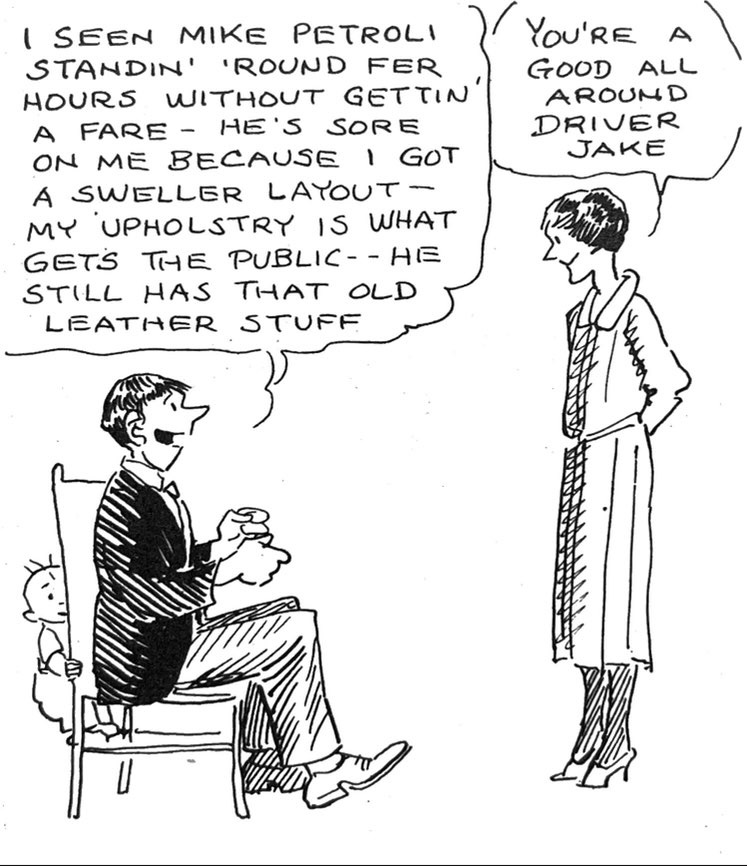

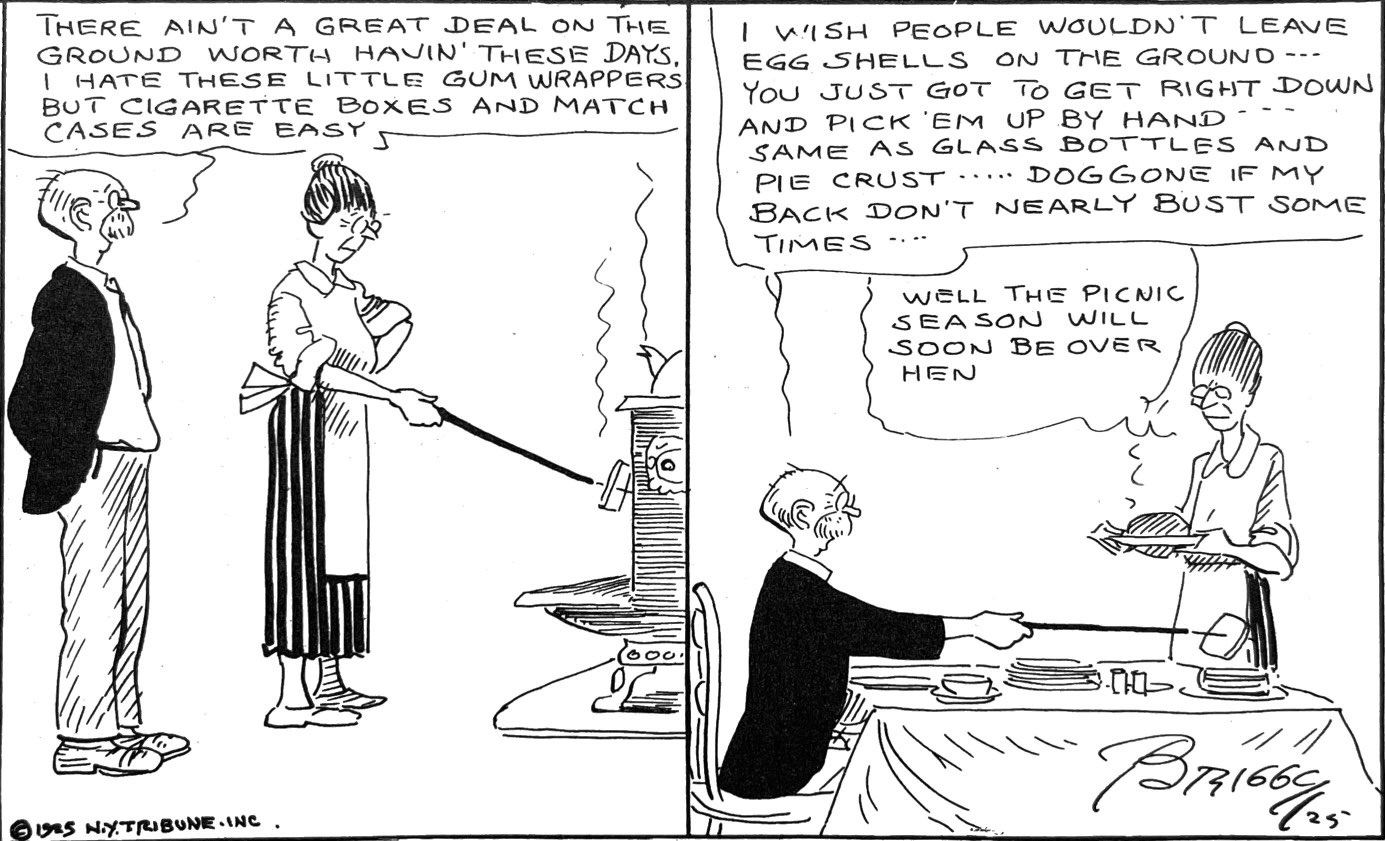
These scenarios of workingmen returning home at night and reflecting upon their craft was the conceit for Clare Briggs’ remarkable Real Folks at Home series of the 1920s. This was a deep dive into the nuances of pride, spousal support, small ambitions, respect for craft among the laboring classes for the most part. There were occasional forays into more vaunted professions like an orchestra conductor, opera singer, or baseball star. But largely Briggs was concerned with the hard-working manual laborers who may have been invisible to the white collar suburban classes to which many newspapers tried to expand their circulation after WWI. This was a regular celebration of the people who made towns and cities run, the dignity of work, and the native intelligence and thoughtfulness of “real folk.”
Continue readingRip Kirby Introduces the 1950s
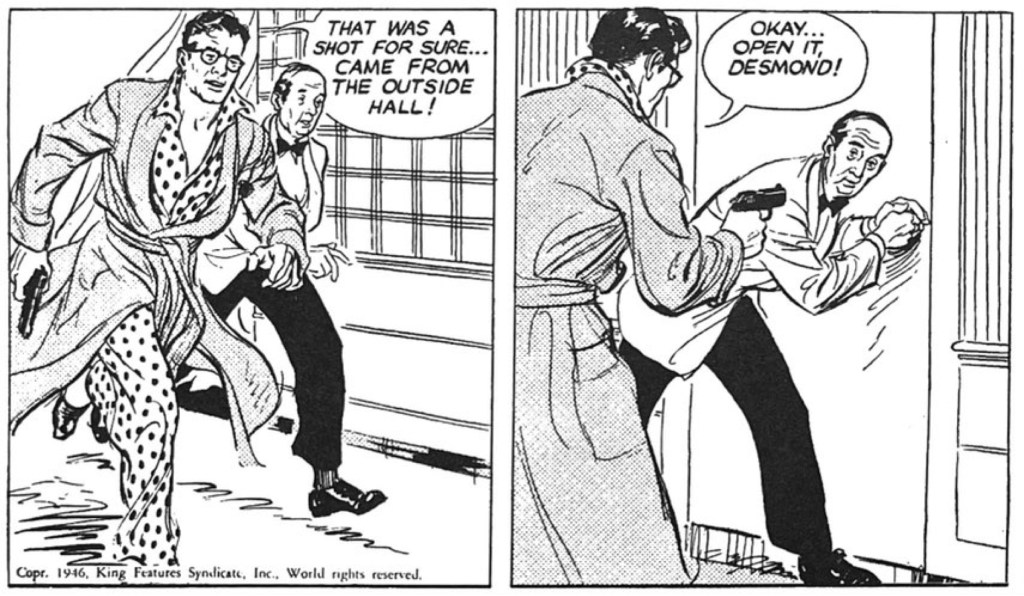

In the first days of Alex “Flash Gordon” Raymond’s post-WWII detective adventure Rip Kirby, it was clear the master was going to redefine the look of comic strip adventure. Day two of the March 1946 launch story speaks volumes about the influence Raymond was going to have on a decade of 50’s adventure style. The panel progression here is so engaging. The first two panels are energized so that you can almost feel the weight of the murder victim slump into Kirby’s arms and instantly change valence of the scene. And that final close up communicates the deadly reality of the situation by bringing us right into the complex reaction to beauty and death. The photo-realism is here, as is the increasing influence of cinematic points of view, timing, and close-ups. And arguably, the next decade would also see in comic strip adventure a turn inwards, toward psychological realism, the emotional lives of characters, that accompanied the more photographic style of the art. All of these elements would be deployed in different ways by Stan Drake in the Heart of Juliet Jones, Leonard Starr in On Stage, Warren Tufts in Casey Ruggles and Lance and John Cullen Murphy in Big Ben Bolt.
Continue reading Panels & Prose