
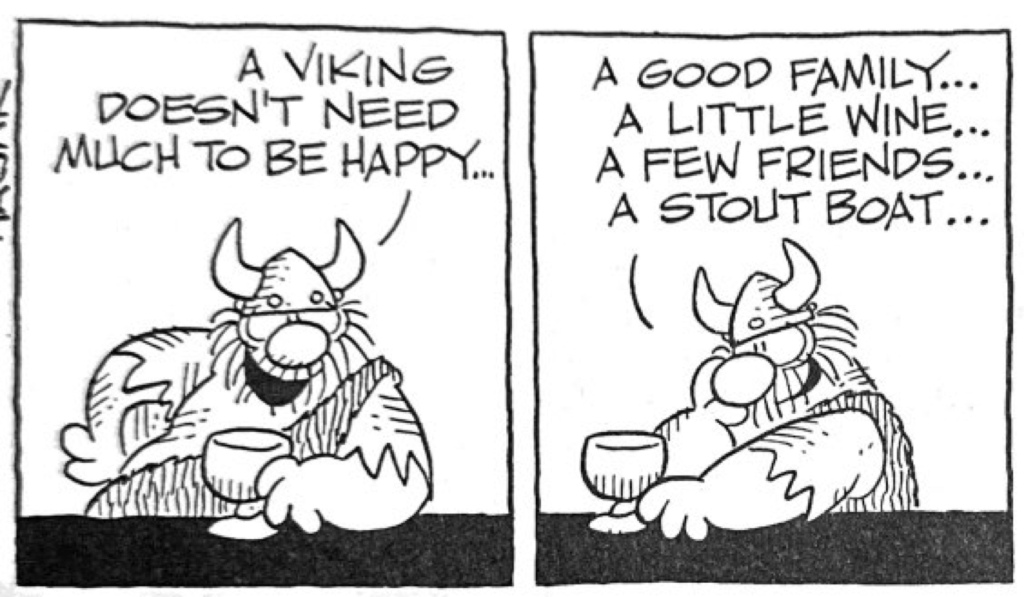
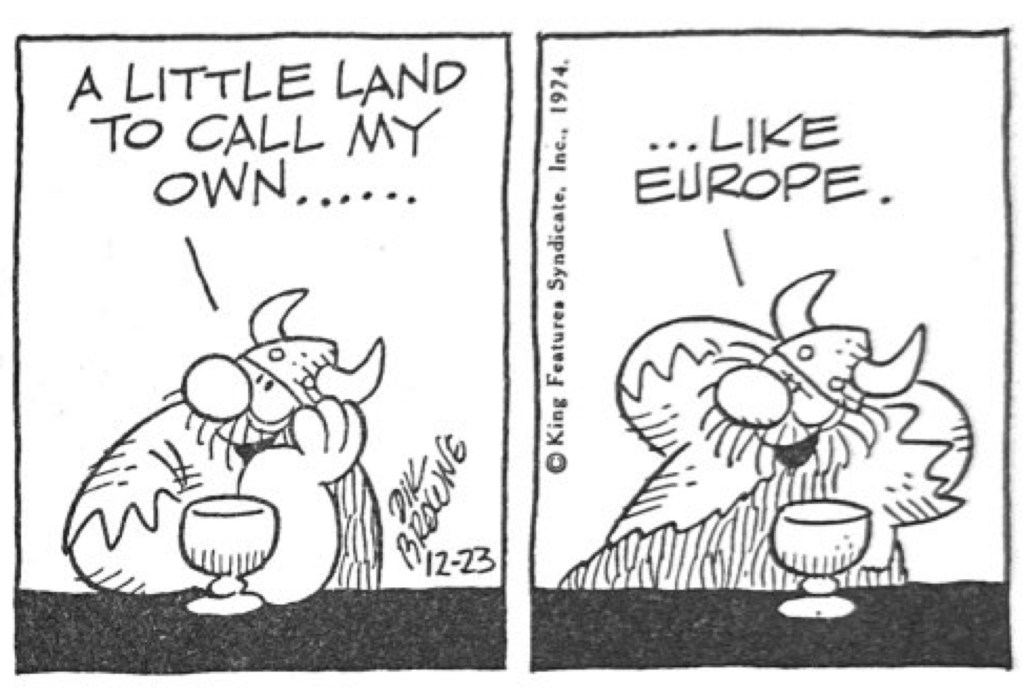
Like all of the most endearing comic strips. Dik Browne’s Hagar the Horrible came from a personal place. As Dik’s son Chris Browne tells it in the barbarian-sized collection, Hagar the Horrible: The First 50 Years (Titan, $49.99), the Brownes often joked about dad’s beefy, bearded, playfully irascible demeaner as Hagar-like. And it turns out, most of the eventual strip was loosely based on the character types and dynamics of the Browne household.
Continue readingMonthly Archives: August 2025
Cartooning the ‘American Scene’: Comics as Modern Landscape

We are such suckers for highbrow validation. Sure, we pop culture critics and comics historians talk a good game about bringing serious critical scrutiny to popular arts, our respect for the common culture…yadda, yadda. But our pants moisten whenever the intelligentsia deign to take our favorite arts seriously, or we find some occasional reference or connection between the “high” and “low” culture labels that we claim to disown. Comic strip histories love to gush over Cliff Sterrett’s appropriation of Cubist stylings in Polly and Her Pals. Although his dalliance with cartooning was brief, Lyonel Feininger’s Expressionist turn in the Kin-der-Kids and Wee Willie Winkie loom so large in comics history you would think he was a beloved mainstay of the Sunday pages. In face, he was a fleeting presence. Picasso’s devotion to the Little Jimmy strip suggests somehow that Jimmy Swinnerton was onto something deeper than it seemed. And of course the critical embrace of George Herriman’s Krazy Kat started early, when Gilbert Seldes and e.e. Cummings, among others, primed us to believe the greatest of all comics for its surreal aesthetic and mythopoeic narrative.1 Never mind that the strip suffered limited distribution and perhaps narrower audience appeal. Indeed, an entire scholarly anthology, Comics and Modernism is a recent map of all the ways in which comics studies tries to wrap the “low” comic arts in the (to my mind) ill-fitting coat of high modernism.2
Continue readingSwipe-Right Follies, Circa 1904
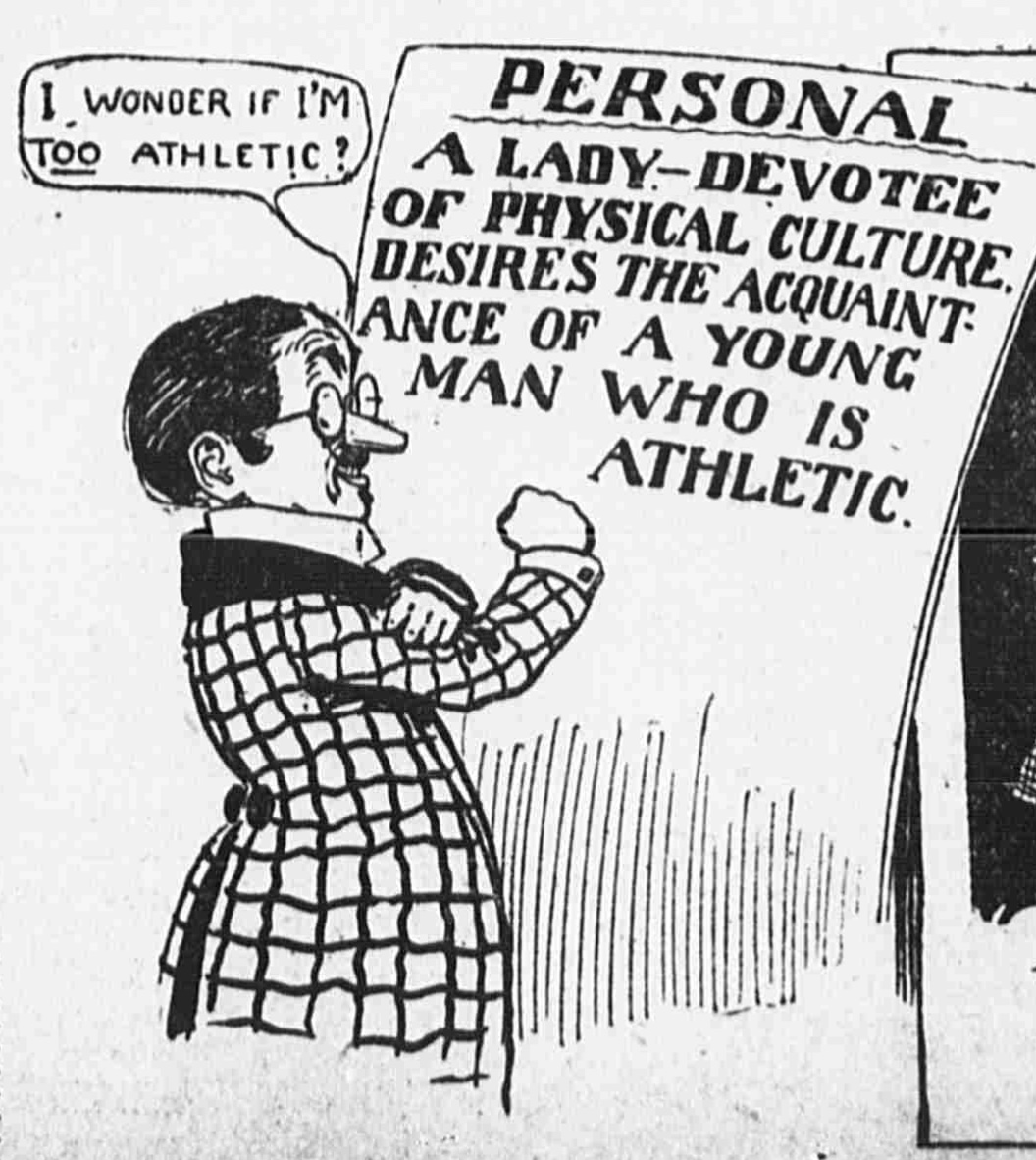
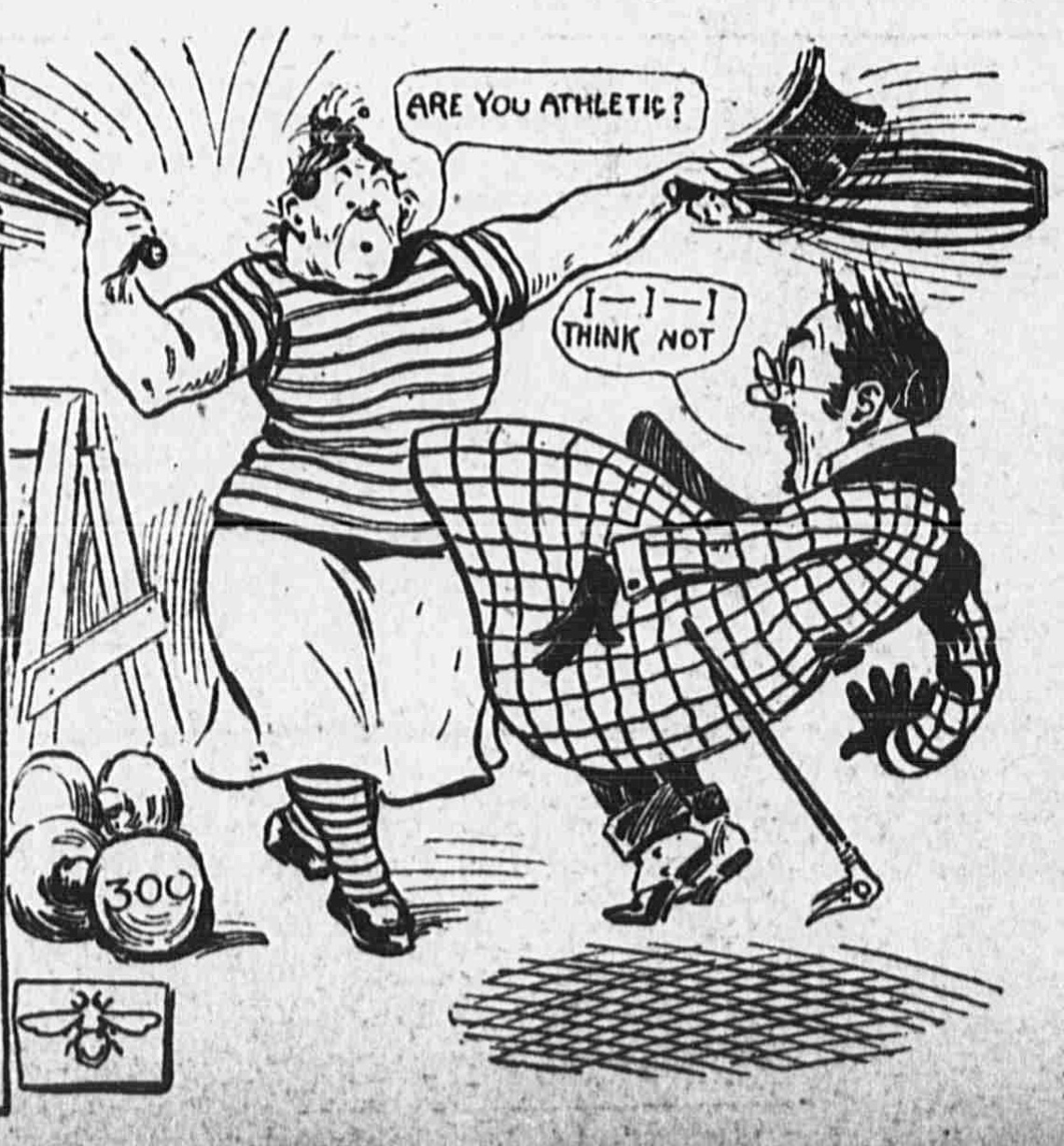
Apparently, getting a date was never easy, and the contemporary swipe-left, swipe-right mobile media is just the latest twist on an old genre – the “personals.” This short-run comics series of 1904, “Romance of the ‘Personal” Column,” in Joseph Pulitzer’s New York World reminds us that Americans were already jaded about the deceptiveness of these early versions of the dating app over a century ago. The strip followed a familiar formula. Our misbegotten suitor finds that the reality of his blind date is frighteningly different from his impression of the ad. Thus, he flees in panic; from a widow’s horde of kids, a muscle-bound athlete, and, in a racist turn that was standard in the day, a “dark brunette” who turns out to be Black. “Romance of the ‘Personal” Column” only ran a handful of times, but it is the kind of early comic strip trifle that surfaces a number of important themes in the cultural history of the first newspaper strips.
Continue reading Panels & Prose