
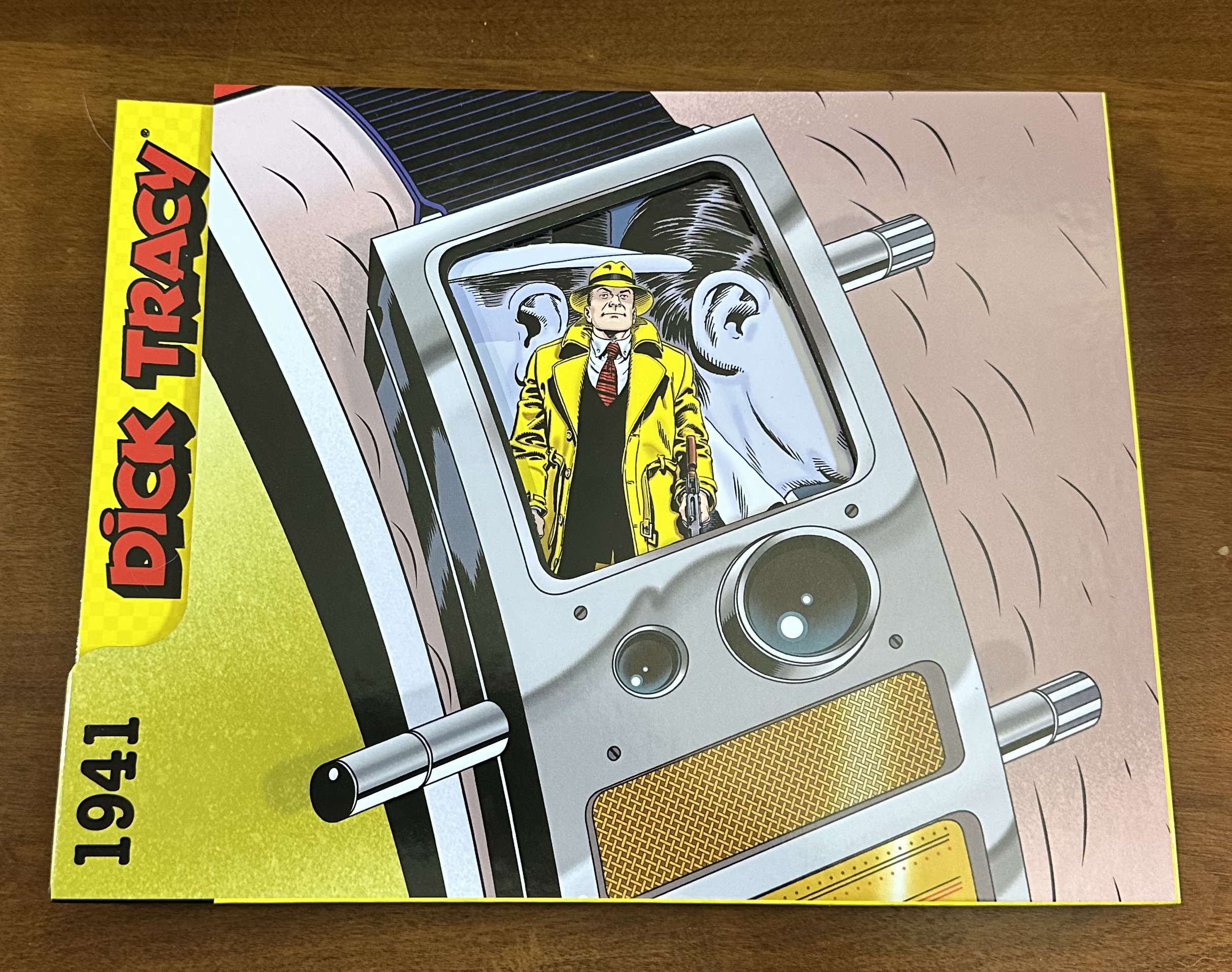
Chester Gould’s Dick Tracy has been among the most reprinted strips of all time. The reasons are obvious, and I don’t need to rehash this site’s exegesis on my personal favorite. Tracy was the strip that turned me on to classic newspaper comics. Gould’s singular visual signature, his grisly violence, grotesque villains and deadpan hero made Dick Tracy compelling on so many levels. And now we get yet another packaging style from the same Library of American Comics group that finished its magisterial 29-volume complete Gould run, 1931-77. With new publishing partner Clover Press, LOAC has reworked some of its earliest projects, like the magnificent upgrade of Terry and the Pirates and the first six volumes of The Complete Dick Tracy. And now we get slipcased, paperback editions of prime-time Gould, 1941 through 1944. Much more affordable, manageable, and available than the original LOAC volumes, each of which covered about two years of comics, the four $29.99 books are also available as a discounted set from Clover. This new series started as a crowd-funded BackerKit project last year.
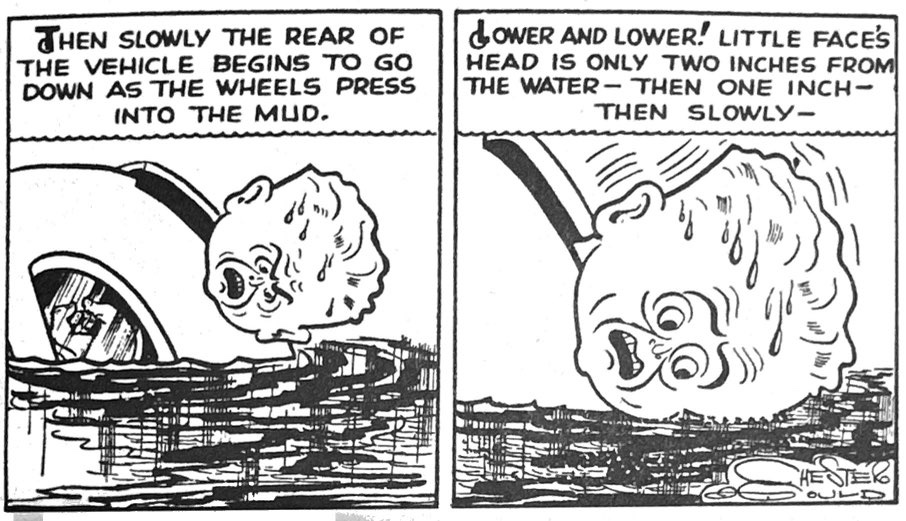
LOAC and Clover have been smart in choosing to start this series (which they tell me will be continued) with Tracy’s most famous era. With villains like Little Face and The Mole, Pruneface, B.B. Keyes, Flattop and The Brow, Gould fully embraces his Grand-Guignol vision of human evil. Likewise, his art style really hits its stride after a decade of evolution. During these years, he really locks in that unique blend of abstracted, thick-lined and flat figures within noirish, deep perspective scenes. And his unapologetic renderings of explicit violence and even sadism start to shape the strip’s overall world view. Institutionalized, retributive justice is the only response to what Gould sees as perversions of human nature.
Both editorial and design choices here seem aimed at attracting a new generation of Tracy enthusiasts, which is most welcome. I have the first, 1941, volume to review. Its 11 x 8.5-inch paperback comes in a diecut slipcase that reveals a dynamic, expressive rendering of Tracy and The Mole. Other volumes feature different artists and their takes on the strip. Personally, I am not a fan of die-cut slipcase format. Fantagraphics has been using it for its Popeye Sundays reprints. I gather these cases add some sense of value or shelf appeal to relatively inexpensive volumes. In this case, it allows contemporary comic book artists to connect these 80 year-old strips with current audiences, many of whom may never have read a daily newspaper. Ok, but generally, they are just a pain in the ass for the reader. The paperbacks never slip back easily. One corner of my copy is already fraying from jockeying it into the right angle for the snug case.
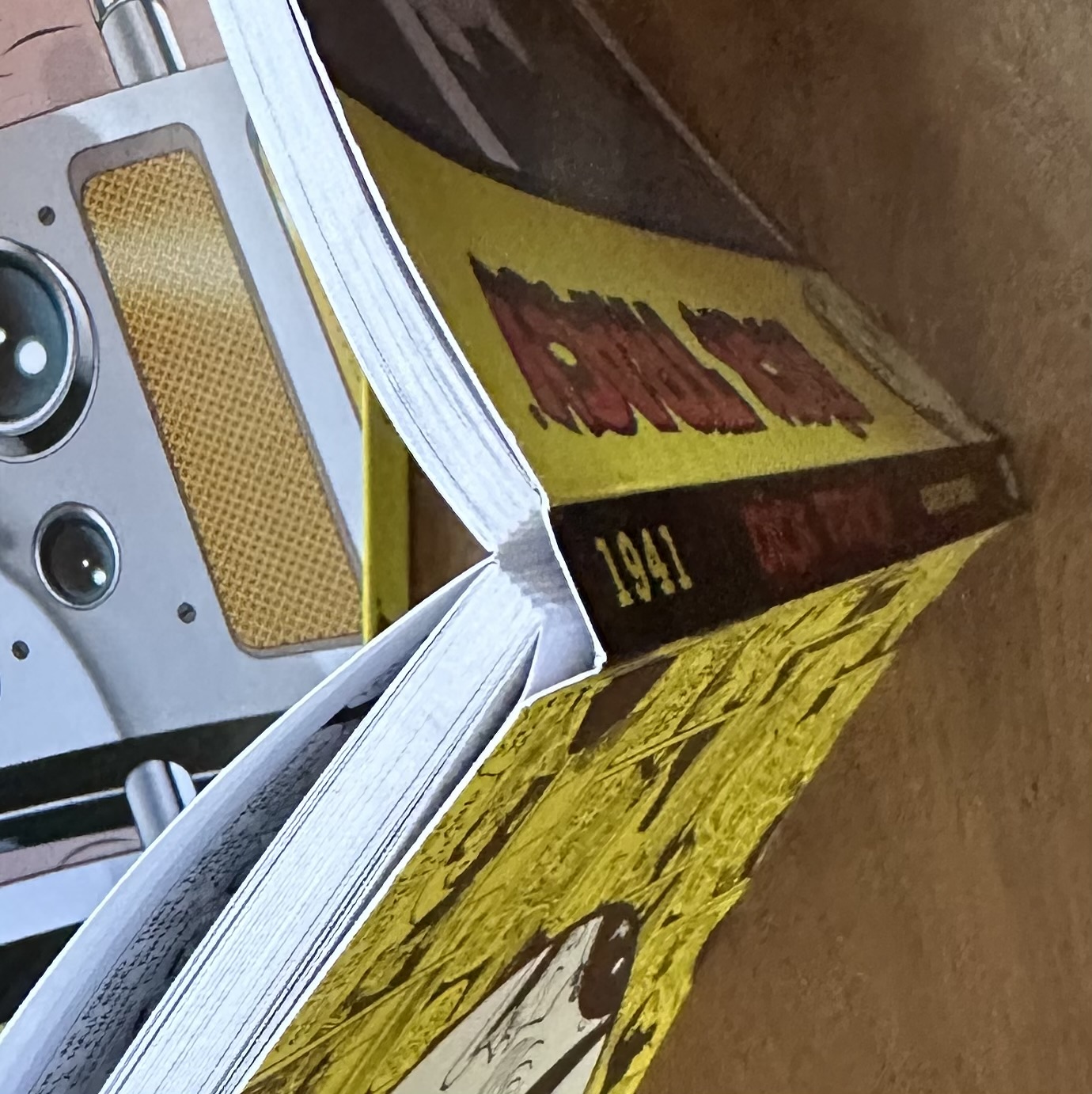
The bindings appear to be built for long term reuse and easier reading. According to Clover, the pages are both glued and sewn, and the outer spine is separate from the pages. This allows the book to be laid flat without degrading the spine, cracking the cover and ultimately losing pages. Any die-hard reprint collectors know that these are not minor matters. A number of the otherwise wonderful Hyperion classic comic reprints from the 70s suffer from pages separating from the binding, which itself has become hopelessly brittle. Likewise many of the current paperback reprints are tough to juggle and read without compromising the glued binding. Only time will tell if Clover’s is the right solution, but clearly they are thinking harder about the art of publishing reprints.
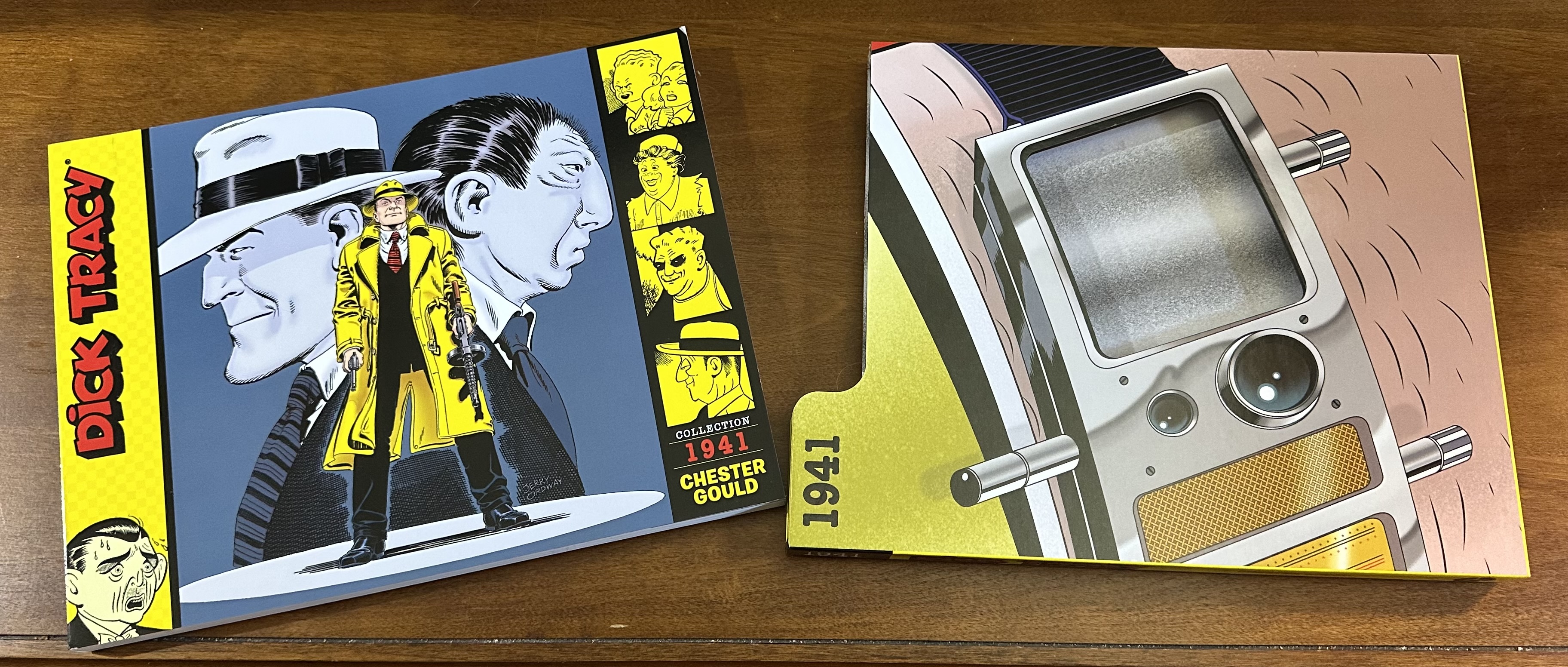
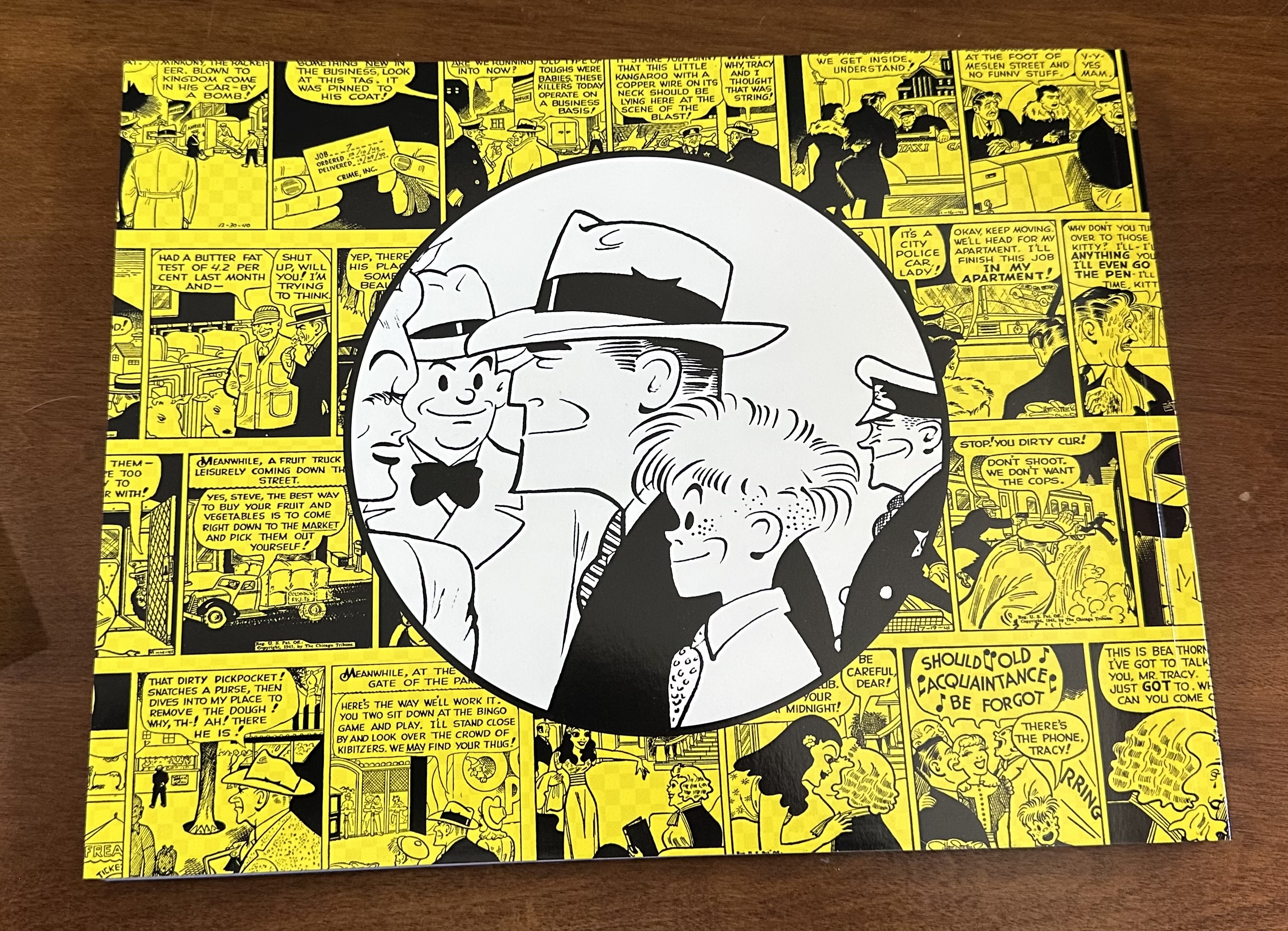
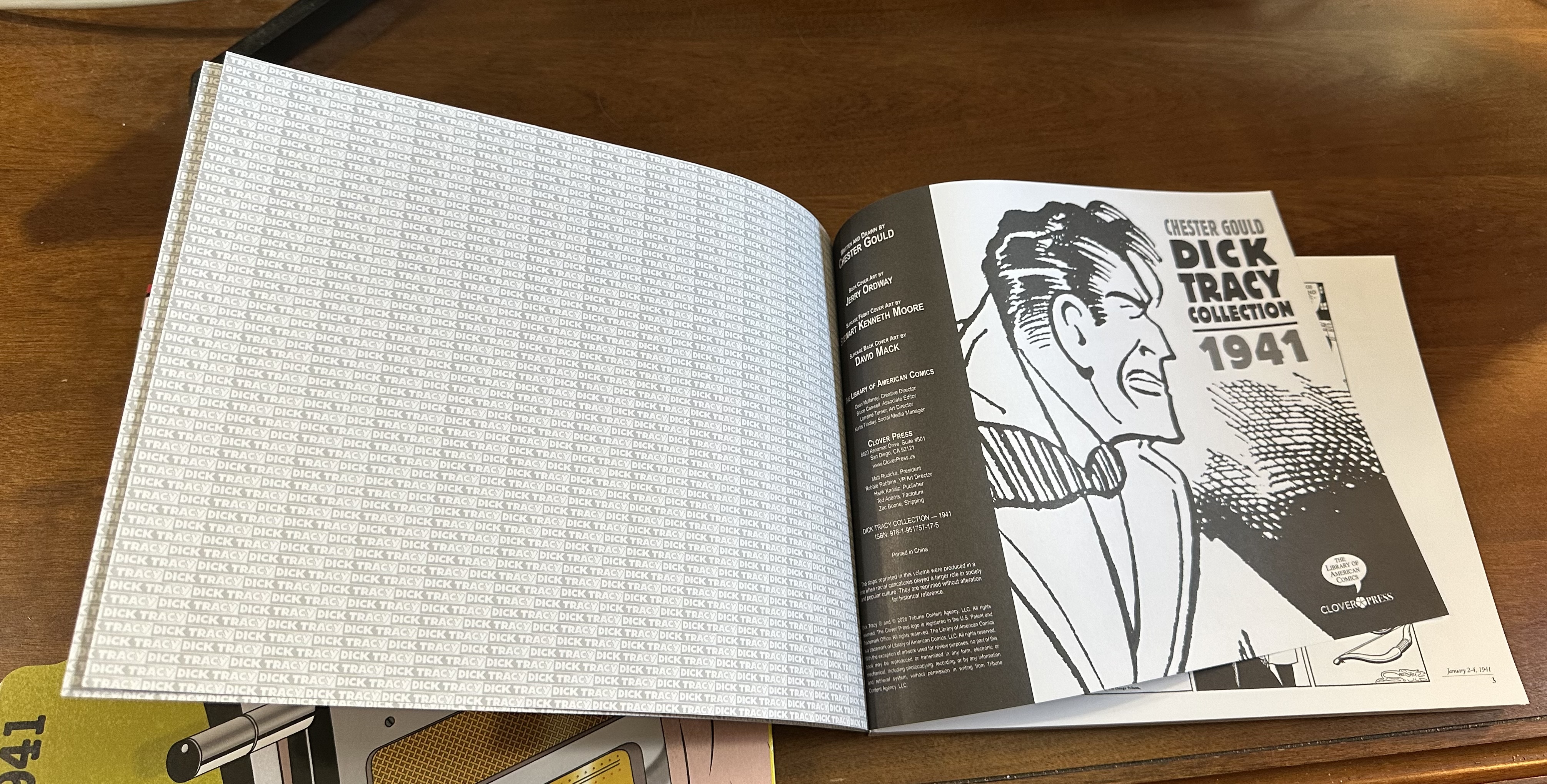
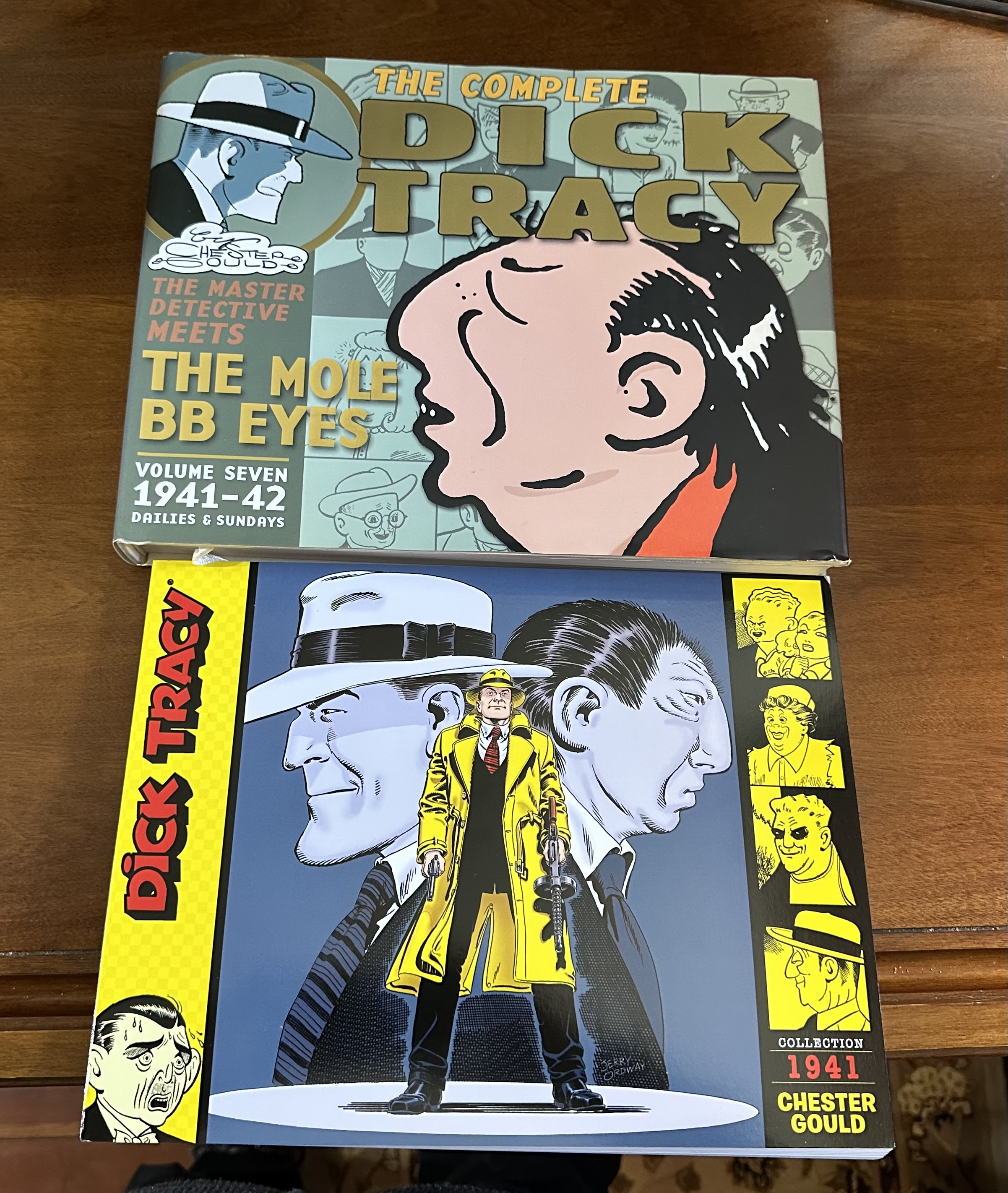
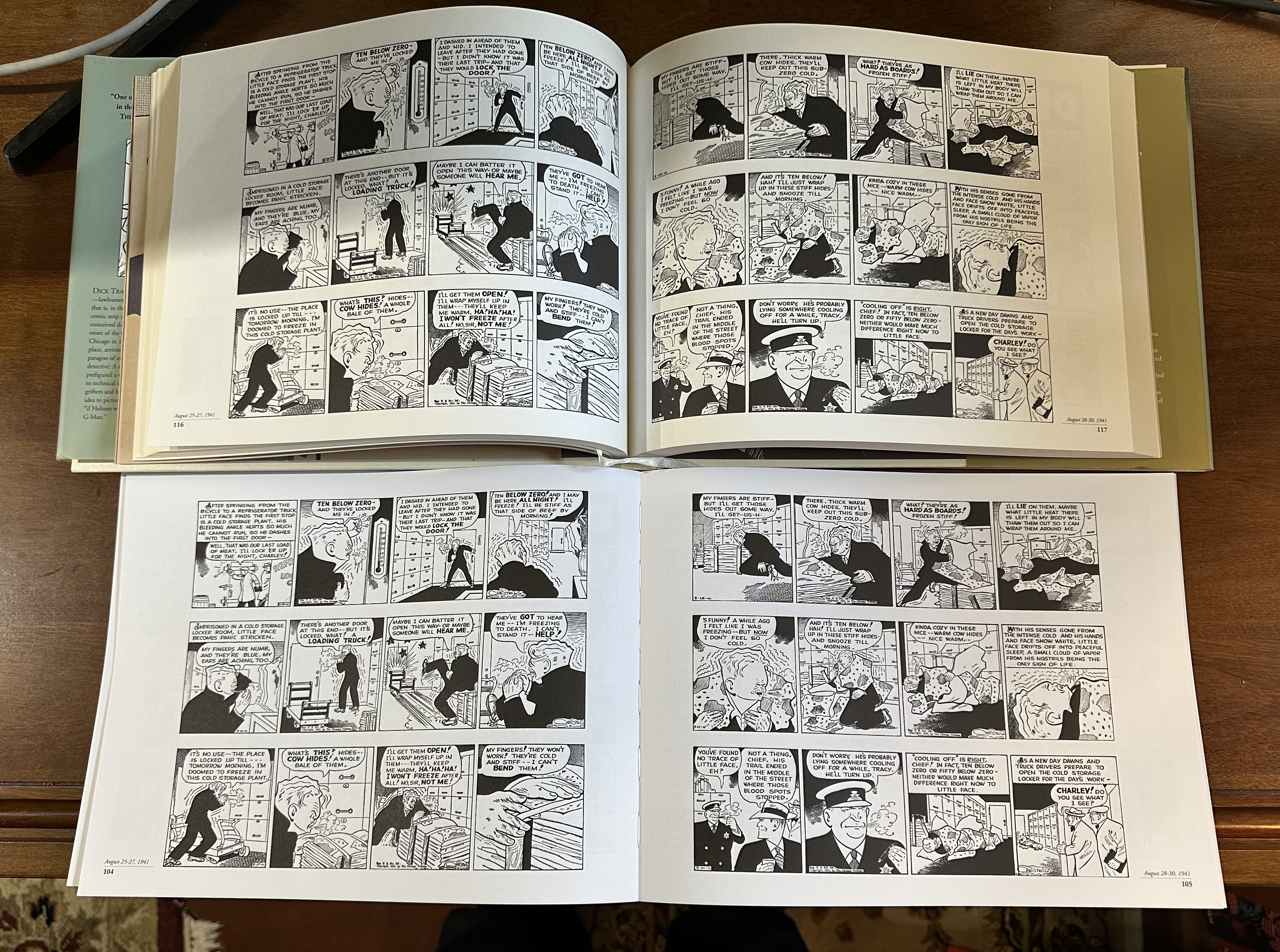
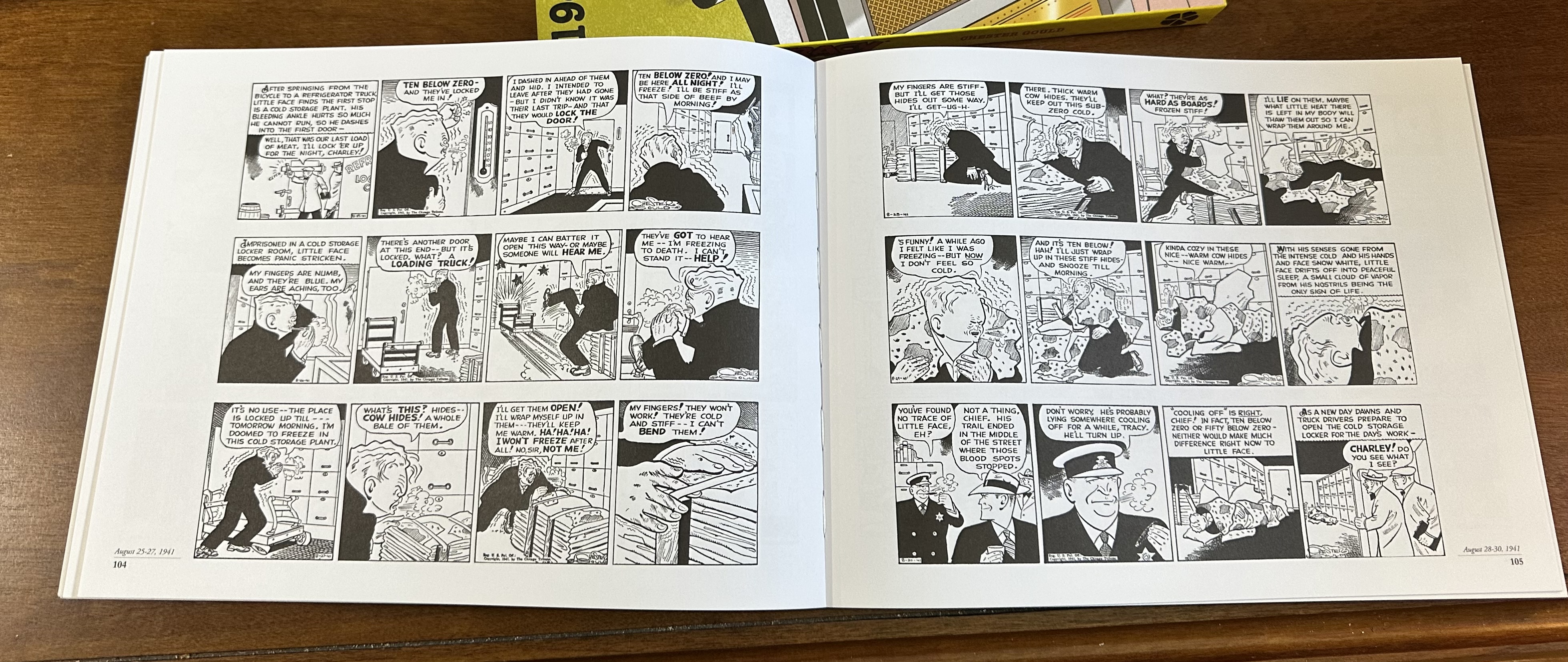
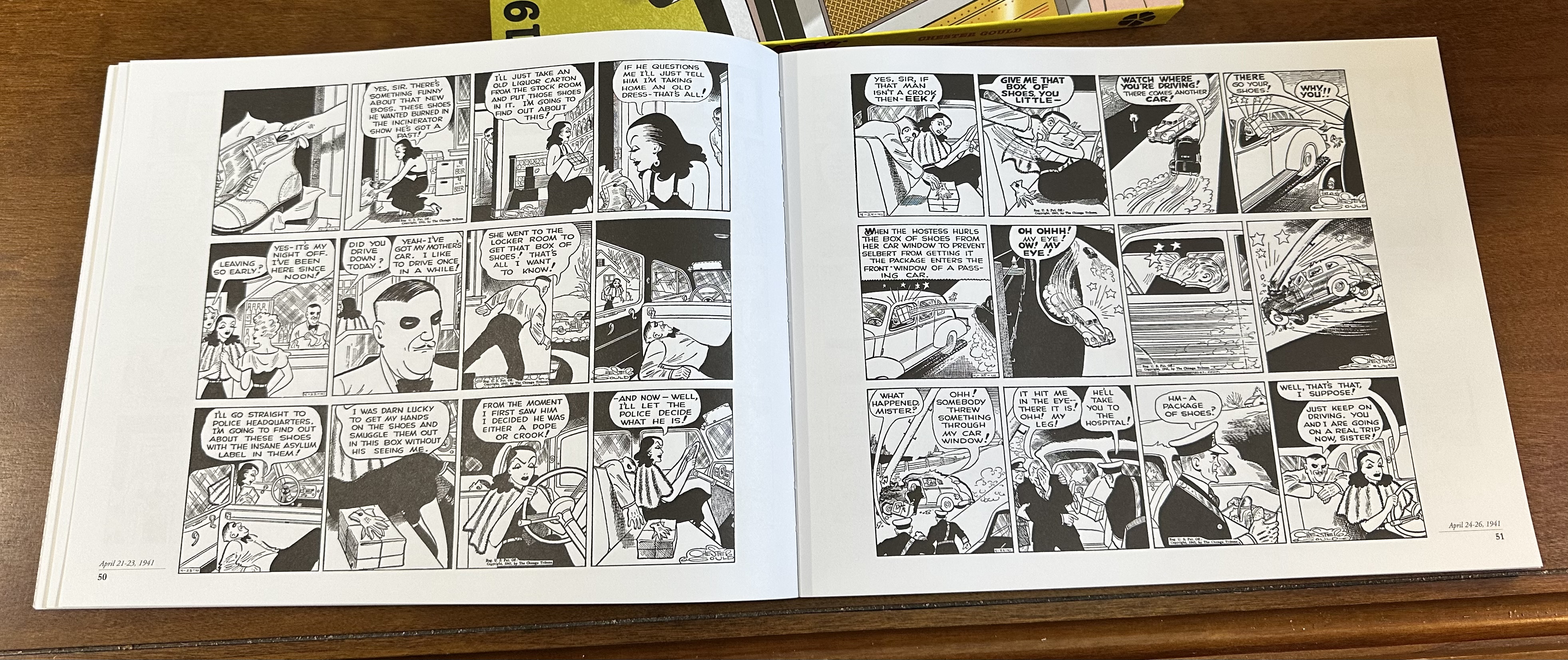
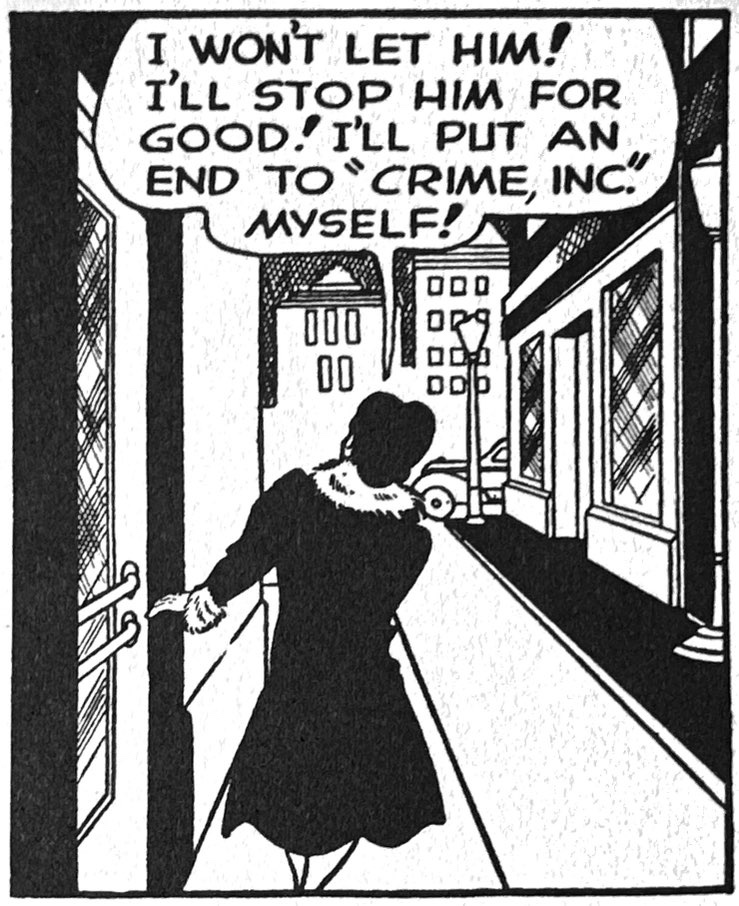
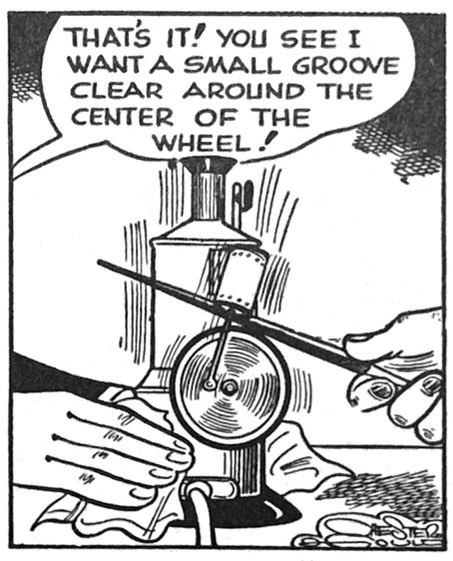
Altogether, this edition is an excellent, stripped down version of LOAC’s hardcover originals. There is no introductory or recap material – just 155 or so pages of material. These strips are just a smidge smaller in the paperback than they appear in the hardcover, but not noticeably so. (See the photos) There are three daily strips to a page, with full page Sundays also in black and white. The printing is crisp and uniform, which is no small thing when reproducing Gould’s art. His famously expansive use of blacks and shadows across his compositions are essential to the strip’s impact. At the same time, while characters and scenes often feel posterized and abstract in Dick Tracy, Gould’s art also had a police procedural aesthetic that loved to detail gadgetry and clues. A steam-powered explosive device in the “Crime Inc.” storyline, for instance, is a bonkers notion that comes to life when Gould invokes his mechanical drawing mode. This reprint gets both the fine lines and swathes of inky blacks just right.
Any excuse to dive back into Dick Tracy is a good one. And this is an exceptional reprint that refreshes the Gould legacy. And the larger project here seems to be introducing a decades-old classic to a new generation of readers. Clearly the success of the original BackerKit campaign suggests sufficient interest in reprinting Dick Tracy, yet again, to move forward. Let’s hope these volumes find their way into the hadns of younger comics fans and artists.
Discover more from Panels & Prose
Subscribe to get the latest posts sent to your email.
 Panels & Prose
My only complaint and the reason I am not buying these reprints, after missing out on the LOAC HC’s is the modern artists interpretation of Tracy and his villains. Gould’s art is so distinctive that anyone else doing his classic rogue’s gallery loses the appeal of what made Gould’s art his and his alone. I hope a reprint will correct this in the future.