

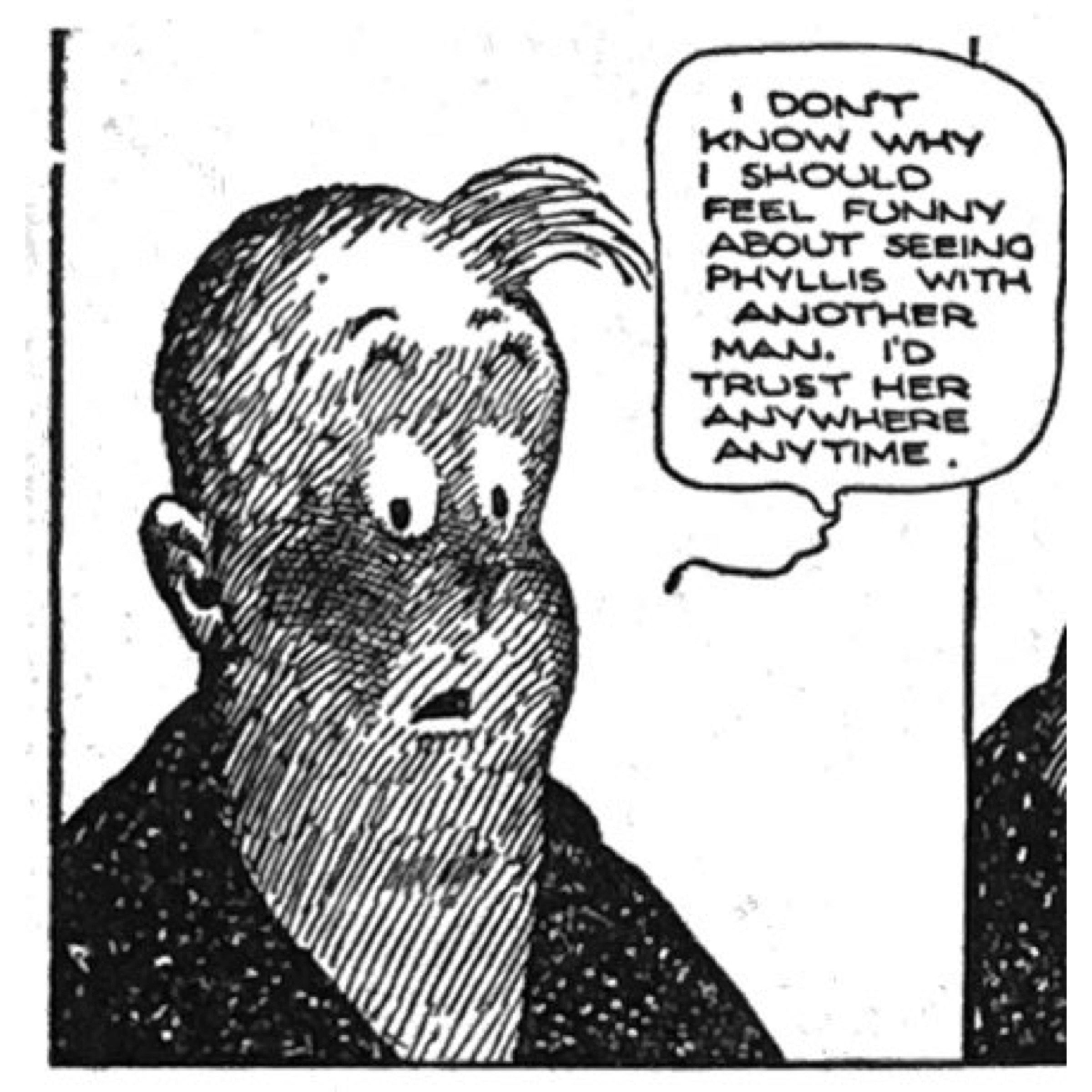
If you let the original art designer of The New Yorker loose on the Sunday comics page, then Rea Irvin’s The Smythes is pretty much what you would expect to get. For six years in the early 1930s, Irvin rendered the foibles and class anxiety of upper-middle class ex-urbanites Margie and John Smythe with impeccable Art Deco taste and reserve. Could we get anything less from the creator of Eustace Tilley, the monocled, effete and outdated New Yorker magazine mascot who appeared as the inaugural cover in 1925? Irvin was also responsible for the design motifs and even the typeface (“NY Irvin”) still in use at the fabled weekly. And The Smythes newspaper strip carried much of that magazine’s class ambivalence and self-consciousness, its droll observational humor, as well as its lack of real satirical edge. The Sunday feature ran in The New York Herald Tribune from June 15, 1930 to Oct. 25, 1936. It was among the most strikingly designed and colored pages in any Sunday supplement, even if its humor may have been too dry for most readers. Beyond the Trib, The Smythes only ran in about half a dozen major metros.
Continue reading


 Panels & Prose