
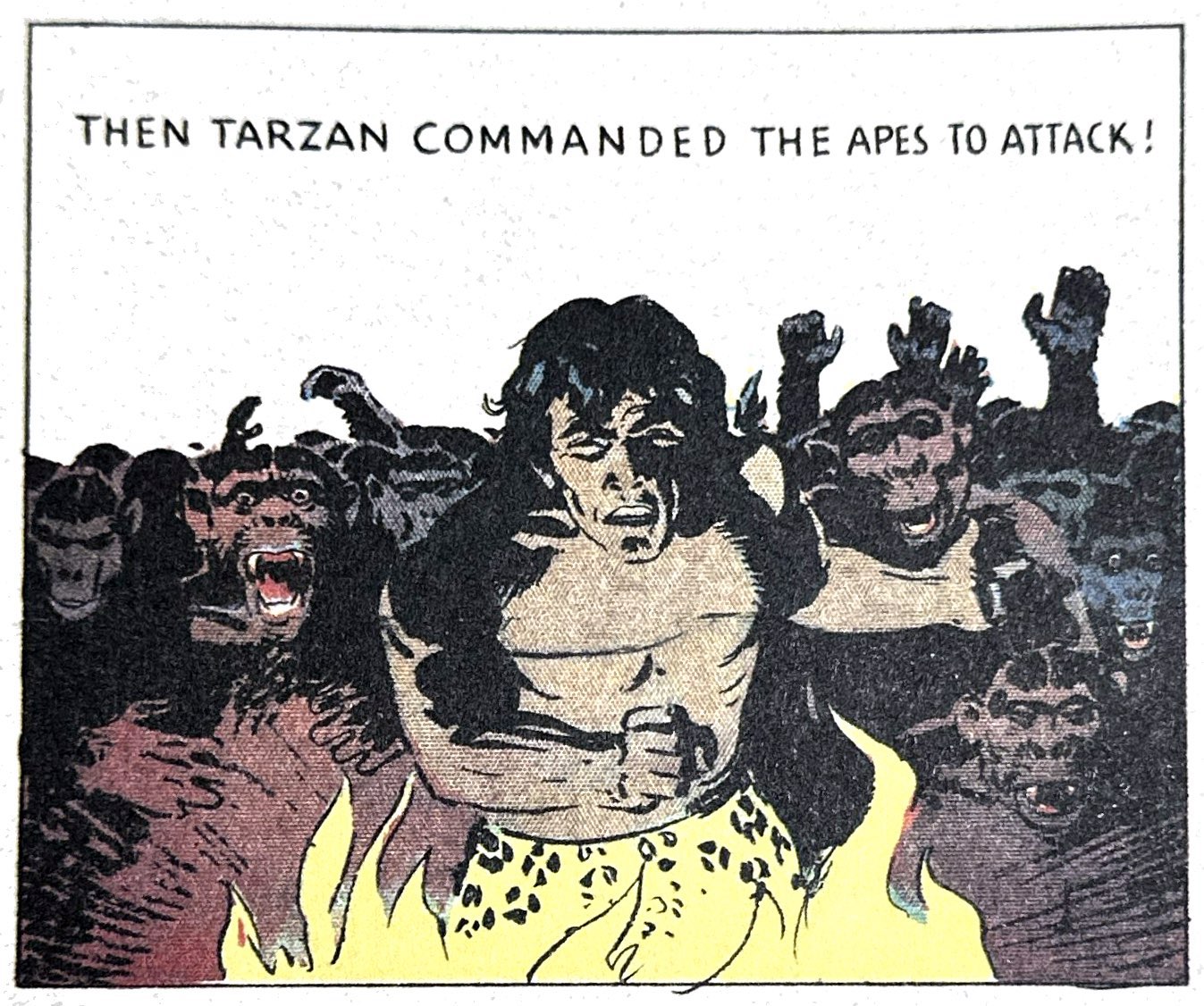
We could easily frame Hal Foster’s 1931-1937 run of Tarzan Sunday comics merely as a pleasant preamble to his magnum opus, Prince Valiant. By his own admission, Foster was a reluctant cartoonist. The successful magazine and commercial artist carried that world’s condescension towards the comic strip. Famously, he quipped in 1984 that being invited to replace Rex Maxon on the Tarzan Sundays was “To be asked to sell my birthright for a mess of pottage.” But the Great Depression had hit advertising and print media hard, so Foster took the life raft. But as TASCHEN’s new and definitive reprint of his Tarzan years shows, Foster was doing more than warming up. Others like Frank Godwin and Nell Brinkley had already started to introduce less cartoony, more illustrative styles to comics pages. But Foster brought into the mix dynamic, realistic figure art, a remarkable attention to color, and an appreciation for spectacle that newspaper Sunday pages hadn’t seen since the earliest years of experimentation by the likes of McCay and Feininger.
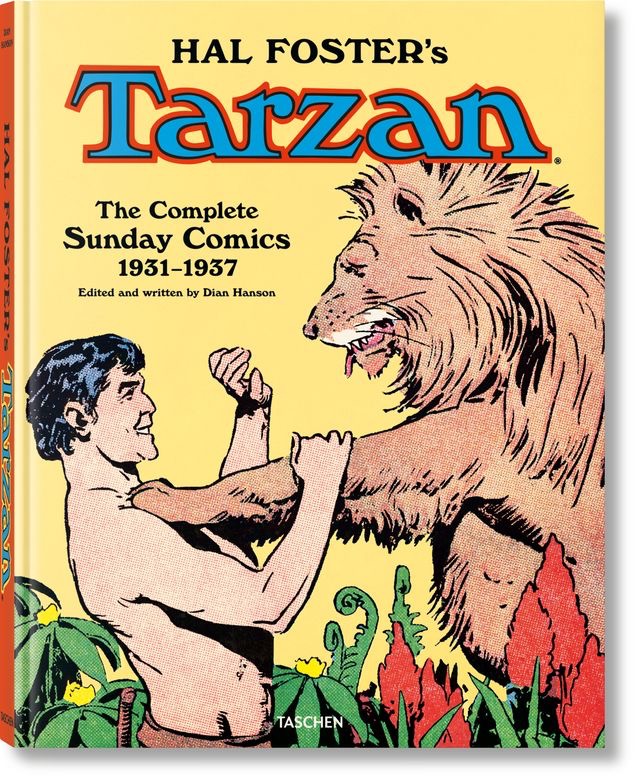
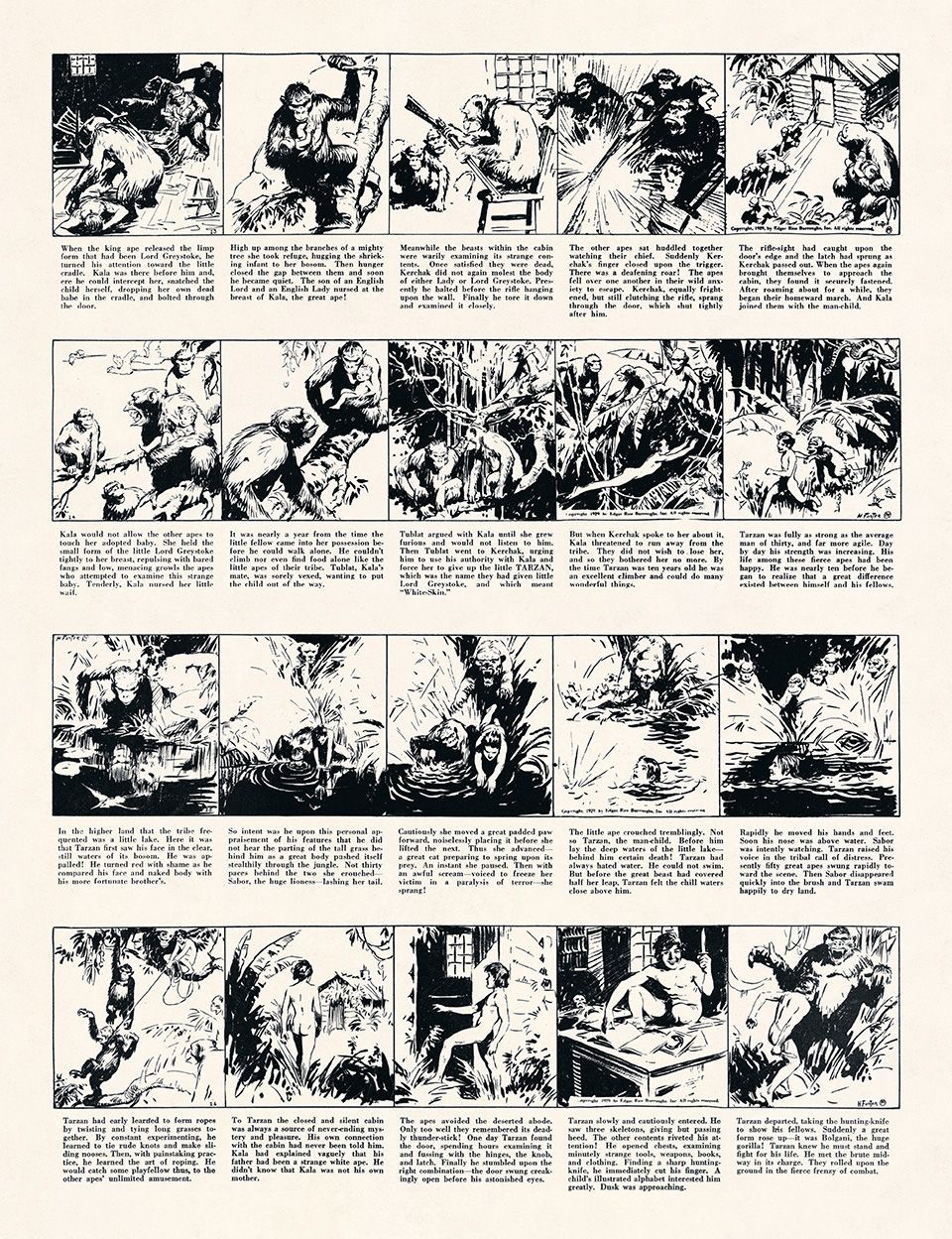
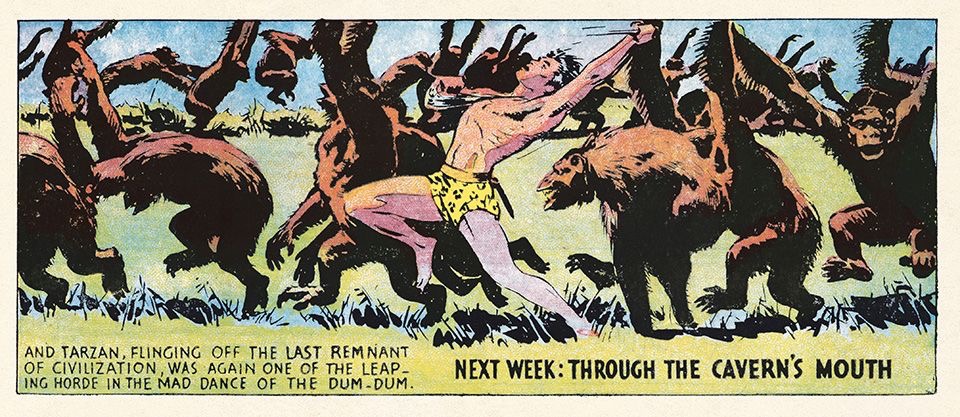
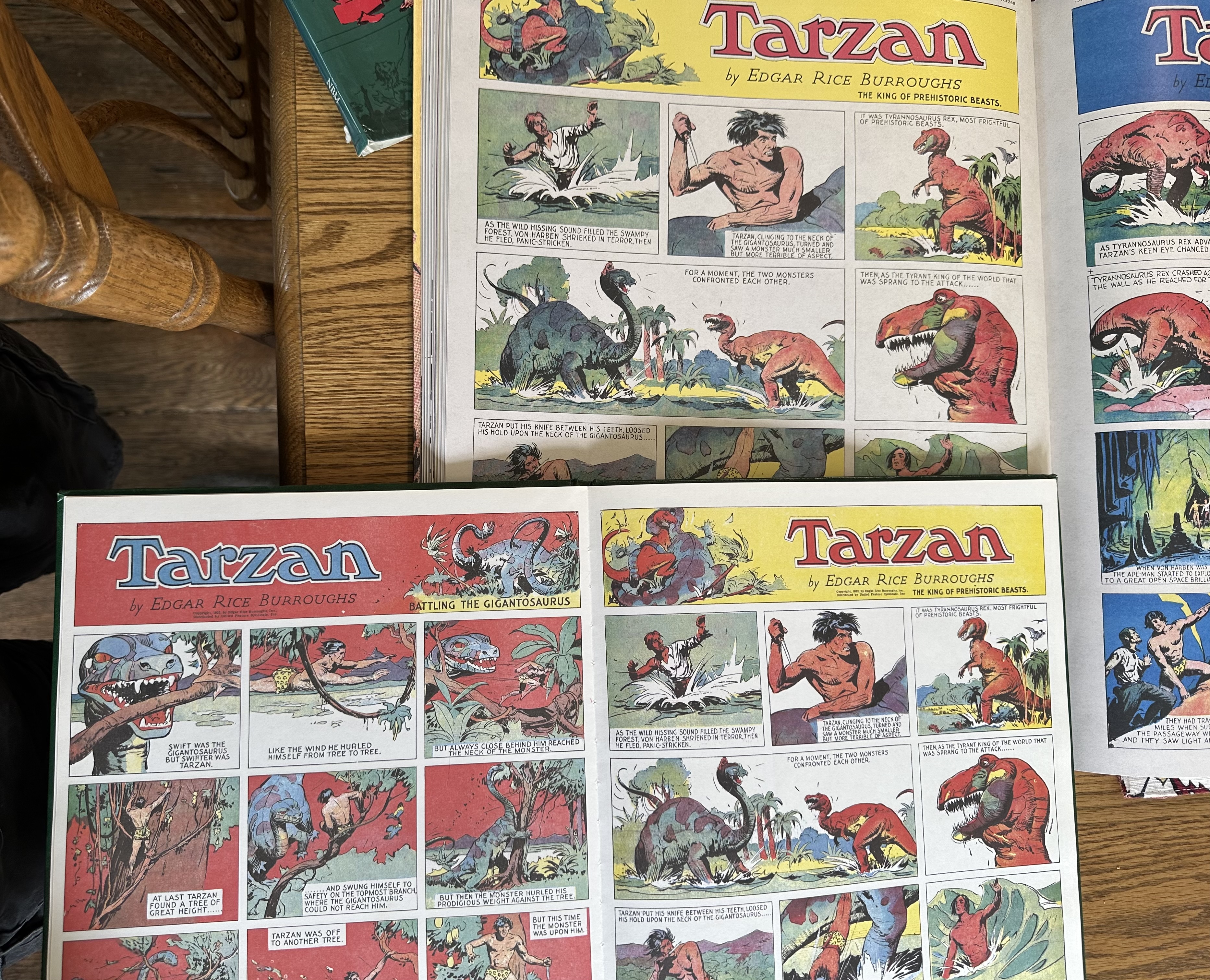
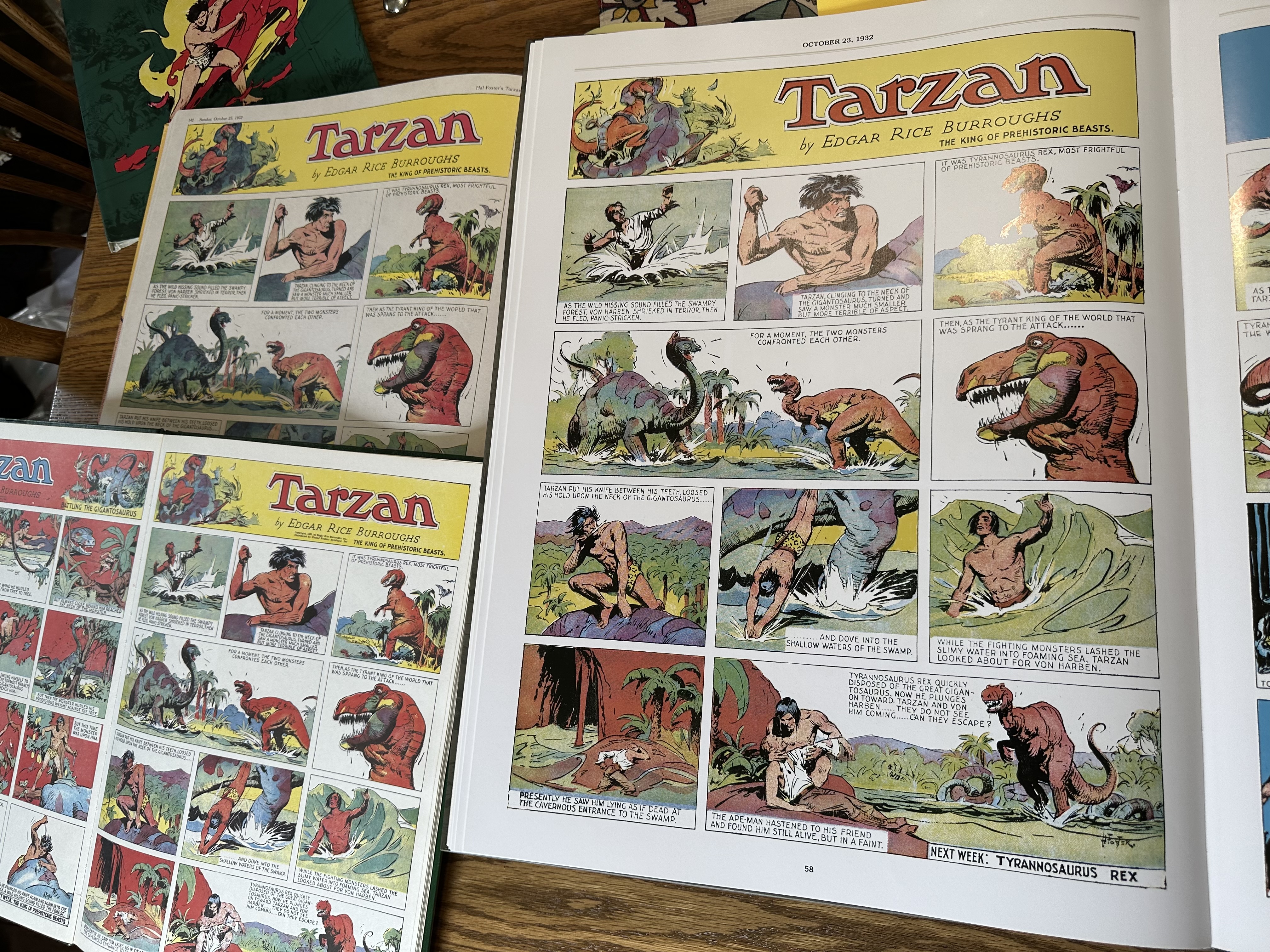
Every TASCHEN release demands weighing in (literally) the basic specs. Part of its XXL-sized series, Hal Foster’s Tarzan. The Complete Sunday Comics 1931–1937 ($200) uses the same 13.5 x 17.3-inch dimension of the company’s recent reprints of EC and Marvel classics. But at 392 pages, it is a bit slimmer than the others and comes in at just under 12 pounds. Still – no lap read this. In addition to an able intro by TASCHEN’s own senior editor Dian Hansen, this goliath also includes the full 60-episode Tarzan daily sequence that Foster had done in 1929, which brought Edgar Rice Burroughs’ pulp phenomenon to newspapers. And then, of course, we get 5+ years of color Sundays reproduced from newsprint and enhanced in the pleasing style TASCHEN applies to most of its comics reprints. The matte, vaguely pulpy paper stock feels a bit like newsprint, as do the well-resolved Ben Day dots and muted blacks. I have come to appreciate TASCHEN’s restoration technique. It smooths the rough edges of the original low-res comics medium, amps up the detail and vibrancy just enough to pop, but never falls into the garishly over-processed style we often see elsewhere. Compared to previous versions of this material from NBM and Dark Horse, this version lets Foster’s line detail come through and best captures his thoughtful and subtle coloring.
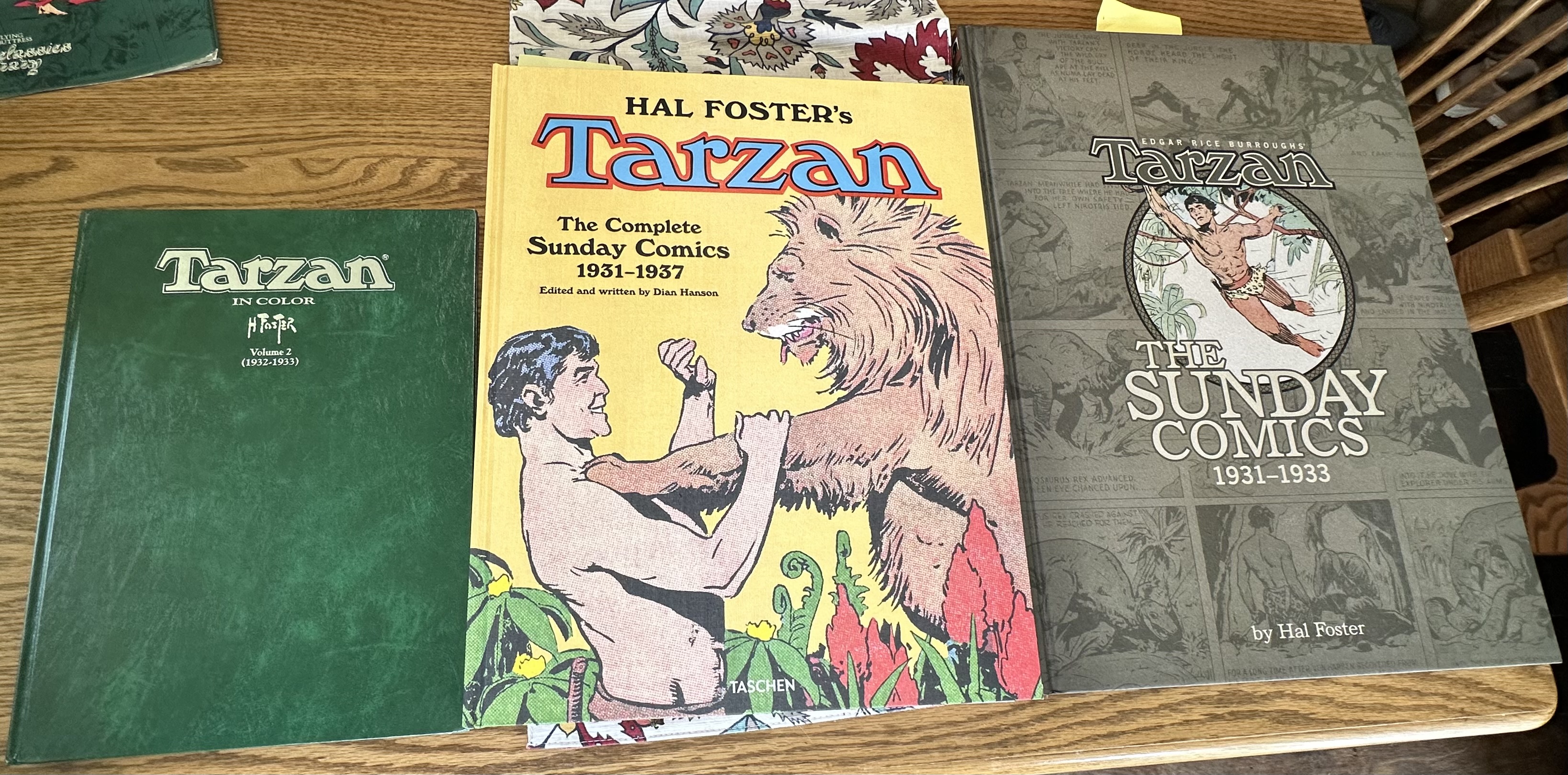
Despite misgivings about the Tarzan assignment, and persistent, deserved dislike for its storylines, Foster flexed his talents in interesting ways. Hansen, who characterizes the artist’s Canadian childhood as “feral,” underscores his lifelong love of nature, survival skills and wildlife. His figure modeling was self-taught from mirror drawing his own nude body. Tarzan married all of these passions in depicting a mostly naked penultimate survivalist bounding through diverse African landscapes. More than Prince Valiant, Foster’s Tarzan panels immerse us in a lush natural environment contrasted with a lithe, muscular action figure in perpetual motion. It is a sight to behold, and Foster was answering some of Burroughs’ complaints about Maxon’s underpowered Tarzan. More than that, arguably his loinclothed athlete helped establish visual templates for the overdressed superheroes on the horizon.
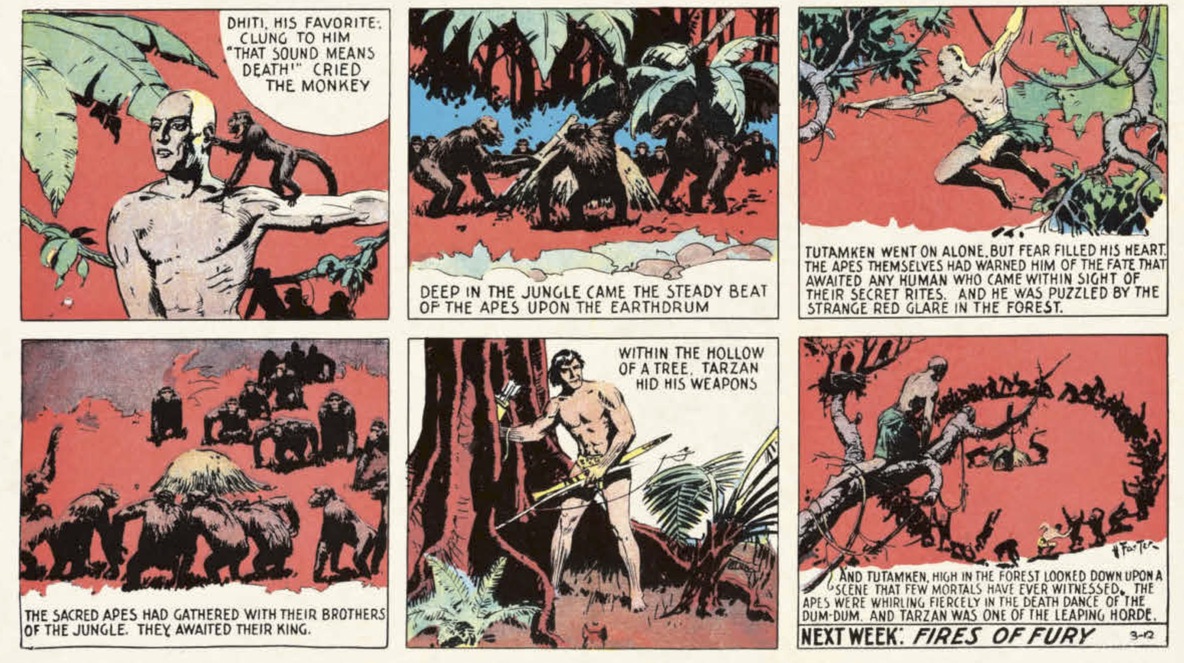
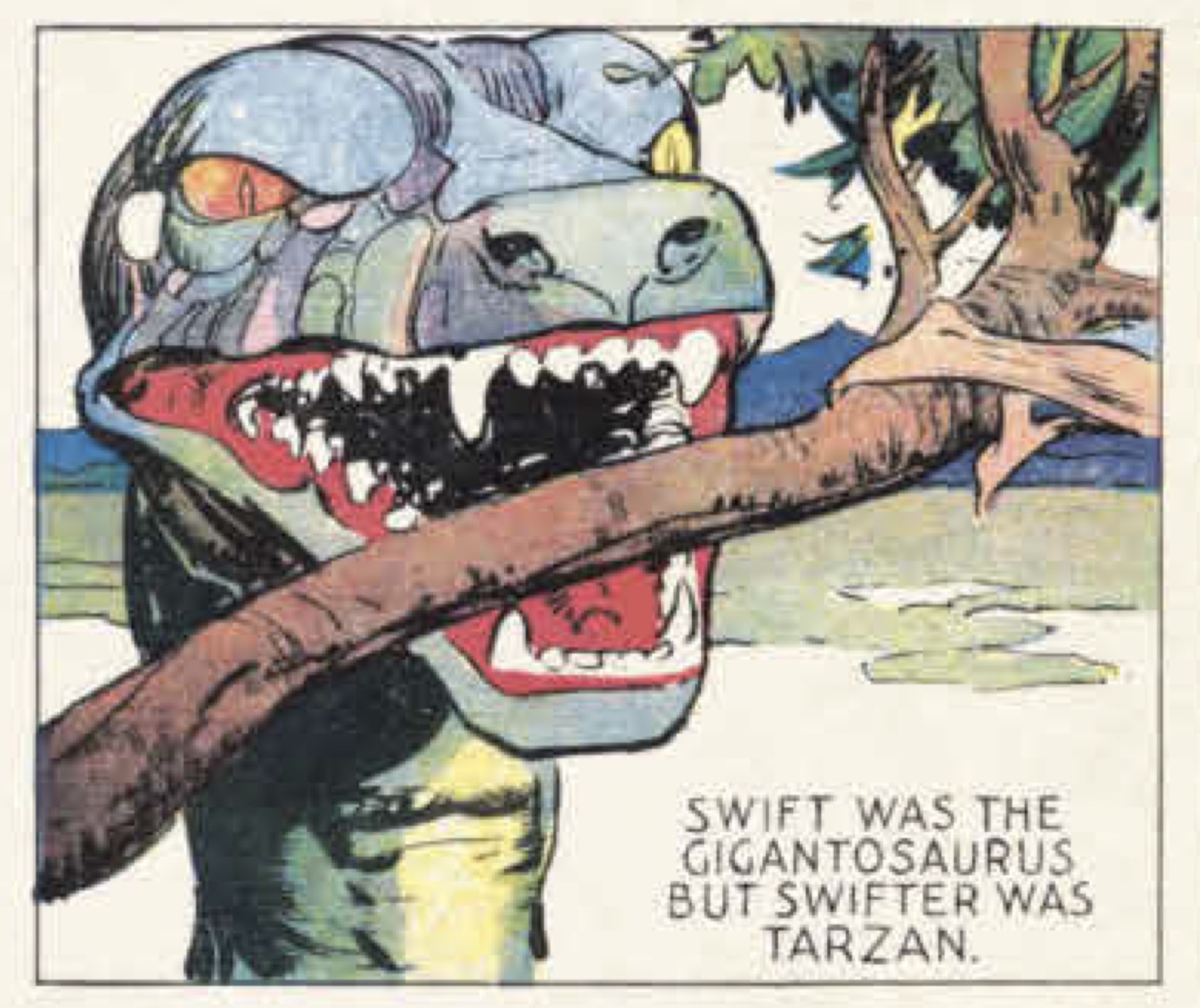
These five years of Tarzan reveal an artist thinking hard about the potential of a full Sunday page. Taking exception with newspapers brutalizing his palette, Foster started providing detailed color guides for every strip. This allowed him to frame his fleshy Adonis in layers of jungle foliage to great effect and with depth. In a 1932 encounter with dinosaurs (yep, dinosaurs!), Foster blends swathes of greens and blues to make his slimy prehistoric ooze palpable. In later years, he would discover the potential of seascapes and again use shading and detail to make us feel imperiled by receding frothy peaks. His regular use of blood reds to heighten tension and dread is most visible. In fact, he makes that connection between color and mood explicit in one of the most famous prolonged story arcs during these years. An Egyptian Prince goes in search of Tarzan amid “the strange red glare in the forest,” which Foster reiterates panel after panel. (March 12, 1932). In Prince Valiant, natural landscapes tend to serve as spectacle. In Tarzan, nature is more of a character in the story, a lush frame for action and a set of tools for the resourceful Tarzan to exploit.
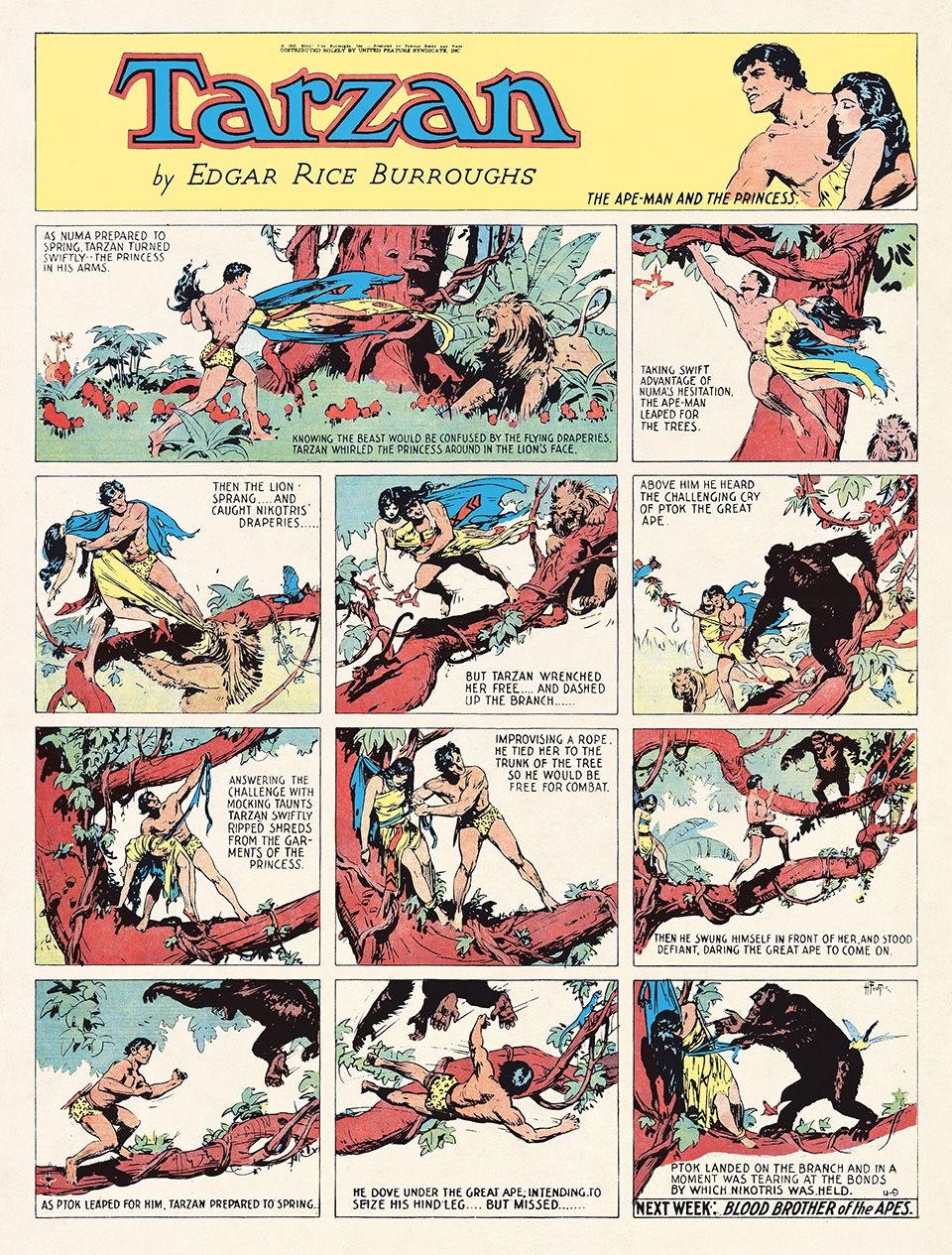
Here Foster renders both animals and action in ways rarely seen in his later epic. As many have argued, Prince Valiant was more an illustrated story than a comic strip in the familiar sense. In Tarzan, however, he plays with panel-to-panel sequencing and cadence, sometimes to tedious lengths. The prolonged wrestling matches with pumas, crocodiles, and giant apes (oh so many apes) demonstrate his skill at finding those peak moments of muscular tension. The animal rendering is impressive. He finds countless ways to frame the enormity of an elephant, the coiled power of big cats and the sub-human expressiveness of apes. In her intro, Hansen tries to argue for the erotic power of Foster’s many princesses, queens and maidens. Frankly, I don’t see it. Compared to many other adventure artists like Alex Raymond and Milton Caniff, Foster was a soft-porn piker. Tarzan’s muscularity, however, was an important contribution to the visual lexicon and helped edge us towards the superhero physiques to come.
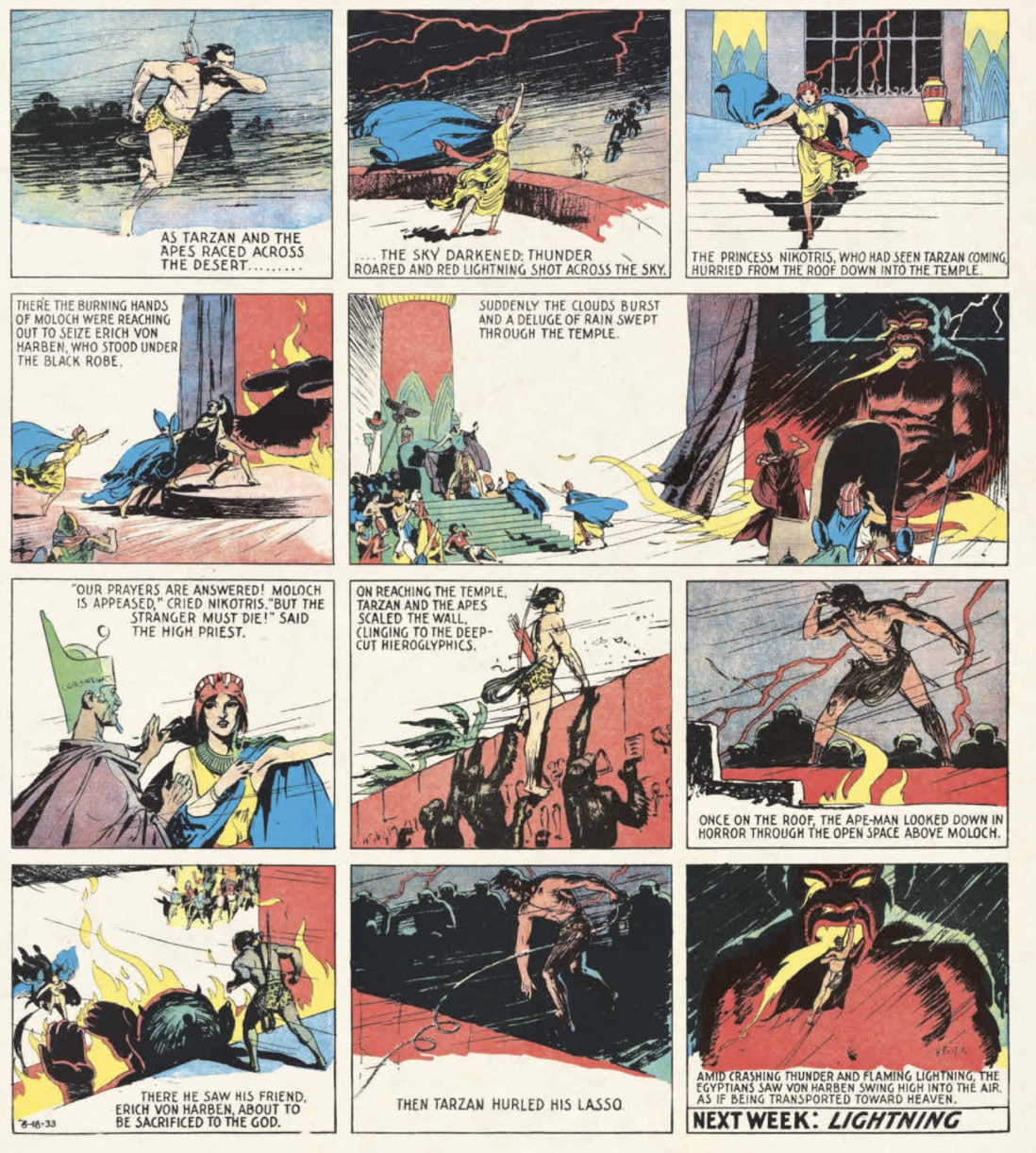
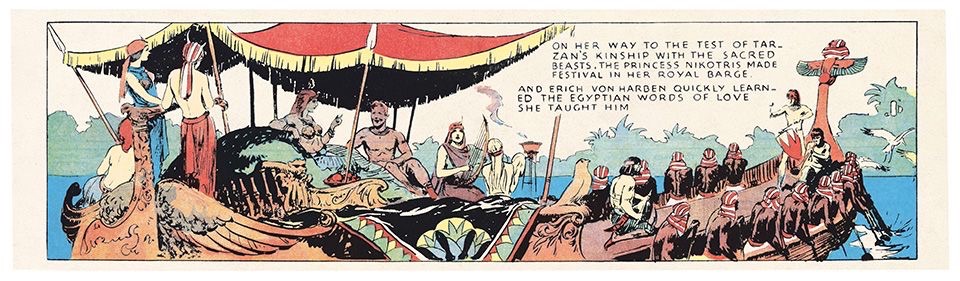
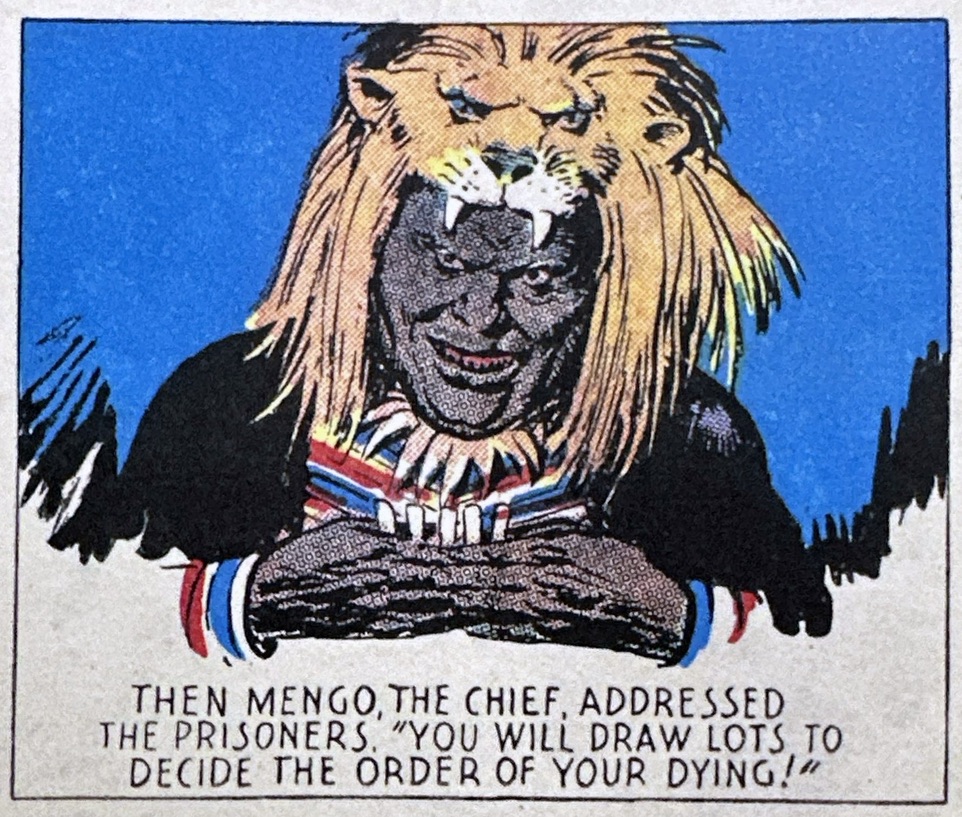
Consider also that Foster made these artistic strides within often risible scripting by syndicate editors George Carlin and Don Garden. Burroughs himself, who monitored the strip closely and had helped excise Maxon, was frustrated by the stories. They often move frenetically from peril to peril, cliffhanger to cliffhanger with the cadence and illogic of poor film serials. Tarzan’s communication with animals approaches Dr. Doolittle silliness. The plots generally turn Africa into a time machine of lost civilizations – Egyptians, Norse Vikings, Hun-like warriors, and of course the Black natives who are infantilized to breathtaking lengths. Foster complained about the geographic accuracy of the animal mix. And even among the bland heroes of 30s pulp and comic fiction, Tarzan is remarkably vague as a person. Generally the strip has characters without much character. Burroughs seems to throw up his hands at one point when a Boston paper complained about the brutality of Foster’s art. “The success of the Tarzan stories appears to be the result of a human weakness for gory and gruesome situations,” he writes the syndicate. Towards the end of his Tarzan run we do see Foster develop the skill for visualizing villainy in nuanced close-up, which would become a fixture of Prince Valiant.
Without control over what he was depicting (let alone why), Foster’s hunger to craft a deeper, more personal strip is understandable. And his ennui is evident on the page. Except for a good aerial adventure in the final year of the strip, the artist appears to be phoning it in by the time he left.
The whole Tarzan enterprise is so self-serious, there is little room for wit let alone irony. The storylines, characters and settings in Buck Rogers, Flash Gordon, Mandrake the Magician, even Dick Tracy at least have a bonkers, campy quality, a quality that Burroughs’ world never countenance.
Tarzan was lucky to attract artists like Foster and then Burne Hogarth who could make its underlying premise more exciting. While any fans of the medium are used to the political incorrectness of early 20th Century strips, the cultural politics of Tarzan are particularly rough. Countless pop and cultural historians have noted how Burroughs’ blue-blood primitive appealed to contemporary American anxieties. As historian John Kasson argues, the Tarzan mythology was all about modern men imaginatively retrieving masculinity that felt lost to modern comfort and bureaucracy. That search for the modern “perfect male” specimen was expressed in the wild popularity of Houdini as well as vaudeville bodybuilding sensation Eugene Sandow. This reclamation was racial as well, an unabashed attempt to reassert white, Anglo-Saxon male superiority in a new America of mass immigration. 1“John Clayton, Viscount Greystoke” (a.k.a Tarzan) checked a lot of boxes. As the comics in this collection attest, depicting non-white characters as inherently irrational, impulsive, and naturally un-democratic was a reflex for this genre. In the cartoon fantasy life of 1930s America, the natural right of kings was de riguer. Even among the ancient civilizations Tarzan meets, the people inevitably become “hordes” and “mobs” easily swayed by demogogues, just like the jungle tribes and ape colonies. The answer always in this imperialist fantasy is a benevolent white “lord.”
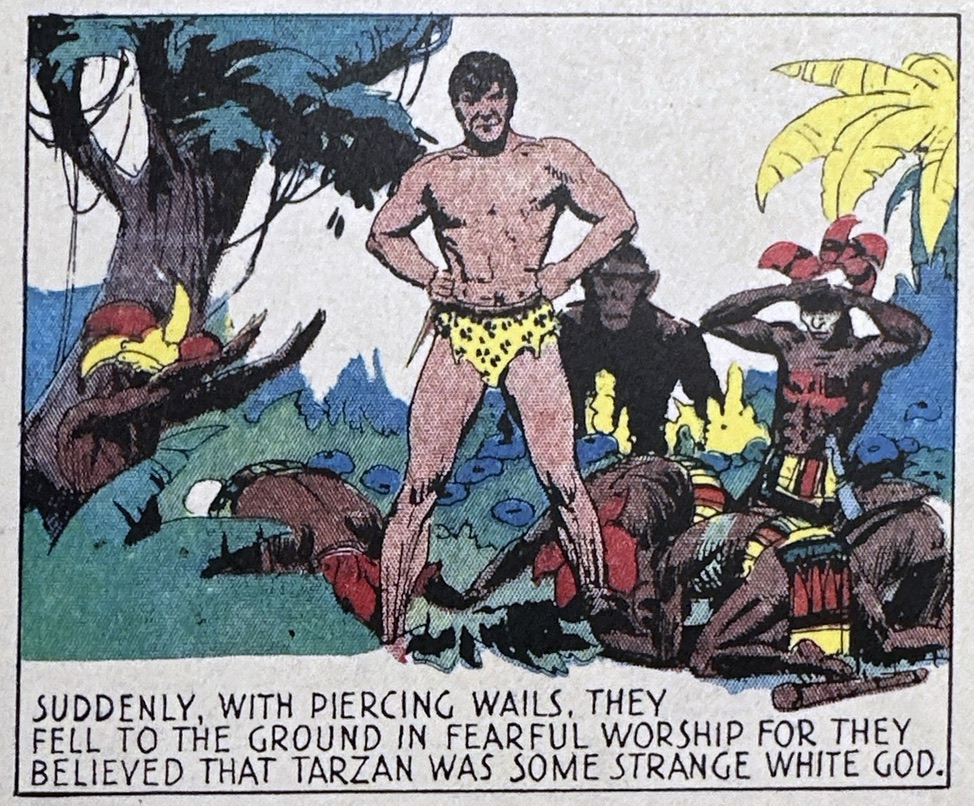
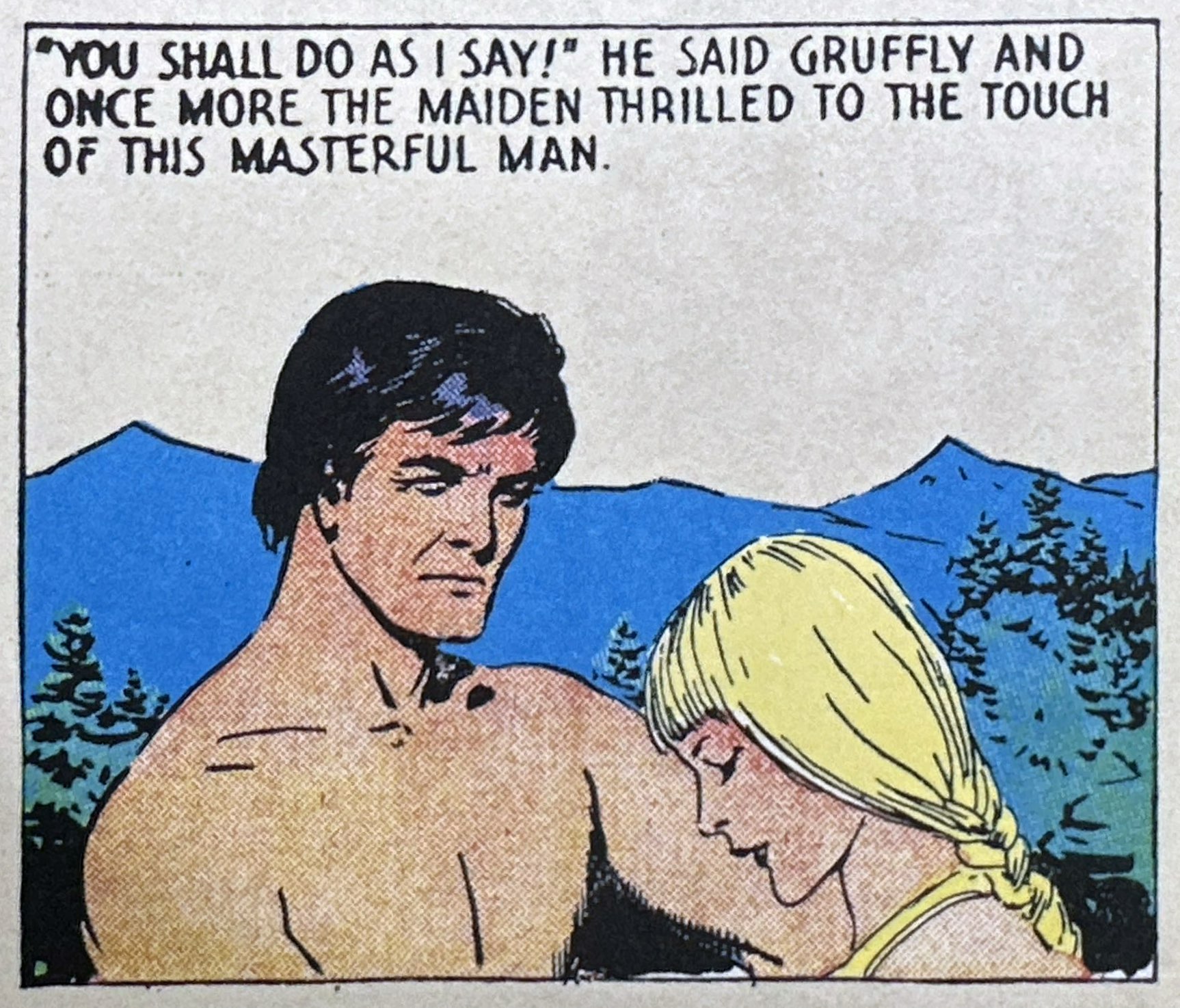
As is true in the best of popular culture, Tarzan reconciled in fiction deeply felt conflicts in the culture. He was of noble blood but drawn back to primitive existence. He had predatory and murderous abilities but a natural do-gooder’s mission. In these comics he even saves baby chimps and innocent gazelles from predators. He liberates a slave ship before it can sell its human cargo. Primitivism and a high moral nature somehow co-exist here. The red tooth and claw laws of survival in uncivilized nature seem compatible with the Lord of the Jungle’s sense of fairness. Tarzan’s century-long endurance as a character is a testament to our ongoing ambivalence over modernity itself. But it is also one of the best examples of how popular fiction allows us to reconcile in cultural fantasy what is irreconcilable in reality. Like the comic book superheroes that followed in his barefoot steps, Tarzan is the kind of cultural fantasy of reclaimed masculinity that is so eccentric it often feels more performative than engaging or real. But to Foster’s credit, he outfitted this skeletal myth with the kind of muscles, movement and suggestive sexuality that would help him endure for generations.
- Kasson, John. Houdini, Tarzan, and the Perfect Man: The White Male Body and the Challenge of Modernity in America. New York: Hill and Wang, 2002 ↩︎
Discover more from Panels & Prose
Subscribe to get the latest posts sent to your email.


Pingback: “Demented Woman Drops Thirty Feet…And Lands on Policeman’s Head” – Panels & Prose