Get Me to The Church on Time: Decoding the Postwar Cartoon Marriage Boom

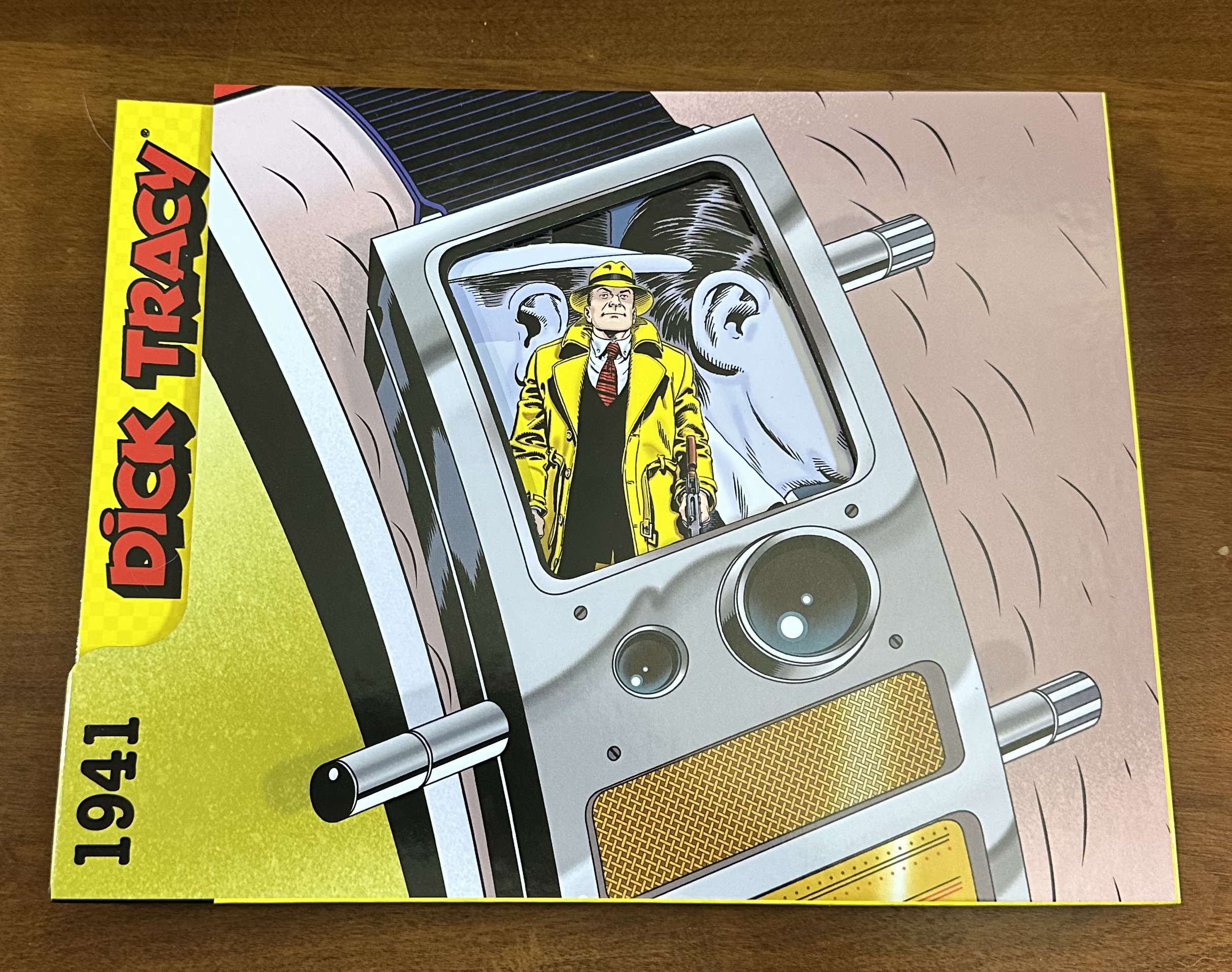
“It is a old comical strip trick – pretendin’ th’ hero gotta git married.” It keeps “stupid readers excited,” Li’l Abner claims in 1952. Days later he unwittingly weds Daisy Mae, ending a nearly 20 year tease. But this time it was no “comical strip” trick. In fact, several perennial bachelors of the comics pages fell in a post-WWII rush to the altar. Along with Abner, Prince Valiant, Buz Sawyer, Dick Tracy and Kerry Drake all enjoyed funny page weddings between 1946 and 1957. Comic strip heroes were just following the lead of the real-world heroes returning from WWII. Desperate to make up for lost time and return to normality, over 16 million Americans got hitched in 1946, the year after war ended in Europe and the Pacific. But each of these strips framed the new normal in American life differently. As the best of popular art often does, Vale, Dick, Abner, Buz, Kerry and their mates offered Americans a range of stories, myths really, about what this new normal meant.

Continue reading

The Year in Pre-Code Comic Book Reprints, 2025

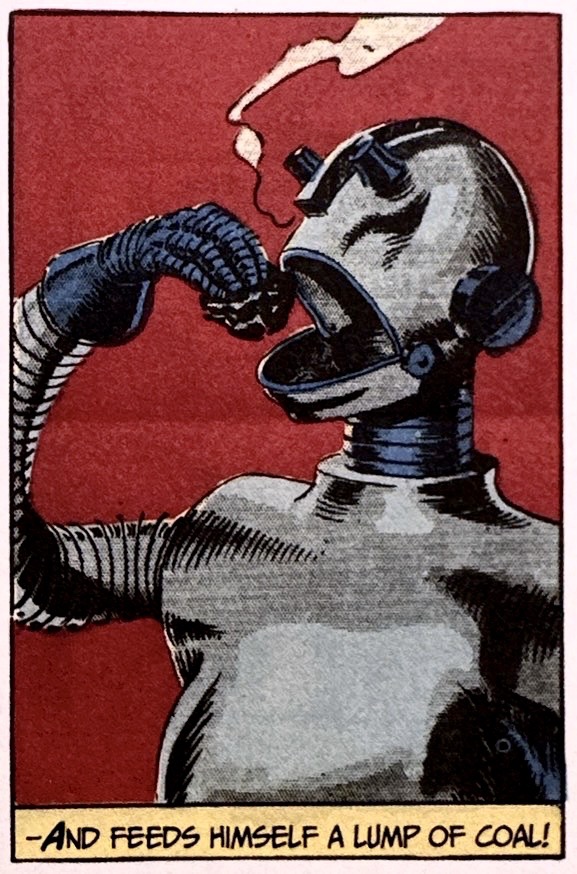
I am an EC chauvinist. I should cop to this before rounding up the notable pre-code comic book reprints from the last year. For decades now I have been devouring the many crime, horror, sci-fi, and romance comics that were part of the glut of adult titles after WWII, in part because they represented the unrealized potential of the comics format in post-war America. This was a real pop culture moment. War veterans ate a steady diet of comic books “over there” and seemed primed to follow the medium into more nuanced and adult storylines in the 40s and 50s. Likewise overseas, Japanese manga and Franco-Belgian bandes dessinées were on a similar path towards the popular, if not literary, mainstream. But in the U.S. that evolution was derailed and slammed into reverse by anti-comics crusades and the industry’s own “Comics Code Authority” in 1954. Self-censorship effectively arrested the medium in pre-adolescence, focused the industry on anodyne morality tales and pubescent fantasies of super-human prowess for at least a couple of decades.

Continue reading

2025 Comic Reprints: Rediscovering Lost Classics

We have already reviewed some of the major 2025 comic reprint releases from major publishers: the reissue of Sunday Press’s Society is Nix, the anniversary celebrations of  Peanuts, Hagar and Beetle Bailey as well as Cathy, and the resurfacing if Rea Irvin’s The Smythes. But this year saw a number of self-publishers bring back everything from Sky Masters of the Space Patrol to Milt Gross. I wanted to devote one round-up that highlights these laudable efforts and the often-obscure treasures they have unearthed.

Continue reading

Shelf Scan: Celebrating Peanuts, Beetle Bailey, Hagar and Donald

Before Thanksgiving and the shopping season overcomes us, let’s make sure we start our annual Panels & Prose quick takes on recent books for comic strip fans. The pile of new releases is high and teetering, so let’s break this down into several posts this week and next. Today, we handle the celebratory and anniversary collections involving Peanuts, Hagar, Beetle Baley. For a hands-on look at these books, look for the video “Quick Flip” at the end.

Continue reading

Our Snooty Neighbors: When The Smythes Moved In

If you let the original art designer of The New Yorker loose on the Sunday comics page, then Rea Irvin’s The Smythes is pretty much what you would expect to get. For six years in the early 1930s, Irvin rendered the foibles and class anxiety of upper-middle class ex-urbanites Margie and John Smythe with impeccable Art Deco taste and reserve. Could we get anything less from the creator of Eustace Tilley, the monocled, effete and outdated New Yorker magazine mascot who appeared as the inaugural cover in 1925? Irvin was also responsible for the design motifs and even the typeface (“NY Irvin”) still in use at the fabled weekly. And The Smythes newspaper strip carried much of that magazine’s class ambivalence and self-consciousness, its droll observational humor, as well as its lack of real satirical edge. The Sunday feature ran in The New York Herald Tribune from June 15, 1930 to Oct. 25, 1936. It was among the most strikingly designed and colored pages in any Sunday supplement, even if its humor may have been too dry for most readers. Beyond the Trib, The Smythes only ran in about half a dozen major metros.

Continue reading

Review: Emanata and Lucaflects, Blurgits and Maladicta: Mort Walker’s Lexicon of Comicana

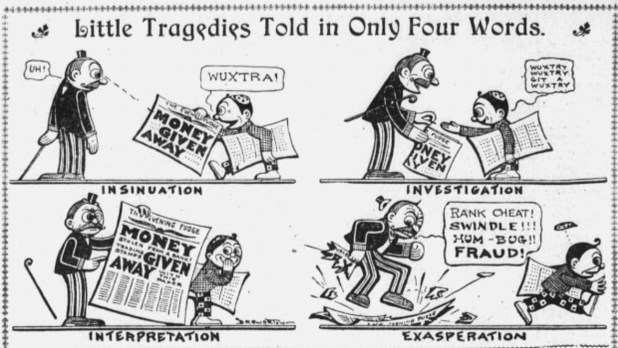
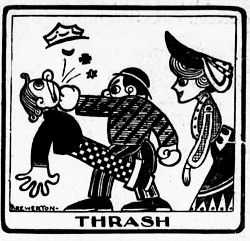
Like the comics art it dissects, Mort Walker’s legendary Lexicon of Comicana is unseriously serious. It is a lighthearted, profusely illustrated breakdown of the visual language of comics, the tropes, conventions, conceits, cliches that artists use to communicate a range of emotions and personalities at a glance. NYRB Comics has reissued this hard-to-find 1980 classic with a ton of supporting material from Chris Ware and Brian Walker. It is a must-have for anyone interested in the medium.

Continue reading

“Tycoons of Comedy”: Building the Myth of the Modern Cartoonist

“But the [comic] strip has suffered from mass production and humor hardening into formula…. It has sacrificed its original spirit for spurious realism.” – “The Funny Papers”, Fortune Magazine, April, 1933.

Who could say such a thing in 1933, just as Flash Gordon, Dick Tracy, Buck Rogers, Tarzan and Terry were about to launch what many consider a “golden age” of American comic strips? But in a major feature in its April 1933 number, Fortune magazine lamented the new adventure trend as a sign of the medium’s decline. In their telling, comics were losing an antic, satirical edge that had distinguished them from the gentility of American literature or saccharine romance of silent film. In particular, the Fortune piece (unattributed so far as I could tell), bemoaned the rise of the dramatic “continuity” strip in place of gags. They single out Tarzan in particular as a corporate product that suffers from too many scribes and artists not working together. “The strip wanders through continents and cannibals with incredible incoherence,” they say.  And to be fair, who could have foreseen in 1933 that Flash, Dick, Terry and Prince Val were about to redirect the “funnies” from hapless hubbies and bigfoot aesthetics towards hyper-masculinized heroism and a new realism that readers found far from “spurious?”

Continue reading