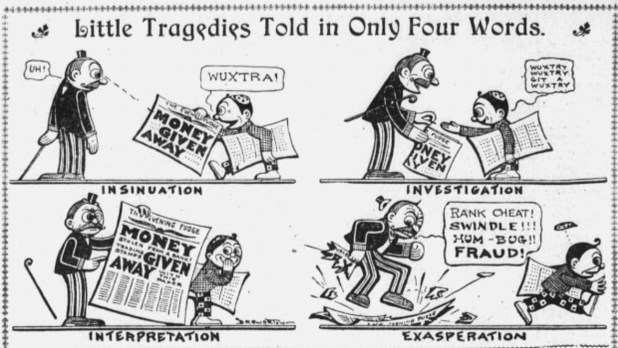
Chatty Pantomime: Little Tragedies Strikingly Told in Four Words (1903)

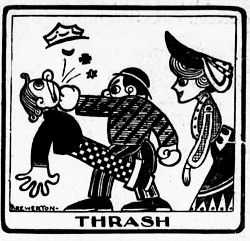
There were no firm rules for comic artists during that first 10 or 15 years of newspaper strips. Formats, aesthetic conventions, even panel shapes and limits hadn’t been fully established. The medium was still elastic. And so we see in these years wild experiments in artistic styles, unfettered explorations of page and the panel structures, even testing different interactions of words and image. Little Tragedies Strikingly Told in Four Words contains that spirit in its own title. It frames itself as an experiment. Crafted by the otherwise forgettable Alfred W. Brewerton for the New York Evening World between Oct. 1903 and June 1904, it was an unusually long-lived title to appear several times a week. True to its title, the strip is indeed striking because it blends pantomime and text in a novel way that is also compact, highly stylized, even wry. It recalls that famous quip about Ernie Bushmiller’s Nancy being easier not to read than to read. And like Nancy, the strip gets at something elemental about how comics work.

Continue reading
A Bigger Barks: Taschen Supersizes the Duck Man

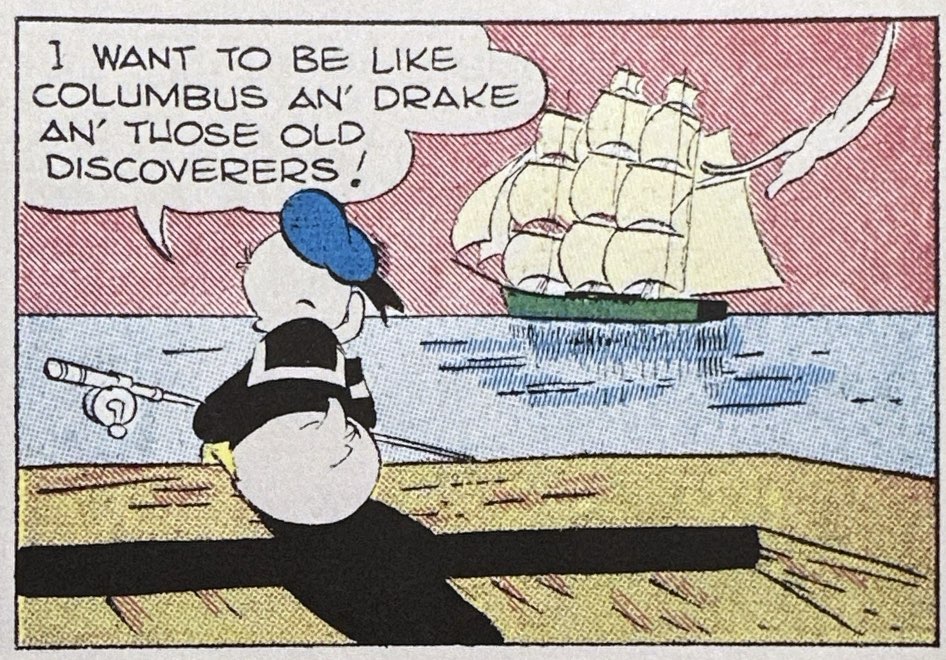
Is a bigger Barks a better Barks? Taschen’s long-awaited Disney Comics Library: Carl Barks’s Donald Duck. Vol. 1. 1942–1950 supersizes the Duck Man, and we are all the richer for it. This is one of their “XXL” volumes, so let’s go to the tape. It weighs in, literally, at 11+ pounds: over 626 11 x 15.5-inch pages that include the longer Donald Duck stories from 15 issues of Western Publishing’s Four-Color series.  up to 1950. These include some of the greatest expressions of Barks’s quick mastery of the comic book format. In “The Old Castle’s Secret” (1948) he uses page structure, atmospherics and pace to create real suspense. His masterpiece of hallucinogenic imagination married to landscape precision surely is “Lost in the Andes” (1949). And his well-tuned sense of character is clear in creating a purely American icon of endearing greed in Uncle Scrooge in “Christmas on Bear Mountain” (1947). Of course we have seen these and many of the other stories in this collection reprinted before. So, to answer my own question, does scaling up Barks give us a better Barks?

Continue reading

Historic Christmas Comics: A Holiday Journey

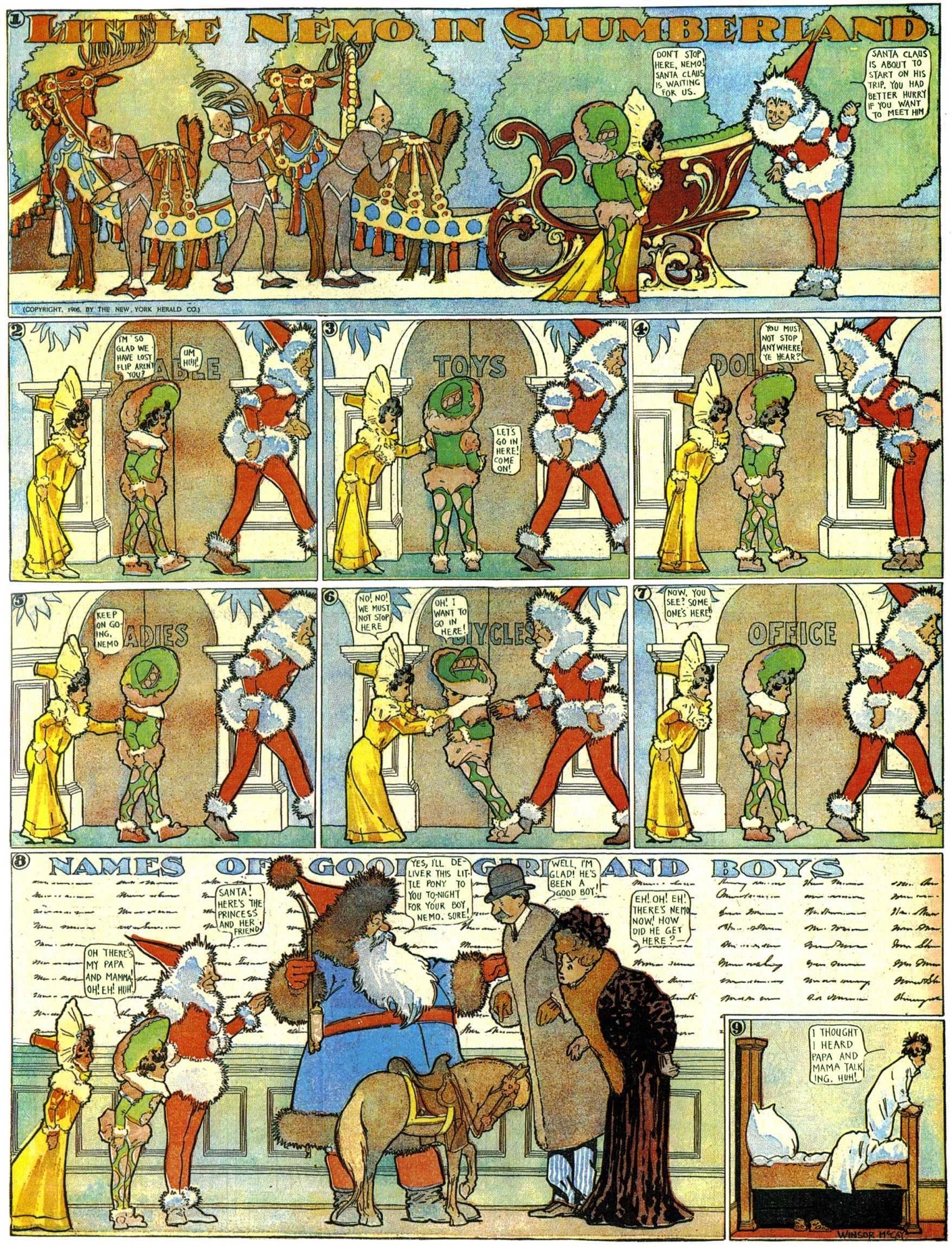
The grand tradition of the Christmas-themed comic episode started pretty much with the modern comic strip itself. Topicality was baked into the newspaper format. But as recurring characters and extended storylines developed, artists found a range of creative ways to integrate holiday greetings with their strips. Today, let’s dance across some noteworthy, even historic, Christmas funnies. Winsor McCay’s Little Nemo in Slumberland often referenced an upcoming holiday. In 1906, Nemo dreams up a pony as his own present.

Continue reading

Shelf Scan 2024: Reviving Calvin, Nancy, Flash, Mandrake and Popeye…Again.

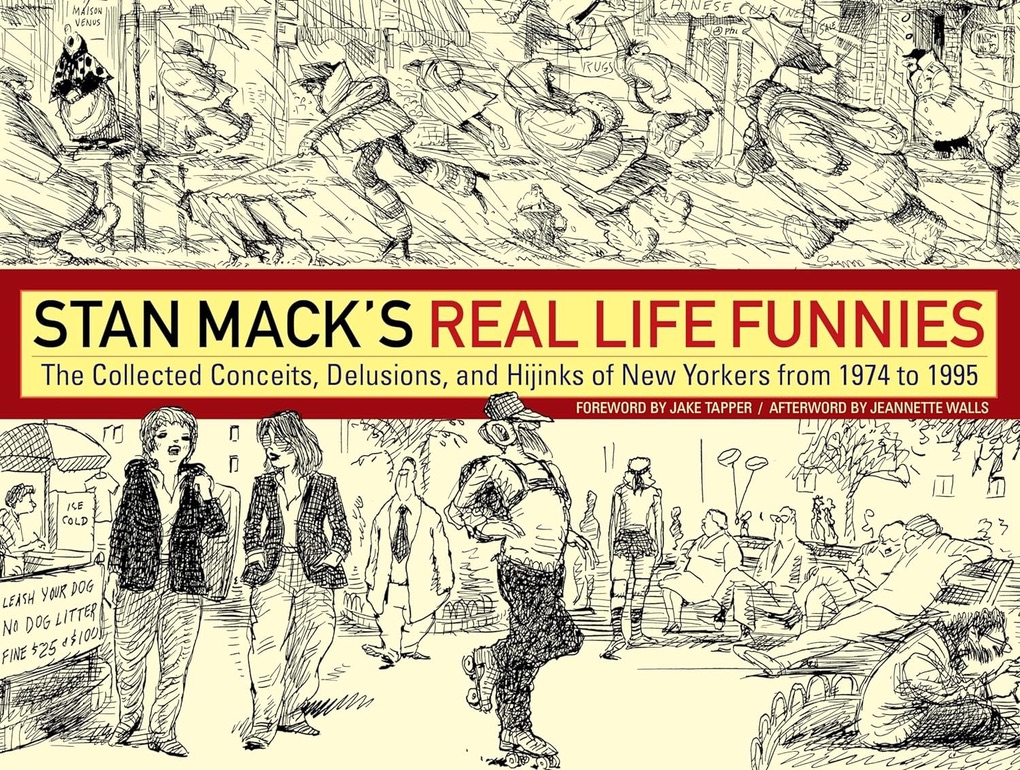
There are now generations of young adults who have no memory of daily newspapers, let alone that back page and Sunday section of comics. Without that experience, I wonder how that legacy survives and continues to inspire everyday readers and young artists. If the volume of classic reprints this year is any indication, however, we graying lovers of newspapers past can’t be the only market for decades-old dailies. Many essential strips enjoyed fresh or continuing reprint projects this year that keeps the likes of Popeye, Nancy, Mandrake and more on current store shelves. Even the most reprinted strip of the last generation got revisited in 2024.

Continue reading

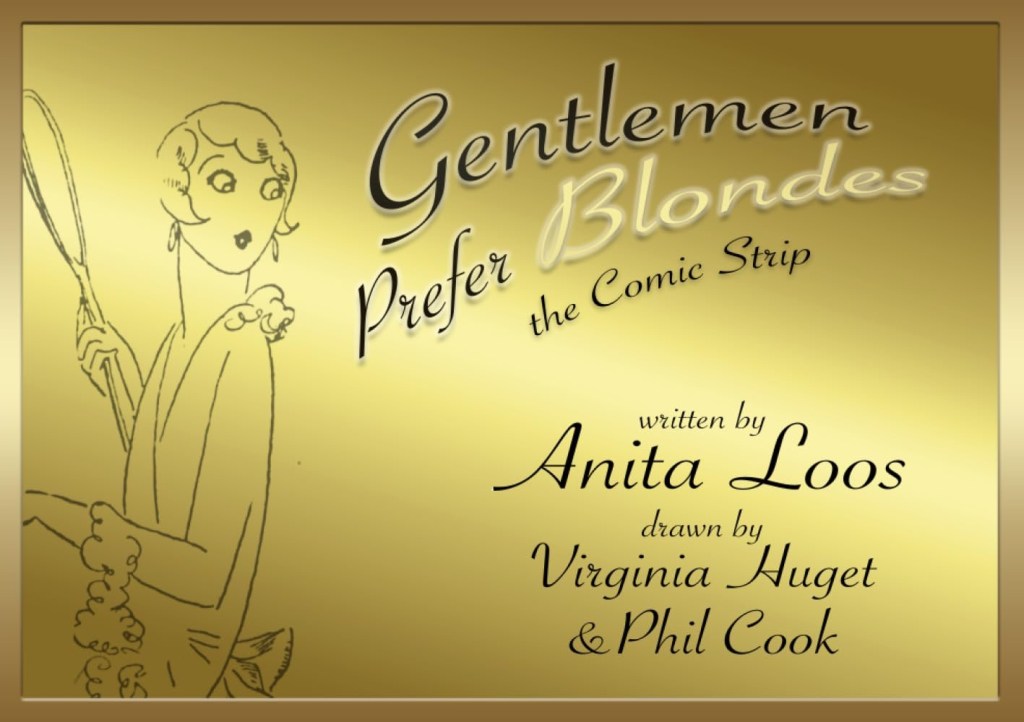
Shelf Scan 2024: Necessary Reprints – From Anita Loos to Betty Brown

Moving through this year’s  shelf of notable titles for comics aficionados, I wanted to call out several projects that revived forgotten or previously uncollected work. From a pharmacist heroine to an illustrated prayer, the ultimate 20s flapper to a pioneer of cartoon journalism, 2024 surfaced some real gems.

Continue reading