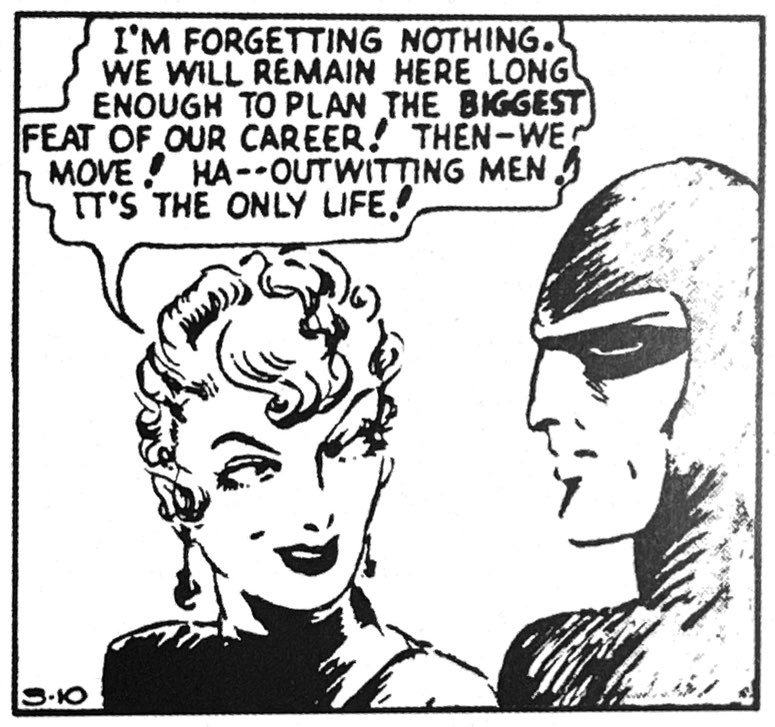
Women-led “Amazon” worlds popped up in a ranges of comic strips during the 1930s and 40s, and they voiced a range of ideas about the prospects for matriarchal rule. In an earlier article we explored otherworldy femtopias in Buck Rogers 25th Century, the Connie strip’s vision of the 30th Century and even in the “Bone Age” of caveman Alley Oop. More muscular he-men heroes like The Phantom and Tarzan, however, found the prospect of matriarchy a bit more, well, shall we say, threatening?
Across five decades of adulthood, every woman I have ever known was familiar, often intimately, with Cathy Guisewite’s Cathy (1976-2010). Our heroine’s struggles with new and old gender roles, the pressures of fashion and body messaging, diet trends, new tech, workplace culture…and MOM, always MOM, found their way into more diaries, onto more refrigerators and clipped into mother/daughter exchanges than any comic of its day. Tis a pity that so many of us male comics readers passed it over as “not for us” or simply unfunny. Spending a couple of days immersed in the new and most welcome 4-volume Cathy 50th Anniversary Collection ($225, Andrews McMeel) makes clear that Cathy was among the most insightful, witty and intelligent strips we had about the experience of post-counter-culture America. And I could have avoided a lot of stupid missteps with the women in my life if I had paid even glancing attention to Guisewite’s wisdom.
“Bah, for Mr. Charles Dana Gibson,” declared the Spokane Press in early 1908. Who needs the signature Gibson Girl anymore. “Miss Fluffy Ruffles is the newest type to which all the girls aspire.”1 The job-hunting, resourceful, and decidedly independent heroine became a national sensation shortly after her Feb. 3 premiere in the New York Herald. Fluffy was a pioneering woman in the workplace battling a reversal in fortune by making weekly tries as a journalist, florist, schoolteacher, dairy maid, waitress and more. The full page Sunday story was conceived and told in comic verse by a professional woman of note herself, the children’s and mystery writer Carolyn Wells. Herald illustrator Wallace Morgan dramatized the tale in vignettes that seemed to channel Charles Dana Gibson’s genteel magazine style. The series ran until early 1909 and quickly a multimedia juggernaut. The early episodes of her job-seeking stage were reprinted in book form before 1907 ended. Within six months of the launch The Herald started contests to find real-life Fluffy Ruffles that migrated to partner newspapers around the country. Paper dolls, chocolates, sheet music, branded hats and suits, even cigars, soon carried the Fluffy Ruffles brand. A 1908 Broadway musical production would travel the country until at least 1910, a year after the strip itself had ended.



 Panels & Prose