If you let the original art designer of The New Yorker loose on the Sunday comics page, then Rea Irvin’s The Smythes is pretty much what you would expect to get. For six years in the early 1930s, Irvin rendered the foibles and class anxiety of upper-middle class ex-urbanites Margie and John Smythe with impeccable Art Deco taste and reserve. Could we get anything less from the creator of Eustace Tilley, the monocled, effete and outdated New Yorker magazine mascot who appeared as the inaugural cover in 1925? Irvin was also responsible for the design motifs and even the typeface (“NY Irvin”) still in use at the fabled weekly. And The Smythes newspaper strip carried much of that magazine’s class ambivalence and self-consciousness, its droll observational humor, as well as its lack of real satirical edge. The Sunday feature ran in The New York Herald Tribune from June 15, 1930 to Oct. 25, 1936. It was among the most strikingly designed and colored pages in any Sunday supplement, even if its humor may have been too dry for most readers. Beyond the Trib, The Smythes only ran in about half a dozen major metros.
Like the comics art it dissects, Mort Walker’s legendary Lexicon of Comicana is unseriously serious. It is a lighthearted, profusely illustrated breakdown of the visual language of comics, the tropes, conventions, conceits, cliches that artists use to communicate a range of emotions and personalities at a glance. NYRB Comics has reissued this hard-to-find 1980 classic with a ton of supporting material from Chris Ware and Brian Walker. It is a must-have for anyone interested in the medium.
Chris Aruffo may not have planned to be a publisher, but somehow he managed to accomplish something that others couldn’t. In just a few years he published the full run of V.T. Hamlin’s Alley Oop dailies as well as Dave Graue’s run. More than that, he made the series affordable and used pristine source material for best possible rendering of this beautifully designed strip. Chris sat down with me recently to reflect on that experience. We discuss his history with Alley Oop, locating good sources, why this series comes in so many different dimensions, and can reprinting old comics make business sense? But with this interview we launch a series of interviews with reprint publishers where we brainstrom ways that 20th Century comic strips can be made relevant and inspiring to the next generations of comics fans and creators.
“Bah, for Mr. Charles Dana Gibson,” declared the Spokane Press in early 1908. Who needs the signature Gibson Girl anymore. “Miss Fluffy Ruffles is the newest type to which all the girls aspire.”1 The job-hunting, resourceful, and decidedly independent heroine became a national sensation shortly after her Feb. 3 premiere in the New York Herald. Fluffy was a pioneering woman in the workplace battling a reversal in fortune by making weekly tries as a journalist, florist, schoolteacher, dairy maid, waitress and more. The full page Sunday story was conceived and told in comic verse by a professional woman of note herself, the children’s and mystery writer Carolyn Wells. Herald illustrator Wallace Morgan dramatized the tale in vignettes that seemed to channel Charles Dana Gibson’s genteel magazine style. The series ran until early 1909 and quickly a multimedia juggernaut. The early episodes of her job-seeking stage were reprinted in book form before 1907 ended. Within six months of the launch The Herald started contests to find real-life Fluffy Ruffles that migrated to partner newspapers around the country. Paper dolls, chocolates, sheet music, branded hats and suits, even cigars, soon carried the Fluffy Ruffles brand. A 1908 Broadway musical production would travel the country until at least 1910, a year after the strip itself had ended.
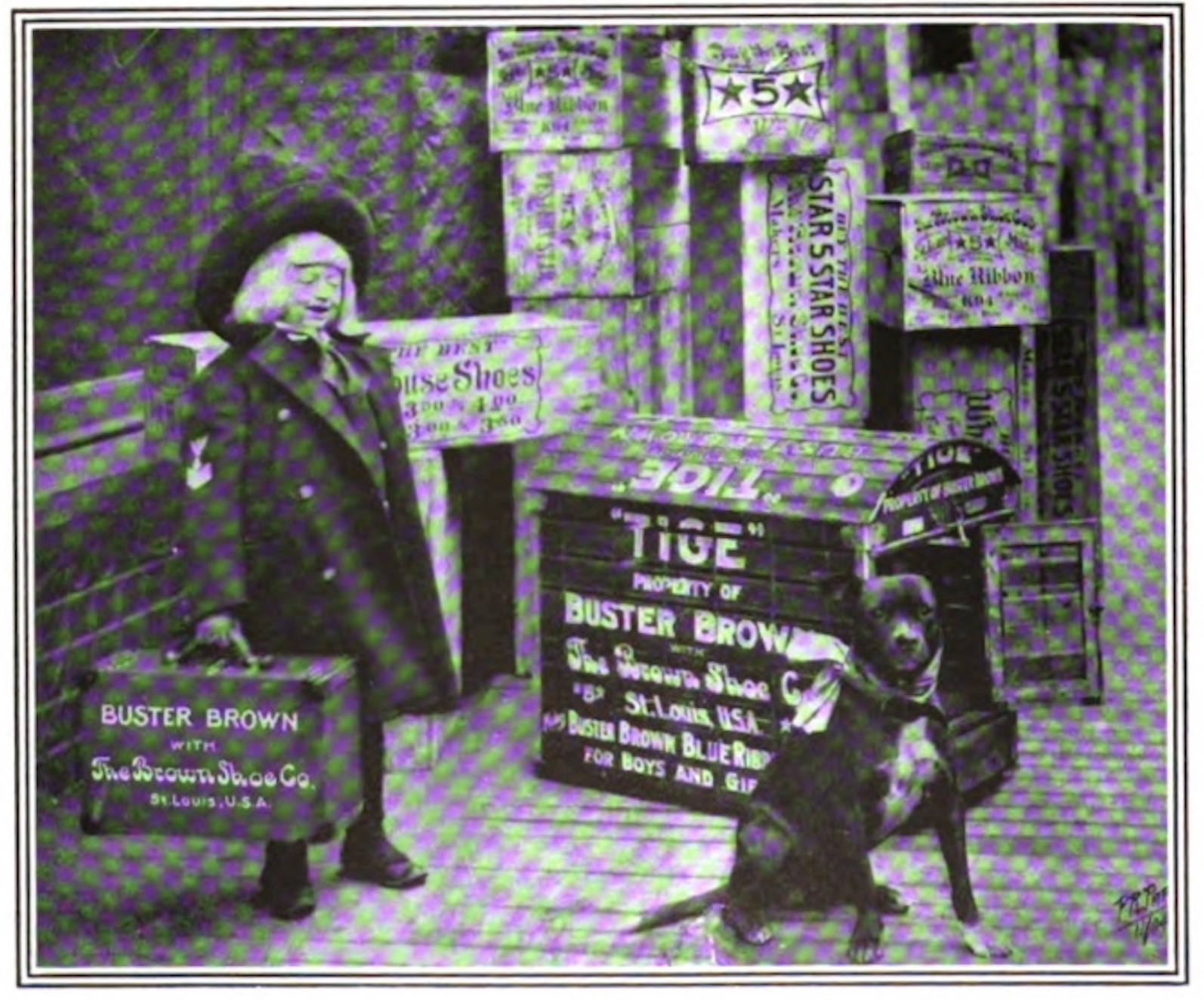
A 43-year-old man, something over 3 feet tall, is dressed in the signature, foppish, Buster Brown garb and wig. He commands his trained dog Tige to do tricks and then engages an audience of schoolchildren, sometimes hundreds, and prompts their pledge only to wear Buster Brown shoes. It was a good pitch in 1906. For local shoe merchants who secured this road show from the Brown shoe Company, “the scheme is the best they ever tried,” reported the trade publication Profitable Advertiser. This was the dawn of mass media celebrity endorsements and syndicated point-of-sale marketing programs.
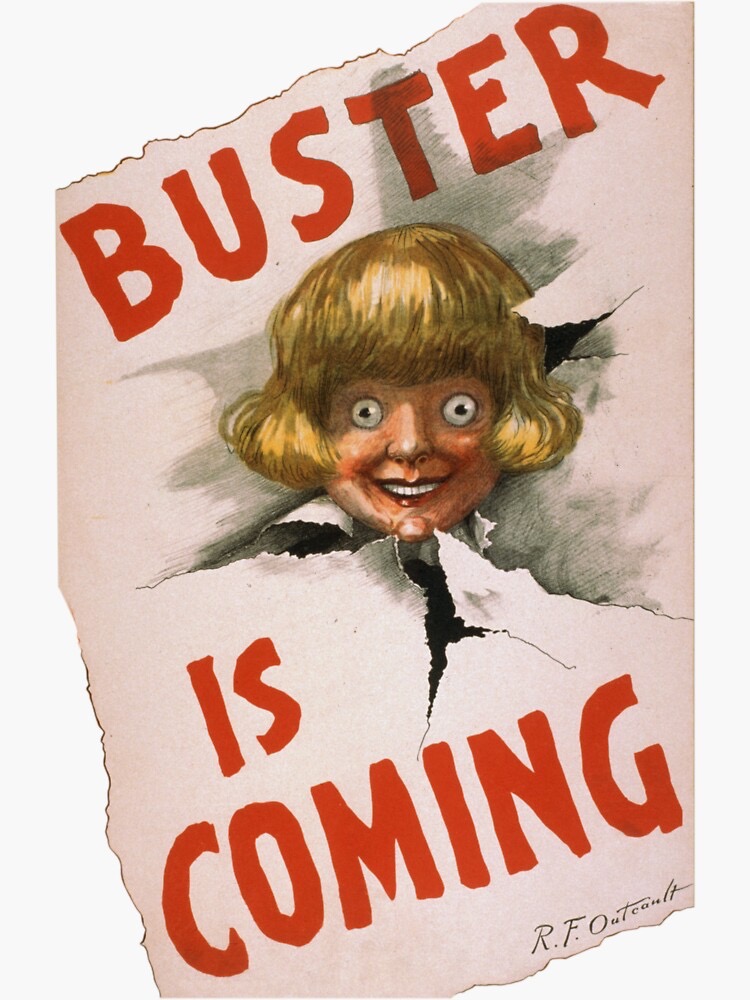
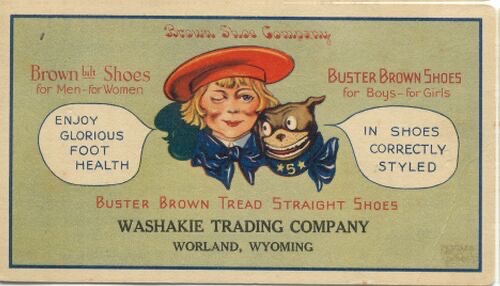
By the time creator R.F. Outcault started licensing his spectacular Buster Brown comic strip character in 1904, its boyish pranks and domestic chaos were familiar to audiences across the nation. Soon after premiering on May 4, 1902 in The New York Herald, the strip became a national sensation. At first blush, Buster seems an unlikely brand ambassador. Along with the Katzenjammer Kids and the many other copy cat pranksters of the “Sunday Supplements,” he was a quintessential comics “smart boy,” just more obviously middle class. His were the kind of antics that were commonly denounced by social reformers, clergy and teachers’ associations for their cruel pranks and disrespect for authority. And yet, here he was, his weekly sins somehow whitewashed by commodification. When Outcault sold licensing rights to the Brown Shoe Company in 1904, and launched the partnership at the St. Louis World’s Fair that year, he was also contracting Buster out to another 200 brands.
But it was the Brown Shoe Company that elevated the Buster Brown partnership into one of the longest-running comic character associations in history. And this was among the first examples of an emerging mass media ecosystem driving a new consumer culture of mass consumption. Brown not only married a celebrity to a mass produced and distributed product, but it showed how to standardize and syndicate a marketing program to a new nationwide market. Along the way, the Buster Brown marketing program pioneered marketing directly to kids in order to influence their parents’ buying habits.
Dubbed “Reception Tours,” the model provided for a Buster actor and a Tighe for day-long visitation to the retail outlet to drum up attention and drive shoe sales for the shoes. According to the St. Louis government’s history site, the Brown company hired up to 20 “midget” actors and trained dogs to staff the many road shows, which ran until 1930. But a forgotten article, “Buster Brown, Advertiser” in the obscure trade paper Profitable Advertiser gives us a more detailed look at “how the scheme is worked.” Retailers who agreed to buy at least 50 dozen pairs of Buster Brown shoes could access the program from Brown. The company provided a package that included the talent as well as marketing templates for local newspaper ads and handbills which the retailer agreed to buy in support of the Reception.
In this 1906 iteration, the company hired a 3-foot tall, 43-year old former salesman and “orator of ability,” Major Ray. In a trip to the town of Berwick, Buster and Tighe enjoyed a full day touring the local sites and manufacturing plants, visiting local officials and leading a parade through town. These tours became wildly popular local events. A Brown salesman claimed that “There were in the neighborhood of 8,000 to 10,000 people out to witness the reception.”
But Buster and Tighe kept their aim at the sales job. As Profitable Advertiser describes it, organizers scheduled the parade to pass local schools around dismissal time. Kids would gather back at the shoe store (or even rented theaters) to watch Tighe perform tricks and Buster entertain and pitch the crowd. They stood before a 30-foot banner across the store window declaring “Buy Buster Brown Shoes for boys and girls here. Every pair the best.” At times the crowd of youngsters were asked to raise their hands to acknowledge they will wear only Buster Brown shoes.
The Brown Shoe Company was writing the early scripts around modern media celebrity endorsement. Arguably, the American comic strip represented the first truly mass medium of the new century. Via newspaper networks and early syndication, premiere strips like Happy Hooligan, Katzenjammer Kids, Foxy Grandpa and Buster Brown were read on the same day coast to coast, a simultaneous, communal experience. That common content drafted nicely onto the new processes of mass production and distribution in manufacturing. Commodities now needed national identities. Consumer product branding emerged at precisely the time national entertainment heroes emerged in comic strips and soon in movies. The marriage of branding and celebrity seems natural and inevitable in part because they both came from a common source, the nationalization and standardization of both media and consumer goods. Consumer culture was being born, and in Buster Brown Shoes we see one of its weirder contours. Characters could be made into anodyne brands, while inert commodities could be given the gloss of personality.
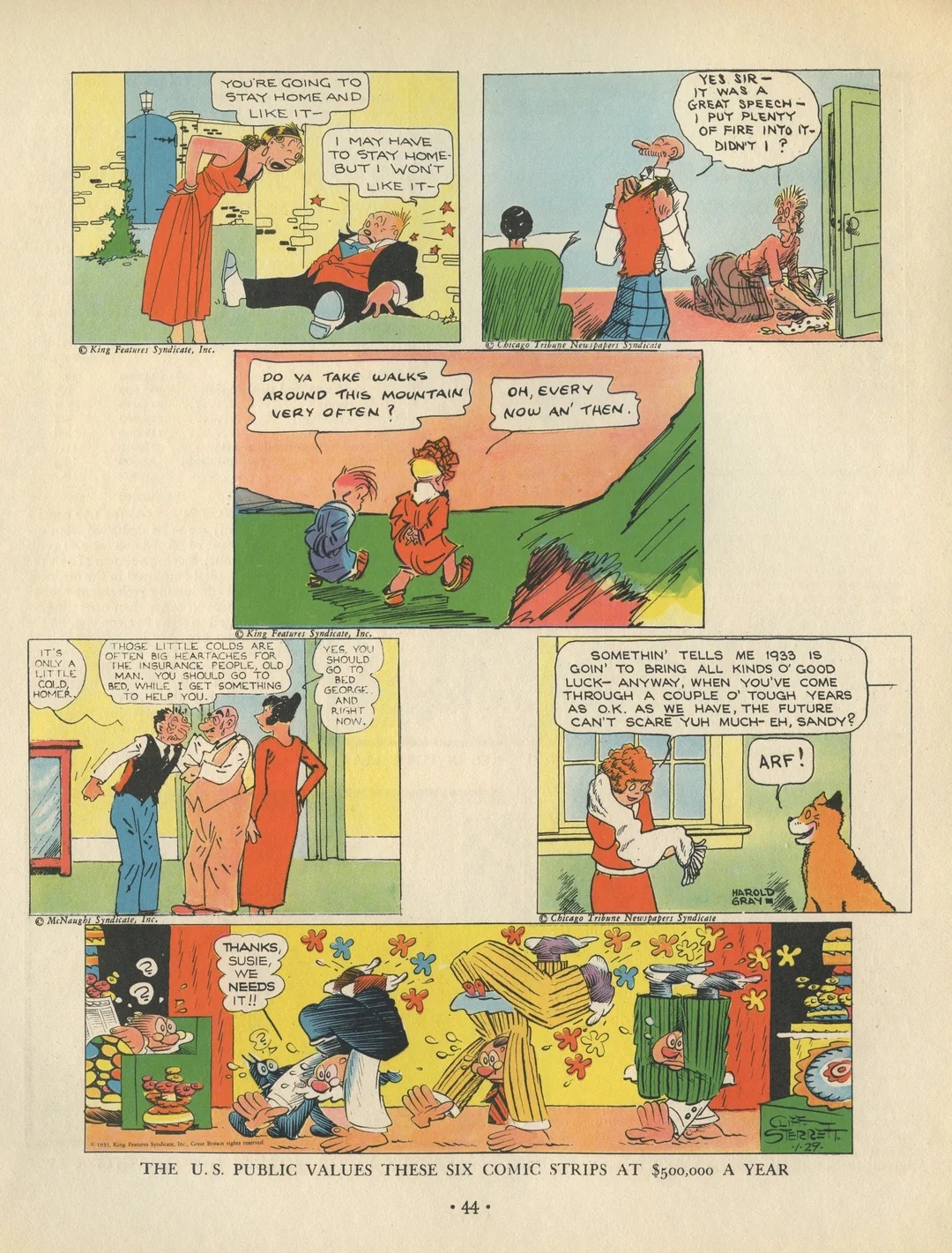
“But the [comic] strip has suffered from mass production and humor hardening into formula…. It has sacrificed its original spirit for spurious realism.” – “The Funny Papers”, Fortune Magazine, April, 1933.
Who could say such a thing in 1933, just as Flash Gordon, Dick Tracy, Buck Rogers, Tarzan and Terry were about to launch what many consider a “golden age” of American comic strips? But in a major feature in its April 1933 number, Fortune magazine lamented the new adventure trend as a sign of the medium’s decline. In their telling, comics were losing an antic, satirical edge that had distinguished them from the gentility of American literature or saccharine romance of silent film. In particular, the Fortune piece (unattributed so far as I could tell), bemoaned the rise of the dramatic “continuity” strip in place of gags. They single out Tarzan in particular as a corporate product that suffers from too many scribes and artists not working together. “The strip wanders through continents and cannibals with incredible incoherence,” they say. And to be fair, who could have foreseen in 1933 that Flash, Dick, Terry and Prince Val were about to redirect the “funnies” from hapless hubbies and bigfoot aesthetics towards hyper-masculinized heroism and a new realism that readers found far from “spurious?”
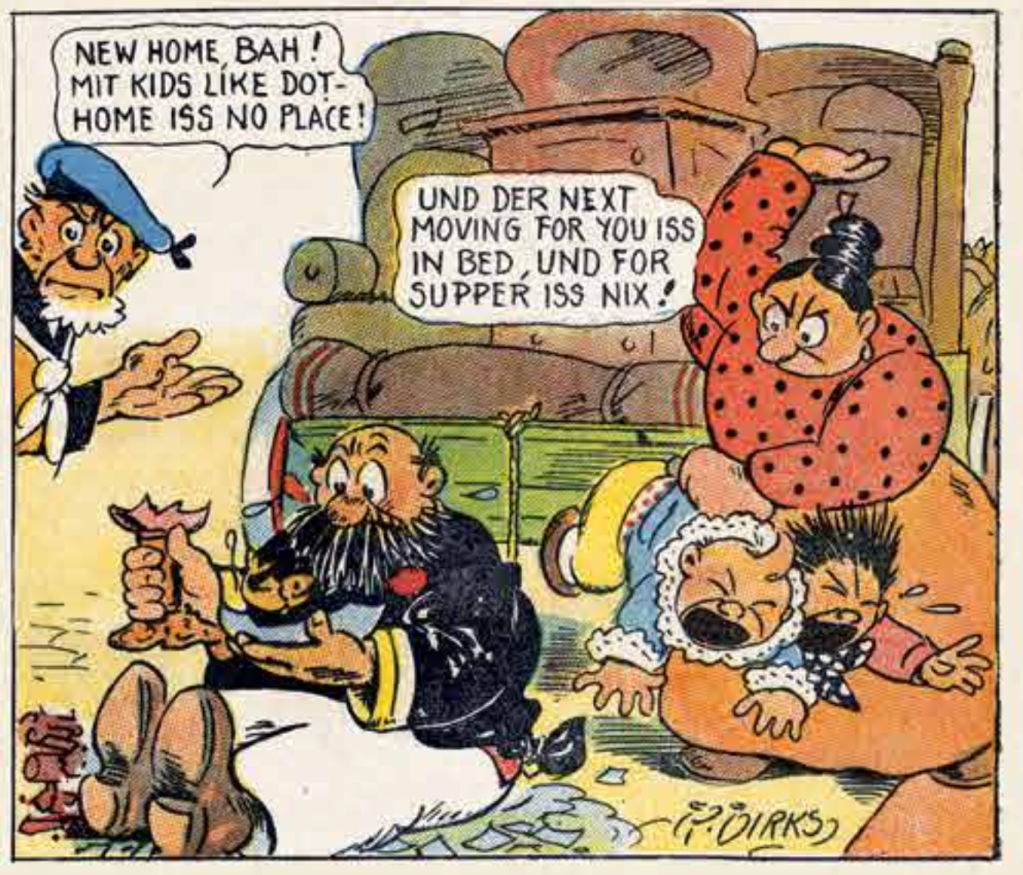
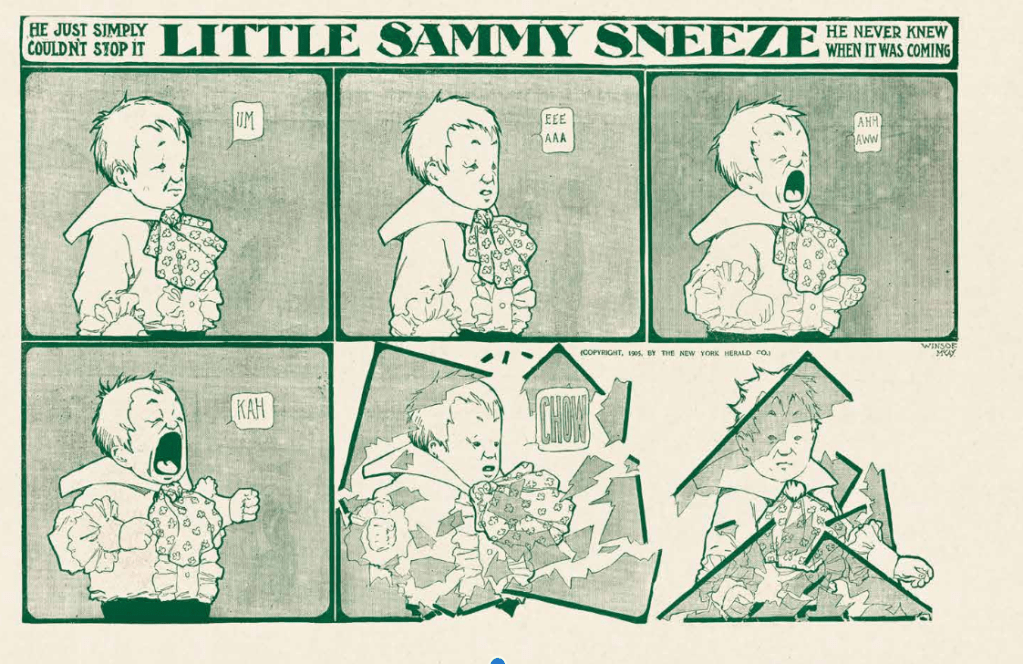
When the massive 21-inch by 17 inch, 152 page slab of early newspaper comic reprints bruised our laps in 2013, Sunday Press’s Society is Nix was a milestone. First of all, we had never seen so many examples from the innovative birthing years of the medium curated so intelligently, restored so beautifully and scaled to the original experience of the first Sunday supplements. Here we got that familiar crumbling mushroom forest in Winsor McCay’s Little Nemo in Slumberland, but now with the tonal nuance and size McCay intended. The Yellow Kid’s Hogan’s Alley was clear and detailed enough to appreciate all of that background business R.F. Outcault helped pioneer. We could best appreciate the sense of motion, and symmetry of Opper’s signature spinning figures in Happy Hooligan and Her Name Was Maude. And James Swinnerton’s often primitive-seeming linework revealed its expressiveness and intentionality when viewed closer up. Taking its title from a proclamation by the Inspector about the unruly Katzenjammers (“Mit dose kids, society iss nix!”), the book captured the creative freedom of a medium that hadn’t settled yet on a form, let alone a business model. Editor/Restorer Peter Maresca was unrivaled both in his eye for the right exemplary strip as well as his sheer skill in reviving the original color and detail from these yellowed, faded paper. For the last. Decade, Society is Nix remained indispensable for any fan or historian of the medium.





 Panels & Prose