Shelf Scan 2024: Necessary Reprints – From Anita Loos to Betty Brown

Moving through this year’s  shelf of notable titles for comics aficionados, I wanted to call out several projects that revived forgotten or previously uncollected work. From a pharmacist heroine to an illustrated prayer, the ultimate 20s flapper to a pioneer of cartoon journalism, 2024 surfaced some real gems.

Continue reading

Shelf Scan 2024: Taschen’s Ultimate Duck

Kicking off this year’s roundup reviews of notable books for comics history buffs, let’s start with the annual Taschen doorstop.

Continue reading

Rockwell Kent: Accidental Cartoonist

Paul Bunyan

Rockwell Kent (1882-1971) was not a cartoonist in any typical sense of the genre. He was insanely prolific across all media and seemed oblivious to formal silos that bother art critics and scholars. He worked in book and magazine illustration, painting, greeting cards and postage stamps, bookplates, murals, and, yes, comics (under the playful pseudonym, “William Hogarth, Jr.” for Vanity Fair). He was a working artist who liked to turn a buck, as entrepreneurial as he was genre agnostic. Which is to say that he was an artist in the American grain.

Continue reading

The Timid Soul Toys With Fascism

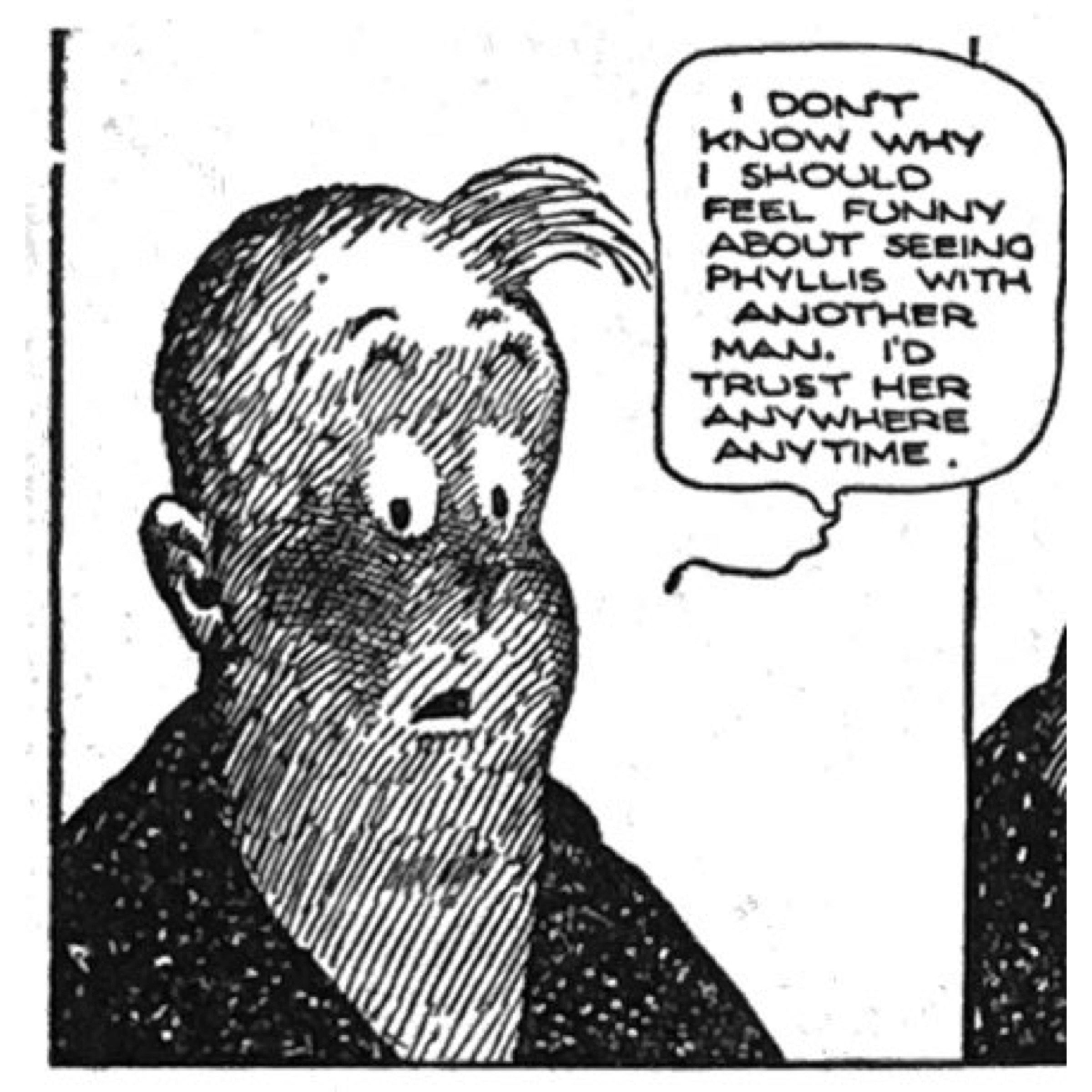
The authoritarian strain in modern democracies has only heightened since I first posted this bit of cartoon wisdom several years ago. In 1937, H.T. Webster’s Casper Milquetoast (The Timid Soul) responds to Italy’s Benito Mussolini and Germany’s Adolph Hitler with his own fantasy of assertiveness. This 1937 vision of fascism’s psychological appeal to feelings of personal disempowerment is eerily relevant to the current ethos. Webster perceptively understands how the personal and political entwine around identity. And through Casper he renders it as a will to power that is at once frightening but also silly and petty. Webster even seems to understand something American liberals are only now grasping: the most effective response to bro-aviating fascist cosplay is ridicule.

Continue reading

Buster Brown: ‘Race Suicide’ v. Family Planning, Circa 1903

Talk of declining fertility and birth rates, even white nationalist mumblings about “race suicide” have become a weird sidebar this election cycle. At the turn of the 20th Century, all of these themes had already been well rehearsed. In 1903, R.F. Outcault’s blockbuster hit Buster Brown alludes to contemporary arguments around changing gender roles, women’s increased autonomy, family planning and, yes, “race suicide.”

Continue reading

I Hear America Talking: Stan Mack’s Real Life

Earlier this summer, I got to chat with visual journalist Stan Mack as he launched the indispensable compilation of his most famous work, Stan Mack’s Real Life Funnies: The Collected Conceits, Delusions, and Hijinks of New Yorkers from 1974 to 1995. The interview is embedded below with a cursory review after that.

Continue reading

Advertising Decency: The Cartoon War on Hate

Hate is an easy sell. In the marketplace of hearts and minds, intolerance, grievance, anger are some of the most compelling product features of any cause or candidate that is new to the political shelves. Likewise, simple, high aspirations tend to market more easily. See “Hope and Change.” Appealing to base instincts or ambition and aspiration is Marketing 101 in America’s cultural economy.

Continue reading