Great Moments: Dick Tracy and The Death of the Brow

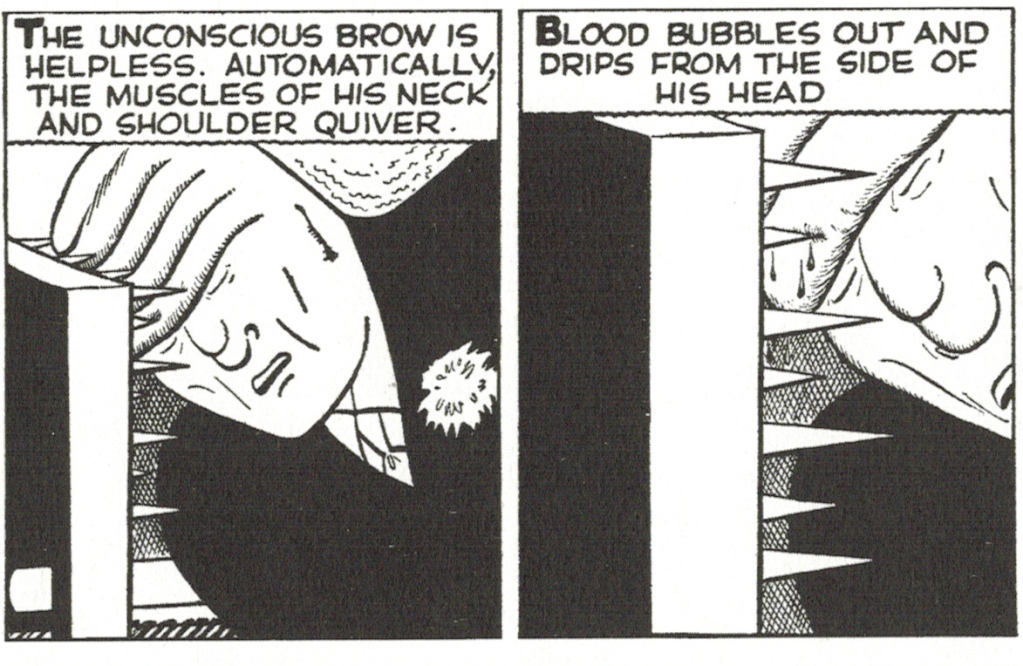
The hallmark of Chester Gould’s Dick Tracy is its surreal villains. Flattop, Pruneface, Mole, Mumbles, et. al. But Gould wasn’t satisfied expressing inner evil with outward disfigurement. He also loved to torture and kill them in equally grotesque ways during the prolonged hunt and chase sequences that were central to every Dick Tracy storyline. Gould wanted more than justice against evil. He wanted revenge and sometime literal pounds of flesh.

Continue reading

Great Moments: The Rise of Dauntless Durham of the USA

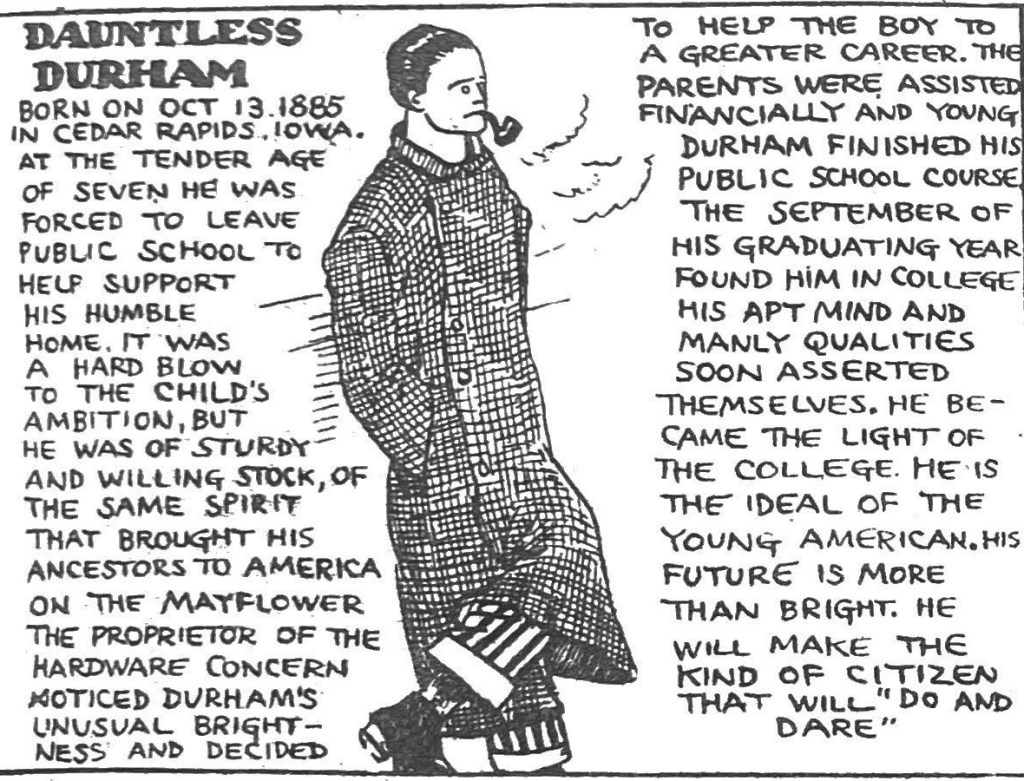
Harry Hershfield’s Dauntless Durham of the U.S.A. only ran for about a year in 1913-14, but it was among the most fully bonkers American comic strips in its imaginative extravagance. Durham was among several sends of the familiar 19th century hero/damsel/villain melodrama. Our damsel is kidnapped relentlessly by the mustachioed, top-hatted Desperate Desmond and rescued in improbable ways from impossible peril.

Continue reading

They Had Faces Then: Close-Ups, 50s Photo-Realism and the Psychological Turn

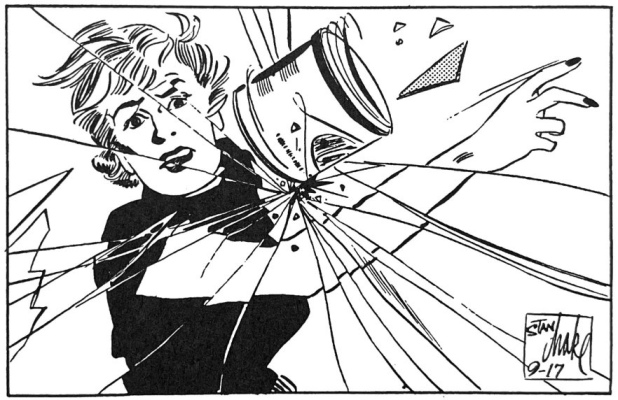
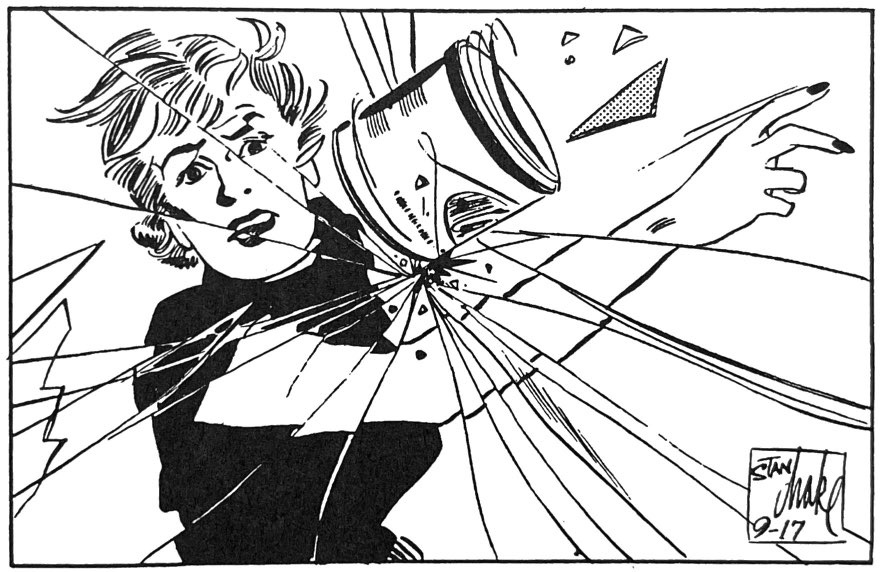
Stan Drake, The Heart of Juliet Jones

The turn to photo-realism in the adventure comics after WWII is well-documented and obvious in any review of the major strips. Alex Raymond’s Rip Kirby, Warren Tufts’ Casey Ruggles and Lance, Leonard Starr’s On Stage, Stan Drake’s Heart of Juliet Jones, John Cullen Murphy’s Big Ben Bolt are just some of the clearest examples. The stylistic foundation had already been set in the 1930s, of course by Noel Sickles (Scorchy Smith), Milton Caniff (Terry and the Pirates) and Hal Foster (Prince Valiant). They moved adventure strips away from the more expressionist modes of Gould and Gray, or the cartoonish remnants of Roy Crane (Wash Tubbs and Capt. Easy) or the sketchy illustrator style of a Frank Godwin (Connie). .But it is really in the post-war period that we see a clear ramping up of fine line, visual detailing, naturalist figure modeling and movement, as well as full adoption of cinematic techniques.

Continue reading
Peak Segar: Plunder Island (1934)

The Plunder Island sequence of Thimble Theatre Sundays that ran from December 1933 to July 1934 was E.C. Segar’s signature epic. It concentrated most of this master’s diverse talents and blended the many genres Thimble Theatre traversed into the strips most impressive run. Fabulism, farce, adventure, sentiment, venality, romance, screwball — all and more are here. And along the way, Segar even fleshes out and distinguishes among his key characters.

Continue reading

Shelf Scan 2024: Can’t-Miss Comic Book Reprints

We go a little off the reservation this time to embrace a few pre-code comic book reprints and underground favorites that have come back into print this year. Classics from Joe Sacco and Richard Corben resurfaced this year to garner new audiences, and Fantagraphics’ ambitious schedule of Atlas Comics reprints took off. And we get to watch the mayor of Duckburg discover his adventurous side.

Continue reading

Little Orphan Annie: Character Is The Real Hero

On August 5, 1924, Harold Gray’s Little Orphan Annie premiered. Historians often remember the strip for its verbose didacticism or regressive politics. Gray famously crowded his panels with Annie’s homilies to self-reliance and in the 1930s anti-New Deal screeds. This explains historians’ interest in Little Orphan Annie, but it doesn’t account for readers’ love affair with the chatty moppet. In many ways Gray’s strip blended genres of adventure and domestic drama. It was among the earliest serial adventure strips. As much as Americans may have identified with Annie’s core self-reliant values and humane sympathies, she was forever the outsider, often overhearing key conversations or sitting in the corner of a panel as an onlooker. Annie was a picaresque figure who embodied modern Americans’ sense of social dislocation and alienation. She was both in and outside of this changing America of new cities, capitalist and government shenanigans, aggrandized power…and its victims. Gray’s Annie captured a complex relationship modern Americans felt towards their culture that was harder to articulate than it was to depict in character and situation. That is what great art, high or low, does for a culture.

Continue reading

Queer-Coding A La 1948: Buz Sawyer Flexes His Pecs

The sublimations of the American comic strip are legion. Whether it is the unbridled eroticism of Flash Gordon or the beefcake of Prince Valiant, the kinkiness of The Phantom or the stripteasing of Terry and the Pirates, the most “innocent” of modern American mass media contained many quiet erotic sub-texts for horny readers across ages and sexes. Case in point, Buz Sawyer in the 1940s. I have no idea what was going on with Buz’s artist Roy Crane and writer Edwin Granberry in the 1947-48 years, but the strip seemed a bit obsessed with gender-bending, sexual stereotypes and masculine identity across storylines in those years. In two adjoined episodes, our two-fisted hero deals with the barely-veiled advances of an effeminate gun-runner and sexual harassment at the hands of a masculinized female Frontier executive. This is one of those many cases where the most reserved and adolescent of modern media, the family newspaper strip, traded in suggestive imagery and innuendo that would never pass muster in other media of the day.

Continue reading