Great Moments: A. Mutt Meets Jeff (1908)


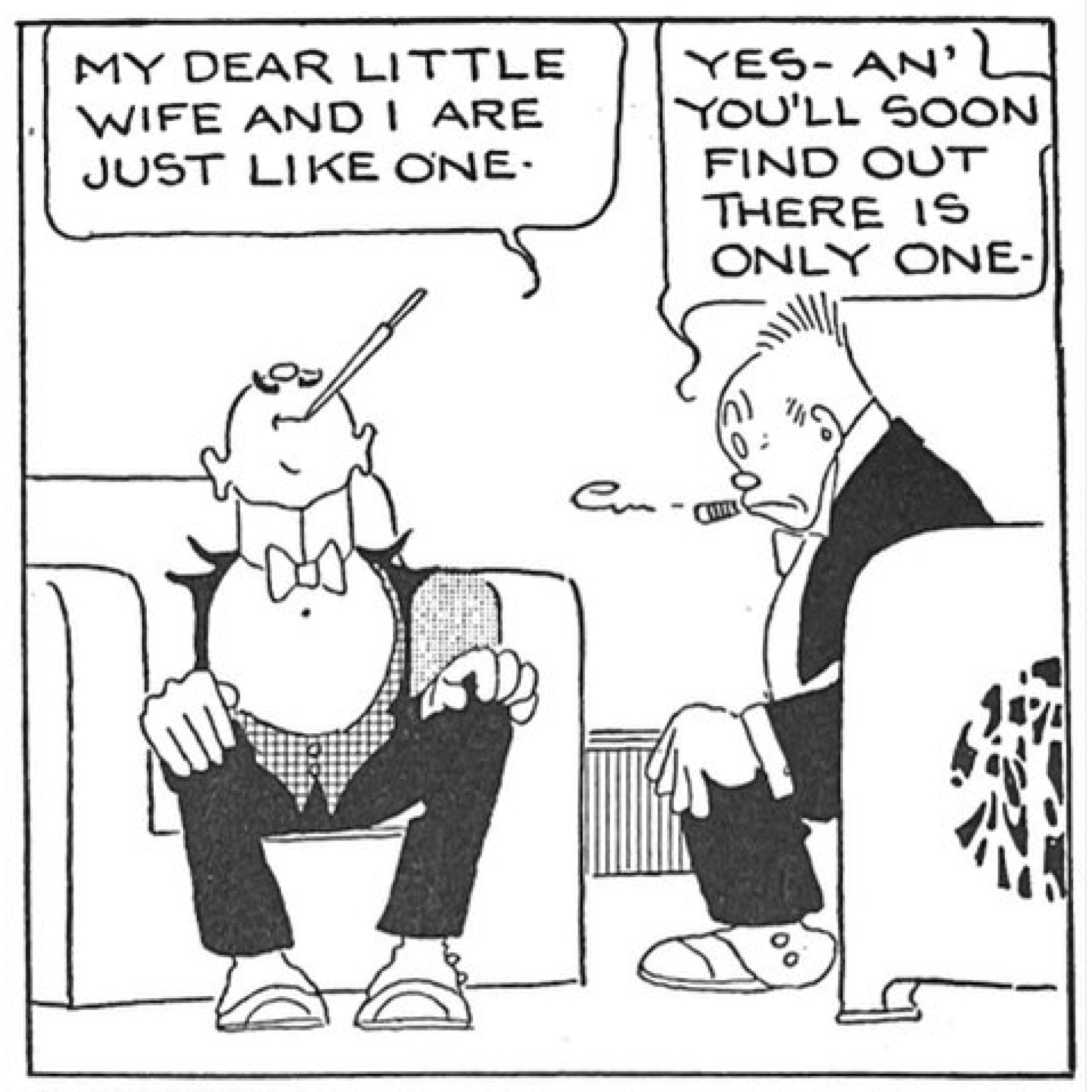
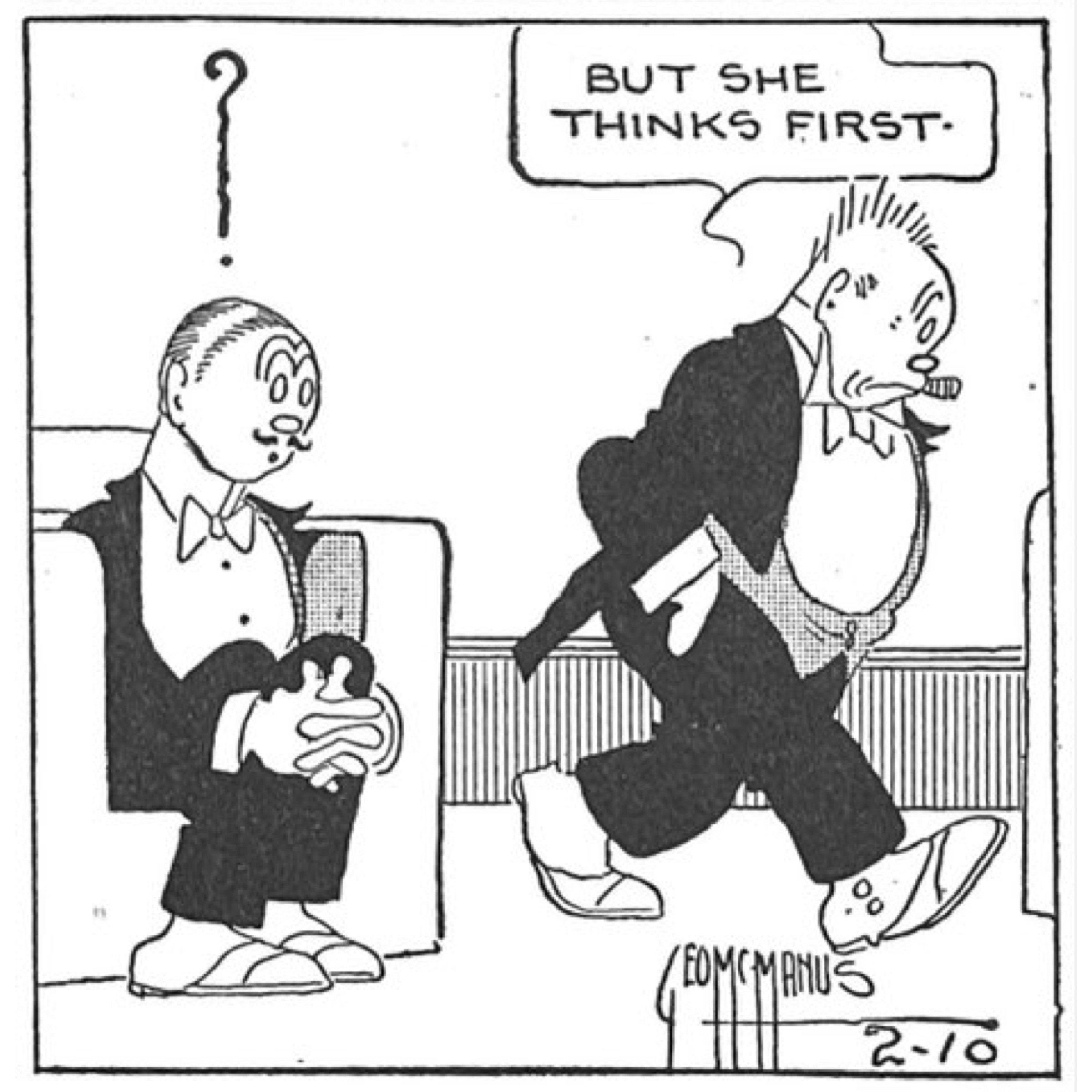
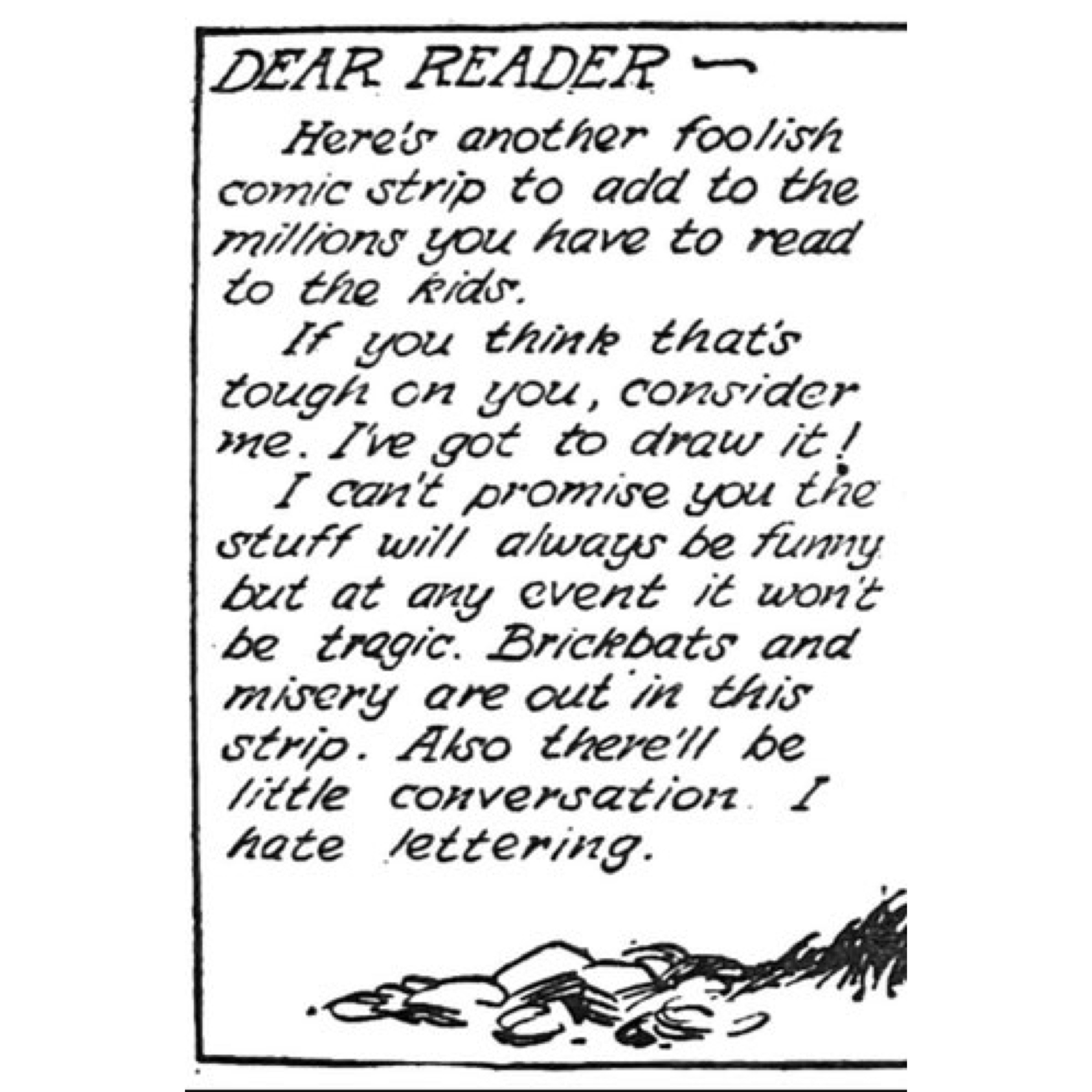
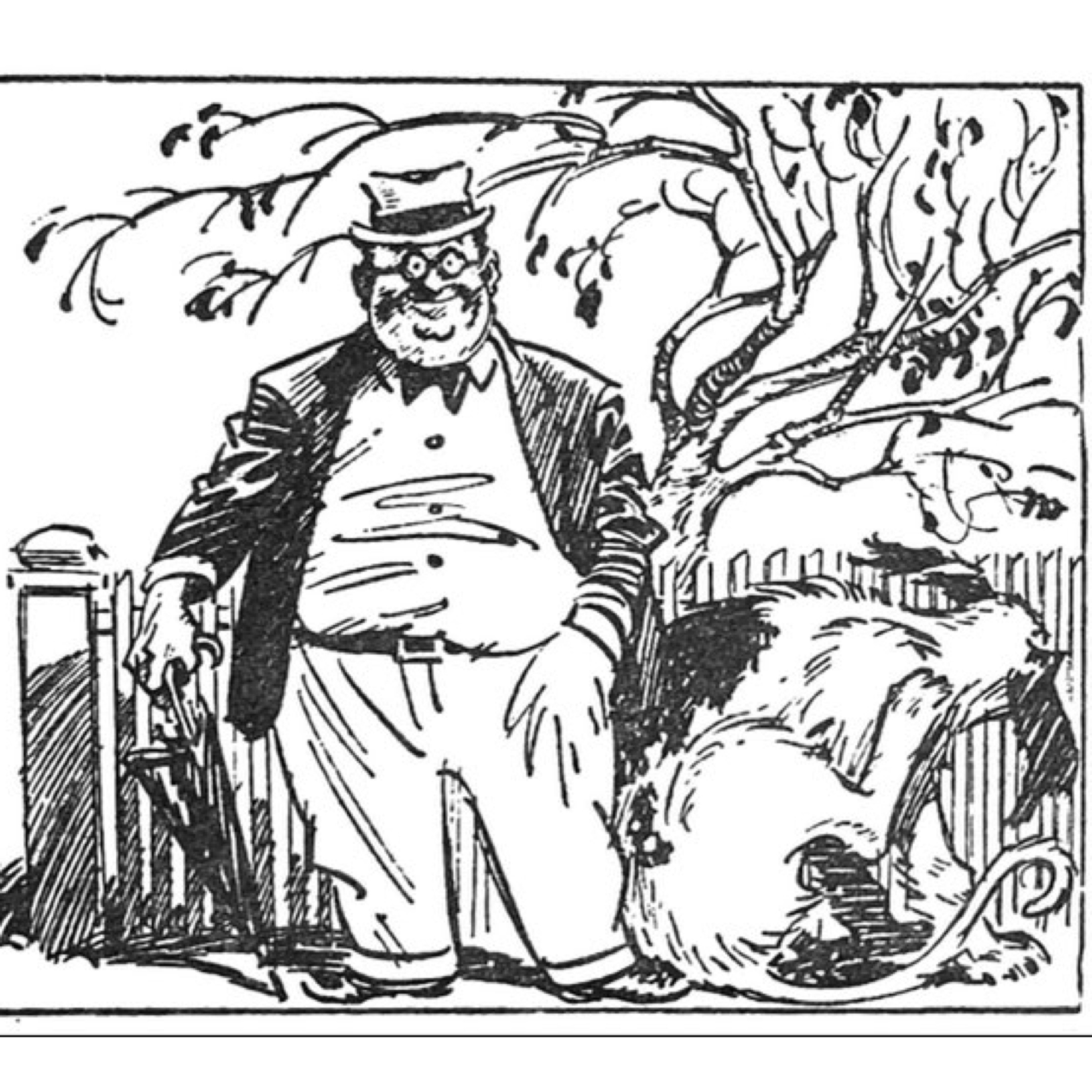
One of the longest lasting marriages in comic strip history began on March 27, 1908 when Bud Fisher’s wildly popular A. Mutt comic strip anti-hero meets a character who soon became his companion until the strip finally sputtered to an end in 1983.

As told by Jeffrey Lindenblatt in the NBM reprint of early strips, A.Mutt had a whirlwind start in the five months from its brilliant inception to the introduction of Jeff. Bud Fisher was a self-taught artist who talked his way onto the the San Francisco Chronicle in 1906. He worked his way up from layouts in the art department to spot illustrations around news stories to regular caricatures in the sports section. Here is where Fisher sold editors on an idea for a daily strip that would top the sports section with betting neophyte A. (Augustus) Mutt’s uninformed picks to win one of that day’s horse races. The next day’s strip would include Mutt’s winnings, losings and mood after the real world results.


A.Mutt was an instant hit, but its Chronicle run lasted only 26 days. The strip attracted the attention of no less than notorious newspaper staff raider William Randolph Hearst, whose rival San Francisco Examiner battled the Chronicle for circulation. As he had done so many times in his “Yellow” newspaper war with Joseph Pulitzer in New York a decade before, Hearst drowned Fisher in cash and the promise of national syndication to lure him to the Examiner less than a month after A.Mutt launched. Eventually Fisher would leave Hearst too for a much more lucrative syndication deal that became a model for decades of lavishly paid cartoonists.


Fisher’s final A.Mutt for the Chronicle appeared on Dec. 10, 1907, but that last iteration had one very important (and lucrative) addition – “Copyright 1907 by H.C. Fisher.” In Lindenblatt’s telling, Fisher accompanied the artwork to the printing department that day and before the printing plate was struck added that copyright note that led to his being one of the wealthiest cartoonists of his and subsequent decades. Until his death in 1953, Fisher benefited from gushers of revenue from licensing, theatrical and syndication deals that saw Mutt and Jeff on just about anything willing to pay Fisher royalties. There were a number comic strip millionaires during the golden era of newspaper circ wars, but few were as showy and press savvy about that’s wealth than Fisher.


It is under Hearst’s banner that A.Mutt moved quickly away from racing track picks, added Jeff and because a buddy strip that also introduced extended continuities. Alas, the sad anachronistic later decades of Mutt and Jeff strips obscured its earlier, genuinely witty, edgy slapstick years.

But in its early years the strip was indeed gritty. In fact, Mutt meets Jeff in an asylum, one of many incarcerations for him. This time he meets up with multiple cases of delusional inmates, including a diminutive fellow who fancies himself boxer Jeff Jeffries.

While the strip soon evolved beyond its origin as a sports cartoon, it carried with it to mainstream comics pages the sharp-tongued banter, slang, and snide irreverence that typified much of sport page cartooning. Mutt and Jeff took on politics, lampooned public figures, poked at social pomposity, and even ventured down to Mexico in the 1910s to engage with Pancho Villa.

Mutt was also among the first of a staple for the comics pages – the hapless schemer. Always looking for a buck, failing at the serial jobs he tries, the early Mutt conspires with Jeff (who is usually more flush) just to score a much-needed meal. Well evolved from the early simpletons of comics like F.O. Opper’s Happy Hooligan’ and Ed Carey’s Simon Simple, Mutt was like Harriman’s Baron Bean and Goldberg’s Boob, the American always on the make but falling short, working the angles unsuccessfully at the margins of America’s booming modern economy. The rising middle classes at whom 20th Century newspapers generally were aimed seemed to delight in the misfired ambitions of characters like Baron and Mutt, later Moon Mullins, Bobo Baxter and to some degree Andy Gump. It is a figure that extends into Laurel and Hardy, Abbott and Costello, Chester Riley and Ralph Kramden. Failed ambition is often leavened ironically with empty bravado and inflated self-confidence. It is light satire of America’s core tropes: social and economic ambition, masculinity, mobility, looking for the main chance.

The candor of Mutt and Jeff is in full display in 1918 when the duo scheme to dodge the draft.

Kat and Mouse: Herriman’s Creative Absurdism

Herriman enjoyed calling attention to the absurdities of his own strip. In these dailies (1919) he also uses his signature device of changing the background landscape from panel to panel. All together Herriman is creating an absurdist space in which Krazy, Ignatz and the Coconino County cast focus on language and interpersonal dynamics.

The unique aesthetic of the comic strip is its ability to create an immersive environment through visual style, composition and character that we fall into for less than a minute a day across three or four sequential panels. Herriman used the full palette available to those panels to ground us in his characters by making the physical environment disorienting and fluid.

Past Tomorrows: Back to the Buck Rogers Future

The 1969 moonwalk sparked both a wider interest and new respect for the science-fiction genre and tons of reflection on the ways speculative fiction anticipated contemporary tech. References to our realizing a “Buck Rogers” future flooded the media zone, and Chelsea House published in late ’69 one of the earliest oversized reprints of classic comics, The Collected Works of Buck Rogers in the 25th Century, introduced by Ray Bradbury writing about “Buck Rogers in Apollo Year 1.”

I was age 11 at the time, and had my own fleeting dalliance with sci-fi that drew me to this Chelsea volume at the local library and helped start a much deeper, longer love affair with newspaper comic strips. But an unusual source of comics fandom came into my house at the same time – a trade advertisement for high quality paper stock from the Warren Paper company. Some background. My father was a commercial artist with his own small ad agency in Northern New Jersey. We received at the home office a ton of trade magazines and ads. The S.D. Warren Paper Company promotions were far and away the smartest, most alluring trade marketing I have seen, then or since. To demo the print effect of their premium paper stocks, they created these lush, deeply researched pieces of content marketing that dug into topics like magic or the history of the circus, etc. I recently came upon the one Warren promote that remains etched in my memory – the 1970 celebration of how the Buck Rogers strip imagined accurately the gadgetry and transformative technology of the future.

The one-piece fold-out opened first onto that gorgeous splash above, with the classic Dick Calkins portrait of Buck in mid battle. These are the kinds of magnified newspaper comics images that helped the 12-year-old me into a love of the form. The line art of Calkns, Chester Gould, Will Eisner are among the first classic artists to captivate me. The art style of Buck Rogers felt at once primitive and technical. Calkins did not have a strong of perspective or even anatomy. Most of his figure positions look stiff rather than dynamic. And yet he brought to ray guns and flying ships a dreamy precision that made them live, perhaps even more than his humans.

The Warren promo folds out above to a panorama of comparing old Rogers panels to modern innovations like instant cameras, jet packs, surveillance satellites, monorails and more.

This wonderful look back to how the past imagined its future was all in the service of showing off S.D. Warren’s “Lustro Offset Enamel” paper stock, a product name that itself sounded a bit like a cartoon invention. Still, you can’t argue with a content marketing campaign so well done that an 11-year-old remembers it fondly 50 years later.

Great Moments: Rube Goldberg’s Foolish Questions, 1909

In 1908, Rube Goldberg continued to look for a comic strip series that captured popular imagination. His first Foolish Questions panel that year caught on almost immediately and it became a series in the Sunday Chicago Tribune. Like many strips in the first 20 years of the form’s history, Foolish Questions hinged on a simple gag repeated in every strip. In this case, the surreal silliness of the come-back to the “foolish question” is what gives the strip its energy. But most striking here is how Goldberg’s cranky, abrasive tone could also move into some gritty, dark places. Witness making light of wife beating. This is chilling, even in historical context, to see domestic violence treated this casually in a family newspaper, let alone seen as a site for screwball comedy.

Foolish Question also exercises a common comic strip trope – grumpy rejoinders to little human quirks. From its earliest years, the comic strip form took a light satirical perspective on everyday human foibles and excesses, the tics and social types that rang familiar with readers. Making fun of braggarts, poseurs, women’s fashion, the latest catchphrases or the middle class vogue of treating house pets like children (imagine!) were among the trends early comics artists poked.

In various forms Goldberg continued to answer Foolish Questions as late as 1939. These are from Sunday Press’ excellent compilation.

Top 2019 Books: #9 Charlie Chan

#9 Charlie Chan, 1938 (LOAC Essentials Vol. 13) by Alfred Andriola. IDW, $29.99

The LOAC Essentials series highlights a full year of classic strips that may not support a full reprint series. And it uses a uniquely narrow format that displays a strip per page for a singular reading experience.  It is an inspired imprint from The Library of American Comics that makes accessible many strips that might be lost to history. Charlie Chan had decent locked-room mystery plotting that channeled the popular novels and films. Andriola, who went on to do Kerry Drake strips for years, took his visual cues from Milton Caniff, even if he lacked the master’s rich talents. Modern sensibilities will need to excuse the daily dose of stereotypical Confucian aphorisms, though.

Here is a little bonus I found at the Charlie Chan Family Home site, which has some samples of both the dailies and Sunday strip. The first week of dailies finds Chan and “Number One Son” on the case.