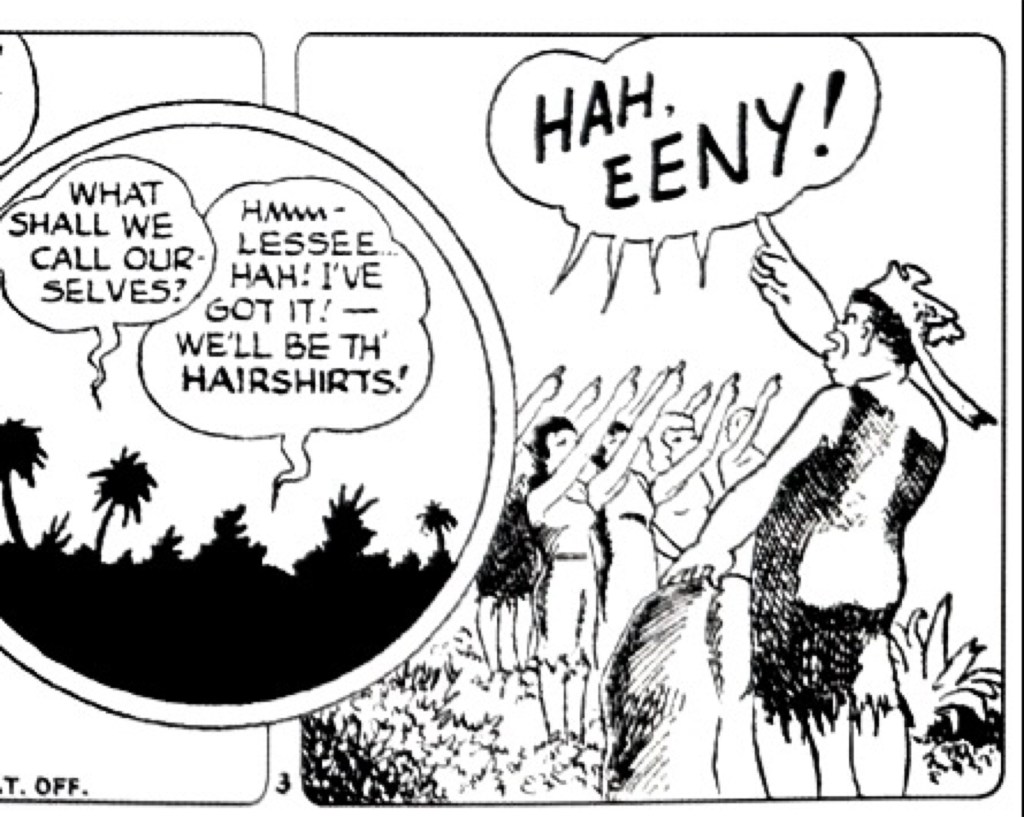
The Revenge of the Reprints: Recent Books for Classic Comics Lovers

It has been a minute – or maybe a year? – since I rounded up my favorite books that revive or explore the great American comic strip or pre-code comics. I don’t know why we are experiencing such a torrent of good reprints from major publishers as well as a number of small enthusiast presses rediscovering artists. My hope is that a new generation of graphic storytellers are being inspired by their predecessors. The graphic novel genre has gone mainstream, and that means our respect for visual storytelling has evolved. And so in various ways the history of the modern comics medium has become important to help fuel the imaginations of a new generation of artists. Let’s dig in.

Continue reading

Queer-Coding A La 1948: Buz Sawyer Flexes His Pecs

The sublimations of the American comic strip are legion. Whether it is the unbridled eroticism of Flash Gordon or the beefcake of Prince Valiant, the kinkiness of The Phantom or the stripteasing of Terry and the Pirates, the most “innocent” of modern American mass media contained many quiet erotic sub-texts for horny readers across ages and sexes. Case in point, Buz Sawyer in the 1940s. I have no idea what was going on with Buz’s artist Roy Crane and writer Edwin Granberry in the 1947-48 years, but the strip seemed a bit obsessed with gender-bending, sexual stereotypes and masculine identity across storylines in those years. In two adjoined episodes, our two-fisted hero deals with the barely-veiled advances of an effeminate gun-runner and sexual harassment at the hands of a masculinized female Frontier executive. This is one of those many cases where the most reserved and adolescent of modern media, the family newspaper strip, traded in suggestive imagery and innuendo that would never pass muster in other media of the day.

Continue reading
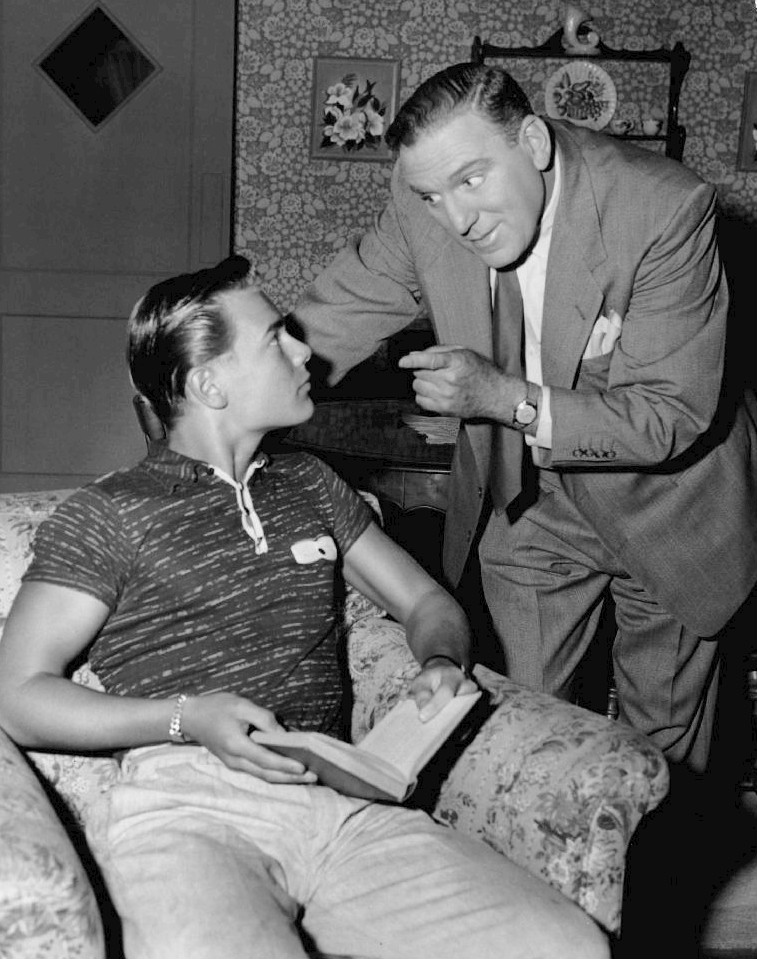
Chester Riley, Al Capp, and Dr. Wertham: The Great Comics Crisis of…1948?

Conventional wisdom holds that the infamous moral panic around crime and horror comics bloomed in 1953 with the popularization of Frederic Wertham’s dubious “research” in general magazines and the formation of Senate subcommittee on juvenile delinquency. But the proliferation of Wertham’s landmark Seduction of the Innocent (1954) diatribe against comics, and the haranguing of Senators Kefauver and Hendrickson was just the culmination of a controversy that had accompanied the rise of more adult and violent comic books throughout the 1940s. Parents worried about the bullets and blood that flew across the color pages of blockbuster titles like Crime Does Not Pay and its many imitators long before the EC titles and their followers horrified parents and legislators even more.

Continue reading
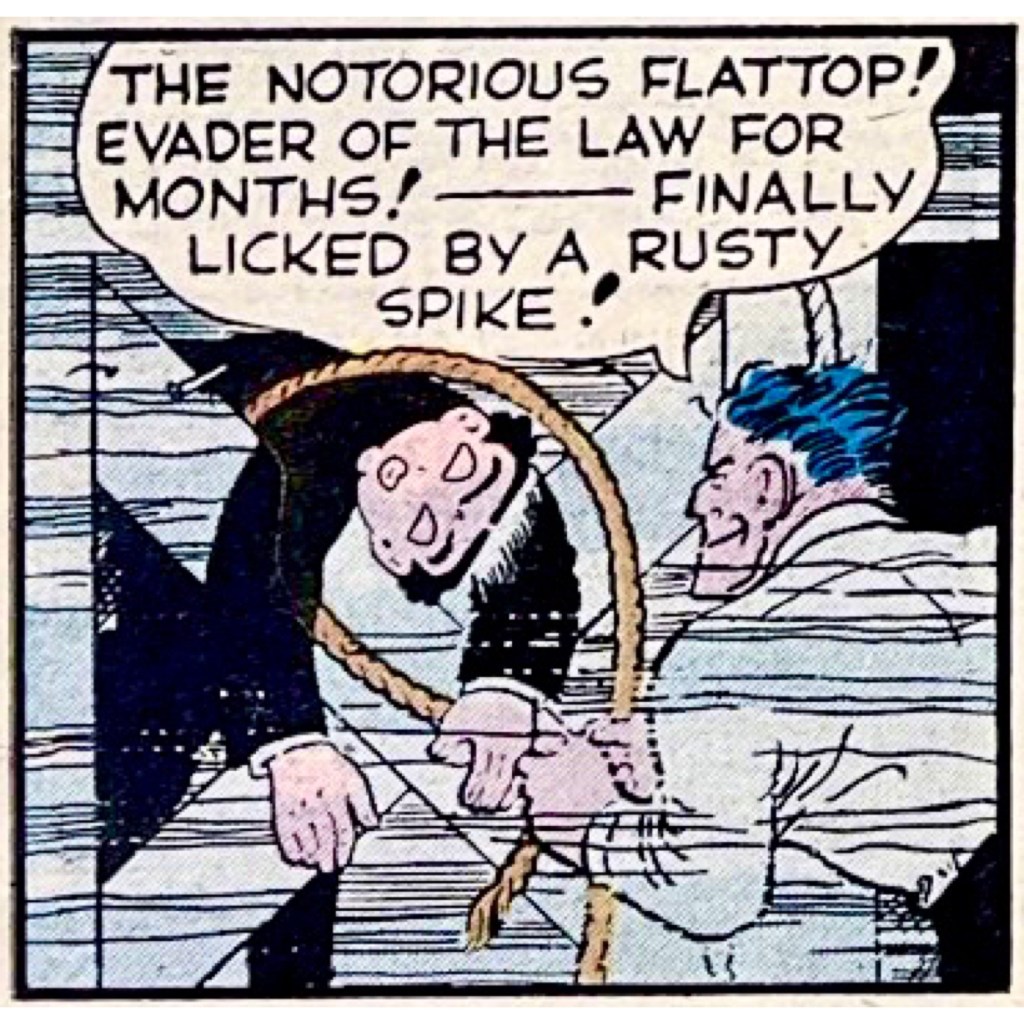
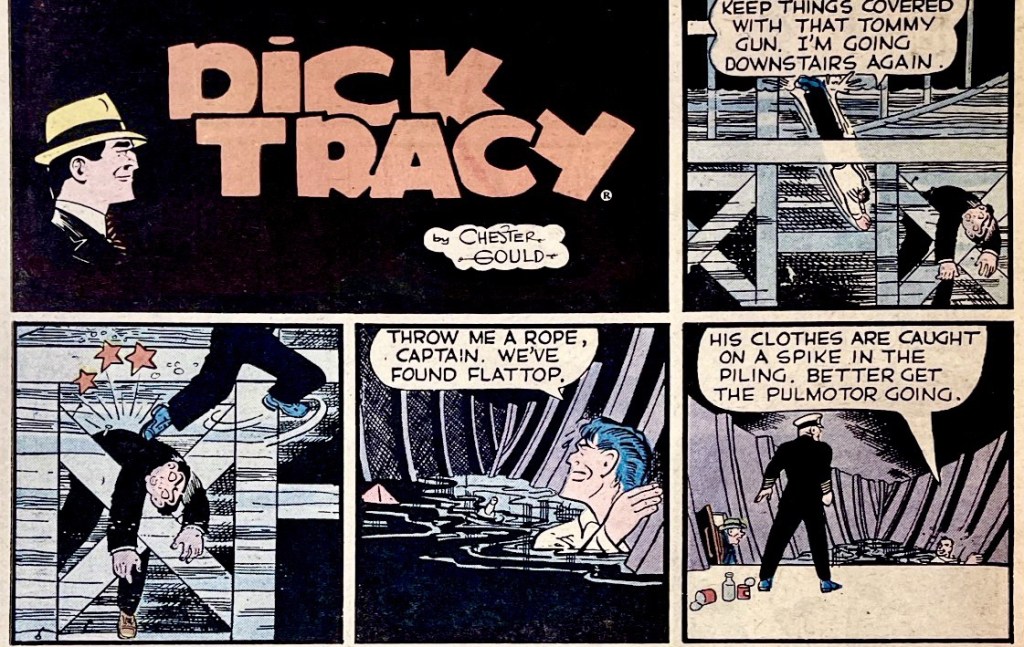
The Death of Flattop (1944)

Feels like peak Gould. This May 1944 Sunday shows off Gould’s visual sense of place, love of clean geometry and perspective, retributive Justice.
More than Mopsy: Gladys Parker Is Back In Fashion

Why don’t we hear more of the marvelously talented, witty, prolific American cartoonist Gladys Parker (1908-1966)? She was the mother of the long running strip and comic book character Mopsy. More than that, Parker was among the better-known cartoonists of the day, in part because she was also a fashion designer to both the general public as well as Hollywood stars. Meanwhile, Parker was a frequent item in the celebrity gossip columns of the 1940s as she dated a noted boxer and character actor. 

Why don’t we know more about Gladys Parker? Well, obviously for the same reasons we don’t know more about Nell Brinkley or Ethel Hays or Jackie Ormes, despite the high quality of their work and substantial public profile in their own day? Not only has the comics field itself been overwhelmingly male dominated, but its history has been written almost entirely by men. And yet, as I myself encounter these overlooked artists as I make my way through comics history, I am struck by their singular visions, how different their aesthetic and social perspective were from their male brethren. To miss these women in our history of the medium is to narrow our understanding of the rich creative range the comic strip reached in the last century. Brinkley used color, facial and emotional expression, line, the contours of the Sunday comics page in ways no other artist did in the 1910s and 1920s. Ormes’ racial satire was sharp and blunt at a time when American needed it desperately. And Parker brought the feminine wit of Hollywood romantic comedy into the comics page and merged the aesthetics of fashion with those of the comic strip into a drawing style that was unlike any other on the comics page.

Continue reading

A Bit of Prince Valiant Beefcake

While it goes without saying that Hal Foster was a much more buttoned down, stiff and restrained adventure artist than the ebullient Alex Raymond, he had his moments of gratuitous cheesecake. Here, from some 1939 sequences, Prince Valiant strips down for some manly bathing.

Hal Foster was never shy about pouring on the bloody swords, celebrations of battle, corpse-coated fields of war. In fact some foreign markets censored the strip when they felt Prince Val’s love of war crossed the line. But showing skin? Not so much.

In the Air: Barney Baxter Flies With Style

Even comics aficionados barely recall the very popular aviation adventure strips of the late 1920s and 1930s, perhaps because, well, they just weren’t very memorable. Tailspin Tommy, Scorchy Smith, Smilin’ Jack, Flyin’ Jenny, and Skyroads, to name a few, were definitely of their time, tapping into the most romantic technology of early 20th Century – aviation. The wild tales of WWI air battles, the triumph of machine and human endurance in Charles Lindbergh’s solo crossing of the Atlantic, the mystery of Amelia Earhart’s disappearance fueled film, pulp magazines, and even popular science journals with an admixture of human spirit, adventure to far off lands and technical jargon that many audiences, especially boys, ate up. The strips captured that blend. Many of them were created by pilots who brought their love and knowledge of flight to the strips. Much of the art was unremarkable. Noel Sickles’ work on Scorchy Smith was a legendary exception, and Russell Keaton had a polished and breezy style in Flyin’ Jenny. For the most part, however, aviation cartoonists were more in love with the planes than their own characters, and they tended to focus effort and attention on the planes themselves.

Frank Miller, however, brought Barney Baxter in the Air (1935-1949) a special whimsy to the genre both in his characterizations and line work. From the Art Deco/Machine Age feel of his lettering to the rounded nature of his figures, everything about this strip feels sophisticated, considered, modern . His faces are comprised of a few deft dabs of ink. The upholstered texture of his people and objects are somewhere between big foot cartooning and classic adventure realism. And this allows him to bring his style to either extreme as it fits the scene. It reminds me of (or foreshadows) Rick Geary, whose style I also love. Miller is adept at using a variety of panel framings to keep the eye energized across the progression. His narrower close-up panels call out important moments of gesture or expression. And he has such a stylized way of rendering shadows in a pointillist style. It all adds up to a visual signature that light, witty, and yet functional as a vehicle for adventure. The feel is similar to Capp’s Li’l Abner.

His skills often came together in some truly creepy villains.

Miller lavishes attention and invention on his Sunday pages. He is breaking frame, manipulating panel shapes and sizes with the kind of energy we usually associate with McCay, King or Sterrett. The detail and color in his rocky backgrounds are just wonderful for establishing setting. He maneuvers our point of view radically from panel to panel to bring us into the scene by circling us around it. And just look at that open parachute as the visual centerpiece of the whole layout. If that isn’t an homage to McCay, I don’t know what is.

Frank Miller, obviously not the Frank Miller of later comic book fame, ran the strip throughout its 15 year span and until his premature death in 1949.