Queer-Coding A La 1948: Buz Sawyer Flexes His Pecs

The sublimations of the American comic strip are legion. Whether it is the unbridled eroticism of Flash Gordon or the beefcake of Prince Valiant, the kinkiness of The Phantom or the stripteasing of Terry and the Pirates, the most “innocent” of modern American mass media contained many quiet erotic sub-texts for horny readers across ages and sexes. Case in point, Buz Sawyer in the 1940s. I have no idea what was going on with Buz’s artist Roy Crane and writer Edwin Granberry in the 1947-48 years, but the strip seemed a bit obsessed with gender-bending, sexual stereotypes and masculine identity across storylines in those years. In two adjoined episodes, our two-fisted hero deals with the barely-veiled advances of an effeminate gun-runner and sexual harassment at the hands of a masculinized female Frontier executive. This is one of those many cases where the most reserved and adolescent of modern media, the family newspaper strip, traded in suggestive imagery and innuendo that would never pass muster in other media of the day.

Continue reading

Li’l Abner’s Culture Wars: Superman, Sinatra and Zoot Suits

One of the pleasures of Al Capp’s Li’l Abner across the decades was that the strip never took itself or any other pop culture phenomenon very seriously. In fact, Capp may have been at his best in his absurdist parodies of pop culture fads, rising celebrities, and politics. Satirical proxies for Margaret Mitchell, John Steinbeck, Frank Sinatra, Marilyn Monroe, Elvis Presley, Marlon Brando showed up in the strip at the height of their popularity. Larger issues like the Cold War, student unrest, Third World politics all found their way to Dogpatch, or Dogpatchers somehow found their way to them. Ironically, what started as a comedy about a backwards and alienated community of big-hearted naives, was really illustrating in its own light way how interdependent and mass mediated the world had become by the 1930s. In Capp’s hands, Dogpatch is anything but disconnected from the rest of the world. The wide world rushes through the hillbilly berg.

Continue reading

Brenda Starr Comes Out Swinging

Like its eponymous heroine, Dale Messick’s Brenda Starr strip had to conquer the systemic sexism of the newsroom to make her mark. It launched in 1940 in constricted, Sunday-only syndication under the skeptical stewardship of New York Daily News legend Captain Joseph Patterson, after he had rejected Messick’s multiple submission for female-led adventure strips. According to lore, Patterson was unabashed in dismissing women in cartooning, claiming to have tried and failed with them in the past, “and wanted no more of them.” Messick’s samples were salvaged from the discard pile by Patterson’s more open minded assistant Mollie Slott, who helped the artist rework her ideas to feature an ambitious and dauntless female reporter. The artist was acutely aware of the gender deck stacked against her. Born “Dalia” Messick, she deliberately adopted the androgynous “Dale” to help get her strips considered more seriously. Slott convinced thge reluctant Patterson to give this red-headed firebrand and Rita Hayworth lookalike a try. History was made.

Continue reading

Before the Fold-In, Al Jaffee’s (1921-2023) Tall Tale Telling

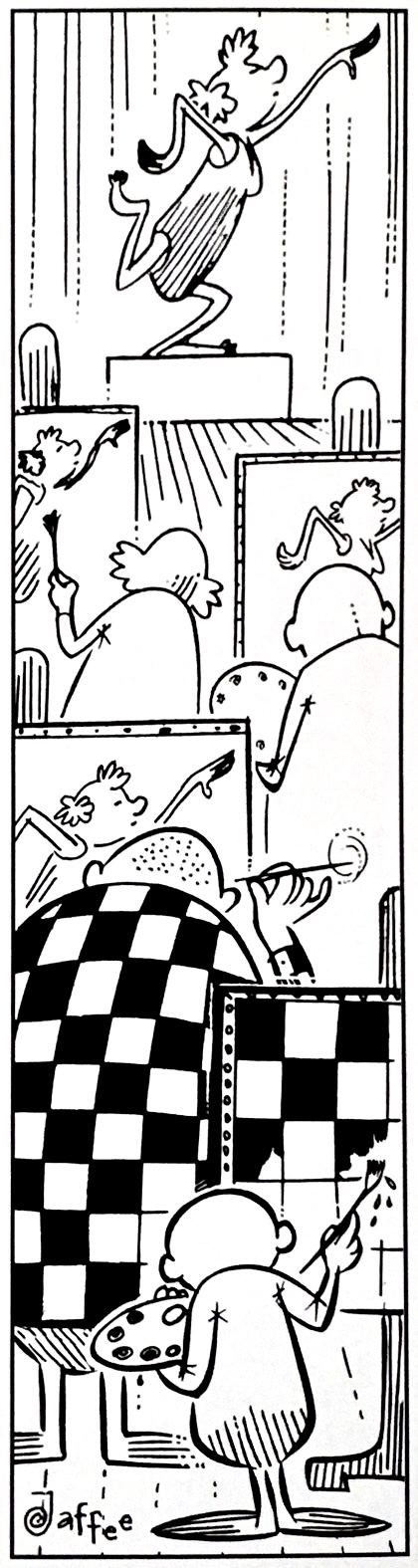
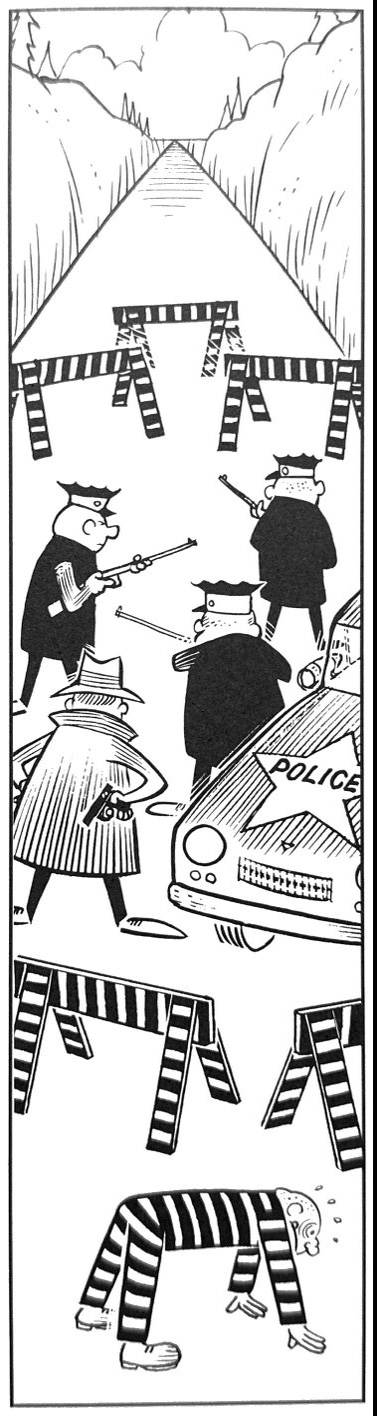
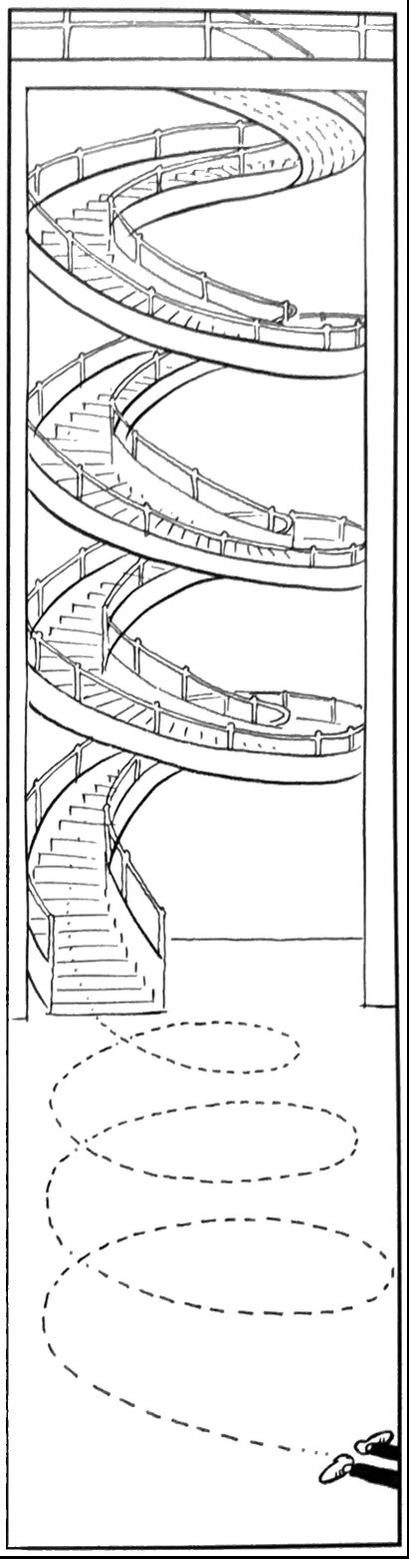
With the sad passing of Al Jaffee this week, cartooning lost its oldest and longest-working artist. In fact, the man behind 55 years of MAD magazine Fold-Ins held the Guinness Book of World Record for having the longest career in the field. But his 1964 invention of that classic foldable end-page gag was not his first stab at rethinking form. His inspiration for the fold-in was an inversions of the then-trendy magazine fold-out. But it turns out that zigging when others zagged was a bit of a thing with Jaffee. Back in the mid-1950s he broke into the syndicated newspaper comic strip market by literally turning convention on its side. He called them Tall Tales.

Continue reading

Happy Birthday, Dennis

On March 12, 1951, Hank Ketcham’s Dennis the Menace premiered. Ketcham’s artistry only looked effortless. In fact, every aspect of the strip was thought through and expressive of the strip’s deeper joys. I wrote about this early last year, but resurfacing it for Dennis’s birthday. And here is a bit of 1950s gender studies, via Dennis.

Hugh Hefner’s Cartoon Chicago

Hugh Hefner was famously supportive of cartooning in the pages of Playbpy for decades, in part because he was a frustrated artist himself. Samples of his own attempts at single panel humor surface from time to time in biographies of the legendary publisher and the history of his landmark magazine. Less well-known is that in 1951 and prior to his meteoric Playboy fame he published a collection of his own comic work focused on the theme of his beloved Chicago., That Toddlin’ Town: A Rowdy Burlesque of Chicago Manners and Morals. This was very much an insiders’ cartoon revue, as Hef broke the volume into Chi-town’s famous districts and infamous institutions like The Loop. Michigan Avenue, Bug House Square, North Clark Street, The El, and the activities for which they were famous: strip bars, b-girls, the city’s multiple newspapers, soapbox orators.

Continue reading

Like a Comet: Frazetta Races In

On Jan. 28, 1952, Frank Frazetta’s breathtaking talent for dramatically charged action and erotic, muscular figure drawing finally made its way into newspapers with one of the most gorgeous, if short-lived, strips of the decade, Johnny Comet. The eponymous adventure was set in the racing world, a theme that should have tapped naturally into the car customization craze of the 50s. It was ceonceived and distributed by the McNaught Syndicate, ghost-written by Earl Baldwin, but co-credited to Frazetta and 1925 Indianapolis 500 winner Peter DePaolo who served more as an advisor and was attached to the project to lend an air of authenticity. Hobbled perhaps by uninspired scripting, Johnny Comet failed to catch on despite its standout visual poetry.

Continue reading