“Fake News” Hot Off the 1894 Presses

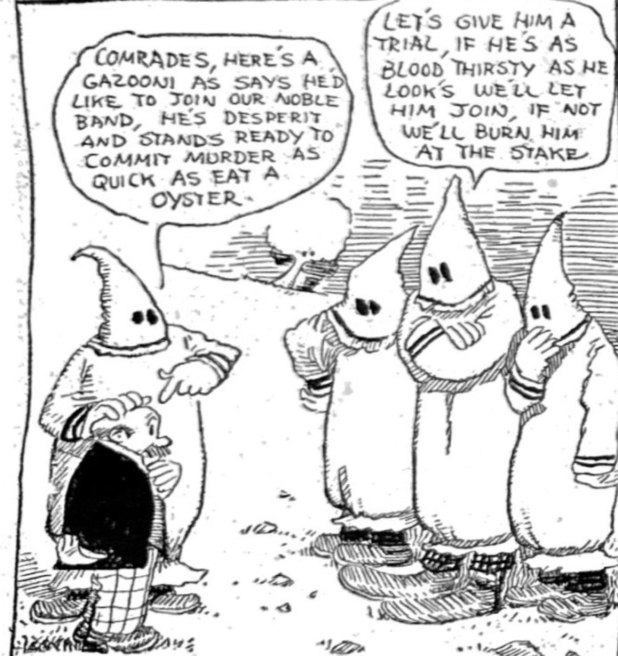
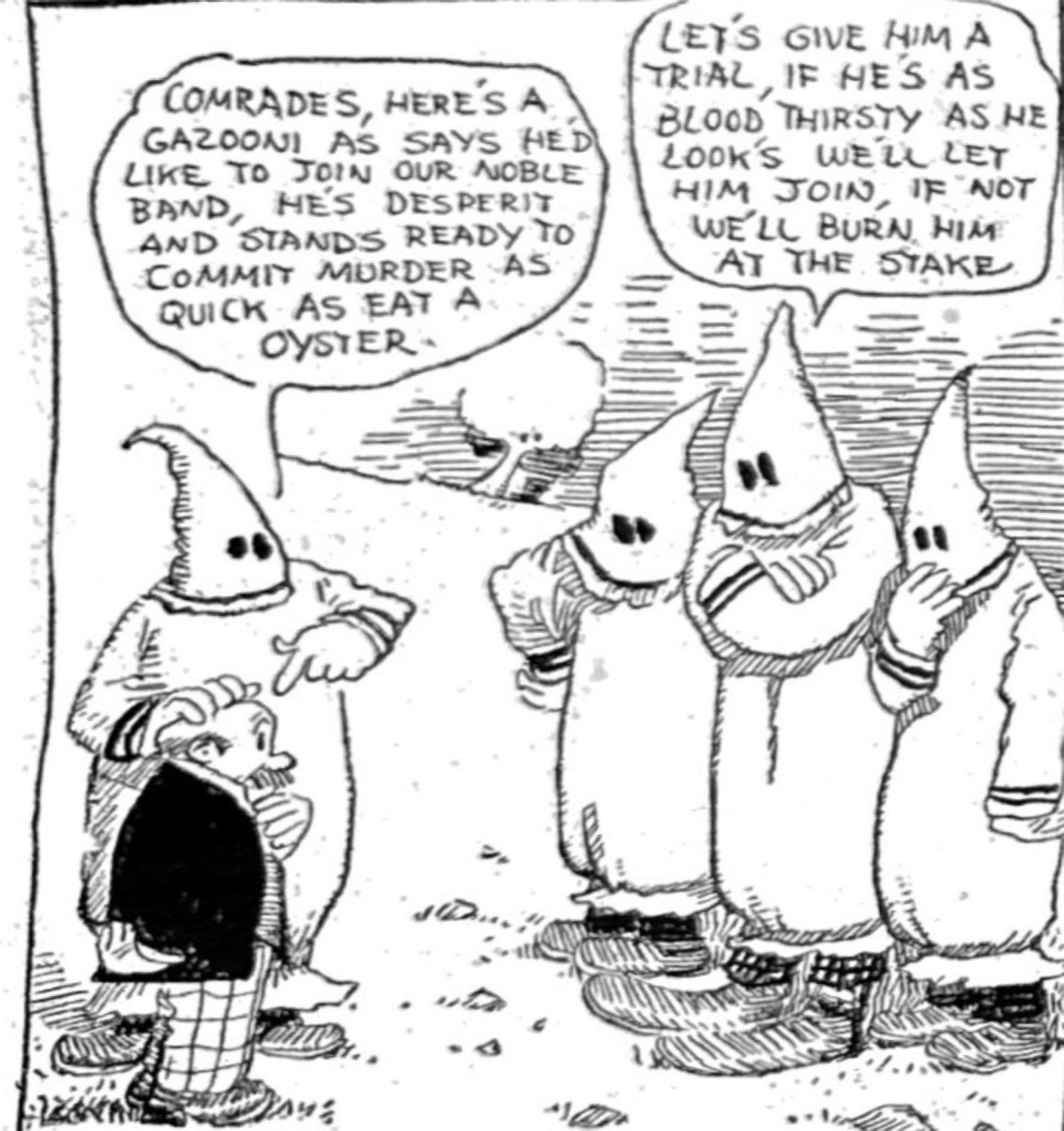
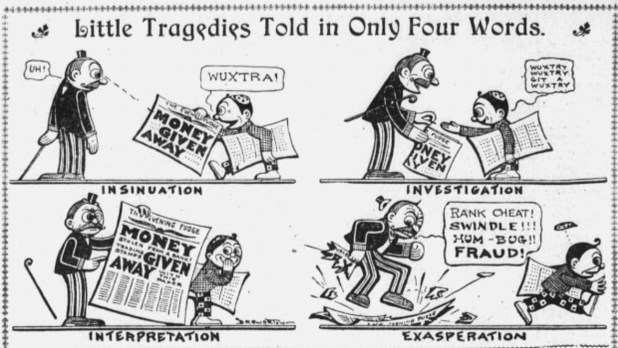
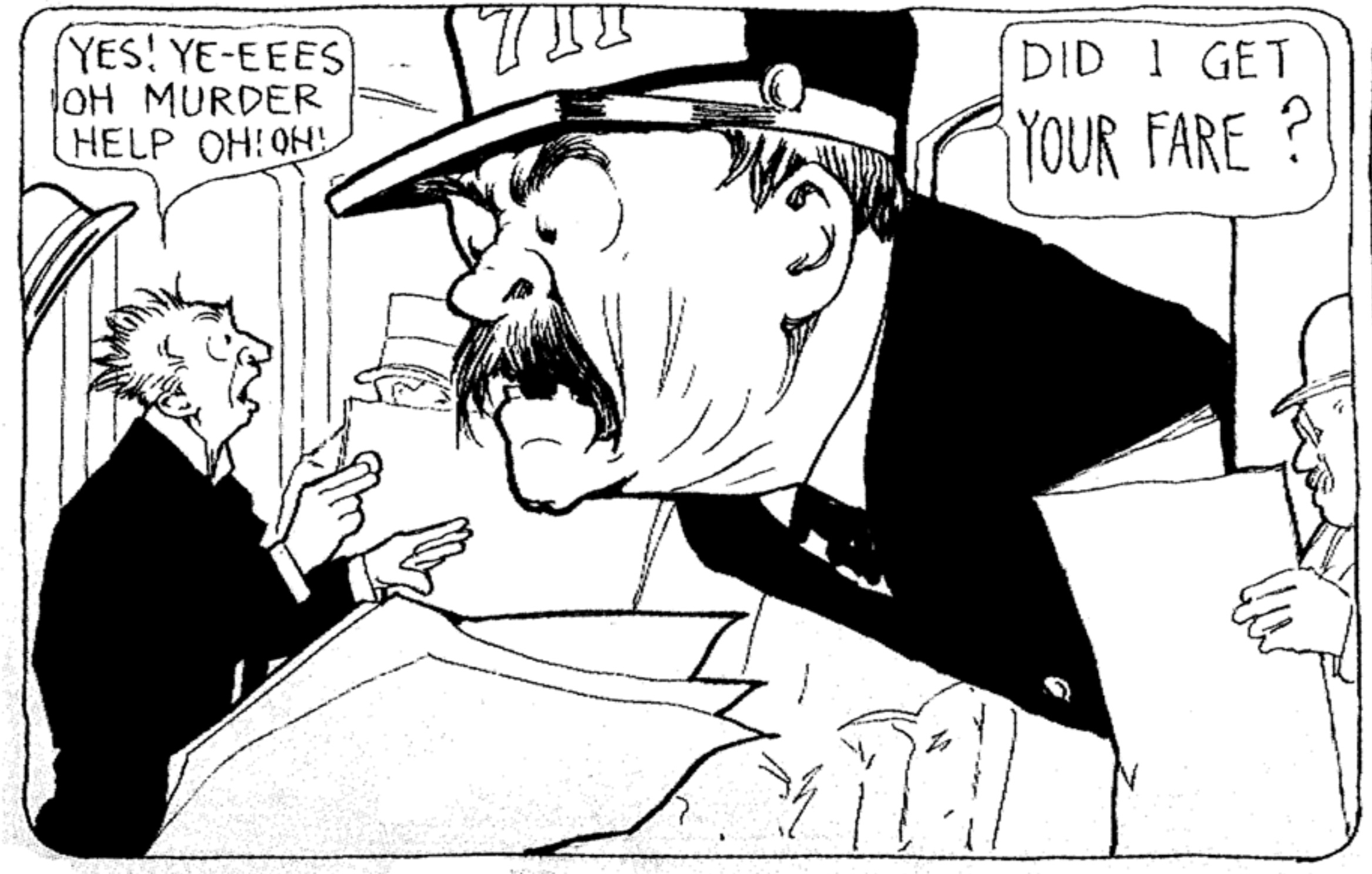
The Weekly Weird. In 1894, Puck magazine took aim at the rising influence of increasingly sensational and less costly city newspapers. Here, Frederick Burr Opper, who would go on to be one of newspaper comics’ founding fathers, called out Joseph Pulitzer in particular as a purveyor of “fake news.” More on the full cartoon here.

A Bigger Barks: Taschen Supersizes the Duck Man

Is a bigger Barks a better Barks? Taschen’s long-awaited Disney Comics Library: Carl Barks’s Donald Duck. Vol. 1. 1942–1950 supersizes the Duck Man, and we are all the richer for it. This is one of their “XXL” volumes, so let’s go to the tape. It weighs in, literally, at 11+ pounds: over 626 11 x 15.5-inch pages that include the longer Donald Duck stories from 15 issues of Western Publishing’s Four-Color series.  up to 1950. These include some of the greatest expressions of Barks’s quick mastery of the comic book format. In “The Old Castle’s Secret” (1948) he uses page structure, atmospherics and pace to create real suspense. His masterpiece of hallucinogenic imagination married to landscape precision surely is “Lost in the Andes” (1949). And his well-tuned sense of character is clear in creating a purely American icon of endearing greed in Uncle Scrooge in “Christmas on Bear Mountain” (1947). Of course we have seen these and many of the other stories in this collection reprinted before. So, to answer my own question, does scaling up Barks give us a better Barks?

Continue reading

Elmo Gets Hairy

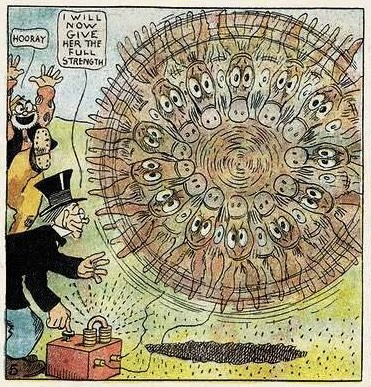
Force-fed a new brand of cereal by his kidnappers that grows hair uncontrollably, Cecil Jensen’s country rube Elmo is awash in a pool of his own tresses. More on this strange late 1940s satire here.

Recovering Hank: America’s Anti-Fascist Hero

A WWII veteran amputee who doesn’t want to journey (or save) the world. Just a grease monkey who yearns to get back to the garage, marry his sweetheart, and figure out what he and his pals’ great sacrifice really meant. That was Hank Hannigan, the titular, unlikely hero of the short-lived 1945 comic strip Hank, which creator Coulton Waugh conceived as an answer to traditional adventures. “To get a new character I go into the subways and actually draw them,” he told Editor and Publisher before Hank’s April launch. “I want the people of America to stream into the strip.”

Continue reading

Markets Booming, Bullets Flying, Booze Flowing – Happy 1926!

New Year’s Day in Chicago 1926 felt like peak 1920s. The common tropes of the “Jazz Age” congealed on the front page of Tribune: “Gay, Wet New Year’s: 11 Shot – Prosperous U.S, Forecast by 1925 Success” barked the headline. Front page stories reported that the manufacturing and consumption were driving demand-side growth to new levels. Meanwhile, casual gunplay celebrating New Year’s Eve resulted in one dead child and multiple woundings. And at the height of Prohibition, citizens and journalists openly mocked officials trying to enforce alcohol bans in the local nightclubs. According to The Trib, two barely guised Prohibition agents were assigned to each club, while revelers succeeded in hiding their hooch throughout the night. One club crowd had had enough and chased the agents out the door. The cops refused to intervene, claiming that they wanted to remain “neutral.”

Continue reading

Historic Christmas Comics: A Holiday Journey

The grand tradition of the Christmas-themed comic episode started pretty much with the modern comic strip itself. Topicality was baked into the newspaper format. But as recurring characters and extended storylines developed, artists found a range of creative ways to integrate holiday greetings with their strips. Today, let’s dance across some noteworthy, even historic, Christmas funnies. Winsor McCay’s Little Nemo in Slumberland often referenced an upcoming holiday. In 1906, Nemo dreams up a pony as his own present.

Continue reading

A Merry Dick Tracy Christmas

Christmas always had a special place on the comic strip page. Many artists creatively wove Yuletide celebrations into their storyline or just broke the fourth wall for a day to send holiday messages directly to readers. Over the next few days we will recall some of the most creative examples. But let’s start with one of the heartiest celebrants of the holidays, Dick Tracy, and trace how he and Chester Gould treated the holiday.

Continue reading