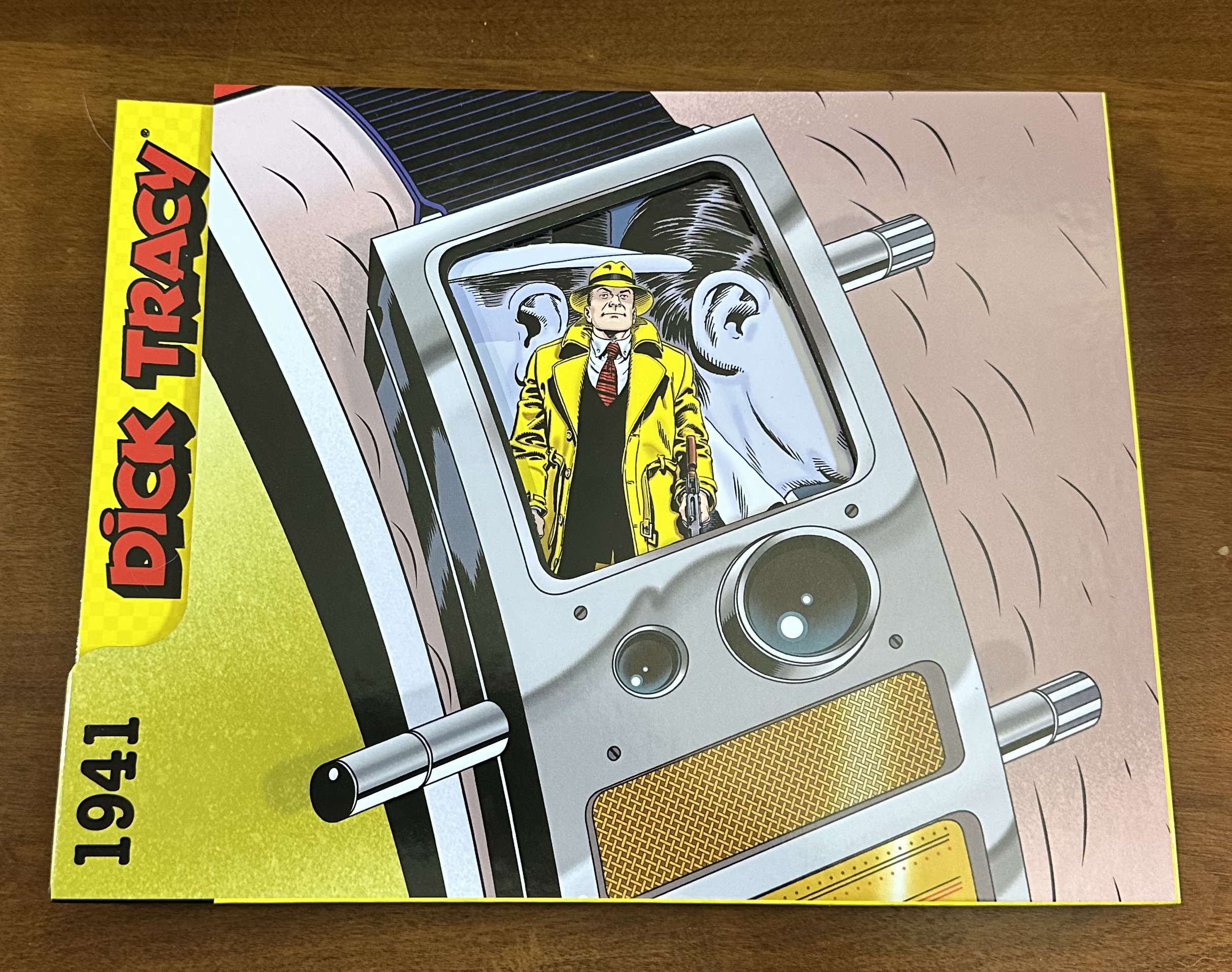
A lot of comic strip fans have been looking forward to these updated early volumes of The Complete Dick Tracy. Here are Vols. 1 and 2, just in today. This project reprints the first six volumes in the larger format that matches the rest of the series.
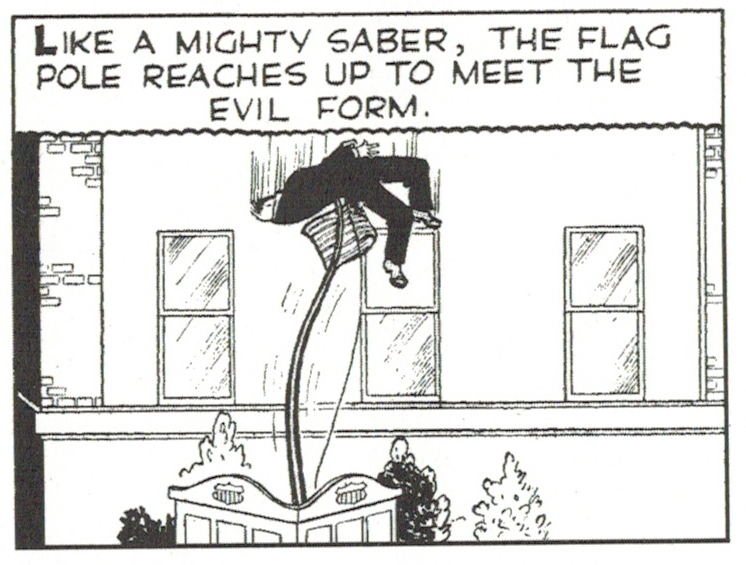
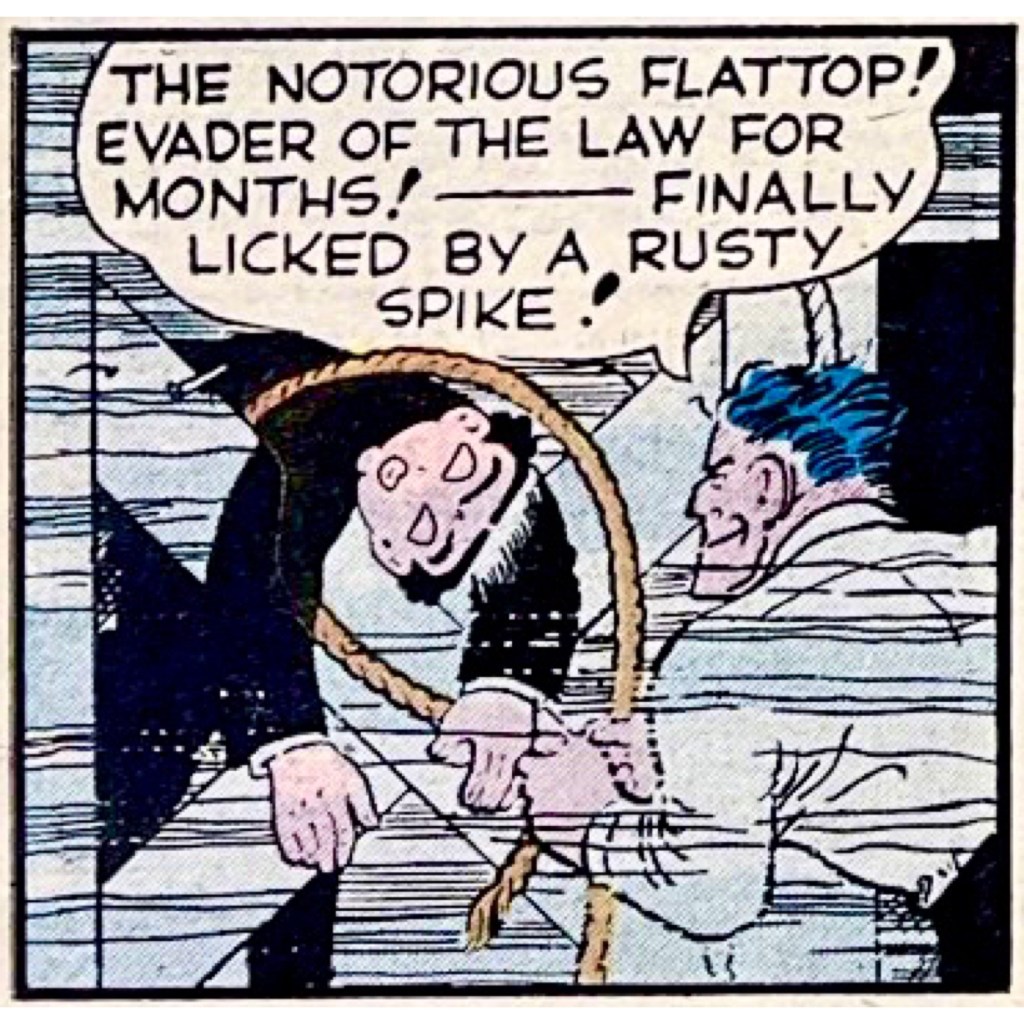
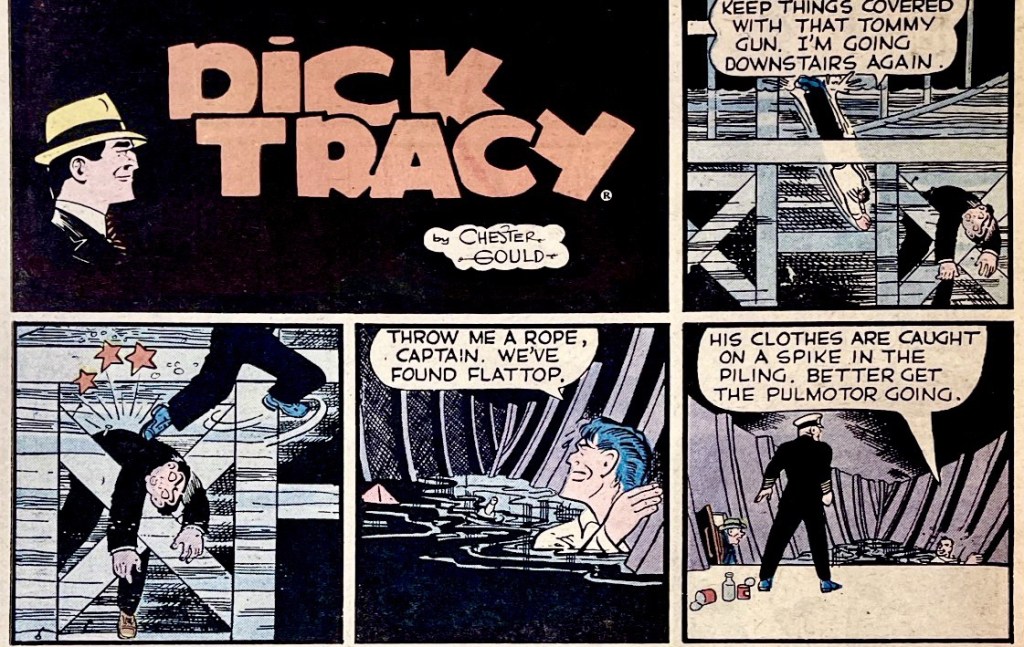
By the end of his career in 1977, Dick Tracy creator Chester Gould was notoriously reactionary. His disdain for the counter-cultural forces at play in the 1960s and 70s, for liberal explanations of criminal behavior, were clear in the strip itself. In fact, his resistance to leniency in America’s legal system, and progressivism in general, had been baked into his epic since its roots n the gangster era of 1931. From the start, Dick Tray was an exploration of individual valor and evil rather than institutional or social forces. Gould’s take on the 50s moral panic around “juvenile delinquency” via Flattop Jr. is an excellent example. And the moral universe of Dick Tracy hinged on the personal evil of villains(usually embodied in physical abnormalities) and the poetic symmetry of their deaths via some kind of retributive justice.
Chester Gould’s Dick Tracy was created in the 1930s as a response to the romanticization of gangsters and declining respect for law enforcement. And throughout its run under the notoriously conservative artist made no secret of his disdain for many modern trends. In the 1950s when mania around “juvenile delinquency” dominated popular culture, Gould added to his famous rogues gallery a few of these teen terrorists. Most notable for its outright weirdness (even for Gould) are the 1956 episodes spanning Joe Period and Flattop, Jr., the son of one of Tracy’s most famous nemeses of the prior decade.
Foreshadowing some of the more colorful arch-villains in the 40s and beyond, Dick Tracy’s early 1933 encounter with Stooge Viller was a standout as Chester Gould developed his style and focus. Stooge is imported to the city by a broken crime ring to discredit the now-famous gangbuster Dick Tracy. He is a master pickpocket and a bit of an effete dandy. He successfully frames Tracy and even causes Tess Trueheart to fall out with the love of her life.
Here we get our introduction to Stooge.
Stooge plants counterfeit bills on Tracy, who eventually is confronted and accused.
Our hero feels the world collapsing around him and descends into the bane of masculine mythos – self-doubt.
By 1933, Chester Gould ‘s overall style is gelling around those signature thick lines and dense bodies, those wonderful masses of black. But he is also experimenting with evocative design ideas. Here Dick’s emotional nadir, Tess Trueheart’s rejection, is depicted as a full-on silhouette strip.
And adding insult to male ego injury, Stooge moves in on the disillusioned Tess. In the strip’s early years especially, Gould deployed a range of female stereotyping on poor Tess. Often flighty or naive, she was a gender foil for the dripping masculinity of Dick Tracy. As we covered in an earlier post, neither Gould nor his avatar Tracy were progressive feminists by any means.
While Gould’s style and design sense evolved mightily throughout the 30s, and his imagination just got zanier, one thing never evolved – his reliance on unlikely plot contrivances. Viller’s scheme and Tracy’s innocence are revealed to Tess when she finds a draft of Stooge’s wire to Eastern gangsters that conveniently narrates his entire plot against her estranged boyfriend.
When Tess ends up getting shot in the course of her misadventure with Stooge, we have to wonder if this is Gould himself expressing some resentment towards her loss of faith in Dick. The panel in which she declares herself a fool is a wonderful composition that frames her frail, swooning, naive femininity against the burly expanse of the Chief’s grimace, perhaps voicing Gould’s own disappointment in her.
When Dick and Tess do finally reunite and reconcile, Gould exercises what would become a signature move for him, a radical juxtaposition of mood and action from one panel to the next. Gould had a talent for using the panel structure to jar the reader, to interrupt a mood in one panel with a surprising twist in the next. In this case a romantic interlude is upset by the capture Stooge inexplicably trying to slit his own throat.
It goes without saying that in a strip focused mainly on dramatizing the masculine prowess of his hero Chester Gould showed no understanding or sympathy for his female characters. Not surprisingly, he is equally inept even at drawing human intimacy. Tess and Dick’s kiss has all of the romance and finesse of a fender bender.
And yet we wee in the Stooge Viller episode Gould clearly expanding his palette and moving towards more stylized approach to depicting character and capturing mood and emotion especially through shadows and literally dimming the lights on scenes that try to dramatize deeper emotion.
Stooge Viller would be among a small handful of Tracy villains to recur over many years. He proves to be a deft nemesis in the detective’s early years. He is a clever schemer who seems smarter than the glorified thugs of the earliest strips. At Stooge’s hands, Tracy is put out to the physical and psychological wilderness. Stooge not only frames Tracy as a counterfeiter and gets this beloved cop drummed from the force, but he steals Tess’s affections. Tracy’s career, reputation and girl are taken from him all at once, a true trifecta of masculine humiliation.
The hero of pulp adventure seemed compelled to enshrine masculinity by having it beaten down. In order to triumph, heroes must be bound, trapped, tortured, emasculated or simply ruined by villainy before emerging from humiliation to assert their power. This eccentric opera of masculinity in pop fiction has always led to weird homo-erotic depictions of S&M, bondage, dominatrix encounters, subjugation, and banishment of all sorts. The classic heroes of myth had to suffer taxing encounters with nature and monsters to complete their quest or rescue the land. But the peculiarly American style of pulp heroism often required male humiliation of some sort in order for our hero to assert the righteousness of his masculine power.
This wise-cracking cigarette girl, seemingly working in an underground speakeasy was an odd “topper” strip for this wildly popular strip. The signature on the fourth panel is the giveaway, of course.
Cigarette Sadie was the filler strip for the Sunday Dick Tracy episodes. Considering the the straight-laced righteousness of Tracy, this was a bit of a counterpoint to the strip’s buttoned-down sensibility. adie is the featured collectable “stamp” in this edition, but in other weeks the collectible usually involved a character from the Tracy strip.
Even 30 years into one of the most successful runs in comic strip history, Chester Gould’s Dick Tracy continued to promote itself to new newspapers that still hadn’t syndicated the iconic hero. This ad ran in Editor & Publisher, the longtime trade bible for print periodical publications. Of course, this “man of stature” led the most grisly, violent and truly weird of all American comic strips. It was also one of the most compelling. For a gallery of gruesome villain deaths, see this earlier post. On the impaling of The Brow. On the general strangeness of Gould’s imagination. On Gould and Tracy’s conservatism.