In the New York World on April 5 1904, a giant but apparently friendly robotic beast vaulted from an unfinished New York City subway entrance to address some of the city’s most pressing concerns. Daily, and for the next week, this cartoon “Rapidtoodleum” offered rapid transit that solved for a much-delayed subway project, exposed gambling in Harlem, proposed an alternative to overpriced city housing, outpaced a newfangled automobile, and lampooned the florid fashion in women’s hats.
Even taking a superficial glance across Russ Manning’s introduction of Star Wars to newspaper comics and Al Williamson’s subsequent pick up of the series is a contrast in different talents. Manning, heralded for his years on the Tarzan beat, was self-conscious of how the strip had to translate the film epic into the language of strips. He launched the series deliberately with the familiar movie characters, if only so they could ease the audience into his new stories and creations. In what is literally a handoff of villainy, his “Blackhole” acts as Lord Vader’s evil extension. But Manning crafts Blackhole visually as a newspaper strip presence, a silhouette in half tone, using shape and gradients, fading in and out, to define this malevolent force. Likewise, Lucas’ Vader was graphically a screen villain. He is defined by moving reflections of light on dark glossy surfaces, the elemental stuff of film.
Williamson’s lifetime in otherworldly comics and strips also comes through when he takes the helm after Manning’’s withdrawal. Al Williamson, who had some of the most striking sci-fi and fantasy art in pre-code comics brought that aesthetic into the strip. The photo-realistic cosmos, swathes of shadows across close-up, emotive faces, could have been cut from the pages of Weird Science, with Wally Wood inking.
One of the intrinsic appeals of the comic strip medium, I suspect, is the enduring power of craft in an age of mechanical reproduction and collaborative media. Consider the deep ironies of the modern comic strip. It was distributed by the most read mass produced media -of the last century. The reporting voice, photography, and advertising too, were industrialized, usually homogenized, event anonymized. The comic strip was one of the only non-collaborative mass media of the modern age. Assistances and syndicate editors notwithstanding, the visual voice of Capp, Schulz, McManus, Caniff et. Al. , the idiosyncratic personal vision of individual strips, was unmistakeable.
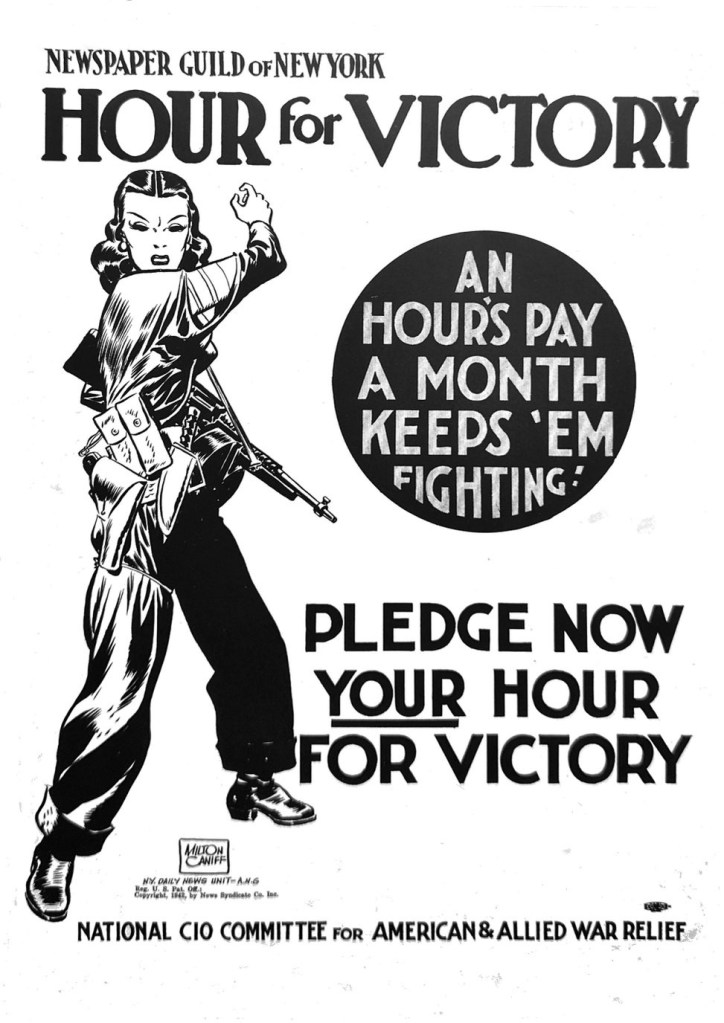
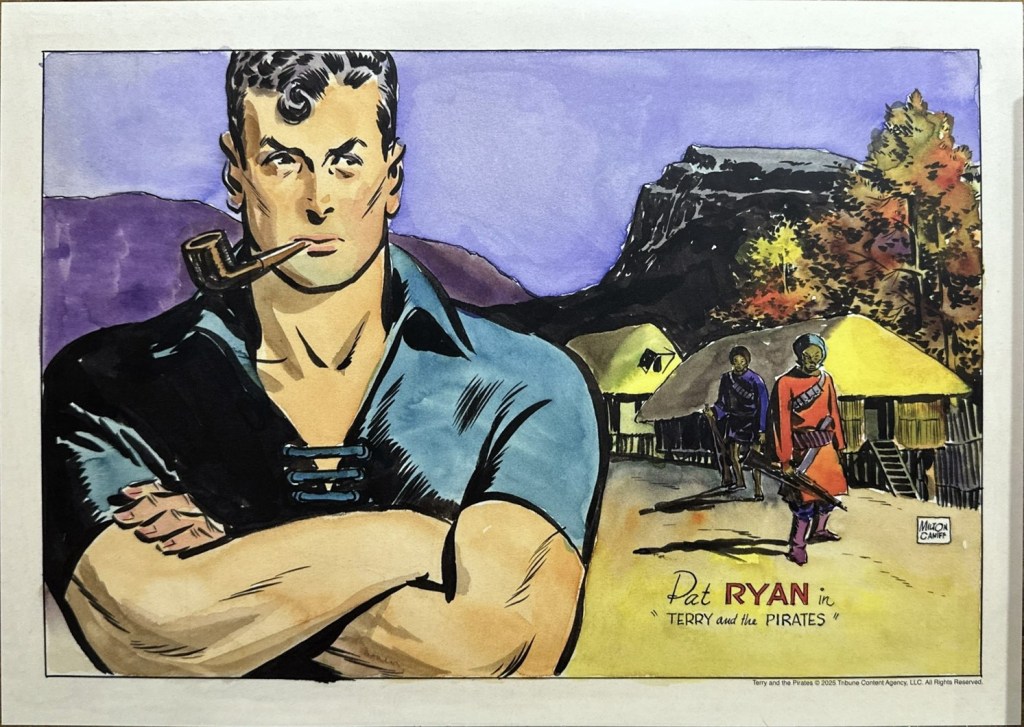
Milton Caniff’s landmark adventure Terry and the Pirates has been among the most reprinted newspaper strips of all time…and deservedly so. The artist’s fame for establishing the tone, cadence, composition and dramaturgy of the mid-century adventure genre in comics is well known. I won’t rehash it here. The latest and most ambitious reprint Terry project concluded this week when Clover Press and the Library of American Comics shipped the final three volumes in the 13 book Terry and the Pirates: The Master Collection. As I said in my initial review of the first volumes, the series is magnificent, if you don’t mind juggling oversized tomes. The sourcing of best available art, coloration and overall reproduction are the best I have seen among the many renderings of Terry over the years. This is LOAC’s second go at the strip. The imprint was launched two decades ago with a 6-volume oblong set. The first 12 volumes of the Master Collection reprint the full run from inception in 1934 through Caniff’s exit in 1946. A thirteenth volume carries new commentary, ancillary art and all of the front matter from the earlier series. Kudos to LOAC and Clover. Unlike many comic strip reprint projects that lumber for years, or peter out in mid-run, this one only took three years to complete. This final tranch of volumes also comes with a packed in bit of extra art (see above.
The United States has never made a bold move forward without anchoring it in a reading of the past. Our “Founding Fathers” have been carted out regularly to sanctify everything from The Civil War to Progressive and New Deal reforms, the Civil Rights movement to Reaganism. Americans like to frame changes in our politics and culture not as radical breaks from the past so much as realizations of original principles. It is self-evident in our own time. Consider the distance between Lin Manuel Miranda’s Hamilton and the countless founders bios from Fox News hosts. Arguing about America’s future is always grounded in a a declaration about its past.
It should not surprise us, then, that one of the most ambitious projects in the underground comics movement of the 1970s was a cartoon retelling of the war that started it all. The 50th Anniversary reissue of Gilbert Shelton and Ted Richards’ Give Me Liberty: A Revised History of the American Revolution is a cause for appreciation and reflection on the rich legacy of the 60s/70s counter-culture. Across 1975-76 in the pages of their Rip-Off Press comic books and underground newspaper syndicate, the creator of the Fabulous Furry Freak Brothers and collaborator on the Disney-defaming Air Pirates combined well-researched history with hippie irreverence.
The Plunder Island sequence of Thimble Theatre Sundays that ran from December 1933 to July 1934 was E.C. Segar’s signature epic. It concentrated most of this master’s diverse talents and blended the many genres Thimble Theatre traversed into the strips most impressive run. Fabulism, farce, adventure, sentiment, venality, romance, screwball — all and more are here. And along the way, Segar even fleshes out and distinguishes among his key characters.
There are now generations of young adults who have no memory of daily newspapers, let alone that back page and Sunday section of comics. Without that experience, I wonder how that legacy survives and continues to inspire everyday readers and young artists. If the volume of classic reprints this year is any indication, however, we graying lovers of newspapers past can’t be the only market for decades-old dailies. Many essential strips enjoyed fresh or continuing reprint projects this year that keeps the likes of Popeye, Nancy, Mandrake and more on current store shelves. Even the most reprinted strip of the last generation got revisited in 2024.




 Panels & Prose