
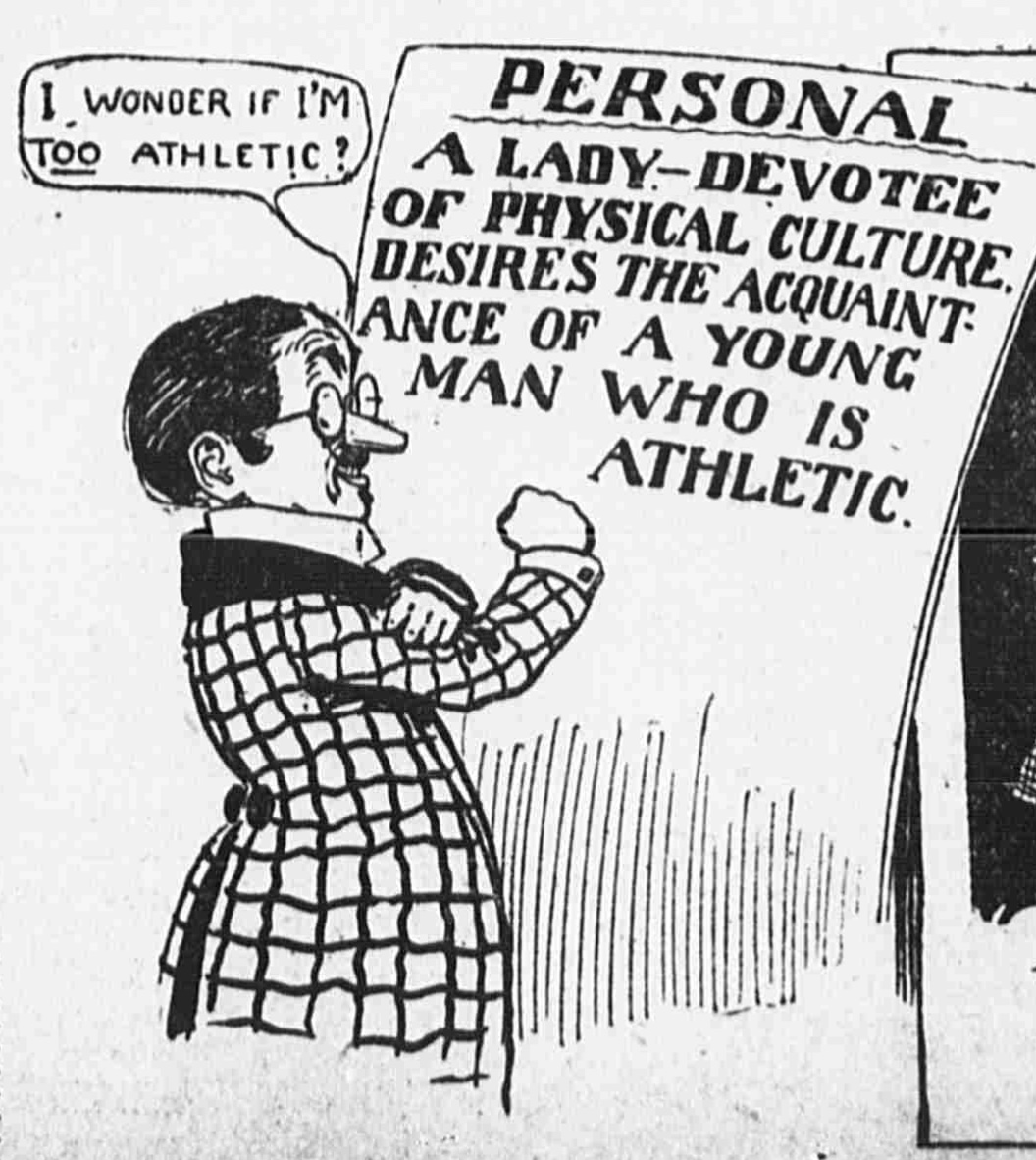
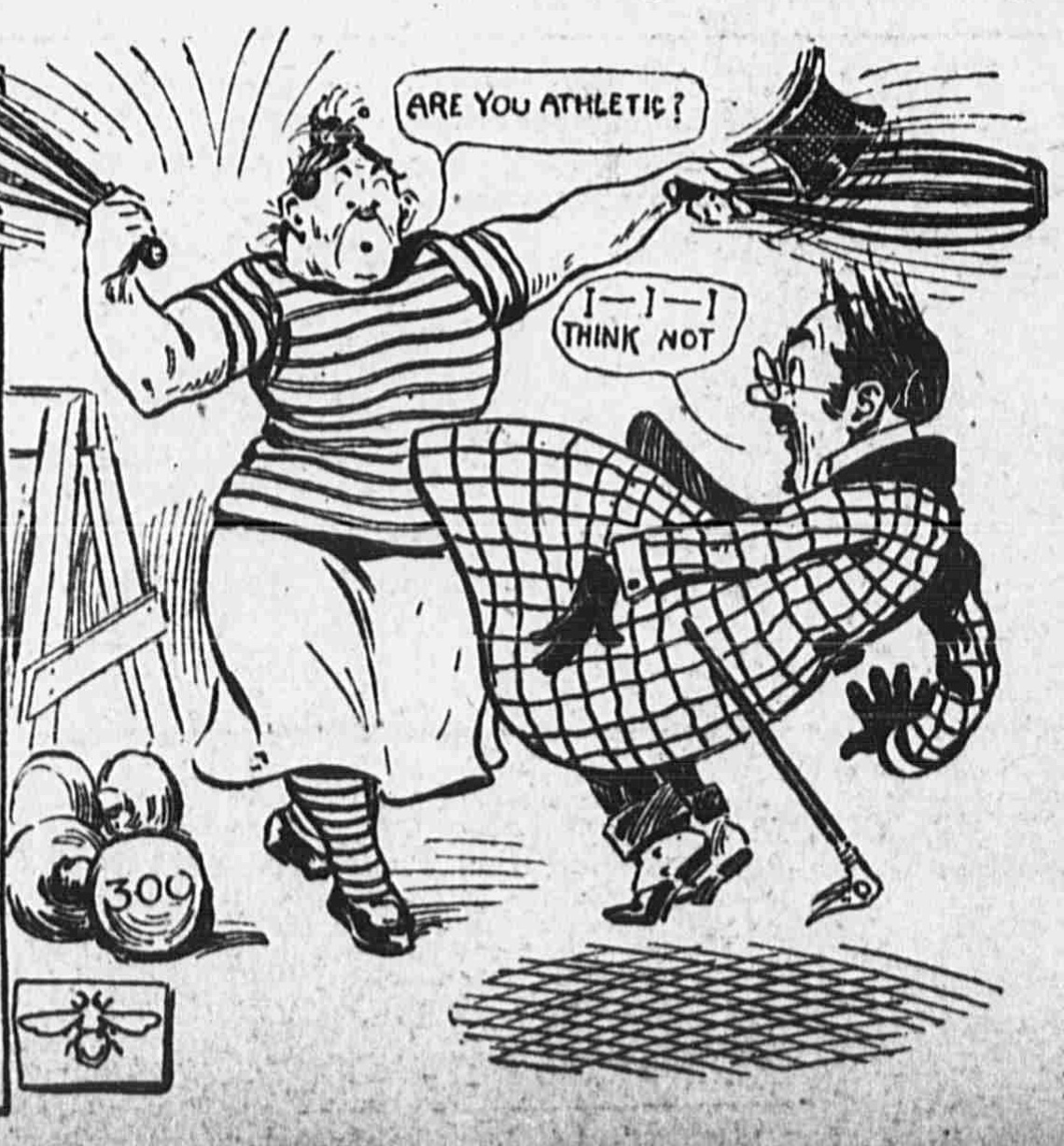
Apparently, getting a date was never easy, and the contemporary swipe-left, swipe-right mobile media is just the latest twist on an old genre – the “personals.” This short-run comics series of 1904, “Romance of the ‘Personal” Column,” in Joseph Pulitzer’s New York World reminds us that Americans were already jaded about the deceptiveness of these early versions of the dating app over a century ago. The strip followed a familiar formula. Our misbegotten suitor finds that the reality of his blind date is frighteningly different from his impression of the ad. Thus, he flees in panic; from a widow’s horde of kids, a muscle-bound athlete, and, in a racist turn that was standard in the day, a “dark brunette” who turns out to be Black. “Romance of the ‘Personal” Column” only ran a handful of times, but it is the kind of early comic strip trifle that surfaces a number of important themes in the cultural history of the first newspaper strips.
Continue readingCategory Archives: history
Gasoline Alley’s Emotional Realism
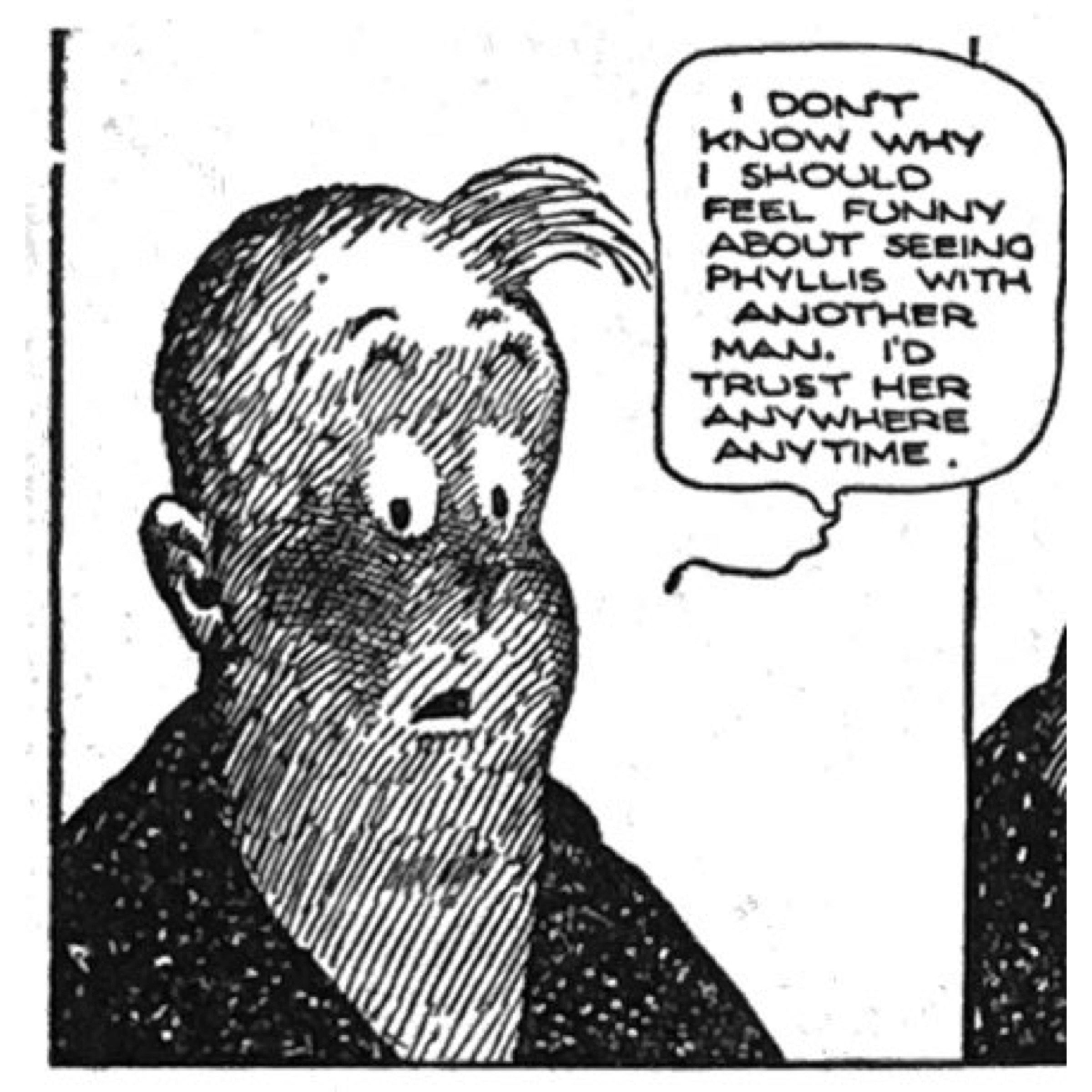


Frank King’s Gasoline Alley may be the “Great American Novel” of the 20th Century we didn’t know we had. This remarkable multi-generational saga of the Wallets evolved in several panels a day across decades, exploring the domestic and emotional lives of small town Americans during a century of intense change. And in its heyday during the post-WWI era, this strip was singular in its affectionate embrace of suburban family life at a time when post-war disenchantment overwhelmed the intellectual class, when glamour, sex and emotion dominated the film arts and magazines and glitz dominated Hollywood. When more famous social commentators like H.L. Mencken, Walter Lippman and Sinclair Lewis lampooned, decried and doubted the small town American intellect – the so-called “revolt from the village” – King celebrated what Mencken called the “booboisie.” Comics historians often characterize the post-1915 period of the medium as a kind of literal and figurative domestication. As newspaper syndication expanded into every burg, the mass media business of comics needed to shave the edges off of a once-raucous and urban-focused art form. Shifting the focus to family relations and suburbia, relying on more repartee than prankish violence, made the comic strip more acceptable to a mass audience.
Continue readingThe Rapidtoodleum Will Save Us All

In the New York World on April 5 1904, a giant but apparently friendly robotic beast vaulted from an unfinished New York City subway entrance to address some of the city’s most pressing concerns. Daily, and for the next week, this cartoon “Rapidtoodleum” offered rapid transit that solved for a much-delayed subway project, exposed gambling in Harlem, proposed an alternative to overpriced city housing, outpaced a newfangled automobile, and lampooned the florid fashion in women’s hats.
Continue readingWhen Superman Was Woke?

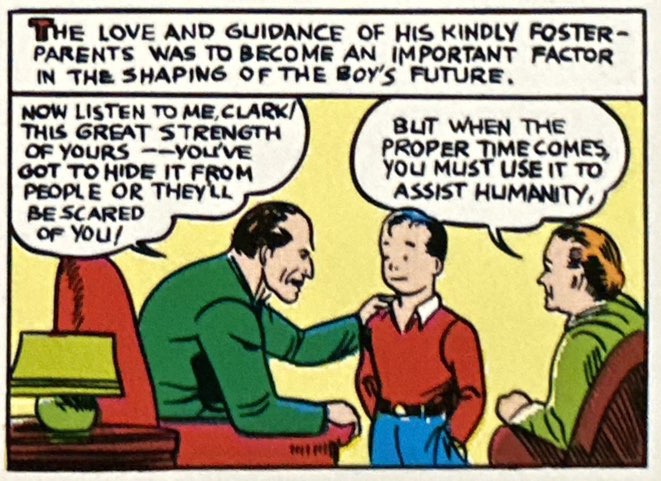
America needed a hero. That is how Superman creators Jerry Siegel and Joe Shuster remembered the late-1930s world in which their modern myth soared. Everyone is familiar with the Clark Kent origin story: orphaned by cosmic circumstance; rocketed to Earth; fostered by the Kents in the american breadbasket; super-powered by our planet’s physics; and taking on his secret identity as the milquetoast reporter. It is that rare mass mediated pop culture fiction that genuinely approaches folk mythology. It is an origin that compels retelling for every generation. Less attention has been paid to his political roots, however. Every comic strip in the adventure genre especially has an identifiable political slant, most obviously in its choices of wrongs to right and the villains to subdue. The famously conservative Chester Gould in Dick Tracy and populist Harold Gray in Little Orphan Annie were the most overt. Less obvious was the implicit imperialism of Milton Caniff’s Terry and the Pirates and most of the adventure pulps, which characterized non-Western cultures as at best quaintly primitive or at worst inherently brutal.
Continue readingFlesh, Fantasy, Fetish: 1930s and the Return of the Repressed

The sheer horniness of the otherwise circumspect American newspaper comics in the 1930s is as unmistakable as it is overlooked in the usual histories. I have written about the kinkiness of 30s adventure in bits and pieces in the past. But rereading Dale Arden’s “obedience training” at the hands of the dominatrix “Witch Queen” in Flash Gordon, reminded me how much unbridled fetishism romped through the adventure comics of Depression America. Any honest history of the American comic strip really needs to have “the sex talk” about itself.
Continue readingReframing Star Wars: From Manning to Williamson


Even taking a superficial glance across Russ Manning’s introduction of Star Wars to newspaper comics and Al Williamson’s subsequent pick up of the series is a contrast in different talents. Manning, heralded for his years on the Tarzan beat, was self-conscious of how the strip had to translate the film epic into the language of strips. He launched the series deliberately with the familiar movie characters, if only so they could ease the audience into his new stories and creations. In what is literally a handoff of villainy, his “Blackhole” acts as Lord Vader’s evil extension. But Manning crafts Blackhole visually as a newspaper strip presence, a silhouette in half tone, using shape and gradients, fading in and out, to define this malevolent force. Likewise, Lucas’ Vader was graphically a screen villain. He is defined by moving reflections of light on dark glossy surfaces, the elemental stuff of film.
Williamson’s lifetime in otherworldly comics and strips also comes through when he takes the helm after Manning’’s withdrawal. Al Williamson, who had some of the most striking sci-fi and fantasy art in pre-code comics brought that aesthetic into the strip. The photo-realistic cosmos, swathes of shadows across close-up, emotive faces, could have been cut from the pages of Weird Science, with Wally Wood inking.


One of the intrinsic appeals of the comic strip medium, I suspect, is the enduring power of craft in an age of mechanical reproduction and collaborative media. Consider the deep ironies of the modern comic strip. It was distributed by the most read mass produced media -of the last century. The reporting voice, photography, and advertising too, were industrialized, usually homogenized, event anonymized. The comic strip was one of the only non-collaborative mass media of the modern age. Assistances and syndicate editors notwithstanding, the visual voice of Capp, Schulz, McManus, Caniff et. Al. , the idiosyncratic personal vision of individual strips, was unmistakeable.
EC Sci-Fi At Scale: Taschen’s XXL Weird Science

The EC science fiction titles hold a special place in American pop culture. The books that ran from 1950 to 1955 (Weird Science, Weird Fantasy, Weird Science-Fantasy) were indispensable waystations for the still-niche genre of science-based speculative fiction. I would argue they were the crucible in which pop sci-fi as we have known it was forged. These comics not only popularized some of the foundational tropes of the genre. But EC’s stable of premiere artists then visualized many of these themes in ways that were far more sophisticated than the typically awful B- and C-level production values Hollywood applied to the sci-fi genre. Even though these comics were among the least popular of the EC titles, they likely were legitimating sci-fi in more young readers’ minds than any pulp mag or film c-lister could. And at the same time, artists like Wally Wood, Al Feldstein, Joe Orlando, Harvey Kurtzman and Jack Kamen were inventing a visual language for sci-fi themes: post-apocalyptic vistas, space travel, the romance of a starship launch, bug-eyed and fish-faced aliens. Their influence on the subsequent conceits of sci-fi fiction, art and film, as well as their look, is undeniable. From Forbidden Planet (1956) to 2001: A Space Odyssey (1968), Star Trek (1966), Star Wars (1977) and beyond, these comics were the first rough sketches of what our fantasies of the future would become.
Continue reading Panels & Prose