
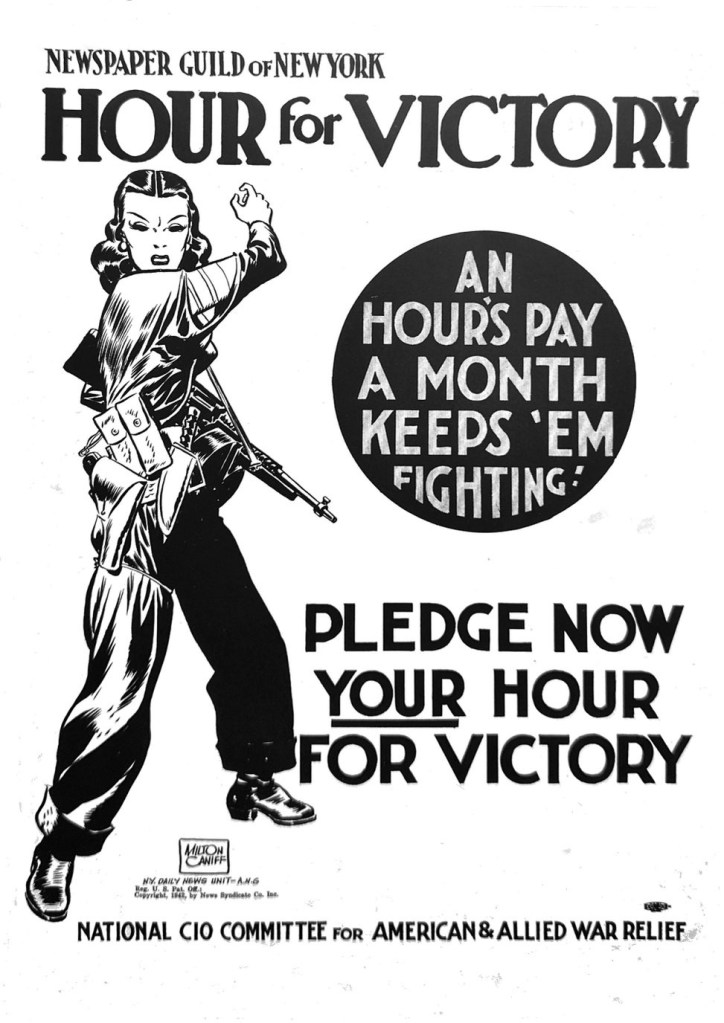
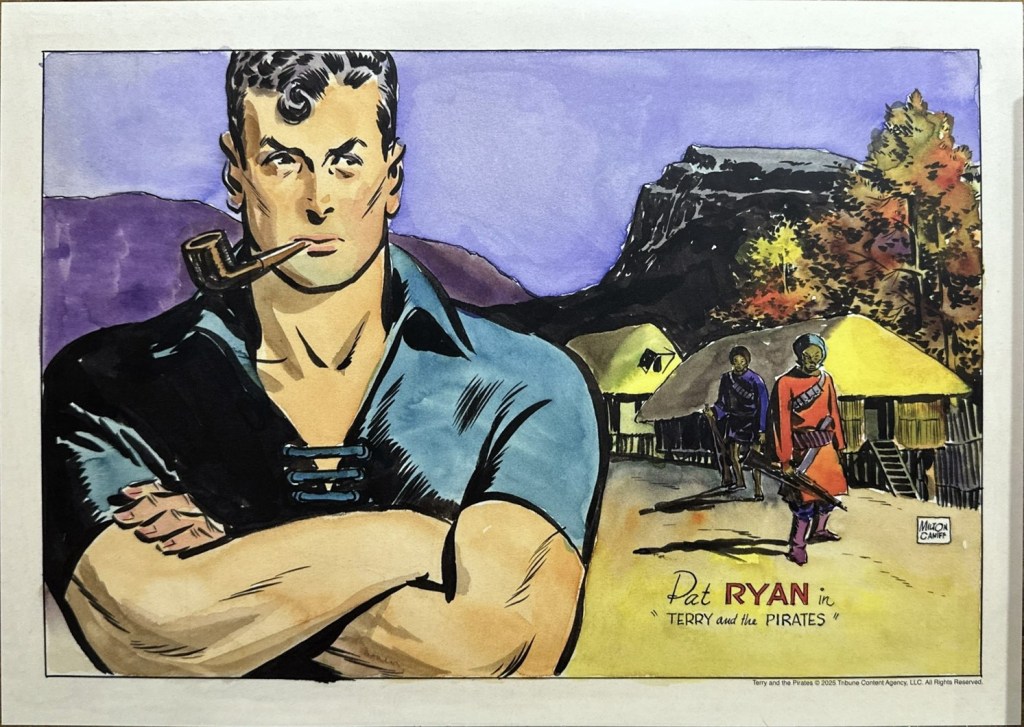
Milton Caniff’s landmark adventure Terry and the Pirates has been among the most reprinted newspaper strips of all time…and deservedly so. The artist’s fame for establishing the tone, cadence, composition and dramaturgy of the mid-century adventure genre in comics is well known. I won’t rehash it here. The latest and most ambitious reprint Terry project concluded this week when Clover Press and the Library of American Comics shipped the final three volumes in the 13 book Terry and the Pirates: The Master Collection. As I said in my initial review of the first volumes, the series is magnificent, if you don’t mind juggling oversized tomes. The sourcing of best available art, coloration and overall reproduction are the best I have seen among the many renderings of Terry over the years. This is LOAC’s second go at the strip. The imprint was launched two decades ago with a 6-volume oblong set. The first 12 volumes of the Master Collection reprint the full run from inception in 1934 through Caniff’s exit in 1946. A thirteenth volume carries new commentary, ancillary art and all of the front matter from the earlier series. Kudos to LOAC and Clover. Unlike many comic strip reprint projects that lumber for years, or peter out in mid-run, this one only took three years to complete. This final tranch of volumes also comes with a packed in bit of extra art (see above.
Continue readingCategory Archives: history
Tijuana Bibles: The Alternative America of Lust

The underground sex comics of the Great Depression were not just an interesting sidebar to comics strip history. More than 700 of these 8-12 page titles were widely distributed in the 1930s through a clandestine, ramshackle shadow syndicate. The art was often at least as crude as the situations and banter. But their connection to mainstream comics were unmistakeable, mainly because they started by supplying Popeye, Moon Mullins, Blondie and Dagwood, Major Hoople, Betty Boop, and most major strip heroes with the raging libidos their real world creators left out. In their early years, the TBs depicted essentially the imagined sex lives of cartoon superstars. [FAIR WARNING: WHILE THE IMAGES TO FOLLOW HAVE BEEN CENSORED TO ABIDE BY WORDPRESS TERMS OF SERVICE, THE SITUATIONS AND LANGUAGE EVEN IN THESE CENSORED COMICS ARE VULGAR, MISOGYNIST, RACIST AND OFFENSIVE TO ALMOST EVERY CONTEMPORARY SENSIBILITY, AND MOST OF THOSE OF THAT TIME. IT WAS INTENTIONAL. TRANSGRESSION WAS THE POINT]
Continue readingMickey Mouse Diplomacy: Disney’s Ambassador of American Exceptionalism

By the summer of 1937, Disney’s Mickey Mouse cartoons and the syndicated strip had already become worldwide ambassadors of American mass media. Like Charlie Chaplin in the previous decade, Mickey’s simple visual signature and deft antics translated well from Europe to Asia. The Mouse had effectively displaced The Tramp as an international icon of slapstick. But in August 1937, with Floyd Gottfredson’s Medioka story line, the ambassadorship becomes self-conscious and reflexive..even politicized by both creators and at least one government. Mickey journeys off to the vaguely Slavic kingdom of Medioka to save its corrupt government and oppressed people from feudalism with American ingenuity, empiricism and democratic character. It is the most explicit exercise of the American exceptionalism mythology we are bound to see in comics history, even if it has all of the political subtlety of a Yellowstone episode.
Continue readingPeak Segar: Plunder Island (1934)

The Plunder Island sequence of Thimble Theatre Sundays that ran from December 1933 to July 1934 was E.C. Segar’s signature epic. It concentrated most of this master’s diverse talents and blended the many genres Thimble Theatre traversed into the strips most impressive run. Fabulism, farce, adventure, sentiment, venality, romance, screwball — all and more are here. And along the way, Segar even fleshes out and distinguishes among his key characters.
Continue readingThe Democratic Genius of Clare Briggs

The great Clare Briggs (1875-1930) continues to impress me as perhaps the most under-appreciated figure in American comics history. He was by no means a distinctive stylist or draftsman of the sort that helps us better remember fellow greats like McCay, McManus, Herriman, Sterrett, King or Gould. But in the staggering range of cartoon series he conceived (When a Feller Needs a Friend, The Days of Real Sport, Mr. and Mrs., Real Folks at Home, Movie of a Man, Wonder What _____ Thinks About, among others) he demonstrated a range of human empathy, attention to emotional detail, and a social/class sensitivity that seems to me unmatched by any other American comic artist. Briggs was among the highest paid cartoonists of the 1920s, and widely known and beloved by audiences who were shocked at his premature death at aged 55 in 1930. His loss to the field was so deeply felt that his publisher issued a multi-volume memorial retrospective of his greatest work shortly after his death.
Continue readingShelf Scan 2024: Can’t-Miss Comic Book Reprints

We go a little off the reservation this time to embrace a few pre-code comic book reprints and underground favorites that have come back into print this year. Classics from Joe Sacco and Richard Corben resurfaced this year to garner new audiences, and Fantagraphics’ ambitious schedule of Atlas Comics reprints took off. And we get to watch the mayor of Duckburg discover his adventurous side.
Continue readingShelf Scan 2024: Reviving Calvin, Nancy, Flash, Mandrake and Popeye…Again.


There are now generations of young adults who have no memory of daily newspapers, let alone that back page and Sunday section of comics. Without that experience, I wonder how that legacy survives and continues to inspire everyday readers and young artists. If the volume of classic reprints this year is any indication, however, we graying lovers of newspapers past can’t be the only market for decades-old dailies. Many essential strips enjoyed fresh or continuing reprint projects this year that keeps the likes of Popeye, Nancy, Mandrake and more on current store shelves. Even the most reprinted strip of the last generation got revisited in 2024.
Continue reading Panels & Prose